Schmallenberg Virus Treatment Market Size, Share and Trends Analysis 2025 to 2034
Warning: Trying to access array offset on value of type null in /home/z8nbkwptb7pj/public_html/report-details.php on line 219
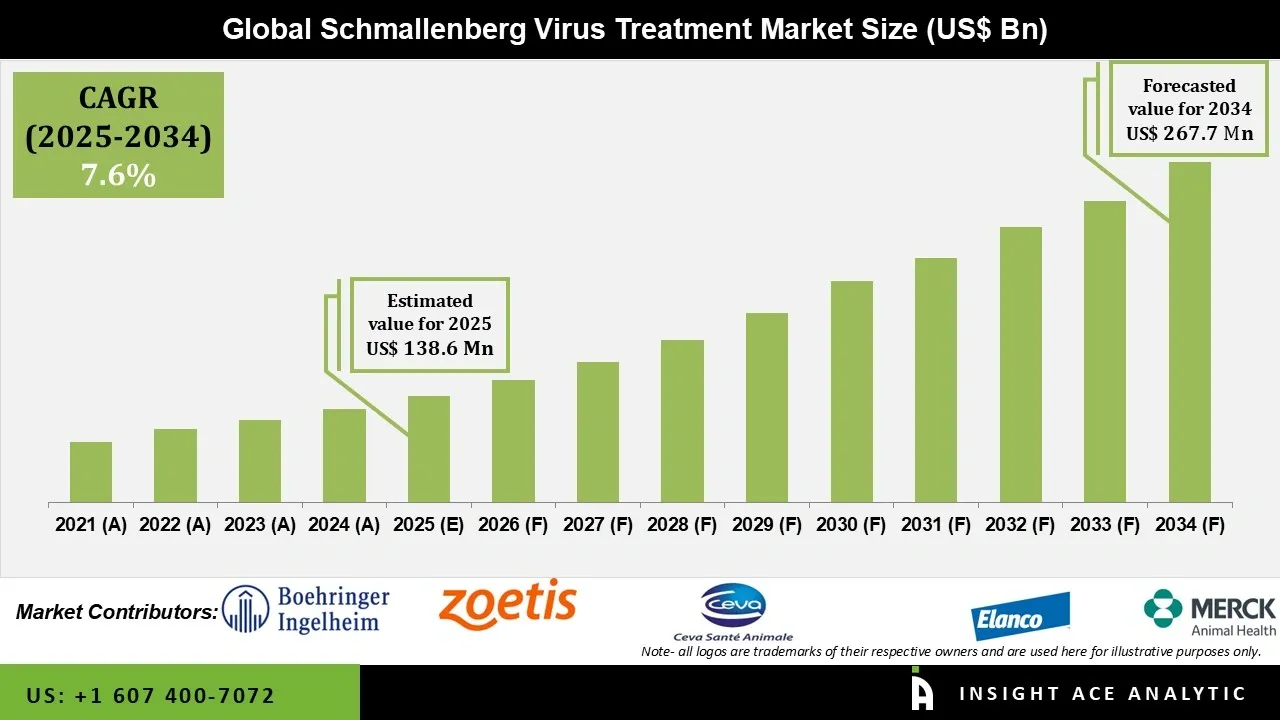
Schmallenberg Virus Treatment Market Size is valued at USD 138.6 Mn in 2025 and is predicted to reach USD 267.7 Mn by the year 2034 at a 7.6% CAGR during the forecast period for 2025 to 2034.
Schmallenberg Virus Treatment Market Size, Share & Trends Analysis Distribution by Animal Type (Sheep, Cattle, Goats, and Others), By Treatment Type (Analgesics, Antiviral Drugs, Vaccines, Anti-inflammatory Drugs, and Others), By End-user (Veterinary Hospitals and Clinics, Veterinary Pharmacies and Drug Store, Research Institutions, and Others), and Segment Forecasts, 2025 to 2034
The Schmallenberg virus is a newly discovered virus spread by insects and primarily affects ruminant animals, including sheep, goats, and cattle. This orthobunyavirus, which is a member of the Peribunyaviridae family, is mostly spread by biting Culicoides species midges. Infection in adult animals can cause symptoms such as fever, decreased milk production, diarrhea, and appetite loss, but it is often mild or asymptomatic.
The Schmallenberg virus (SBV), an arthropod-borne virus that primarily affects ruminants, including cattle, sheep, and goats, refers to supportive and preventive measures used to control infection caused by the virus. One of the main factors in the Schmallenberg virus treatment market is the rising incidence of SBV, particularly in cattle, sheep, and goats, driven by global trade and climate change. This calls for improved biosecurity protocols and the development of effective remedies and preventive measures.
The urgent need to prevent significant financial losses from congenital defects and stillbirths in cattle and sheep herds is another key factor driving the expansion of the Schmallenberg virus treatment market. The need for efficient intervention procedures is further fueled by the growing emphasis on Veterinaryivestock welfare and the need for strong herd health management tactics in endemic areas.
Moreover, as stakeholders prioritize animal welfare and agricultural output, demand for veterinary medications, including antiviral therapies and supportive care products, is increasing. Additionally, the increased investment in treatment methods is being prompted by a growing awareness among veterinary professionals and livestock owners about the economic implications of SBV, which can result in congenital abnormalities and decreased milk output. This is anticipated to boost the Schmallenberg virus treatment market growth over the forecast period.
In addition, significant advancements in veterinary diagnostics and treatments further drive the expansion of the Schmallenberg virus treatment market. The development of an SBV vaccination and the increasing use of proactive health care techniques in veterinary clinics and pharmacies are important factors. Additionally, the global Schmallenberg virus treatment market is anticipated to grow as vaccines, antiviral medications, supportive care solutions, and diagnostic tools are developed.
However, since the Schmallenberg virus treatment market has significant potential, certain obstacles may arise, such as the possibility of stringent regulatory approvals for novel SBV treatments and the ongoing challenge of accurately diagnosing the virus in its early stages. Nonetheless, the market for Schmallenberg virus treatments will continue to grow due to the emphasis on illness prevention and control, as well as government programs that encourage animal health protection.
Competitive Landscape
Which are the Leading Players in Schmallenberg Virus Treatment Market?
• Bayer Animal Health
• Boehringer Ingelheim
• Ceva Santé Animale
• Virbac
• MSD Animal Health (Merck Animal Health)
• Elanco Animal Health
• Zoetis
• Vetoquinol
• Huvepharma
• IDT Biologika
• Phibro Animal Health
• Heska Corporation
• Dechra Pharmaceuticals
• Neogen Corporation
Market Dynamics
Driver
Rising Prevalence of Livestock Schmallenberg Virus Outbreaks
One of the main drivers of the Schmallenberg virus treatment market expansion is the rising prevalence of livestock Schmallenberg virus outbreaks, which creates a pressing need for management and diagnostic tools. In order to control the virus's spread and maintain the health of the herd, prompt veterinary care is required due to the abrupt increase in congenital abnormalities and stillbirths as the virus reappears in cyclical waves.
The rate of confirmed Schmallenberg virus cases in Ireland rose by 2,200% in 2024 compared to the previous year, according to Agriland's February 2025 report, "22 cases of Schmallenberg virus recorded in 2024. "This sharp increase highlights the disease's unpredictability and the urgent need for readily available treatment alternatives during times of active infection. Therefore, there is a constant need for efficient treatments and preventative measures due to the ongoing prevalence and recurrence of SBV outbreaks in cattle populations, especially in Europe. This is anticipated to boost the growth of the Schmallenberg virus treatment market over the forecast period.
Restrain/Challenge
Irregular Nature of Schmallenberg Virus Outbreaks
A significant obstacle to the growth of the global Schmallenberg virus treatment market is the cyclical and irregular character of outbreaks. This Orthobunyavirus has a variable transmission pattern that depends on vector activity and herd immunity levels, resulting in periods of strong demand interspersed with long stretches of market dormancy, in contrast to diseases that require continuous, yearly intervention.
Furthermore, the pharmaceutical producers find it extremely difficult to estimate income or justify the significant capital investment needed for the development and manufacturing of innovative therapies due to this unpredictability. As a result, inventory management poses serious risks to stakeholders, which frequently result in stockouts during spikes or waste during slow times. Recent fluctuations in infection rates are indicative of this instability.
Cattle Segment is Expected to Drive the Schmallenberg Virus Treatment Market
The cattle category held the largest share in the Schmallenberg Virus Treatment market in 2024. The increasing incidence of Schmallenberg virus (SBV) infections in cow populations, especially in areas with substantial ruminant livestock production, is one important factor. Farmers and dairy operators suffer significant financial losses as a result of reproductive abnormalities such as abortions, stillbirths, and congenital deformities that are linked to Schmallenberg virus infection in cattle. Additionally, there is a greater uptake of veterinary vaccines and disease control treatments due to the growth of commercial cow farming, especially in Europe, where Schmallenberg virus outbreaks have been observed more frequently.
Veterinary Hospitals and Clinics Segment is Growing at the Highest Rate in the Schmallenberg Virus Treatment Market
In 2024, the Veterinary Hospitals and Clinics category dominated the Schmallenberg Virus Treatment market because cattle owners are depending more and more on expert veterinarian care for precise diagnosis and disease control. The Schmallenberg virus mostly affects ruminants, including sheep, goats, and cattle. It causes congenital abnormalities and reproductive problems that need prompt medical attention.
Veterinary hospitals and clinics are the initial point of contact during disease outbreaks because they have access to supportive and preventive treatment procedures, skilled veterinarians, and state-of-the-art diagnostic equipment. Additionally, more people are visiting these institutions as a result of farmers becoming more conscious of the financial losses linked to untreated diseases and the increased focus on herd health management.
Why North America Led the Schmallenberg Virus Treatment Market?
The Schmallenberg Virus Treatment market was dominated by the North America region in 2024, supported by extensive disease surveillance in animal populations and well-established veterinary healthcare systems. The demand for supportive medicines and vaccines is driven by the United States and Canada's strong emphasis on biosecurity measures, early diagnosis, and preventative animal health management.

Furthermore, farmers and producers are encouraged to invest in prompt treatment and prevention due to the significant financial losses linked to reproductive problems and birth malformations brought on by viral infections in cattle, which supports the Schmallenberg virus treatment market expansion in the region.
Schmallenberg Virus Treatment Market Report Scope:
| Report Attribute | Specifications |
| Market size value in 2025 | USD 138.6 Mn |
| Revenue forecast in 2034 | USD 267.7 Mn |
| Growth Rate CAGR | CAGR of 7.6% from 2025 to 2034 |
| Quantitative Units | Representation of revenue in US$ Bn and CAGR from 2025 to 2034 |
| Historic Year | 2021 to 2023 |
| Forecast Year | 2025-2034 |
| Report Coverage | The forecast of revenue, the position of the company, the competitive market structure, growth prospects, and trends |
| Segments Covered | Animal Type, Treatment Type, End-user, and By Region |
| Regional Scope | North America; Europe; Asia Pacific; Latin America; Middle East & Africa |
| Country Scope | U.S.; Canada; U.K.; Germany; China; India; Japan; Brazil; Mexico; The UK; France; Italy; Spain; China; Japan; India; South Korea; Southeast Asia; South Korea; Southeast Asia |
| Competitive Landscape | Bayer Animal Health, Boehringer Ingelheim, Ceva Santé Animale, Virbac, MSD Animal Health (Merck Animal Health), Elanco Animal Health, Zoetis, Vetoquinol, Huvepharma, IDT Biologika, Phibro Animal Health, Heska Corporation, Dechra Pharmaceuticals, and Neogen Corporation. |
| Customization Scope | Free customization report with the procurement of the report, Modifications to the regional and segment scope. Geographic competitive landscape. |
| Pricing and Available Payment Methods | Explore pricing alternatives that are customized to your particular study requirements. |
Market Segmentation:
Schmallenberg Virus Treatment Market by Animal Type-
• Sheep
• Cattle
• Goats
• Others
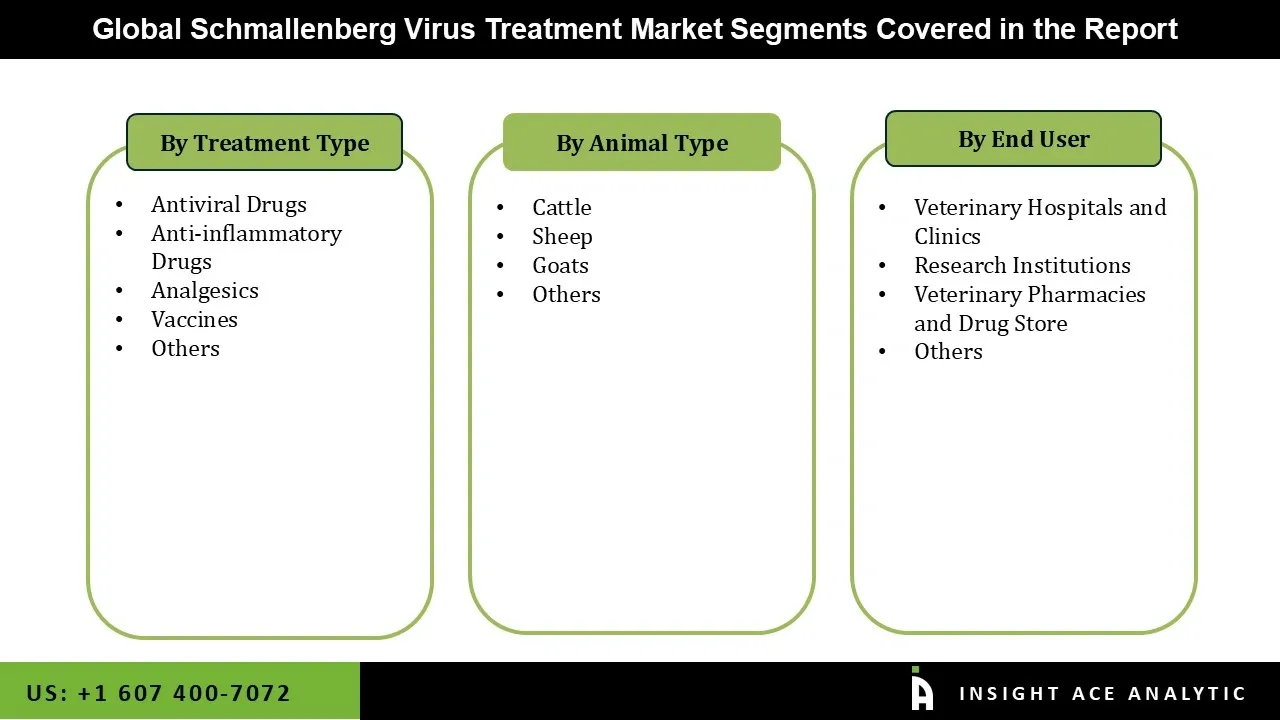
Schmallenberg Virus Treatment Market by Treatment Type-
• Analgesics
• Antiviral Drugs
• Vaccines
• Anti-inflammatory Drugs
• Others
Schmallenberg Virus Treatment Market by End-user-
• Veterinary Hospitals and Clinics
• Veterinary Pharmacies and Drug Store
• Research Institutions
• Others
Schmallenberg Virus Treatment Market By Region-
North America-
• The US
• Canada
Europe-
• Germany
• The UK
• France
• Italy
• Spain
• Rest of Europe
Asia-Pacific-
• China
• Japan
• India
• South Korea
• South East Asia
• Rest of Asia Pacific
Latin America-
• Brazil
• Mexico
• Argentina
• Rest of Latin America
Middle East & Africa-
• GCC Countries
• South Africa
• Rest of Middle East and Africa
Research Design and Approach
This study employed a multi-step, mixed-method research approach that integrates:
- Secondary research
- Primary research
- Data triangulation
- Hybrid top-down and bottom-up modelling
- Forecasting and scenario analysis
This approach ensures a balanced and validated understanding of both macro- and micro-level market factors influencing the market.
Secondary Research
Secondary research for this study involved the collection, review, and analysis of publicly available and paid data sources to build the initial fact base, understand historical market behaviour, identify data gaps, and refine the hypotheses for primary research.
Sources Consulted
Secondary data for the market study was gathered from multiple credible sources, including:
- Government databases, regulatory bodies, and public institutions
- International organizations (WHO, OECD, IMF, World Bank, etc.)
- Commercial and paid databases
- Industry associations, trade publications, and technical journals
- Company annual reports, investor presentations, press releases, and SEC filings
- Academic research papers, patents, and scientific literature
- Previous market research publications and syndicated reports
These sources were used to compile historical data, market volumes/prices, industry trends, technological developments, and competitive insights.

Primary Research
Primary research was conducted to validate secondary data, understand real-time market dynamics, capture price points and adoption trends, and verify the assumptions used in the market modelling.
Stakeholders Interviewed
Primary interviews for this study involved:
- Manufacturers and suppliers in the market value chain
- Distributors, channel partners, and integrators
- End-users / customers (e.g., hospitals, labs, enterprises, consumers, etc., depending on the market)
- Industry experts, technology specialists, consultants, and regulatory professionals
- Senior executives (CEOs, CTOs, VPs, Directors) and product managers
Interview Process
Interviews were conducted via:
- Structured and semi-structured questionnaires
- Telephonic and video interactions
- Email correspondences
- Expert consultation sessions
Primary insights were incorporated into demand modelling, pricing analysis, technology evaluation, and market share estimation.
Data Processing, Normalization, and Validation
All collected data were processed and normalized to ensure consistency and comparability across regions and time frames.
The data validation process included:
- Standardization of units (currency conversions, volume units, inflation adjustments)
- Cross-verification of data points across multiple secondary sources
- Normalization of inconsistent datasets
- Identification and resolution of data gaps
- Outlier detection and removal through algorithmic and manual checks
- Plausibility and coherence checks across segments and geographies
This ensured that the dataset used for modelling was clean, robust, and reliable.
Market Size Estimation and Data Triangulation
Bottom-Up Approach
The bottom-up approach involved aggregating segment-level data, such as:
- Company revenues
- Product-level sales
- Installed base/usage volumes
- Adoption and penetration rates
- Pricing analysis
This method was primarily used when detailed micro-level market data were available.

Top-Down Approach
The top-down approach used macro-level indicators:
- Parent market benchmarks
- Global/regional industry trends
- Economic indicators (GDP, demographics, spending patterns)
- Penetration and usage ratios
This approach was used for segments where granular data were limited or inconsistent.
Hybrid Triangulation Approach
To ensure accuracy, a triangulated hybrid model was used. This included:
- Reconciling top-down and bottom-up estimates
- Cross-checking revenues, volumes, and pricing assumptions
- Incorporating expert insights to validate segment splits and adoption rates
This multi-angle validation yielded the final market size.
Forecasting Framework and Scenario Modelling
Market forecasts were developed using a combination of time-series modelling, adoption curve analysis, and driver-based forecasting tools.
Forecasting Methods
- Time-series modelling
- S-curve and diffusion models (for emerging technologies)
- Driver-based forecasting (GDP, disposable income, adoption rates, regulatory changes)
- Price elasticity models
- Market maturity and lifecycle-based projections
Scenario Analysis
Given inherent uncertainties, three scenarios were constructed:
- Base-Case Scenario: Expected trajectory under current conditions
- Optimistic Scenario: High adoption, favourable regulation, strong economic tailwinds
- Conservative Scenario: Slow adoption, regulatory delays, economic constraints
Sensitivity testing was conducted on key variables, including pricing, demand elasticity, and regional adoption.
Request Customization
Add countries, segments, company profiles, or extend forecast — free 10% customization with purchase.
Customize This Report →Enquire Before Buying
Speak with our analyst team about scope, methodology, pricing, or deliverable formats.
Enquire Now →Frequently Asked Questions
Schmallenberg Virus Treatment Market Size is valued at USD 138.6 Mn in 2025 and is predicted to reach USD 267.7 Mn by the year 2034 at a 7.6% CAGR during the forecast period for 2025 to 2034.
Bayer Animal Health, Boehringer Ingelheim, Ceva Santé Animale, Virbac, MSD Animal Health (Merck Animal Health), Elanco Animal Health, Zoetis, Vetoquinol, Huvepharma, IDT Biologika, Phibro Animal Health, Heska Corporation, Dechra Pharmaceuticals, and Neogen Corporation.
Animal Type, Treatment Type, End-user, and By Region are the key segments of the Schmallenberg Virus Treatment Market.
SNorth America region is leading the Schmallenberg Virus Treatment Market