Veterinary Artificial Intelligence Market Size, Share, Scope, Forecast Report 2026 to 2035
What is Veterinary Artificial Intelligence Market Size?
Global Veterinary Artificial Intelligence Market is likely to grow at a 18.8% CAGR during the forecast period for 2026 to 2035.
Veterinary Artificial Intelligence Market Size, Share & Trends Analysis Distribution by Application Cluster (Diagnostic Imaging AI, Clinical-Pathology & Cellular-Analysis AI, Molecular, Genomic & Precision-Oncology AI, Predictive Analytics & Clinical-Decision-Support AI, Remote-Monitoring & Wearable-Biosensor AI), By Offering / Delivery Model (Cloud & SaaS AI Services, In-Clinic AI-Embedded Analyzers & Imaging, Reference-Lab AI Services, Wearable Device + Analytics Subscription), By Species (Canine, Feline, Equine, Other Companion / Exotic), By End-User (G eneral & Companion Veterinary Practices, Specialty, Referral & Academic Teaching Hospitals, Veterinary Reference Laboratories & Diagnostic-Service Providers, Corporate / Consolidated Practice Groups) and Segment Forecasts, 2026 to 2035.
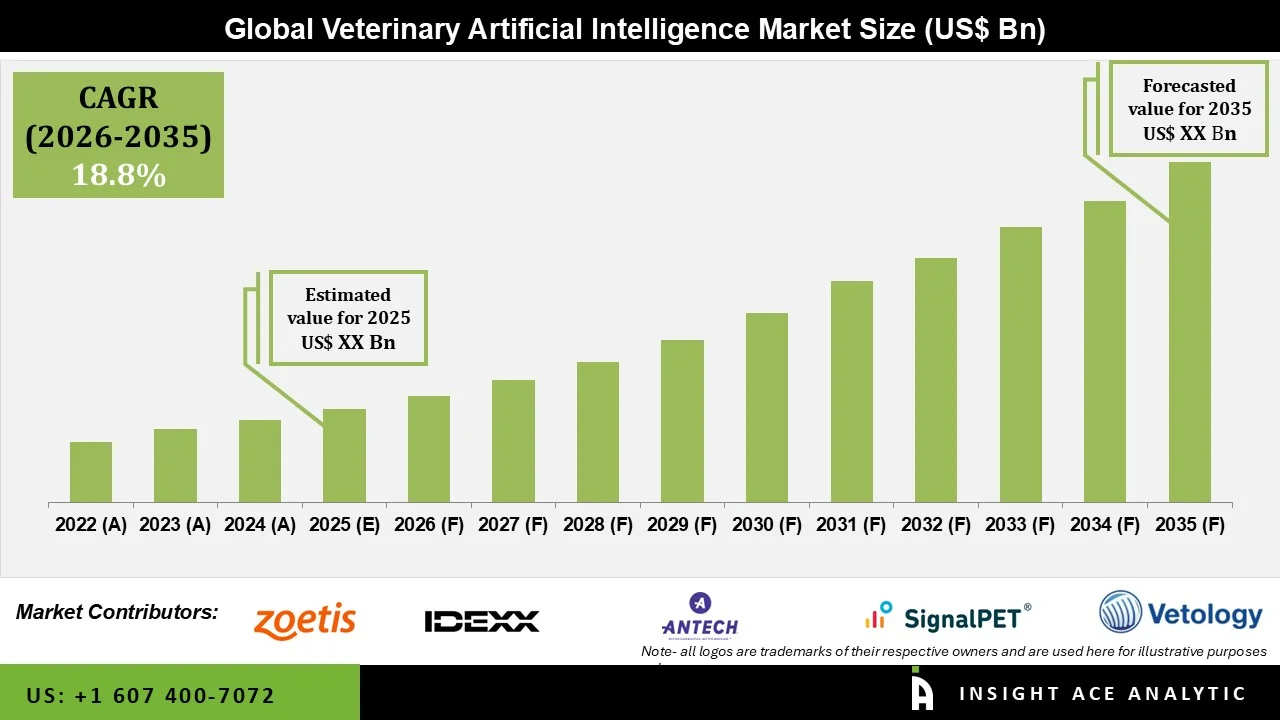
Veterinary artificial intelligence (AI) refers to the application of machine learning, computer vision, predictive analytics, and other data-driven technologies to support animal healthcare, disease detection, clinical assessment, treatment planning, and health monitoring. These technologies can process and interpret diverse sources of veterinary data, including diagnostic images, laboratory results, genomic information, electronic health records, and physiological measurements, to identify clinically relevant patterns and abnormalities. By augmenting conventional veterinary workflows, AI can support earlier detection of disease, improve diagnostic consistency, assist clinical decision-making, and enable more personalized approaches to animal care.
The application of AI is expanding across several areas of veterinary medicine, including diagnostic imaging, digital pathology, molecular and genomic diagnostics, precision oncology, predictive analytics, clinical decision support, and wearable-based health monitoring. These solutions are being developed for a broad range of animal populations, including companion animals, equines, livestock, and other species. AI-enabled technologies can assist veterinarians in interpreting complex clinical information, identifying potential health risks, monitoring disease progression, and supporting treatment and follow-up decisions.
The growing digitalization of veterinary healthcare is increasing the integration of AI into veterinary practices, specialty hospitals, reference laboratories, diagnostic centres, and animal health research environments. Demand for earlier disease identification, more specialized diagnostics, improved clinical efficiency, and data-supported treatment decisions is encouraging the adoption of AI-enabled solutions. At the same time, advances in veterinary imaging, laboratory automation, cloud-based diagnostic platforms, connected monitoring devices, and genomic technologies are broadening the range of data available for AI-based analysis.
The veterinary artificial intelligence market encompasses AI-powered software, analytical platforms, diagnostic technologies, decision-support systems, and connected solutions designed to support veterinary healthcare and animal health management. The market is evolving as AI moves from individual diagnostic applications toward increasingly integrated clinical and monitoring workflows, combining multiple data sources to provide more comprehensive insights into animal health and disease management.
Competitive Landscape
Which are the Leading Players in the Veterinary Artificial Intelligence Market?
- Zoetis Inc.
- IDEXX Laboratories, Inc.
- Antech Diagnostics (Mars)
- SignalPET
- Vetology Innovations
- Techcyte
- ImpriMed, Inc.
- Aiforia Technologies Plc
- Picoxia
- Radimal
- FidoCure (One Health Company)
- PetPace
- SK Telecom Co., Ltd.
Market Dynamics
Driver
Growing Demand for Early and Accurate Disease Diagnosis in Animals
The main factor pushing the growth of the veterinary artificial intelligence market is the increasing demand for early and accurate diagnosis of animal diseases. Because of the greater use of AI in diagnostic imaging, digital pathology, and automated laboratory analysis, vets are now able to identify illnesses more efficiently, interpret complicated diagnostic data, and make timely decisions regarding treatment. The growing demand for advanced veterinary healthcare, together with the rising number of pet owners and higher spending on companion animals' health, is speeding up the uptake of AI-based solutions in veterinary clinics, specialist hospitals, and diagnostic laboratories.
Restrain/Challenge
Limited Availability of High-Quality Veterinary Data and Standardized Diagnostic Datasets
The greatest difficulty facing the veterinary artificial intelligence market is the scarcity of high-quality veterinary data and standardized diagnostic datasets. In order to provide reliable outcomes, veterinary AI models need diverse data that is accurately labeled and covers different animal species, breeds, diseases, imaging techniques, and clinical environments. Differences in diagnostic practices, the limited access to complete veterinary datasets, and the way diseases manifest among various species can all have an impact on the accuracy and generalizability of the models. Since these limitations are compounded by the cost of integration and the requirement for clinical validation, the uptake by veterinary clinics and diagnostic laboratories—especially smaller ones with limited technical and financial resources—remains slow.
Diagnostic AI segment Segment is Expected to Drive the Veterinary Artificial Intelligence Market
Diagnostic imaging AI is expected to be a major segment driving the veterinary artificial intelligence market, supported by the growing adoption of AI-powered radiography analysis, automated image interpretation, and diagnostic assistance in veterinary practices. Increasing demand for faster and more accurate detection of musculoskeletal conditions, thoracic diseases, and other abnormalities is encouraging the use of AI-enabled imaging solutions across veterinary clinics and specialty hospitals. The availability of AI tools that streamline radiograph interpretation and support clinical decision-making further strengthens the segment's growth potential.
Cloud & SaaS AI Services Segment is Growing at the Highest Rate in the Veterinary Artificial Intelligence Market
Cloud & SaaS AI Services is expected to grow at the highest rate in the veterinary artificial intelligence market, driven by increasing demand for scalable, cost-effective diagnostic solutions and remote access to AI-powered veterinary tools. Cloud-based platforms enable veterinary clinics and diagnostic laboratories to analyze medical images, process diagnostic data, and access AI-assisted clinical insights without substantial investments in on-premise infrastructure. Growing adoption of subscription-based software, continuous improvements in AI algorithms, and easier integration with veterinary practice-management systems are further supporting segment growth.
Why North America Led the Veterinary Artificial Intelligence Market?
North America is expected to lead the veterinary artificial intelligence market, driven by its advanced veterinary healthcare infrastructure, high expenditure on companion-animal care, and strong adoption of digital diagnostic technologies.
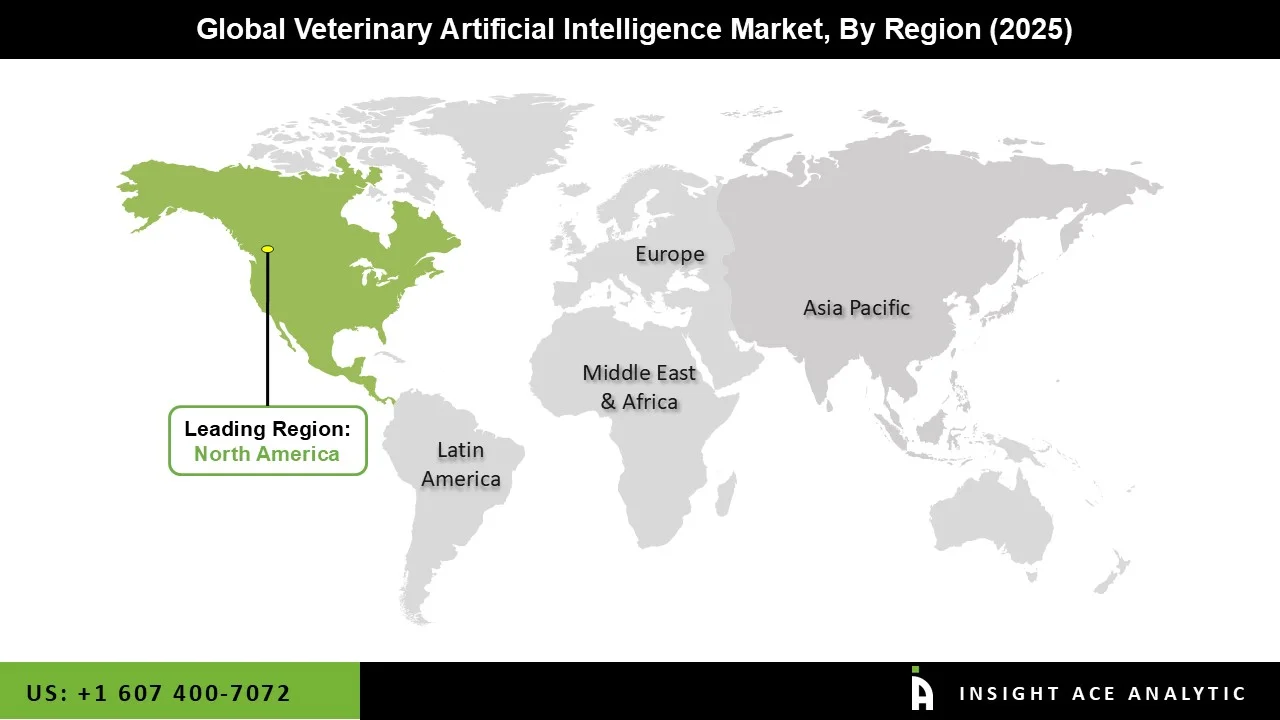
The region benefits from the presence of established veterinary diagnostics companies, AI solution providers, and specialized animal hospitals, particularly in the United States. Increasing demand for early disease detection, growing adoption of AI-enabled veterinary imaging and laboratory diagnostics, and rising investments in animal health technology are further supporting market growth across the region.
Key Development
- November 2025: Zoetis announced an agreement to acquire VitalRADS to expand its veterinary teleradiology services and strengthen its cloud-based diagnostic imaging capabilities with AI-assisted report generation and quality assurance.
- September 2026: IDEXX Laboratories acquired CoVetAI to expand its AI-powered veterinary clinical workflow capabilities, automate medical documentation, and integrate patient information across consultations, treatment planning, and follow-up care.
Veterinary Artificial Intelligence Market Report Scope:
| Report Attribute | Specifications |
| Growth Rate CAGR | CAGR of 18.8% from 2026 to 2035 |
| Quantitative Units | Representation of revenue in US$ Bn and CAGR from 2026 to 2035 |
| Historic Year | 2022 to 2025 |
| Forecast Year | 2026-2035 |
| Report Coverage | The forecast of revenue, the position of the company, the competitive market structure, growth prospects, and trends |
| Segments Covered | Application Cluster, Offering / Delivery Model, Species, End-User and By Region |
| Regional Scope | North America; Europe; Asia Pacific; Latin America; Middle East & Africa |
| Country Scope | U.S.; Canada; U.K.; Germany; China; India; Japan; Brazil; Mexico; France; Italy; Spain; South Korea; Southeast Asia |
| Competitive Landscape | Zoetis Inc., IDEXX Laboratories, Inc., Antech Diagnostics (Mars), SignalPET, Vetology Innovations, Techcyte, ImpriMed, Inc., Aiforia Technologies Plc, Picoxia, Radimal, FidoCure (One Health Company), PetPace, SK Telecom Co., Ltd. |
| Customization Scope | Free customization report with the procurement of the report, Modifications to the regional and segment scope. Geographic competitive landscape. |
| Pricing and Available Payment Methods | Explore pricing alternatives that are customized to your particular study requirements. |
Segmentations Veterinary Artificial Intelligence Market:
Veterinary Artificial Intelligence Market by Application Cluster -
- Diagnostic Imaging AI
- Radiography (General) AI
- Dental Radiography AI
- Advanced-Imaging AI (CT, MRI, Ultrasound & Cardiac Measurement)
- Clinical-Pathology & Cellular-Analysis AI
- Digital Cytology AI
- Hematology / Blood-Smear AI
- Dermatology (Ear / Skin) Cytology AI
- Urinalysis / Urine-Sediment AI
- Parasitology / Fecal AI
- Histopathology / Digital-Pathology AI
- Molecular, Genomic & Precision-Oncology AI
- Functional (Live-Cell) Drug-Response Prediction
- Genomic Tumor Profiling
- Liquid-Biopsy Cancer-Signal Detection
- Predictive Analytics & Clinical-Decision-Support AI
- Remote-Monitoring & Wearable-Biosensor AI
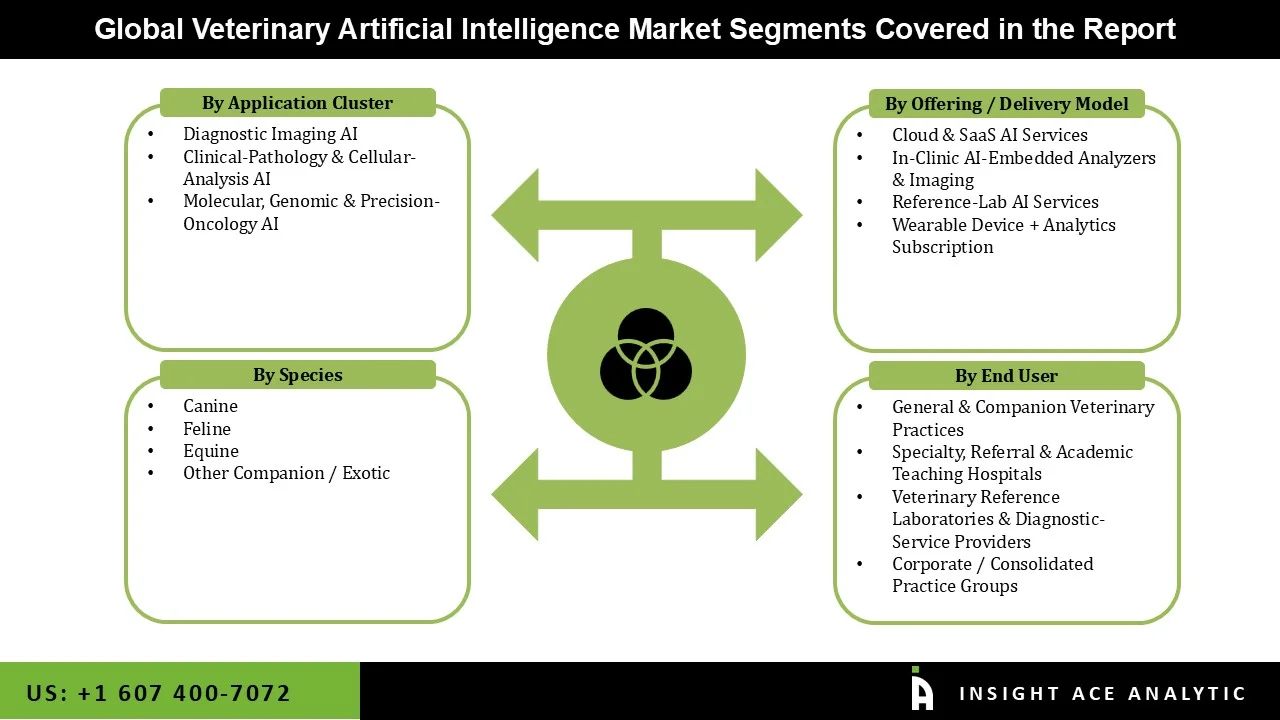
Veterinary Artificial Intelligence Market by Offering / Delivery Model -
- Cloud & SaaS AI Services
- In-Clinic AI-Embedded Analyzers & Imaging
- Reference-Lab AI Services
- Wearable Device + Analytics Subscription
Veterinary Artificial Intelligence Market by Species -
- Canine
- Feline
- Equine
- Other Companion / Exotic
Veterinary Artificial Intelligence Market by End-User -
- General & Companion Veterinary Practices
- Specialty, Referral & Academic Teaching Hospitals
- Veterinary Reference Laboratories & Diagnostic-Service Providers
- Corporate / Consolidated Practice Groups
Veterinary Artificial Intelligence Market by Region-
- North America-
- The US
- Canada
- Europe-
- Germany
- The UK
- France
- Italy
- Spain
- Rest of Europe
- Asia-Pacific-
- China
- Japan
- India
- South Korea
- South East Asia
- Rest of Asia Pacific
- Latin America-
- Brazil
- Argentina
- Mexico
- Rest of Latin America
- Middle East and Africa-
- GCC Countries
- South Africa
- Rest of Middle East and Africa
Research Design and Approach
This study employed a multi-step, mixed-method research approach that integrates:
- Secondary research
- Primary research
- Data triangulation
- Hybrid top-down and bottom-up modelling
- Forecasting and scenario analysis
This approach ensures a balanced and validated understanding of both macro- and micro-level market factors influencing the market.
Secondary Research
Secondary research for this study involved the collection, review, and analysis of publicly available and paid data sources to build the initial fact base, understand historical market behaviour, identify data gaps, and refine the hypotheses for primary research.
Sources Consulted
Secondary data for the market study was gathered from multiple credible sources, including:
- Government databases, regulatory bodies, and public institutions
- International organizations (WHO, OECD, IMF, World Bank, etc.)
- Commercial and paid databases
- Industry associations, trade publications, and technical journals
- Company annual reports, investor presentations, press releases, and SEC filings
- Academic research papers, patents, and scientific literature
- Previous market research publications and syndicated reports
These sources were used to compile historical data, market volumes/prices, industry trends, technological developments, and competitive insights.
Primary Research
Primary research was conducted to validate secondary data, understand real-time market dynamics, capture price points and adoption trends, and verify the assumptions used in the market modelling.
Stakeholders Interviewed
Primary interviews for this study involved:
- Manufacturers and suppliers in the market value chain
- Distributors, channel partners, and integrators
- End-users / customers (e.g., hospitals, labs, enterprises, consumers, etc., depending on the market)
- Industry experts, technology specialists, consultants, and regulatory professionals
- Senior executives (CEOs, CTOs, VPs, Directors) and product managers
Interview Process
Interviews were conducted via:
- Structured and semi-structured questionnaires
- Telephonic and video interactions
- Email correspondences
- Expert consultation sessions
Primary insights were incorporated into demand modelling, pricing analysis, technology evaluation, and market share estimation.
Data Processing, Normalization, and Validation
All collected data were processed and normalized to ensure consistency and comparability across regions and time frames.
The data validation process included:
- Standardization of units (currency conversions, volume units, inflation adjustments)
- Cross-verification of data points across multiple secondary sources
- Normalization of inconsistent datasets
- Identification and resolution of data gaps
- Outlier detection and removal through algorithmic and manual checks
- Plausibility and coherence checks across segments and geographies
This ensured that the dataset used for modelling was clean, robust, and reliable.
Market Size Estimation and Data Triangulation
Bottom-Up Approach
The bottom-up approach involved aggregating segment-level data, such as:
- Company revenues
- Product-level sales
- Installed base/usage volumes
- Adoption and penetration rates
- Pricing analysis
This method was primarily used when detailed micro-level market data were available.
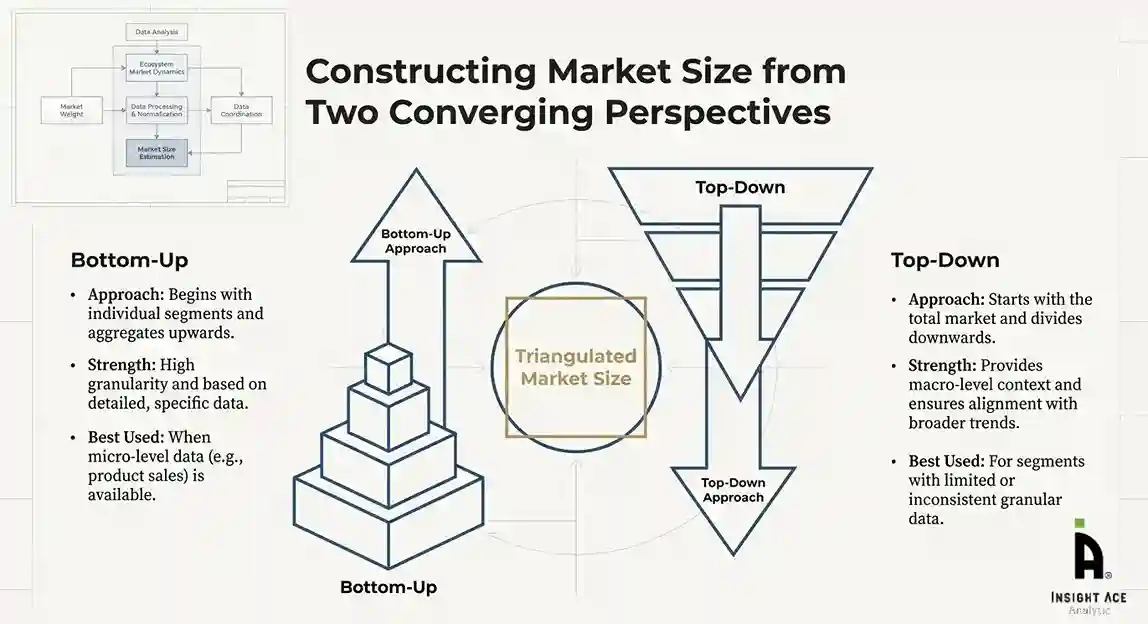
Top-Down Approach
The top-down approach used macro-level indicators:
- Parent market benchmarks
- Global/regional industry trends
- Economic indicators (GDP, demographics, spending patterns)
- Penetration and usage ratios
This approach was used for segments where granular data were limited or inconsistent.
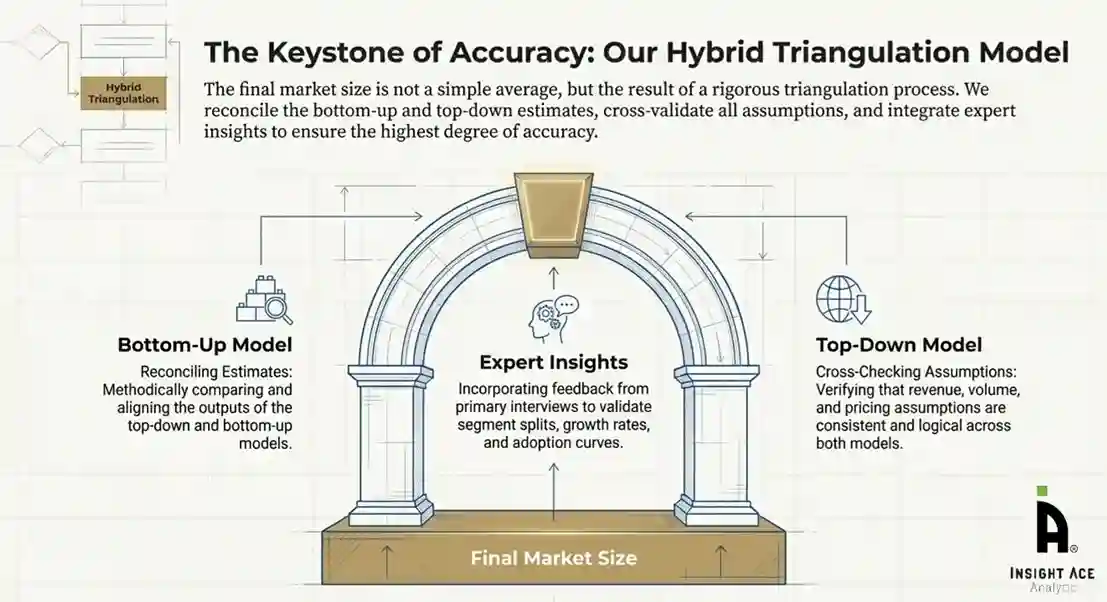
Hybrid Triangulation Approach
To ensure accuracy, a triangulated hybrid model was used. This included:
- Reconciling top-down and bottom-up estimates
- Cross-checking revenues, volumes, and pricing assumptions
- Incorporating expert insights to validate segment splits and adoption rates
This multi-angle validation yielded the final market size.
Forecasting Framework and Scenario Modelling
Market forecasts were developed using a combination of time-series modelling, adoption curve analysis, and driver-based forecasting tools.
Forecasting Methods
- Time-series modelling
- S-curve and diffusion models (for emerging technologies)
- Driver-based forecasting (GDP, disposable income, adoption rates, regulatory changes)
- Price elasticity models
- Market maturity and lifecycle-based projections
Scenario Analysis
Given inherent uncertainties, three scenarios were constructed:
- Base-Case Scenario: Expected trajectory under current conditions
- Optimistic Scenario: High adoption, favourable regulation, strong economic tailwinds
- Conservative Scenario: Slow adoption, regulatory delays, economic constraints
Sensitivity testing was conducted on key variables, including pricing, demand elasticity, and regional adoption.
Request Customization
Add countries, segments, company profiles, or extend forecast — free 10% customization with purchase.
Customize This Report →Enquire Before Buying
Speak with our analyst team about scope, methodology, pricing, or deliverable formats.
Enquire Now →Frequently Asked Questions
Veterinary Artificial Intelligence Market is likely to grow at a 18.8% CAGR during the forecast period for 2026 to 2035.
Zoetis Inc., IDEXX Laboratories, Inc., Antech Diagnostics (Mars), SignalPET, Vetology Innovations, Techcyte, ImpriMed, Inc., Aiforia Technologies Plc, Picoxia, Radimal, FidoCure (One Health Company), PetPace, SK Telecom Co., Ltd. and Others.
Veterinary Artificial Intelligence Market is segmented into Application Cluster, Offering / Delivery Model, Species, End-User and other.
North America region is leading the Veterinary Artificial Intelligence Market