Companion Animal Behavioral Health Market Size, Share, Revenue Report 2026 to 2035
What is Companion Animal Behavioral Health Market Size?
Global Companion Animal Behavioral Health Market Size is valued at USD 1344.76 Mn in 2025 and is predicted to reach USD 2371.88 Mn by the year 2035 at a 5.9% CAGR during the forecast period for 2026 to 2035.
Companion Animal Behavioral Health Market Size, Share & Trends Analysis Distribution by Product & Service Category (Prescription Behavioral Therapeutics, Non-Prescription Behavior Support Products, Professional Behavior Services, Digital Behavioral Monitoring), By Indication (Noise Aversion & Phobias, Separation-Related Behaviors, Transport & Veterinary-Visit Anxiety, Generalized Anxiety & Stress, Cognitive Dysfunction, Compulsive & Other Behaviors), By Species (Dogs, Cats), By Distribution Channel (Veterinary Clinic, Retail & Online Pharmacy, Pet-Specialty Retail, E-commerce & DTC) and Segment Forecasts, 2026 to 2035.
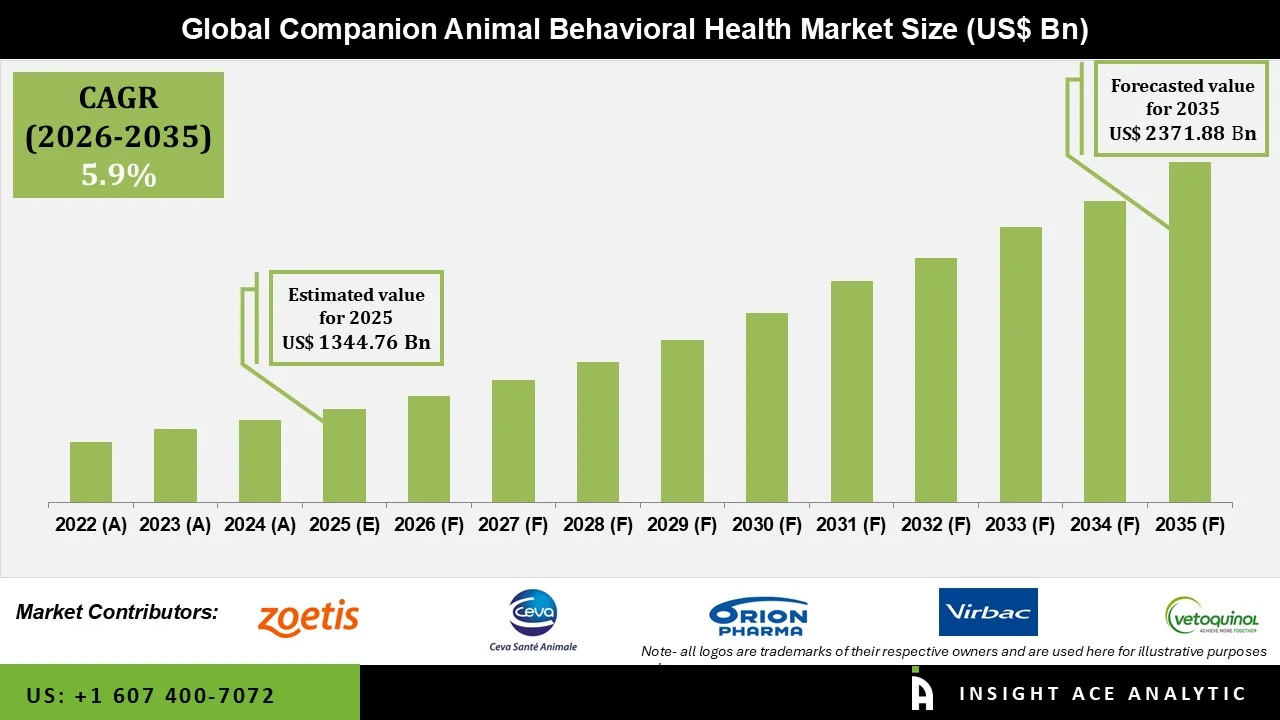
Companion animal behavioural health encompasses the emotional, psychological, and behavioural well-being of pets, particularly dogs and cats, and includes the prevention, identification, and management of behavioural conditions that can affect their quality of life. Common behavioural concerns include anxiety, fear, stress, separation anxiety, noise phobia, compulsive behaviours, inappropriate behaviours, and aggression. These conditions can arise from environmental factors, changes in routine, social interactions, underlying health conditions, or other physiological and behavioural factors, and may significantly affect both animal welfare and the human–animal bond.
The management of companion animal behavioural health typically involves a multidisciplinary approach combining veterinary pharmaceuticals, calming supplements and nutraceuticals, pheromone-based products, therapeutic diets, behavioural modification and training, environmental interventions, and technology-enabled solutions. Depending on the condition and its severity, these approaches may be used individually or in combination to reduce behavioural symptoms, support emotional stability, improve adaptation to stressful situations, and promote overall animal well-being.
The companion animal behavioural health market encompasses products and solutions designed to address behavioural and emotional health conditions in companion animals. The market includes prescription medications, nutraceuticals, calming treats, pheromone products, therapeutic nutrition, behavioural therapy products and devices, and technology-based monitoring or intervention solutions. These offerings support different stages of behavioural health management, ranging from preventive care and everyday stress management to clinical intervention for diagnosed behavioural conditions.
The market ecosystem includes veterinary pharmaceutical companies, animal health manufacturers, pet wellness and nutrition brands, specialist behavioural health providers, veterinary practices, and other service providers involved in developing, manufacturing, distributing, recommending, or delivering behavioural health solutions. Increasing recognition of behavioural health as an important component of overall pet wellness is encouraging its integration into routine veterinary care, while growing owner awareness of anxiety, stress, and other behavioural conditions is expanding demand for specialized products and services.
The continued development of behavioural therapeutics, functional nutrition, pheromone-based interventions, digital monitoring technologies, and other supportive solutions is broadening the range of tools available for companion animal behavioural management. As behavioural health becomes increasingly incorporated into comprehensive veterinary and preventive care, it is emerging as an important component of the broader companion animal healthcare and wellness ecosystem.
Competitive Landscape
Which are the Leading Players in the Companion Animal Behavioral Health Market?
- Zoetis
- Orion Corporation
- Ceva Santé Animale
- Virbac
- Vetoquinol
- Nestlé Purina PetCare
- Nutramax Laboratories
- H&H Group
- Swedencare AB
- PetIQ
- Central Garden & Pet
- FoodScience LLC
- PetHonesty
- Beaphar
- VetPlus
- Unex Designs
- ElleVet Sciences
- Zomedica
- Nelsons
- Ark Naturals
Market Dynamics
Driver
Increasing Pet Humanization and Awareness of Companion Animal Mental Health
The growing humanization of pets is a major driver of the Companion Animal Behavioral Health Market. Pet owners increasingly consider companion animals as family members, leading to greater attention to their emotional well-being, psychological health, and quality of life. This shift in ownership patterns is increasing awareness of behavioral conditions such as separation anxiety, noise phobia, fear, stress, and compulsive behaviors in dogs and cats. Pet owners are becoming more willing to seek veterinary consultations and invest in specialized solutions, including calming supplements, prescription medications, pheromone-based products, therapeutic diets, and behavioral therapy devices. Consequently, the increasing emphasis on providing comprehensive physical and emotional care for companion animals is supporting market growth.
Restrain/Challenge
Limited Awareness and Underdiagnosis of Behavioral Health Conditions in Companion Animals
A big issue in the companion animal behavioural health market is the lack of recognition and diagnosis of behavioural health issues in pets. Anxiety, stress, fear, aggression and compulsive behaviours are frequently just seen as "normal" pet behaviour or as a temporary reaction to a change in the environment. Pet owners often don't have the requisite knowledge to spot these issues and will rarely go to a vet for a diagnosis or for any form of treatment. The conditions are also difficult to diagnose as the presentation of the symptoms can be very different across species, breeds, age groups and individual animals. There are very few vets who are actually qualified in animal behaviour which further hampers the ability to get a diagnosis and treatment at the right time. All of this has a direct impact on the uptake of specialist behavioural health products and solutions and is a significant barrier to the growth of the market as a whole.
Non-Prescription Behavior Support Products Segment is Expected to Drive the Companion Animal Behavioral Health Market
Non-prescription behaviour support products are expected to be the major driver of the companion animal behavioural health market as owners increasingly turn to accessible, convenient and preventative solutions for their animal's behavioural health. This includes a wide range of products such as calming supplements, nutraceuticals, pheromone diffusers and sprays, functional treats and specific calming diets to manage the day to day stress, anxiety, fear and noise phobia issues that companion animals experience. They are widely available through the vet's surgery, pet specialist shops and online. The growing humanisation of our pets and the increasing awareness of the importance of preventative pet wellness is also helping to drive the uptake of these non-prescription products.
Separation-Related Behaviors Segment is Growing at the Highest Rate in the Companion Animal Behavioral Health Market
Separation related behaviours are expected to be the fastest growing segment in the Companion Animal Behavioural Health market, underpinned by growing awareness of separation anxiety and distress in dogs and cats. The changing nature of working lives, with more people working from home and spending longer periods of time away from their pets, is leading to greater recognition of separation related behavioural issues. The increasing humanisation of our pets is also driving owners to look for more specific solutions to these problems (prescription medication, calming supplements, pheromone products, behavioural modification etc). There is also a growing level of attention from the veterinary profession to the early identification and management of separation anxiety.
Why North America Led the Companion Animal Behavioral Health Market?
North America is the largest market for companion animal behavioral health, driven by high levels of pet ownership, increased spending on pet healthcare and a rising awareness of the importance of behavioural and emotional wellness in pets. The market is supported by a well-developed veterinary healthcare infrastructure and a broad range of prescription behavioural therapeutics, calming supplements, pheromone products and professional behavioural services.
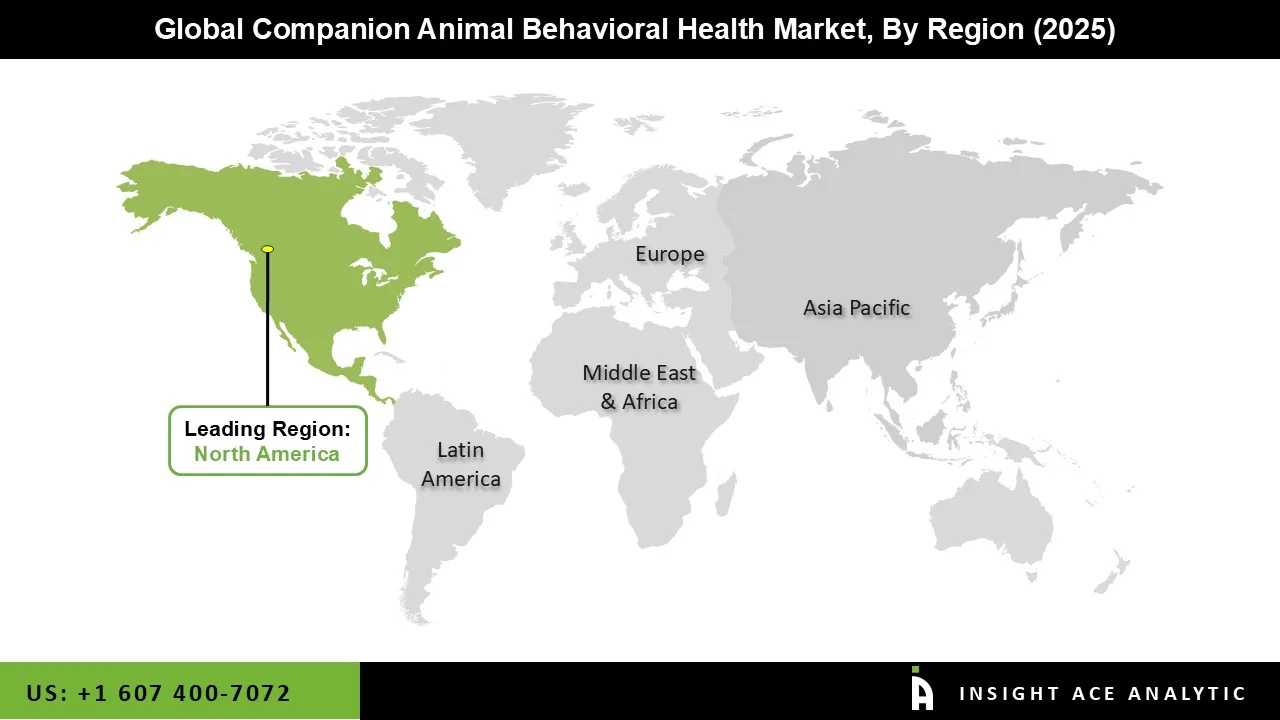
The growing 'humanisation' of pets and greater recognition of behavioural issues such as separation anxiety, noise phobia, stress and fear are all driving pet owners to seek out specialist treatment and preventative care. The market is also being bolstered by strong uptake of premium pet wellness products, the growth of e-commerce and increasing numbers of veterinary consultations.
Key Development
May 2026: Orion Corporation received U.S. FDA approval for Tessie® (tasipimidine) oral solution, indicated for treating noise aversion and separation anxiety in dogs. The CNS-targeting veterinary medicine will be exclusively marketed and sold in the U.S. by its strategic partner Zoetis, with commercial availability anticipated by mid-2027, expanding its companion animal behavioral therapeutics portfolio.
Companion Animal Behavioral Health Market Report Scope:
| Report Attribute | Specifications |
| Market size value in 2025 | USD 1344.76 Mn |
| Revenue forecast in 2035 | USD 2371.88 Mn |
| Growth Rate CAGR | CAGR of 5.9% from 2026 to 2035 |
| Quantitative Units | Representation of revenue in US$ Bn and CAGR from 2026 to 2035 |
| Historic Year | 2022 to 2025 |
| Forecast Year | 2026-2035 |
| Report Coverage | The forecast of revenue, the position of the company, the competitive market structure, growth prospects, and trends |
| Segments Covered | Product & Service Category, Indication, Species, Distribution Channel and By Region |
| Regional Scope | North America; Europe; Asia Pacific; Latin America; Middle East & Africa |
| Country Scope | U.S.; Canada; U.K.; Germany; China; India; Japan; Brazil; Mexico; France; Italy; Spain; South Korea; Southeast Asia |
| Competitive Landscape | Zoetis, Orion Corporation, Ceva Santé Animale, Virbac, Vetoquinol, Nestlé Purina PetCare, Nutramax Laboratories, H&H Group, Swedencare AB, PetIQ, Central Garden & Pet |
| Customization Scope | Free customization report with the procurement of the report, Modifications to the regional and segment scope. Geographic competitive landscape. |
| Pricing and Available Payment Methods | Explore pricing alternatives that are customized to your particular study requirements. |
Segmentation Companion Animal Behavioral Health Market:
Companion Animal Behavioral Health Market by Product & Service Category -
- Prescription Behavioral Therapeutics
- Situational-Use Agents
- Chronic-Use Agents
- Cognitive-Dysfunction Agents
- Non-Prescription Behavior Support Products
- Pheromone Products
- Diffusers
- Sprays
- Collars
- Other Formats
- Calming Supplements
- Veterinary-Channel Supplements
- Consumer / DTC Supplements
- Behavioral & Calming-Support Diets
- Non-Ingestible Calming Aids
- Pheromone Products
- Professional Behavior Services
- Digital Behavioral Monitoring
- Devices
- Subscriptions
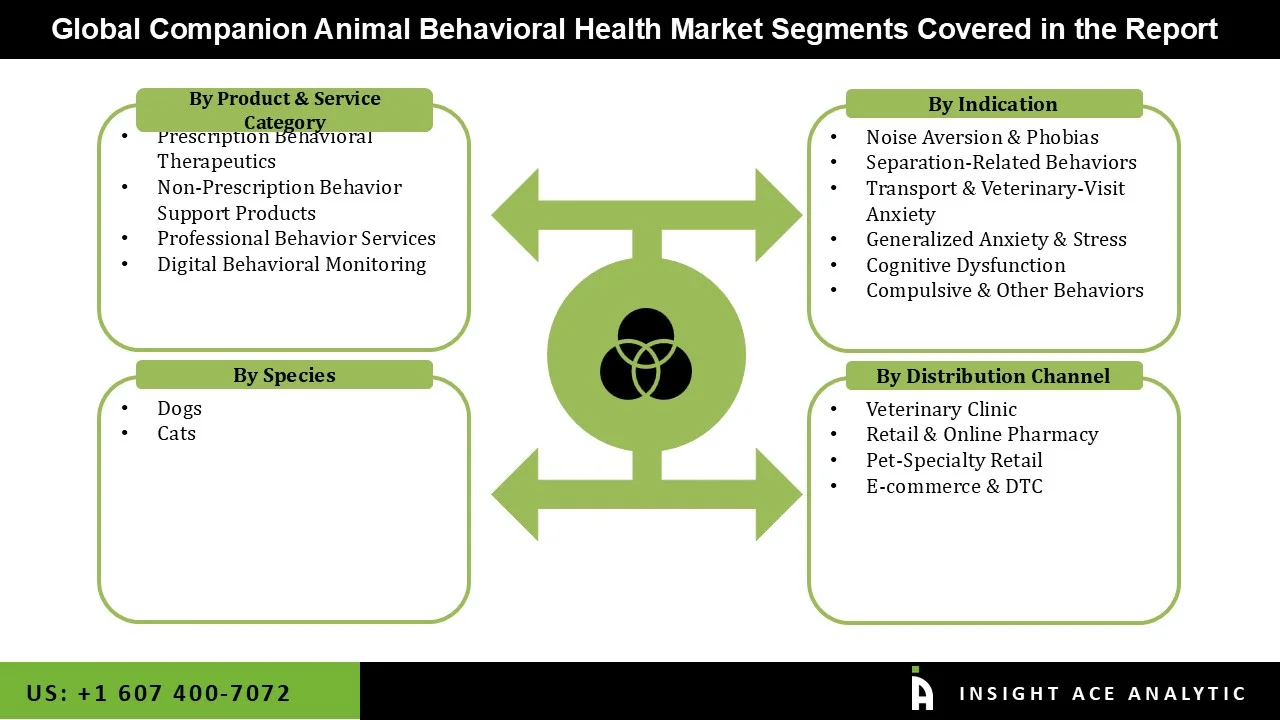
Companion Animal Behavioral Health Market by Indication -
- Noise Aversion & Phobias
- Separation-Related Behaviors
- Transport & Veterinary-Visit Anxiety
- Generalized Anxiety & Stress
- Cognitive Dysfunction
- Compulsive & Other Behaviors
Companion Animal Behavioral Health Market by Species -
- Dogs
- Cats
Companion Animal Behavioral Health Market by Distribution Channel -
- Veterinary Clinic
- Retail & Online Pharmacy
- Pet-Specialty Retail
- E-commerce & DTC
Companion Animal Behavioral Health Market by Region-
- North America-
- The US
- Canada
- Europe-
- Germany
- The UK
- France
- Italy
- Spain
- Rest of Europe
- Asia-Pacific-
- China
- Japan
- India
- South Korea
- South East Asia
- Rest of Asia Pacific
- Latin America-
- Brazil
- Argentina
- Mexico
- Rest of Latin America
- Middle East and Africa-
- GCC Countries
- South Africa
- Rest of Middle East and Africa
Research Design and Approach
This study employed a multi-step, mixed-method research approach that integrates:
- Secondary research
- Primary research
- Data triangulation
- Hybrid top-down and bottom-up modelling
- Forecasting and scenario analysis
This approach ensures a balanced and validated understanding of both macro- and micro-level market factors influencing the market.
Secondary Research
Secondary research for this study involved the collection, review, and analysis of publicly available and paid data sources to build the initial fact base, understand historical market behaviour, identify data gaps, and refine the hypotheses for primary research.
Sources Consulted
Secondary data for the market study was gathered from multiple credible sources, including:
- Government databases, regulatory bodies, and public institutions
- International organizations (WHO, OECD, IMF, World Bank, etc.)
- Commercial and paid databases
- Industry associations, trade publications, and technical journals
- Company annual reports, investor presentations, press releases, and SEC filings
- Academic research papers, patents, and scientific literature
- Previous market research publications and syndicated reports
These sources were used to compile historical data, market volumes/prices, industry trends, technological developments, and competitive insights.

Primary Research
Primary research was conducted to validate secondary data, understand real-time market dynamics, capture price points and adoption trends, and verify the assumptions used in the market modelling.
Stakeholders Interviewed
Primary interviews for this study involved:
- Manufacturers and suppliers in the market value chain
- Distributors, channel partners, and integrators
- End-users / customers (e.g., hospitals, labs, enterprises, consumers, etc., depending on the market)
- Industry experts, technology specialists, consultants, and regulatory professionals
- Senior executives (CEOs, CTOs, VPs, Directors) and product managers
Interview Process
Interviews were conducted via:
- Structured and semi-structured questionnaires
- Telephonic and video interactions
- Email correspondences
- Expert consultation sessions
Primary insights were incorporated into demand modelling, pricing analysis, technology evaluation, and market share estimation.
Data Processing, Normalization, and Validation
All collected data were processed and normalized to ensure consistency and comparability across regions and time frames.
The data validation process included:
- Standardization of units (currency conversions, volume units, inflation adjustments)
- Cross-verification of data points across multiple secondary sources
- Normalization of inconsistent datasets
- Identification and resolution of data gaps
- Outlier detection and removal through algorithmic and manual checks
- Plausibility and coherence checks across segments and geographies
This ensured that the dataset used for modelling was clean, robust, and reliable.
Market Size Estimation and Data Triangulation
Bottom-Up Approach
The bottom-up approach involved aggregating segment-level data, such as:
- Company revenues
- Product-level sales
- Installed base/usage volumes
- Adoption and penetration rates
- Pricing analysis
This method was primarily used when detailed micro-level market data were available.
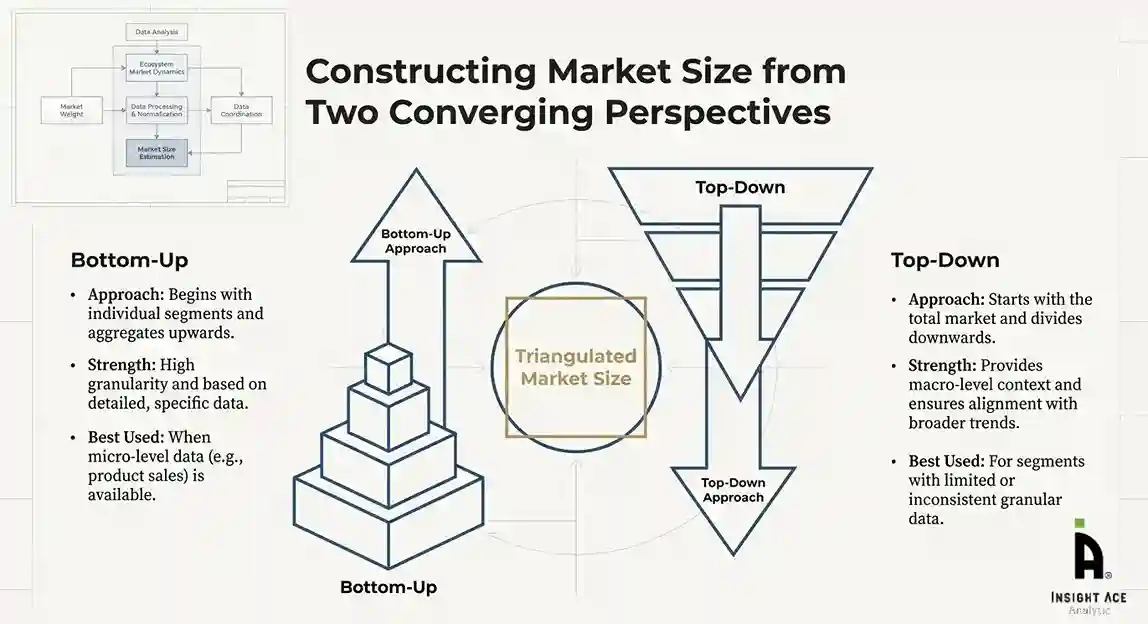
Top-Down Approach
The top-down approach used macro-level indicators:
- Parent market benchmarks
- Global/regional industry trends
- Economic indicators (GDP, demographics, spending patterns)
- Penetration and usage ratios
This approach was used for segments where granular data were limited or inconsistent.
Hybrid Triangulation Approach
To ensure accuracy, a triangulated hybrid model was used. This included:
- Reconciling top-down and bottom-up estimates
- Cross-checking revenues, volumes, and pricing assumptions
- Incorporating expert insights to validate segment splits and adoption rates
This multi-angle validation yielded the final market size.
Forecasting Framework and Scenario Modelling
Market forecasts were developed using a combination of time-series modelling, adoption curve analysis, and driver-based forecasting tools.
Forecasting Methods
- Time-series modelling
- S-curve and diffusion models (for emerging technologies)
- Driver-based forecasting (GDP, disposable income, adoption rates, regulatory changes)
- Price elasticity models
- Market maturity and lifecycle-based projections
Scenario Analysis
Given inherent uncertainties, three scenarios were constructed:
- Base-Case Scenario: Expected trajectory under current conditions
- Optimistic Scenario: High adoption, favourable regulation, strong economic tailwinds
- Conservative Scenario: Slow adoption, regulatory delays, economic constraints
Sensitivity testing was conducted on key variables, including pricing, demand elasticity, and regional adoption.
Request Customization
Add countries, segments, company profiles, or extend forecast — free 10% customization with purchase.
Customize This Report →Enquire Before Buying
Speak with our analyst team about scope, methodology, pricing, or deliverable formats.
Enquire Now →Frequently Asked Questions
Companion Animal Behavioral Health Market Size is valued at USD 1344.76 Mn in 2025 and is predicted to reach USD 2371.88 Mn by the year 2035
The Companion Animal Behavioral Health Market is expected to grow at a 5.9% CAGR during the forecast period for 2026 to 2035
Zoetis, Orion Corporation, Ceva Santé Animale, Virbac, Vetoquinol, Nestlé Purina PetCare, Nutramax Laboratories, H&H Group, Swedencare AB, PetIQ, Central Garden & Pet and Others.
Companion Animal Behavioral Health Market is segmented into Product & Service Category, Indication, Species, Distribution Channel and Other.
North America region is leading the Companion Animal Behavioral Health Market.