Building a Greener Future: The Rising Importance of Sustainable Primary Packaging for Injectable Drugs
Sustainable primary packaging for injectable drugs is reshaping the way pharmaceutical industry balances patient safety with environmental responsibility. Unlike conventional packaging, which often prioritizes functionality alone, sustainable solutions focus on reducing material usage, improving recyclability, and lowering environmental impact while maintaining sterility and drug stability. Innovations in vials, ampoules, prefilled syringes, and cartridges are enabling safer drug delivery with a smaller carbon footprint. By combining regulatory compliance, advanced materials, and eco-conscious design, sustainable packaging is supporting more responsible healthcare practices and contributing to a cleaner, future-ready pharmaceutical ecosystem.
This blog explores the growing sustainable primary packaging for injectable drugs market, highlighting key material innovations, regulatory influences, and industry adoption trends, while examining the benefits for pharmaceutical companies, challenges in implementation, and the long-term outlook for sustainable healthcare packaging solutions.
What is Sustainable Primary Packaging?
Sustainable primary packaging is the packaging that directly holds medicines, especially injectable drugs, while being designed to reduce environmental impact. It goes beyond simply keeping drugs safe and sterile it focuses on using recyclable or low-waste materials, reducing carbon emissions, and minimizing resource use during production and disposal. With increasing pressure on healthcare to adopt greener practices, sustainable packaging is becoming a priority for pharmaceutical companies. From lightweight vials and prefilled syringes to reusable cartridges and PVC-free IV containers, these solutions ensure that patient safety and drug quality are maintained while promoting eco-friendly practices across the healthcare industry.
Greener Solutions for Injectables:
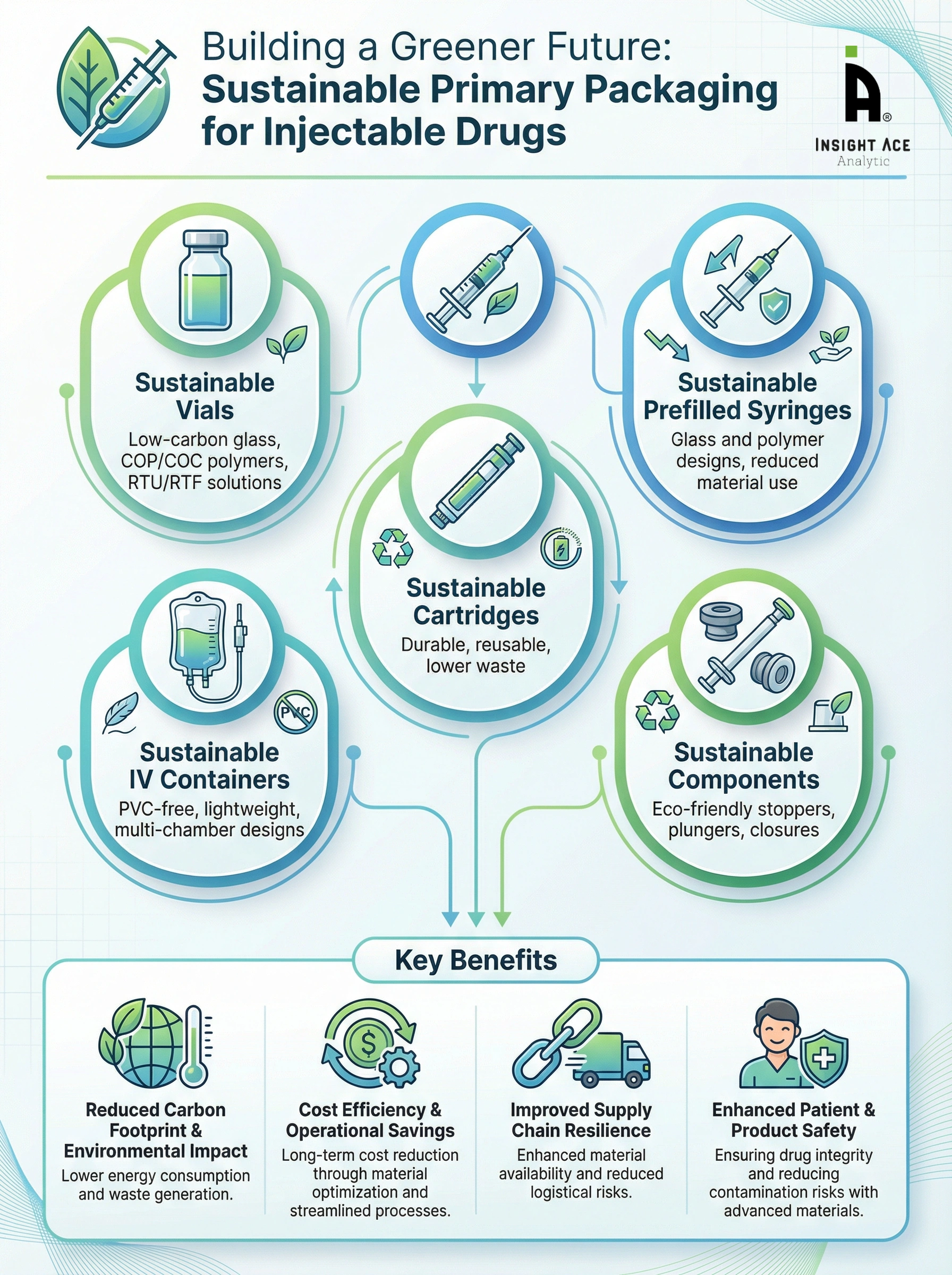
- Sustainable Vials : Low-carbon glass and polymer vials (COP/COC) reduce energy use and improve durability, while RTU and RTF vials cut cleaning, sterilization, and material waste.
- Sustainable Prefilled Syringes : Glass and polymer prefilled syringes with eco-engineered designs lower material use and carbon footprint while ensuring safe, precise drug delivery.
- Sustainable Cartridges : Low-carbon glass and polymer cartridges are durable and reusable, reducing single-use waste and supporting eco-friendly drug delivery systems.
- Sustainable IV Containers : PVC-free IV bags, lightweight bottles, and multi-chamber bags minimize material use and emissions while maintaining stability and efficiency.
- Sustainable Components : Redesigned stoppers, plungers, needle shields, and closure systems use cleaner materials and optimized processes to cut energy, water, and chemical usage.
The Need for Sustainable Packaging in Pharma:
• Reduce Environmental Impact : Minimizes medical waste, carbon emissions, and resource consumption.
• Ensure Patient Safety : Maintains sterility, stability, and efficacy while using eco-friendly materials.
• Regulatory Compliance : Meets increasing global standards for sustainable healthcare and packaging.
• Cost Efficiency : Lightweight and reusable designs reduce transportation and manufacturing costs.
• Support Corporate Sustainability Goals : Aligns with pharma companies’ ESG and environmental initiatives.
• Promote Responsible Healthcare : Encourages greener practices across hospitals, clinics, and supply chains.
Key Factors Driving Sustainable Packaging in Injectables:
1. Environmental Regulations : Increasing global regulations are pushing pharmaceutical companies to adopt eco-friendly packaging solutions.
2. Rising Awareness of Medical Waste : Hospitals and healthcare providers are focusing on reducing medical and plastic waste.
3. Growing Demand for Injectable Drugs : The surge in biologics, vaccines, and specialty injectables drives the need for safe, sustainable packaging.
4. Innovative Materials and Designs : Low-carbon glass, COP/COC polymer vials, prefilled syringes, and reusable cartridges enable greener, lightweight, and efficient solutions.
5. Healthcare Sustainability Goals : Companies are aligning with ESG initiatives and greener supply chains to reduce carbon footprint.
6. Operational Efficiency : Ready-to-Use (RTU) and Ready-to-Fill (RTF) packaging reduce cleaning, sterilization, and resource consumption.
Hurdles in Sustainable Injectable Packaging:
1. High Production Costs : Eco-friendly materials and advanced designs are often more expensive than traditional packaging.
2. Regulatory Compliance : Sustainable packaging must meet strict safety, sterility, and drug compatibility standards.
3. Limited Material Options : Not all recyclable or low-carbon materials are suitable for injectable drugs.
4. Supply Chain & Adoption Issues : Scaling sustainable solutions and convincing manufacturers or healthcare providers to switch can be challenging.
Regional Trends in Sustainable Primary Packaging
• North America : Leading the market due to strict environmental regulations, strong adoption of eco-friendly practices, and high awareness among pharmaceutical companies.
• Europe : A strong contender, with sustainability initiatives, regulatory pressure, and eco-conscious healthcare providers driving growth.
• Asia-Pacific : Rapidly emerging market thanks to expanding pharmaceutical manufacturing, improving healthcare infrastructure, and growing environmental awareness.
• Latin America & Middle East/Africa : Gradual adoption of sustainable solutions as regulations strengthens and environmental consciousness increases.
Future Outlook: What Lies Ahead?
1. The momentum behind sustainable primary packaging for injectable drugs is expected to grow as pharmaceutical companies and healthcare providers increasingly prioritize environmental responsibility. Key trends shaping the future include:
• Eco-Friendly Material Innovation: Developing recyclable, biodegradable, and low-carbon packaging solutions to reduce environmental impact.
• Advanced Packaging Designs: Using lightweight, reusable, and multi-component systems to improve efficiency and minimize waste.
• Integration with Pharma Sustainability Goals: Companies will increasingly align packaging strategies with ESG initiatives, reducing carbon footprint across the supply chain.
2. Recyclable products such Glass (borosilicate) made from natural sand is chemically inert and the most trusted material for injectable vials and ampoules, while natural rubber from rubber trees is used for stoppers and plungers, bio-based polymers derived from corn, sugarcane, or cellulose support innovative syringe components, and cellulose-based materials from plant fibers are mainly used for labels, seals, and protective packaging.
3. Leading Players in Sustainable Primary Packaging for Injectable Drugs Market are West Pharmaceutical Services, Aptar Pharma, Datwyler, Daikyo Seiko, Helvoet Rubber & Plastic Technologies.
Conclusion:
The sustainable primary packaging market for injectable drugs is driving a shift toward greener and more responsible healthcare. Eco-friendly materials, reusable systems, and innovative designs help reduce waste and carbon footprint while maintaining drug safety and quality. Growing regulatory focus, rising demand for injectables, and increased environmental awareness are accelerating adoption. Overall, sustainable packaging is becoming a key priority for pharmaceutical companies, paving the way for a safer and more eco-conscious future.