Powering Circular Consumption: The Growth of Second-Hand Products
The second-hand shopping had been gaining increasing momentum as consumers increasingly turned to value-based and sustainable consumption patterns. What was once considered a niche or budget-friendly alternative to traditional consumerism had now become mainstream, thanks to growing awareness about the environment, inflation, and the rapid rise of online marketplaces for second-hand products. From clothing, electronics, and home furniture to luxury items and second-hand appliances, the second-hand market had revolutionized the way consumers approached extending the life of products. As the principles of the circular economy gained popularity across the globe, the second-hand market had become a viable alternative to traditional retail.
In this blog, we explore the booming Second-Hand Products Market, from thrift stores and consignment shops to online and specialized resale platforms. We highlight how digital marketplaces, AI-driven authentication, and brand-led circular initiatives are transforming buying and selling, while examining benefits like affordability and sustainability, challenges around quality and trust, and the fast-growing Asia Pacific market driving mainstream adoption.
What are Second-Hand Products?
Second-hand products are pre-owned items that had been previously used by one or more consumers and are resold for reuse instead of being discarded. Such items are usually sold at a lower price compared to new products and can be sourced from second-hand stores, online marketplaces, consignment shops, auction houses, or between individuals. Some of the most common types of second-hand products include clothing, electronics, furniture, books, cars, and luxury items. Second-hand products help to increase the lifespan of products and hence support sustainability by reducing waste.
Types of Second-Hand Marketplaces
The second-hand market had evolved into a diverse ecosystem, offering multiple ways for consumers to buy and sell pre-owned items. From physical stores to digital platforms, each marketplace type caters to different needs, product categories, and price points, making resale more accessible and convenient than ever.
The following are the main types of second-hand marketplaces:
• Thrift Stores and Charity Shops are physical retail locations where donated goods are sold to support charitable causes. These stores offer a variety of items, from clothing to household goods, at affordable prices.
• Consignment Shops are retailers that sell items on behalf of owners, providing them with a percentage of the sale price once the item is sold. This model is common for higher-end goods, such as designer clothing and accessories.
• Online Marketplaces: Digital platforms where individuals and businesses can list and purchase pre-owned items. Examples include eBay, Poshmark, and Depop, which have become increasingly popular due to their convenience and extensive reach.
• Specialised Second-Hand Platforms: Niche marketplaces focusing on specific product categories, such as electronics or luxury goods. For instance, Back Market specialises in refurbished electronics, providing consumers with vetted, high-quality used devices.
Factors Fuelling the Second-Hand Products Market
• Rising cost of living and price sensitivity: Consumers increasingly preferred second-hand products to access quality and branded goods at significantly lower prices.
• Growing focus on sustainability and circular economy: Increased awareness of environmental impact had driven demand for reuse, waste reduction, and extended product lifecycles.
• Rapid growth of digital resale platforms: Online marketplaces and mobile apps improved convenience, pricing transparency, and accessibility, accelerating market adoption.
• Increasing acceptance of refurbished and certified products: Quality assurance, warranties, and standardized grading boosted consumer trust, especially in electronics and luxury goods.
• Changing consumer attitudes toward ownership: Younger consumers prioritized value, experience, and sustainability over owning new products.
• Influence of social media and resale communities: Social commerce, influencer-driven resale trends, and peer recommendations normalized second-hand purchasing.
• Entry of organized players and brand-led resale models: Participation from established retailers and brands strengthened market credibility and scale.
Advantages of Second-Hand Goods
• Cost Savings: Second-hand products are significantly cheaper than new ones often 50 – 70 % less than the original price making quality items more accessible for budget-conscious shoppers. This is one of the strongest incentives for buyers across categories from electronics to furniture.
• Environmental Benefits: Buying used goods reduces the need for new production, which in turn conserves natural resources and cuts greenhouse gas emissions associated with manufacturing and transportation. Extending a product’s life also keeps it out of landfills longer, contributing to reduced waste and environmental impact.
• Quality Products at Lower Prices: Many second-hand items especially those gently used remain in excellent condition. Well-made products like furniture or appliances can often outlast cheaper new alternatives, offering high quality at a lower price.
• Unique and Vintage Finds: The second-hand market is a treasure trove for rare, vintage, or discontinued items that aren’t available in regular retail stores. These finds add personality and uniqueness to your style or home.
• Supports Local Sellers and Small Businesses: Buying and selling second-hand items helps circulate money locally and supports small sellers and entrepreneurs who trade within the community.
• Lower Depreciation on Purchases: Many products particularly electronics and vehicles depreciate rapidly when new. Second-hand goods usually have already undergone most of their depreciation, so buyers lose less value over time.
Challenges in AI-Driven Monitoring and Fish Welfare Analytics Market
• Quality inconsistency and lack of standardization: Product condition varies widely, and the absence of uniform grading standards makes it difficult for buyers to accurately assess quality.
• Trust and authenticity concerns: Risks related to counterfeit products, fake listings, and misrepresentation—especially in electronics and luxury goods—can limit consumer confidence.
• Limited warranties and after-sales support: Unlike new products, second-hand goods often lack warranties or reliable return policies, increasing perceived purchase risk.
• Hygiene and safety concerns: For categories such as apparel, furniture, and personal-use items, cleanliness and safety remain key barriers for some consumers.
• Pricing and valuation challenges: Determining fair resale prices is difficult due to product age, condition, brand value, and demand fluctuations.
• Regulatory and taxation uncertainties: In some regions, unclear regulations around resale, refurbished goods, and cross-border trade can restrict market growth.
Leading companies:
- Geo Holdings Corporation – Operator of large-scale reuse, recycling, and second-hand retail businesses, primarily in Japan.
- Crossroads Trading – Fashion-focused resale retailer specializing in curated, trend-driven second-hand apparel.
- Buffalo Exchange – Buy-sell-trade retailer offering affordable second-hand clothing for young, urban consumers.
- Wasteland – Premium vintage and luxury resale store targeting high-end fashion shoppers.
- Back Market – Online marketplace for refurbished electronics with certified quality checks and warranties.
- Carousell – Mobile-first peer-to-peer resale platform widely used across Asia Pacific.
- Uptown Cheapskate – Franchise-based resale chain focused on value-priced fashion and accessories.
- The Salvation Army – Nonprofit organization operating thrift stores to fund social and charitable programs.
- Goodwill Industries – Global nonprofit retailer providing donated second-hand goods while supporting workforce development.
- Winmark Corporation – Parent company of multiple resale brands including Plato’s Closet, Style Encore, and Play It Again Sports.
- Savers Value Village Inc. (Savers) – For-profit thrift retailer operating Value Village and Savers stores globally.
- Depop – Social-commerce resale platform popular among Gen Z for fashion and lifestyle products.
- Vestiaire Collective – Global marketplace specializing in authenticated luxury and premium resale.
- Decluttr – Recommerce platform focused on buying and reselling used electronics, media, and tech products.
- Poshmark – Social-driven resale marketplace centered on fashion, accessories, and lifestyle items.
- IKEA Buy Back & Resell – Brand-led circular resale program enabling customers to resell used IKEA furniture.
Future Outlook:
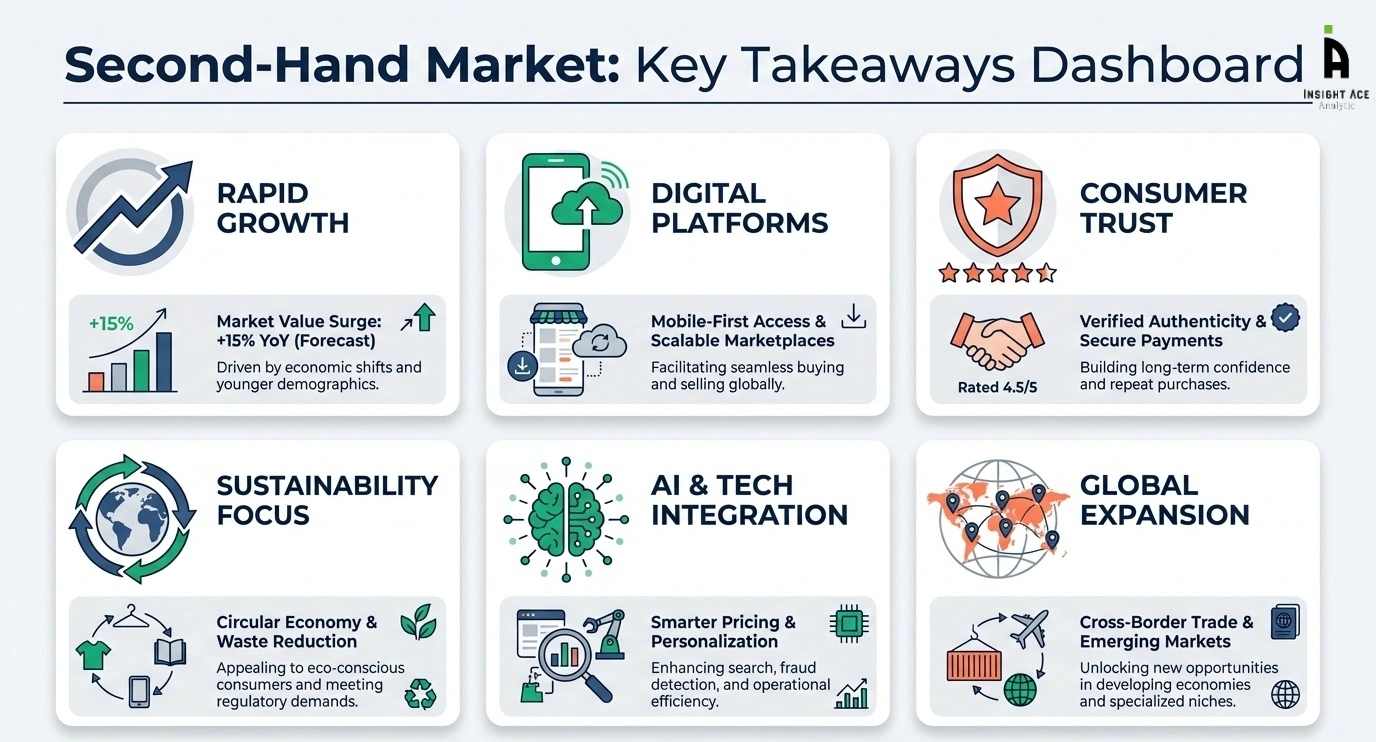
• Second-hand purchasing is expected to become increasingly mainstream as consumers prioritize affordability, sustainability, and value-driven consumption.
• Continued innovation in digital resale platforms, including AI-based pricing, authentication, and logistics optimization, will enhance trust and scalability.
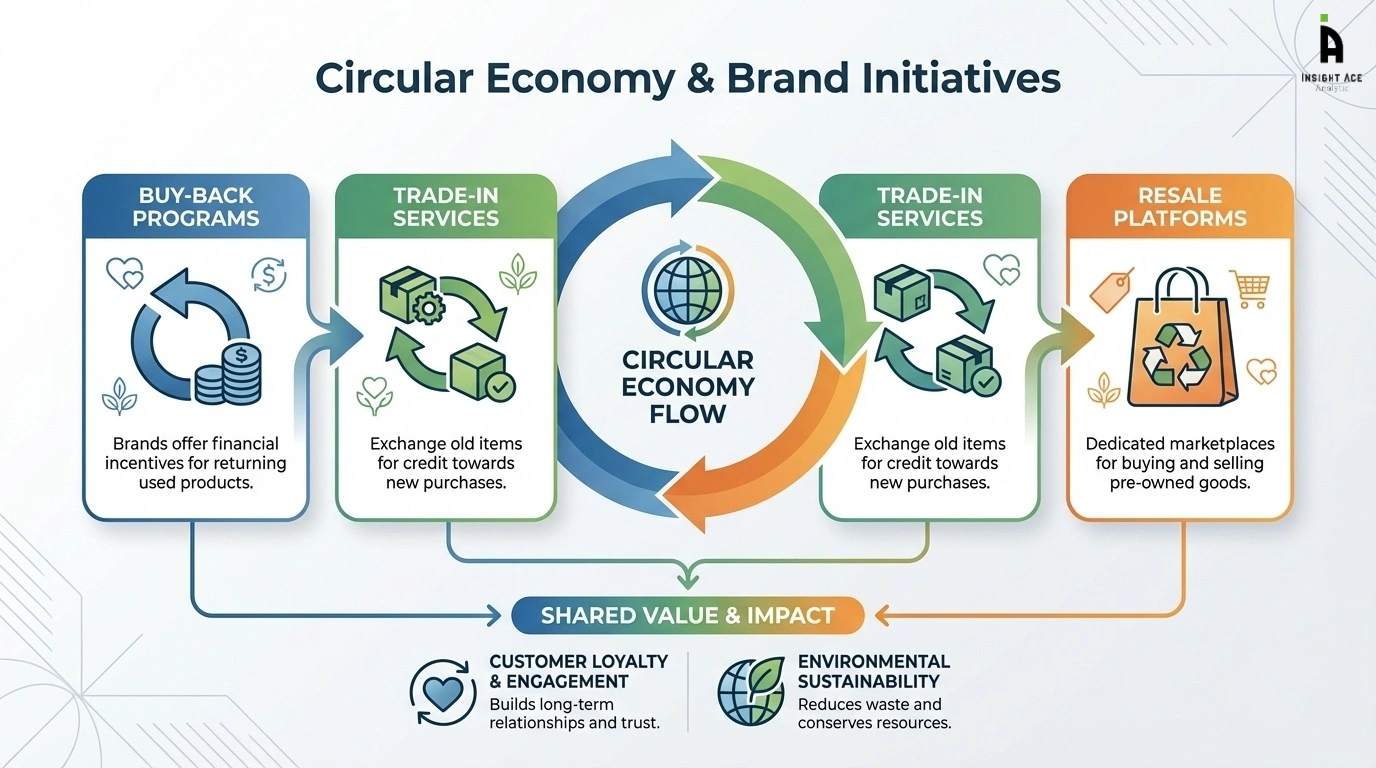
• More brands are likely to launch buy-back, trade-in, and resale programs to support circular economy goals and strengthen customer loyalty.
• Asia Pacific is expected to emerge as the fastest-growing region, driven by rapid urbanization, high smartphone penetration, expanding middle-class populations, and strong adoption of peer-to-peer commerce platforms.
Conclusion:
The second-hand products market had been growing rapidly, driven by affordability, sustainability, and changing consumer attitudes. Digital platforms, AI tools, and brand-led resale programs had made buying pre-owned goods easier and more reliable. With Asia Pacific leading growth and global interest in sustainable consumption rising, the market was poised to expand further, reshaping retail and promoting circular economy practices worldwide.
Relevant Studies to Explore:
1. Second Hand Products Market (2026–2035)
2. Low/Zero Waste Household Products Market Investments Report 2025–2034
3. Sustainable Secondary Packaging Market Size, Share & Trends Analysis Report 2025–2034
4. Upcycled Ingredients in Beverage Market Size 2025–2034
5. Sustainable Home Decor Market Size, Share Detailed Report 2025–2034