Probiotics, Prebiotics & Immunostimulants in Aquaculture Feed Solutions
This blog explains how probiotics, prebiotics, and immunostimulants support sustainable, disease-resistant, and high-performance aquaculture farming.
What are Probiotics, Prebiotics & Immunostimulants for Aquaculture?
Probiotics, Prebiotics, and Immunostimulants are natural health-supporting ingredients used in aquaculture to keep fish and shrimp healthy and productive. Probiotics are beneficial microorganisms added to feed or water that help maintain a balanced gut, improve digestion, and protect aquatic animals from harmful bacteria. Prebiotics are special nutrients that feed these beneficial microbes, helping them grow and work more effectively in the digestive system. Immunostimulants strengthen the natural immune response of aquatic animals, making them more resistant to stress, infections, and disease outbreaks. Together, these solutions support better growth, higher survival rates, and healthier farming systems while reducing dependence on antibiotics, making aquaculture more sustainable and efficient.
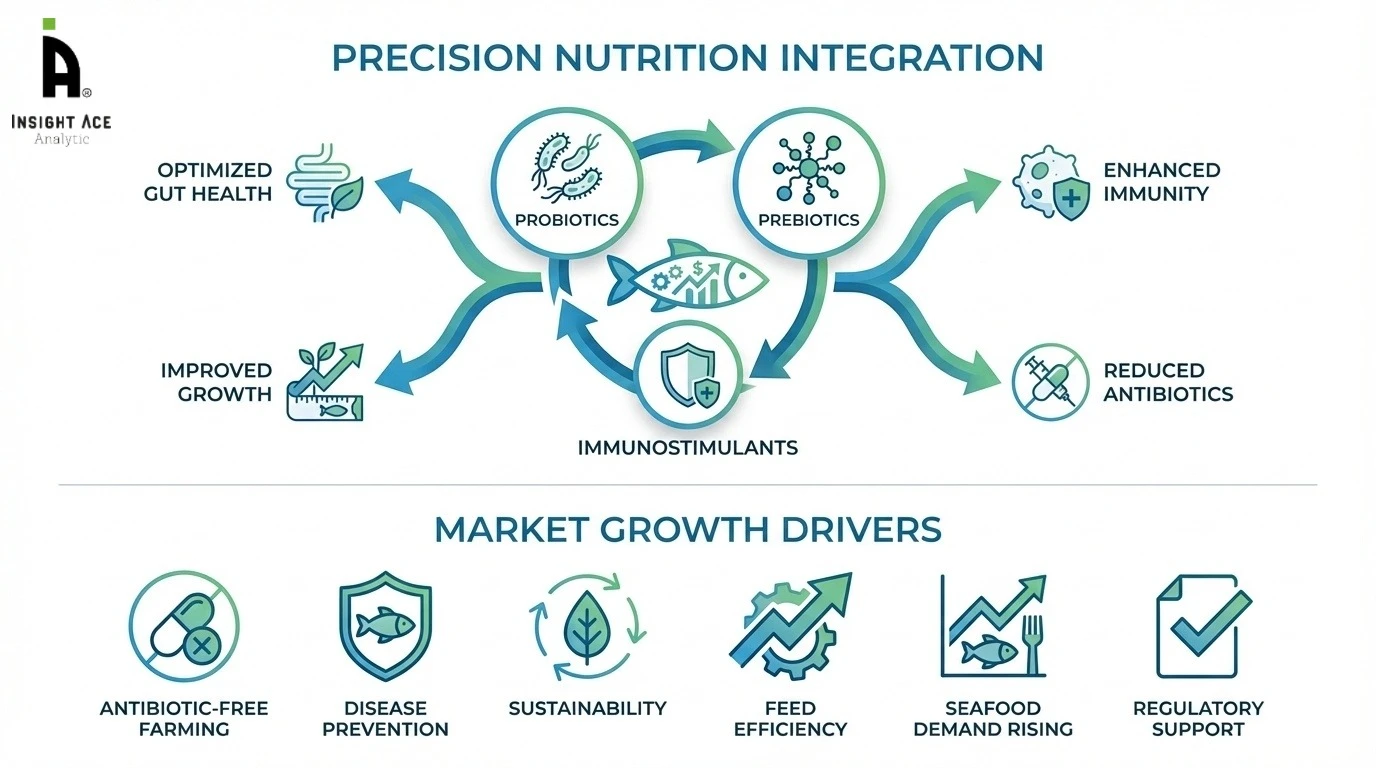
Integrating Probiotics, Prebiotics, and Immunostimulants for Precision Nutrition
The most significant breakthrough in modern aquaculture is the integration of probiotics, prebiotics, and immunostimulants into advanced feed strategies, marking a shift toward true precision nutrition. This sophisticated, data-driven approach goes far beyond simply adding basic supplements to ponds or tanks it optimizes diets by precisely aligning nutrient profiles with each species' genetic makeup, metabolic requirements, and the specific environmental stressors unique to individual farms, such as water quality variations, temperature fluctuations, and high stocking densities. When these elements are combined synergistically often as symbiotic, multi-component formulations, or functional feeds they enable highly tailored nutritional interventions. This convergence promotes proactive health management, dramatically reducing antibiotic dependency, improving feed conversion efficiency, minimizing environmental impacts, and enhancing resilience amid climate challenges and rising disease pressures.
Probiotics, prebiotics, and immunostimulants have thus become a vital force in today's aquaculture industry, fundamentally reshaping aquatic health and disease management. These functional feed additives support a broad spectrum of farmed species by optimizing gut health, elevating immunity, and driving superior growth performance. From balancing intestinal microbiota and enhancing nutrient uptake to fortifying disease resistance and promoting animal welfare, they emphasize sustainability, operational efficiency, and eco-friendly practices. Their widespread adoption in fish and shrimp farming signals a clear transition from reactive treatments to preventive strategies, yielding higher survival rates, faster productivity, and more resilient systems as global seafood demand continues to surge.
Core Product in Probiotics, Prebiotics & Immunostimulants:
Probiotics
- Bacillus-Based Probiotics – Improve digestion, enhance feed efficiency, and help control harmful bacteria
- Lactic Acid Bacteria (LAB) – Support gut health, boost immunity, and improve disease resistance
- Yeast-Based Probiotics – Enhance nutrient absorption and strengthen stress tolerance
- Photosynthetic / Water-Quality Probiotics – Improve water quality by reducing ammonia and organic waste
Prebiotics
- Mannan-Oligosaccharides (MOS) – Promote beneficial gut bacteria and block pathogenic microbes
- Fructo-Oligosaccharides (FOS) – Support digestive health and improve immune response
- Galacto-Oligosaccharides (GOS) – Enhance gut microbiota balance and nutrient utilization
- Inulin & Inulin-Form Fructans – Improve digestion and overall gut health
- Yeast Cell Wall Extracts (MOS-rich / β-glucan-rich) – Support immunity and gut integrity
Immunostimulants
- Beta-Glucans – Strengthen immune defense and improve disease resistance
- Chitosan & Chitin Oligosaccharides – Enhance immunity and promote gut health
- Alginate & Seaweed Polysaccharides – Improve immune response and stress tolerance
- Phytogenic Extracts (Herbal & Essential Oils) – Provide natural antimicrobial and antioxidant benefits
- Nucleotides – Support cell growth, stress recovery, and immune function
Factors fuelling the Probiotics, Prebiotics & Immunostimulants for Aquaculture Market
1. Rising Demand for Antibiotic-Free Aquaculture: Growing concerns over antibiotic resistance and residue in seafood are encouraging farmers to adopt probiotics, prebiotics, and immunostimulants as safer alternatives.
2. Increasing Disease Challenges in Aquaculture: Frequent disease outbreaks in fish and shrimp farming are driving the need for preventive health solutions that strengthen immunity and reduce mortality rates.
3. Growing Focus on Sustainable Aquaculture Practices: Aquaculture producers are increasingly adopting eco-friendly and sustainable farming methods, boosting demand for natural health-enhancing feed additives.
4. Improved Growth Performance and Feed Efficiency: These additives help enhance digestion, nutrient absorption, and overall growth, making them attractive to farmers seeking better productivity and profitability.
5. Rising Global Seafood Consumption: Increasing demand for fish and shrimp is pushing aquaculture operations to improve animal health and survival, fueling market growth.
6. Supportive Regulatory Environment: Stricter regulations on antibiotic use in aquaculture are accelerating the adoption of probiotics, prebiotics, and immunostimulants across global markets
Barriers for Probiotics, Prebiotics & Immunostimulants for Aquaculture Market
- High cost of specialized probiotics, prebiotics, and immunostimulant products
- Limited awareness and technical knowledge among small and traditional aquaculture farmers
- Lack of standardized regulations and quality benchmarks in some regions
- Limited access to proper storage, handling, and application guidance
- Regulatory approval complexities for new functional feed additives
Major Key Players in the Probiotics, Prebiotics & Immunostimulants for Aquaculture Market
- Cargill, Incorporated
- BioMar Group A/S
- Aller Aqua Group A/S
- Alltech, Inc.
- Ridley Corporation Limited
- Kemin Industries, Inc.
- BASF SE
- Evonik Industries AG
- DSM-Firmenich AG
- Archer Daniels Midland Company (ADM)
- Novozymes A/S
- Skretting (Nutreco N.V.)
- Lallemand Inc.
- Zeigler Bros., Inc.
- Grobest Holdings Limited
- Chr. Hansen Holding A/S
- Biorigin (Zilor Group)
- Pancosma SA
- Norel S.A.
- ICC Brazil
- Synbio Tech Inc.
- Biostadt India Limited
- Bluestar Adisseo Company
- Vinnbio India Pvt. Ltd.
- BernAqua NV
- Zeal Aqua Limited
- Avanti Feeds Limited
- AquaBio Technology Group
- Inve Aquaculture NV
- Lesaffre Group
- Angel Yeast Co., Ltd.
- Ohly GmbH
- PhytoBiotics Futterzusatzstoffe GmbH
- Olmix Group
- AB Vista
- BioMarin Energy Inc.
- AquaInTech Inc.
- Huvepharma EOOD
Future Outlook:
- North America continues to lead the Probiotics, Prebiotics & Immunostimulants for Aquaculture Market due to advanced aquaculture practices, strong awareness of aquatic animal health, and early adoption of antibiotic-free farming solutions.
- Rising adoption of preventive health management strategies focused on gut health and immunity will drive future market growth.
- Advancements in aquaculture nutrition, biotechnology, and functional feed formulations will enhance product effectiveness and on-farm performance.
- Growing emphasis on sustainable aquaculture, improved survival rates, and reduced disease outbreaks will further strengthen market demand across fish and shrimp farming operations.
Conclusion:
The Probiotics, Prebiotics & Immunostimulants for Aquaculture Market is experiencing steady growth, driven by rising demand for sustainable aquaculture practices, increasing disease challenges, and growing awareness of aquatic animal health. North America leads the market due to advanced aquaculture technologies and early adoption of antibiotic-free solutions, while emerging regions offer strong growth opportunities supported by expanding fish and shrimp farming. With continuous advancements in functional feed additives, biotechnology, and preventive health approaches, the market is expected to continue expanding and playing a critical role in the future of sustainable and resilient aquaculture.