Advanced Gene Delivery: The Role of Non-Viral and LNP Platforms
The field of genetic therapies is rapidly evolving, and advanced gene delivery systems are at the heart of this transformation. Non-viral delivery systems and lipid nanoparticle (LNP) platforms provide a safer, scalable, and highly efficient way to transport genetic material such as DNA, mRNA, and gene-editing tools into target cells without relying on traditional viral vectors. These technologies reduce the risk of immune reactions, improve cellular uptake, and allow for precise, controlled delivery, making them ideal for applications like mRNA vaccines, RNA-based drugs, and emerging gene therapies. By combining innovation, safety, and flexibility, non-viral and LNP platforms are paving the way for the next generation of personalized and life-changing treatments in modern medicine.
This blog explores non-viral delivery systems and lipid nanoparticle (LNP) platforms, their role in genetic therapies, and how they are enabling safer, more efficient, and scalable delivery of advanced treatments, including mRNA vaccines, RNA-based drugs, and gene-editing therapies, shaping the future of personalized medicine.
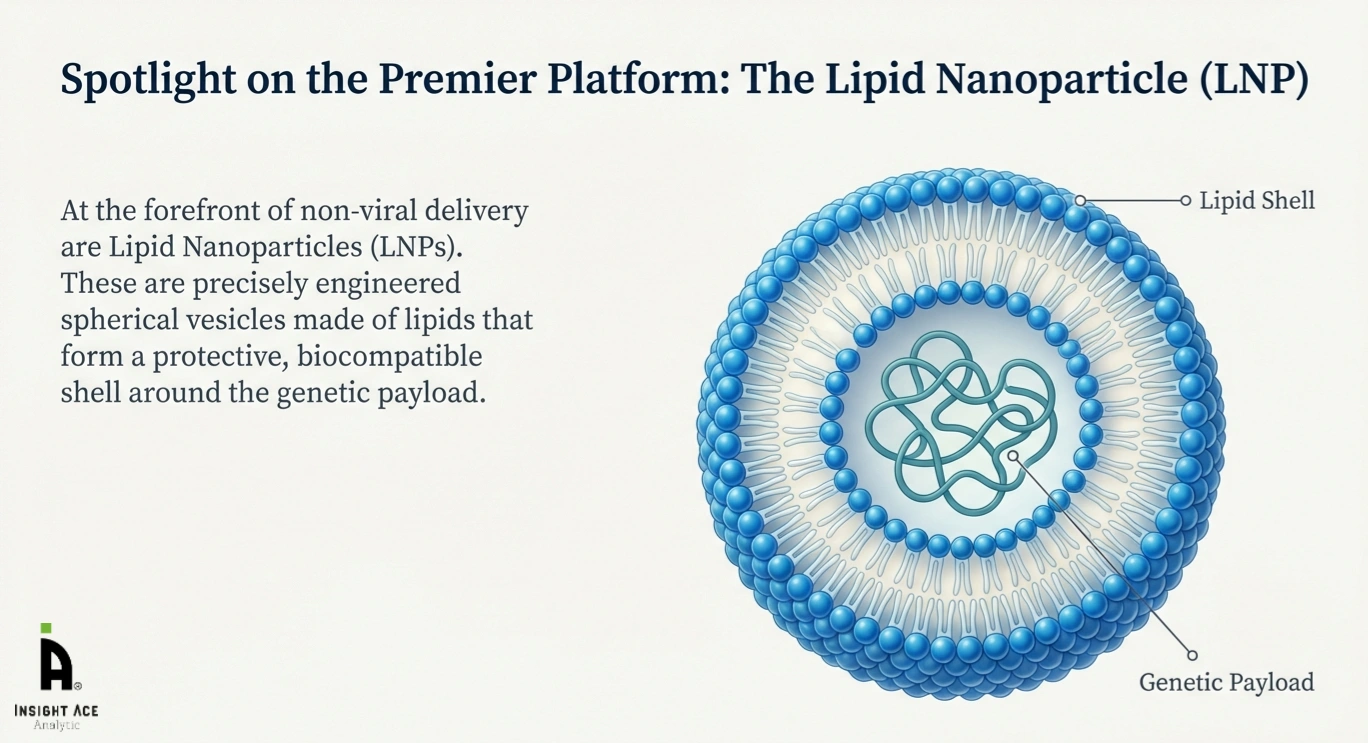
What are non-viral delivery systems and LNP platforms for genetic therapies?
Non-viral delivery systems and LNP platforms for genetic therapies are advanced technologies designed to safely transport genetic material such as DNA, mRNA, siRNA, and gene-editing tools into cells without using viruses. These systems rely on synthetic carriers, especially lipid nanoparticles (LNPs), to protect genetic payloads, improve cellular uptake, and minimize immune reactions and safety risks linked to viral vectors. Widely used in mRNA vaccines, RNA-based drugs, and emerging gene therapies, non-viral delivery platforms offer greater scalability, flexibility, and manufacturing efficiency, making them a critical enabler of next-generation genetic medicine.
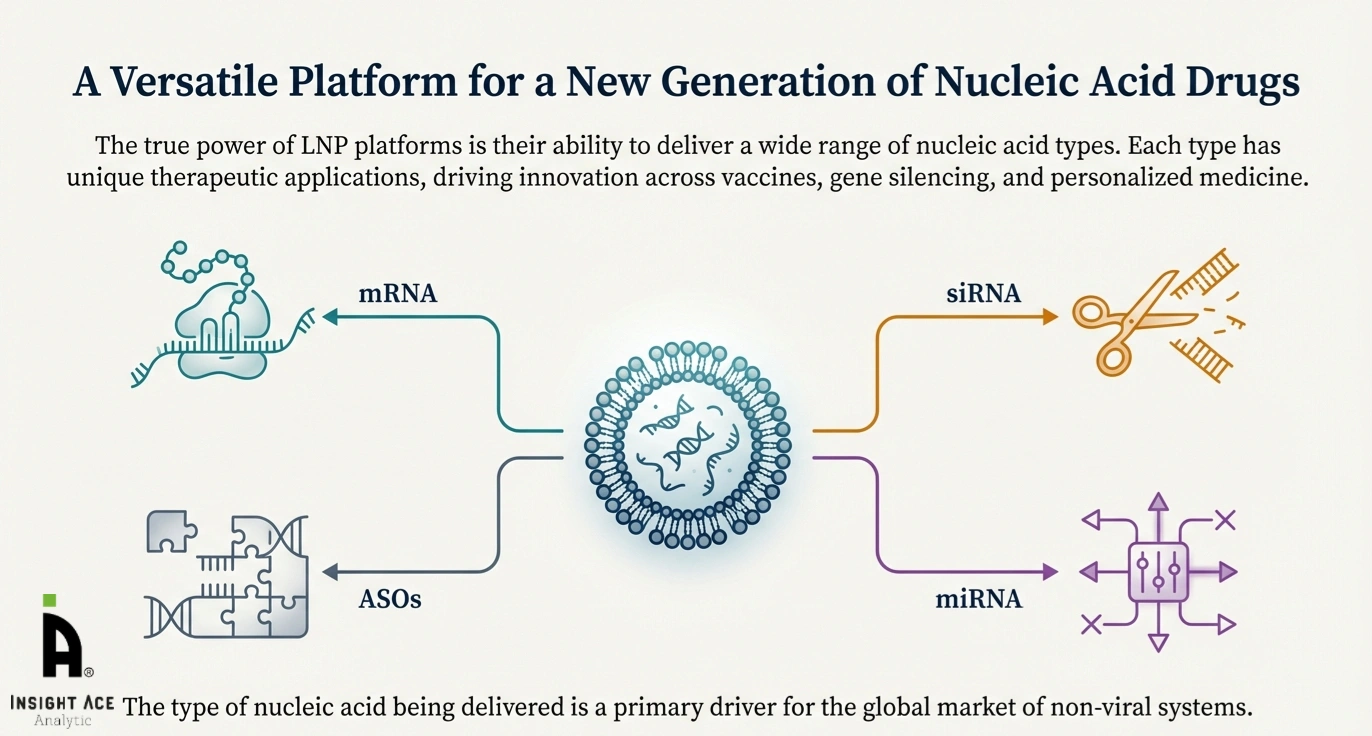
mRNA, siRNA, miRNA & ASOs: Driving the Future of Gene Therapy Delivery
- The global market for non-viral delivery systems and lipid nanoparticle (LNP) platforms is driven by the type of nucleic acid being delivered. Each type has unique therapeutic applications and requires specialized delivery methods for optimal safety and efficacy.
mRNA (Messenger RNA): Widely used in vaccines and protein replacement therapies, mRNA enables rapid production of therapeutic proteins. LNP platforms protect mRNA from degradation, enhance cellular uptake, and reduce immune responses, making it the backbone of many next-generation therapies. - siRNA (Small Interfering RNA): siRNA therapies are designed to silence specific genes involved in disease progression. Non-viral carriers and LNPs improve delivery to target cells while minimizing off-target effects, supporting precision medicine approaches for conditions like cancer, viral infections, and genetic disorders.
- miRNA (MicroRNA): miRNAs regulate gene expression and cellular pathways, offering potential in treating complex diseases. LNP-based delivery ensures stability and targeted action, which is crucial for therapeutic interventions where precise modulation of multiple genes is required.
- Antisense Oligonucleotides (ASOs): ASOs are short, synthetic strands that bind to RNA to correct genetic defects or modulate gene expression. Non-viral delivery and LNP platforms improve cellular uptake, protect against enzymatic degradation, and enhance the therapeutic impact, making ASOs a key focus in personalized medicine.
The Pathways of Genetic Treatment:
Non-viral delivery systems and lipid nanoparticle (LNP) platforms for genetic therapies can be administered through various routes, each tailored to optimize therapeutic outcomes:
- Intravenous (IV): Direct delivery into the bloodstream allows rapid distribution and systemic treatment, commonly used for mRNA therapies and gene-editing applications.
- Subcutaneous (SC): Injection under the skin enables sustained release, convenient dosing, and improved patient compliance for repeated treatments.
- Intramuscular (IM): Delivery into muscle tissue supports localized absorption and is widely used in vaccines and protein therapies.
- Inhalation / Pulmonary: Non-invasive delivery to the lungs offers targeted treatment for respiratory diseases and enables efficient uptake of nucleic acids in pulmonary cells.
Drivers for Non-Viral Delivery & LNP Platforms Market:
- Rising Demand for Gene Therapies: Increasing prevalence of genetic disorders and chronic diseases is driving the adoption of advanced delivery systems.
- Safety Advantages over Viral Vectors: Non-viral systems reduce immune responses, insertional mutagenesis, and other risks associated with viral delivery.
- Success of mRNA Vaccines: The global adoption of mRNA vaccines has validated LNP platforms, boosting confidence in non-viral delivery technologies.
- Technological Advancements: Innovations in lipid nanoparticles, polymers, and synthetic carriers improve stability, targeting, and efficiency of genetic therapies.
- Growing Focus on Personalized Medicine: Customized therapies require precise, flexible, and scalable delivery platforms, which non-viral and LNP systems provide.
- Regulatory Support & Investment: Increased funding, government initiatives, and regulatory approvals are accelerating the development of next-generation genetic therapies.
Main Barriers in Non-Viral & LNP Delivery Platforms:
- Complex Formulation & Stability: Maintaining the effectiveness of nucleic acids within non-viral carriers is technically challenging
- High Development Costs: Specialized materials, equipment, and rigorous quality control make manufacturing expensive.
- Targeted Delivery Limitations: Precisely reaching specific cells or tissues remains a key challenge.
- Regulatory Hurdles: Approval processes for novel genetic therapies and delivery systems are complex and time-consuming.
Leading Companies:
- Moderna, Inc. – Pioneer in LNP-based mRNA delivery, with expanding applications in genetic therapeutics
- BioNTech SE – Developer of LNP-enabled mRNA platforms across vaccines, oncology, and personalized medicine
- Pfizer – Leverages LNP platforms through strategic collaboration with BioNTech for vaccines and RNA-based therapies
- Acuitas Therapeutics – Specialist in proprietary ionizable lipid technologies for mRNA and gene-editing delivery
- Alnylam Pharmaceuticals – Leader in RNAi therapeutics supported by clinically validated LNP delivery systems
- Arcturus Therapeutics – Developer of proprietary LNP platforms, including self-amplifying RNA technologies
- Evonik Industries AG – Supplier of GMP-grade lipids and LNP formulation technologies for clinical and commercial use
- Precision NanoSystems (Danaher) – Provider of microfluidics-based LNP formulation and scalable manufacturing platforms
- Genevant Sciences – Innovator in advanced ionizable lipid systems for efficient nucleic acid delivery
Future Outlook:
- Further growth is expected from the expansion of the pipelines for RNA, mRNAs, siRNAs, and gene editing modalities. Next-generation ionizable lipids research and the development of biodegradable materials and targetable LNPs are envisioned to enhance safety, tissue selectivity, and potency.
- More pharma-biotech collaborations and investment in CDMO capacity will help drive scalable manufacturing and commercialization of LNP modalities.
- Regional Insight: The North American market is likely to remain in the leading position backed by increased R&D investments in this region along with early adoption of genetic therapy. The European and Asia-Pacific markets are expected to register faster growth in the coming years in response to enhanced clinical pipelines and government-driven biotech initiatives.
Conclusion:
The Non-Viral Delivery Systems & LNP Platforms market is revolutionizing the way genetic therapies are delivered, offering safer, more flexible, and efficient alternatives to traditional viral vectors. By enabling precise delivery of mRNA, siRNA, miRNA, and antisense oligonucleotides, these platforms are expanding the possibilities of treating complex and rare diseases. With continuous technological advancements and growing investment in genetic medicine, this market is set to play a pivotal role in shaping next-generation therapeutic solutions.