Traditional Medicine Market Size, Share & Trends Analysis Report By Product (Herbal Medicine, Ayurvedic Medicine, Unani Medicine, Alternative Medicine, Homeopathy Medicine, Others ), By Form (Capsules and Tablets, Powders and Granules, Liquid Extracts, Syrups, Creams and Ointment, Others ), By Disease Indication (Cardiac Disorders, Bone and Joint Disorders, Gynecological Disorders, Neurological and Mental Disorders, Digestive Disorders, Others), By Distribution Channel (Hospital and Retail Pharmacies, Online Pharmacies, Specialty Stores, Direct Sales, By Region, And By Segment Forecasts, 2025-2034
Global Traditional Medicine Market Size is valued at USD 190.95 Bn in 2024 and is predicted to reach USD 426.70 Bn by the year 2034 at a 8.5% CAGR during the forecast period for 2025-2034.
Traditional medicine encompasses a variety of health practices, theories, and beliefs based on indigenous cultural backgrounds. It includes herbal remedies, acupuncture, dietary therapies, and physical exercises like yoga and Tai Chi, among others. Rooted in a holistic approach, it aims to treat the mind, body, and spirit to maintain health and treat diseases. Practices like Traditional Chinese Medicine and Ayurveda have been used for thousands of years.

The market for traditional medicines has also grown due to the COVID-19 epidemic. Because of the lockdown limitations, most people could not go to fitness facilities like gyms and sports clubs to improve their fitness and immunity. As a result of the growing emphasis on developing immunity against COVID-19, the market for traditional medications grew. Vendors extensively promoted online sales during the lockdowns, particularly through brand-owned e-commerce platforms, and provided discounts on well-known herbal medications. During the forecast period, these factors are anticipated to fuel the market for traditional medicines.
Competitive Landscape
Some Major Key Players In The Traditional Medicine Market:
- Guizhou Yifang Pharmaceutical Co., Ltd.
- Guangzhou Baiyunshan Pharmaceutical Holdings Co., Ltd
- Tasly Holding Group Co., Ltd.
- Kotobuki Seiyaku Co., Ltd.
- Herbalife Nutrition
- Imperial Ginseng Products Ltd.
- Hammurapi Pharma GmbH
- Zydus Nutriva
- Hawaii Pharma, LLC
- VitaHealth Australia
- Amrita Ayurvedic Pharmaceutical
- The Himalaya Drug Company
- Dabur
- Kotaro Pharmaceuticals Company
- Charak Pharma
- Fortis Healthcare
- Baidyanath Ayurved
- Gaia Herbs Inc.
- Himalaya Wellness Co.
- Native Circle LLP
- Nature's Answer LLC
- Nutraceutical International
- Patanjali Ayurved Ltd.
- Ricola AG
- Schwabe Group
- Weleda AG
- Zandu Realty Ltd.
- Zeinpharma Germany GMBH
- Other Prominent Players
Market Segmentation:
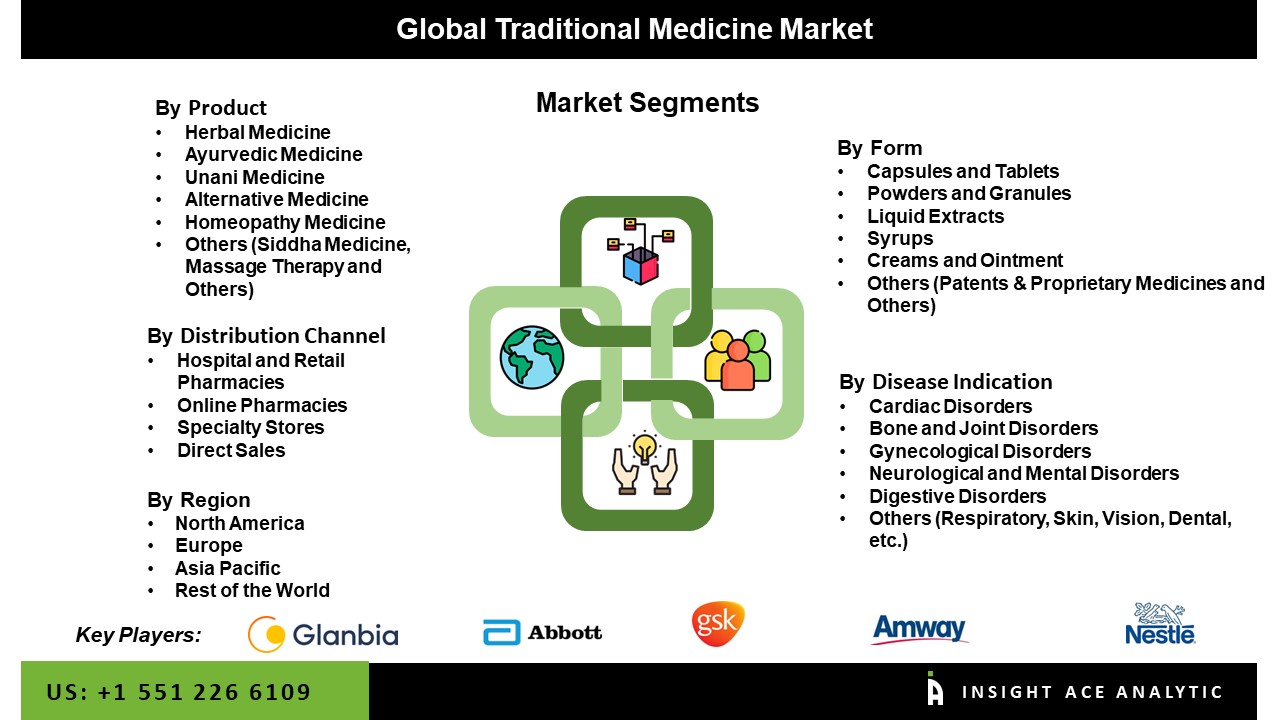
The traditional medicine market is segmented into Product, disease indication, and distribution channels. By Product, the market is segmented into Herbal Medicine, Ayurvedic Medicine, Unani Medicine, Alternative Medicine, Homeopathy Medicine, and Others (Siddha Medicine, Massage Therapy, and Others). Moreover, segmentation by disease indication involves Cardiac Disorders, Bone and Joint Disorders, Gynecological Disorders, Neurological and Mental Disorders, Digestive Disorders, and Others (Respiratory, Skin, Vision, Dental, etc.) Lastly, segmentation by distribution channels includes hospital and retail pharmacies, online pharmacies, speciality stores, and direct sales.
Herbal Medicine Based On Products Is A Major Growth Segment In The Traditional Medicine Market.
Herbal medications are an important aspect of medical therapy in many developing nations, which helps to fuel market expansion. These products are used to treat nearly all minor diseases. Visits to professional doctors or pharmacists are uncommon in developing and low-income nations, and they are often reserved for life-threatening conditions. In underdeveloped countries, medical herbs are unprocessed herbs, whole plants, or plant parts that have been dried and utilized in whole or cut form. Herbs are also used to prepare teas (often in the form of capsules or pills) to aid with internal healing, as well as salves and poultices for external ailments. Most developing economies have minimal regulations regarding herbs as medicines, so the industry size may expand rapidly in the coming years.
Online Pharmacies Segment Witnessed Growth In Traditional Medicine Market.
Sales of traditional medicine products through e-commerce distribution platforms have increased dramatically in recent years. This shift is a result of expenditures made to enhance online shopping experiences through more effective online teaching and targeted marketing. Numerous internet retailers, including Amazon, have created product portfolios just for herbal goods. Live chat services are offered by online distributors to meet the significant requirements of their clients. Furthermore, producers and merchants provide complimentary usage of "wellness tools" to generate a personalized inventory of traditional remedies according to certain ailments and specifications.
North America Has A Significant Revenue Share In The Global Traditional Medicine Market Region.
North America has dominated the global Traditional Medicine Market for several years. The region is home to many leading healthcare organizations and government institutions that are doing pioneering work in addressing social issues impacting public health outcomes. Several large cities in the U.S. and Canada have implemented innovative programs targeting social risk factors like housing, transportation, education, and employment. Asia Pacific, on the other hand, has strong cultural ties and government backing, making it a profitable region for the global traditional medicine business. Traditional Medicine is in high demand in nations like South Korea, Japan, China, and India.
Recent Developments:
- In Oct 2023, Himalaya Wellness Company LLC An AED 200 million Herbal Pharmaceutical Factory is being established at Dubai Industrial City, marking an expansion in the UAE. The plant will manufacture tablets, capsules, liquid orals, and ointments at Dubai Industrial City, which is a prominent manufacturing and logistics hub in the region. This development will increase the global pharmaceutical company's presence within TECOM Group PJSC's ecosystem in Dubai.
- In Dec 2022, Dabur India Limited introduced two innovative products - Premium Sugar-Free health restorative Ratnaprash Sugar-Free and Ayurvedic Digestive Tonic Aampachak Kadha, during the 9th World Ayurveda Congress & International AROGYA EXPO in Goa.
Traditional Medicine Market Report Scope:
| Report Attribute | Specifications |
| Market Size Value In 2024 | USD 190.9 Bn |
| Revenue Forecast In 2034 | USD 426.7 Bn |
| Growth Rate CAGR | CAGR of 8.5% from 2025 to 2034 |
| Quantitative Units | Representation of revenue in US$ Bn and CAGR from 2025 to 2034 |
| Historic Year | 2021 to 2024 |
| Forecast Year | 2025-2034 |
| Report Coverage | The forecast of revenue, the position of the company, the competitive market structure, growth prospects, and trends |
| Segments Covered | By Product, Disease Indication, And Distribution Channels |
| Regional Scope | North America; Europe; Asia Pacific; Latin America; Middle East & Africa |
| Country Scope | U.S.; Canada; U.K.; Germany; China; India; Japan; Brazil; Mexico; France; Italy; Spain; South East Asia; South Korea |
| Competitive Landscape | Guizhou Yifang Pharmaceutical Co., Ltd., Guangzhou Baiyunshan Pharmaceutical Holdings Co., Ltd, Tasly Holding Group Co., Ltd., Kotobuki Seiyaku Co., Ltd., Herbalife Nutrition, Imperial Ginseng Products Ltd., Hammurapi Pharma GmbH, Zydus Nutriva, Hawaii Pharma, LLC, VitaHealth Australia, Amrita Ayurvedic Pharmaceutical, The Himalaya Drug Company, Dabur, Kotaro Pharmaceuticals Company, Charak Pharma, Fortis Healthcare, Baidyanath Ayurved. And other market players. |
| Customization Scope | Free customization report with the procurement of the report and modifications to the regional and segment scope. Particular Geographic competitive landscape. |
| Pricing And Available Payment Methods | Explore pricing alternatives that are customized to your particular study requirements. |
Segmentation of The Traditional Medicine Market –
Traditional Medicine Market By Product-
- Herbal Medicine
- Ayurvedic Medicine
- Unani Medicine
- Alternative Medicine
- Homeopathy Medicine
- Others (Siddha Medicine, Massage Therapy, and Others)
Traditional Medicine Market By Disease Indication-
- Cardiac Disorders
- Bone and Joint Disorders
- Gynecological Disorders
- Neurological and Mental Disorders
- Digestive Disorders
- Others (Respiratory, Skin, Vision, Dental, etc.)
Traditional Medicine Market By Distribution Channel-
- Hospital and Retail Pharmacies
- Online Pharmacies
- Specialty Stores
- Direct Sales
Traditional Medicine Market By Region-
North America-
- The US
- Canada
Europe-
- Germany
- The UK
- France
- Italy
- Spain
- Rest of Europe
Asia-Pacific-
- China
- Japan
- India
- South Korea
- South East Asia
- Rest of Asia Pacific
Latin America-
- Brazil
- Mexico
- Argentina
- Rest of Latin America
Middle East & Africa-
- GCC Countries
- South Africa
- Rest of Middle East and Africa
Research Design and Approach
This study employed a multi-step, mixed-method research approach that integrates:
- Secondary research
- Primary research
- Data triangulation
- Hybrid top-down and bottom-up modelling
- Forecasting and scenario analysis
This approach ensures a balanced and validated understanding of both macro- and micro-level market factors influencing the market.
Secondary Research
Secondary research for this study involved the collection, review, and analysis of publicly available and paid data sources to build the initial fact base, understand historical market behaviour, identify data gaps, and refine the hypotheses for primary research.
Sources Consulted
Secondary data for the market study was gathered from multiple credible sources, including:
- Government databases, regulatory bodies, and public institutions
- International organizations (WHO, OECD, IMF, World Bank, etc.)
- Commercial and paid databases
- Industry associations, trade publications, and technical journals
- Company annual reports, investor presentations, press releases, and SEC filings
- Academic research papers, patents, and scientific literature
- Previous market research publications and syndicated reports
These sources were used to compile historical data, market volumes/prices, industry trends, technological developments, and competitive insights.
Primary Research
Primary research was conducted to validate secondary data, understand real-time market dynamics, capture price points and adoption trends, and verify the assumptions used in the market modelling.
Stakeholders Interviewed
Primary interviews for this study involved:
- Manufacturers and suppliers in the market value chain
- Distributors, channel partners, and integrators
- End-users / customers (e.g., hospitals, labs, enterprises, consumers, etc., depending on the market)
- Industry experts, technology specialists, consultants, and regulatory professionals
- Senior executives (CEOs, CTOs, VPs, Directors) and product managers
Interview Process
Interviews were conducted via:
- Structured and semi-structured questionnaires
- Telephonic and video interactions
- Email correspondences
- Expert consultation sessions
Primary insights were incorporated into demand modelling, pricing analysis, technology evaluation, and market share estimation.
Data Processing, Normalization, and Validation
All collected data were processed and normalized to ensure consistency and comparability across regions and time frames.
The data validation process included:
- Standardization of units (currency conversions, volume units, inflation adjustments)
- Cross-verification of data points across multiple secondary sources
- Normalization of inconsistent datasets
- Identification and resolution of data gaps
- Outlier detection and removal through algorithmic and manual checks
- Plausibility and coherence checks across segments and geographies
This ensured that the dataset used for modelling was clean, robust, and reliable.
Market Size Estimation and Data Triangulation
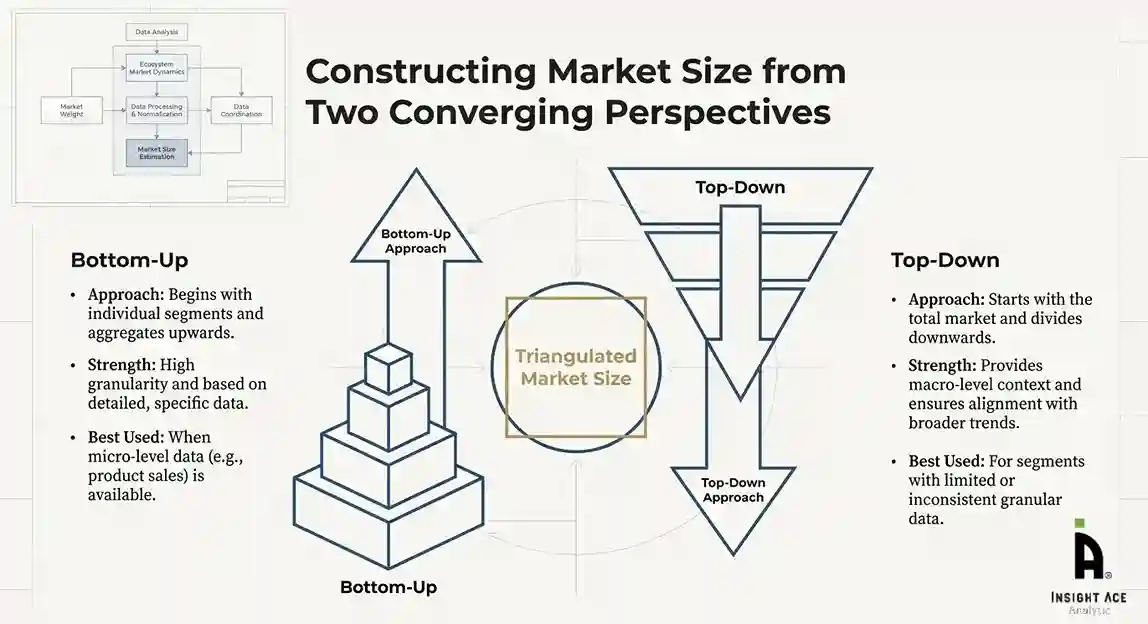
Bottom-Up Approach
The bottom-up approach involved aggregating segment-level data, such as:
- Company revenues
- Product-level sales
- Installed base/usage volumes
- Adoption and penetration rates
- Pricing analysis
This method was primarily used when detailed micro-level market data were available.
Top-Down Approach
The top-down approach used macro-level indicators:
- Parent market benchmarks
- Global/regional industry trends
- Economic indicators (GDP, demographics, spending patterns)
- Penetration and usage ratios
This approach was used for segments where granular data were limited or inconsistent.
Hybrid Triangulation Approach
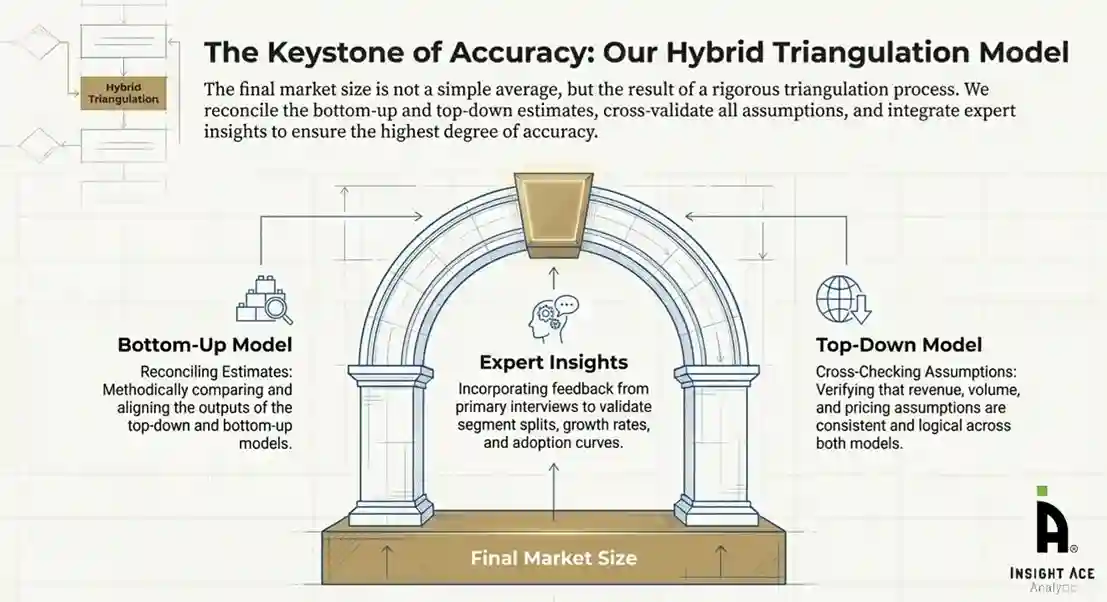
To ensure accuracy, a triangulated hybrid model was used. This included:
- Reconciling top-down and bottom-up estimates
- Cross-checking revenues, volumes, and pricing assumptions
- Incorporating expert insights to validate segment splits and adoption rates
This multi-angle validation yielded the final market size.
Forecasting Framework and Scenario Modelling
Market forecasts were developed using a combination of time-series modelling, adoption curve analysis, and driver-based forecasting tools.
Forecasting Methods
- Time-series modelling
- S-curve and diffusion models (for emerging technologies)
- Driver-based forecasting (GDP, disposable income, adoption rates, regulatory changes)
- Price elasticity models
- Market maturity and lifecycle-based projections
Scenario Analysis
Given inherent uncertainties, three scenarios were constructed:
- Base-Case Scenario: Expected trajectory under current conditions
- Optimistic Scenario: High adoption, favourable regulation, strong economic tailwinds
- Conservative Scenario: Slow adoption, regulatory delays, economic constraints
Sensitivity testing was conducted on key variables, including pricing, demand elasticity, and regional adoption.
Request Customization
Add countries, segments, company profiles, or extend forecast — free 10% customization with purchase.
Customize This Report →Enquire Before Buying
Speak with our analyst team about scope, methodology, pricing, or deliverable formats.
Enquire Now →Frequently Asked Questions
Traditional Medicine Market Size is valued at USD 190.9 Bn in 2024 and is predicted to reach USD 426.7 Bn by the year 2034
Traditional Medicine Market is expected to grow at a 8.5% CAGR during the forecast period for 2025-2034.
Amrita Ayurvedic Pharmaceutical, The Himalaya Drug Company, Dabur, Kotaro Pharmaceuticals Company, Charak Pharma, Fortis Healthcare, Baidyanath Ayurve
Traditional medicine market is segmented into Product, disease indication, and distribution channels.
North America region is leading the Traditional medicine market.