Non Viral Delivery Systems and LNP Platforms for Genetic Therapies Market Current Trends Analysis 2026 to 2035
What is Non Viral Delivery Systems and LNP Platforms for Genetic Therapies Market Size?
Non Viral Delivery Systems and LNP Platforms for Genetic Therapies Market is estimated to grow at a 16.1% CAGR during the forecast period for 2026 to 2035.
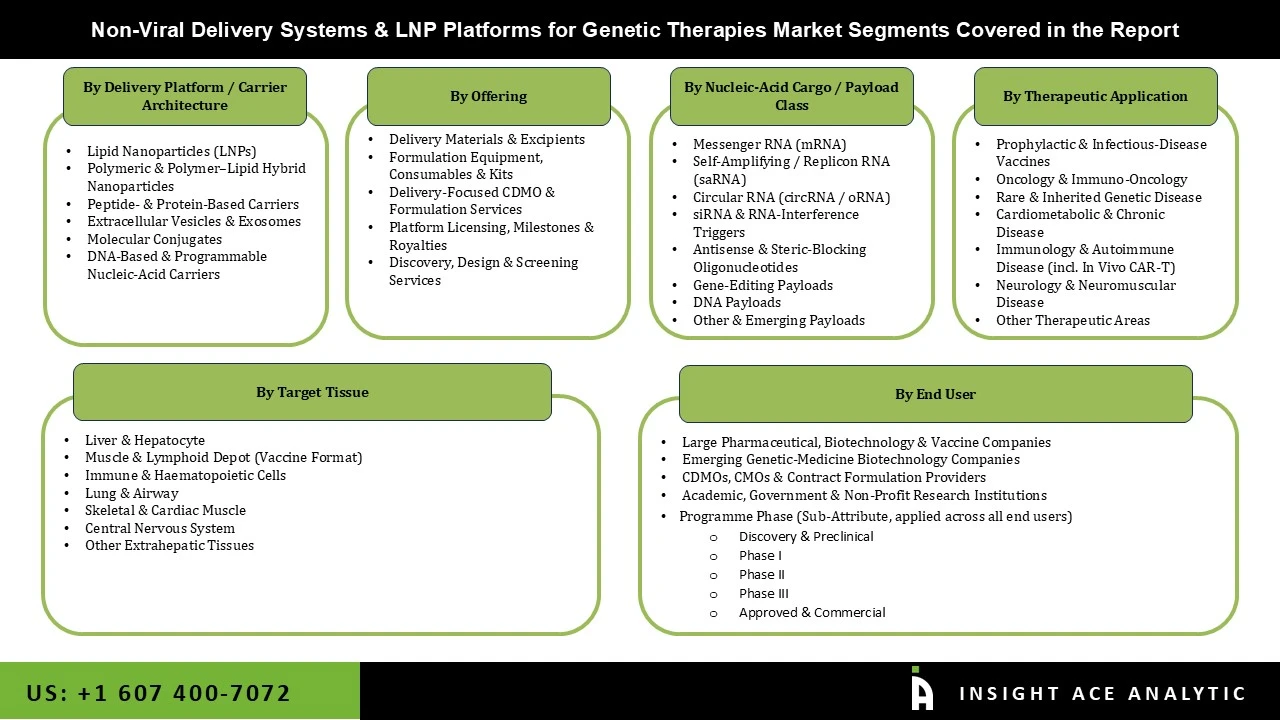
Non-Viral Delivery Systems & LNP Platforms for Genetic Therapies Market Size, Share & Trends Analysis By Delivery Platform / Carrier Architecture (Lipid Nanoparticles (LNPs), Polymeric & Polymer–Lipid Hybrid Nanoparticles, Peptide- & Protein-Based Carriers, Extracellular Vesicles & Exosomes, Molecular Conjugates, and DNA-Based & Programmable Nucleic-Acid Carriers), By Offering (Delivery Materials & Excipients, Formulation Equipment, Consumables & Kits, Delivery-Focused CDMO & Formulation Services, Platform Licensing, Milestones & Royalties, and Discovery, Design & Screening Services), By Nucleic-Acid Cargo / Payload Class (Messenger RNA (mRNA), Self-Amplifying / Replicon RNA (saRNA), Circular RNA (circRNA / oRNA), siRNA & RNA-Interference Triggers, Antisense & Steric-Blocking Oligonucleotides, Gene-Editing Payloads, DNA Payloads, and Other & Emerging Payloads), By Therapeutic Application (Prophylactic & Infectious-Disease Vaccines, Oncology & Immuno-Oncology, Rare & Inherited Genetic Disease, Cardiometabolic & Chronic Disease, Immunology & Autoimmune Disease (incl. In Vivo CAR-T), Neurology & Neuromuscular Disease, and Other Therapeutic Areas), By Target Tissue (Liver & Hepatocyte, Muscle & Lymphoid Depot (Vaccine Format), Immune & Haematopoietic Cells, Lung & Airway, Skeletal & Cardiac Muscle, Central Nervous System, and Other Extrahepatic Tissues), By End User (Large Pharmaceutical, Biotechnology & Vaccine Companies, Emerging Genetic-Medicine Biotechnology Companies, CDMOs, CMOs & Contract Formulation Providers, and Academic, Government & Non-Profit Research Institutions) and Segment Forecasts, 2026 to 2035
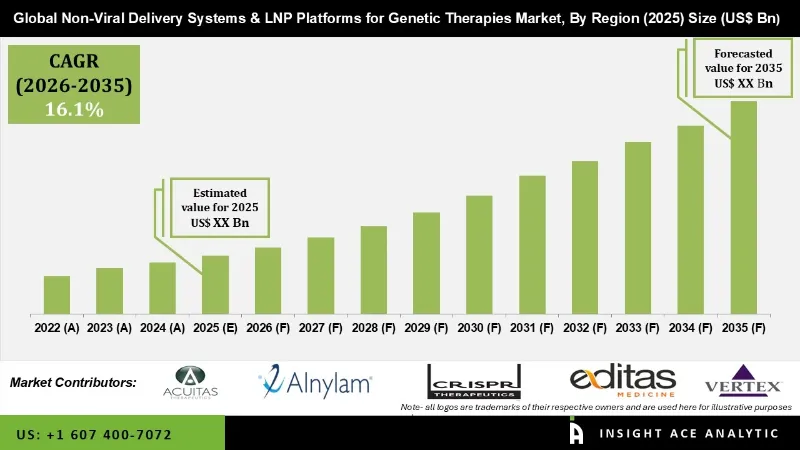
Non-viral delivery systems are safe ways to send genetic material (DNA, RNA, or gene-editing tools) into human cells without using viruses. The most common and successful type is lipid nanoparticles (LNPs), tiny fat-based carriers that protect the genetic cargo, help it enter cells, and release it where it is needed. These systems are used to deliver mRNA medicines (like COVID-19 vaccines), RNA interference (RNAi) drugs, gene-editing tools (CRISPR), gene replacement, and protein replacement therapies. They are developed and used by biotech companies, research labs, and universities to turn new genetic treatments from experiments into real medicines for many diseases.
The growth of non-viral delivery systems and lipid nanoparticle (LNP) platforms for genetic therapies is being driven by several factors. There is a rising demand for gene and RNA-based treatments to address genetic disorders, cancers, and rare diseases. These technologies are becoming more popular because they are safer than viral methods and cause fewer immune reactions.
Advancements in LNPs and polymer-based carriers have made it easier to deliver genetic material efficiently to the right tissues or organs. The success of mRNA-based medicines such as COVID-19 vaccines, has further increased interest in these delivery systems. Additionally, more research and collaborations among biopharmaceutical companies, academic institutes, and other partners are helping to develop new and effective genetic therapies, making these technologies increasingly important in modern medicine.
The Global Non-Viral Delivery Systems & LNP Platforms for Genetic Therapies face several key challenges. Non-viral delivery methods often have lower transfection efficiency, means they may deliver genetic material less effectively than viral systems. They also face targeted delivery limitations, making it difficult to reach specific organs or cell types precisely. Molecular instability is another concern, as RNA and DNA can degrade quickly if not properly protected. Additionally, even these safe delivery systems can sometimes trigger unwanted immune responses, and the high costs of research and development make creating advanced delivery platforms expensive. Despite these challenges, ongoing innovation continues to improve the safety and effectiveness of these therapies. A major opportunity is the rapid growth of mRNA and RNA-based therapeutics, demonstrated by the success of COVID-19 vaccines. This success paves the way for personalized gene therapies, protein replacement treatments, and advanced genetic me
Competitive Landscape
Which are the Leading Players in the Global Non-Viral Delivery Systems & LNP Platforms for Genetic Therapies Market?
- Acuitas Therapeutics
- Alnylam Pharmaceuticals
- Arcturus Therapeutics
- Beam Therapeutics
- Code Biotherapeutics
- CRISPR Therapeutics
- CureAge Therapeutics
- Editas Medicine
- Evox Therapeutics
- GenEdit
- Genevant Sciences
- Generation Bio
- Genprex
- Intellia Therapeutics
- Moderna
- NanoVation Therapeutics
- Orna Therapeutics
- ReCode Therapeutics
- STRM.BIO
- Vertex Pharmaceuticals
Market Dynamics
Driver
Use of Lipid Nanoparticle (LNP) Technology in Genetic Therapies drives the market.
The main driver for the growth of non-viral delivery systems and lipid nanoparticle (LNP) platforms is the Use of LNP technology in mRNA-based therapies, which achieved major success during the COVID-19 pandemic. This real-world validation showed that non-viral delivery systems can safely and effectively deliver genetic material at a global scale. In contrast to viral vectors, these systems can be produced in large volumes, allow repeat dosing without major immune issues, and offer greater flexibility in treatment design. As a result, biopharmaceutical companies and researchers gained strong confidence in LNP platforms, leading to increased investment, wider adoption, and expanded development of gene and RNA-based therapies. This proves the evidence of safety, scalability, and effectiveness continues to be a key reason behind the strong growth of the market.
Restrain/Challenge
Efficient and Precise Delivery Beyond the Liver as a major barrier.
Achieving efficient delivery and precise targeting to specific extrahepatic tissues or cells is considered the biggest challenge for non-viral delivery systems and LNP platforms. While these technologies have proven highly effective in delivering genetic material to the liver, reaching other organs or specific cell types remains difficult. This is because the body’s natural barriers, circulation patterns, and cellular uptake mechanisms can prevent the therapy from reaching the intended site.
The inability to target tissues precisely can reduce treatment effectiveness, increase the risk of side effects, and limit the development of therapies for diseases beyond the liver, such as certain cancers, neurological disorders, or immune-related conditions. Addressing this challenge is therefore essential for expanding the clinical applications of non-viral delivery systems and completely realizing the potential of RNA- and DNA-based therapies.
Market Segmentation
The Global Non-Viral Delivery Systems & LNP Platforms for Genetic Therapies Market is segmented across multiple dimensions, reflecting the rapid growth and technological diversity in non-viral gene delivery. By delivery platform type, it includes lipid nanoparticles (LNPs), cell-targeted LNPs (ctLNPs), polymeric nanoparticles, and DNA-based nanocarriers, each offering distinct advantages in stability, targeting, and delivery efficiency. Based on nucleic acid cargo, platforms support mRNA, siRNA, miRNA, and antisense oligonucleotides (ASOs), enabling a wide range of therapeutic applications. By application area, the market encompasses mRNA therapeutics, RNA interference (RNAi) therapies, in vivo gene editing, gene replacement therapies, and protein replacement via mRNA, while target tissue segmentation focuses on the liver, lungs (inhaled or nebulized), immune cells, and the central nervous system (CNS). The market is further categorized by route of administration, including intravenous (IV), subcutaneous(SC)
mRNA Therapeutics and Vaccines segment is leading the Global Non-Viral Delivery Systems & LNP Platforms for Genetic Therapies Market.
Within the application area of non-viral delivery systems and LNP platforms, mRNA therapeutics and vaccines are the leading segment. These therapies work by delivering mRNA molecules into cells, which instruct the cells to produce specific proteins that can either treat diseases, replace missing proteins, or stimulate the immune system. The success of mRNA COVID-19 vaccines demonstrated the potential of this approach on a global scale, proving that mRNA-based treatments can be safe, effective, and manufactured rapidly at large volumes. Beyond vaccines, mRNA therapeutics are being developed for a range of applications, including cancer immunotherapy, rare genetic disorders, protein replacement therapies, and infectious diseases. The versatility of mRNA, combined with advances in lipid nanoparticle (LNP) delivery technology, allows precise targeting, improved stability, and reduced immune reactions, making it a cornerstone of next-generation genetic medicine. This strong performance has led to increased invest
Intravenous (IV) is Growing at the Highest Rate in the Global Non-Viral Delivery Systems & LNP Platforms for Genetic Therapies
Within non-viral delivery systems and LNP platforms, intravenous (IV) administration is the most widely used route for delivering genetic material. This method allows therapies to be directly introduced into the bloodstream, ensuring rapid and efficient distribution to target tissues, especially the liver and other highly vascularized organs. IV administration is particularly effective for mRNA therapeutics, RNA interference (RNAi) therapies, and gene replacement treatments, as it maximizes delivery efficiency while maintaining safety. Its reliability, precision, and scalability make it the preferred choice for both clinical trials and approved therapies, supporting the broader adoption of non-viral genetic therapies worldwide.
Why North America Led the Global Non-Viral Delivery Systems & LNP Platforms for Genetic Therapies?
North America dominates the global non-viral delivery systems and LNP platforms market due to a combination of advanced biotechnology infrastructure, strong government and private funding, and a culture of rapid adoption of innovative therapies. The region is home to pioneering companies and research institutes that are at the forefront of developing RNA-based therapies, gene editing, and protein replacement treatments. The early success and widespread implementation of mRNA COVID-19 vaccines in North America validated LNP technology on a massive scale, boosting confidence in non-viral delivery methods. Additionally, high patient awareness, well-established clinical trial networks, and favorable regulatory pathways make it easier to test, approve, and commercialize new therapies quickly. The presence of strategic collaborations between industry and research institutions also accelerates innovation, giving North America a clear edge in the development and adoption of cutting-edge genetic therapies.
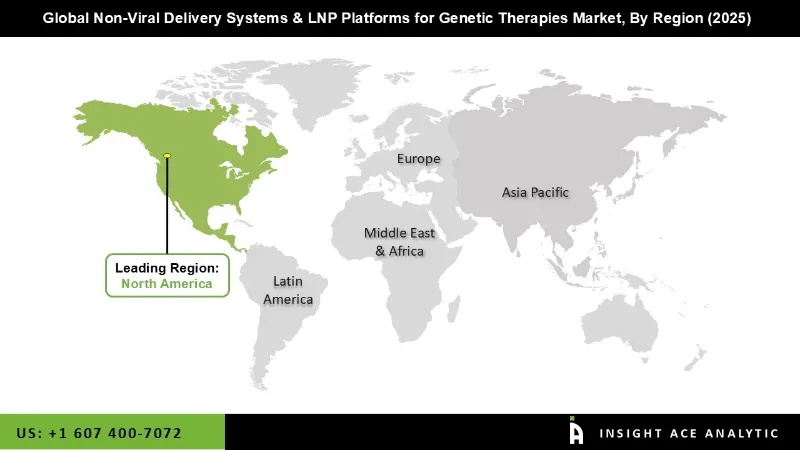
The Asia-Pacific region is rapidly growing due to the fast expansion of biotechnology infrastructure, increasing investments in genetic therapies, and rising healthcare awareness. Countries like China, Japan, and India are seeing rising adoption of RNA-based therapies and participation in clinical trials, driving strong market growth in the region.
Key Development
• November 2025: Acuitas Therapeutics had announced its next-generation Lipid Nanoparticle (LNP) technology, highlighting advancements in potency, safety, and extra-hepatic (beyond the liver) delivery. This technology was notably used in the world's first personalized CRISPR therapy administered to an infant with a rare genetic disease.
Non-Viral Delivery Systems & LNP Platforms for Genetic Therapies Market Report Scope:
| Report Attribute | Specifications |
| Growth Rate CAGR | CAGR of 16.1% from 2026 to 2035 |
| Quantitative Units | Representation of revenue in US$ Bn and CAGR from 2026 to 2035 |
| Historic Year | 2022 to 2025 |
| Forecast Year | 2026 to 2035 |
| Report Coverage | The forecast of revenue, the position of the company, the competitive market structure, growth prospects, and trends |
| Segments Covered | By Delivery Platform Type, Nucleic Acid Cargo, Application Area, Target Tissue, Route of Administration, Stage of Development, End-User. |
| Regional Scope | North America; Europe; Asia Pacific; Latin America; Middle East & Africa |
| Country Scope | U.S.; Canada; U.K.; Germany; China; India; Japan; Brazil; Mexico; The UK; France; Italy; Spain; China; Japan; India; South Korea; Southeast Asia; South Korea; Southeast Asia |
| Competitive Landscape | Acuitas Therapeutics, Alnylam Pharmaceuticals, Arcturus Therapeutics, Beam Therapeutics, Code Biotherapeutics, CRISPR Therapeutics, CureAge Therapeutics, Editas Medicine, Evox Therapeutics, GenEdit, Genevant Sciences, Generation Bio, Genprex, Intellia Therapeutics, Moderna, NanoVation Therapeutics, Orna Therapeutics, ReCode Therapeutics, STRM.BIO, Vertex Pharmaceuticals. |
| Customization Scope | Free customization report with the procurement of the report, Modifications to the regional and segment scope. Geographic competitive landscape. |
| Pricing and Available Payment Methods | Explore pricing alternatives that are customized to your particular study requirements. |
Market Segmentation:
Global Non-Viral Delivery Systems & LNP Platforms for Genetic Therapies Market by Delivery Platform / Carrier Architecture
• Lipid Nanoparticles (LNPs)
◦ Conventional / Untargeted LNP
– Intramuscular Vaccine-Format LNP
– Systemic Hepatocyte-Directed LNP
◦ Composition-Tuned / Organ-Selective LNP (Ligand-Free)
– Selective Organ Targeting (SORT) LNP
– Long-Circulating LNP (lcLNP)
– Tissue-Targeted Lipid-Library LNP (ttLNP)
◦ Ligand-Targeted LNP (tLNP / ctLNP)
– GalNAc-LNP
– Antibody / Fab-Targeted LNP
– Peptide- and Protein-Ligand-Targeted LNP
• Polymeric & Polymer–Lipid Hybrid Nanoparticles
◦ Hydrophilic Non-Lipid Polymeric Nanoparticles
◦ Poly(beta-amino ester), PLGA, Chitosan & Dendrimer Polyplexes
◦ Lipid–Polymer Hybrid Nanoparticles
• Peptide- & Protein-Based Carriers
◦ Cell-Penetrating Peptide & Endosomal-Escape Carriers (Non-Covalent)
◦ Protein Nanoparticles & Engineered Protein Cages
◦ Engineered Enveloped / Virus-Like Delivery Particles (Non-Replicating)
• Extracellular Vesicles & Exosomes
◦ Engineered Exosomes
◦ ARRDC1-Mediated Microvesicles (ARMMs)
◦ Hybrid & Cell-Derived Vesicles
• Molecular Conjugates
◦ GalNAc–Oligonucleotide Conjugates
◦ Antibody–Oligonucleotide Conjugates (AOC)
◦ Fab / Fragment–Oligonucleotide Conjugates
◦ Peptide–Oligonucleotide Conjugates (PDC / PPMO)
◦ Lipophilic & Small-Molecule Conjugates (C16, Cholesterol, Folate, Aptamer)
• DNA-Based & Programmable Nucleic-Acid Carriers
◦ Closed-Ended / Non-Integrating DNA Carriers
◦ DNA-Scaffold & Dendrimer Architectures
◦ Programmable RNA-Carrier Architectures
Global Non-Viral Delivery Systems & LNP Platforms for Genetic Therapies Market by Offering
• Delivery Materials & Excipients
◦ Ionizable & Cationic Lipids
◦ Helper Phospholipids, Cholesterol & Structural Sterols
◦ PEG-Lipids & Functionalised / Conjugatable Lipids
◦ Polymers, Peptides, Targeting Ligands, Linkers & Conjugation Reagents
• Formulation Equipment, Consumables & Kits
◦ Microfluidic & Impingement-Jet Formulation Systems
◦ Cartridges, Chips, Mixers & Single-Use Flow Paths
◦ Formulation & Reagent Kits
◦ Nanoparticle-Specific TFF & Sterile-Filtration Hardware
• Delivery-Focused CDMO & Formulation Services
◦ Formulation & Process Development
◦ GMP Encapsulation & Drug-Product Manufacture
◦ Analytical Development, Characterisation & QC Release
◦ Fill-Finish & Lyophilisation
◦ Small-Batch / Bespoke (n-of-1) GMP Supply
• Platform Licensing, Milestones & Royalties
• Discovery, Design & Screening Services
Global Non-Viral Delivery Systems & LNP Platforms for Genetic Therapies Market by Nucleic-Acid Cargo / Payload Class
• Messenger RNA (mRNA)
• Self-Amplifying / Replicon RNA (saRNA)
• Circular RNA (circRNA / oRNA)
• siRNA & RNA-Interference Triggers
• Antisense & Steric-Blocking Oligonucleotides
◦ Gapmer Antisense Oligonucleotides (ASO)
◦ Splice-Switching Oligonucleotides & PMO / PPMO
◦ RNA-Editing (ADAR-Recruiting) Oligonucleotides
• Gene-Editing Payloads
◦ Cas Nuclease mRNA + Guide RNA
◦ Base-Editor mRNA + Guide RNA
◦ Prime Editors, Gene Writers & Integrases
◦ Ribonucleoprotein (RNP) Complexes
◦ HDR Templates & Multi-Component Editing Cargos
• DNA Payloads
◦ Plasmid DNA & Minicircle
◦ Closed-Ended / Non-Integrating DNA
◦ Transposon Systems
• Other & Emerging Payloads (miRNA / Anti-miR, Aptamers, tRNA, lncRNA)
Global Non-Viral Delivery Systems & LNP Platforms for Genetic Therapies Market by Therapeutic Application
• Prophylactic & Infectious-Disease Vaccines
• Oncology & Immuno-Oncology
• Rare & Inherited Genetic Disease
• Cardiometabolic & Chronic Disease
• Immunology & Autoimmune Disease (incl. In Vivo CAR-T)
• Neurology & Neuromuscular Disease
• Other Therapeutic Areas (Respiratory, Ophthalmology, Dermatology, Hepatology)
Global Non-Viral Delivery Systems & LNP Platforms for Genetic Therapies Market by Target Tissue (Route of Administration as Sub-Attribute)
• Liver & Hepatocyte
• Muscle & Lymphoid Depot (Vaccine Format)
• Immune & Haematopoietic Cells
• Lung & Airway
• Skeletal & Cardiac Muscle
• Central Nervous System
• Other Extrahepatic Tissues (Tumour, Eye, Kidney, Spleen, Adipose, Skin)
Global Non-Viral Delivery Systems & LNP Platforms for Genetic Therapies Market by End User (Programme Phase as Sub-Attribute)
• Large Pharmaceutical, Biotechnology & Vaccine Companies
• Emerging Genetic-Medicine Biotechnology Companies
• CDMOs, CMOs & Contract Formulation Providers
• Academic, Government & Non-Profit Research Institutions
• Programme Phase (Sub-Attribute, applied across all end users)
◦ Discovery & Preclinical
◦ Phase I
◦ Phase II
◦ Phase III
◦ Approved & Commercial
Global Non-Viral Delivery Systems & LNP Platforms for Genetic Therapies Market By Region
North America-
• United States
• Canada
Europe-
• Germany
• United Kingdom
• France
• Italy
• Spain
• Rest of Europe
Asia Pacific-
• China
• Japan
• India
• South Korea
• Southeast Asia
• Rest of Asia Pacific
Latin America-
• Brazil
• Mexico
• Argentina
• Rest of Latin America
Middle East & Africa-
• GCC Countries
• South Africa
• Rest of Middle East & Africa
Research Design and Approach
This study employed a multi-step, mixed-method research approach that integrates:
- Secondary research
- Primary research
- Data triangulation
- Hybrid top-down and bottom-up modelling
- Forecasting and scenario analysis
This approach ensures a balanced and validated understanding of both macro- and micro-level market factors influencing the market.
Secondary Research
Secondary research for this study involved the collection, review, and analysis of publicly available and paid data sources to build the initial fact base, understand historical market behaviour, identify data gaps, and refine the hypotheses for primary research.
Sources Consulted
Secondary data for the market study was gathered from multiple credible sources, including:
- Government databases, regulatory bodies, and public institutions
- International organizations (WHO, OECD, IMF, World Bank, etc.)
- Commercial and paid databases
- Industry associations, trade publications, and technical journals
- Company annual reports, investor presentations, press releases, and SEC filings
- Academic research papers, patents, and scientific literature
- Previous market research publications and syndicated reports
These sources were used to compile historical data, market volumes/prices, industry trends, technological developments, and competitive insights.

Primary Research
Primary research was conducted to validate secondary data, understand real-time market dynamics, capture price points and adoption trends, and verify the assumptions used in the market modelling.
Stakeholders Interviewed
Primary interviews for this study involved:
- Manufacturers and suppliers in the market value chain
- Distributors, channel partners, and integrators
- End-users / customers (e.g., hospitals, labs, enterprises, consumers, etc., depending on the market)
- Industry experts, technology specialists, consultants, and regulatory professionals
- Senior executives (CEOs, CTOs, VPs, Directors) and product managers
Interview Process
Interviews were conducted via:
- Structured and semi-structured questionnaires
- Telephonic and video interactions
- Email correspondences
- Expert consultation sessions
Primary insights were incorporated into demand modelling, pricing analysis, technology evaluation, and market share estimation.
Data Processing, Normalization, and Validation
All collected data were processed and normalized to ensure consistency and comparability across regions and time frames.
The data validation process included:
- Standardization of units (currency conversions, volume units, inflation adjustments)
- Cross-verification of data points across multiple secondary sources
- Normalization of inconsistent datasets
- Identification and resolution of data gaps
- Outlier detection and removal through algorithmic and manual checks
- Plausibility and coherence checks across segments and geographies
This ensured that the dataset used for modelling was clean, robust, and reliable.
Market Size Estimation and Data Triangulation
Bottom-Up Approach
The bottom-up approach involved aggregating segment-level data, such as:
- Company revenues
- Product-level sales
- Installed base/usage volumes
- Adoption and penetration rates
- Pricing analysis
This method was primarily used when detailed micro-level market data were available.

Top-Down Approach
The top-down approach used macro-level indicators:
- Parent market benchmarks
- Global/regional industry trends
- Economic indicators (GDP, demographics, spending patterns)
- Penetration and usage ratios
This approach was used for segments where granular data were limited or inconsistent.
Hybrid Triangulation Approach
To ensure accuracy, a triangulated hybrid model was used. This included:
- Reconciling top-down and bottom-up estimates
- Cross-checking revenues, volumes, and pricing assumptions
- Incorporating expert insights to validate segment splits and adoption rates
This multi-angle validation yielded the final market size.
Forecasting Framework and Scenario Modelling
Market forecasts were developed using a combination of time-series modelling, adoption curve analysis, and driver-based forecasting tools.
Forecasting Methods
- Time-series modelling
- S-curve and diffusion models (for emerging technologies)
- Driver-based forecasting (GDP, disposable income, adoption rates, regulatory changes)
- Price elasticity models
- Market maturity and lifecycle-based projections
Scenario Analysis
Given inherent uncertainties, three scenarios were constructed:
- Base-Case Scenario: Expected trajectory under current conditions
- Optimistic Scenario: High adoption, favourable regulation, strong economic tailwinds
- Conservative Scenario: Slow adoption, regulatory delays, economic constraints
Sensitivity testing was conducted on key variables, including pricing, demand elasticity, and regional adoption.
Request Customization
Add countries, segments, company profiles, or extend forecast — free 10% customization with purchase.
Customize This Report →Enquire Before Buying
Speak with our analyst team about scope, methodology, pricing, or deliverable formats.
Enquire Now →Frequently Asked Questions
Non Viral Delivery Systems and LNP Platforms for Genetic Therapies Market is estimated to grow at a 16.1% CAGR during the forecast period for 2026 to 2035.
Acuitas Therapeutics, Alnylam Pharmaceuticals, Arcturus Therapeutics, Beam Therapeutics, Code Biotherapeutics, CRISPR Therapeutics, CureAge Therapeutics, Editas Medicine, Evox Therapeutics, GenEdit, Genevant Sciences, Generation Bio, Genprex, Intellia Therapeutics, Moderna, NanoVation Therapeutics, Orna Therapeutics, ReCode Therapeutics, STRM.BIO, Vertex Pharmaceuticals.
By Delivery Platform Type, Nucleic Acid Cargo, Application Area, Target Tissue, Route of Administration, Stage of Development, End-User are the key segments of the Non Viral Delivery Systems and LNP Platforms for Genetic Therapies Market
North America region is leading the Non Viral Delivery Systems and LNP Platforms for Genetic Therapies Market.