AAV Vector Gene Therapy for Rare Disease Market Size, Share, Forecast Report 2026 to 2035
What is AAV Vector Gene Therapy for Rare Disease Market?
AAV Vector Gene Therapy for Rare Disease Market Size is valued at USD 7.55 Bn in 2025 and is predicted to reach USD 34.89 Bn by the year 2035 at a 16.7% CAGR during the forecast period for 2026 to 2035.
AAV Vector Gene Therapy for Rare Disease Market Size, Share & Trends Analysis Distribution by Vector Type (AAV Serotype 2 (AAV2), AAV Serotype 8 (AAV8), AAV Serotype 9 (AAV9), and Novel Engineered AAVs), Disease Area (Metabolic Disorders, Hematologic Disorders, Ocular Diseases, and Neuromuscular Diseases), End-user (Specialty Hospitals, Rare Disease Clinics, and Academic Medical Centers), and Segment Forecasts, 2026 to 2035
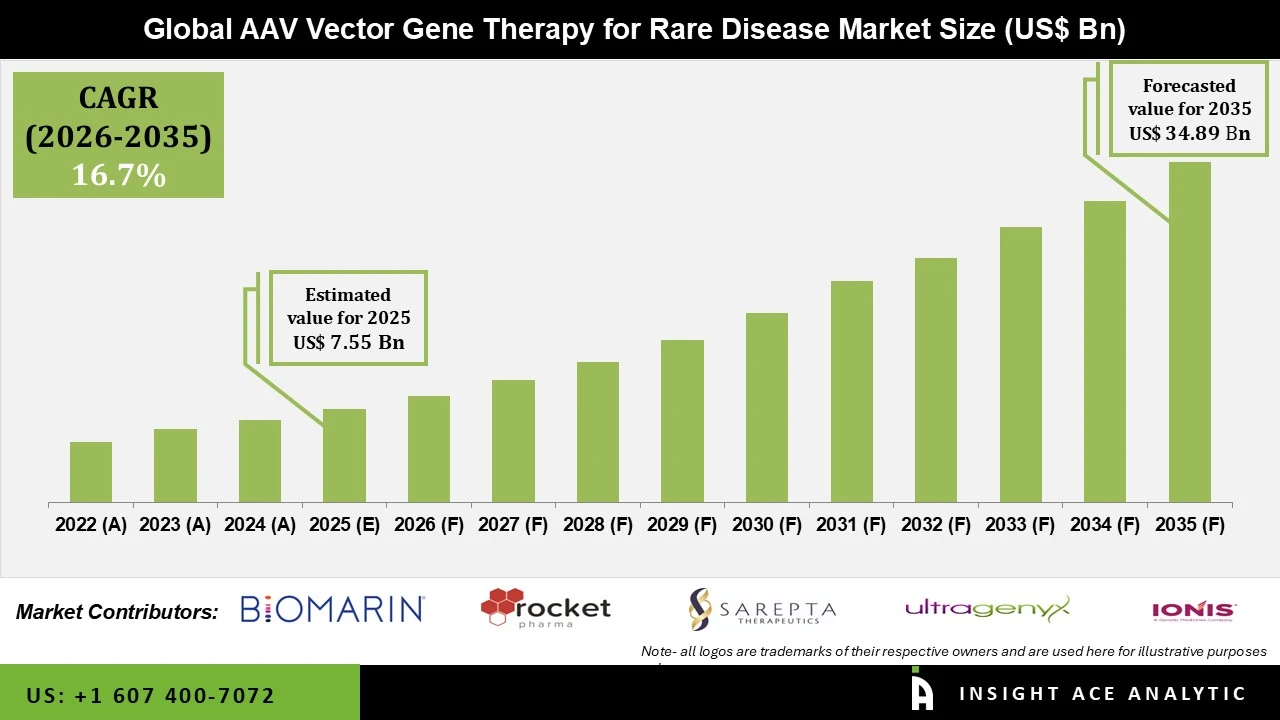
Adeno-associated virus (AAV) vector gene therapy for uncommon disorders is a cutting-edge treatment strategy that transfers functional copies of missing or faulty genes directly into a patient's cells using modified, non-pathogenic AAVs as delivery vehicles. This approach is especially useful for uncommon genetic conditions where a single gene mutation causes the disease to progress, such as hemophilia, Duchenne muscular dystrophy, and spinal muscular atrophy. In most situations, AAV vectors are designed to deliver therapeutic DNA into target tissues without integrating into the host genome. The rising incidence and diagnosis of genetic abnormalities, for which there are few or no effective treatment alternatives, is the main factor driving the expansion of AAV vector gene therapy for rare diseases market.
The AAV vector gene therapy for rare diseases market is experiencing strong revenue growth due to a number of factors, including rising rates of genetic and rare diseases, growing demand for novel and potentially curative treatments, and rising investments in R&D and healthcare infrastructure across a number of nations. Additionally, the AAV vector gene therapy for rare diseases, which provides long-term solutions with fewer side effects than conventional treatments, is increasingly being used to treat rare diseases such as Duchenne muscular dystrophy (DMD), spinal muscular atrophy (SMA), hemophilia, Parkinson's disease (PD), and Alzheimer's disease (AD). Furthermore, the AAV vector gene therapy for rare diseases market growth is supported by higher investment in this field due to the higher success rates in clinical studies.
In addition, the improvements in AAV vector technology and biotechnology are making gene therapies more focused and effective, which raises the success rates of clinical studies. Additionally, favorable regulatory environments, especially in North America and Europe, are facilitating a quicker gene therapy approval procedure, which makes it simpler for businesses to launch cutting-edge treatments. The AAV vector gene therapy for rare diseases market growth is also being accelerated by strategic alliances, joint ventures, and mergers between biopharmaceutical firms, academic institutions, and technology suppliers. The rapid AAV vector gene therapy for rare diseases market expansion is also a result of ongoing R&D investment and increased access to healthcare worldwide, particularly in developing regions.
Competitive Landscape
Which are the Leading Players in AAV Vector Gene Therapy for Rare Disease Market?
• Ultragenyx Pharmaceutical
• Sarepta Therapeutics
• BioMarin Pharmaceuticals
• Orca Bio
• Rocket Pharmaceuticals
• Atara Biotherapeutics
• Ionis Pharmaceuticals
Market Dynamics
Driver
Rising Incidence and Better Diagnosis of Rare Genetic Illnesses
The AAV vector gene therapy for rare diseases market is being driven primarily by the rising incidence and better diagnosis of rare genetic illnesses. Due to improvements in genetic screening and newborn testing programs, diseases including Duchenne muscular dystrophy and spinal muscular atrophy are being discovered at earlier stages. There is a greater addressable market for curative therapy as a result of this growing pool of diagnosed patients. Simultaneously, the successful commercialization of medicines such as Zolgensma has increased investor and physician trust by proving that one-time treatments can provide long-term benefits. These factors, along with rising patient and healthcare provider awareness, are driving acceptance and fostering long-term global AAV vector gene therapy for rare diseases market growth.
Restrain/Challenge
High Cost of Therapy Development
The extremely high cost of therapy development, manufacturing, and patient care is one of the main barriers to the AAV vector gene therapy for rare diseases market. Zolgensma and other therapies can cost millions of dollars per dose, making them unaffordable for individuals and healthcare systems, especially in developing nations. The intricacy of producing AAV vectors, which includes severe quality control and scalability constraints, raises prices and limits supply availability. Furthermore, payer reluctance and reimbursement ambiguities may restrict or postpone patient access. Even though rare illnesses such as hemophilia have great therapeutic potential, smaller patient populations also make it challenging to allocate expenditures efficiently, which affects pricing strategies and slows wider AAV vector gene therapy for rare diseases market penetration.
AAV Serotype 9 (AAV9) Segment is Expected to Drive the AAV Vector Gene Therapy for Rare Disease Market
The AAV Serotype 9 (AAV9) category held the largest share in the AAV Vector Gene Therapy for Rare Disease market in 2025. Because of its exceptional capacity to penetrate the blood-brain barrier and its effectiveness in targeting a variety of organs, AAV9 is very useful in gene therapy for rare disorders. In clinical studies for rare diseases such as hemophilia, Duchenne muscular dystrophy, and spinal muscular atrophy, which are currently among the most expensive in terms of gene therapy expenditure, it is the most frequently utilized serotype. Moreover, given its wide range of applications and excellent success rates in clinical trials, it is anticipated to dominate the AAV vector gene therapy for rare diseases market and spur adoption as new medicines incorporating the AAV9 approach are approved.
Neuromuscular Diseases Segment is Growing at the Highest Rate in the AAV Vector Gene Therapy for Rare Disease Market
In 2025, the Neuromuscular Diseases category dominated the AAV Vector Gene Therapy for Rare Disease market due to these illnesses' strong genetic foundation and great unmet medical need. Well-characterized single-gene mutations cause conditions like Duchenne muscular dystrophy and spinal muscular atrophy, which makes them excellent candidates for AAV-mediated gene replacement treatments. The therapeutic potential of AAV vectors in enhancing survival and recovering motor function has been verified by the success of authorized medicines such as Zolgensma, which has encouraged additional pipeline development. Furthermore, continuous improvements in vector design are increasing the effectiveness of distribution to tissues of the central nervous system and muscles, which are crucial in neuromuscular illnesses.
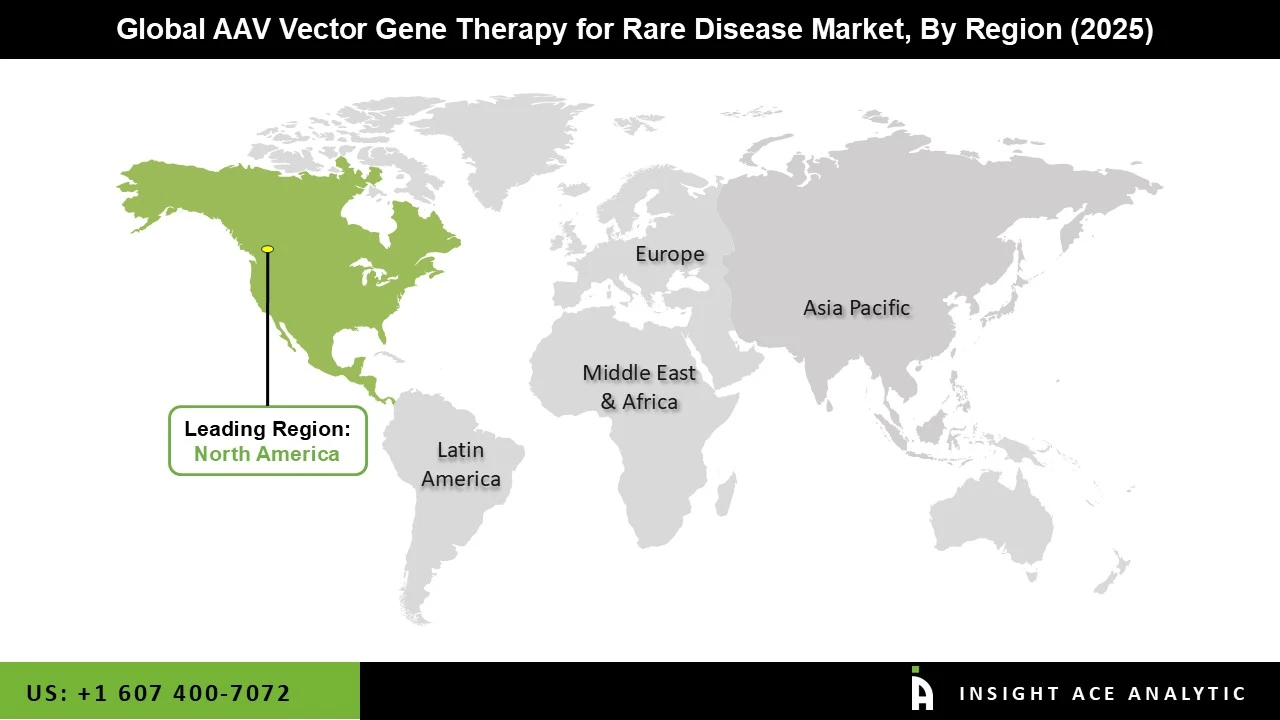
Why North America Led the AAV Vector Gene Therapy for Rare Disease Market?
The AAV Vector Gene Therapy for Rare Disease market was dominated by North America region in 2025 because of the sophisticated healthcare infrastructure, favorable regulatory framework, and substantial investments in R&D. Leading biotechnology firms, top-notch research facilities, and advantageous reimbursement regulations for cutting-edge treatments are the reasons for the region's prominence. The United States has the most extensive gene therapy environment in the world. Additionally, the region benefits from a sizable clinical trial infrastructure and patient groups that are open to taking part in gene therapy research. With specialized manufacturing facilities and clinical trial capabilities, academic medical centers have developed extensive gene therapy programs. These organizations offer vital clinical validation for AAV vector gene therapy for rare diseases and are important development partners for biotechnology firms.
AAV Vector Gene Therapy for Rare Disease Market Report Scope:
| Report Attribute | Specifications |
| Market size value in 2025 | USD 7.55 Bn |
| Revenue forecast in 2035 | USD 34.89 Bn |
| Growth Rate CAGR | CAGR of 16.7% from 2026 to 2035 |
| Quantitative Units | Representation of revenue in US$ Bn and CAGR from 2026 to 2035 |
| Historic Year | 2022 to 2025 |
| Forecast Year | 2026-2035 |
| Report Coverage | The forecast of revenue, the position of the company, the competitive market structure, growth prospects, and trends |
| Segments Covered | Vector Type, Disease Area, End-user, and By Region |
| Regional Scope | North America; Europe; Asia Pacific; Latin America; Middle East & Africa |
| Country Scope | U.S.; Canada; U.K.; Germany; China; India; Japan; Brazil; Mexico; The UK; France; Italy; Spain; China; Japan; India; South Korea; Southeast Asia; South Korea; Southeast Asia |
| Competitive Landscape | Ultragenyx Pharmaceutical, Sarepta Therapeutics, BioMarin Pharmaceuticals, Orca Bio, Rocket Pharmaceuticals, Atara Biotherapeutics, and Ionis Pharmaceuticals. |
| Customization Scope | Free customization report with the procurement of the report, Modifications to the regional and segment scope. Geographic competitive landscape. |
| Pricing and Available Payment Methods | Explore pricing alternatives that are customized to your particular study requirements. |
Market Segmentation:
AAV Vector Gene Therapy for Rare Disease Market by Vector Type-
• AAV Serotype 2 (AAV2)
• AAV Serotype 8 (AAV8)
• AAV Serotype 9 (AAV9)
• Novel Engineered AAVs
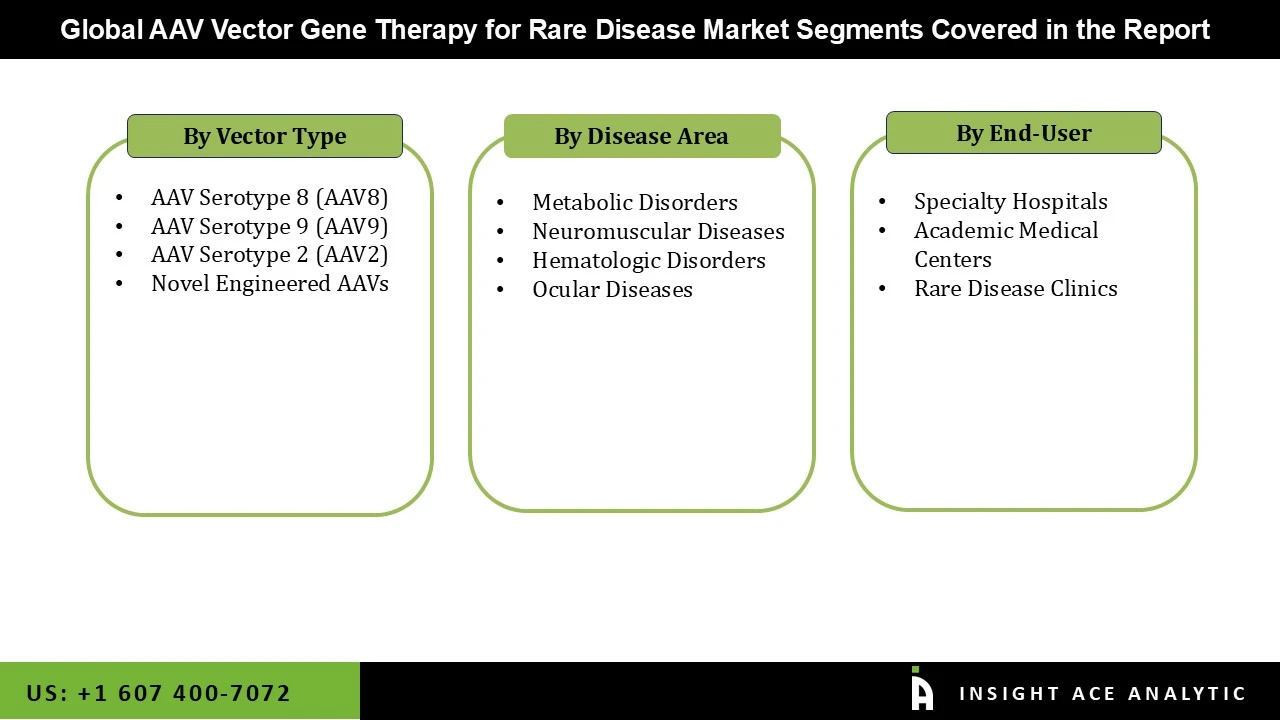
AAV Vector Gene Therapy for Rare Disease Market by Disease Area-
• Metabolic Disorders
• Hematologic Disorders
• Ocular Diseases
• Neuromuscular Diseases
AAV Vector Gene Therapy for Rare Disease Market by End-user-
• Specialty Hospitals
• Rare Disease Clinics
• Academic Medical Centers
Research Design and Approach
This study employed a multi-step, mixed-method research approach that integrates:
- Secondary research
- Primary research
- Data triangulation
- Hybrid top-down and bottom-up modelling
- Forecasting and scenario analysis
This approach ensures a balanced and validated understanding of both macro- and micro-level market factors influencing the market.
Secondary Research
Secondary research for this study involved the collection, review, and analysis of publicly available and paid data sources to build the initial fact base, understand historical market behaviour, identify data gaps, and refine the hypotheses for primary research.
Sources Consulted
Secondary data for the market study was gathered from multiple credible sources, including:
- Government databases, regulatory bodies, and public institutions
- International organizations (WHO, OECD, IMF, World Bank, etc.)
- Commercial and paid databases
- Industry associations, trade publications, and technical journals
- Company annual reports, investor presentations, press releases, and SEC filings
- Academic research papers, patents, and scientific literature
- Previous market research publications and syndicated reports
These sources were used to compile historical data, market volumes/prices, industry trends, technological developments, and competitive insights.
Primary Research
Primary research was conducted to validate secondary data, understand real-time market dynamics, capture price points and adoption trends, and verify the assumptions used in the market modelling.
Stakeholders Interviewed
Primary interviews for this study involved:
- Manufacturers and suppliers in the market value chain
- Distributors, channel partners, and integrators
- End-users / customers (e.g., hospitals, labs, enterprises, consumers, etc., depending on the market)
- Industry experts, technology specialists, consultants, and regulatory professionals
- Senior executives (CEOs, CTOs, VPs, Directors) and product managers
Interview Process
Interviews were conducted via:
- Structured and semi-structured questionnaires
- Telephonic and video interactions
- Email correspondences
- Expert consultation sessions
Primary insights were incorporated into demand modelling, pricing analysis, technology evaluation, and market share estimation.
Data Processing, Normalization, and Validation
All collected data were processed and normalized to ensure consistency and comparability across regions and time frames.
The data validation process included:
- Standardization of units (currency conversions, volume units, inflation adjustments)
- Cross-verification of data points across multiple secondary sources
- Normalization of inconsistent datasets
- Identification and resolution of data gaps
- Outlier detection and removal through algorithmic and manual checks
- Plausibility and coherence checks across segments and geographies
This ensured that the dataset used for modelling was clean, robust, and reliable.
Market Size Estimation and Data Triangulation
Bottom-Up Approach
The bottom-up approach involved aggregating segment-level data, such as:
- Company revenues
- Product-level sales
- Installed base/usage volumes
- Adoption and penetration rates
- Pricing analysis
This method was primarily used when detailed micro-level market data were available.
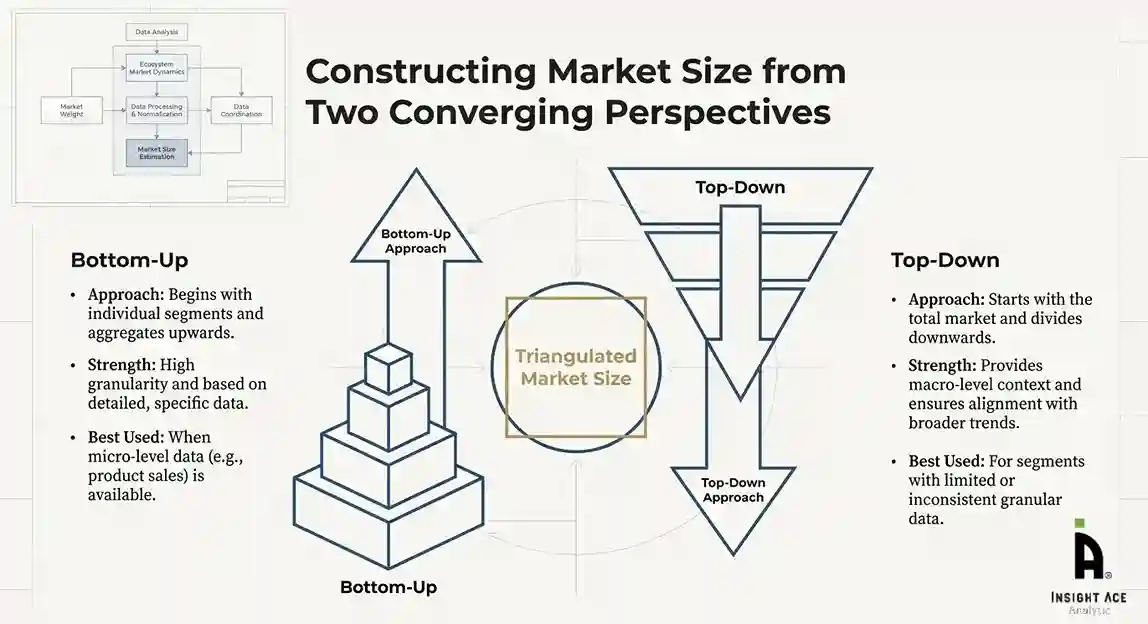
Top-Down Approach
The top-down approach used macro-level indicators:
- Parent market benchmarks
- Global/regional industry trends
- Economic indicators (GDP, demographics, spending patterns)
- Penetration and usage ratios
This approach was used for segments where granular data were limited or inconsistent.
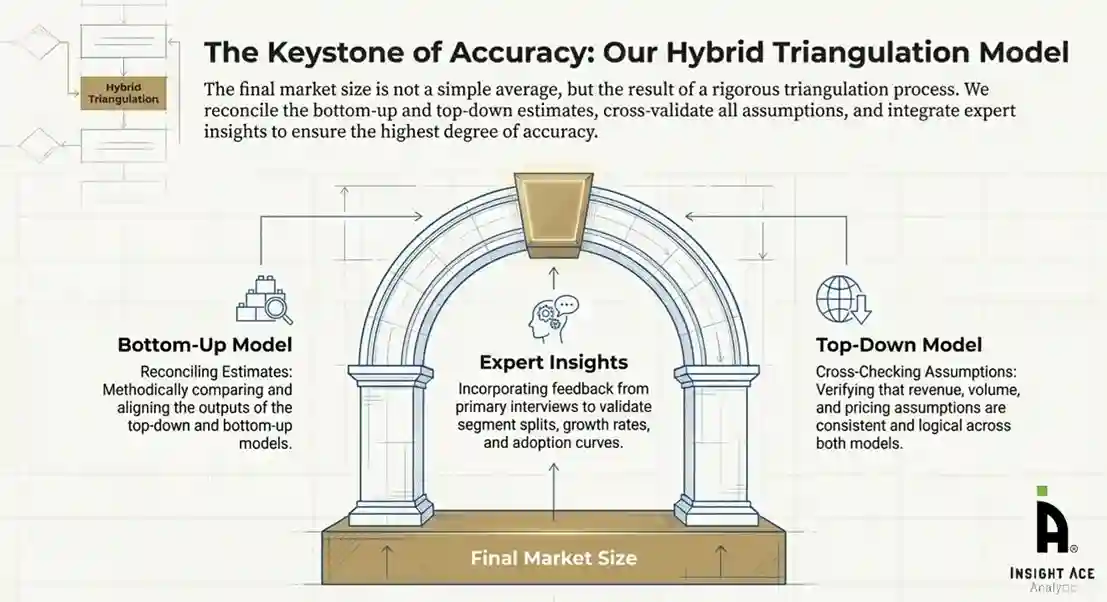
Hybrid Triangulation Approach
To ensure accuracy, a triangulated hybrid model was used. This included:
- Reconciling top-down and bottom-up estimates
- Cross-checking revenues, volumes, and pricing assumptions
- Incorporating expert insights to validate segment splits and adoption rates
This multi-angle validation yielded the final market size.
Forecasting Framework and Scenario Modelling
Market forecasts were developed using a combination of time-series modelling, adoption curve analysis, and driver-based forecasting tools.
Forecasting Methods
- Time-series modelling
- S-curve and diffusion models (for emerging technologies)
- Driver-based forecasting (GDP, disposable income, adoption rates, regulatory changes)
- Price elasticity models
- Market maturity and lifecycle-based projections
Scenario Analysis
Given inherent uncertainties, three scenarios were constructed:
- Base-Case Scenario: Expected trajectory under current conditions
- Optimistic Scenario: High adoption, favourable regulation, strong economic tailwinds
- Conservative Scenario: Slow adoption, regulatory delays, economic constraints
Sensitivity testing was conducted on key variables, including pricing, demand elasticity, and regional adoption.
Request Customization
Add countries, segments, company profiles, or extend forecast — free 10% customization with purchase.
Customize This Report →Enquire Before Buying
Speak with our analyst team about scope, methodology, pricing, or deliverable formats.
Enquire Now →Frequently Asked Questions
AAV Vector Gene Therapy for Rare Disease Market Size is valued at USD 7.55 Bn in 2025 and is predicted to reach USD 34.89 Bn by the year 2035
AAV Vector Gene Therapy for Rare Disease Market Size is predicted to grow at a 16.7% CAGR during the forecast period for 2026 to 2035.
Ultragenyx Pharmaceutical, Sarepta Therapeutics, BioMarin Pharmaceuticals, Orca Bio, Rocket Pharmaceuticals, Atara Biotherapeutics, and Ionis Pharmaceuticals.
AAV Vector Gene Therapy for Rare Disease Market is segmented into Vector Type, Disease Area, End-user, and By Region
North America region is leading the AAV Vector Gene Therapy for Rare Disease Market.