Medically Tailored Nutrition and Therapeutic Food Market Size, Share, Revenue Report 2026 to 2035
What is Medically Tailored Nutrition and Therapeutic Food Market Size?
Global Medically Tailored Nutrition and Therapeutic Food Market Size is is predicted to grow at a 7.8% CAGR during the forecast period for 2026 to 2035.
Medically Tailored Nutrition and Therapeutic Food Market Size, Share & Trends Analysis Distribution by Disease (Diabetes & Metabolic Disorders, Cancer Recovery & Oncology Support, Gut Health & Digestive Disorders, Cardiovascular Support, Immune Support & Critical Care, Renal & Organ-Specific Nutrition), By Product Type (RTD Medical Beverages, Powdered Clinical Nutrition Formulas, Enteral / Tube Feeding Formulas, Therapeutic Bars & Snacks, Fortified Staples for Patients), By Distribution Channel (Hospitals & Clinics (Institutional), Pharmacies & Drugstores, D2C / Online Healthcare Platforms, Specialty Medical Nutrition Stores, Grocery / Retail (Medical Nutrition Aisle)) and Segment Forecasts, 2026 to 2035
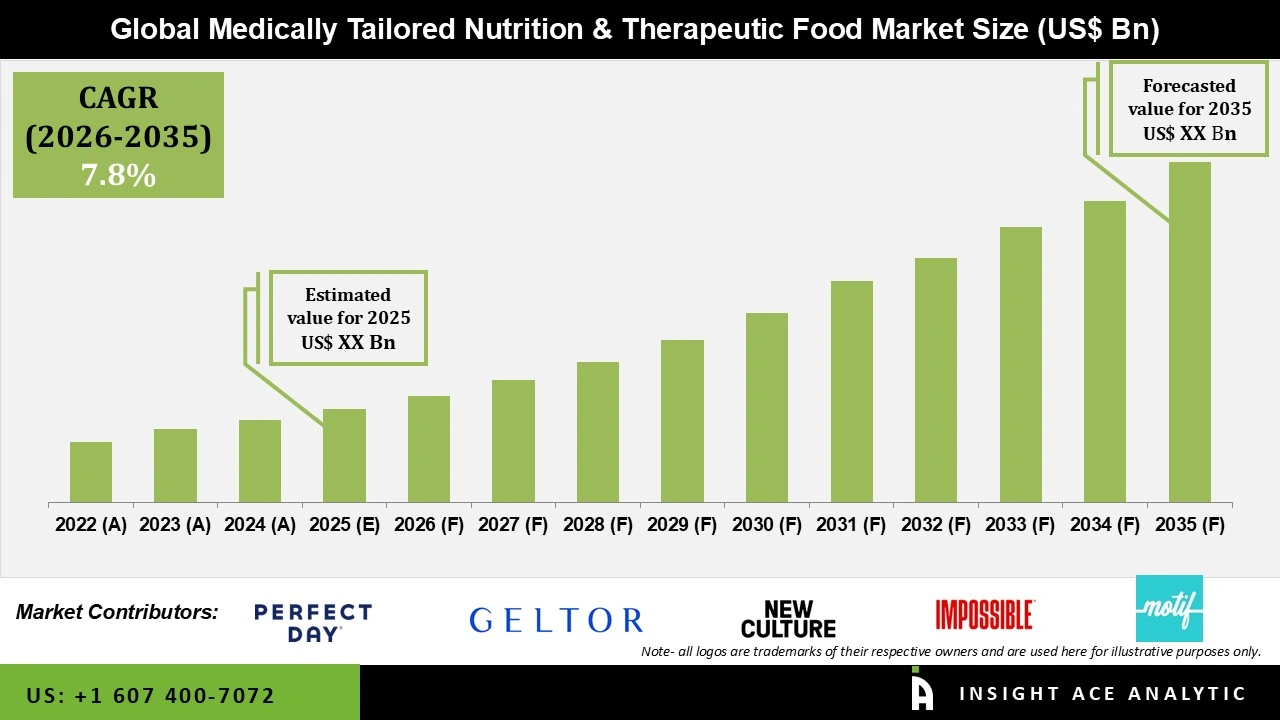
The medically tailored nutrition (MTN) and therapeutic foods market focuses on providing specialized diets and foods designed to manage or treat specific medical conditions. MTN is the process of developing customized diets for individuals with long-term health complications such as diabetes, heart disease, cancer, kidney problems by healthcare practitioners. Unlike normal diets, these meals are prepared with the goal of enhancing the health status of the patient and lowering risks of hospitalization due to complications from diseases. Therapeutic foods include medical foods, oral nutritional products, and ready-to-use therapeutic foods.
Applications of the market include managing chronic conditions, treating malnutrition, and recovery after surgery by fulfilling the unique nutritional requirements of the patients. The growing number of chronic disease cases in the world is one factor that will promote market growth. But, high prices associated with the specialty food industry can be seen as a major restraining factor.
Key Market Trends (2026–2035)
From 2026 to 2035, the medically tailored nutrition (MTN) and therapeutic foods market is set to grow rapidly, driven by personalized nutrition using genomics, microbiome insights, and AI, along with gut-health integration through prebiotics and probiotics. Expansion of D2C models and insurance reimbursements, premium clinical products, food-as-medicine policies, and taste-optimized RTD formats are accelerating adoption, while emerging markets like India, Southeast Asia, and Africa are fueling demand with affordable therapeutic solutions from players such as Medcura and Mondelez Health India.
Competitive Landscape
Which are the Leading Players in the Medically Tailored Nutrition and Therapeutic Food Market?
- Nourish (US)
- Mosaic Foods (Health Line)
- Epicured
- Territory Foods
- Sun Genomics
- IronSource Nutrition
- Jinong / Biostime (H&H Group)
- Medcura Nutrition
- Revive Medical
- Other Prominent Players
Market Dynamics
Driver
Growing Prevalence of Chronic Diseases
Chronic illnesses like diabetes, heart problems, cancer, and kidney conditions, among others, are the most significant drivers fueling the growth of the MTN and therapeutic foods market. The increase in cases of these conditions has led to an increased need for nutritional intervention that can assist in managing these illnesses and improving the quality of patients' lives. Additionally, the use of advanced technologies in the field of nutrition, including artificial intelligence (AI), genomics, and microbiomics, and the increase in coverage under insurance for medically tailored nutrition have contributed significantly to the market's growth.
Restrain/Challenge
High Cost and Accessibility Constraints
The main challenges in the market for medially tailored nutrition and therapeutic foods include the high prices associated with such nutrition products due to their formulation process. Such nutrition formulations entail clinical trials as well as clinical safety of these formulations, thus increasing their prices. The process involves complex regulation requirements as well as educating healthcare practitioners and making patients comply with recommended meals.
Diabetes and Metabolic Disorders Segment is Expected to Drive the Medically Tailored Nutrition and Therapeutic Food Market
The diabetes and metabolic disorders category represents the key contributor to the MTN and Therapeutic Foods industry. The increasing incidence of diabetes globally has increased the need for specialized food that can help regulate glucose levels, maintain body weight, and minimize any associated complications. The clinical use of nutrition interventions for diabetic patients has proven effective in improving patient results, reducing hospital admissions, and minimizing healthcare expenditures, making this category the biggest contributor to market development.
Ready to Drink (RTD) Medical Beverages Segment is Growing at the Highest Rate in the Medically Tailored Nutrition and Therapeutic Food Market
The ready to drink (RTD) medical beverages category exhibits the fastest growth in the MTN and Therapeutic Foods space. This rapid growth is primarily due to factors like convenience, improved taste, and better nutrient delivery systems, which make them extremely popular among patients with chronic diseases, cancer, and post-operative recovery. They also overcome some of the problems associated with conventional products such as taste fatigue and poor compliance.
Why North America Led the Medically Tailored Nutrition and Therapeutic Food Market?
North America presently holds the top spot for the global Medically Tailored Nutrition (MTN) and Therapeutic Foods market. The region enjoys an advantage owing to its high incidence of chronic ailments such as diabetes, heart conditions, and cancer, complemented by well-developed health care facilities, robust insurance payment systems, and the availability of innovative personalized nutrition technologies.
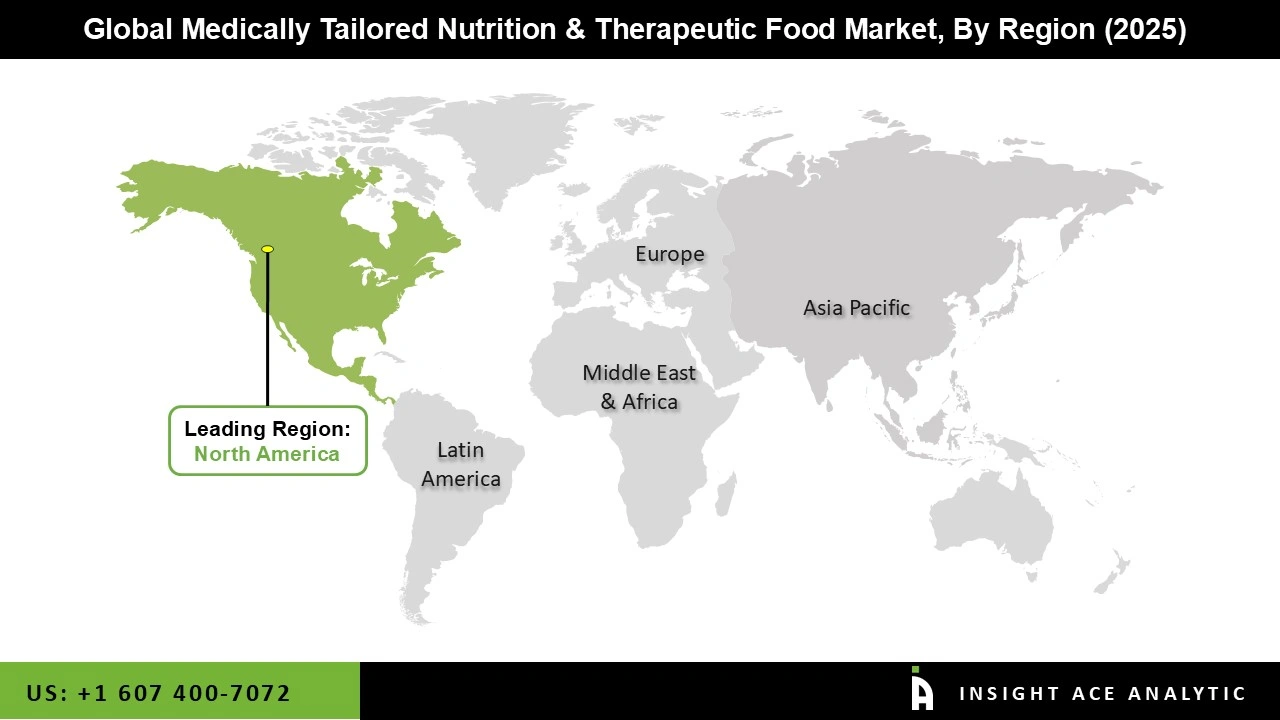
The presence of prominent companies operating in the market, ongoing clinical trials, and favorable food as medicine regulations in the United States and Canada bolster North America’s market leadership position.
Key Development
• Feb 2026: Epicured Inc. acquired Chiyo, Inc. to offer stage-specific, clinically backed nutrition for women, supporting hormonal balance, metabolism, and reducing risks of conditions like PCOS, osteoporosis, diabetes, and heart disease across all life stages.
• March 2026: The Food Is Medicine Coalition (FIMC), with Harvard Law School’s CHLPI, released the first-ever Medically Tailored Meal (MTM) Sustainability Blueprint, a national framework to integrate MTMs into U.S. healthcare. The Blueprint guides delivery of therapeutic, evidence-based meals for individuals with severe or chronic conditions, tailored to their nutritional needs by registered dietitians or nutrition professionals.
Medically Tailored Nutrition and Therapeutic Food Market Report Scope:
| Report Attribute | Specifications |
| Growth Rate CAGR | CAGR of 7.8% from 2026 to 2035 |
| Quantitative Units | Representation of revenue in US$ Bn and CAGR from 2026 to 2035 |
| Historic Year | 2022 to 2025 |
| Forecast Year | 2026-2035 |
| Report Coverage | The forecast of revenue, the position of the company, the competitive market structure, growth prospects, and trends |
| Segments Covered | Disease, Product Type, Distribution Channel and By Region |
| Regional Scope | North America; Europe; Asia Pacific; Latin America; Middle East & Africa |
| Country Scope | U.S.; Canada; U.K.; Germany; China; India; Japan; Brazil; Mexico; The UK; France; Italy; Spain; China; Japan; India; South Korea; Southeast Asia; South Korea; Southeast Asia |
| Competitive Landscape | Nourish (US), Mosaic Foods (Health Line), Epicured, Territory Foods, Sun Genomics, IronSource Nutrition, Jinong / Biostime (H&H Group), Medcura Nutrition, Revive Medical |
| Customization Scope | Free customization report with the procurement of the report, Modifications to the regional and segment scope. Geographic competitive landscape. |
| Pricing and Available Payment Methods | Explore pricing alternatives that are customized to your particular study requirements. |
Segmentation of Medically Tailored Nutrition and Therapeutic Food Market :
Medically Tailored Nutrition and Therapeutic Food Market, by Disease -
- Diabetes & Metabolic Disorders
- Cancer Recovery & Oncology Support
- Gut Health & Digestive Disorders
- Cardiovascular Support
- Immune Support & Critical Care
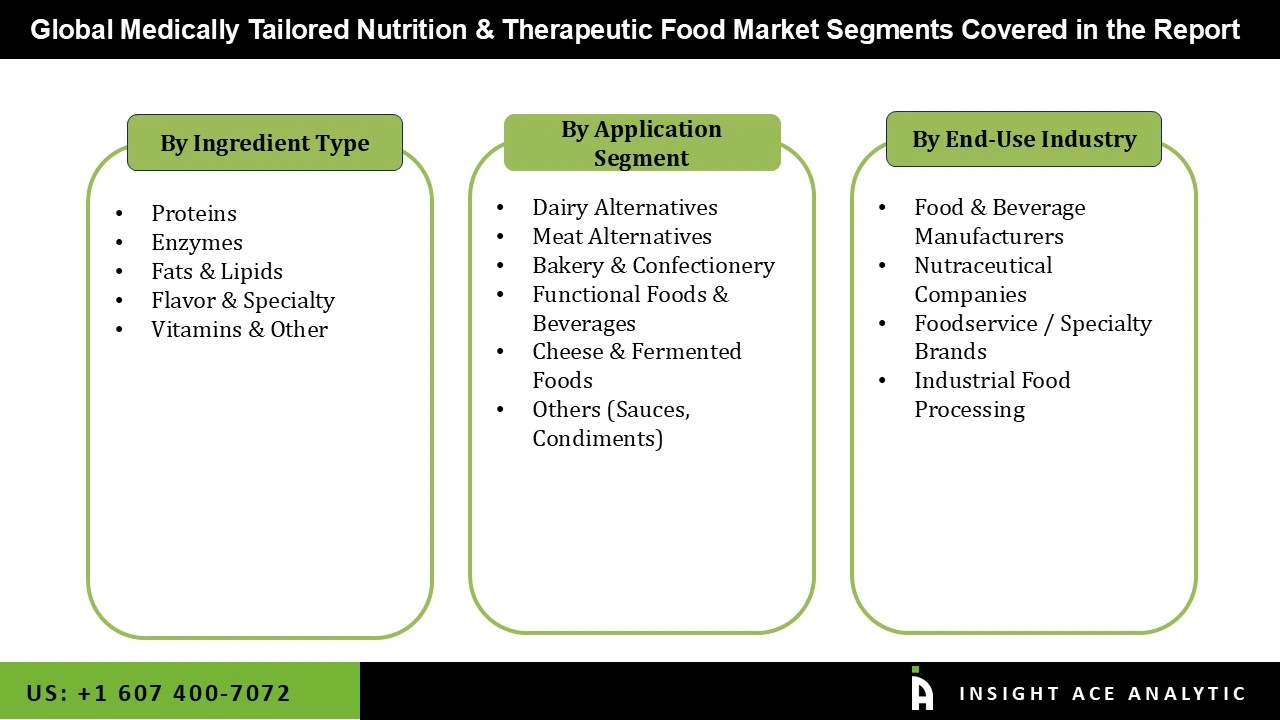
Renal & Organ-Specific Nutrition Medically Tailored Nutrition and Therapeutic Food Market, by Product Type -
- RTD Medical Beverages
- Powdered Clinical Nutrition Formulas
- Enteral / Tube Feeding Formulas
- Therapeutic Bars & Snacks
- Fortified Staples for Patients
Medically Tailored Nutrition and Therapeutic Food Market, by Distribution Channel-
- Hospitals & Clinics (Institutional)
- Pharmacies & Drugstores
- D2C / Online Healthcare Platforms
- Specialty Medical Nutrition Stores
- Grocery / Retail (Medical Nutrition Aisle)
Medically Tailored Nutrition and Therapeutic Food Market, by Region-
- North America-
- The US
- Canada
- Europe-
- Germany
- The UK
- France
- Italy
- Spain
- Rest of Europe
- Asia-Pacific-
- China
- Japan
- India
- South Korea
- South East Asia
- Rest of Asia Pacific
- Latin America-
- Brazil
- Argentina
- Mexico
- Rest of Latin America
- Middle East and Africa-
- GCC Countries
- South Africa
- Rest of Middle East and Africa
Research Design and Approach
This study employed a multi-step, mixed-method research approach that integrates:
- Secondary research
- Primary research
- Data triangulation
- Hybrid top-down and bottom-up modelling
- Forecasting and scenario analysis
This approach ensures a balanced and validated understanding of both macro- and micro-level market factors influencing the market.
Secondary Research
Secondary research for this study involved the collection, review, and analysis of publicly available and paid data sources to build the initial fact base, understand historical market behaviour, identify data gaps, and refine the hypotheses for primary research.
Sources Consulted
Secondary data for the market study was gathered from multiple credible sources, including:
- Government databases, regulatory bodies, and public institutions
- International organizations (WHO, OECD, IMF, World Bank, etc.)
- Commercial and paid databases
- Industry associations, trade publications, and technical journals
- Company annual reports, investor presentations, press releases, and SEC filings
- Academic research papers, patents, and scientific literature
- Previous market research publications and syndicated reports
These sources were used to compile historical data, market volumes/prices, industry trends, technological developments, and competitive insights.

Primary Research
Primary research was conducted to validate secondary data, understand real-time market dynamics, capture price points and adoption trends, and verify the assumptions used in the market modelling.
Stakeholders Interviewed
Primary interviews for this study involved:
- Manufacturers and suppliers in the market value chain
- Distributors, channel partners, and integrators
- End-users / customers (e.g., hospitals, labs, enterprises, consumers, etc., depending on the market)
- Industry experts, technology specialists, consultants, and regulatory professionals
- Senior executives (CEOs, CTOs, VPs, Directors) and product managers
Interview Process
Interviews were conducted via:
- Structured and semi-structured questionnaires
- Telephonic and video interactions
- Email correspondences
- Expert consultation sessions
Primary insights were incorporated into demand modelling, pricing analysis, technology evaluation, and market share estimation.
Data Processing, Normalization, and Validation
All collected data were processed and normalized to ensure consistency and comparability across regions and time frames.
The data validation process included:
- Standardization of units (currency conversions, volume units, inflation adjustments)
- Cross-verification of data points across multiple secondary sources
- Normalization of inconsistent datasets
- Identification and resolution of data gaps
- Outlier detection and removal through algorithmic and manual checks
- Plausibility and coherence checks across segments and geographies
This ensured that the dataset used for modelling was clean, robust, and reliable.
Market Size Estimation and Data Triangulation
Bottom-Up Approach
The bottom-up approach involved aggregating segment-level data, such as:
- Company revenues
- Product-level sales
- Installed base/usage volumes
- Adoption and penetration rates
- Pricing analysis
This method was primarily used when detailed micro-level market data were available.

Top-Down Approach
The top-down approach used macro-level indicators:
- Parent market benchmarks
- Global/regional industry trends
- Economic indicators (GDP, demographics, spending patterns)
- Penetration and usage ratios
This approach was used for segments where granular data were limited or inconsistent.
Hybrid Triangulation Approach
To ensure accuracy, a triangulated hybrid model was used. This included:
- Reconciling top-down and bottom-up estimates
- Cross-checking revenues, volumes, and pricing assumptions
- Incorporating expert insights to validate segment splits and adoption rates
This multi-angle validation yielded the final market size.
Forecasting Framework and Scenario Modelling
Market forecasts were developed using a combination of time-series modelling, adoption curve analysis, and driver-based forecasting tools.
Forecasting Methods
- Time-series modelling
- S-curve and diffusion models (for emerging technologies)
- Driver-based forecasting (GDP, disposable income, adoption rates, regulatory changes)
- Price elasticity models
- Market maturity and lifecycle-based projections
Scenario Analysis
Given inherent uncertainties, three scenarios were constructed:
- Base-Case Scenario: Expected trajectory under current conditions
- Optimistic Scenario: High adoption, favourable regulation, strong economic tailwinds
- Conservative Scenario: Slow adoption, regulatory delays, economic constraints
Sensitivity testing was conducted on key variables, including pricing, demand elasticity, and regional adoption.
Request Customization
Add countries, segments, company profiles, or extend forecast — free 10% customization with purchase.
Customize This Report →Enquire Before Buying
Speak with our analyst team about scope, methodology, pricing, or deliverable formats.
Enquire Now →Frequently Asked Questions
Medically Tailored Nutrition and Therapeutic Food Market Size is is predicted to grow at a 7.8% CAGR during the forecast period for 2026 to 2035.
North America region is leading the Medically Tailored Nutrition and Therapeutic Food Market.
Nourish (US), Mosaic Foods (Health Line), Epicured, Territory Foods, Sun Genomics, IronSource Nutrition, Jinong / Biostime (H&H Group), Medcura Nutrition, Revive Medical and Others.
Medically Tailored Nutrition and Therapeutic Food Market is segmented into Disease, Product Type, Distribution Channel and Other.