Chronic Pruritus Market Size, Scope, Forecast Report 2026 to 2035
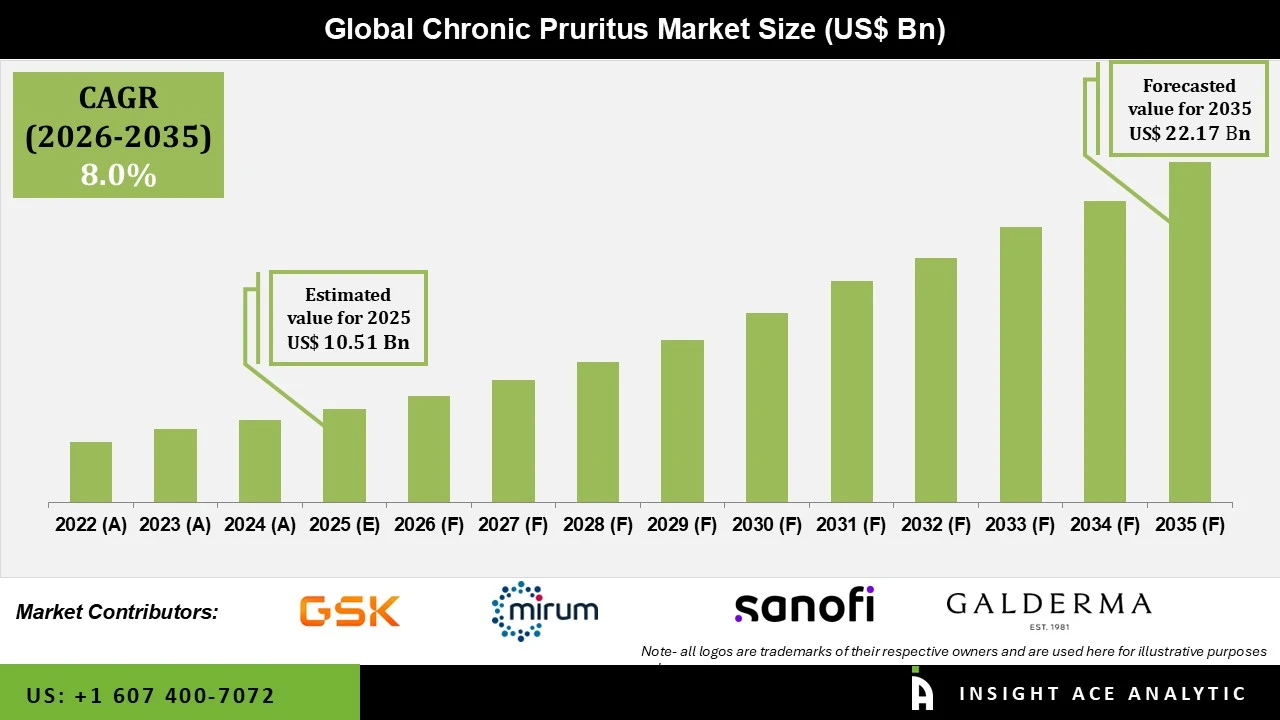
Chronic Pruritus Market Size is valued at USD 10.51 Bn in 2025 and is predicted to reach USD 22.17 Bn by the year 2035 at 8.0% CAGR during the forecast period for 2026 to 2035.
Chronic Pruritus Market Size, Share & Trends Analysis Distribution by Disease Type (Atopic Dermatitis, Urticaria, Allergic Contact Dermatitis, and Others), Drug Type (Corticosteroid, Calcineurin Inhibitors, Local Anesthetic, Antihistamine, Counterirritant, Immunosuppressant, and Others), and Segment Forecasts, 2026 to 2035
A persistent, frequently severe type of itching that lasts longer than six weeks is called chronic pruritus.
Eczema, psoriasis, liver illness, kidney disease, and neurological diseases are just a few of the underlying medical conditions that might cause it. The underlying mechanisms include intricate interactions between the neurological system and the immunological system, with components such as neuropeptides and cytokines being crucial in sustaining the itch. A person's quality of life can be greatly impacted by chronic pruritus, which can cause worry, depression, and sleep difficulties. The growing awareness and diagnosis, the development of tailored medicines, and the incidence of skin problems and chronic ailments are the factors driving the chronic pruritus market.
The growing frequency of underlying illnesses such as diabetes, liver disorders, chronic kidney disease, and dermatological conditions like psoriasis and atopic dermatitis, all of which frequently result in persistent itching, is driving the chronic pruritus market. Higher diagnosis and treatment rates are also being driven by patients' and medical professionals' growing awareness of chronic pruritus as a significant and treatable disorder. Additionally, the chronic pruritus market demand is being further accelerated by the aging population, which is more susceptible to chronic illnesses linked to pruritus. Furthermore, new antipruritic medications, biologics, and monoclonal antibodies are examples of targeted therapeutics that are improving therapy efficacy and increasing therapeutic alternatives.
However, a number of factors could prevent the market for persistent pruritus from expanding. The lack of trustworthy biomarkers, the inability to successfully target neural sensitization, the predominance of conventional treatments like corticosteroids and antihistamines, and the variety of underlying etiologies all impede the chronic pruritus market's growth. On the other hand, various treatments for chronic pruritus are being researched, and it is reasonable to assume that during the forecast period, the treatment space will have a major impact on the chronic pruritus market. Additionally, the chronic pruritus market is likely to develop due to the anticipated launch of new treatments with increased efficacy and a further improvement in the diagnostic rate.
Competitive Landscape
Which are the Leading Players in Chronic Pruritus Market?
• Galaxo SmithKline plc
• Galderma
• Sanofi
• Mirum Pharmaceuticals
• Chugai Pharmaceutical
• Others
Market Dynamics
Driver
Increasing Underlying Chronic Disease Prevalence
The rising incidence of underlying systemic and dermatological illnesses such as diabetes, atopic dermatitis, chronic kidney disease, and liver diseases is one of the biggest factors driving the chronic pruritus market. Since chronic pruritus is frequently a sign of various chronic illnesses rather than a separate problem, the number of people with persistent itching rises in tandem with the global frequency of these diseases. The patient pool is further increased by the fact that the world's aging population is more vulnerable to these chronic illnesses. Additionally, the pharmaceutical companies are being encouraged to invest in research and development of novel therapeutics in order to meet the growing need for effective and focused treatment choices, which is driving the chronic pruritus market growth.
Restrain/Challenge
High Price of Cutting-Edge Treatments
The high expense of cutting-edge therapy alternatives like biologics and targeted treatments is a significant barrier to the chronic pruritus market. Even though these medicines have proven to be more effective than traditional medications, many people cannot afford them, especially in low- and middle-income nations. Insurance hurdles and payment restrictions can limit patient access even in developed areas. Additionally, long-term or continuous medication is frequently necessary for persistent pruritus, which increases the overall financial burden on patients. The widespread adoption of sophisticated therapies is severely hampered by this cost factor, which further inhibits the chronic pruritus market growth.
Atopic Dermatitis Segment is Expected to Drive the Chronic Pruritus Market
The Atopic Dermatitis category held the largest share in the Chronic Pruritus market in 2025. One of the most prevalent long-term skin conditions is eczema, also known as atopic dermatitis, which frequently starts in early childhood. The National Eczema Association estimates that 9.6 million children under the age of 18 in the United States suffer from atopic dermatitis, with one-third having moderate to severe symptoms. Additionally, for atopic dermatitis patients, topical corticosteroids continue to be the first line of treatment for reducing inflammation and easing itching. Furthermore, patients with atopic dermatitis are receiving more effective, tailored, and long-lasting relief due to continuing research and new drug approvals in pruritus treatments, which enhances both clinical results and quality of life.
Corticosteroid Segment is Growing at the Highest Rate in the Chronic Pruritus Market
In 2025, the Corticosteroid category dominated the Chronic Pruritus market because they serve as both a first line of treatment and a means of relieving the patient and reducing inflammation. Corticosteroids, which activate glucocorticoid receptors, lessen local inflammation and indirectly manage pruritus by preventing cytokine activation. Corticosteroids are available without a prescription at several pharmacies and are thought to be an over-the-counter medication that could have the biggest gain in market share over the course of the projection year. Additionally, the fact that corticosteroids come in a variety of formulations, enabling customized treatment plans, is another advantage. For chronic pruritus cases, oral and injectable versions are recommended.
Why North America Led the Chronic Pruritus Market?
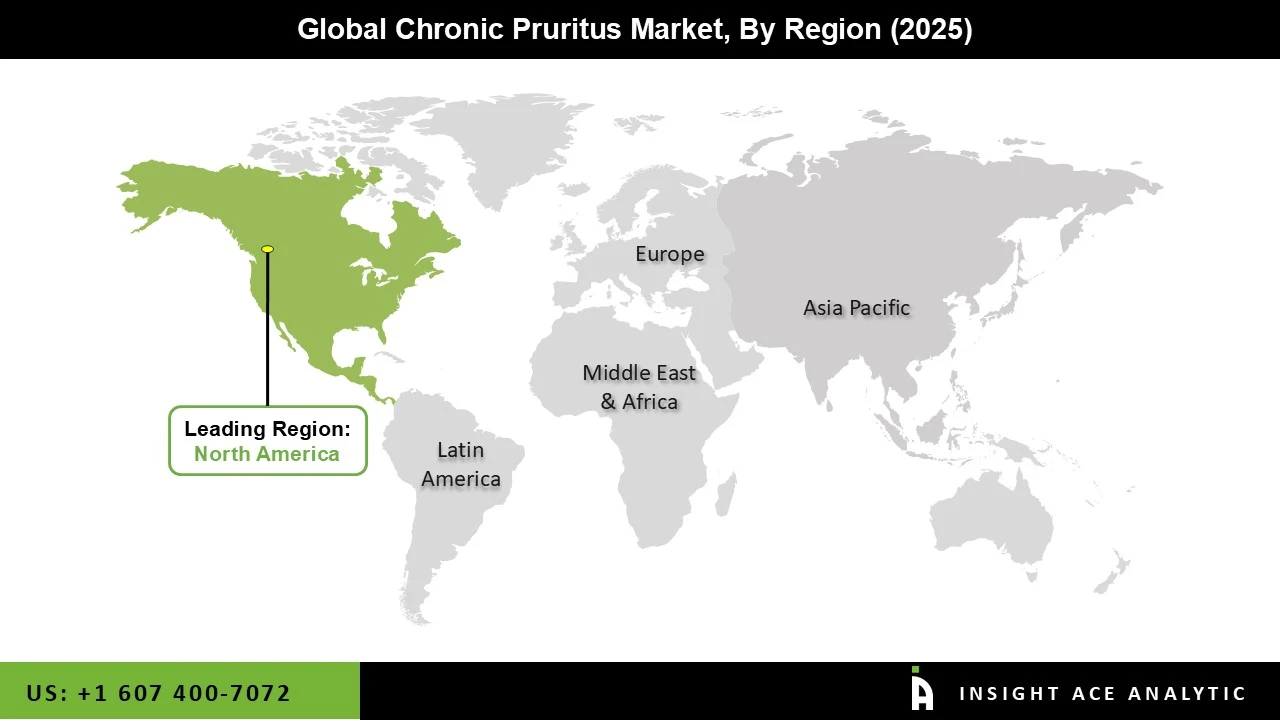
The Chronic Pruritus market was dominated by North America region in 2025 propelled by a substantial investment in research and development, a well-established healthcare system, and high awareness levels. Chronic ailments like chronic renal disease, liver diseases, and dermatological disorders like psoriasis and atopic dermatitis are highly prevalent in the region, especially in the United States, and are frequently linked to chronic pruritus.
The steady demand for efficient and cutting-edge treatment solutions is fueled by this sizable patient base. Furthermore, the research and commercialization of novel treatments, such as biologics, monoclonal antibodies, and tailored antipruritic medications, are accelerated by the presence of top pharmaceutical and biotechnology companies in North America. Additionally, regulatory agencies such as the FDA are essential because they speed up the approval process for ground-breaking treatments, which encourages the chronic pruritus market innovation.
Chronic Pruritus Market Report Scope:
| Report Attribute | Specifications |
| Market size value in 2025 | USD 10.51 Bn |
| Revenue forecast in 2035 | USD 22.17 Bn |
| Growth Rate CAGR | CAGR of 8.0% from 2026 to 2035 |
| Quantitative Units | Representation of revenue in US$ Bn and CAGR from 2026 to 2035 |
| Historic Year | 2022 to 2025 |
| Forecast Year | 2026-2035 |
| Report Coverage | The forecast of revenue, the position of the company, the competitive market structure, growth prospects, and trends |
| Segments Covered | Disease Type, Drug Type, and By Region |
| Regional Scope | North America; Europe; Asia Pacific; Latin America; Middle East & Africa |
| Country Scope | U.S.; Canada; U.K.; Germany; China; India; Japan; Brazil; Mexico; The UK; France; Italy; Spain; China; Japan; India; South Korea; Southeast Asia; South Korea; Southeast Asia |
| Competitive Landscape | Galaxo SmithKline plc, Galderma, Sanofi, Mirum Pharmaceuticals, Chugai Pharmaceutical, and Others |
| Customization Scope | Free customization report with the procurement of the report, Modifications to the regional and segment scope. Geographic competitive landscape. |
| Pricing and Available Payment Methods | Explore pricing alternatives that are customized to your particular study requirements. |
Market Segmentation:
Chronic Pruritus Market by Disease Type-
• Atopic Dermatitis
• Urticaria
• Allergic Contact Dermatitis
• Others
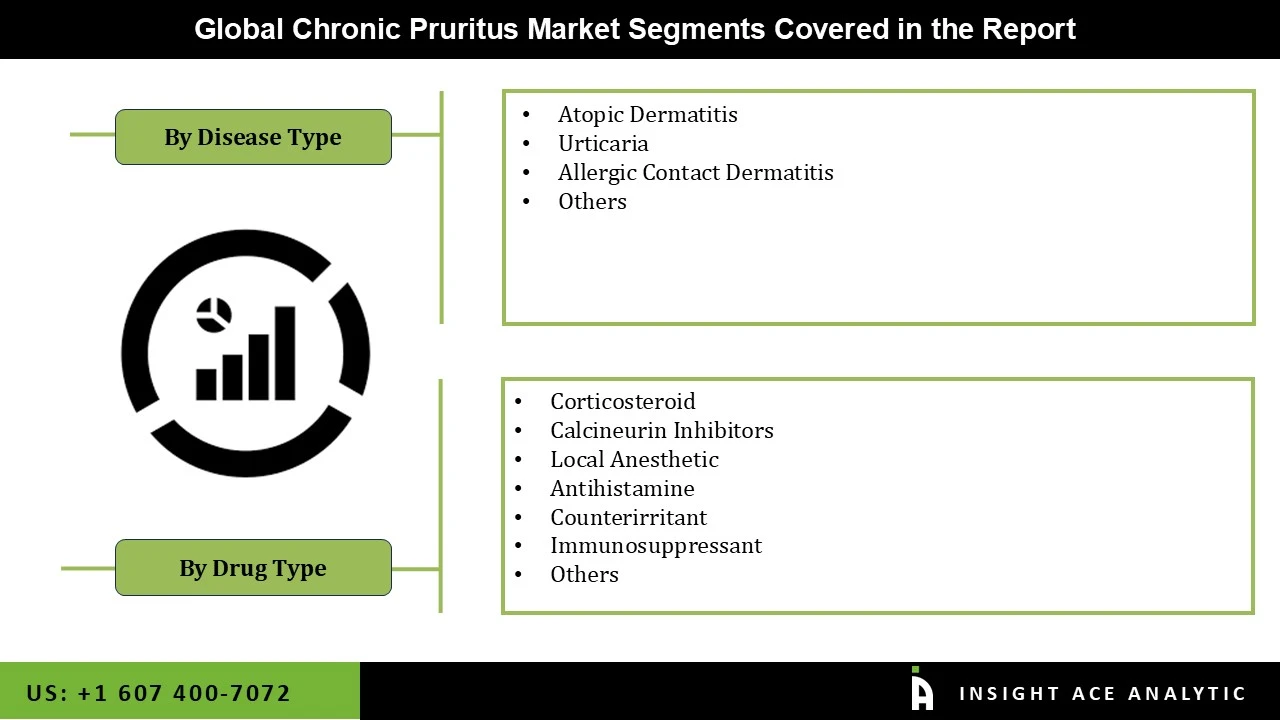
Chronic Pruritus Market by Drug Type-
• Corticosteroid
• Calcineurin Inhibitors
• Local Anesthetic
• Antihistamine
• Counterirritant
• Immunosuppressant
• Others
Chronic Pruritus Market By Region-
North America-
• The US
• Canada
Europe-
• Germany
• The UK
• France
• Italy
• Spain
• Rest of Europe
Asia-Pacific-
• China
• Japan
• India
• South Korea
• South East Asia
• Rest of Asia Pacific
Latin America-
• Brazil
• Argentina
• Mexico
• Rest of Latin America
Middle East & Africa-
• GCC Countries
• South Africa
• Rest of Middle East and Africa
Research Design and Approach
This study employed a multi-step, mixed-method research approach that integrates:
- Secondary research
- Primary research
- Data triangulation
- Hybrid top-down and bottom-up modelling
- Forecasting and scenario analysis
This approach ensures a balanced and validated understanding of both macro- and micro-level market factors influencing the market.
Secondary Research
Secondary research for this study involved the collection, review, and analysis of publicly available and paid data sources to build the initial fact base, understand historical market behaviour, identify data gaps, and refine the hypotheses for primary research.
Sources Consulted
Secondary data for the market study was gathered from multiple credible sources, including:
- Government databases, regulatory bodies, and public institutions
- International organizations (WHO, OECD, IMF, World Bank, etc.)
- Commercial and paid databases
- Industry associations, trade publications, and technical journals
- Company annual reports, investor presentations, press releases, and SEC filings
- Academic research papers, patents, and scientific literature
- Previous market research publications and syndicated reports
These sources were used to compile historical data, market volumes/prices, industry trends, technological developments, and competitive insights.

Primary Research
Primary research was conducted to validate secondary data, understand real-time market dynamics, capture price points and adoption trends, and verify the assumptions used in the market modelling.
Stakeholders Interviewed
Primary interviews for this study involved:
- Manufacturers and suppliers in the market value chain
- Distributors, channel partners, and integrators
- End-users / customers (e.g., hospitals, labs, enterprises, consumers, etc., depending on the market)
- Industry experts, technology specialists, consultants, and regulatory professionals
- Senior executives (CEOs, CTOs, VPs, Directors) and product managers
Interview Process
Interviews were conducted via:
- Structured and semi-structured questionnaires
- Telephonic and video interactions
- Email correspondences
- Expert consultation sessions
Primary insights were incorporated into demand modelling, pricing analysis, technology evaluation, and market share estimation.
Data Processing, Normalization, and Validation
All collected data were processed and normalized to ensure consistency and comparability across regions and time frames.
The data validation process included:
- Standardization of units (currency conversions, volume units, inflation adjustments)
- Cross-verification of data points across multiple secondary sources
- Normalization of inconsistent datasets
- Identification and resolution of data gaps
- Outlier detection and removal through algorithmic and manual checks
- Plausibility and coherence checks across segments and geographies
This ensured that the dataset used for modelling was clean, robust, and reliable.
Market Size Estimation and Data Triangulation
Bottom-Up Approach
The bottom-up approach involved aggregating segment-level data, such as:
- Company revenues
- Product-level sales
- Installed base/usage volumes
- Adoption and penetration rates
- Pricing analysis
This method was primarily used when detailed micro-level market data were available.

Top-Down Approach
The top-down approach used macro-level indicators:
- Parent market benchmarks
- Global/regional industry trends
- Economic indicators (GDP, demographics, spending patterns)
- Penetration and usage ratios
This approach was used for segments where granular data were limited or inconsistent.
Hybrid Triangulation Approach
To ensure accuracy, a triangulated hybrid model was used. This included:
- Reconciling top-down and bottom-up estimates
- Cross-checking revenues, volumes, and pricing assumptions
- Incorporating expert insights to validate segment splits and adoption rates
This multi-angle validation yielded the final market size.
Forecasting Framework and Scenario Modelling
Market forecasts were developed using a combination of time-series modelling, adoption curve analysis, and driver-based forecasting tools.
Forecasting Methods
- Time-series modelling
- S-curve and diffusion models (for emerging technologies)
- Driver-based forecasting (GDP, disposable income, adoption rates, regulatory changes)
- Price elasticity models
- Market maturity and lifecycle-based projections
Scenario Analysis
Given inherent uncertainties, three scenarios were constructed:
- Base-Case Scenario: Expected trajectory under current conditions
- Optimistic Scenario: High adoption, favourable regulation, strong economic tailwinds
- Conservative Scenario: Slow adoption, regulatory delays, economic constraints
Sensitivity testing was conducted on key variables, including pricing, demand elasticity, and regional adoption.
Request Customization
Add countries, segments, company profiles, or extend forecast — free 10% customization with purchase.
Customize This Report →Enquire Before Buying
Speak with our analyst team about scope, methodology, pricing, or deliverable formats.
Enquire Now →Frequently Asked Questions
Chronic Pruritus Market Size is valued at USD 10.51 Bn in 2025 and is predicted to reach USD 22.17 Bn by the year 2035
Chronic Pruritus Market is expected to grow at 8.0% CAGR during the forecast period for 2026 to 2035.
Galaxo SmithKline plc, Galderma, Sanofi, Mirum Pharmaceuticals, Chugai Pharmaceutical, and Others
Chronic Pruritus Market is segmented into Disease Type, Drug Type, and By Region
North America region is leading the Chronic Pruritus Market.
Digital Wound Care Management System Market is segmented into Product, Wound Type, End Use and other.
North America region is leading the Digital Wound Care Management System Market.