Sodium Ascorbate Excipient Market Size, Trend, Forecast Report 2026 to 2035
What is Sodium Ascorbate Excipient Market Size?
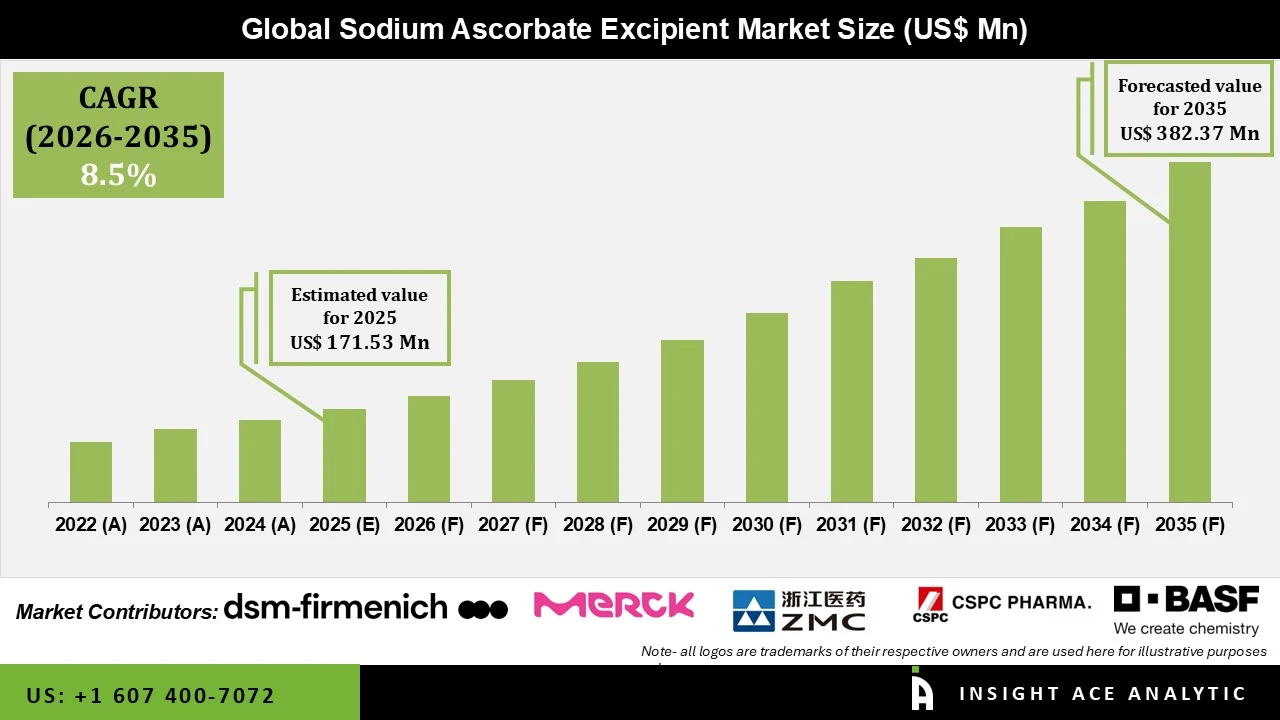
Sodium Ascorbate Excipient Market Size is valued at USD 171.53 Mn in 2025 and is predicted to reach USD 382.37 Mn by the year 2035 at a 8.5% CAGR during the forecast period for 2026 to 2035.
Sodium Ascorbate Excipient Market Size, Share & Trends Analysis Distribution by End-user (Food & Beverages, Pharmaceuticals, and Others), Sales Channel (Direct Sales and Indirect Sales), and Segment Forecasts, 2026 to 2035
The sodium salt version of ascorbic acid, or vitamin C, is known as sodium ascorbate excipient and is employed as a supporting, inert component in pharmaceutical and nutraceutical formulations. Its main role as an excipient is that of an antioxidant, which helps shield active pharmaceutical ingredients from oxidation and deterioration, increasing the product's stability and shelf life. Because it is less acidic than pure ascorbic acid, which makes it kinder to the stomach and appropriate for delicate formulations, it is also prized for its buffering qualities. Furthermore, sodium ascorbate may assist product homogeneity, improve solubility, and occasionally have moderate preservation properties. Due to its numerous uses in a variety of industries, including pharmaceuticals, food and beverage, cosmetics, and personal care, the global sodium ascorbate excipient market is expanding significantly.
The growing consumer demand for goods with natural preservatives—sodium ascorbate is regarded as a safer substitute for artificial additives—supports the sodium ascorbate excipient market's growth. Sodium ascorbate is utilized in skin care formulations because of its anti-aging and skin-brightening qualities, and the cosmetics and personal care sector also makes a substantial contribution to the sodium ascorbate excipient market's expansion. The demand for sodium ascorbate in this market is anticipated to expand as consumers become more conscious of the advantages of vitamin C in skin care. Additionally, sodium ascorbate's use as a dietary supplement and in functional foods is expanding due to the increased emphasis on health and wellness, especially in developing nations. This will also boost the sodium ascorbate excipient market growth over the forecast period.
In addition, the future growth trajectory of the sodium ascorbate excipient market is anticipated to be shaped by technological advancements in production processes and the growing adoption of sustainable and eco-friendly manufacturing practices, while market dynamics will continue to be influenced by regulatory frameworks guaranteeing product safety. However, the unstable supply chain situation, erratic raw material costs, and strict and varied food purity regulations in different nations are some of the primary reasons limiting the global sodium ascorbate excipient market.
Competitive Landscape
Which are the Leading Players in Sodium Ascorbate Excipient Market?
• BASF SE
• DuPont
• Colorcon, Inc.
• DSM Firmenich N.V.
• Hebei Welcome Pharmaceutical
• Zhejiang Medicine
• Merck KGaA
• Evonik Industries
• Spectrum Chemical Mfg. Corp
• Foodchem International Corporation
• CSPC Pharmaceutical Group
• Northeast Pharmaceutical Group
• JRS PHARMA
• Vantage Specialty Chemicals, Inc.
• Others
Market Dynamics
Driver
Growth in Dietary Supplements and Functional Foods
The sodium ascorbate excipient market is expanding due to consumers' growing emphasis on health and wellbeing as well as their increased knowledge of the advantages of functional foods and dietary supplements. Sodium ascorbate is essential for boosting the health advantages of functional foods, which go beyond basic nutrition. Because of its strong antioxidant qualities and immune-boosting advantages, it is frequently utilized in the creation of dietary supplements, making it a well-liked component of immunity-boosting goods. Additionally, the sodium ascorbate excipient market is expanding due to rising consumer demand for goods that support general health, enhance digestion, strengthen immunity, and fight the effects of aging. Since it can increase the bioavailability of other nutrients, sodium ascorbate is a useful excipient in these products. Furthermore, it keeps components like probiotics stable so that their strength doesn't change over the product's shelf life.
Restrain/Challenge
Growing Difficulties with Regulation and Compliance
Navigating the complicated and strict regulatory regimes across different areas is a major issue for the global sodium ascorbate excipient market. As a common excipient in medications and nutritional supplements, sodium ascorbate must adhere to strict regulations set forth by regulatory organizations, including the World Health Organization (WHO), the European Medicines Agency (EMA), and the U.S. FDA. Companies must make significant investments in monitoring and adjusting to new laws and regulations because these regulatory standards vary from nation to nation and may change over time. Additionally, the excipient approval procedure can be costly and time-consuming, especially in developing nations where regulatory requirements might be less predictable. Thus, the growth potential of businesses in the sodium ascorbate excipient market may be hampered by any delays or noncompliance with these rules, which may result in financial penalties, recalls, or obstacles to market access.
Pharmaceuticals Segment is Expected to Drive the Sodium Ascorbate Excipient Market
The Pharmaceuticals category held the largest share in the Sodium Ascorbate Excipient market in 2025 driven by the rising need for safe and efficient excipients in pharmaceutical formulations. Because of its antioxidant qualities, which assist in maintaining the stability of active pharmaceutical ingredients (APIs) and improve the bioavailability of some medications, sodium ascorbate—a stable form of vitamin C—is frequently employed in pharmaceutical applications. High-quality excipients such as sodium ascorbate are becoming more and more necessary as the pharmaceutical business grows worldwide, particularly in developing nations. Additionally, the growing incidence of chronic conditions, including diabetes, cancer, and cardiovascular disease, which call for long-term medicine and premium formulations, contributes to this segment's domination.
Direct Sales Segment is Growing at the Highest Rate in the Sodium Ascorbate Excipient Market
In 2025, the Direct Sales category dominated the Sodium Ascorbate Excipient market. Pharmaceutical firms' emphasis on material traceability and supply chain transparency to maintain compliance with strict regulatory criteria is the main driver of this increase. Businesses may confirm the legitimacy of raw ingredients and obtain crucial technical assistance for intricate formulas by purchasing directly from producers. Eliminating middlemen also offers a competitive advantage by lowering procurement costs and streamlining logistics. Together, these elements push businesses to use direct sourcing strategies in order to uphold strict quality control and operational effectiveness. Additionally, it has been noted that the majority of pharmaceuticals, nutraceuticals, and food formulations are bought through the direct sales channel in order to provide quality and quality assurances with effective service delivery at the lowest possible cost.
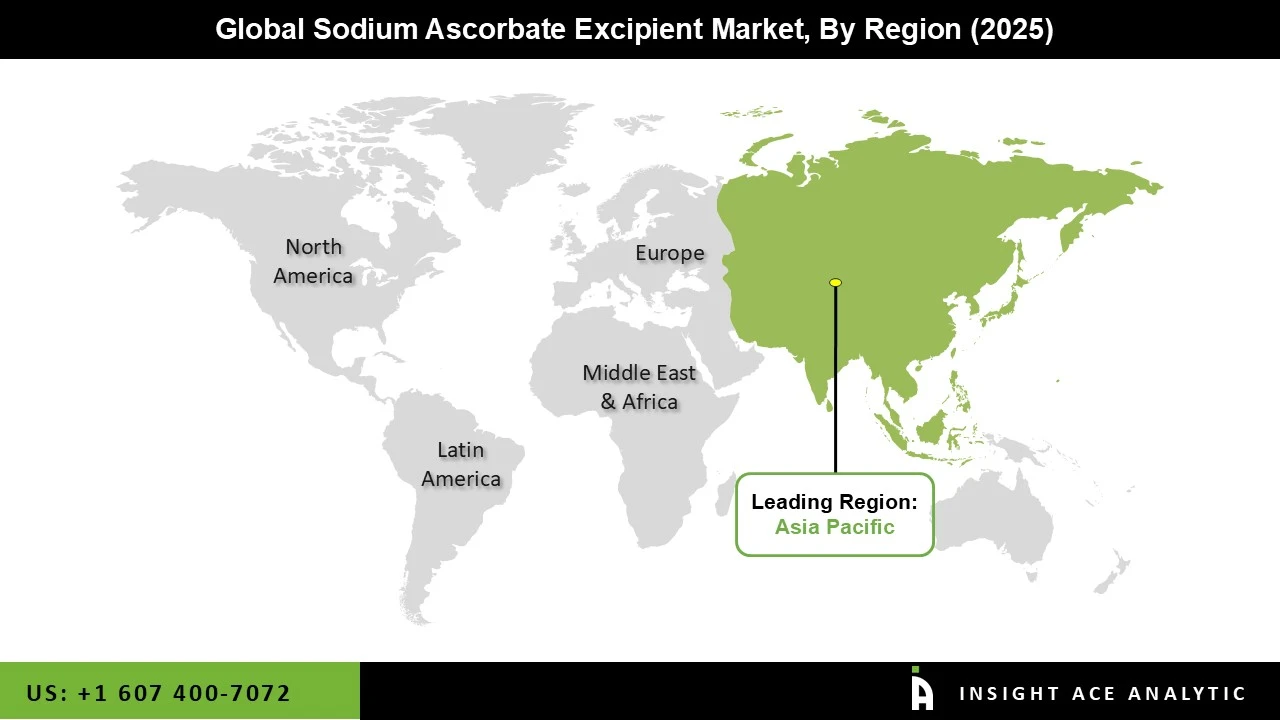
Why Asia Pacific Led the Sodium Ascorbate Excipient Market?
The Sodium Ascorbate Excipient market was dominated by Asia-Pacific region in 2025 propelled by the sophisticated pharmaceutical and nutraceutical industries in the area. The significant demand for stable and superior formulations is supported by the existence of large corporations and manufacturing hubs in China, India, Japan, and South Korea. Its use is being further increased by growing consumer knowledge of preventative healthcare and the widespread use of vitamin supplements. Furthermore, stringent regulations from regulatory authorities across key Asia-Pacific markets promote the use of safe and efficient excipients like sodium ascorbate. The regional sodium ascorbate excipient market expansion is also facilitated by ongoing innovation in drug delivery technologies and growing R&D expenditures.
Sodium Ascorbate Excipient Market Report Scope:
| Report Attribute | Specifications |
| Market size value in 2025 | USD 171.53 Mn |
| Revenue forecast in 2035 | USD 382.37 Mn |
| Growth Rate CAGR | CAGR of 8.5% from 2026 to 2035 |
| Quantitative Units | Representation of revenue in US$ Mn and CAGR from 2026 to 2035 |
| Historic Year | 2022 to 2025 |
| Forecast Year | 2026-2035 |
| Report Coverage | The forecast of revenue, the position of the company, the competitive market structure, growth prospects, and trends |
| Segments Covered | End-user, Sales Channel, and By Region |
| Regional Scope | North America; Europe; Asia Pacific; Latin America; Middle East & Africa |
| Country Scope | U.S.; Canada; U.K.; Germany; China; India; Japan; Brazil; Mexico; The UK; France; Italy; Spain; China; Japan; India; South Korea; Southeast Asia; South Korea; Southeast Asia |
| Competitive Landscape | BASF SE, DuPont, Colorcon, Inc., DSM Firmenich N.V., Hebei Welcome Pharmaceutical, Zhejiang Medicine, Merck KGaA, Evonik Industries, Spectrum Chemical Mfg. Corp, Foodchem International Corporation, CSPC Pharmaceutical Group, Northeast Pharmaceutical Group, JRS PHARMA, Vantage Specialty Chemicals, Inc., and Others |
| Customization Scope | Free customization report with the procurement of the report, Modifications to the regional and segment scope. Geographic competitive landscape. |
| Pricing and Available Payment Methods | Explore pricing alternatives that are customized to your particular study requirements. |
Market Segmentation:
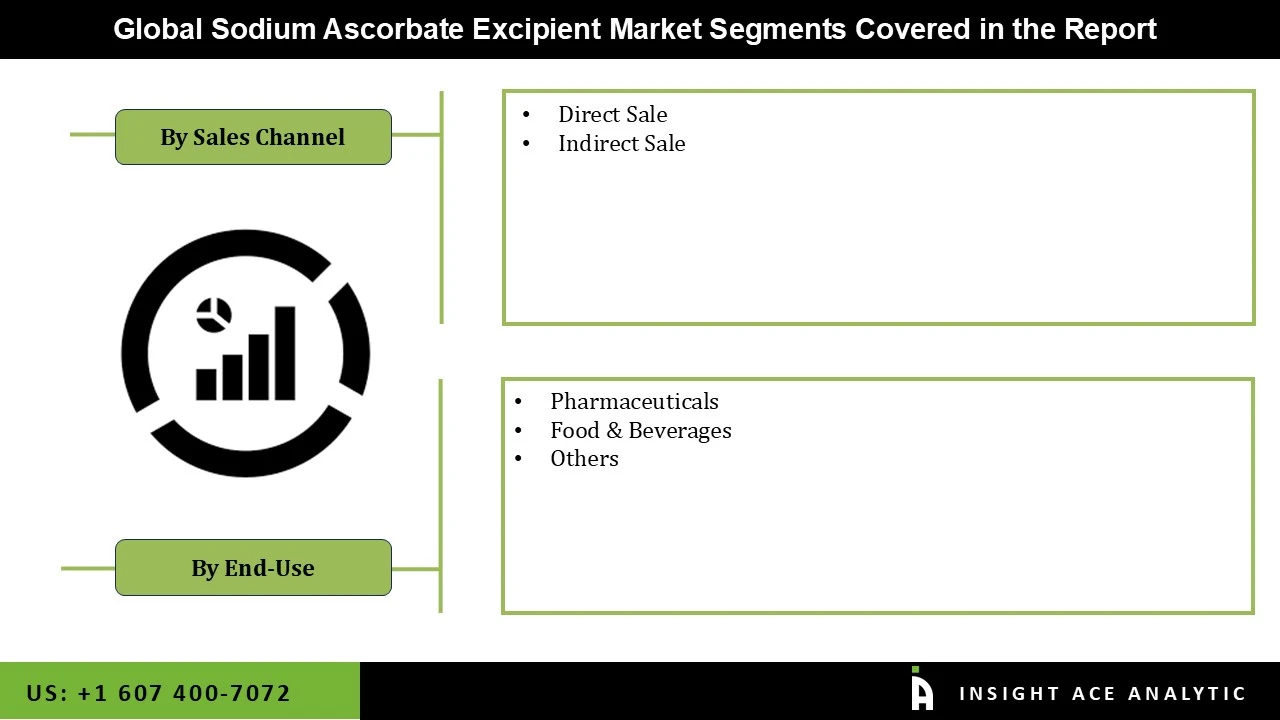
Sodium Ascorbate Excipient Market by End-user-
• Food & Beverages
• Pharmaceuticals
• Others
Sodium Ascorbate Excipient Market by Sales Channel-
• Direct Sales
• Indirect Sales
Sodium Ascorbate Excipient Market By Region-
North America-
• The US
• Canada
Europe-
• Germany
• The UK
• France
• Italy
• Spain
• Rest of Europe
Asia-Pacific-
• China
• Japan
• India
• South Korea
• South East Asia
• Rest of Asia Pacific
Latin America-
• Brazil
• Argentina
• Mexico
• Rest of Latin America
Middle East & Africa-
• GCC Countries
• South Africa
• Rest of Middle East and Africa
Research Design and Approach
This study employed a multi-step, mixed-method research approach that integrates:
- Secondary research
- Primary research
- Data triangulation
- Hybrid top-down and bottom-up modelling
- Forecasting and scenario analysis
This approach ensures a balanced and validated understanding of both macro- and micro-level market factors influencing the market.
Secondary Research
Secondary research for this study involved the collection, review, and analysis of publicly available and paid data sources to build the initial fact base, understand historical market behaviour, identify data gaps, and refine the hypotheses for primary research.
Sources Consulted
Secondary data for the market study was gathered from multiple credible sources, including:
- Government databases, regulatory bodies, and public institutions
- International organizations (WHO, OECD, IMF, World Bank, etc.)
- Commercial and paid databases
- Industry associations, trade publications, and technical journals
- Company annual reports, investor presentations, press releases, and SEC filings
- Academic research papers, patents, and scientific literature
- Previous market research publications and syndicated reports
These sources were used to compile historical data, market volumes/prices, industry trends, technological developments, and competitive insights.
Primary Research
Primary research was conducted to validate secondary data, understand real-time market dynamics, capture price points and adoption trends, and verify the assumptions used in the market modelling.
Stakeholders Interviewed
Primary interviews for this study involved:
- Manufacturers and suppliers in the market value chain
- Distributors, channel partners, and integrators
- End-users / customers (e.g., hospitals, labs, enterprises, consumers, etc., depending on the market)
- Industry experts, technology specialists, consultants, and regulatory professionals
- Senior executives (CEOs, CTOs, VPs, Directors) and product managers
Interview Process
Interviews were conducted via:
- Structured and semi-structured questionnaires
- Telephonic and video interactions
- Email correspondences
- Expert consultation sessions
Primary insights were incorporated into demand modelling, pricing analysis, technology evaluation, and market share estimation.
Data Processing, Normalization, and Validation
All collected data were processed and normalized to ensure consistency and comparability across regions and time frames.
The data validation process included:
- Standardization of units (currency conversions, volume units, inflation adjustments)
- Cross-verification of data points across multiple secondary sources
- Normalization of inconsistent datasets
- Identification and resolution of data gaps
- Outlier detection and removal through algorithmic and manual checks
- Plausibility and coherence checks across segments and geographies
This ensured that the dataset used for modelling was clean, robust, and reliable.
Market Size Estimation and Data Triangulation
Bottom-Up Approach
The bottom-up approach involved aggregating segment-level data, such as:
- Company revenues
- Product-level sales
- Installed base/usage volumes
- Adoption and penetration rates
- Pricing analysis
This method was primarily used when detailed micro-level market data were available.
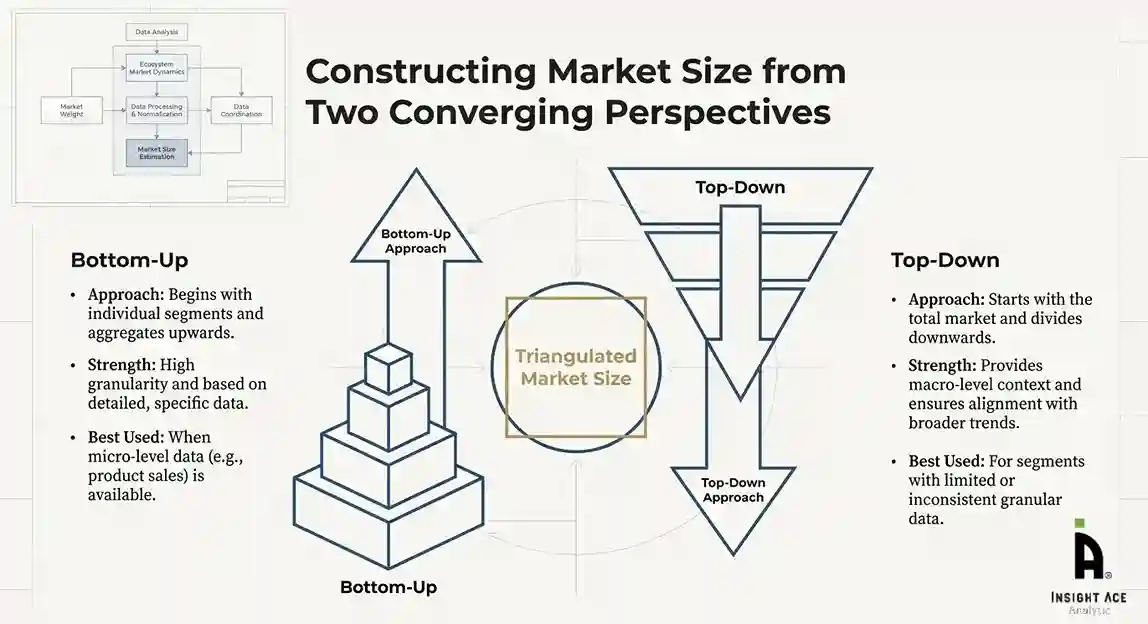
Top-Down Approach
The top-down approach used macro-level indicators:
- Parent market benchmarks
- Global/regional industry trends
- Economic indicators (GDP, demographics, spending patterns)
- Penetration and usage ratios
This approach was used for segments where granular data were limited or inconsistent.
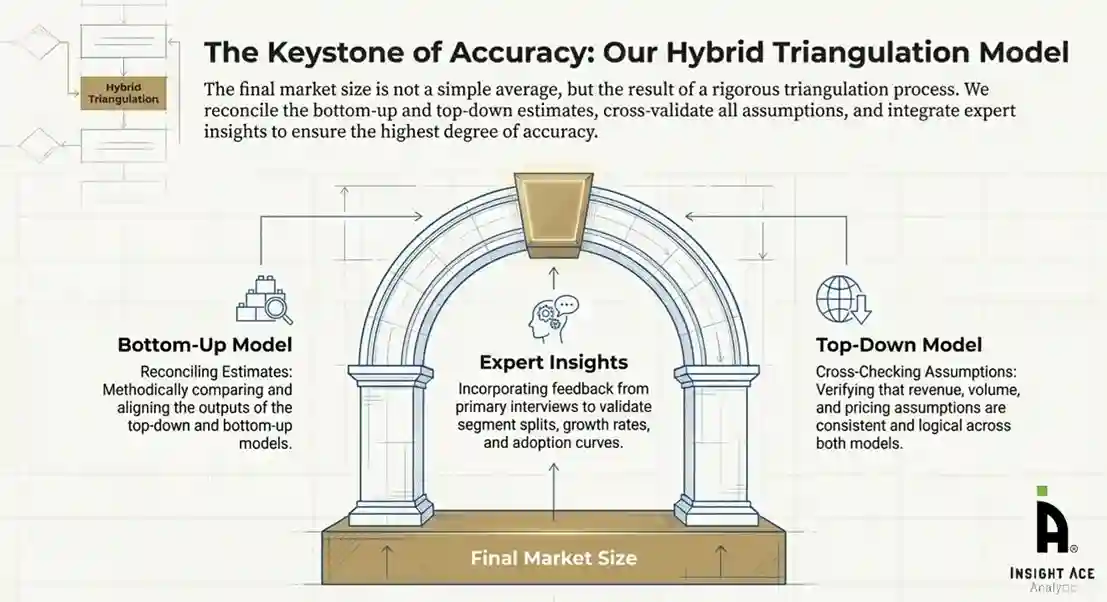
Hybrid Triangulation Approach
To ensure accuracy, a triangulated hybrid model was used. This included:
- Reconciling top-down and bottom-up estimates
- Cross-checking revenues, volumes, and pricing assumptions
- Incorporating expert insights to validate segment splits and adoption rates
This multi-angle validation yielded the final market size.
Forecasting Framework and Scenario Modelling
Market forecasts were developed using a combination of time-series modelling, adoption curve analysis, and driver-based forecasting tools.
Forecasting Methods
- Time-series modelling
- S-curve and diffusion models (for emerging technologies)
- Driver-based forecasting (GDP, disposable income, adoption rates, regulatory changes)
- Price elasticity models
- Market maturity and lifecycle-based projections
Scenario Analysis
Given inherent uncertainties, three scenarios were constructed:
- Base-Case Scenario: Expected trajectory under current conditions
- Optimistic Scenario: High adoption, favourable regulation, strong economic tailwinds
- Conservative Scenario: Slow adoption, regulatory delays, economic constraints
Sensitivity testing was conducted on key variables, including pricing, demand elasticity, and regional adoption.
Request Customization
Add countries, segments, company profiles, or extend forecast — free 10% customization with purchase.
Customize This Report →Enquire Before Buying
Speak with our analyst team about scope, methodology, pricing, or deliverable formats.
Enquire Now →Frequently Asked Questions
Sodium Ascorbate Excipient Market Size is valued at USD 171.53 Mn in 2025 and is predicted to reach USD 382.37 Mn by the year 2035
Sodium Ascorbate Excipient Market Growth is predicted to be at a 8.5% CAGR during the forecast period for 2026 to 2035.
BASF SE, DuPont, Colorcon, Inc., DSM Firmenich N.V., Hebei Welcome Pharmaceutical, Zhejiang Medicine, Merck KGaA, Evonik Industries, Spectrum Chemical Mfg. Corp, Foodchem International Corporation, CSPC Pharmaceutical Group, Northeast Pharmaceutical Group, JRS PHARMA, Vantage Specialty Chemicals, Inc., and Others
Sodium Ascorbate Excipient Market is segmented into End-user, Sales Channel, and By Region
Asia Pacific region is leading the Sodium Ascorbate Excipient Market.