Faux Leather Market Size, Share, Trend, Forecast Report 2026 to 2035
What is Faux Leather Market Size?
Faux Leather Market Size is valued at USD 41.12 Bn in 2025 and is predicted to reach USD 80.84 Bn by the year 2035 at an 7.2% CAGR during the forecast period for 2026 to 2035.
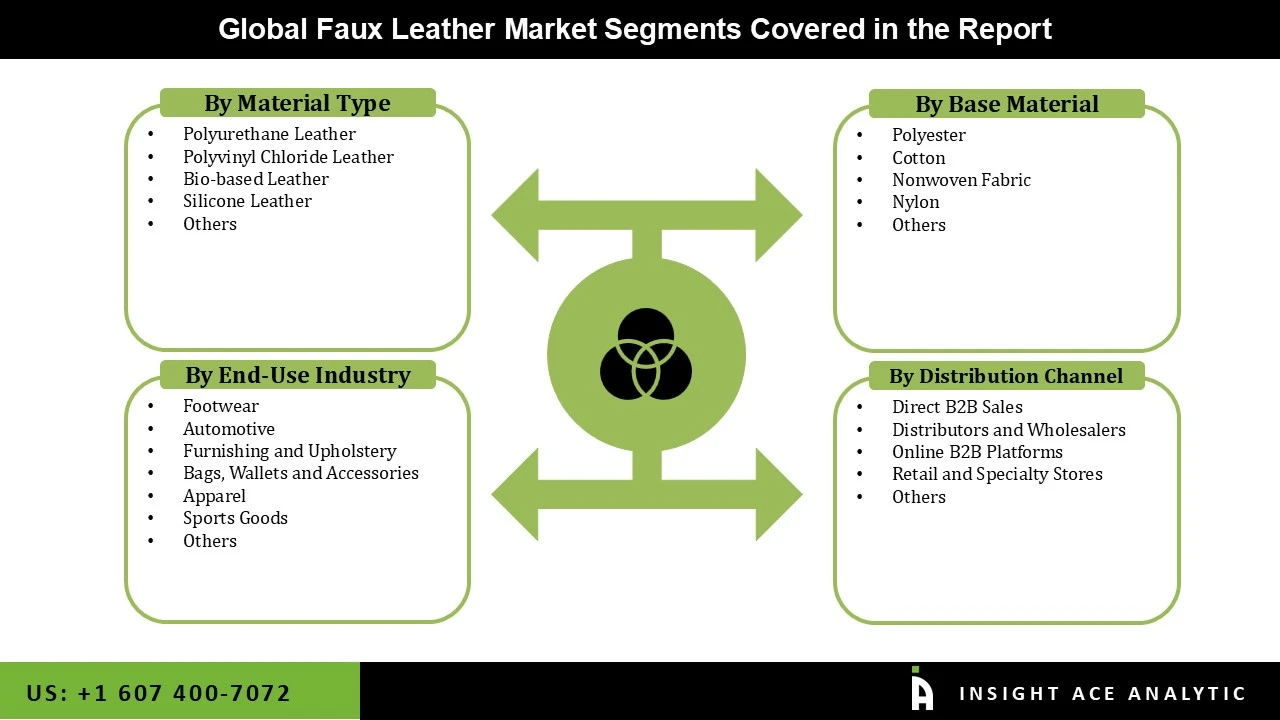
Faux Leather Market Size, Share & Trends Analysis by Material Type (Polyurethane Leather, Polyvinyl Chloride Leather, Bio-based Leather, Silicone Leather, Others), by Base Material (Polyester, Cotton, Nonwoven Fabric, Nylon, Others), by End-use Industry (Footwear, Automotive, Furnishing and Upholstery, Bags, Wallets and Accessories, Apparel, Sports Goods, Others), by Distribution Channel (Direct B2B Sales, Distributors and Wholesalers, Online B2B Platforms, Retail and Specialty Stores, Others) and Segment Forecasts, 2026 to 2035
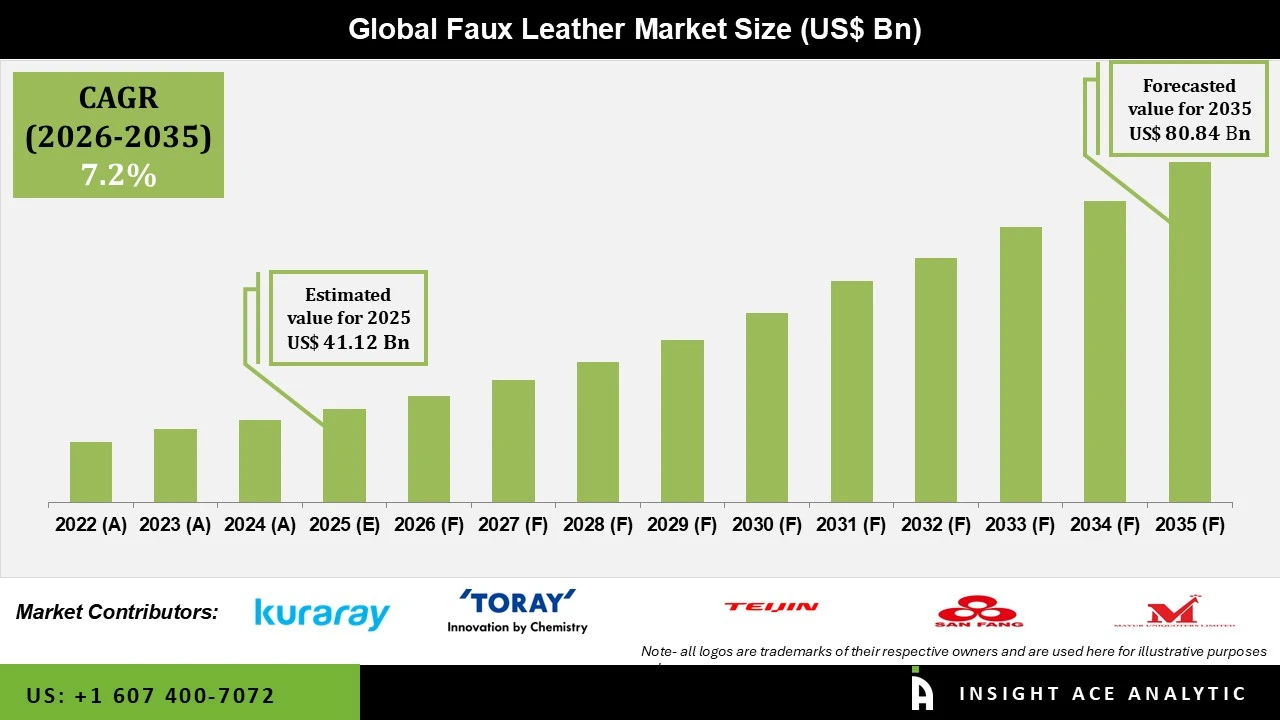
Faux leather is popular in many industries because it lets manufacturers create products in a wide range of colors, textures, and finishes without using animal leather. The global faux leather market includes the production and supply of synthetic materials that look and feel like real leather. Manufacturers use various polymers, coatings, and backing materials to achieve the right balance of durability, flexibility, appearance, maintenance, and cost. Polyurethane (PU) and polyvinyl chloride (PVC) are the most common materials, while bio-based and silicone leathers offer more options for specific uses. Demand depends on factors like material costs, manufacturing abilities, product design needs, consumer preferences, and the availability of alternatives.
The faux leather market is divided by material type, base material, end-use industry, and distribution channel. The main types are polyurethane leather, polyvinyl chloride leather, bio-based leather, silicone leather, and others. PU leather is often chosen for its flexibility, soft feel, and use in fashion and upholstery. PVC leather is preferred when cost, durability, and easy cleaning matter most. Bio-based leather comes from renewable or plant sources, but its makeup and environmental benefits can differ. Silicone leather is used when specific surface or performance features are needed. The choice of material depends on how the product will be used, how long it should last, processing needs, regulations, and cost.
Base materials are also key in making faux leather. Polyester, cotton, nonwoven fabric, and nylon are often used as the base, giving structure for coatings and finishes. These materials affect the product’s strength, flexibility, thickness, texture, and how it can be used. Manufacturers choose backing materials and coatings based on what customers want, production needs, and performance goals. New developments in coatings, surface treatments, and manufacturing methods help suppliers offer more types of faux leather for both consumer and industrial uses.
Faux leather is used in many industries, such as footwear, automotive, furniture, bags, wallets, accessories, clothing, and sports goods. In footwear, it is found in shoes and sandals where looks, flexibility, and price matter. Car makers use faux leather for seats, door panels, and other interior parts, focusing on durability, comfort, easy cleaning, and meeting vehicle standards. For furniture, it is used in sofas, chairs, and other items. Fashion brands use it in handbags, wallets, clothes, and more, while sports goods are another area. Demand in these industries depends on how much is produced, design trends, how often products are replaced, consumer spending, and technical needs.
Several factors are influencing the development of the faux leather market. Demand for affordable, versatile materials; the expansion of footwear and fashion manufacturing; automotive interior production; and furniture consumption support the use of faux leather across global supply chains. The ability to produce consistent finishes and customise colours, patterns, and textures also makes these materials suitable for manufacturers serving different market segments. Interest in animal-free materials also influences purchasing and product development decisions. However, how much this preference translates into demand varies by customer group, application, price point, and material performance.
Manufacturers are also exploring alternative raw materials and production methods in response to growing attention to environmental impact and resource efficiency. Technology and regulations are important for companies in the faux leather market. Better polymers, coatings, finishes, and backing materials help improve quality and allow products to fit specific uses. At the same time, rules about chemicals, safety, emissions, waste, and the environment can affect how materials are made and chosen.
Sustainability is becoming more important, as buyers look at raw materials, how products are made, how long they last, and what happens at the end of their life. Just having bio-based content does not always mean a product is better for the environment; it depends on the makeup, how it is made, how long it lasts, and how it is disposed of. Because of this, manufacturers and buyers are looking at a wider range of technical and environmental factors when choosing materials.
Despite these opportunities, the faux leather market faces challenges related to raw material price fluctuations, energy and production costs, competitive pricing, and the need for consistent product quality. Manufacturers must balance affordability with durability, flexibility, appearance, and performance requirements across different end-use industries. Competition from genuine leather and other alternative materials can also influence product positioning and purchasing decisions. Environmental concerns about certain synthetic polymers, chemical inputs, recyclability, and end-of-life waste may further pressure companies to improve formulations and manufacturing processes.
Furthermore, automotive, fashion, footwear, and furniture customers may require different product specifications, testing procedures, and compliance documentation, increasing the importance of technical expertise and quality control. The future of the global faux leather market will depend on demand from key industries, new material technologies, how competitive manufacturing is, and how well the industry adapts to changing customer and environmental needs. Suppliers who offer reliable quality, products for specific uses, good prices, and steady distribution will likely do well in different regions. New materials and better production methods could bring more opportunities, but their success will depend on cost, performance, scalability, and how well they fit each use. Overall, faux leather is expected to stay important in the global materials supply chain, with its growth shaped by the need for function, affordability, design options, and sustainability.
Competitive Landscape
Which are the Leading Players in the Faux Leather Market?
• Kuraray
• Toray Industries
• Teijin
• San Fang Chemical Industry
• Mayur Uniquoters
• Continental
• Kolon Industries
• Achilles Corporation
• Anhui Anli Material Technology
• H R Polycoats
• FILWEL
• Alfatex Italia
• Fujian Polytech Technology
• Winner Nippon Leatherette
• Xiefu Group
Driver
Growing Demand for Affordable, Versatile, and Animal-Free Materials is Driving the Faux Leather Market
The faux leather market is growing as more industries look for affordable, durable, and attractive materials. Footwear, fashion, automotive, and furniture companies are turning to faux leather because it offers design flexibility, a range of textures and finishes, and options for different budgets. Interest in animal-free materials is also shaping new products and buying choices. Polyurethane (PU) and polyvinyl chloride (PVC) leather are popular because they can be made in many finishes and used in various products. PU leather is valued for its soft feel and flexibility, while PVC leather is chosen when cost and easy care are priorities. Manufacturers can serve many markets, including footwear, car interiors, upholstery, bags, wallets, and clothing. New coating and surface treatments are helping suppliers improve quality and meet specific customer needs. As companies look for materials that look good, perform well, and are cost-effective, faux leather is likely to stay a key choice in many industries.
Restraint/Challenge
Raw Material Cost Fluctuations, Environmental Concerns, and Price Competition Can Challenge Faux Leather Market Growth
The faux leather market faces several challenges, including price competition, changing raw material costs, and higher expectations for quality and environmental standards. Manufacturers depend on materials like polymers, fabrics, coatings, chemicals, and energy, so their costs can change quickly with market conditions. Buyers in industries such as footwear, automotive, fashion, and furniture often compare suppliers on price, durability, appearance, consistency, and delivery. This puts pressure on manufacturers to keep prices low while meeting quality standards. Environmental issues are also a concern, especially for synthetic materials that are hard to recycle or dispose of. Companies looking at bio-based options must think about costs, how well the materials work, and whether they can get enough raw materials. Different industries may also need special testing, chemical approvals, and technical paperwork. To manage these challenges, companies can focus on making production more efficient, improving quality control, offering more material choices, and building strong relationships with both customers and suppliers.
Polyurethane Leather Segment is Expected to Account for a Significant Share of the Faux Leather Market
Polyurethane leather is expected to remain an important segment of the faux leather market because of its versatility and wide range of applications. Manufacturers use it in footwear, handbags, wallets, apparel, furniture upholstery, and automotive interiors, where they look for materials that combine an attractive appearance with flexibility and practical performance. PU leather can be produced in different colours, textures, thicknesses, and surface finishes, allowing brands to adapt materials to different designs and customer preferences. Its soft feel and flexibility make it suitable for fashion and upholstery applications, while advances in coating and finishing technologies enable products with specific durability and maintenance characteristics. Demand from manufacturers seeking alternatives to genuine leather also supports the use of PU-based materials. However, performance and environmental characteristics vary according to formulation, backing material, production process, and product design. Suppliers that can offer consistent quality, competitive pricing, and application-specific solutions are likely to remain important partners for footwear, fashion, furniture, and automotive manufacturers. Continued demand for versatile materials is expected to support polyurethane leather's position in the market.
Direct B2B Sales Channel is Expected to Remain Important in the Faux Leather Market
Direct B2B sales matter in the faux leather market because manufacturers often sell large volumes of material to companies that make shoes, car parts, furniture, and fashion items. This direct approach lets buyers and suppliers coordinate on product specs, colors, textures, performance, order size, and delivery times. It also helps with custom product development, technical support, quality checks, and long-term supply deals. These things matter most to industrial buyers who need steady quality and reliable deliveries. Distributors and wholesalers help manufacturers reach more customers in different regions and industries. They also help smaller buyers get more material choices and support with logistics and orders. Online B2B platforms let buyers find suppliers and compare products, while retail and specialty stores serve customers with smaller or special needs. The best sales channel depends on order size, location, product needs, and support required. As demand grows in key industries, both direct and intermediary sales channels will stay important for the market’s supply chain.
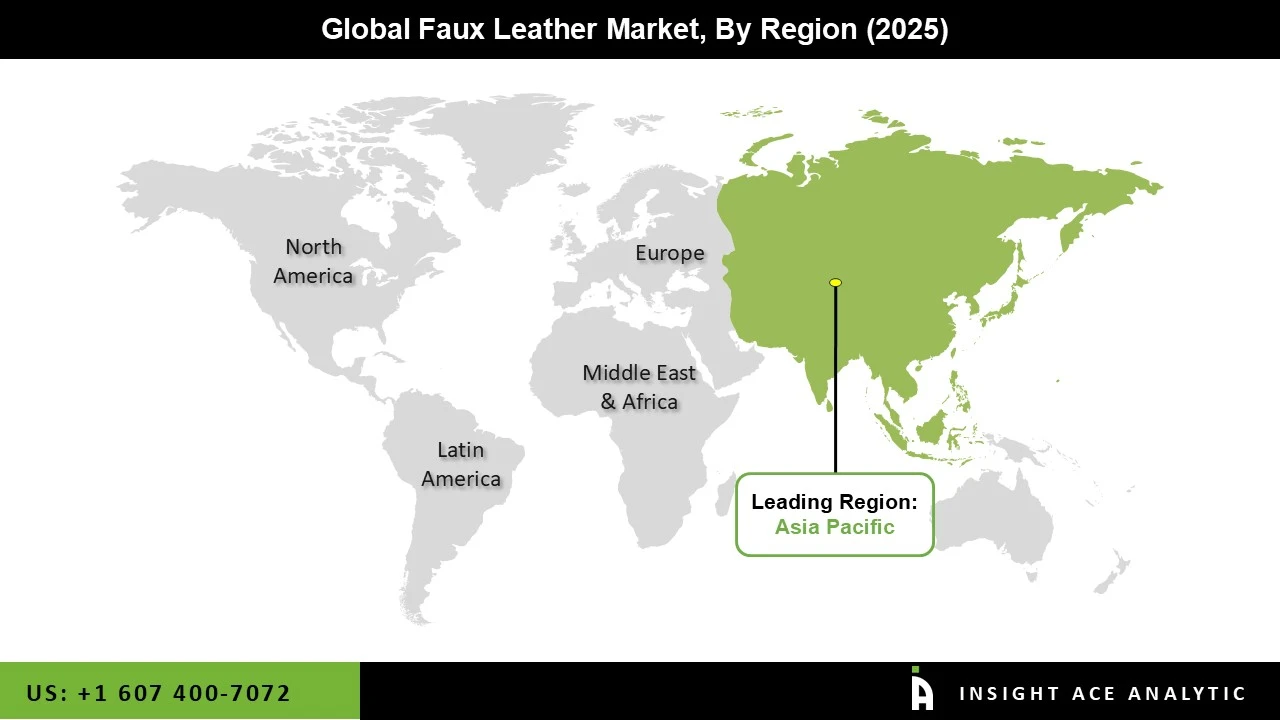
Why Asia Pacific is Leading Region in the Faux Leather Market
Asia Pacific is an important region in the faux leather market, supported by its established manufacturing base for footwear, apparel, furniture, automotive components, and consumer accessories. Countries such as China, India, Japan, and South Korea drive regional demand through manufacturing, industrial supply chains, and consumer markets. The region’s footwear and fashion industries create demand for materials used in shoes, handbags, wallets, and apparel, while furniture production and automotive manufacturing provide additional applications. Faux leather manufacturers, coating specialists, backing-material suppliers, and downstream product producers can also support production capacity and supply-chain integration. PU and PVC leather are widely relevant to these industries because they offer manufacturers different combinations of cost, appearance, and functional performance. At the same time, growing attention to material innovation and environmental considerations is encouraging suppliers to explore alternative formulations and bio-based options.
Buyers across the region continue to consider pricing, product consistency, technical specifications, and delivery reliability when selecting suppliers. Market conditions nevertheless vary by country and application, reflecting differences in manufacturing capabilities, consumer demand, and regulatory requirements. Continued activity in footwear, automotive interiors, fashion, and furnishing is expected to support Asia Pacific’s importance in the global faux leather market.
Key Developments
• In January 2026, Toray Industries expanded its European customer-facing presence for Ultrasuede by establishing a dedicated showroom and stock sales point at Alva Confecções in Sintra, Portugal. The initiative also introduced Ultrasuede sewing operations using existing facilities, strengthening local access to the material and supporting customer engagement for applications such as interiors, furniture, and other design-related products.
• In October 2024, Kuraray Co., Ltd. collaborated with Diana Co., Ltd. to develop recycled-material-based CLARINO artificial leather for sneakers sold under the Plus Diana brand. The material incorporated recycled PET bottles collected in Japan, using the equivalent of approximately 3.6 bottles per pair of sneakers in the microfiber nonwoven base.
Faux Leather Market Report Scope:
| Report Attribute | Specifications |
| Market size value in 2025 | USD 41.12 Bn |
| Revenue forecast in 2035 | USD 80.84 Bn |
| Growth Rate CAGR | CAGR of 7.2% from 2026 to 2035 |
| Quantitative Units | Representation of revenue in US$ Bn and CAGR from 2026 to 2035 |
| Historic Year | 2021 to 2025 |
| Forecast Year | 2026-2035 |
| Report Coverage | The forecast of revenue, the position of the company, the competitive market structure, growth prospects, and trends |
| Segments Covered | Material Type, Base Material, End-Use Industry, Distribution Channel and By Region |
| Regional Scope | North America; Europe; Asia Pacific; Latin America; Middle East & Africa |
| Country Scope | U.S.; Canada; U.K.; Germany; China; India; Japan; Brazil; Mexico;France; Italy; Spain; South Korea; Southeast Asia; |
| Competitive Landscape | Kuraray, Toray Industries, Teijin, San Fang Chemical Industry, Mayur Uniquoters, Continental, Kolon Industries, Achilles Corporation, Anhui Anli Material Technology, H R Polycoats, FILWEL, Alfatex Italia, Fujian Polytech Technology, Winner Nippon Leatherette, Xiefu Group |
| Customization Scope | Free customisation report with the procurement of the report, Modifications to the regional and segment scope. Geographic competitive landscape. |
| Pricing and Available Payment Methods | Explore pricing alternatives that are customised to your particular study requirements. |
Market Segmentation:
Faux Leather Market by Material Type-
• Polyurethane Leather
• Polyvinyl Chloride Leather
• Bio-based Leather
• Silicone Leather
• Others
Faux Leather Market by Base Material -
• Polyester
• Cotton
• Nonwoven Fabric
• Nylon
• Others
Faux Leather Market by End Use Industry -
• Footwear
• Automotive
• Furnishing and Upholstery
• Bags, Wallets and Accessories
• Apparel
• Sports Goods
• Others
Faux Leather Market by Distribution Channel -
• Direct B2B Sales
• Distributors and Wholesalers
• Online B2B Platforms
• Retail and Specialty Stores
• Others
Faux Leather Market by Region-
North America-
• United States
• Canada
Europe-
• Germany
• United Kingdom
• France
• Russia
• Italy
• Spain
• Rest of Europe
Asia Pacific-
• China
• India
• Japan
• South Korea
• Malaysia
• Thailand
• Indonesia
• Rest of APAC
South America-
• Brazil
• Mexico
• Argentina
• Rest of South America
Middle East & Africa (MEA)-
• GCC Countries
• South Africa
• Rest of MEA
Research Design and Approach
This study employed a multi-step, mixed-method research approach that integrates:
- Secondary research
- Primary research
- Data triangulation
- Hybrid top-down and bottom-up modelling
- Forecasting and scenario analysis
This approach ensures a balanced and validated understanding of both macro- and micro-level market factors influencing the market.
Secondary Research
Secondary research for this study involved the collection, review, and analysis of publicly available and paid data sources to build the initial fact base, understand historical market behaviour, identify data gaps, and refine the hypotheses for primary research.
Sources Consulted
Secondary data for the market study was gathered from multiple credible sources, including:
- Government databases, regulatory bodies, and public institutions
- International organizations (WHO, OECD, IMF, World Bank, etc.)
- Commercial and paid databases
- Industry associations, trade publications, and technical journals
- Company annual reports, investor presentations, press releases, and SEC filings
- Academic research papers, patents, and scientific literature
- Previous market research publications and syndicated reports
These sources were used to compile historical data, market volumes/prices, industry trends, technological developments, and competitive insights.
Primary Research
Primary research was conducted to validate secondary data, understand real-time market dynamics, capture price points and adoption trends, and verify the assumptions used in the market modelling.
Stakeholders Interviewed
Primary interviews for this study involved:
- Manufacturers and suppliers in the market value chain
- Distributors, channel partners, and integrators
- End-users / customers (e.g., hospitals, labs, enterprises, consumers, etc., depending on the market)
- Industry experts, technology specialists, consultants, and regulatory professionals
- Senior executives (CEOs, CTOs, VPs, Directors) and product managers
Interview Process
Interviews were conducted via:
- Structured and semi-structured questionnaires
- Telephonic and video interactions
- Email correspondences
- Expert consultation sessions
Primary insights were incorporated into demand modelling, pricing analysis, technology evaluation, and market share estimation.
Data Processing, Normalization, and Validation
All collected data were processed and normalized to ensure consistency and comparability across regions and time frames.
The data validation process included:
- Standardization of units (currency conversions, volume units, inflation adjustments)
- Cross-verification of data points across multiple secondary sources
- Normalization of inconsistent datasets
- Identification and resolution of data gaps
- Outlier detection and removal through algorithmic and manual checks
- Plausibility and coherence checks across segments and geographies
This ensured that the dataset used for modelling was clean, robust, and reliable.
Market Size Estimation and Data Triangulation
Bottom-Up Approach
The bottom-up approach involved aggregating segment-level data, such as:
- Company revenues
- Product-level sales
- Installed base/usage volumes
- Adoption and penetration rates
- Pricing analysis
This method was primarily used when detailed micro-level market data were available.
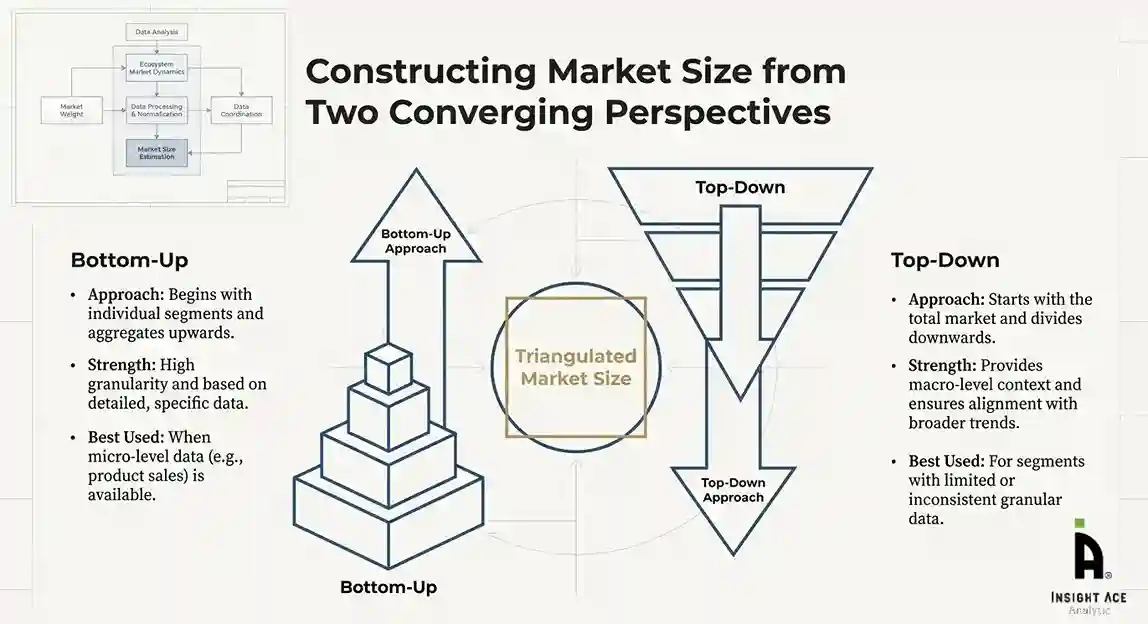
Top-Down Approach
The top-down approach used macro-level indicators:
- Parent market benchmarks
- Global/regional industry trends
- Economic indicators (GDP, demographics, spending patterns)
- Penetration and usage ratios
This approach was used for segments where granular data were limited or inconsistent.
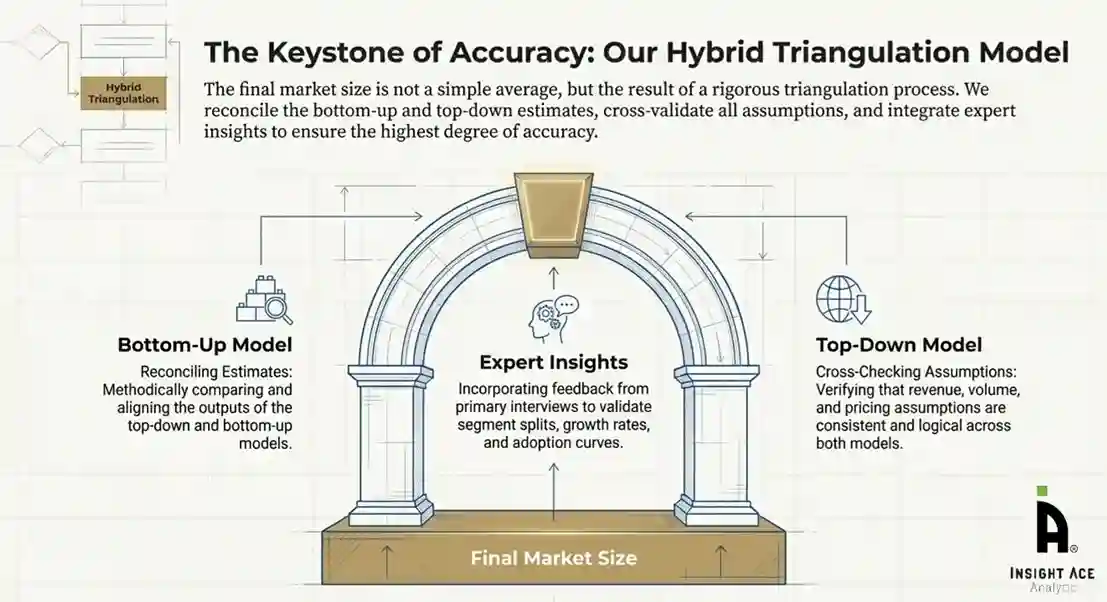
Hybrid Triangulation Approach
To ensure accuracy, a triangulated hybrid model was used. This included:
- Reconciling top-down and bottom-up estimates
- Cross-checking revenues, volumes, and pricing assumptions
- Incorporating expert insights to validate segment splits and adoption rates
This multi-angle validation yielded the final market size.
Forecasting Framework and Scenario Modelling
Market forecasts were developed using a combination of time-series modelling, adoption curve analysis, and driver-based forecasting tools.
Forecasting Methods
- Time-series modelling
- S-curve and diffusion models (for emerging technologies)
- Driver-based forecasting (GDP, disposable income, adoption rates, regulatory changes)
- Price elasticity models
- Market maturity and lifecycle-based projections
Scenario Analysis
Given inherent uncertainties, three scenarios were constructed:
- Base-Case Scenario: Expected trajectory under current conditions
- Optimistic Scenario: High adoption, favourable regulation, strong economic tailwinds
- Conservative Scenario: Slow adoption, regulatory delays, economic constraints
Sensitivity testing was conducted on key variables, including pricing, demand elasticity, and regional adoption.
Request Customization
Add countries, segments, company profiles, or extend forecast — free 10% customization with purchase.
Customize This Report →Enquire Before Buying
Speak with our analyst team about scope, methodology, pricing, or deliverable formats.
Enquire Now →Frequently Asked Questions
Faux Leather Market Size is valued at USD 41.12 Bn in 2025 and is predicted to reach USD 80.84 Bn by the year 2035
Faux Leather Market Size is expected to grow at an 7.2% CAGR during the forecast period for 2026 to 2035.
Kuraray, Toray Industries, Teijin, San Fang Chemical Industry, Mayur Uniquoters, Continental, Kolon Industries, Achilles Corporation, Anhui Anli Material Technology, H R Polycoats, FILWEL, Alfatex Italia, Fujian Polytech Technology, Winner Nippon Leatherette, Xiefu Group
Faux Leather Market Size is segmented into Material Type, Base Material, End-Use Industry, Distribution Channel and By Region
Asia Pacific region is leading the Faux Leather Market Size.