Serology Testing Market Size, Share, Forecast Report 2026 to 2035
What is Serology Testing Market Size?
Global Serology Testing Market Size is valued at USD 17.13 Bn in 2025 and is predicted to reach USD 33.69 Bn by the year 2035 at a 7.2% CAGR during the forecast period for 2026 to 2035.
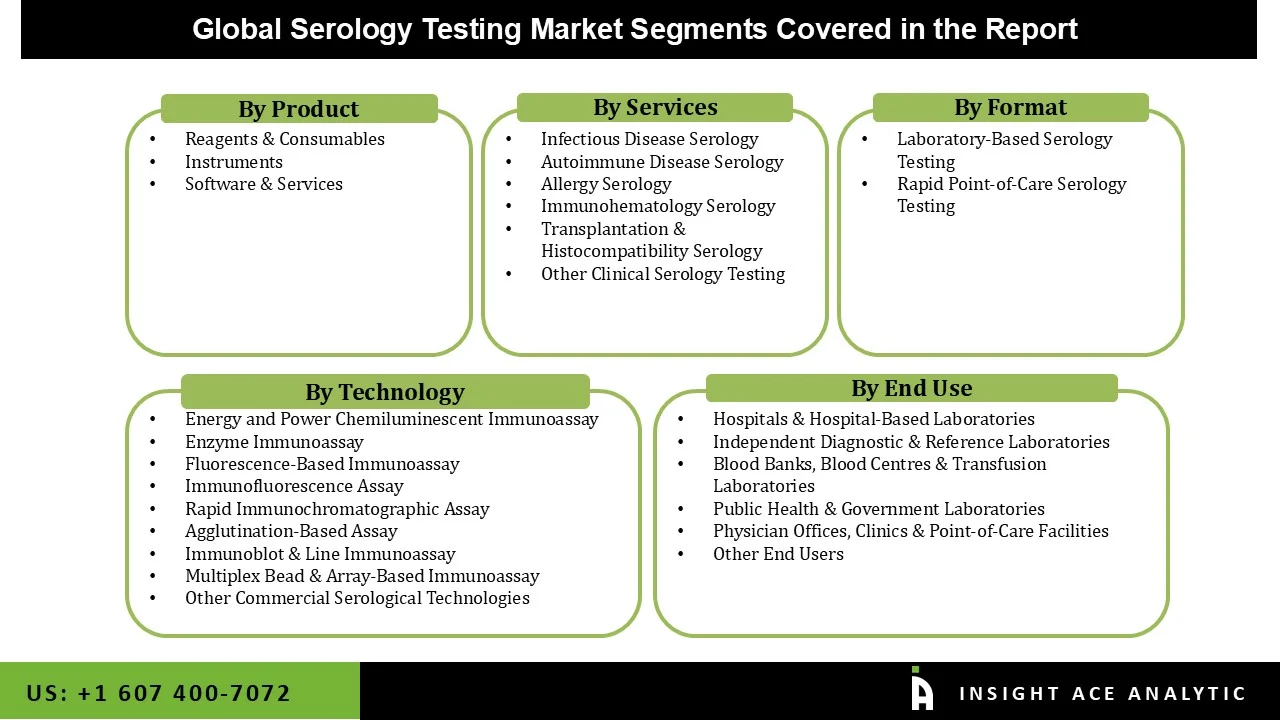
Serology Testing Market Size, Share & Trends Analysis Distribution by Product (Reagents & Consumables, Instruments, Software & Services), By Service (Infectious Disease Serology, Autoimmune Disease Serology, Allergy Serology, Immunohematology Serology, Transplantation & Histocompatibility Serology, Other Clinical Serology Testing), By Format (Laboratory-Based Serology Testing, Rapid Point-of-Care Serology Testing), By Technology (Chemiluminescent Immunoassay, Enzyme Immunoassay, Fluorescence-Based Immunoassay, Immunofluorescence Assay, Rapid Immunochromatographic Assay, Agglutination-Based Assay, Immunoblot & Line Immunoassay, Multiplex Bead & Array-Based Immunoassay, Other Commercial Serological Technologies), By End Use (Hospitals & Hospital-Based Laboratories, Independent Diagnostic & Reference Laboratories, Blood Banks, Blood Centres & Transfusion Laboratories, Public Health & Government Laboratories, Physician Offices, Clinics & Point-of-Care Facilities, Other End Users) and Segment Forecasts, 2026 to 2035.
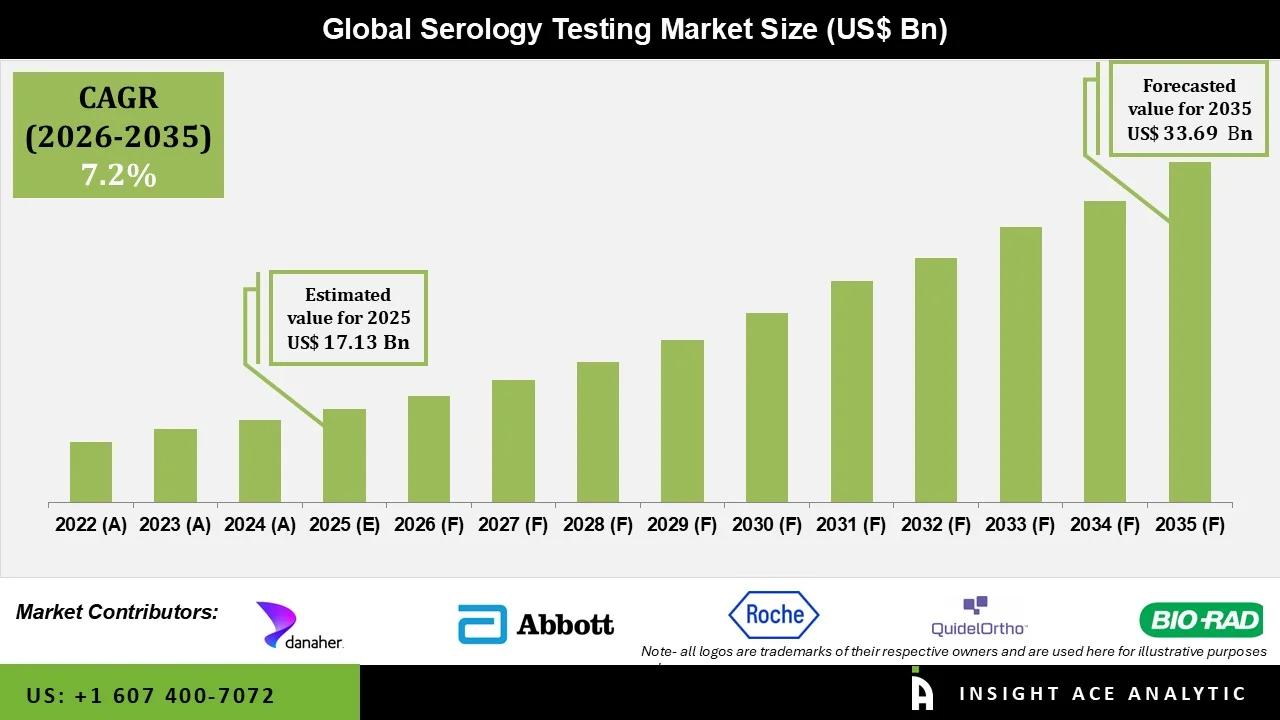
Serology testing involves the examination of blood serum or plasma in order to detect antibodies, antigens, and other biomarkers related to the immune system which are connected with infectious diseases, autoimmune disorders, the immune response, and certain clinical conditions. It is employed for determining whether or not there has been previous or ongoing exposure to pathogens, for assessing the state of the immune system, to aid in diagnosis, to evaluate the response to vaccination, and to help with disease surveillance. The various serological techniques commonly used include enzyme-linked immunosorbent assays (ELISA), chemiluminescence immunoassays (CLIA), immunofluorescence assays (IFA), agglutination tests, rapid diagnostic tests, and other automated immunoassay systems used in hospitals, diagnostic laboratories, blood banks, and public health facilities.
The market for serology testing includes analyzers, instruments, assay kits, reagents, consumables, and rapid testing solutions which are used for serological analysis in both clinical and laboratory environments. It involves a range of applications such as testing for infectious diseases, blood screening, testing for autoimmune conditions, testing related to transplantation, and the assessment of immunity, and this market encompasses both centralized laboratory systems and decentralized point-of-care options. The major companies in the market compete on the basis of their assay portfolio, diagnostic accuracy, automation, throughput, regulatory approvals, workflow integration, and geographic availability, and as a result serology testing has become a significant part of the wider in-vitro diagnostics industry.
Competitive Landscape
Which are the Leading Players in the Serology Testing Market?
- F. Hoffmann-La Roche Ltd
- Abbott Laboratories
- Danaher Corporation
- QuidelOrtho Corporation
- Bio-Rad Laboratories, Inc.
- Grifols, S.A.
- Siemens Healthineers AG
- bioMérieux SA
- DiaSorin S.p.A.
- Thermo Fisher Scientific Inc.
Market Dynamics
Driver
Rising Prevalence of Infectious Diseases
The growing incidence of infectious diseases is a key factor in boosting the serology testing market, since it increases the demand for reliable diagnostic methods that can detect infections and evaluate immune responses. The ongoing impact of diseases including HIV, hepatitis, dengue, and various other viral and bacterial infections is leading to higher demand for serological tests in hospitals, diagnostic laboratories, and blood banks. Such tests are able to identify antibodies and antigens that are specific to a disease, thus aiding in diagnosis, screening, and disease surveillance. Moreover, the expansion of public health screening programmes, the increasing awareness of the importance of early disease detection, and the need to keep track of infection exposure are all helping to promote the use of serology testing in both clinical and public health contexts. The rise in international travel and population movement also adds to the requirement for effective infectious disease surveillance and screening. Because healthcare systems are focusing on achieving timely diagnosis and better disease management, demand for serological testing is expected to go up.
Restrain/Challenge
Risk of False-Positive and False-Negative Results
A major challenge in the serology testing market is the possibility of both false-positive and false-negative results, since the accuracy of the tests can be influenced by cross-reactivity, variations in immune responses, and the time at which the sample is collected. It can take several days or weeks for antibodies to develop after an infection, which means that false-negative results may occur if the test is carried out in the early stages of the disease. Moreover, cross-reactivity with antibodies linked to other infections or disorders can cause false-positive results, making it difficult to arrive at a correct diagnosis and affecting clinical decision-making. Because of these limitations, confirmatory testing by means of molecular or other diagnostic methods is often needed, thus raising the cost of testing and prolonging the time it takes to get results.
Reagents & Consumables Segment is Expected to Drive the Serology Testing Market
Reagents & consumables are expected to drive the serology testing market, owing to their recurring use in diagnostic procedures and the continuous demand for test kits, antibodies, antigens, assay substrates, and other essential testing materials. Unlike instruments, which are typically purchased less frequently, reagents and consumables are required for every testing cycle and must be replenished regularly. The increasing volume of infectious disease screening, blood-donor testing, and routine diagnostic procedures across hospitals, diagnostic laboratories, and blood banks is supporting segment growth. Additionally, the introduction of new assay kits, growing adoption of automated immunoassay platforms, and continued demand for reliable and rapid diagnostic results are expected to strengthen the segment's market position.
Allergy Serology Segment is Growing at the Highest Rate in the Serology Testing Market
Allergy serology is anticipated to see the quickest growth in the serology testing market during the forecast period. The reason for this growth is the growing prevalence of various allergic conditions, such as food allergies, allergic rhinitis, asthma, and environmental allergies, together with a higher demand for accurate diagnostic techniques that can identify specific allergens. Blood-based serological tests which measure allergen-specific immunoglobulin E (IgE) assist healthcare professionals in investigating allergic sensitization, especially in cases where skin testing is not feasible. Moreover, the expansion of diagnostic capabilities, the introduction of more advanced allergy testing assays, and the greater adoption of automated laboratory systems are all expected to contribute to growth in this segment.
Why North America Led the Serology Testing Market?
North America holds the leading position in the global serology testing market as a result of its sophisticated healthcare infrastructure, its well-developed network of diagnostic laboratories, and the high level of acceptance of advanced diagnostic technologies. This region enjoys high healthcare spending, extensive screening initiatives for infectious diseases, and long-standing blood-donor testing procedures, all of which contribute to the steady demand for serological assays.
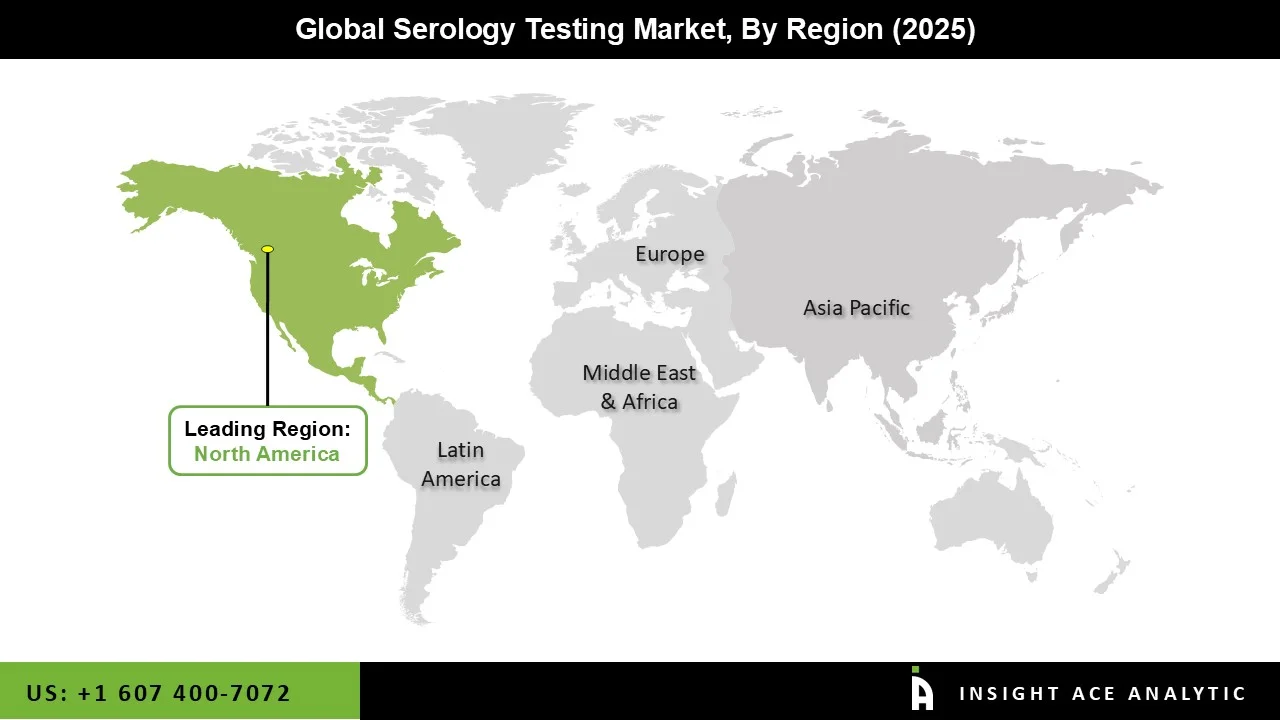
The significant presence of large diagnostic companies, ongoing investment in research and development, and the increasing use of automated immunoassay platforms also serve to boost market growth. Moreover, the rising awareness of the importance of early disease detection and the existence of established healthcare reimbursement systems promote the use of serology testing in hospitals, clinical laboratories, and other healthcare settings.
Key Development
September 2026: Beckman Coulter Diagnostics, a Danaher company, is expanding its infectious disease serology portfolio on the DxI 9000 Immunoassay Analyzer. The expanded assay menu supports testing for HIV, syphilis, viral hepatitis, and other infections, helping laboratories address growing screening needs, improve diagnostic sensitivity, and manage increasing test volumes efficiently.
Serology Testing Market Report Scope:
| Report Attribute | Specifications |
| Market size value in 2025 | USD 17.13 Bn |
| Revenue forecast in 2035 | USD 33.69 Bn |
| Growth Rate CAGR | CAGR of 7.2% from 2026 to 2035 |
| Quantitative Units | Representation of revenue in US$ Bn and CAGR from 2026 to 2035 |
| Historic Year | 2022 to 2025 |
| Forecast Year | 2026-2035 |
| Report Coverage | The forecast of revenue, the position of the company, the competitive market structure, growth prospects, and trends |
| Segments Covered | Product, Services, Format, Technology, End Use and By Region |
| Regional Scope | North America; Europe; Asia Pacific; Latin America; Middle East & Africa |
| Country Scope | U.S.; Canada; U.K.; Germany; China; India; Japan; Brazil; Mexico; France; Italy; Spain; South Korea; Southeast Asia |
| Competitive Landscape | F. Hoffmann-La Roche Ltd, Abbott Laboratories, Danaher Corporation, QuidelOrtho Corporation, Bio-Rad Laboratories, Inc., Grifols, S.A., Siemens Healthineers AG, bioMérieux SA, DiaSorin S.p.A., Thermo Fisher Scientific Inc. |
| Customization Scope | Free customization report with the procurement of the report, Modifications to the regional and segment scope. Geographic competitive landscape. |
| Pricing and Available Payment Methods | Explore pricing alternatives that are customized to your particular study requirements. |
Segmentations Serology Testing Market:
Serology Testing Market by Product -
- Reagents & Consumables
- Instruments
- Software & Services
Serology Testing Market by Services -
- Infectious Disease Serology
- Autoimmune Disease Serology
- Allergy Serology
- Immunohematology Serology
- Transplantation & Histocompatibility Serology
- Other Clinical Serology Testing
Serology Testing Market by Format -
- Laboratory-Based Serology Testing
- Rapid Point-of-Care Serology Testing
Serology Testing Market by Technology -
- Chemiluminescent Immunoassay
- Enzyme Immunoassay
- Fluorescence-Based Immunoassay
- Immunofluorescence Assay
- Rapid Immunochromatographic Assay
- Agglutination-Based Assay
- Immunoblot & Line Immunoassay
- Multiplex Bead & Array-Based Immunoassay
- Other Commercial Serological Technologies
Serology Testing Market by End Use -
- Hospitals & Hospital-Based Laboratories
- Independent Diagnostic & Reference Laboratories
- Blood Banks, Blood Centres & Transfusion Laboratories
- Public Health & Government Laboratories
- Physician Offices, Clinics & Point-of-Care Facilities
- Other End Users
Serology Testing Market by Region-
- North America-
- The US
- Canada
- Europe-
- Germany
- The UK
- France
- Italy
- Spain
- Rest of Europe
- Asia-Pacific-
- China
- Japan
- India
- South Korea
- South East Asia
- Rest of Asia Pacific
- Latin America-
- Brazil
- Argentina
- Mexico
- Rest of Latin America
- Middle East and Africa-
- GCC Countries
- South Africa
- Rest of Middle East and Africa
Research Design and Approach
This study employed a multi-step, mixed-method research approach that integrates:
- Secondary research
- Primary research
- Data triangulation
- Hybrid top-down and bottom-up modelling
- Forecasting and scenario analysis
This approach ensures a balanced and validated understanding of both macro- and micro-level market factors influencing the market.
Secondary Research
Secondary research for this study involved the collection, review, and analysis of publicly available and paid data sources to build the initial fact base, understand historical market behaviour, identify data gaps, and refine the hypotheses for primary research.
Sources Consulted
Secondary data for the market study was gathered from multiple credible sources, including:
- Government databases, regulatory bodies, and public institutions
- International organizations (WHO, OECD, IMF, World Bank, etc.)
- Commercial and paid databases
- Industry associations, trade publications, and technical journals
- Company annual reports, investor presentations, press releases, and SEC filings
- Academic research papers, patents, and scientific literature
- Previous market research publications and syndicated reports
These sources were used to compile historical data, market volumes/prices, industry trends, technological developments, and competitive insights.
Primary Research
Primary research was conducted to validate secondary data, understand real-time market dynamics, capture price points and adoption trends, and verify the assumptions used in the market modelling.
Stakeholders Interviewed
Primary interviews for this study involved:
- Manufacturers and suppliers in the market value chain
- Distributors, channel partners, and integrators
- End-users / customers (e.g., hospitals, labs, enterprises, consumers, etc., depending on the market)
- Industry experts, technology specialists, consultants, and regulatory professionals
- Senior executives (CEOs, CTOs, VPs, Directors) and product managers
Interview Process
Interviews were conducted via:
- Structured and semi-structured questionnaires
- Telephonic and video interactions
- Email correspondences
- Expert consultation sessions
Primary insights were incorporated into demand modelling, pricing analysis, technology evaluation, and market share estimation.
Data Processing, Normalization, and Validation
All collected data were processed and normalized to ensure consistency and comparability across regions and time frames.
The data validation process included:
- Standardization of units (currency conversions, volume units, inflation adjustments)
- Cross-verification of data points across multiple secondary sources
- Normalization of inconsistent datasets
- Identification and resolution of data gaps
- Outlier detection and removal through algorithmic and manual checks
- Plausibility and coherence checks across segments and geographies
This ensured that the dataset used for modelling was clean, robust, and reliable.
Market Size Estimation and Data Triangulation
Bottom-Up Approach
The bottom-up approach involved aggregating segment-level data, such as:
- Company revenues
- Product-level sales
- Installed base/usage volumes
- Adoption and penetration rates
- Pricing analysis
This method was primarily used when detailed micro-level market data were available.
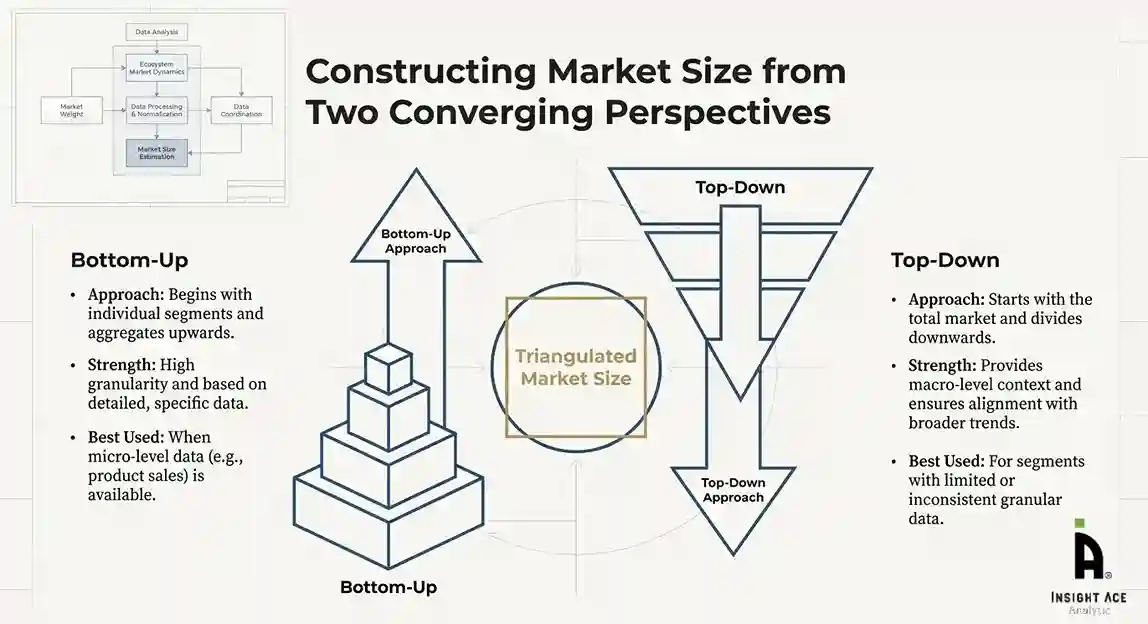
Top-Down Approach
The top-down approach used macro-level indicators:
- Parent market benchmarks
- Global/regional industry trends
- Economic indicators (GDP, demographics, spending patterns)
- Penetration and usage ratios
This approach was used for segments where granular data were limited or inconsistent.
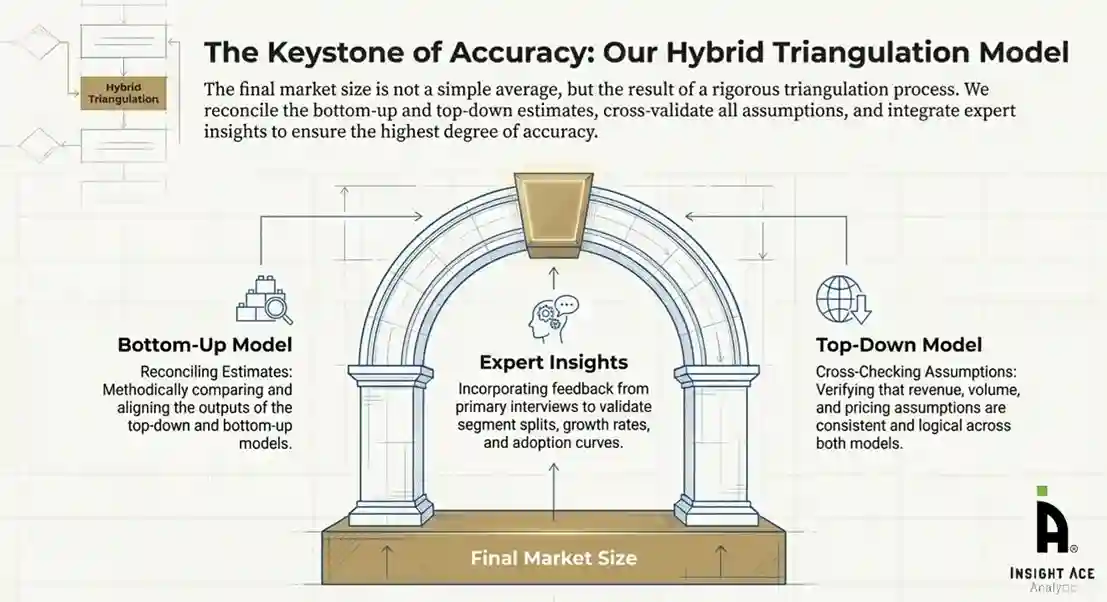
Hybrid Triangulation Approach
To ensure accuracy, a triangulated hybrid model was used. This included:
- Reconciling top-down and bottom-up estimates
- Cross-checking revenues, volumes, and pricing assumptions
- Incorporating expert insights to validate segment splits and adoption rates
This multi-angle validation yielded the final market size.
Forecasting Framework and Scenario Modelling
Market forecasts were developed using a combination of time-series modelling, adoption curve analysis, and driver-based forecasting tools.
Forecasting Methods
- Time-series modelling
- S-curve and diffusion models (for emerging technologies)
- Driver-based forecasting (GDP, disposable income, adoption rates, regulatory changes)
- Price elasticity models
- Market maturity and lifecycle-based projections
Scenario Analysis
Given inherent uncertainties, three scenarios were constructed:
- Base-Case Scenario: Expected trajectory under current conditions
- Optimistic Scenario: High adoption, favourable regulation, strong economic tailwinds
- Conservative Scenario: Slow adoption, regulatory delays, economic constraints
Sensitivity testing was conducted on key variables, including pricing, demand elasticity, and regional adoption.
Request Customization
Add countries, segments, company profiles, or extend forecast — free 10% customization with purchase.
Customize This Report →Enquire Before Buying
Speak with our analyst team about scope, methodology, pricing, or deliverable formats.
Enquire Now →Frequently Asked Questions
Serology Testing Market Size is valued at USD 17.13 Bn in 2025 and is predicted to reach USD 33.69 Bn by the year 2035
The Serology Testing Market is expected to grow at a 7.2% CAGR during the forecast period for 2026 to 2035
F. Hoffmann-La Roche Ltd, Abbott Laboratories, Danaher Corporation, QuidelOrtho Corporation, Bio-Rad Laboratories, Inc., Grifols, S.A., Siemens Healthineers AG, bioMérieux SA, DiaSorin S.p.A., Thermo Fisher Scientific Inc. and Others.
Serology Testing Iprodione Market is segmented into Product, Services, Format, Technology, End Use and Other.
North America region is leading the Iprodione Market.