Amylin Analog Therapeutics Market Size, Share, Trend, Forecast Report 2026 to 2035
What is Amylin Analog Therapeutics Market Size?
Amylin Analog Therapeutics Market is likely to witness the growth at a 28.5% CAGR during the forecast period for 2026 to 2035.
Amylin Analog Therapeutics Market Size, Share & Trends Analysis Distribution by Therapeutic Class / Product Architecture (Amylin Monotherapy, Selective Amylin Receptor Agonists, Dual Amylin & Calcitonin Receptor Agonists, GLP-1–Amylin Combination Therapy, Fixed-Dose (Multi-Molecule) Combinations, Unimolecular GLP-1 / Amylin Co-Agonists, Amylin–Insulin Combination Therapy), by Route of Administration & Formulation (Injectable, Oral, Oral Peptide, Oral Small Molecule), by Indication / Patient Population (Chronic Weight Management, Obesity / Overweight with Type 2 Diabetes, Insulin-Treated Diabetes) and Segment Forecasts, 2026 to 2035
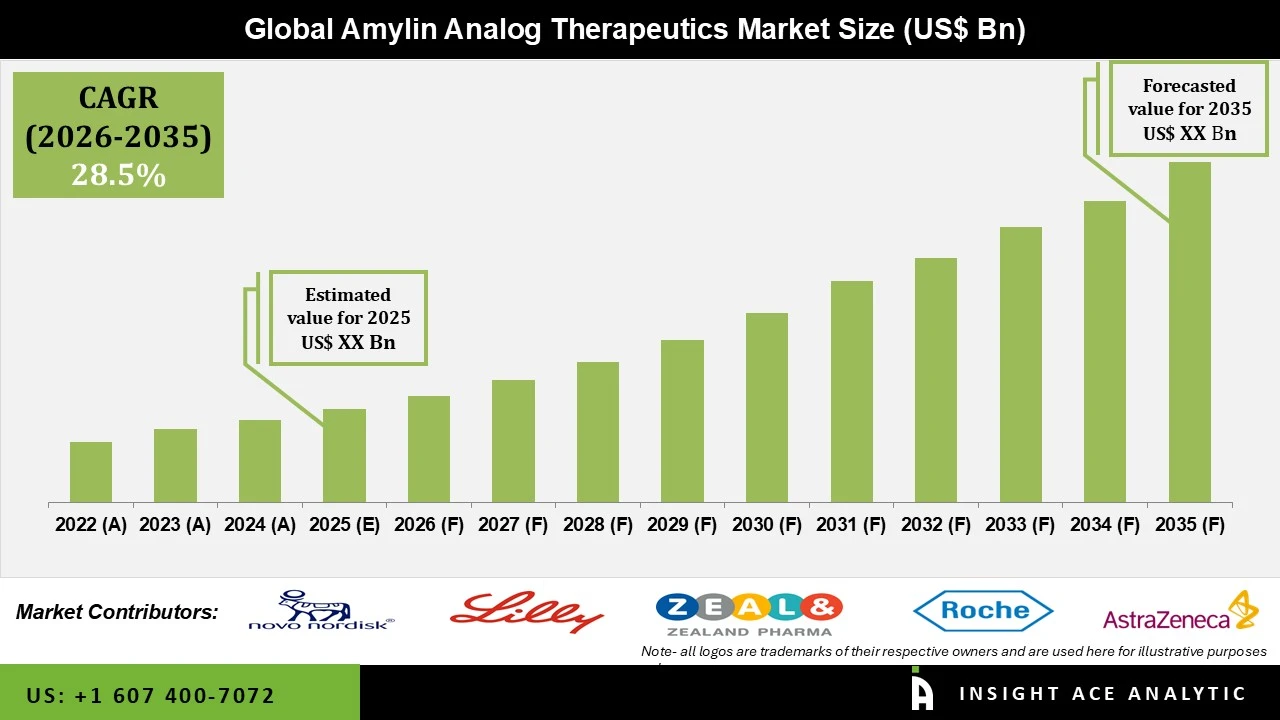
Amylin is a naturally occurring hormone involved in appetite regulation, gastric emptying, and post-meal glucose control. Amylin analogs are designed to reproduce these effects and may therefore offer benefits across both weight management and glycemic control. This has made amylin-based therapies particularly relevant in the treatment of obesity and type 2 diabetes, where controlling body weight and blood glucose levels remains a major clinical challenge. Companies are also exploring amylin therapies as standalone treatments and in combination with established metabolic medicines, including GLP-1 therapies and insulin, with the aim of improving satiety, supporting greater weight reduction, and achieving better overall metabolic control. The increasing prevalence of obesity and diabetes, together with rising demand for effective pharmacological weight-management options, is creating a favourable environment for the development of amylin-based treatments. The amylin analog therapeutics market is attracting growing interest as pharmaceutical companies look for new and more effective approaches to treating obesity, overweight, and metabolic disorders.
Innovation in how these drugs are designed and delivered is shaping the amylin analog therapeutics market
Developers are working on longer-lasting amylin receptor agonists, better peptide formulas, and combination therapies that can provide stronger and longer-lasting effects while staying safe and tolerable. New amylin analogs are being made to be more stable, last longer in the body, and possibly require fewer doses. Another key area is combining GLP-1 and amylin therapies, using fixed-dose combinations or single molecules that target several metabolic pathways at once. Improvements in peptide engineering, new formulation methods, and sustained-release delivery systems are helping companies overcome some of the challenges of traditional peptide drugs. However, there are still hurdles, such as complex manufacturing, keeping the drugs stable, cold storage needs, injections, making sure patients stick to treatment, and the need for thorough long-term testing. Competition from existing obesity and diabetes treatments may also affect how new amylin-based products are positioned and adopted in the market.
The long-term outlook for the amylin analog therapeutics market looks positive as healthcare systems deal with rising rates of obesity, type 2 diabetes, and related conditions. Ongoing investment in new peptide therapies is expected to lead to treatments that can be taken less often, are more convenient, and offer wider benefits for metabolism. Injectable therapies will likely stay important, but research into oral delivery and other new methods could make these treatments available to more people. Combination therapies that target amylin, GLP-1, insulin, and other metabolic pathways at the same time may also open up new possibilities for unique products. As studies continue to show that targeting multiple pathways can help people lose weight and control blood sugar over the long term, amylin analogs are set to play a bigger role in treating obesity and metabolic diseases.
Competitive Landscape
Which are the Leading Players in the Amylin Analog Therapeutics Market ?
• Novo Nordisk A/S
• Eli Lilly and Company
• Zealand Pharma A/S
• F. Hoffmann-La Roche Ltd
• AstraZeneca plc
• AbbVie Inc.
• Gubra A/S
• Pfizer Inc.
• Structure Therapeutics Inc.
• Viking Therapeutics Inc.
• Verdiva Bio Limited
• Adocia S.A.
• Amgen Inc.
• Boehringer Ingelheim International GmbH
• Merck & Co., Inc.
• Innovent Biologics, Inc.
• Hanmi Pharmaceutical Co., Ltd.
• Kailera Therapeutics, Inc.
• Altimmune, Inc.
Market Dynamics
Driver
Rising Demand for Effective and Durable Pharmacological Weight-Management Therapies
The growing global burden of obesity and overweight is creating strong demand for new pharmacological treatments that can deliver meaningful and sustained weight reduction. While GLP-1-based therapies have transformed the obesity and diabetes treatment landscape, there is increasing interest in additional mechanisms that can improve appetite control, satiety, and metabolic outcomes. Amylin analogs are gaining attention because amylin naturally contributes to appetite regulation, delayed gastric emptying, and post-meal glucose control. This is encouraging pharmaceutical companies to develop selective amylin receptor agonists, dual amylin and calcitonin receptor agonists, and other next-generation therapies. The opportunity is particularly strong in chronic weight management and in patients with obesity or overweight alongside type 2 diabetes, where both weight reduction and improved metabolic control are important treatment goals.
Restraint / Challenge
Complex Peptide Development, Manufacturing Requirements, and Long-Term Safety Considerations
Even though amylin analog therapies show promise, they face several challenges in development and commercialization. Many of these drugs are peptides, which makes them harder to manufacture, store, and deliver than traditional small-molecule medicines. Since most are given by injection, some patients may be put off if they prefer pills or less frequent dosing. Companies also need to prove that these treatments work well, are safe, and can be used long-term, since obesity and diabetes medicines are often taken for years. Other issues include side effects like stomach problems, making sure patients stick to their treatment, high production costs, and competition from existing GLP-1 drugs. Creating stable and easy-to-use versions of these medicines is still a major challenge for the industry.
GLP-1–Amylin Combination Therapy Segment is Expected to Drive the Amylin Analog Therapeutics Market
The GLP-1 and amylin combination therapy segment is expected to be a key growth area in the amylin analog therapeutics market. By combining the effects of amylin and GLP-1, these treatments can target several factors involved in appetite, fullness, blood sugar, and weight control. Companies are testing both fixed-dose combinations and single molecules that act on both GLP-1 and amylin pathways, hoping for better and longer-lasting results. Interest in these multi-hormone approaches is growing, leading to more investment. If these therapies show real benefits in weight loss, blood sugar control, safety, and ease of use, they could become a strong competitor in the obesity treatment market.
Chronic Weight Management Segment is Expected to Drive the Amylin Analog Therapeutics Market
The chronic weight management segment is expected to represent a major growth opportunity as obesity is increasingly recognised as a long-term metabolic disease requiring sustained treatment. Patients and healthcare providers are seeking therapies that can deliver substantial and durable weight reduction while supporting long-term treatment adherence. Amylin analogs may offer a complementary mechanism to existing weight-management medicines by influencing appetite, satiety, gastric emptying, and food intake. Development activity in selective amylin receptor agonists, dual amylin and calcitonin receptor agonists, and GLP-1/amylin co-agonists is expanding the potential role of amylin-based therapies in long-term obesity management. Growing demand for pharmacological treatment among individuals who are unable to achieve sufficient weight reduction through lifestyle interventions alone is expected to further support this segment.
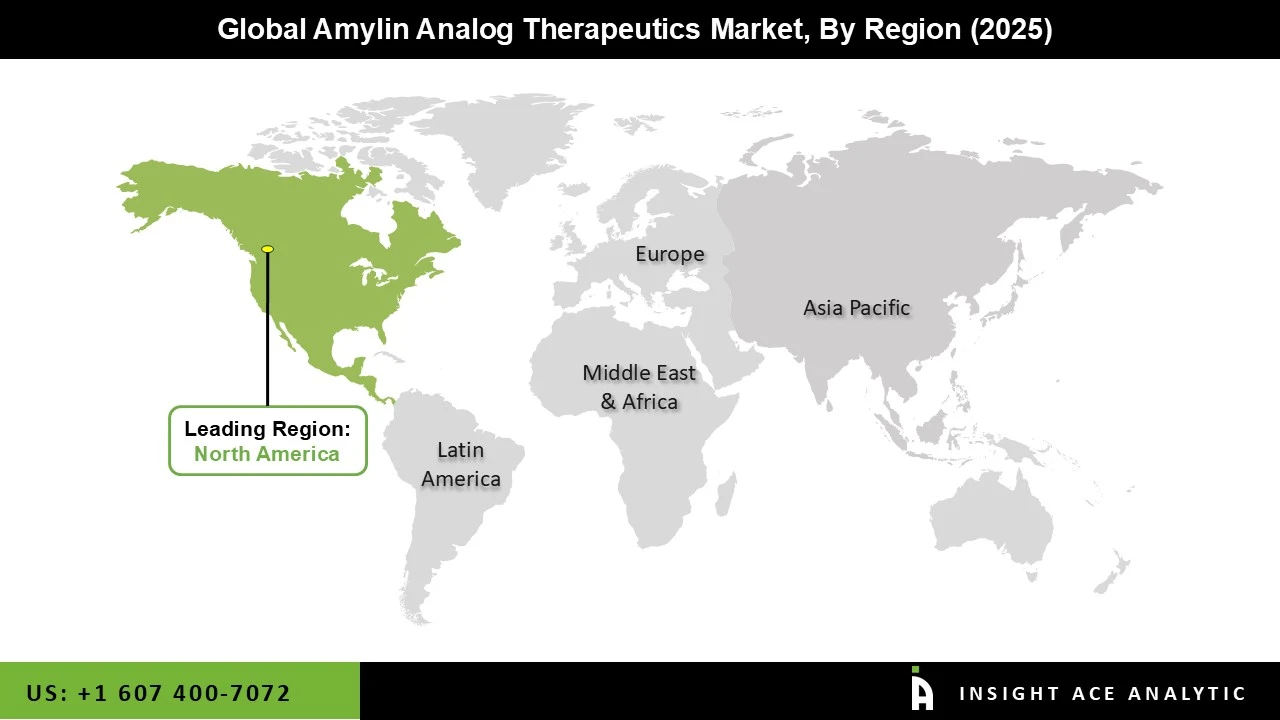
Why North America Leads the Amylin Analog Therapeutics Market?
North America is expected to maintain a leading position in the Amylin Analog Therapeutics Market, supported by the high prevalence of obesity and type 2 diabetes, strong demand for advanced metabolic therapies, substantial pharmaceutical R&D investment, and the presence of major biotechnology and pharmaceutical companies. The United States, in particular, has a well-developed clinical research ecosystem and a strong commercial market for obesity and diabetes medicines. Increasing healthcare awareness, growing adoption of prescription weight-management therapies, and continued investment in next-generation peptide and multi-hormone treatments are supporting regional market development. The presence of companies developing innovative amylin-based and combination therapies further strengthens North America's position.
At the same time, Asia Pacific is expected to witness significant growth during the forecast period. Rising rates of obesity, diabetes, and other metabolic disorders, expanding healthcare infrastructure, increasing awareness of medical weight management, and growing pharmaceutical investment are creating new opportunities across the region. Countries such as China, Japan, South Korea, India, and Australia are strengthening their capabilities in pharmaceutical research, clinical development, and advanced drug manufacturing. As access to obesity and diabetes treatments improves and demand for innovative metabolic therapies increases, Asia Pacific is expected to become an increasingly important market for amylin analog therapeutics.
Key Developments-
• In January 2025, Novo Nordisk A/S continued advancing its next-generation obesity and metabolic disease pipeline, with ongoing development of amylin-based and combination approaches designed to provide greater weight reduction and improved metabolic control. The company's broader investment in multi-hormonal therapies strengthens its position in the emerging amylin therapeutics landscape.
• In March 2025, Zealand Pharma A/S continued advancing its peptide-based obesity pipeline, including amylin-related and multi-pathway approaches. Its focus on novel peptide therapeutics positions the company as an important emerging participant in next-generation weight-management treatments.
Amylin Analog Therapeutics Market Report Scope:
| Report Attribute | Specifications |
| Growth Rate CAGR | CAGR of 28.5% from 2026 to 2035 |
| Quantitative Units | Representation of revenue in US$ Bn and CAGR from 2026 to 2035 |
| Historic Year | 2021 to 2025 |
| Forecast Year | 2026-2035 |
| Report Coverage | The forecast of revenue, the position of the company, the competitive market structure, growth prospects, and trends |
| Segments Covered | Therapeutic Class/Product Architecture, Route of Administration & Formulation, Indication/Patient Population and By Region |
| Regional Scope | North America; Europe; Asia Pacific; Latin America; Middle East & Africa |
| Country Scope | U.S.; Canada; U.K.; Germany; China; India; Japan; Brazil; Mexico; The UK; France; Italy; Spain; China; Japan; India; South Korea; Southeast Asia; South Korea; Southeast Asia |
| Competitive Landscape | Novo Nordisk A/S, Eli Lilly and Company, Zealand Pharma A/S, F. Hoffmann-La Roche Ltd, AstraZeneca plc, AbbVie Inc., Gubra A/S, Pfizer Inc., Structure Therapeutics Inc., Viking Therapeutics Inc., Verdiva Bio Limited, Adocia S.A., Amgen Inc., Boehringer Ingelheim International GmbH, Merck & Co., Inc., Innovent Biologics, Inc., Hanmi Pharmaceutical Co., Ltd., Kailera Therapeutics, Inc., Altimmune, Inc. |
| Customization Scope | Free customisation report with the procurement of the report, Modifications to the regional and segment scope. Geographic competitive landscape. |
| Pricing and Available Payment Methods | Explore pricing alternatives that are customized to your particular study requirements. |
Market Segmentation:
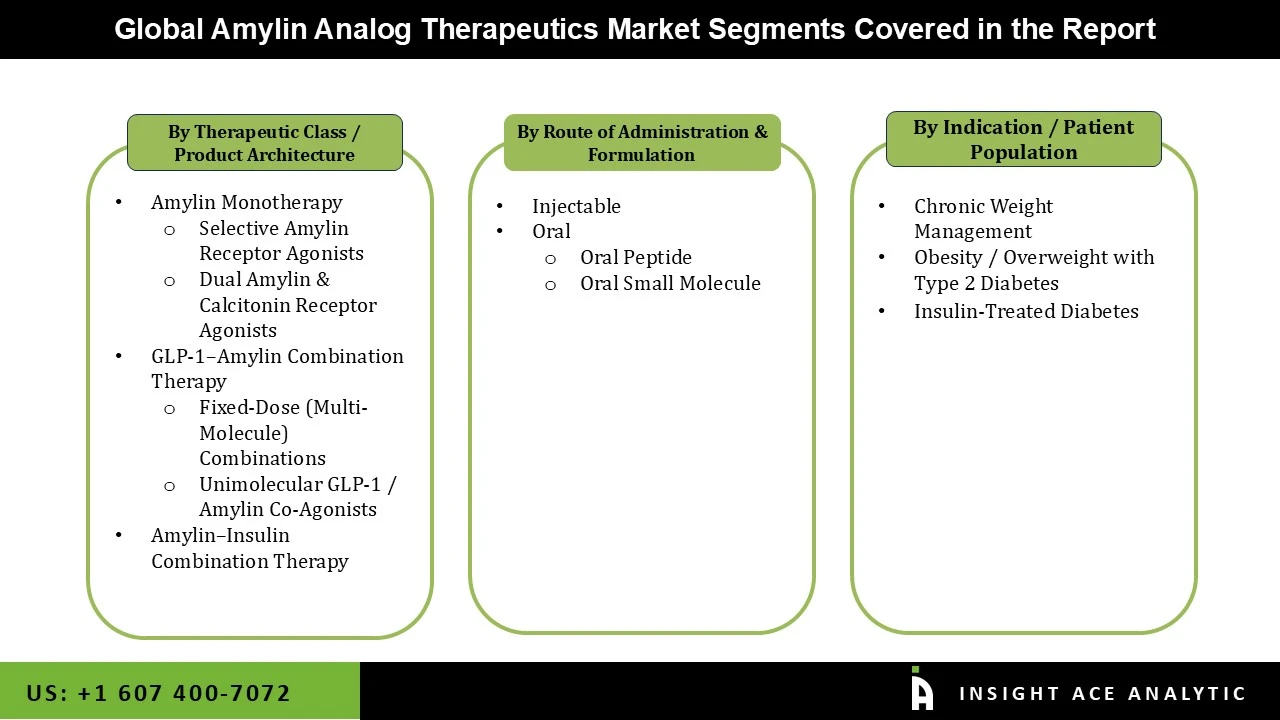
Amylin Analog Therapeutics Market by Therapeutic Class / Product Architecture-
• Amylin Monotherapy
o Selective Amylin Receptor Agonists
o Dual Amylin & Calcitonin Receptor Agonists
• GLP-1–Amylin Combination Therapy
o Fixed-Dose (Multi-Molecule) Combinations
o Unimolecular GLP-1 / Amylin Co-Agonists
• Amylin–Insulin Combination Therapy
Amylin Analog Therapeutics Market By Source / Feedstock-
• Injectable
• Oral
o Oral Peptide
o Oral Small Molecule
Amylin Analog Therapeutics Market By Indication / Patient Population-
• Chronic Weight Management
• Obesity / Overweight with Type 2 Diabetes
• Insulin-Treated Diabetes
Amylin Analog Therapeutics Market by Region-
North America-
• The US
• Canada
Europe-
• Germany
• UK
• France
• Nordics
• Netherlands
• Switzerland
• Spain
• Italy
• Benelux
• Rest of Europe
Asia-Pacific-
• China
• Japan
• South Korea
• Australia
• India
• Rest of APAC
Latin America-
• Brazil
• Mexico
• Chile
• Rest of LatAm
Middle East & Africa-
• GCC
• South Africa
• Rest of MEA
Research Design and Approach
This study employed a multi-step, mixed-method research approach that integrates:
- Secondary research
- Primary research
- Data triangulation
- Hybrid top-down and bottom-up modelling
- Forecasting and scenario analysis
This approach ensures a balanced and validated understanding of both macro- and micro-level market factors influencing the market.
Secondary Research
Secondary research for this study involved the collection, review, and analysis of publicly available and paid data sources to build the initial fact base, understand historical market behaviour, identify data gaps, and refine the hypotheses for primary research.
Sources Consulted
Secondary data for the market study was gathered from multiple credible sources, including:
- Government databases, regulatory bodies, and public institutions
- International organizations (WHO, OECD, IMF, World Bank, etc.)
- Commercial and paid databases
- Industry associations, trade publications, and technical journals
- Company annual reports, investor presentations, press releases, and SEC filings
- Academic research papers, patents, and scientific literature
- Previous market research publications and syndicated reports
These sources were used to compile historical data, market volumes/prices, industry trends, technological developments, and competitive insights.

Primary Research
Primary research was conducted to validate secondary data, understand real-time market dynamics, capture price points and adoption trends, and verify the assumptions used in the market modelling.
Stakeholders Interviewed
Primary interviews for this study involved:
- Manufacturers and suppliers in the market value chain
- Distributors, channel partners, and integrators
- End-users / customers (e.g., hospitals, labs, enterprises, consumers, etc., depending on the market)
- Industry experts, technology specialists, consultants, and regulatory professionals
- Senior executives (CEOs, CTOs, VPs, Directors) and product managers
Interview Process
Interviews were conducted via:
- Structured and semi-structured questionnaires
- Telephonic and video interactions
- Email correspondences
- Expert consultation sessions
Primary insights were incorporated into demand modelling, pricing analysis, technology evaluation, and market share estimation.
Data Processing, Normalization, and Validation
All collected data were processed and normalized to ensure consistency and comparability across regions and time frames.
The data validation process included:
- Standardization of units (currency conversions, volume units, inflation adjustments)
- Cross-verification of data points across multiple secondary sources
- Normalization of inconsistent datasets
- Identification and resolution of data gaps
- Outlier detection and removal through algorithmic and manual checks
- Plausibility and coherence checks across segments and geographies
This ensured that the dataset used for modelling was clean, robust, and reliable.
Market Size Estimation and Data Triangulation
Bottom-Up Approach
The bottom-up approach involved aggregating segment-level data, such as:
- Company revenues
- Product-level sales
- Installed base/usage volumes
- Adoption and penetration rates
- Pricing analysis
This method was primarily used when detailed micro-level market data were available.

Top-Down Approach
The top-down approach used macro-level indicators:
- Parent market benchmarks
- Global/regional industry trends
- Economic indicators (GDP, demographics, spending patterns)
- Penetration and usage ratios
This approach was used for segments where granular data were limited or inconsistent.
Hybrid Triangulation Approach
To ensure accuracy, a triangulated hybrid model was used. This included:
- Reconciling top-down and bottom-up estimates
- Cross-checking revenues, volumes, and pricing assumptions
- Incorporating expert insights to validate segment splits and adoption rates
This multi-angle validation yielded the final market size.
Forecasting Framework and Scenario Modelling
Market forecasts were developed using a combination of time-series modelling, adoption curve analysis, and driver-based forecasting tools.
Forecasting Methods
- Time-series modelling
- S-curve and diffusion models (for emerging technologies)
- Driver-based forecasting (GDP, disposable income, adoption rates, regulatory changes)
- Price elasticity models
- Market maturity and lifecycle-based projections
Scenario Analysis
Given inherent uncertainties, three scenarios were constructed:
- Base-Case Scenario: Expected trajectory under current conditions
- Optimistic Scenario: High adoption, favourable regulation, strong economic tailwinds
- Conservative Scenario: Slow adoption, regulatory delays, economic constraints
Sensitivity testing was conducted on key variables, including pricing, demand elasticity, and regional adoption.
Request Customization
Add countries, segments, company profiles, or extend forecast — free 10% customization with purchase.
Customize This Report →Enquire Before Buying
Speak with our analyst team about scope, methodology, pricing, or deliverable formats.
Enquire Now →Frequently Asked Questions
Amylin Analog Therapeutics Market is likely to witness the growth at a 28.5% CAGR during the forecast period for 2026 to 2035.
Novo Nordisk A/S, Eli Lilly and Company, Zealand Pharma A/S, F. Hoffmann-La Roche Ltd, AstraZeneca plc, AbbVie Inc., Gubra A/S, Pfizer Inc., Structure Therapeutics Inc., Viking Therapeutics Inc., Verdiva Bio Limited, Adocia S.A., Amgen Inc., Boehringer Ingelheim International GmbH, Merck & Co., Inc., Innovent Biologics, Inc., Hanmi Pharmaceutical Co., Ltd., Kailera Therapeutics, Inc., Altimmune, Inc.
Amylin Analog Therapeutics Market is segmented into Therapeutic Class/Product Architecture, Route of Administration & Formulation, Indication/Patient Population and By Region
North America region is leading the Amylin Analog Therapeutics Market.