Menopause Related Vasomotor Symptoms Market Size, Share, Trend, Scope Report 2026 to 2035
What is Menopause Related Vasomotor Symptoms Market Size?
Menopause Related Vasomotor Symptoms Market Size is valued at USD 12.16 Bn in 2025 and is predicted to reach USD 20.28 Bn by the year 2035 at an 5.4% CAGR during the forecast period for 2026 to 2035.
Menopause Related Vasomotor Symptoms Market Size, Share & Trends Analysis Distribution by Treatment Type (Hormone Therapy, Estrogen-only Therapy, Non-Hormonal Treatment, Neurokinin, SSRIs/SNRIs, Gabapentinoids, Others, Dietary Supplements), by Menopause Stage (Premature Menopause, Perimenopause, Post-menopause), by Distribution Channel (Hospital Pharmacies, Retail Pharmacies, Online Channels) and Segment Forecasts, 2026 to 2035
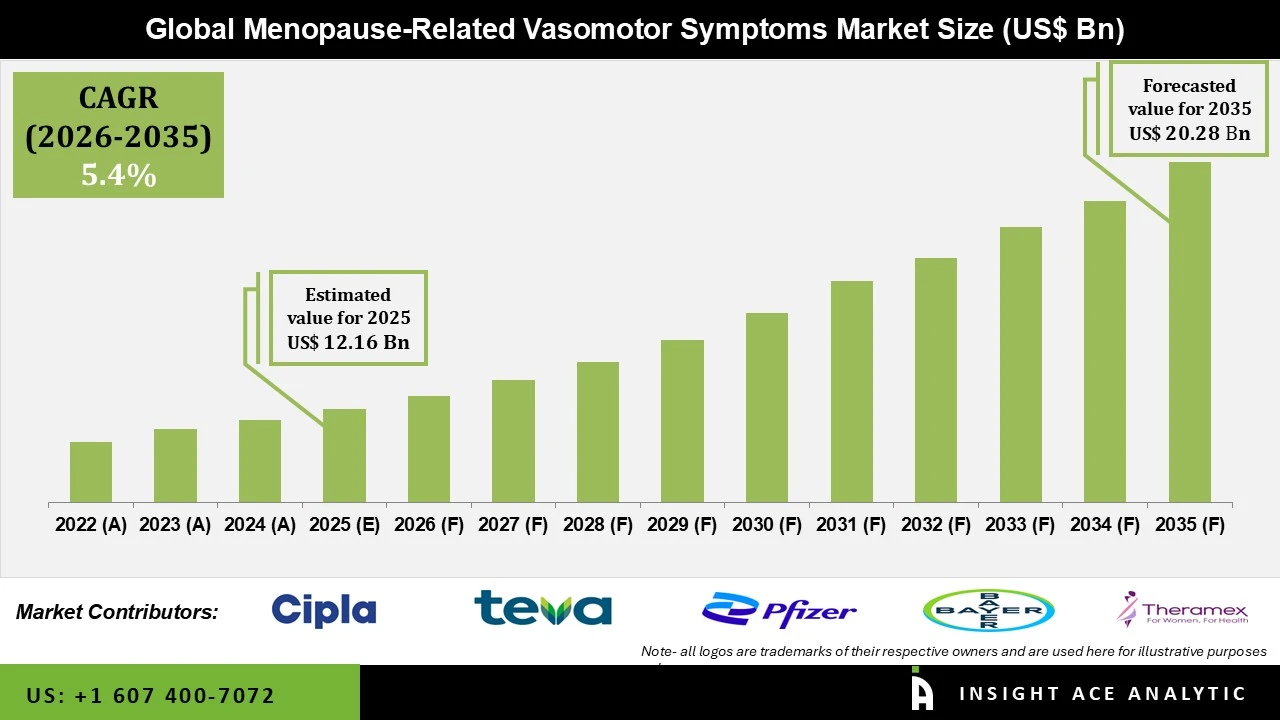
Vasomotor symptoms, particularly hot flashes and night sweats, are among the most common and disruptive symptoms experienced during menopause. Greater awareness of available treatment options, improved diagnosis, and increasing willingness to seek medical support are driving market growth across regions. Hormone therapy is still a key way to manage menopause-related vasomotor symptoms, especially for women who can safely use estrogen-based treatments. The menopause-related vasomotor symptoms market is growing as awareness of menopause and its associated symptoms increases among women, healthcare professionals, and policymakers. As more people talk about menopause and women’s health, the demand for effective treatments is rising. Healthcare providers are also paying closer attention to each patient’s history and risks before recommending hormone therapy. The market is also growing because there are more non-hormonal treatment options available.
Interest in dietary supplements and wellness products for menopause is rising as more women seek non-pharmaceutical options to manage symptoms. Greater access to health information and a stronger focus on preventive, personalised women’s care are supporting this trend. However, product quality, clinical evidence, appropriate dosing, safety, and regulatory compliance remain essential.
The market is shaped by the different stages of menopause—premature menopause, perimenopause, and post-menopause—each associated with distinct symptom profiles and treatment needs. Perimenopause is particularly significant, as vasomotor symptoms such as hot flashes often begin before the final menstrual period. Earlier recognition of symptoms is prompting women to seek support sooner, encouraging healthcare providers and companies to develop solutions across the full menopause continuum.
Research and product development continue to expand treatment options. Pharmaceutical companies are advancing therapies that improve symptom relief and ease of use, with non-hormonal approaches—especially those targeting the neurokinin pathway—gaining attention as alternatives for women who cannot or prefer not to use hormone therapy. Ongoing clinical research and regulatory approvals are expected to broaden available choices in the coming years.
Despite growth potential, the market faces challenges. Concerns about the safety and suitability of certain hormone-based treatments influence both patient and physician decisions. Individual responses to therapy vary, and some treatments carry side effects or contraindications. Limited awareness in certain populations, uneven healthcare access, treatment costs, and inconsistent diagnosis can also restrict uptake. Strict regulatory requirements for safety, efficacy, quality, labelling, and claims further shape development timelines and costs for both pharmaceutical and supplement products.
Overall, rising menopause awareness, demand for effective symptom management, advances in non-hormonal therapies, and continued pharmaceutical innovation are expected to support market expansion. Greater openness around women’s health and improved access to information create additional opportunities, while stakeholders must continue addressing safety, regulation, affordability, awareness, and healthcare access to sustain growth within women’s health and pharmaceutical care.
Competitive Landscape
Which are the Leading Players in the Menopause-Related Vasomotor Symptoms Market?
• Cipla
• Teva Pharmaceutical Industries Ltd.
• Pfizer Inc.
• Bayer AG
• Theramex
• Besins Healthcare
• Astellas Pharma Inc.
• Sun Pharmaceutical Industries Ltd.
• Zydus Group
• Hikma Pharmaceuticals Plc.
Driver
Growing Awareness of Menopause and Increasing Demand for Effective Symptom Management is Driving the Menopause-Related Vasomotor Symptoms Market
The global market for menopause-related vasomotor symptoms is growing as more people learn about menopause and how it affects women’s health. Hot flashes and night sweats are common symptoms that can disrupt sleep, daily routines, work, and overall well-being. As more women look for medical help with these symptoms, the need for effective and easy-to-use treatments is rising. Healthcare professionals and organisations are also focusing more on menopause management, helping raise awareness of available treatment options. Hormone therapy remains an important approach for eligible patients, while the development of non-hormonal treatments is creating additional choices for women who cannot or do not want to use hormone-based therapies. Increasing research into the biological causes of vasomotor symptoms is also encouraging pharmaceutical companies to develop more targeted treatment solutions.
The growing focus on women’s health is further supporting market expansion. Menopause is increasingly being discussed as an important healthcare issue rather than a condition that women are expected to manage without medical support. Greater access to health information, telemedicine, digital health platforms, and specialised menopause services is helping women identify symptoms and seek treatment earlier. These factors are expected to support continued demand for therapies used to manage menopause-related vasomotor symptoms.
Restraint/Challenge
Treatment Safety Concerns, Limited Awareness, and High Development Costs Can Limit Market Expansion
The market for menopause-related vasomotor symptoms faces some challenges, such as worries about treatment safety, how people respond differently to treatments, limited awareness, and strict regulations. Hormone therapies can help many women, but whether they are suitable depends on each person’s medical history, age, risk factors, and other health issues. Some patients may be unsure about using hormone therapy because of possible side effects and long-term risks. Non-hormonal therapies offer other options, but not everyone knows about them or can get them, depending on where they live.
Some women may keep using lifestyle changes or manage symptoms on their own because they do not know about medical treatments or cannot reach specialized healthcare services. The pharmaceutical development process is another challenge. New treatments require extensive clinical research, safety evaluation, regulatory approval, and commercialisation investment. These requirements can increase development costs and extend the time needed to bring new therapies to market. In addition, differences in healthcare infrastructure, treatment affordability, reimbursement policies, and access to specialists can affect market adoption. Companies operating in this space therefore need to balance treatment effectiveness, safety, affordability, and patient convenience while meeting regulatory requirements.
Non-Hormonal Treatment Segment is Expected to Witness Strong Growth in the Menopause-Related Vasomotor Symptoms Market
The non-hormonal treatment segment is expected to experience strong growth as more women look for alternatives to hormone therapy. Some women are not suitable candidates for hormone therapy, while others prefer to avoid hormonal treatments because of personal preferences or concerns about potential risks. This is increasing interest in therapies such as SSRIs/SNRIs, gabapentinoids, and newer treatments targeting the neurokinin pathway. The development of targeted non-hormonal therapies is an important factor supporting this segment.
Advances in understanding the neural mechanisms behind hot flashes have created opportunities for pharmaceutical companies to develop treatments designed to reduce vasomotor symptoms. Newer therapies may provide additional options for women who require alternatives to conventional hormone-based approaches. As research continues and more people learn about non-hormonal treatments, doctors will have more options to offer based on each patient’s needs. The trend toward personalized care and better symptom management should help this segment grow in the coming years.
Post-Menopause Segment is Expected to Witness Strong Growth in the Menopause-Related Vasomotor Symptoms Market
The post-menopause segment is expected to account for a significant share of the global Menopause-Related Vasomotor Symptoms Market. Vasomotor symptoms such as hot flashes and night sweats can continue for several years after the final menstrual period, creating a sustained need for symptom management among post-menopausal women. Increasing life expectancy is also contributing to a larger population of women living through the post-menopausal stage. As women remain active in professional, social, and personal activities longer, interest is growing in treatments that can reduce symptoms and improve quality of life. Doctors are paying more attention to personalized menopause care, considering symptom severity, each woman’s medical history, treatment preferences, and overall health. This is increasing demand for both hormonal and non-hormonal treatments. Ongoing awareness campaigns and better access to menopause care should further strengthen the post-menopause segment.
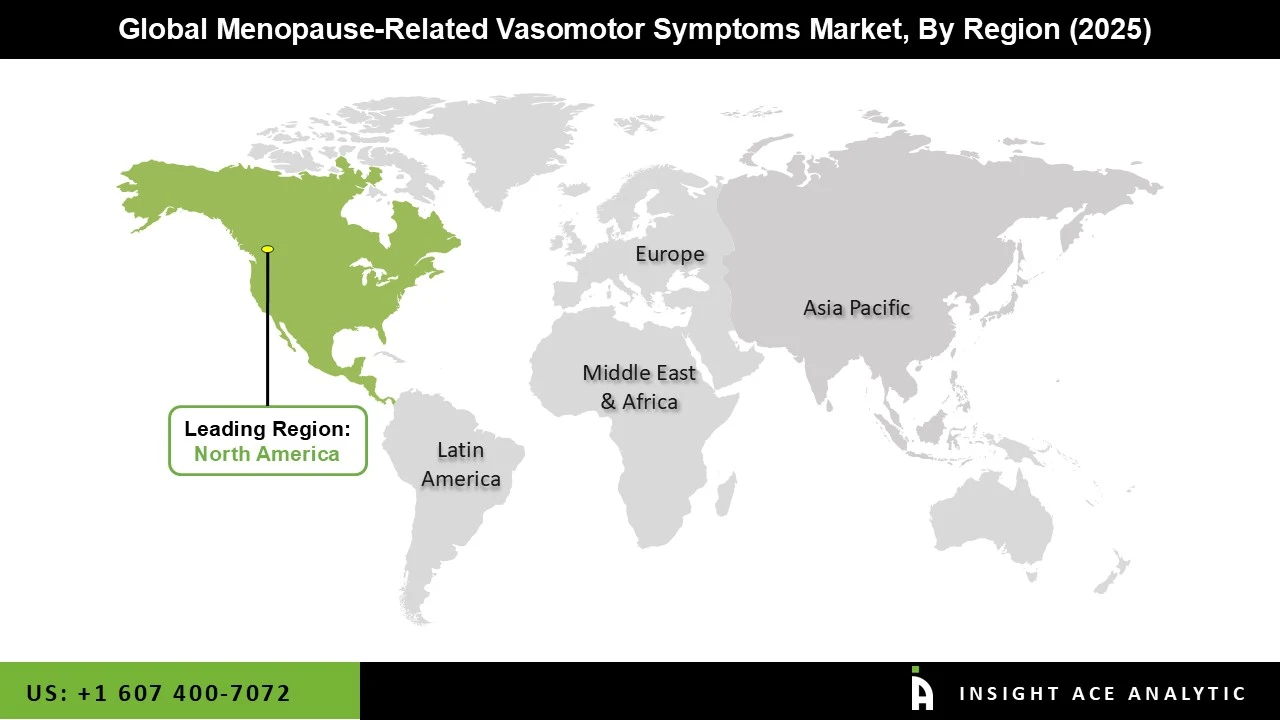
Why North America Led the Menopause-Related Vasomotor Symptoms Market?
North America is expected to remain a leading region in the global Menopause-Related Vasomotor Symptoms Market, supported by high awareness of menopause, advanced healthcare infrastructure, strong pharmaceutical research capabilities, and greater access to treatment options. The U.S. is a major contributor to regional demand, supported by a large post-menopausal population and growing attention to women’s health. The region has a well-established healthcare system with access to gynaecologists, primary-care providers, specialists, hospitals, retail pharmacies, and online healthcare platforms. Women in North America are also increasingly seeking medical advice for menopause symptoms rather than relying only on self-management or lifestyle changes.
Major drug companies and ongoing investment in women’s health research make the regional market even stronger. Companies are working on both hormone-based and non-hormonal treatments, and new approaches that target the causes of vasomotor symptoms are getting more attention. Digital healthcare, telemedicine, online pharmacies, and menopause-focused health platforms are making information and treatment options more accessible. Growing awareness, improved healthcare access, strong pharmaceutical capabilities, and continued product development are expected to keep North America at the forefront of the global menopause-related vasomotor symptoms market.
Key Developments
• In October 2026, Astellas Pharma Inc. presented new real-world data for VEOZAH™ (fezolinetant), showing improvements in bothersome vasomotor symptoms and sleep quality among women with menopause-related hot flashes. The findings further support the role of non-hormonal treatment options for women experiencing moderate to severe vasomotor symptoms.
• In August 2026, Bayer AG received expanded market authorization in Canada for LYNKUET® (elinzanetant) to include moderate to severe vasomotor symptoms caused by adjuvant endocrine therapy related to breast cancer. The development expands the potential use of non-hormonal neurokinin-based treatment for women experiencing hot flashes and night sweats.
Menopause-Related Vasomotor Symptoms Market Report Scope:
| Report Attribute | Specifications |
| Market size value in 2025 | USD 12.16 Bn |
| Revenue forecast in 2035 | USD 20.28 Bn |
| Growth Rate CAGR | CAGR of 5.4% from 2026 to 2035 |
| Quantitative Units | Representation of revenue in US$ Bn and CAGR from 2026 to 2035 |
| Historic Year | 2021 to 2025 |
| Forecast Year | 2026-2035 |
| Report Coverage | The forecast of revenue, the position of the company, the competitive market structure, growth prospects, and trends |
| Segments Covered | Treatment Type, Menopause Stage, Distribution Channel, and By Region |
| Regional Scope | North America; Europe; Asia Pacific; Latin America; Middle East & Africa |
| Country Scope | U.S.; Canada; Germany; China; India; Japan; Brazil; Mexico; The UK; France; Italy; Spain; South Korea; Southeast Asia; |
| Competitive Landscape | Cipla, Teva Pharmaceutical Industries Ltd., Pfizer Inc., Bayer AG, Theramex, Besins Healthcare, Astellas Pharma Inc., Sun Pharmaceutical Industries Ltd., Zydus Group, Hikma Pharmaceuticals Plc. |
| Customization Scope | Free customisation report with the procurement of the report, Modifications to the regional and segment scope. Geographic competitive landscape. |
| Pricing and Available Payment Methods | Explore pricing alternatives that are customised to your particular study requirements. |
Market Segmentation:
Menopause-Related Vasomotor Symptoms Market by Treatment Type-
• Hormone Therapy
o Estrogen-only Therapy
• Non-Hormonal Treatment
o Neurokinin
o SSRIs/SNRIs
o Gabapentinoids
o Others
• Dietary Supplements
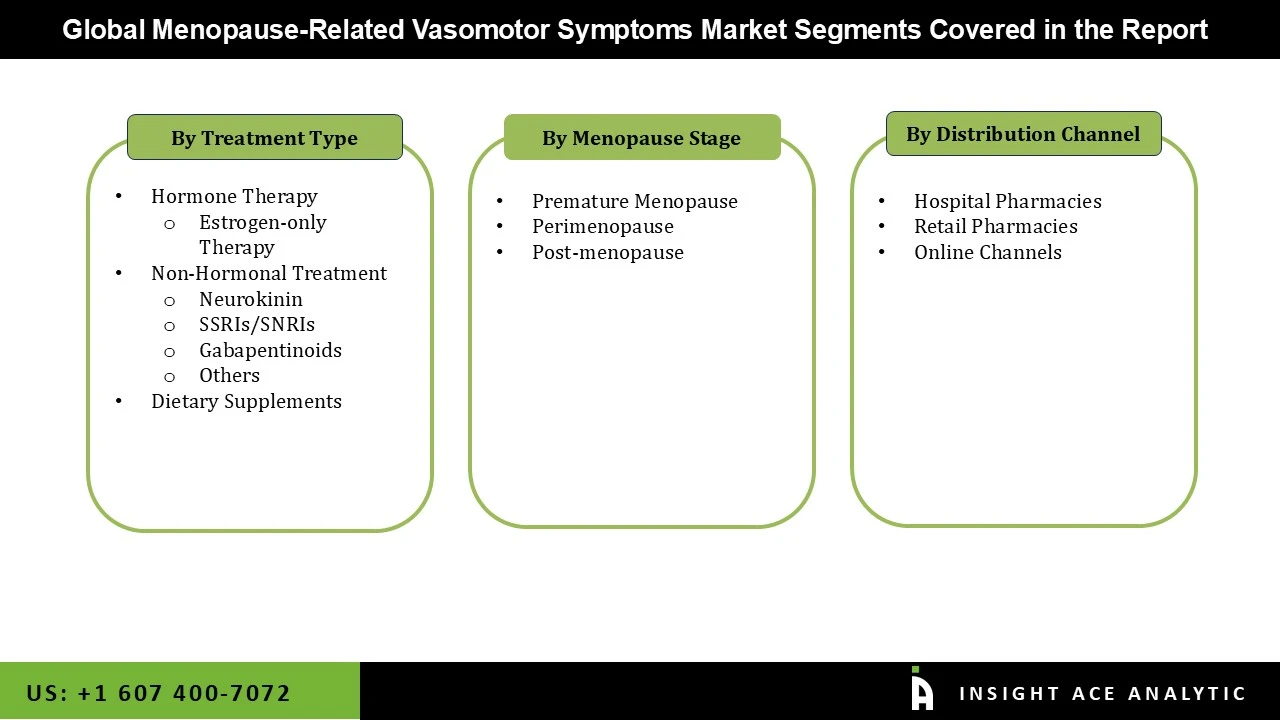
Menopause-Related Vasomotor Symptoms Market by Menopause Stage-
• Premature Menopause
• Perimenopause
• Post-menopause
Menopause-Related Vasomotor Symptoms Market by Distribution Channel-
• Hospital Pharmacies
• Retail Pharmacies
• Online Channels
Menopause-Related Vasomotor Symptoms Market by Region-
North America-
• The US
• Canada
• Rest of North America
Europe-
• Germany
• United Kingdom
• France
• Italy
• Nordics
• Rest of Europe
Asia-Pacific-
• Japan
• China
• South Korea
• India
• Australia
• Rest of Asia-Pacific
Middle East and Africa-
• GCC & Saudi Arabia
• South Africa
• Rest of Middle East & Africa
Latin America-
• Brazil
• Rest of Latin America
Research Design and Approach
This study employed a multi-step, mixed-method research approach that integrates:
- Secondary research
- Primary research
- Data triangulation
- Hybrid top-down and bottom-up modelling
- Forecasting and scenario analysis
This approach ensures a balanced and validated understanding of both macro- and micro-level market factors influencing the market.
Secondary Research
Secondary research for this study involved the collection, review, and analysis of publicly available and paid data sources to build the initial fact base, understand historical market behaviour, identify data gaps, and refine the hypotheses for primary research.
Sources Consulted
Secondary data for the market study was gathered from multiple credible sources, including:
- Government databases, regulatory bodies, and public institutions
- International organizations (WHO, OECD, IMF, World Bank, etc.)
- Commercial and paid databases
- Industry associations, trade publications, and technical journals
- Company annual reports, investor presentations, press releases, and SEC filings
- Academic research papers, patents, and scientific literature
- Previous market research publications and syndicated reports
These sources were used to compile historical data, market volumes/prices, industry trends, technological developments, and competitive insights.
Primary Research
Primary research was conducted to validate secondary data, understand real-time market dynamics, capture price points and adoption trends, and verify the assumptions used in the market modelling.
Stakeholders Interviewed
Primary interviews for this study involved:
- Manufacturers and suppliers in the market value chain
- Distributors, channel partners, and integrators
- End-users / customers (e.g., hospitals, labs, enterprises, consumers, etc., depending on the market)
- Industry experts, technology specialists, consultants, and regulatory professionals
- Senior executives (CEOs, CTOs, VPs, Directors) and product managers
Interview Process
Interviews were conducted via:
- Structured and semi-structured questionnaires
- Telephonic and video interactions
- Email correspondences
- Expert consultation sessions
Primary insights were incorporated into demand modelling, pricing analysis, technology evaluation, and market share estimation.
Data Processing, Normalization, and Validation
All collected data were processed and normalized to ensure consistency and comparability across regions and time frames.
The data validation process included:
- Standardization of units (currency conversions, volume units, inflation adjustments)
- Cross-verification of data points across multiple secondary sources
- Normalization of inconsistent datasets
- Identification and resolution of data gaps
- Outlier detection and removal through algorithmic and manual checks
- Plausibility and coherence checks across segments and geographies
This ensured that the dataset used for modelling was clean, robust, and reliable.
Market Size Estimation and Data Triangulation
Bottom-Up Approach
The bottom-up approach involved aggregating segment-level data, such as:
- Company revenues
- Product-level sales
- Installed base/usage volumes
- Adoption and penetration rates
- Pricing analysis
This method was primarily used when detailed micro-level market data were available.
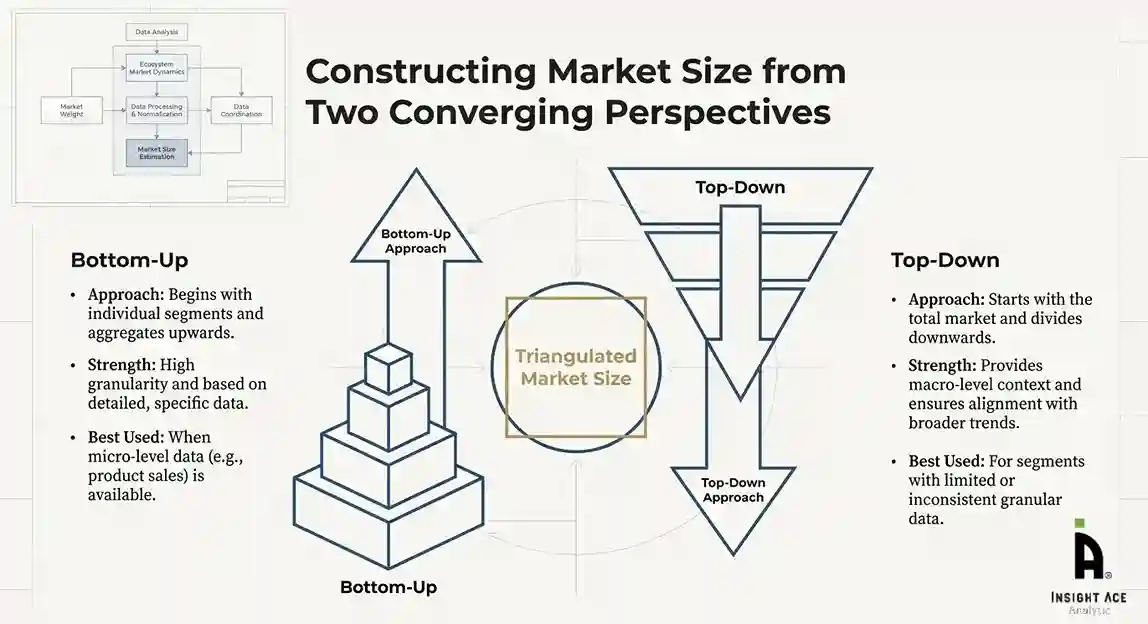
Top-Down Approach
The top-down approach used macro-level indicators:
- Parent market benchmarks
- Global/regional industry trends
- Economic indicators (GDP, demographics, spending patterns)
- Penetration and usage ratios
This approach was used for segments where granular data were limited or inconsistent.
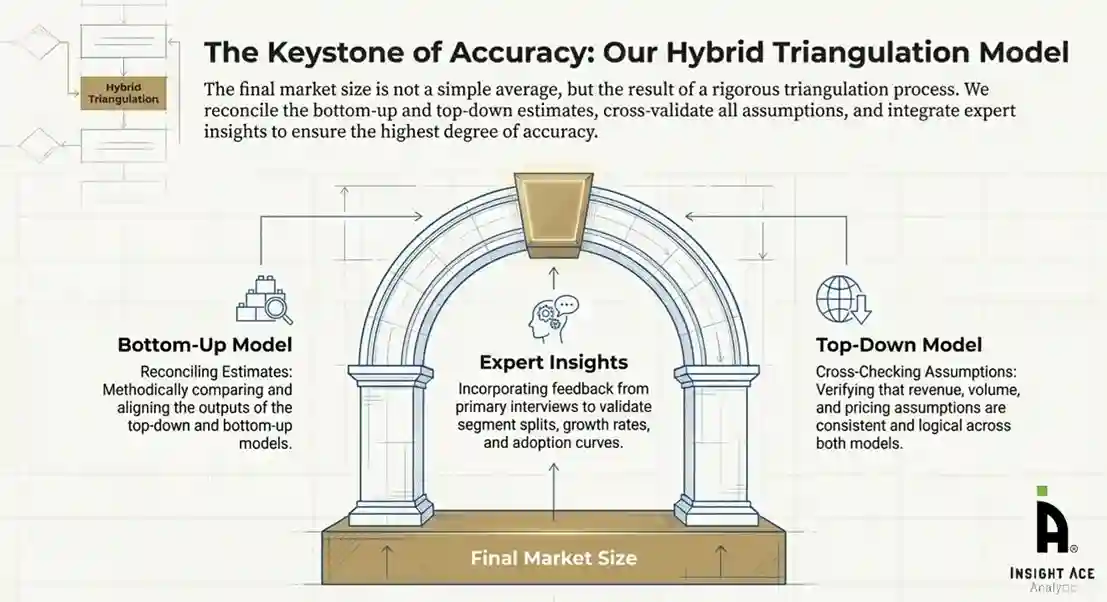
Hybrid Triangulation Approach
To ensure accuracy, a triangulated hybrid model was used. This included:
- Reconciling top-down and bottom-up estimates
- Cross-checking revenues, volumes, and pricing assumptions
- Incorporating expert insights to validate segment splits and adoption rates
This multi-angle validation yielded the final market size.
Forecasting Framework and Scenario Modelling
Market forecasts were developed using a combination of time-series modelling, adoption curve analysis, and driver-based forecasting tools.
Forecasting Methods
- Time-series modelling
- S-curve and diffusion models (for emerging technologies)
- Driver-based forecasting (GDP, disposable income, adoption rates, regulatory changes)
- Price elasticity models
- Market maturity and lifecycle-based projections
Scenario Analysis
Given inherent uncertainties, three scenarios were constructed:
- Base-Case Scenario: Expected trajectory under current conditions
- Optimistic Scenario: High adoption, favourable regulation, strong economic tailwinds
- Conservative Scenario: Slow adoption, regulatory delays, economic constraints
Sensitivity testing was conducted on key variables, including pricing, demand elasticity, and regional adoption.
Request Customization
Add countries, segments, company profiles, or extend forecast — free 10% customization with purchase.
Customize This Report →Enquire Before Buying
Speak with our analyst team about scope, methodology, pricing, or deliverable formats.
Enquire Now →Frequently Asked Questions
Menopause Related Vasomotor Symptoms Market Size is valued at USD 12.16 Bn in 2025 and is predicted to reach USD 20.28 Bn by the year 2035
Menopause Related Vasomotor Symptoms Market is expected to grow at an 5.4% CAGR during the forecast period for 2026 to 2035.
Cipla, Teva Pharmaceutical Industries Ltd., Pfizer Inc., Bayer AG, Theramex, Besins Healthcare, Astellas Pharma Inc., Sun Pharmaceutical Industries Ltd., Zydus Group, Hikma Pharmaceuticals Plc.
Menopause Related Vasomotor Symptoms Market is segmented into Treatment Type, Menopause Stage, Distribution Channel, and By Region
North America region is leading the Menopause Related Vasomotor Symptoms Market.