Non-Insulin Therapies for Diabetes Market Size, Scope, Revenue Report 2026 to 2035
What is Non-Insulin Therapies for Diabetes Market Size?
Global Non-Insulin Therapies for Diabetes Market Size is valued at USD 35.51 Bn in 2025 and is predicted to reach USD 63.56 Bn by the year 2035 at a 6.2% CAGR during the forecast period for 2026 to 2035.
Non-Insulin Therapies for Diabetes Market Size, Share & Trends Analysis Distribution by Drug Class (Biguanides, Sulfonylureas, Thiazolidinediones, Alpha-Glucosidase Inhibitors, DPP-4 Inhibitors, GLP-1 Analogs, Sodium-Glucose Cotransporter-2 (SGLT2) Inhibitors), by Route of Administration (Oral, Intramuscular), by Distribution Channel (Retail Pharmacy, Hospital Pharmacy, Online Pharmacy) and Segment Forecasts, 2026 to 2035.
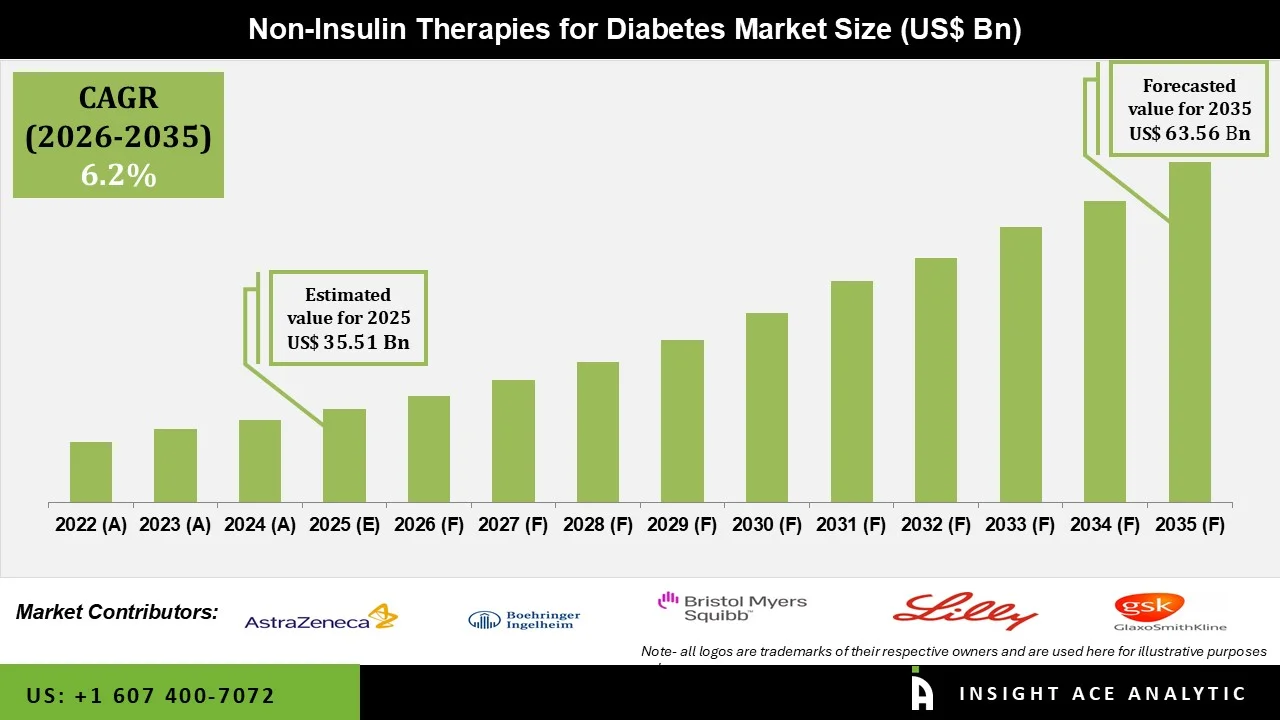
Non-Insulin Therapies for Diabetes Market Size, Share & Trends Analysis Distribution by Drug Class (Biguanides, Sulfonylureas, Thiazolidinediones, Alpha-Glucosidase Inhibitors, DPP-4 Inhibitors, GLP-1 Analogs, Sodium-Glucose Cotransporter-2 (SGLT2) Inhibitors), by Route of Administration (Oral, Intramuscular), by Distribution Channel (Retail Pharmacy, Hospital Pharmacy, Online Pharmacy) and Segment Forecasts, 2026 to 2035
Advances in diabetes care are expanding treatment options, with non-insulin therapies playing an increasingly important role in blood glucose management and long-term disease control. These treatments work in different ways, such as lowering the amount of glucose the liver produces, increasing insulin sensitivity, helping the body release more insulin, or increasing glucose removal in urine. The market includes several drug classes, such as biguanides, sulfonylureas, thiazolidinediones, alpha-glucosidase inhibitors, DPP-4 inhibitors, GLP-1 analogues, and SGLT2 inhibitors. These medicines come in different forms and can be taken in different ways. Many are taken by mouth, but some non-insulin therapies are administered by injection.
This market covers everything from research and development to manufacturing, distribution, and sales of non-insulin diabetes medicines, especially for type 2 diabetes. These treatments are used in many healthcare settings, like hospitals, clinics, and outpatient centres, and are available through retail, hospital, and sometimes online pharmacies. The market brings together drug makers, developers, healthcare providers, distributors, and pharmacy networks to help people get the diabetes treatments they need. It includes both well-known medicines and newer options that aim to control blood sugar, help with weight management, and lower heart and kidney risks for certain patients. This market is growing because more people are being diagnosed with diabetes, new drugs are being discovered, access and affordability are improving, and diabetes management is changing over time.
Competitive Landscape
Which are the Leading Players in the Non-Insulin Therapies for Diabetes Market?
- AstraZeneca
- Boehringer Ingelheim GmbH
- Bristol-Myers Squibb
- Eli Lilly and Company
- GlaxoSmithKline
- F. Hoffmann-La Roche Ltd.
- Janssen Pharmaceuticals
- Merck & Company
- Novartis AG
- Novo Nordisk
- Pfizer
- Sanofi Aventis
- Takeda Pharmaceuticals
- Other Prominent Players
Market Dynamics
Driver
Rising Prevalence of Diabetes and Growing Demand for Effective Treatment Options
The increasing prevalence of diabetes worldwide is driving demand for medicines that help patients manage blood glucose levels and reduce the risk of long-term problems. Non-insulin therapies are especially important for people with type 2 diabetes who need medication along with lifestyle changes. Drug companies are developing new treatments that target different parts of glucose control, such as insulin sensitivity, glucose production, and glucose removal. With several drug options available, healthcare providers can choose the best option based on each patient’s needs, response, and health risks. More people are also recognising the value of early diagnosis and long-term diabetes care, increasing demand for non-insulin therapies.
Restrain/Challenge
High Treatment Costs and Differences in Patient Response
The price of some non-insulin diabetes medicines can make them hard to get, especially in places where health insurance is limited, or patients have to pay much of the cost themselves. Newer drugs often cost more than older ones, which can be a problem for people who need treatment over a long period. How well these medicines work and whether they are right for a patient can depend on the person’s health, how they respond, and possible side effects. Some drugs need extra monitoring or may not be safe for people with certain health issues. Differences in healthcare access, knowledge about treatment, and drug availability also affect how widely these medicines are used. As a result, making treatments affordable, educating patients, and ensuring access are all important for market growth.
GLP-1 Analogues Segment is Expected to Drive the Non-Insulin Therapies for Diabetes Market
GLP-1 analogues are expected to keep driving growth in the non-insulin diabetes therapies market because they help control blood sugar and may also help with weight management for some patients. These drugs work by boosting insulin when needed, lowering glucagon, and slowing how quickly the stomach empties. More doctors are interested in treatments that help with both diabetes and weight issues, which is leading to greater use of GLP-1 analogues. Ongoing product development, more clinical use, and better awareness of their benefits are also helping this segment grow. Still, the cost of treatment, how well patients tolerate the drugs, and whether they are suitable for each person will affect how widely they are used.
Sodium-Glucose Cotransporter-2 (SGLT2) Inhibitors Segment is Expected to Witness Significant Growth
SGLT2 inhibitors are expected to grow strongly as more research shows they help manage diabetes and benefit some heart and kidney conditions. These drugs help the kidneys remove extra glucose in the urine, providing another way to control blood sugar. For patients with heart failure or chronic kidney disease, these medicines are becoming more important in treatment plans, not just for diabetes. More healthcare professionals are learning about these benefits, and ongoing research is increasing interest in this drug class. How widely they are used will also depend on cost, prescribing rules, patient suitability, and access to treatment.
Why North America Leads the Non-Insulin Therapies for Diabetes Market
North America is the leading market for non-insulin diabetes therapies, thanks to a high rate of diabetes, strong healthcare systems, and good access to prescription drugs. The region also benefits from active drug research, new treatment options, and doctors who know about therapies that help beyond just blood sugar control. Big drug companies and strong distribution networks make it easier to introduce and supply diabetes medicines.
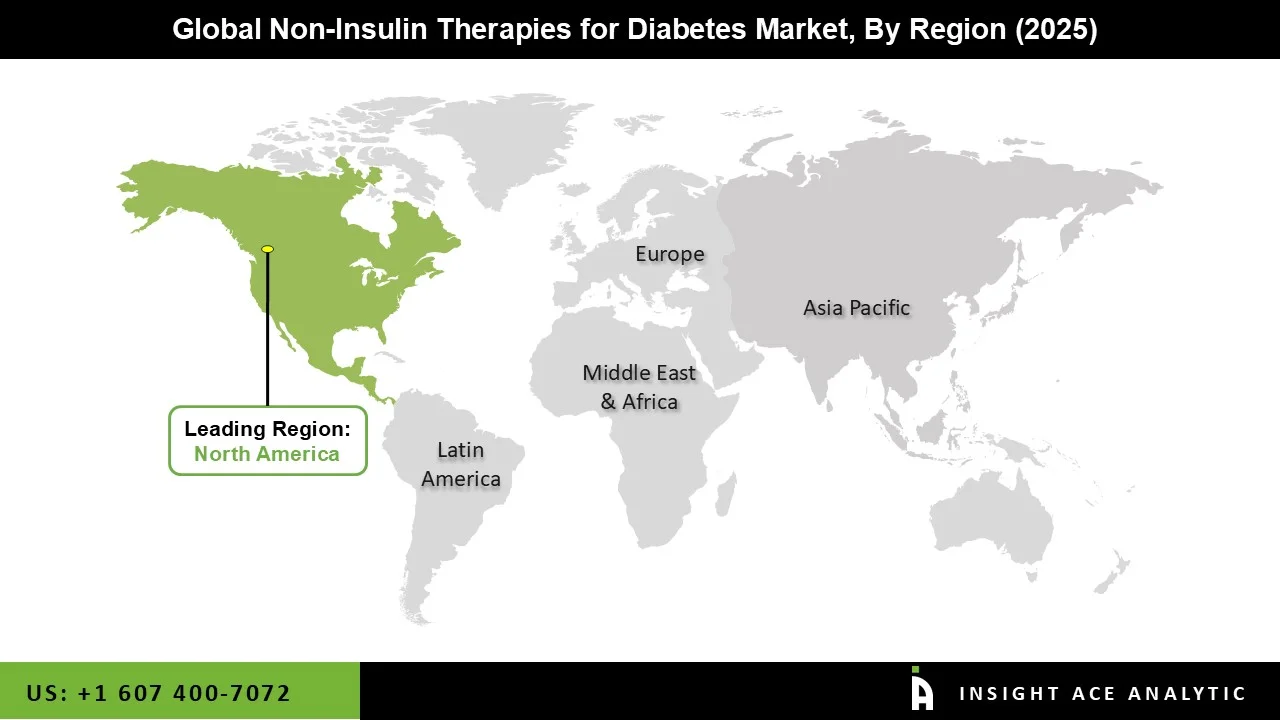
Europe is also a key market, with solid healthcare and ongoing use of proven diabetes treatments. In Asia Pacific, there are big growth opportunities because of the large population, more diabetes cases, better healthcare, and easier access to medicines. Going forward, how these markets develop will depend on how affordable treatments are, insurance coverage, early diagnosis, and access to the right diabetes care.
Key Development
• In June 2026, AstraZeneca announced positive Phase IIb results for elecoglipron, an investigational oral GLP-1 receptor agonist. The company reported reductions in HbA1c among adults with type 2 diabetes and plans for a Phase III development programme, highlighting continued research into oral alternatives for metabolic disease management.
• In October 2026, Boehringer Ingelheim reported Phase III results for survodutide in people with obesity and type 2 diabetes. The trial showed improvements in body weight and blood glucose control, supporting further development of this investigational treatment for metabolic conditions.
Non-Insulin Therapies for Diabetes Market Report Scope :
| Report Attribute | Specifications |
| Market size value in 2025 | USD 35.51 Bn |
| Revenue forecast in 2035 | USD 63.56 Bn |
| Growth Rate CAGR | CAGR of 6.2% from 2026 to 2035 |
| Quantitative Units | Representation of revenue in US$ Bn and CAGR from 2026 to 2035 |
| Historic Year | 2022 to 2025 |
| Forecast Year | 2026-2035 |
| Report Coverage | The forecast of revenue, the position of the company, the competitive market structure, growth prospects, and trends |
| Segments Covered | Drug Class, Route of Administration, Distribution Channel and By Region |
| Regional Scope | North America; Europe; Asia Pacific; Latin America; Middle East & Africa |
| Country Scope | U.S.; Canada; U.K.; Germany; China; India; Japan; Brazil; Mexico; France; Italy; Spain; South Korea; Southeast Asia |
| Competitive Landscape | AstraZeneca, Boehringer Ingelheim GmbH, Bristol-Myers Squibb, Eli Lilly and Company, GlaxoSmithKline, F. Hoffmann-La Roche Ltd., Janssen Pharmaceuticals, Merck & Company, Novartis AG, Novo Nordisk, Pfizer, Sanofi Aventis, Takeda Pharmaceuticals |
| Customization Scope | Free customization report with the procurement of the report, Modifications to the regional and segment scope. Geographic competitive landscape. |
| Pricing and Available Payment Methods | Explore pricing alternatives that are customized to your particular study requirements. |
Segmentations Non-Insulin Therapies for Diabetes Market:
Non-Insulin Therapies for Diabetes Market by Drug Class -
- Biguanides
- Sulfonylureas
- Thiazolidinediones
- Alpha-Glucosidase Inhibitors
- DPP-4 Inhibitors
- GLP-1 Analogs
- Sodium-Glucose Cotransporter-2 (SGLT2) Inhibitors
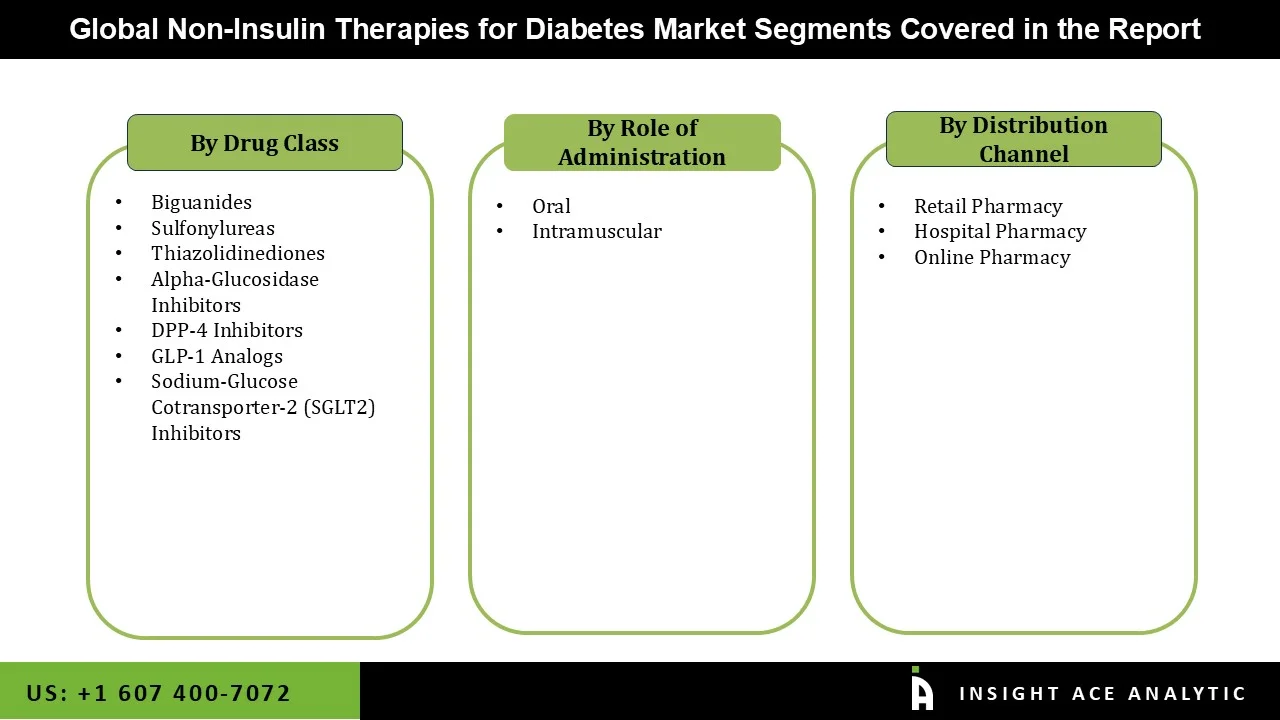
Non-Insulin Therapies for Diabetes Market by Route of Administration -
- Oral
- Intramuscular
Non-Insulin Therapies for Diabetes Market by Distribution Channel -
- Retail Pharmacy
- Hospital Pharmacy
- Online Pharmacy
Non-Insulin Therapies for Diabetes Market by Region-
- North America-
- The US
- Canada
- Europe-
- Germany
- The UK
- France
- Italy
- Spain
- Rest of Europe
- Asia-Pacific-
- China
- Japan
- India
- South Korea
- South East Asia
- Rest of Asia Pacific
- Latin America-
- Brazil
- Argentina
- Mexico
- Rest of Latin America
- Middle East and Africa-
- GCC Countries
- South Africa
- Rest of Middle East and Africa
Research Design and Approach
This study employed a multi-step, mixed-method research approach that integrates:
- Secondary research
- Primary research
- Data triangulation
- Hybrid top-down and bottom-up modelling
- Forecasting and scenario analysis
This approach ensures a balanced and validated understanding of both macro- and micro-level market factors influencing the market.
Secondary Research
Secondary research for this study involved the collection, review, and analysis of publicly available and paid data sources to build the initial fact base, understand historical market behaviour, identify data gaps, and refine the hypotheses for primary research.
Sources Consulted
Secondary data for the market study was gathered from multiple credible sources, including:
- Government databases, regulatory bodies, and public institutions
- International organizations (WHO, OECD, IMF, World Bank, etc.)
- Commercial and paid databases
- Industry associations, trade publications, and technical journals
- Company annual reports, investor presentations, press releases, and SEC filings
- Academic research papers, patents, and scientific literature
- Previous market research publications and syndicated reports
These sources were used to compile historical data, market volumes/prices, industry trends, technological developments, and competitive insights.
Primary Research
Primary research was conducted to validate secondary data, understand real-time market dynamics, capture price points and adoption trends, and verify the assumptions used in the market modelling.
Stakeholders Interviewed
Primary interviews for this study involved:
- Manufacturers and suppliers in the market value chain
- Distributors, channel partners, and integrators
- End-users / customers (e.g., hospitals, labs, enterprises, consumers, etc., depending on the market)
- Industry experts, technology specialists, consultants, and regulatory professionals
- Senior executives (CEOs, CTOs, VPs, Directors) and product managers
Interview Process
Interviews were conducted via:
- Structured and semi-structured questionnaires
- Telephonic and video interactions
- Email correspondences
- Expert consultation sessions
Primary insights were incorporated into demand modelling, pricing analysis, technology evaluation, and market share estimation.
Data Processing, Normalization, and Validation
All collected data were processed and normalized to ensure consistency and comparability across regions and time frames.
The data validation process included:
- Standardization of units (currency conversions, volume units, inflation adjustments)
- Cross-verification of data points across multiple secondary sources
- Normalization of inconsistent datasets
- Identification and resolution of data gaps
- Outlier detection and removal through algorithmic and manual checks
- Plausibility and coherence checks across segments and geographies
This ensured that the dataset used for modelling was clean, robust, and reliable.
Market Size Estimation and Data Triangulation
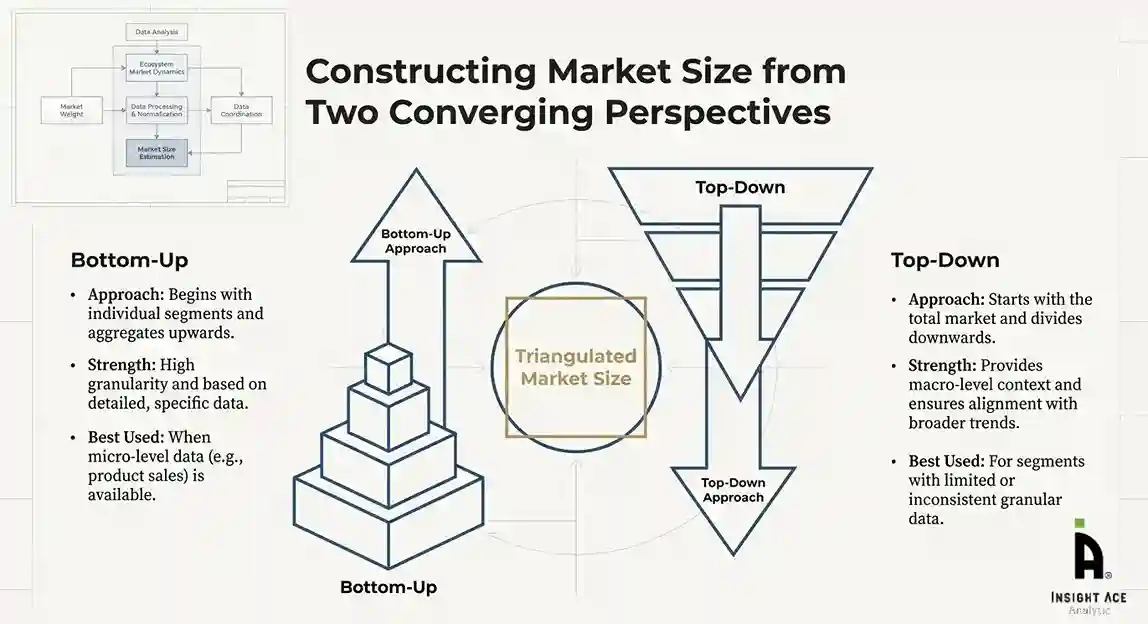
Bottom-Up Approach
The bottom-up approach involved aggregating segment-level data, such as:
- Company revenues
- Product-level sales
- Installed base/usage volumes
- Adoption and penetration rates
- Pricing analysis
This method was primarily used when detailed micro-level market data were available.
Top-Down Approach
The top-down approach used macro-level indicators:
- Parent market benchmarks
- Global/regional industry trends
- Economic indicators (GDP, demographics, spending patterns)
- Penetration and usage ratios
This approach was used for segments where granular data were limited or inconsistent.
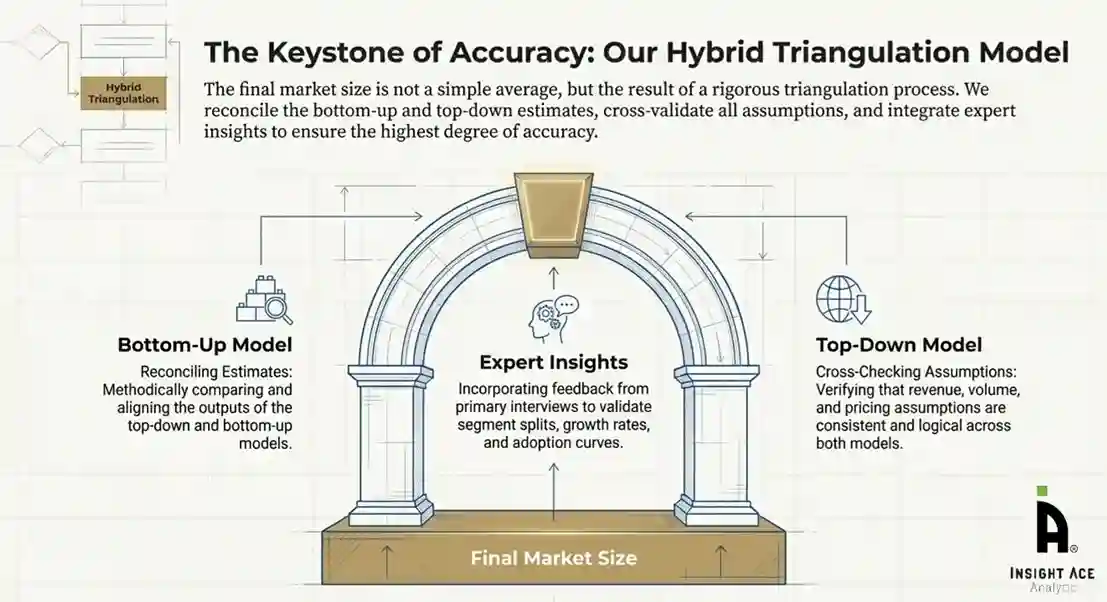
Hybrid Triangulation Approach
To ensure accuracy, a triangulated hybrid model was used. This included:
- Reconciling top-down and bottom-up estimates
- Cross-checking revenues, volumes, and pricing assumptions
- Incorporating expert insights to validate segment splits and adoption rates
This multi-angle validation yielded the final market size.
Forecasting Framework and Scenario Modelling
Market forecasts were developed using a combination of time-series modelling, adoption curve analysis, and driver-based forecasting tools.
Forecasting Methods
- Time-series modelling
- S-curve and diffusion models (for emerging technologies)
- Driver-based forecasting (GDP, disposable income, adoption rates, regulatory changes)
- Price elasticity models
- Market maturity and lifecycle-based projections
Scenario Analysis
Given inherent uncertainties, three scenarios were constructed:
- Base-Case Scenario: Expected trajectory under current conditions
- Optimistic Scenario: High adoption, favourable regulation, strong economic tailwinds
- Conservative Scenario: Slow adoption, regulatory delays, economic constraints
Sensitivity testing was conducted on key variables, including pricing, demand elasticity, and regional adoption.
Request Customization
Add countries, segments, company profiles, or extend forecast — free 10% customization with purchase.
Customize This Report →Enquire Before Buying
Speak with our analyst team about scope, methodology, pricing, or deliverable formats.
Enquire Now →Frequently Asked Questions
Non-Insulin Therapies for Diabetes Market Size is valued at USD 35.51 Bn in 2025 and is predicted to reach USD 63.56 Bn by the year 2035
The Non-Insulin Therapies for Diabetes Market is expected to grow at a 6.2% CAGR during the forecast period for 2026 to 2035
AstraZeneca, Boehringer Ingelheim GmbH, Bristol-Myers Squibb, Eli Lilly and Company, GlaxoSmithKline, F. Hoffmann-La Roche Ltd., Janssen Pharmaceuticals, Merck & Company, Novartis AG, Novo Nordisk, Pfizer, Sanofi Aventis, Takeda Pharmaceuticals and Others.
Non-Insulin Therapies for Diabetes Market is segmented into Drug Class, Route of Administration, Distribution Channel and Other.
North America region is leading the Non-Insulin Therapies for Diabetes Market.