Healthcare Infrastructure Finance Market Size, Share, Scope Report 2026 to 2035
What is Healthcare Infrastructure Finance Market Size?
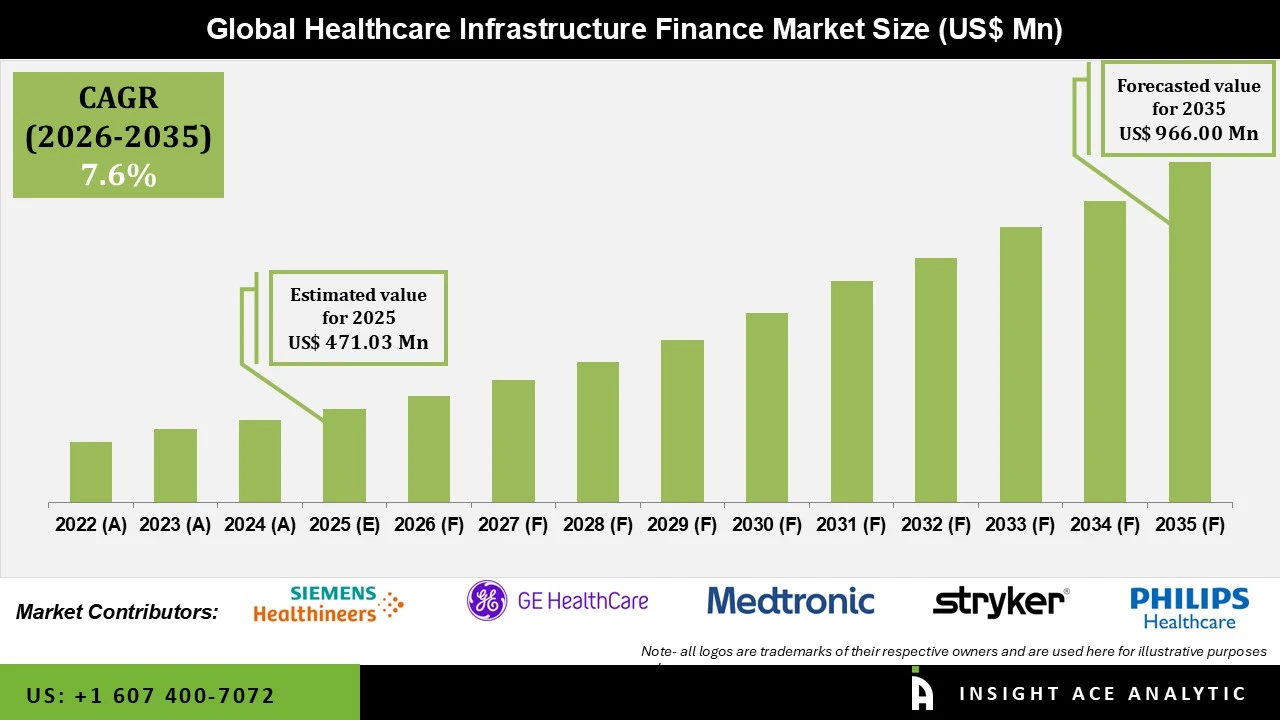
Healthcare Infrastructure Finance Market Size is valued at USD 471.03 Mn in 2025 and is predicted to reach USD 966.00 Mn by the year 2035 at a 7.6% CAGR during the forecast period for 2026 to 2035.
Healthcare Infrastructure Finance Market Size, Share & Trends Analysis Distribution by Facility Type (Hospitals, Clinics, Long-Term Care Facilities, Diagnostic Centers, and Others), Component (Debt Financing, Grants & Subsidies, Equity Financing, and Public-Private Partnerships), End-user (Public Sector and Private Sector), and Segment Forecasts, 2026 to 2035
The financing, investment, and financial management of organizational and physical facilities—such as hospitals, clinics, diagnostic centers, labs, and medical schools—that support the provision of healthcare services is referred to as healthcare infrastructure finance. To create, improving, and maintain healthcare infrastructure, it entails raising money from both public and private sources, such as government budgets, bank loans, private equity, insurance funds, and public-private partnerships (PPPs). The availability of cutting-edge medical equipment, contemporary facilities, and effective service delivery methods is guaranteed by this funding. The growing investments in healthcare infrastructure, the urgent need to update old facilities, and the expansion of healthcare access in both developed and emerging nations are the main drivers of the healthcare infrastructure finance market's growth.
The healthcare infrastructure finance market is being driven by the growing demand for modern healthcare facilities and improved medical service delivery as governments and private organizations spend more on hospitals, diagnostic facilities, and specialized care units. Furthermore, the need for extensive infrastructure development is being fueled by the growing population, rising incidence of chronic illnesses, and rising demand for high-quality healthcare services, all of which are increasing financial activities. As healthcare providers look to renovate current facilities and improve operational efficiency, the quick uptake of cutting-edge medical technologies and digital health systems is further stimulating expenditures. Additionally, favorable legislation, government initiatives, and the growing use of public-private partnership (PPP) models are speeding up capital inflows into the healthcare infrastructure finance market.
In addition, the ongoing developments in financing models, such as impact investment, blended finance, and creative funding strategies meant to lower financial risks, are anticipated to influence the healthcare infrastructure finance market. The healthcare infrastructure finance market growth is also being impacted by regulatory frameworks that support healthcare expansion and universal health coverage, opening up new opportunities for financial institutions and investors. Moreover, as patient preferences and care delivery methods change, there is an increasing trend toward specialized healthcare infrastructure, such as integrated care facilities, telemedicine hubs, and ambulatory surgery centers. The healthcare infrastructure finance market is also anticipated to grow steadily on a global scale as awareness of infrastructure gaps and high-quality healthcare continues to grow.
Competitive Landscape
Which are the Leading Players in Healthcare Infrastructure Finance Market?
• Philips Healthcare
• Stryker Corporation
• Johnson & Johnson
• Medtronic
• Siemens Healthineers
• GE Healthcare
• Cardinal Health
• Baxter International
• BD (Becton, Dickinson and Company)
• Tenet Healthcare
• Mayo Clinic
• Fresenius Medical Care
• McKesson Corporation
• Cerner Corporation
• Apollo Global Management
• Brookfield Asset Management
• Macquarie Group
• Mubadala Investment Company
• UnitedHealth Group
• HCA Healthcare
Market Dynamics
Driver
Growing Demand for Healthcare Services Across Various End-use Industries
The growing demand for healthcare services across certain end-use industries is a significant factor driving the healthcare infrastructure finance market expansion, especially in regions with fast-aging populations and rising rates of chronic illness. The increased need for renovation and expansion in hospitals and diagnostic facilities has led to an increase in financing activities. In order to address the complex needs of various patient groups, the private sector, in particular, is utilizing creative funding mechanisms to construct specialized clinics and long-term care facilities. Additionally, the investments in cutting-edge medical facilities with telemedicine capabilities, cutting-edge diagnostic tools, and sustainable energy systems are becoming more and more important to governments and private players. Thus, the financial institutions, investment companies, and infrastructure developers are fighting for a piece of the growing healthcare infrastructure finance market as a result of this increased usage.
Restrain/Challenge
High Capital Intensity and Extended Payback Times
The high capital intensity and lengthy payback times of healthcare projects are major obstacles to the healthcare infrastructure finance market. Large upfront expenditures in site acquisition, construction, cutting-edge medical equipment, and hiring qualified personnel are necessary for the development of hospitals, specialty care facilities, and diagnostic laboratories. Additionally, the financial load is increased by continuing operational expenses, such as upkeep, technology advancements, and adherence to strict healthcare regulations. Financiers' returns on investment are sometimes delayed because it takes years for these projects to fully function and produce steady cash streams. Private investors are deterred, and participation is restricted by this lengthy gestation time, especially in emerging economies where financial risks are already considerable.
Debt Financing Segment is Expected to Drive the Healthcare Infrastructure Finance Market
The Debt Financing category held the largest share in the Healthcare Infrastructure Finance market in 2025. The most popular component is still debt financing, which makes up a sizable portion of the healthcare infrastructure finance market growth. Large-scale building and remodeling projects are largely financed by loans and bonds for healthcare providers, both public and private. Furthermore, the ability of debt financing to supply significant upfront funding while preserving organizations' ownership and control over their assets is what makes it appealing. Moreover, the banks, development finance institutions, and multilateral organizations play a critical role in providing long-term loans at competitive interest rates, frequently backed by government guarantees or credit upgrades to reduce risk.
Public Sector Segment is Growing at the Highest Rate in the Healthcare Infrastructure Finance Market
In 2025, the Public Sector category dominated the Healthcare Infrastructure Finance market. The infrastructure development is mostly driven by governments and public health organizations, especially in areas where universal healthcare access is a policy aim. The large-scale hospitals, community health centers, and long-term care facilities can be built due to grants, subsidies, and concessional financing for public sector projects. Additionally, the established construction companies, technical consultancies, and financial consultants with a wealth of experience in public procurement procedures define the competitive climate. However, the growing need for specialized care facilities, medical tourism, and high-end healthcare services is driving the private sector's quick expansion.
Why North America Led the Healthcare Infrastructure Finance Market?
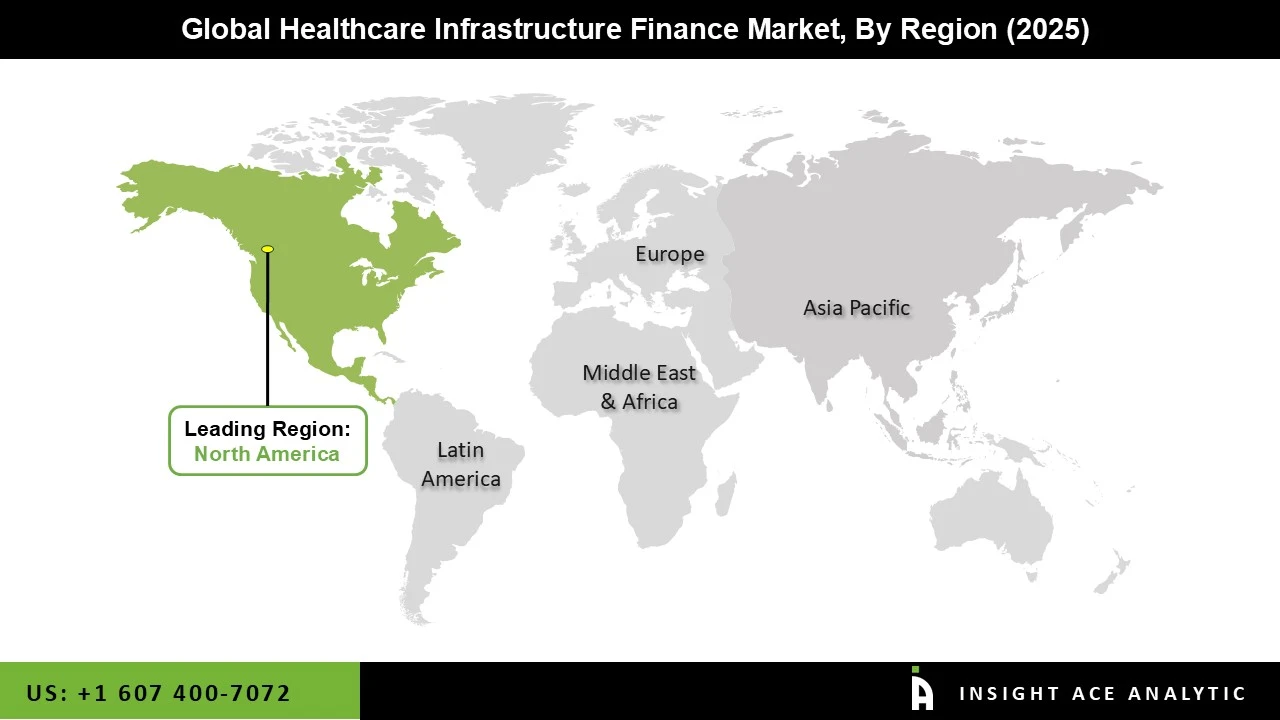
The Healthcare Infrastructure Finance market was dominated by North America region in 2025 driven by established healthcare systems, substantial healthcare spending, and ongoing expenditures in cutting-edge medical facilities. Large-scale financing for hospital expansion, modernization, and digital health integration is supported by the existence of top healthcare providers, robust financial institutions, and advantageous reimbursement structures in the US and Canada. Additionally, as the population ages and chronic illnesses become more common, there is a greater need for specialized care facilities, which drives up infrastructure spending. Moreover, public-private partnerships (PPPs) are being used by the region's governments to promote private sector involvement and modernize public health systems.
Healthcare Infrastructure Finance Market Report Scope:
| Report Attribute | Specifications |
| Market size value in 2025 | USD 471.03 Mn |
| Revenue forecast in 2035 | USD 966.00 Mn |
| Growth Rate CAGR | CAGR of 7.6% from 2026 to 2035 |
| Quantitative Units | Representation of revenue in US$ Mn and CAGR from 2026 to 2035 |
| Historic Year | 2022 to 2025 |
| Forecast Year | 2026-2035 |
| Report Coverage | The forecast of revenue, the position of the company, the competitive market structure, growth prospects, and trends |
| Segments Covered | Facility Type, Component, End-user, and By Region |
| Regional Scope | North America; Europe; Asia Pacific; Latin America; Middle East & Africa |
| Country Scope | U.S.; Canada; U.K.; Germany; China; India; Japan; Brazil; Mexico; The UK; France; Italy; Spain; China; Japan; India; South Korea; Southeast Asia; South Korea; Southeast Asia |
| Competitive Landscape | Philips Healthcare, Stryker Corporation, Johnson & Johnson, Medtronic, Siemens Healthineers, GE Healthcare, Cardinal Health, Baxter International, BD (Becton, Dickinson and Company), Tenet Healthcare, Mayo Clinic, Fresenius Medical Care, McKesson Corporation, Cerner Corporation, Apollo Global Management, Brookfield Asset Management, Macquarie Group, Mubadala Investment Company, UnitedHealth Group, and HCA Healthcare. |
| Customization Scope | Free customization report with the procurement of the report, Modifications to the regional and segment scope. Geographic competitive landscape. |
| Pricing and Available Payment Methods | Explore pricing alternatives that are customized to your particular study requirements. |
Market Segmentation:
Healthcare Infrastructure Finance Market by Facility Type-
• Hospitals
• Clinics
• Long-Term Care Facilities
• Diagnostic Centers
• Others
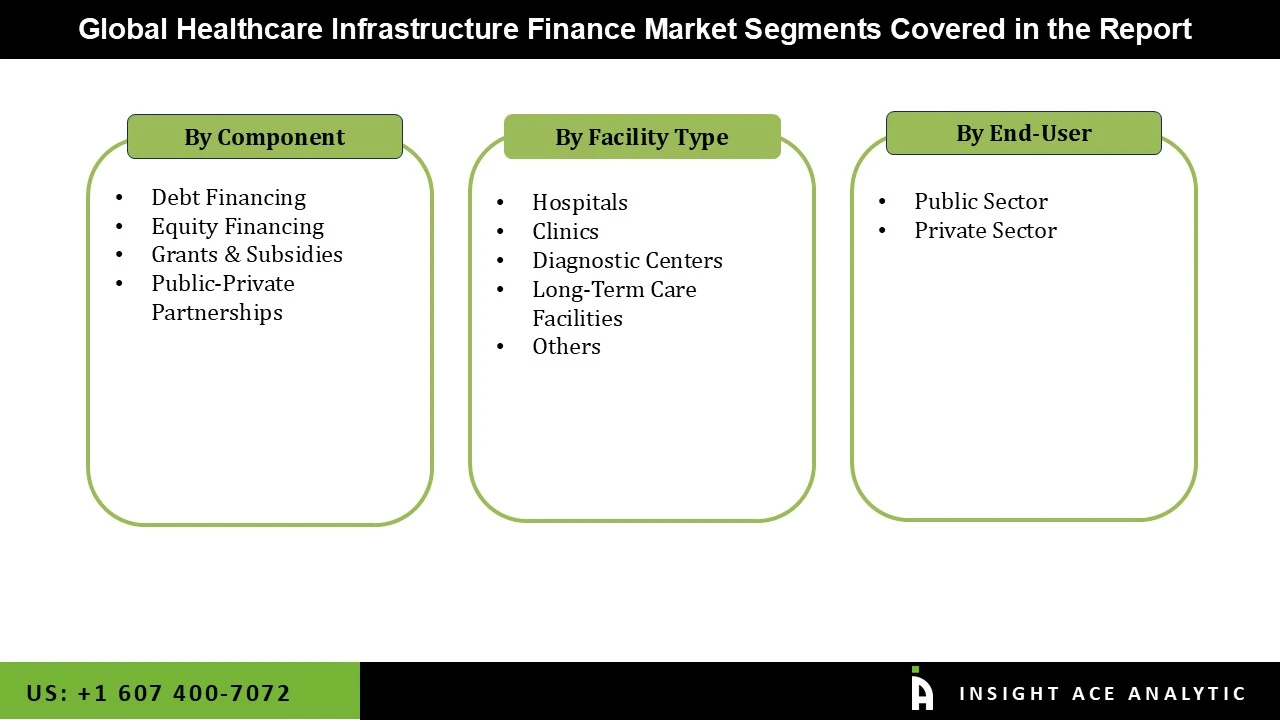
Healthcare Infrastructure Finance Market by Component-
• Debt Financing
• Grants & Subsidies
• Equity Financing
• Public-Private Partnerships
Healthcare Infrastructure Finance Market by End-user-
• Public Sector
• Private Sector
Research Design and Approach
This study employed a multi-step, mixed-method research approach that integrates:
- Secondary research
- Primary research
- Data triangulation
- Hybrid top-down and bottom-up modelling
- Forecasting and scenario analysis
This approach ensures a balanced and validated understanding of both macro- and micro-level market factors influencing the market.
Secondary Research
Secondary research for this study involved the collection, review, and analysis of publicly available and paid data sources to build the initial fact base, understand historical market behaviour, identify data gaps, and refine the hypotheses for primary research.
Sources Consulted
Secondary data for the market study was gathered from multiple credible sources, including:
- Government databases, regulatory bodies, and public institutions
- International organizations (WHO, OECD, IMF, World Bank, etc.)
- Commercial and paid databases
- Industry associations, trade publications, and technical journals
- Company annual reports, investor presentations, press releases, and SEC filings
- Academic research papers, patents, and scientific literature
- Previous market research publications and syndicated reports
These sources were used to compile historical data, market volumes/prices, industry trends, technological developments, and competitive insights.

Primary Research
Primary research was conducted to validate secondary data, understand real-time market dynamics, capture price points and adoption trends, and verify the assumptions used in the market modelling.
Stakeholders Interviewed
Primary interviews for this study involved:
- Manufacturers and suppliers in the market value chain
- Distributors, channel partners, and integrators
- End-users / customers (e.g., hospitals, labs, enterprises, consumers, etc., depending on the market)
- Industry experts, technology specialists, consultants, and regulatory professionals
- Senior executives (CEOs, CTOs, VPs, Directors) and product managers
Interview Process
Interviews were conducted via:
- Structured and semi-structured questionnaires
- Telephonic and video interactions
- Email correspondences
- Expert consultation sessions
Primary insights were incorporated into demand modelling, pricing analysis, technology evaluation, and market share estimation.
Data Processing, Normalization, and Validation
All collected data were processed and normalized to ensure consistency and comparability across regions and time frames.
The data validation process included:
- Standardization of units (currency conversions, volume units, inflation adjustments)
- Cross-verification of data points across multiple secondary sources
- Normalization of inconsistent datasets
- Identification and resolution of data gaps
- Outlier detection and removal through algorithmic and manual checks
- Plausibility and coherence checks across segments and geographies
This ensured that the dataset used for modelling was clean, robust, and reliable.
Market Size Estimation and Data Triangulation
Bottom-Up Approach
The bottom-up approach involved aggregating segment-level data, such as:
- Company revenues
- Product-level sales
- Installed base/usage volumes
- Adoption and penetration rates
- Pricing analysis
This method was primarily used when detailed micro-level market data were available.

Top-Down Approach
The top-down approach used macro-level indicators:
- Parent market benchmarks
- Global/regional industry trends
- Economic indicators (GDP, demographics, spending patterns)
- Penetration and usage ratios
This approach was used for segments where granular data were limited or inconsistent.
Hybrid Triangulation Approach
To ensure accuracy, a triangulated hybrid model was used. This included:
- Reconciling top-down and bottom-up estimates
- Cross-checking revenues, volumes, and pricing assumptions
- Incorporating expert insights to validate segment splits and adoption rates
This multi-angle validation yielded the final market size.
Forecasting Framework and Scenario Modelling
Market forecasts were developed using a combination of time-series modelling, adoption curve analysis, and driver-based forecasting tools.
Forecasting Methods
- Time-series modelling
- S-curve and diffusion models (for emerging technologies)
- Driver-based forecasting (GDP, disposable income, adoption rates, regulatory changes)
- Price elasticity models
- Market maturity and lifecycle-based projections
Scenario Analysis
Given inherent uncertainties, three scenarios were constructed:
- Base-Case Scenario: Expected trajectory under current conditions
- Optimistic Scenario: High adoption, favourable regulation, strong economic tailwinds
- Conservative Scenario: Slow adoption, regulatory delays, economic constraints
Sensitivity testing was conducted on key variables, including pricing, demand elasticity, and regional adoption.
Request Customization
Add countries, segments, company profiles, or extend forecast — free 10% customization with purchase.
Customize This Report →Enquire Before Buying
Speak with our analyst team about scope, methodology, pricing, or deliverable formats.
Enquire Now →Frequently Asked Questions
Healthcare Infrastructure Finance Market Size is valued at USD 471.03 Mn in 2025 and is predicted to reach USD 966.00 Mn by the year 2035
Healthcare Infrastructure Finance Market is expected to grow at a 7.6% CAGR during the forecast period for 2026 to 2035.
Philips Healthcare, Stryker Corporation, Johnson & Johnson, Medtronic, Siemens Healthineers, GE Healthcare, Cardinal Health, Baxter International, BD (Becton, Dickinson and Company), Tenet Healthcare, Mayo Clinic, Fresenius Medical Care, McKesson Corporation, Cerner Corporation, Apollo Global Management, Brookfield Asset Management, Macquarie Group, Mubadala Investment Company, UnitedHealth Group, and HCA Healthcare.
Healthcare Infrastructure Finance Market is segmented into Facility Type, Component, End-user, and By Region
North America region is leading the Healthcare Infrastructure Finance Market.