Fitness-Focused Travel and Retreats Market Size, Revenue, Forecast Report 2026 to 2035
What is Fitness-Focused Travel and Retreats Market?
Global Fitness-Focused Travel and Retreats Market Size is predicted to witness a 9.3% CAGR during the forecast period for 2026 to 2035.
Fitness-Focused Travel and Retreats Market Size, Share & Trends Analysis Distribution by Fitness Vacation Type (Fitness Boot Camps & Weight Loss Retreats, Yoga & Functional Fitness Retreats, Sports-Specific Training Camps, Adventure Fitness Vacations, Luxury Fitness Resorts, Corporate Fitness Retreats), By Program Intensity / Duration (Short-Term, Mid-Term, Long-Term), By Traveler Type (Primary Fitness Travelers, Secondary Fitness Travelers) By Booking Model (Direct-to-Consumer (D2C), Travel Aggregators / Platforms, Corporate / Group Bookings), By End User(Individual Consumers, Corporate / Employee Wellness Programs, Fitness Communities / Clubs), By Price Tier(Budget, Mid-Range, Premium / Luxury) and Segment Forecasts, 2026 to 2035
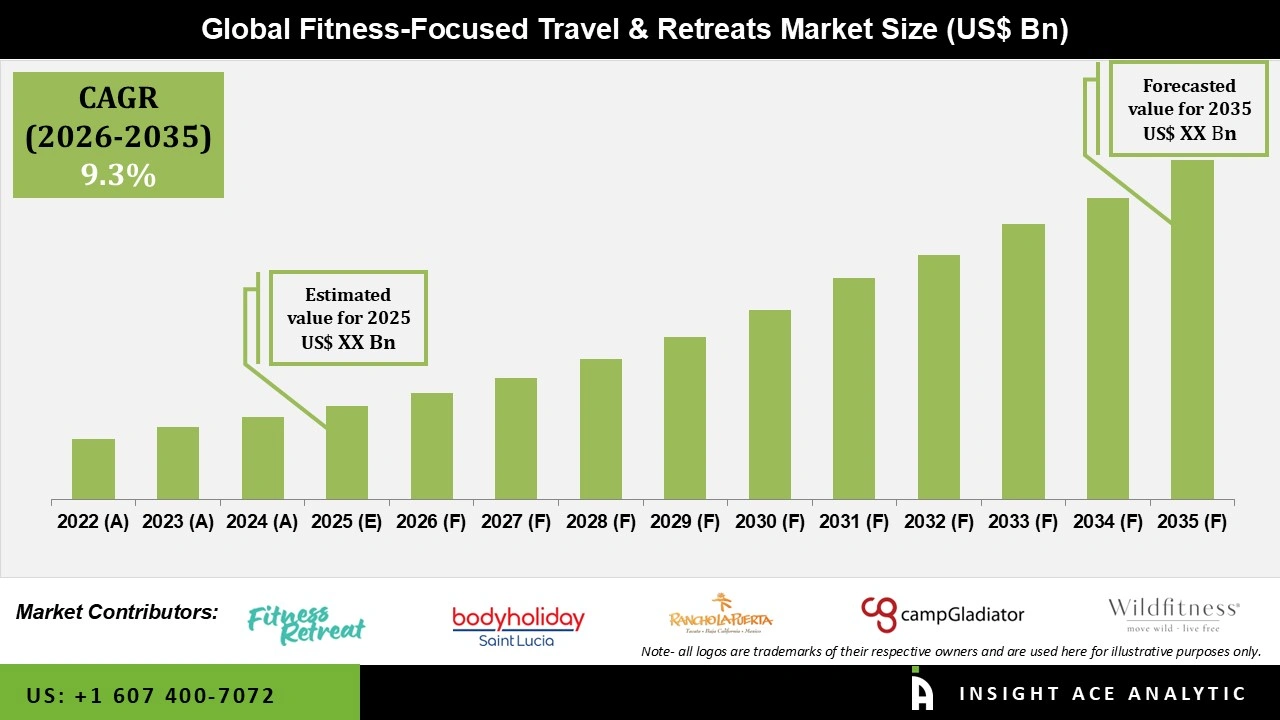
The fitness-focused travel and retreats market has become a rapidly growing niche within the overall wellness tourism sector, owing to an increased awareness of physical fitness, psychological health, and preventive medicine. While conventional forms of vacationing do not typically incorporate any such elements, fitness-focused travel combines aspects of fitness training, diet, and wellness treatments within the experience, thereby providing a more targeted and healthy alternative for tourists. High-stress environments, sedentary living conditions, as well as social media and corporate influences, have contributed to a significant rise in its popularity. Consequently, fitness vacations are transitioning from niche products to mainstream and high-end travel options.
Travel and retreats based on fitness is a term used to describe special travel arrangements where one engages in physical exercises and practices such as yoga, meditation, therapy, and recovery in order to improve his general wellbeing. Such retreats can be applied for different purposes including weight loss, stress relief, rehabilitation, improving athletic performance, and even lifestyle change. Some examples of these retreats include yoga and meditation retreats, intense fitness boot camp, luxury fitness and wellness retreats, adventure fitness travels, detox retreats, and specialized sports camps.
Competitive Landscape
Which are the Leading Players in the Fitness-Focused Travel and Retreats Market?
- Fitness Retreats
- The BodyHoliday
- Rancho La Puerta
- Camp Gladiator
- Wildfitness
- Hyatt Hotels Corporation
- Four Seasons Hotels and Resorts
- Marriott International
- Accor S.A.
- Hilton Worldwide Holdings
- Fit Bodies Inc.
- Escape Fitness Retreats
- Yoga for Bad People
- Surf Yoga Beer
Market Dynamics
Driver
Rising Demand for Preventive Healthcare and Holistic Wellness
The main factor influencing the growth of the fitness-focused travel and retreats market is the gradual change in the attitudes of consumers towards their health and the increasing inclination to adopt a preventative approach to healthcare. As more people become concerned about their health and strive to find ways to tackle obesity and excessive stress associated with an urban lifestyle, the demand for health-centered holidays is on the rise. The popularity of such trips is driven by several factors, including rising incomes, the impact of social media on consumers' perceptions of healthy living, and the spread of corporate wellness programs.
Restrain/Challenge
High Costs and Limited Accessibility Restricting Mass Adoption
One of the major challenges in the fitness-focused travel and retreats market is the expensive and difficult nature of accessing such retreats, thereby making them the preserve of consumers who can afford them. The premium nature of such retreats due to luxury accommodation, customized training and fitness programs, as well as other amenities involved makes it difficult for average people to access such retreats. Besides that, inconsistent quality and performance standards, unmeasurable results, and little awareness in emerging markets are some of the challenges that this market faces.
Fitness Boot Camps and Weight Loss Retreats Segment is Expected to Drive the Fitness-Focused Travel and Retreats Market
The fitness boot camps and weight loss retreats segment is driving the Fitness-Focused Travel and Retreats Market, primarily due to strong consumer demand for quick, visible results in weight management and physical transformation. These programs offer structured, high-intensity routines, personalized coaching, and measurable outcomes, making them highly attractive to individuals seeking short-term yet impactful fitness solutions. Additionally, the growing prevalence of obesity and lifestyle-related health concerns, along with the appeal of disciplined, results-oriented programs, has significantly boosted the popularity and revenue contribution of this segment compared to more leisure-oriented retreat types.
Travel Aggregators / Platforms Segment is Growing at the Highest Rate in the Fitness-Focused Travel and Retreats Market
Travel aggregators/platforms emerges as the most rapidly growing segment in the Fitness-Focused Travel and Retreats industry, attributed mainly to the growing digital penetration and inclination of customers toward easy and clear booking experience through digital platforms. Through the use of online booking platforms, users can make comparisons between different retreats, view their reviews, design a package for themselves, and choose from an international variety of options. This makes the segment more appealing to young travelers.
Why North America Led the Fitness-Focused Travel and Retreats Market?
Fitness-focused travel and retreats is a market that has been dominated by North America owing to its high levels of consumer awareness about health and wellness, their high spending power, and the presence of a highly developed wellness tourism sector.
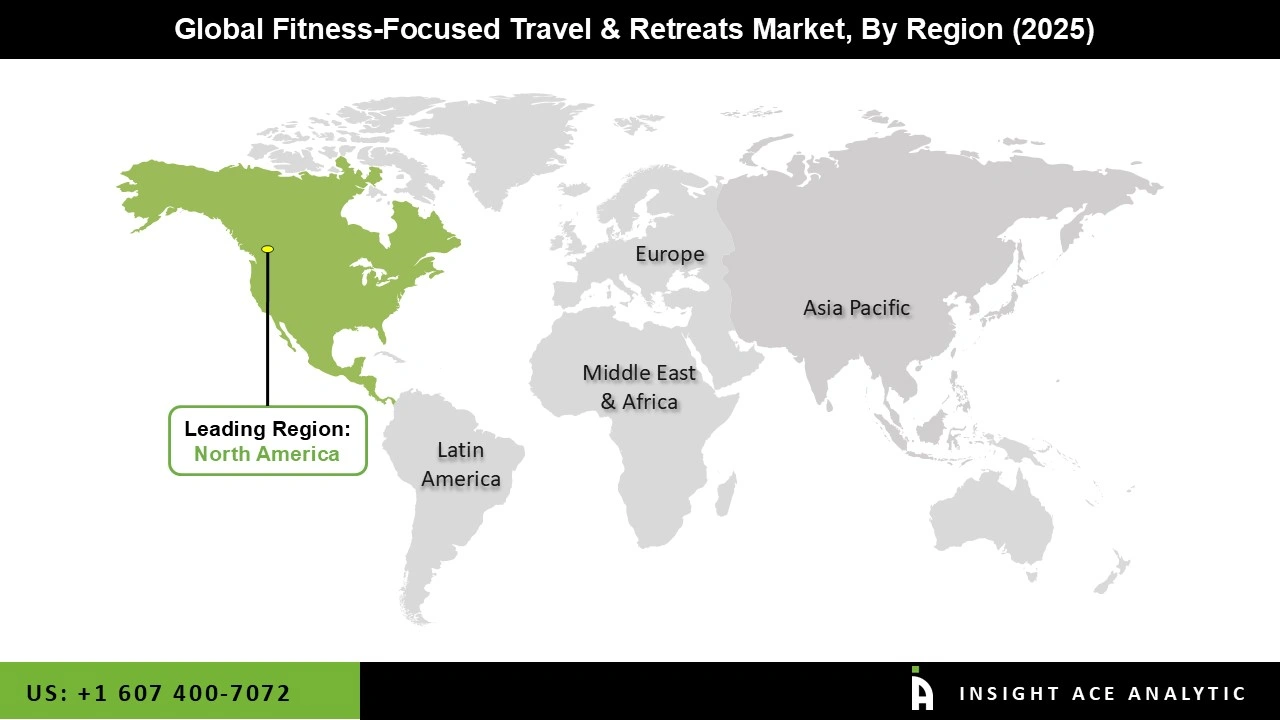
It is due to the presence of a high number of consumers who are fitness-oriented, the existence of preventive healthcare facilities, and luxury wellness destinations within the region.
Key Development
- In 2026: Rancho La Puerta introduced hybrid retreats combining fitness with social and recreational activities (e.g., games, community experiences), moving beyond traditional structured fitness programs. This shift broadens its audience to lifestyle and leisure wellness travelers, increasing customer retention and repeat visits. Growth is driven by experience diversification, with plans to further expand community-driven and hobby-integrated retreat formats.
- October 2025: Four Seasons Hotel Toronto launched the HaloSauna by Halotherapy Solutions at its spa, combining dry salt therapy with infrared sauna technology. The new offering enhances respiratory wellness and recovery solutions, reflecting growing demand for advanced, luxury fitness and wellness experiences.
- August 2025: Hyatt launched a new portfolio of multi-day fitness vacations, including yoga retreats, adventure fitness (hiking + training), and performance-based boot camps, with initial programs such as Desert Flow and Zion Unplugged, followed by a Fitness Performance Retreat in
- October 2025: This launch marks Hyatt’s transition into structured experiential wellness tourism, enabling higher-margin offerings beyond room revenue. The scalable retreat format allows regional expansion across resort destinations globally, while positioning Hyatt to capture demand for luxury fitness resorts and functional wellness programs. Future plans include expanding retreat themes and increasing frequency across key international markets.
Fitness-Focused Travel and Retreats Market Report Scope :
| Report Attribute | Specifications |
| Growth Rate CAGR | CAGR of 9.3% from 2026 to 2035 |
| Quantitative Units | Representation of revenue in US$ Bn and CAGR from 2026 to 2035 |
| Historic Year | 2022 to 2025 |
| Forecast Year | 2026-2035 |
| Report Coverage | The forecast of revenue, the position of the company, the competitive market structure, growth prospects, and trends |
| Segments Covered | Fitness Vacation Type, Program Intensity / Duration, Traveler Type, Booking Model, End-User, Price Tier and By Region |
| Regional Scope | North America; Europe; Asia Pacific; Latin America; Middle East and Africa |
| Country Scope | U.S.; Canada; U.K.; Germany; China; India; Japan; Brazil; Mexico; The UK; France; Italy; Spain; China; Japan; India; South Korea; Southeast Asia; South Korea; Southeast Asia |
| Competitive Landscape | Fitness Retreats, The BodyHoliday, Rancho La Puerta, Camp Gladiator, Wildfitness, Hyatt Hotels Corporation, Four Seasons Hotels and Resorts, Marriott International, Accor S.A., Hilton Worldwide Holdings, Fit Bodies Inc., Escape Fitness Retreats, Yoga for Bad People, Surf Yoga Beer |
| Customization Scope | Free customization report with the procurement of the report, Modifications to the regional and segment scope. Geographic competitive landscape. |
| Pricing and Available Payment Methods | Explore pricing alternatives that are customized to your particular study requirements. |
Segmentation of Fitness-Focused Travel and Retreats Market :
Fitness-Focused Travel and Retreats Market, by Fitness Vacation Type -
- Fitness Boot Camps and Weight Loss Retreats
- Yoga and Functional Fitness Retreats
- Sports-Specific Training Camps
- Adventure Fitness Vacations
- Luxury Fitness Resorts
- Corporate Fitness Retreats
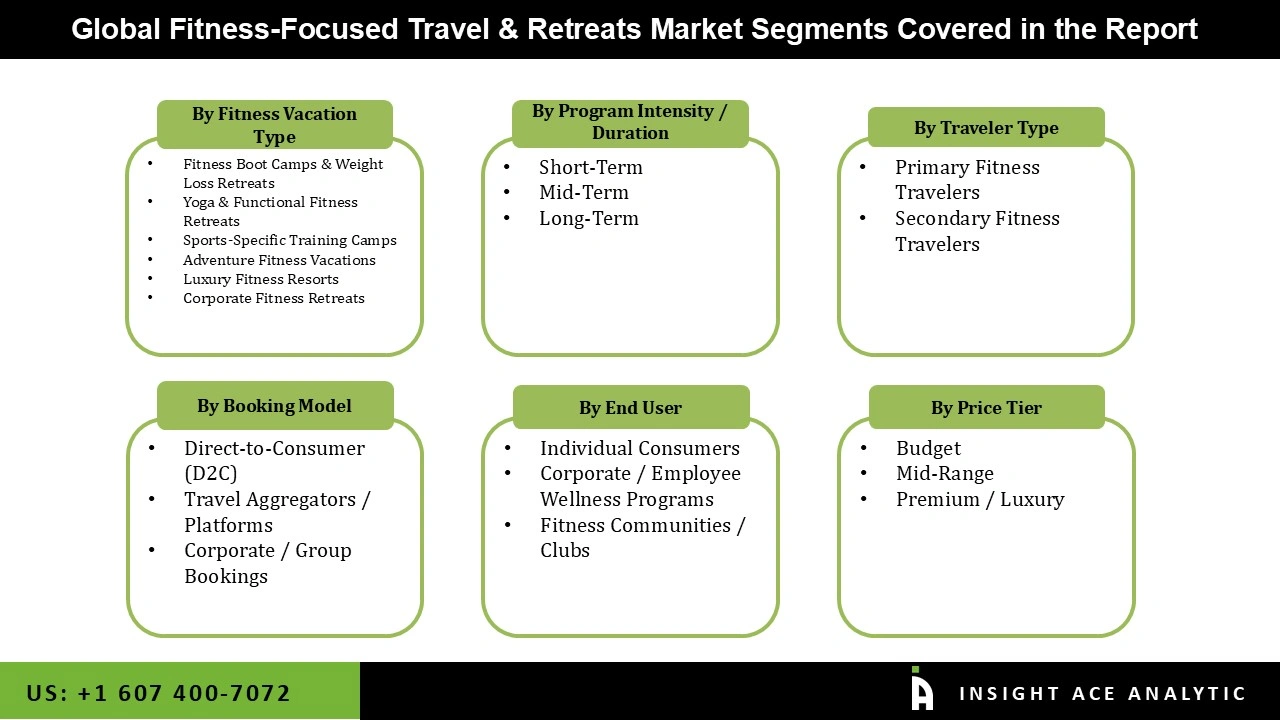
Fitness-Focused Travel and Retreats Market, by Program Intensity / Duration-
- Short-Term
- Mid-Term
- Long-Term
Fitness-Focused Travel and Retreats Market, by Traveler Type -
- Primary Fitness Travelers
- Secondary Fitness Travelers
Fitness-Focused Travel and Retreats Market, by Booking Model -
- Direct-to-Consumer (D2C)
- Travel Aggregators / Platforms
- Corporate / Group Bookings
Fitness-Focused Travel and Retreats Market, by End User -
- Individual Consumers
- Corporate / Employee Wellness Programs
- Fitness Communities / Clubs
Fitness-Focused Travel and Retreats Market, by Price Tier-
- Budget
- Mid-Range
- Premium / Luxury
Fitness-Focused Travel and Retreats Market, by Region-
- North America-
- The US
- Canada
- Europe-
- Germany
- The UK
- France
- Italy
- Spain
- Rest of Europe
- Asia-Pacific-
- China
- Japan
- India
- South Korea
- South East Asia
- Rest of Asia Pacific
- Latin America-
- Brazil
- Argentina
- Mexico
- Rest of Latin America
- Middle East and Africa-
- GCC Countries
- South Africa
- Rest of Middle East and Africa
Research Design and Approach
This study employed a multi-step, mixed-method research approach that integrates:
- Secondary research
- Primary research
- Data triangulation
- Hybrid top-down and bottom-up modelling
- Forecasting and scenario analysis
This approach ensures a balanced and validated understanding of both macro- and micro-level market factors influencing the market.
Secondary Research
Secondary research for this study involved the collection, review, and analysis of publicly available and paid data sources to build the initial fact base, understand historical market behaviour, identify data gaps, and refine the hypotheses for primary research.
Sources Consulted
Secondary data for the market study was gathered from multiple credible sources, including:
- Government databases, regulatory bodies, and public institutions
- International organizations (WHO, OECD, IMF, World Bank, etc.)
- Commercial and paid databases
- Industry associations, trade publications, and technical journals
- Company annual reports, investor presentations, press releases, and SEC filings
- Academic research papers, patents, and scientific literature
- Previous market research publications and syndicated reports
These sources were used to compile historical data, market volumes/prices, industry trends, technological developments, and competitive insights.

Primary Research
Primary research was conducted to validate secondary data, understand real-time market dynamics, capture price points and adoption trends, and verify the assumptions used in the market modelling.
Stakeholders Interviewed
Primary interviews for this study involved:
- Manufacturers and suppliers in the market value chain
- Distributors, channel partners, and integrators
- End-users / customers (e.g., hospitals, labs, enterprises, consumers, etc., depending on the market)
- Industry experts, technology specialists, consultants, and regulatory professionals
- Senior executives (CEOs, CTOs, VPs, Directors) and product managers
Interview Process
Interviews were conducted via:
- Structured and semi-structured questionnaires
- Telephonic and video interactions
- Email correspondences
- Expert consultation sessions
Primary insights were incorporated into demand modelling, pricing analysis, technology evaluation, and market share estimation.
Data Processing, Normalization, and Validation
All collected data were processed and normalized to ensure consistency and comparability across regions and time frames.
The data validation process included:
- Standardization of units (currency conversions, volume units, inflation adjustments)
- Cross-verification of data points across multiple secondary sources
- Normalization of inconsistent datasets
- Identification and resolution of data gaps
- Outlier detection and removal through algorithmic and manual checks
- Plausibility and coherence checks across segments and geographies
This ensured that the dataset used for modelling was clean, robust, and reliable.
Market Size Estimation and Data Triangulation
Bottom-Up Approach
The bottom-up approach involved aggregating segment-level data, such as:
- Company revenues
- Product-level sales
- Installed base/usage volumes
- Adoption and penetration rates
- Pricing analysis
This method was primarily used when detailed micro-level market data were available.

Top-Down Approach
The top-down approach used macro-level indicators:
- Parent market benchmarks
- Global/regional industry trends
- Economic indicators (GDP, demographics, spending patterns)
- Penetration and usage ratios
This approach was used for segments where granular data were limited or inconsistent.
Hybrid Triangulation Approach
To ensure accuracy, a triangulated hybrid model was used. This included:
- Reconciling top-down and bottom-up estimates
- Cross-checking revenues, volumes, and pricing assumptions
- Incorporating expert insights to validate segment splits and adoption rates
This multi-angle validation yielded the final market size.
Forecasting Framework and Scenario Modelling
Market forecasts were developed using a combination of time-series modelling, adoption curve analysis, and driver-based forecasting tools.
Forecasting Methods
- Time-series modelling
- S-curve and diffusion models (for emerging technologies)
- Driver-based forecasting (GDP, disposable income, adoption rates, regulatory changes)
- Price elasticity models
- Market maturity and lifecycle-based projections
Scenario Analysis
Given inherent uncertainties, three scenarios were constructed:
- Base-Case Scenario: Expected trajectory under current conditions
- Optimistic Scenario: High adoption, favourable regulation, strong economic tailwinds
- Conservative Scenario: Slow adoption, regulatory delays, economic constraints
Sensitivity testing was conducted on key variables, including pricing, demand elasticity, and regional adoption.
Request Customization
Add countries, segments, company profiles, or extend forecast — free 10% customization with purchase.
Customize This Report →Enquire Before Buying
Speak with our analyst team about scope, methodology, pricing, or deliverable formats.
Enquire Now →Frequently Asked Questions
Fitness-Focused Travel and Retreats Market Size is predicted to witness a 9.3% CAGR during the forecast period for 2026 to 2035.
North America region is leading the Fitness-Focused Travel and Retreats Market.
Fitness Retreats, The BodyHoliday, Rancho La Puerta, Camp Gladiator, Wildfitness, Hyatt Hotels Corporation, Four Seasons Hotels and Resorts, Marriott International, Accor S.A., Hilton Worldwide Holdings, Fit Bodies Inc., Escape Fitness Retreats, Yoga for Bad People, Surf Yoga Beer and Others.
Fitness-Focused Travel and Retreats Market is segmented into Fitness Vacation Type, Program Intensity / Duration, Traveler Type, Booking Model, End-User, Price Tier and Other.