Post-Procedure Skincare Market Size, Share, Trend Report 2026 to 2035
What is Post-Procedure Skincare Market Size?
Global Post-Procedure Skincare Market is estimated to grow with a 9.6% CAGR during the forecast period for 2026 to 2035.
Post-Procedure Skincare Market Size, Share & Trends Analysis Distribution by Product Function (Barrier Repair & Recovery Moisturizers, Soothing & Anti-Redness Products, Regenerative & Collagen-Support Products, Post-Procedure Photoprotection, Gentle Cleansers & Procedure Prep, Scar & Pigmentation Management), By Format (Cream & Balm, Serum & Ampoule, Gel, Lotion & Emulsion, Foam & Liquid Wash, Mask & Patch), By Procedure Origin (Energy-Based & Laser Procedures, Injectables & Skin Boosters, Chemical Peels, Microneedling & RF Microneedling, Surgical & Dermatologic Procedures, Other Procedures) and Segment Forecasts, 2026 to 2035.
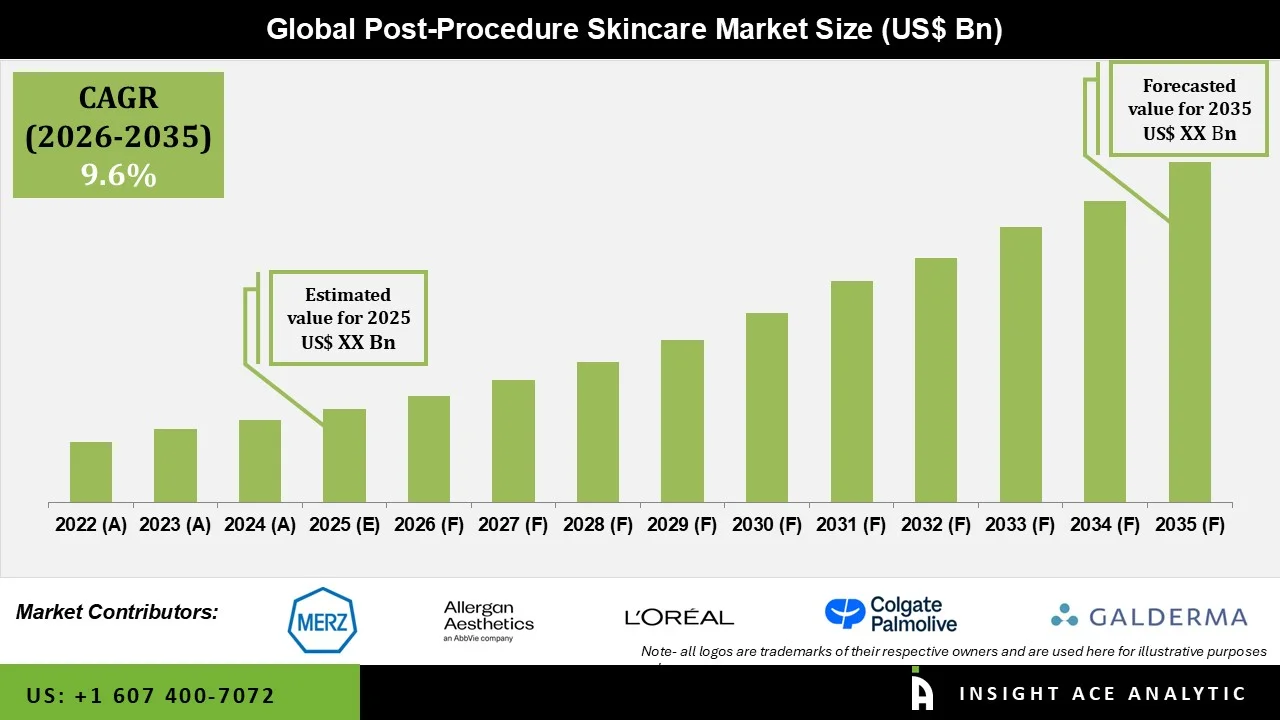
Post-procedure skincare refers to specialised products formulated to support the skin following aesthetic, dermatological, or cosmetic treatments. These products are designed for use when the skin is more sensitive, compromised, or in a recovery phase, helping to soothe irritation, reinforce the skin barrier, promote healing, and protect against further stress. The category typically includes soothing and barrier-repair creams, healing ointments, gentle cleansers, recovery serums, targeted moisturisers, and post-treatment sunscreens. Formulations are adapted to different stages of recovery and levels of skin sensitivity.
Unlike conventional daily skincare, post-procedure products occupy a distinct position between clinical treatment and everyday skincare. They form an integral part of the overall treatment protocol, used immediately after procedures and throughout the recovery period as the skin gradually returns to its normal state. These products are commonly applied following treatments such as laser therapy, chemical peels, microneedling, injectables, and other aesthetic or dermatological procedures, bridging professional aftercare guidelines with at-home skincare routines.
The market for skincare after a procedure is thus the aftercare component of the aesthetic and dermatology sector, incorporating clinically oriented formulations, professional advice, and consumer-oriented recovery products. With product ranges becoming more specialised, the market is moving past simple moisturising and protection to offer targeted solutions for specific post-treatment skincare requirements.
Competitive Landscape
Which are the Leading Players in the Post-Procedure Skincare Market?
- Galderma S.A.
- L'Oréal S.A.
- AbbVie Inc. (Allergan Aesthetics)
- Colgate-Palmolive Company
- Merz Pharma Group
- ZO Skin Health, Inc.
- Obagi Medical
- Revision Skincare
- Beiersdorf AG
- Pierre Fabre Group
- NAOS (Bioderma)
- Amorepacific Corporation
- ISDIN
- Cantabria Labs
- Mesoestetic Pharma Group
- iS Clinical (Innovative Skincare)
- Colorescience, Inc.
- Jan Marini Skin Research
- AlumierMD
- Stratpharma AG
Market Dynamics
Driver
Growing Number of Aesthetic and Dermatological Procedures
The greater the number of aesthetic and dermatological treatments—such as laser therapy, chemical peels, microneedling, dermabrasion, injectables, and skin resurfacing—becomes adopted is a key factor in the growth of the market for skincare after these procedures. Since such treatments may temporarily weaken the skin barrier or lead to sensitivity, redness, dryness, and inflammation, there is a need for special products which help the skin to recover and be protected. With more and more consumers adding professional aesthetic treatments to their regular skincare regimens, the demand for recovery creams that have been formulated on a clinical basis, barrier-repairing products, mild cleansers, calming serums, and post-treatment sunscreens is growing in line with the number of treatments performed.
Restrain/Challenge
Limited Consumer Awareness and Inconsistent Understanding of Post-Procedure Skincare
A big difficulty in the area of skincare after cosmetic and dermatological treatments is that consumers do not have a clear understanding of the particular skincare needs that arise after different types of procedures. The kind of aftercare required can vary a great deal according to the procedure, the type of skin, the intensity of the treatment, and the stage of recovery. As a result, many consumers tend to carry on using ordinary skincare products or stick to general routines instead of taking up the products specifically recommended by professionals. This in turn hinders the uptake of such products and causes consumers to depend more on simple moisturisers, sunscreens, or other easily accessible skincare items.
Barrier Repair & Recovery Moisturizers Segment is Expected to Drive the Post-Procedure Skincare Market
Barrier repair & recovery moisturizers is expected to remain strong since restoring the skin barrier is a basic necessity in a wide variety of treatments such as laser therapy, chemical peels, microneedling, dermabrasion, and other aesthetic procedures. These treatments have the effect of temporarily disrupting the skin barrier, which in turn causes dryness, sensitivity, redness, and greater loss of moisture, thus increasing the requirement for moisturizers and recovery creams containing ceramides, hyaluronic acid, panthenol, and other ingredients that support the skin barrier in order to aid in skin recovery and keep the skin hydrated.
Serum & Ampoule Segment is Growing at the Highest Rate in the Post-Procedure Skincare Market
The serum and ampoule section is expected to achieve the highest growth rate in the post-procedure skincare market, since there is an increasing supply of concentrated and targeted formulations intended to deal with specific post-procedure issues such as redness, inflammation, dehydration, disruption of the skin barrier, and the need for recovery. Because serums and ampoules can include high concentrations of active and regenerative ingredients and at the same time provide lightweight textures that are suitable for inclusion in skincare routines tailored to a particular procedure, and as there is growing acceptance of professional and medical-grade skincare along with rising interest in targeted recovery products, the rapid expansion of this type of product is expected to be further supported.
Why North America Led the Post-Procedure Skincare Market?
North America is expected to lead the post-procedure skincare market, supported by the region’s high adoption of aesthetic and minimally invasive dermatological procedures, strong presence of dermatologists and aesthetic clinics, and well-established medical-grade skincare brands.
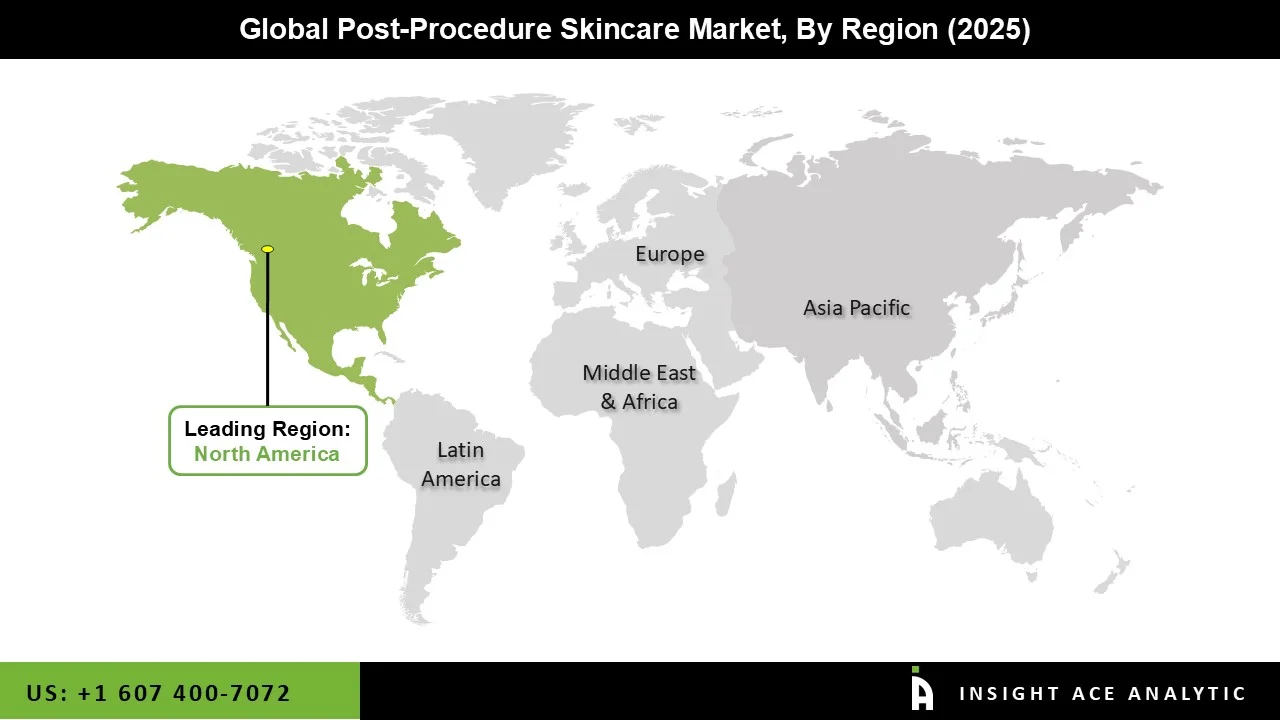
There is also great consumer awareness among people in the region regarding professional skincare and the need for recovery after treatment, and product uptake is further boosted by the availability of specialized products via dermatology practices, aesthetic clinics, and established retail outlets. Moreover, the presence of large companies including Galderma, AbbVie, L'Oréal, ZO Skin Health, Obagi, and Revision Skincare underpins the region's leadership in this market.
Key Development
April 2026: Galderma launched alastin signature practices, a program recognizing dermatology, plastic surgery, and medical aesthetics clinics that integrate ALASTIN’s regenerative and peri-procedural skincare portfolio into treatment planning and patient care. Colorado Springs Dermatology Clinic became the first designated practice, with further U.S. practices planned in 2026.
Post-Procedure Skincare Market Report Scope :
| Report Attribute | Specifications |
| Growth Rate CAGR | CAGR of 9.6% from 2026 to 2035 |
| Quantitative Units | Representation of revenue in US$ Bn and CAGR from 2026 to 2035 |
| Historic Year | 2022 to 2025 |
| Forecast Year | 2026-2035 |
| Report Coverage | The forecast of revenue, the position of the company, the competitive market structure, growth prospects, and trends |
| Segments Covered | Product Function, Format, Procedure Origin, Distribution Channel and By Region |
| Regional Scope | North America; Europe; Asia Pacific; Latin America; Middle East & Africa |
| Country Scope | U.S.; Canada; U.K.; Germany; China; India; Japan; Brazil; Mexico; France; Italy; Spain; South Korea; Southeast Asia |
| Competitive Landscape | Galderma S.A., L'Oréal S.A., AbbVie Inc. (Allergan Aesthetics), Colgate-Palmolive Company, Merz Pharma Group, ZO Skin Health, Inc., Obagi Medical, Revision Skincare, Beiersdorf AG, Pierre Fabre Group |
| Customization Scope | Free customization report with the procurement of the report, Modifications to the regional and segment scope. Geographic competitive landscape. |
| Pricing and Available Payment Methods | Explore pricing alternatives that are customized to your particular study requirements. |
Segmentations Post-Procedure Skincare Market:
Post-Procedure Skincare Market by Product Function -
- Barrier Repair & Recovery Moisturizers
- Soothing & Anti-Redness Products
- Regenerative & Collagen-Support Products
- Post-Procedure Photoprotection
- Gentle Cleansers & Procedure Prep
- Scar & Pigmentation Management
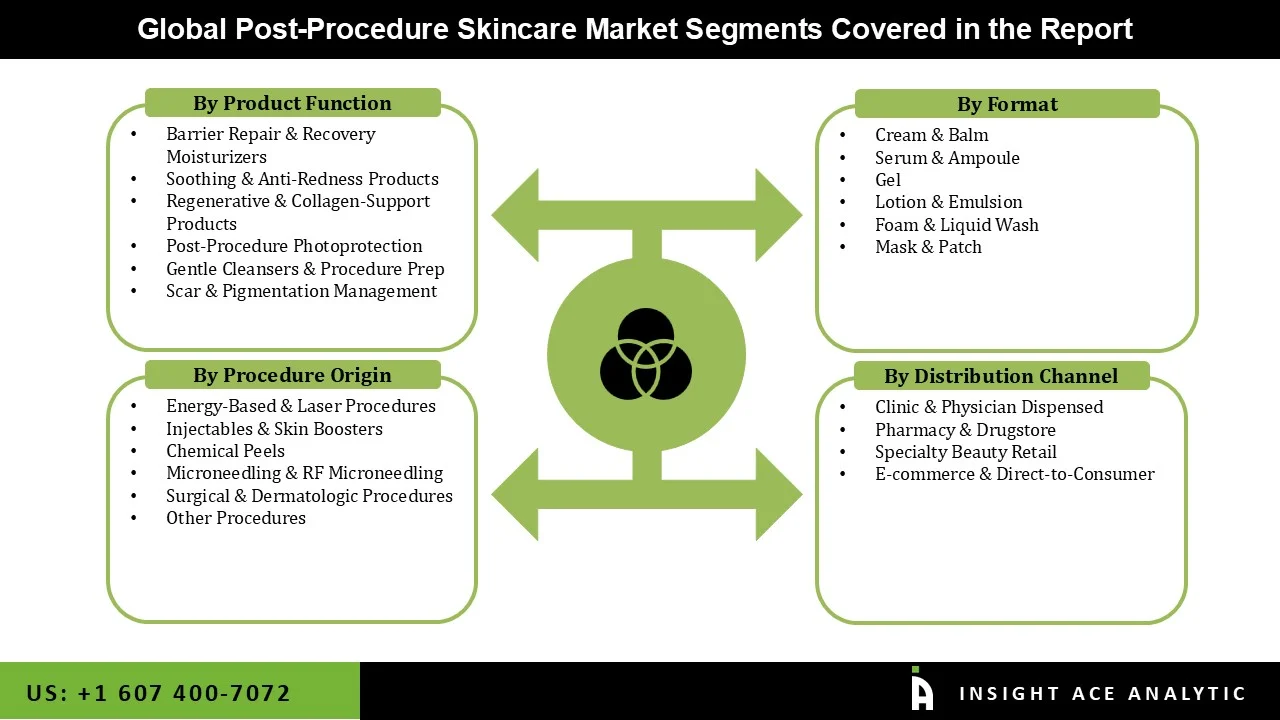
Post-Procedure Skincare Market by Format -
- Cream & Balm
- Serum & Ampoule
- Gel
- Lotion & Emulsion
- Foam & Liquid Wash
- Mask & Patch
Post-Procedure Skincare Market by Procedure Origin -
- Energy-Based & Laser Procedures
- Injectables & Skin Boosters
- Chemical Peels
- Microneedling & RF Microneedling
- Surgical & Dermatologic Procedures
- Other Procedures
Post-Procedure Skincare Market by Distribution Channel -
- Clinic & Physician Dispensed
- Pharmacy & Drugstore
- Specialty Beauty Retail
- E-commerce & Direct-to-Consumer
Post-Procedure Skincare Market by Region-
- North America-
- The US
- Canada
- Europe-
- Germany
- The UK
- France
- Italy
- Spain
- Rest of Europe
- Asia-Pacific-
- China
- Japan
- India
- South Korea
- South East Asia
- Rest of Asia Pacific
- Latin America-
- Brazil
- Argentina
- Mexico
- Rest of Latin America
- Middle East and Africa-
- GCC Countries
- South Africa
- Rest of Middle East and Africa
Research Design and Approach
This study employed a multi-step, mixed-method research approach that integrates:
- Secondary research
- Primary research
- Data triangulation
- Hybrid top-down and bottom-up modelling
- Forecasting and scenario analysis
This approach ensures a balanced and validated understanding of both macro- and micro-level market factors influencing the market.
Secondary Research
Secondary research for this study involved the collection, review, and analysis of publicly available and paid data sources to build the initial fact base, understand historical market behaviour, identify data gaps, and refine the hypotheses for primary research.
Sources Consulted
Secondary data for the market study was gathered from multiple credible sources, including:
- Government databases, regulatory bodies, and public institutions
- International organizations (WHO, OECD, IMF, World Bank, etc.)
- Commercial and paid databases
- Industry associations, trade publications, and technical journals
- Company annual reports, investor presentations, press releases, and SEC filings
- Academic research papers, patents, and scientific literature
- Previous market research publications and syndicated reports
These sources were used to compile historical data, market volumes/prices, industry trends, technological developments, and competitive insights.
Primary Research
Primary research was conducted to validate secondary data, understand real-time market dynamics, capture price points and adoption trends, and verify the assumptions used in the market modelling.
Stakeholders Interviewed
Primary interviews for this study involved:
- Manufacturers and suppliers in the market value chain
- Distributors, channel partners, and integrators
- End-users / customers (e.g., hospitals, labs, enterprises, consumers, etc., depending on the market)
- Industry experts, technology specialists, consultants, and regulatory professionals
- Senior executives (CEOs, CTOs, VPs, Directors) and product managers
Interview Process
Interviews were conducted via:
- Structured and semi-structured questionnaires
- Telephonic and video interactions
- Email correspondences
- Expert consultation sessions
Primary insights were incorporated into demand modelling, pricing analysis, technology evaluation, and market share estimation.
Data Processing, Normalization, and Validation
All collected data were processed and normalized to ensure consistency and comparability across regions and time frames.
The data validation process included:
- Standardization of units (currency conversions, volume units, inflation adjustments)
- Cross-verification of data points across multiple secondary sources
- Normalization of inconsistent datasets
- Identification and resolution of data gaps
- Outlier detection and removal through algorithmic and manual checks
- Plausibility and coherence checks across segments and geographies
This ensured that the dataset used for modelling was clean, robust, and reliable.
Market Size Estimation and Data Triangulation
Bottom-Up Approach
The bottom-up approach involved aggregating segment-level data, such as:
- Company revenues
- Product-level sales
- Installed base/usage volumes
- Adoption and penetration rates
- Pricing analysis
This method was primarily used when detailed micro-level market data were available.
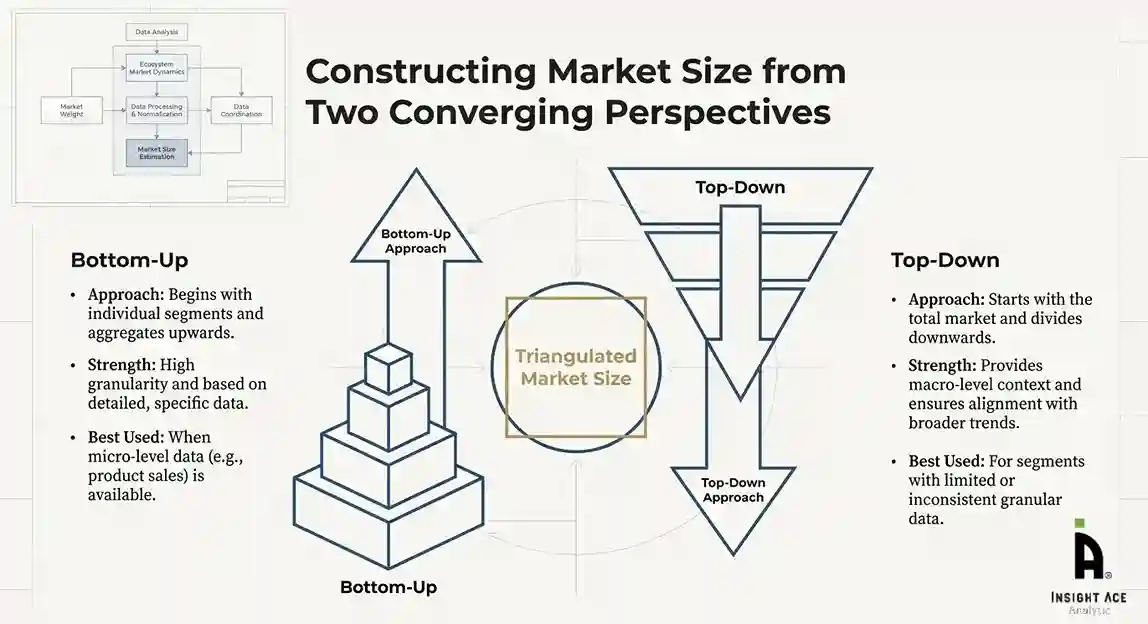
Top-Down Approach
The top-down approach used macro-level indicators:
- Parent market benchmarks
- Global/regional industry trends
- Economic indicators (GDP, demographics, spending patterns)
- Penetration and usage ratios
This approach was used for segments where granular data were limited or inconsistent.
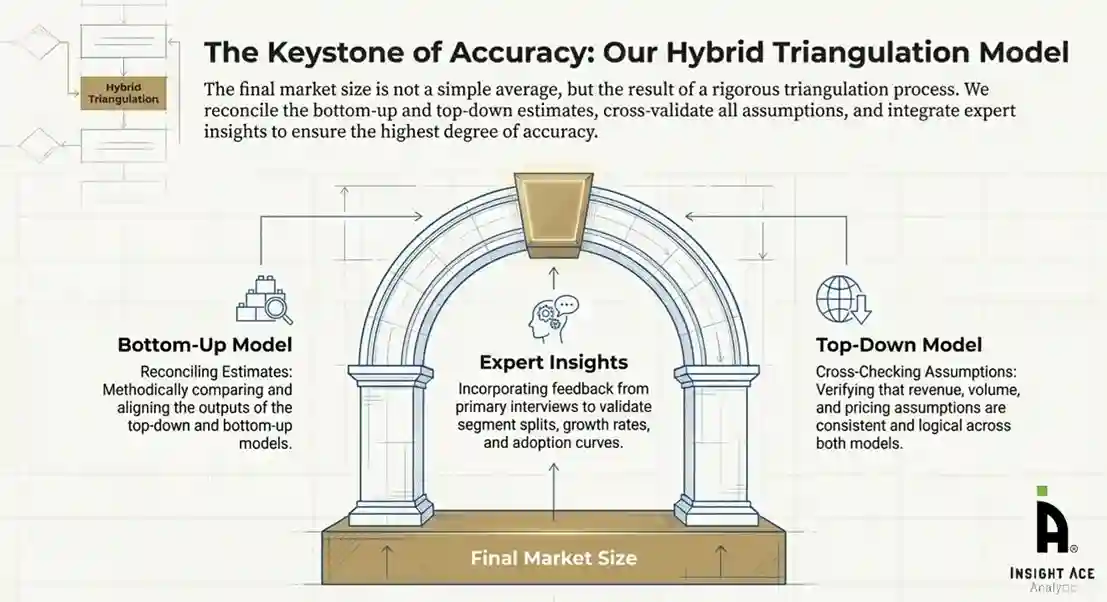
Hybrid Triangulation Approach
To ensure accuracy, a triangulated hybrid model was used. This included:
- Reconciling top-down and bottom-up estimates
- Cross-checking revenues, volumes, and pricing assumptions
- Incorporating expert insights to validate segment splits and adoption rates
This multi-angle validation yielded the final market size.
Forecasting Framework and Scenario Modelling
Market forecasts were developed using a combination of time-series modelling, adoption curve analysis, and driver-based forecasting tools.
Forecasting Methods
- Time-series modelling
- S-curve and diffusion models (for emerging technologies)
- Driver-based forecasting (GDP, disposable income, adoption rates, regulatory changes)
- Price elasticity models
- Market maturity and lifecycle-based projections
Scenario Analysis
Given inherent uncertainties, three scenarios were constructed:
- Base-Case Scenario: Expected trajectory under current conditions
- Optimistic Scenario: High adoption, favourable regulation, strong economic tailwinds
- Conservative Scenario: Slow adoption, regulatory delays, economic constraints
Sensitivity testing was conducted on key variables, including pricing, demand elasticity, and regional adoption.
Request Customization
Add countries, segments, company profiles, or extend forecast — free 10% customization with purchase.
Customize This Report →Enquire Before Buying
Speak with our analyst team about scope, methodology, pricing, or deliverable formats.
Enquire Now →Frequently Asked Questions
Post-Procedure Skincare Market is estimated to grow with a 9.6% CAGR during the forecast period for 2026 to 2035.
Galderma S.A., L\'Oréal S.A., AbbVie Inc. (Allergan Aesthetics), Colgate-Palmolive Company, Merz Pharma Group, ZO Skin Health, Inc., Obagi Medical, Revision Skincare, Beiersdorf AG, Pierre Fabre Group and Others.
Post-Procedure Skincare Market is segmented into Product Function, Format, Procedure Origin, Distribution Channel and Other.
North America region is leading the Post-Procedure Skincare Market.