Organic Skincare Market Size, Trend, Revenue Report 2026 to 2035
What is Organic Skincare Market Size?
Global Organic Skincare Market Size is valued at USD 12.43 Bn in 2025 and is predicted to reach USD 32.23 Bn by the year 2035 at an 10.2% CAGR during the forecast period for 2026 to 2035.
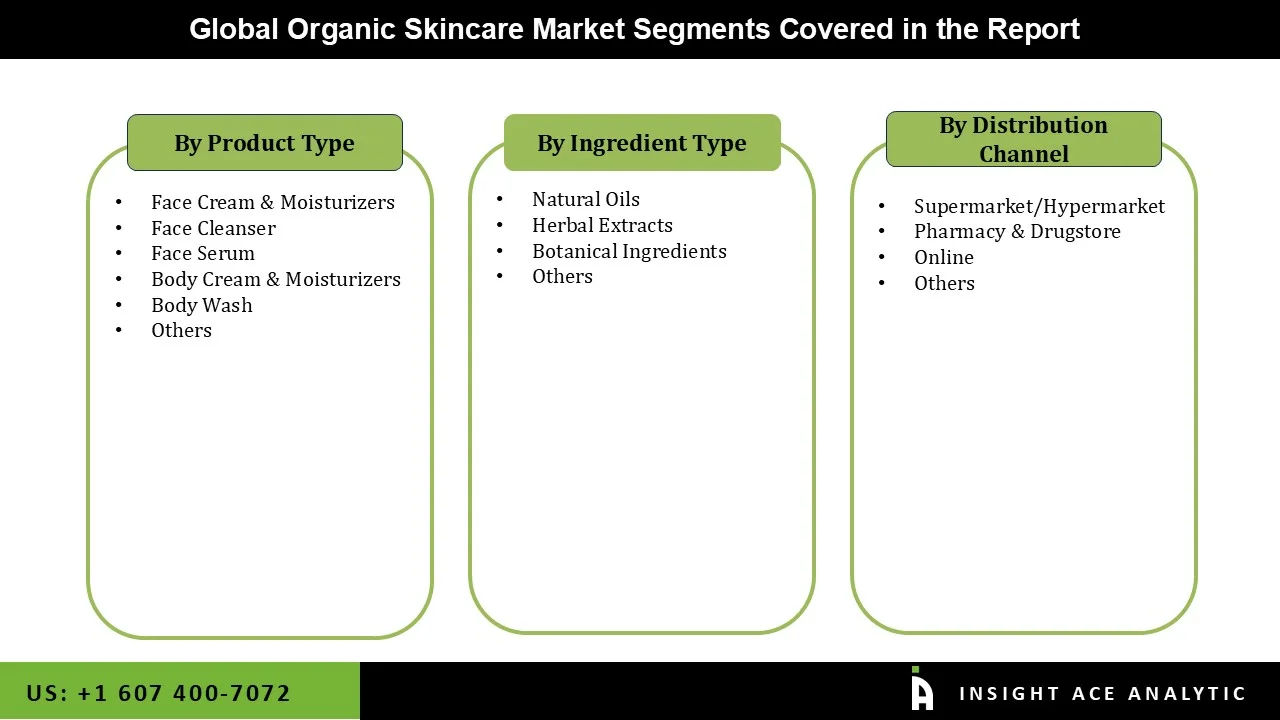
Organic Skincare Market Size, Share & Trends Analysis by Product (Face Cream & Moisturizers, Face Cleanser, Face Serum, Body Cream & Moisturizers, Body Wash, Others), by Ingredient Type (Natural Oils, Herbal Extracts, Botanical Ingredients, Others), by Distribution Channel (Supermarket/Hypermarket, Pharmacy & Drugstore, Online, Others) and Segment Forecasts, 2026 to 2035.
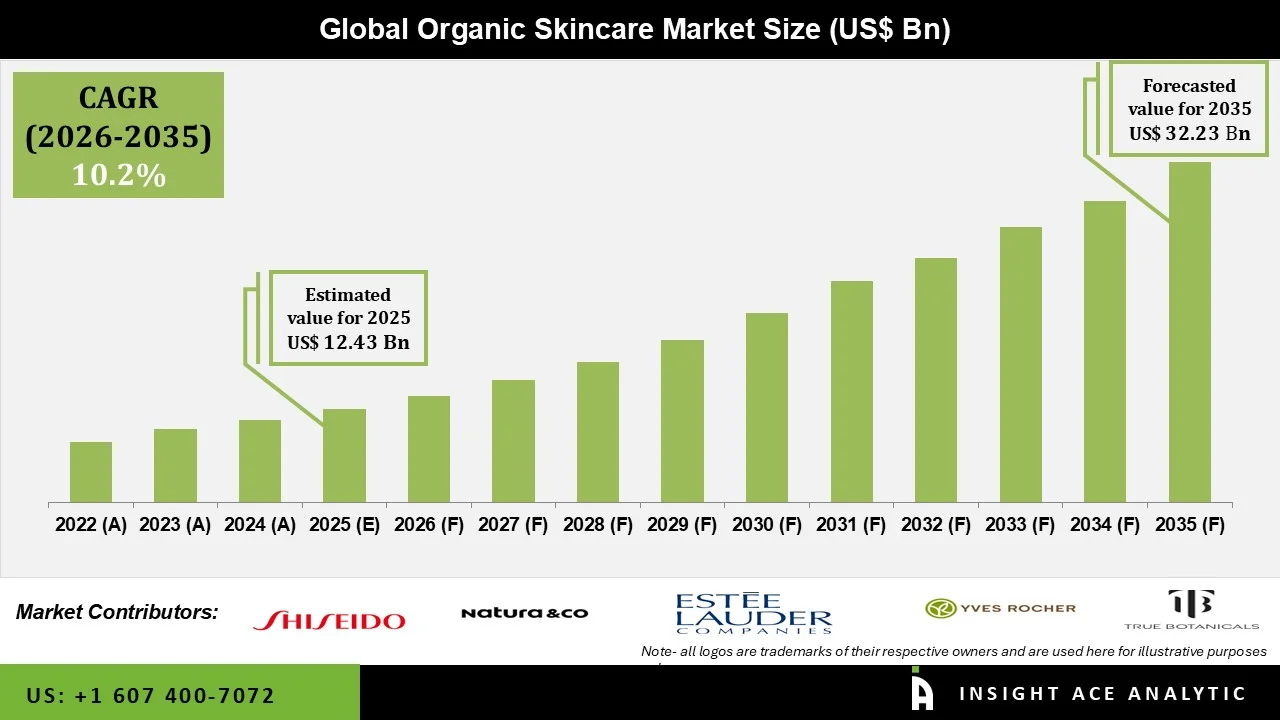
Organic skincare comprises products formulated primarily with certified organic and plant-derived ingredients, designed to cleanse, nourish, protect and improve the appearance of the skin while minimising reliance on synthetic chemicals. Typical ingredients include botanical extracts, plant oils, herbal actives, aloe vera, essential oils and natural moisturising agents. The organic skincare market is expanding as plant-based products become more available, organic ingredients are used more often, and manufacturers create products to meet a wider range of consumer needs. Each product addresses specific skincare needs, such as hydration, cleansing, nourishment, uneven skin tone, and signs of ageing. Organic skincare products are sold through online shops, beauty stores, supermarkets, pharmacies, department stores, and other retailers. Manufacturers are also adding more options for different skin types, age groups, and personal care preferences. Interest in clean beauty, plant-based formulas, cruelty-free products, and eco-friendly packaging is also shaping product development and marketing.
Market growth is supported by rising demand for natural and organic personal care products, greater focus on ingredient transparency, and easier online skincare purchases. Consumers look for products with clear ingredient lists and formulas that match their needs. In response, manufacturers are investing in research, developing new botanical formulas, improving packaging, and seeking sustainable sources. Advances in cosmetic science are helping companies make products with better texture, stability, performance, and shelf life. Digital marketing, bea uty influencers, product reviews, and online education are also helping brands reach more customers and explain product benefits. Still, high production costs, shifts in the supply of organic materials, challenges in keeping formulas stable, and the need to meet quality and certification standards can slow market growth. Differences in certification requirements and consumer understanding of product labels can also challenge manufacturers. Competition from conventional skincare products and other natural beauty alternatives may also influence pricing and purchasing decisions. In the coming years, continued product innovation, better ingredient sourcing, wider distribution, and growing interest in sustainable beauty will likely shape the market. For long-term growth, companies will need to maintain product quality, secure reliable ingredients, offer good prices, share clear product information, and meet changing consumer needs.
Competitive Landscape
Which are the Leading Players in Organic Skincare Market?
- Shiseido Company Limited
- Natura & Co.
- The Estée Lauder Companies
- Yves Rocher
- True Botanicals
- Tata Harper
- The Hain Celestial Group
- Weleda AG
- Arbonne International
- Purity Cosmetics (100% Pure)
Driver
Growing Demand for Natural and Organic Personal Care Products
Increasing consumer interest in natural skincare products and plant-based formulations is supporting the growth of the organic skincare market. Consumers are paying greater attention to product ingredients and looking for skincare solutions that align with their personal preferences. This is encouraging manufacturers to expand their product portfolios across face creams and moisturizers, face cleansers, face serums, body creams, and body washes. The growing use of natural oils, herbal extracts, and botanical ingredients is also creating opportunities for product innovation. In addition, the expansion of online shopping, specialty beauty retailers, and modern retail outlets is making organic skincare products more accessible to consumers across different markets.
Restraint/Challenge
High Product Costs and Challenges in Organic Ingredient Sourcing
The organic skincare market faces challenges related to production costs, ingredient availability, and product formulation. Sourcing certified organic raw materials can be expensive, while seasonal variations and agricultural conditions may affect the availability and consistency of natural oils, herbal extracts, and botanical ingredients. Manufacturers must also maintain product stability, safety, and quality while meeting applicable organic certification and labelling requirements. Certain natural formulations may require additional preservation and packaging measures to maintain their quality and shelf life. These factors can increase manufacturing costs and make it difficult for smaller brands to offer competitively priced products. Price sensitivity among consumers may further affect the adoption of premium organic skincare products.
Face Cream & Moisturizers Segment is Expected to Drive the Organic Skincare Market
The face cream and moisturizers segment represents an important product category in the organic skincare market due to the regular use of moisturising products in daily skincare routines. Consumers are increasingly seeking formulations containing botanical oils, plant extracts, and naturally derived moisturising ingredients to support skin hydration and nourishment. Manufacturers are introducing products designed for different skin types and concerns, including dryness, uneven texture, and visible signs of ageing. Product innovation, wider availability through online platforms and retail stores, and growing interest in ingredient-focused skincare are expected to support this segment. However, product pricing, formulation performance, and the need to maintain consistent quality remain important considerations.
Natural Oils Segment is Expected to Support Growth in the Organic Skincare Market
Natural oils play an important role in organic skincare formulations because they are commonly used to moisturise, soften, and nourish the skin. Ingredients such as jojoba oil, coconut oil, argan oil, and other plant-derived oils are incorporated into face creams, serums, body moisturizers, and cleansing products. Their versatility allows manufacturers to develop products for different skincare requirements and product categories. Growing interest in plant-based ingredients is encouraging brands to explore new combinations of natural oils with herbal extracts and other botanical ingredients. The segment's development will depend on reliable sourcing, ingredient quality, formulation compatibility, and the ability to maintain product performance and shelf life.
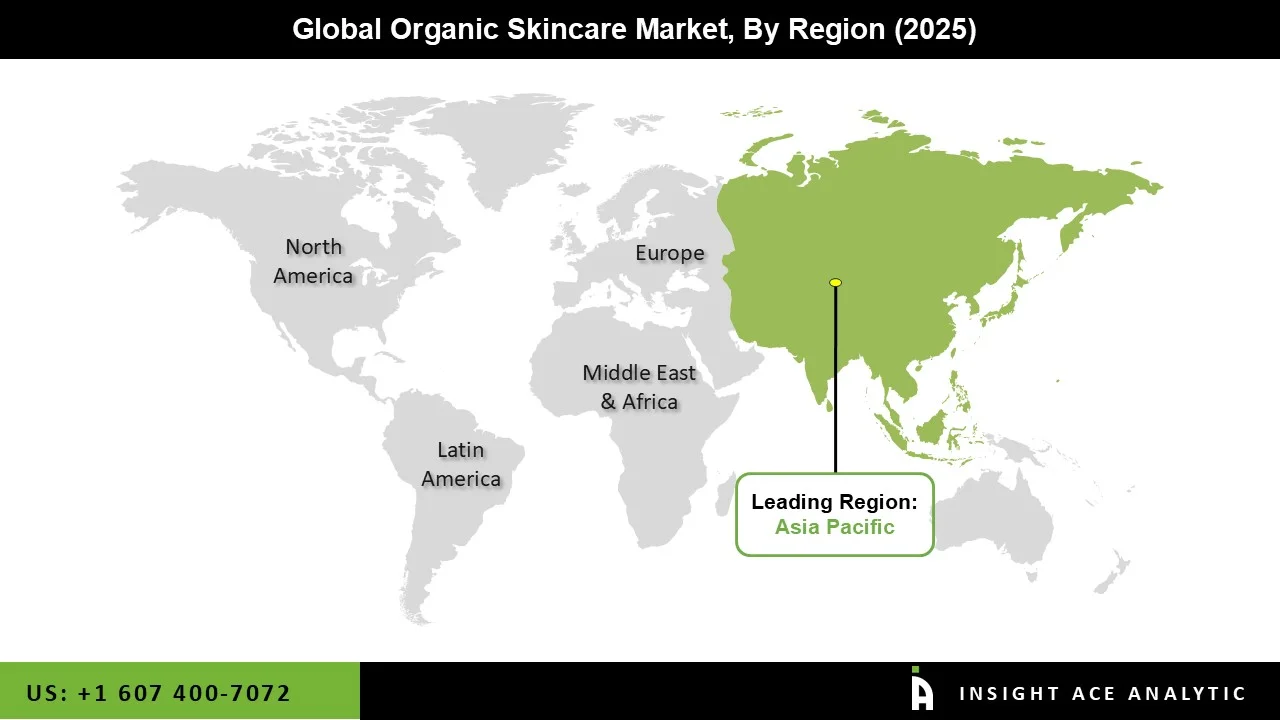
Why Asia Pacific Leads the Organic Skincare Market?
Asia Pacific is an important region for the organic skincare market, supported by its large consumer base, established beauty and personal care industries, and growing availability of skincare products through online and offline retail channels. Countries such as China, India, Japan, South Korea, and Australia offer opportunities for market development because of their diverse skincare preferences and expanding beauty product markets. The region's established use of botanical ingredients and traditional skincare practices also creates opportunities for products incorporating natural oils, herbal extracts, and other plant-derived ingredients.
Rising disposable incomes in several markets, greater product availability through e-commerce, and increasing interest in specialised skincare formulations are supporting demand across product categories, including face creams and moisturizers, face cleansers, serums, and body care products. Supermarkets, hypermarkets, pharmacies, drugstores, and online platforms provide manufacturers with multiple routes to reach consumers. However, price sensitivity, differences in consumer preferences, regulatory requirements, and competition from conventional skincare brands may affect market expansion. Going forward, product innovation, reliable ingredient sourcing, transparent labelling, and wider distribution are expected to influence the region's development.
Key Developments
• In January 2026, Shiseido Company Limited introduced an AI-powered formulation development capability, enabling researchers to explore and evaluate cosmetic formulations more efficiently, including applications in sun care.
• In May 2026, Natura & Co. brand Natura partnered with Debut to commercialise an AI-discovered skin-longevity ingredient complex combining biotechnology with Amazonian botanical ingredients, subject to successful clinical validation.
Organic Skincare Market Report Scope:
| Report Attribute | Specifications |
| Market size value in 2025 | USD 12.43 Bn |
| Revenue forecast in 2035 | USD 32.23 Bn |
| Growth Rate CAGR | CAGR of 10.2% from 2026 to 2035 |
| Quantitative Units | Representation of revenue in US$ Bn and CAGR from 2026 to 2035 |
| Historic Year | 2021 to 2025 |
| Forecast Year | 2026-2035 |
| Report Coverage | The forecast of revenue, the position of the company, the competitive market structure, growth prospects, and trends |
| Segments Covered | By Product, Ingredient Type, Distribution Channel and By Region |
| Regional Scope | North America; Europe; Asia Pacific; Latin America; Middle East & Africa |
| Country Scope | U.S.; Canada; U.K.; Germany; China; India; Japan; Brazil; Mexico;France; Italy; Spain; South Korea; Southeast Asia; |
| Competitive Landscape | Shiseido Company Limited, Natura & Co., The Estée Lauder Companies, Yves Rocher, True Botanicals, Tata Harper, The Hain Celestial Group, Weleda AG, Arbonne International, Purity Cosmetics |
| Customization Scope | Free customisation report with the procurement of the report, Modifications to the regional and segment scope. Geographic competitive landscape. |
| Pricing and Available Payment Methods | Explore pricing alternatives that are customised to your particular study requirements. |
Segmentations Organic Skincare Market:
Organic Skincare Market by Product-
- Face Cream & Moisturizers
- Face Cleanser
- Face Serum
- Body Cream & Moisturizers
- Body Wash
- Others
Organic Skincare Market by Ingredient Type -
- Natural Oils
- Herbal Extracts
- Botanical Ingredients
- Others
Organic Skincare Market by Distribution Channel-
- Supermarket/Hypermarket
- Pharmacy & Drugstore
- Online
- Others
Organic Skincare Market by Region-
- North America-
- The US
- Canada
- Europe-
- Germany
- The UK
- France
- Italy
- Spain
- Rest of Europe
- Asia-Pacific-
- China
- Japan
- India
- South Korea
- South East Asia
- Rest of Asia Pacific
- Latin America-
- Brazil
- Argentina
- Mexico
- Rest of Latin America
- Middle East and Africa-
- GCC Countries
- South Africa
- Rest of Middle East and Africa
Research Design and Approach
This study employed a multi-step, mixed-method research approach that integrates:
- Secondary research
- Primary research
- Data triangulation
- Hybrid top-down and bottom-up modelling
- Forecasting and scenario analysis
This approach ensures a balanced and validated understanding of both macro- and micro-level market factors influencing the market.
Secondary Research
Secondary research for this study involved the collection, review, and analysis of publicly available and paid data sources to build the initial fact base, understand historical market behaviour, identify data gaps, and refine the hypotheses for primary research.
Sources Consulted
Secondary data for the market study was gathered from multiple credible sources, including:
- Government databases, regulatory bodies, and public institutions
- International organizations (WHO, OECD, IMF, World Bank, etc.)
- Commercial and paid databases
- Industry associations, trade publications, and technical journals
- Company annual reports, investor presentations, press releases, and SEC filings
- Academic research papers, patents, and scientific literature
- Previous market research publications and syndicated reports
These sources were used to compile historical data, market volumes/prices, industry trends, technological developments, and competitive insights.
Primary Research
Primary research was conducted to validate secondary data, understand real-time market dynamics, capture price points and adoption trends, and verify the assumptions used in the market modelling.
Stakeholders Interviewed
Primary interviews for this study involved:
- Manufacturers and suppliers in the market value chain
- Distributors, channel partners, and integrators
- End-users / customers (e.g., hospitals, labs, enterprises, consumers, etc., depending on the market)
- Industry experts, technology specialists, consultants, and regulatory professionals
- Senior executives (CEOs, CTOs, VPs, Directors) and product managers
Interview Process
Interviews were conducted via:
- Structured and semi-structured questionnaires
- Telephonic and video interactions
- Email correspondences
- Expert consultation sessions
Primary insights were incorporated into demand modelling, pricing analysis, technology evaluation, and market share estimation.
Data Processing, Normalization, and Validation
All collected data were processed and normalized to ensure consistency and comparability across regions and time frames.
The data validation process included:
- Standardization of units (currency conversions, volume units, inflation adjustments)
- Cross-verification of data points across multiple secondary sources
- Normalization of inconsistent datasets
- Identification and resolution of data gaps
- Outlier detection and removal through algorithmic and manual checks
- Plausibility and coherence checks across segments and geographies
This ensured that the dataset used for modelling was clean, robust, and reliable.
Market Size Estimation and Data Triangulation
Bottom-Up Approach
The bottom-up approach involved aggregating segment-level data, such as:
- Company revenues
- Product-level sales
- Installed base/usage volumes
- Adoption and penetration rates
- Pricing analysis
This method was primarily used when detailed micro-level market data were available.
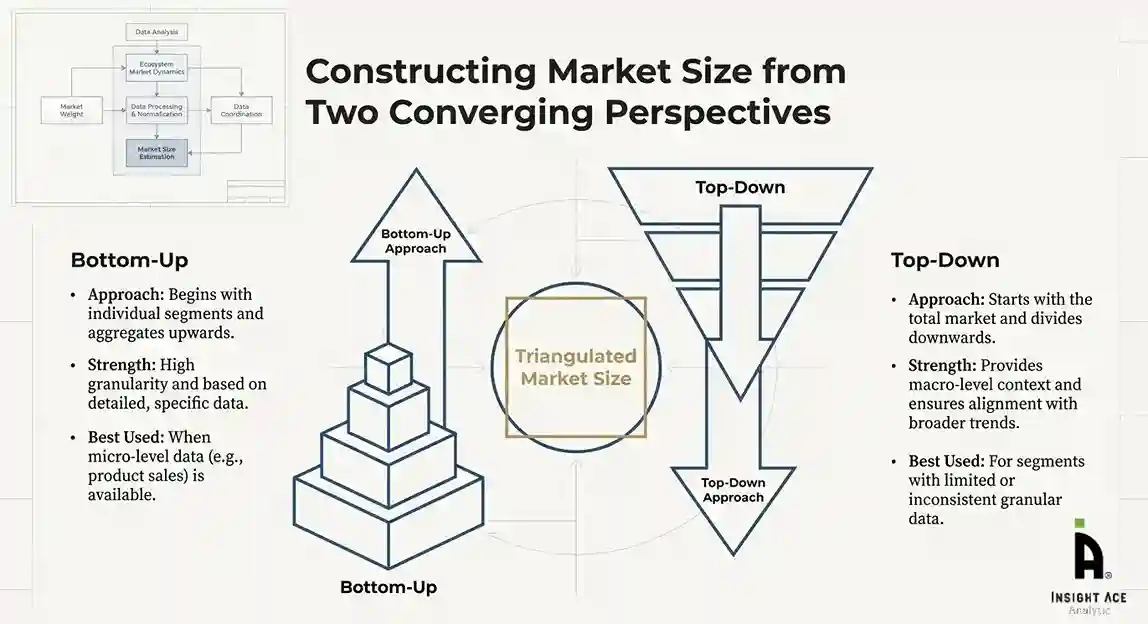
Top-Down Approach
The top-down approach used macro-level indicators:
- Parent market benchmarks
- Global/regional industry trends
- Economic indicators (GDP, demographics, spending patterns)
- Penetration and usage ratios
This approach was used for segments where granular data were limited or inconsistent.
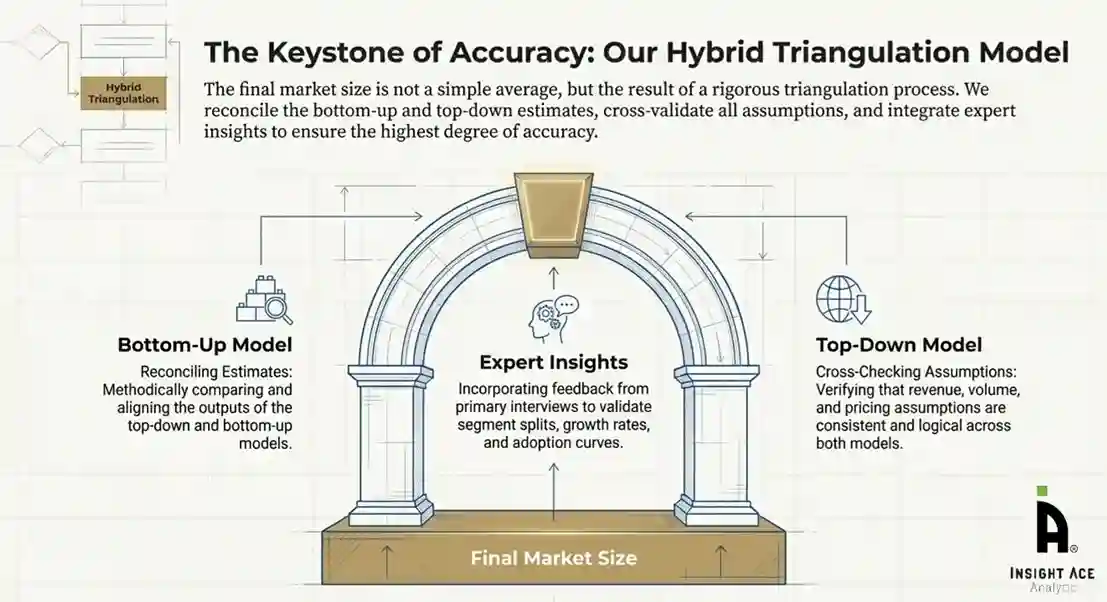
Hybrid Triangulation Approach
To ensure accuracy, a triangulated hybrid model was used. This included:
- Reconciling top-down and bottom-up estimates
- Cross-checking revenues, volumes, and pricing assumptions
- Incorporating expert insights to validate segment splits and adoption rates
This multi-angle validation yielded the final market size.
Forecasting Framework and Scenario Modelling
Market forecasts were developed using a combination of time-series modelling, adoption curve analysis, and driver-based forecasting tools.
Forecasting Methods
- Time-series modelling
- S-curve and diffusion models (for emerging technologies)
- Driver-based forecasting (GDP, disposable income, adoption rates, regulatory changes)
- Price elasticity models
- Market maturity and lifecycle-based projections
Scenario Analysis
Given inherent uncertainties, three scenarios were constructed:
- Base-Case Scenario: Expected trajectory under current conditions
- Optimistic Scenario: High adoption, favourable regulation, strong economic tailwinds
- Conservative Scenario: Slow adoption, regulatory delays, economic constraints
Sensitivity testing was conducted on key variables, including pricing, demand elasticity, and regional adoption.
Request Customization
Add countries, segments, company profiles, or extend forecast — free 10% customization with purchase.
Customize This Report →Enquire Before Buying
Speak with our analyst team about scope, methodology, pricing, or deliverable formats.
Enquire Now →Frequently Asked Questions
Organic Skincare Market Size is valued at USD 12.43 Bn in 2025 and is predicted to reach USD 32.23 Bn by the year 2035
The Organic Skincare Market is expected to grow at a 10.2% CAGR during the forecast period for 2026 to 2035
Shiseido Company Limited, Natura & Co., The Estée Lauder Companies, Yves Rocher, True Botanicals, Tata Harper, The Hain Celestial Group, Weleda AG, Arbonne International, Purity Cosmetics and Others.
Organic Skincare Market is segmented into Product, Ingredient Type, Distribution Channel and Other.
Asia Pacific region is leading the Organic Skincare Market.