Virtual Reality Sports Training Market Size, Trend, Revenue Report 2026 to 2035
What is Virtual Reality Sports Training Market Size?
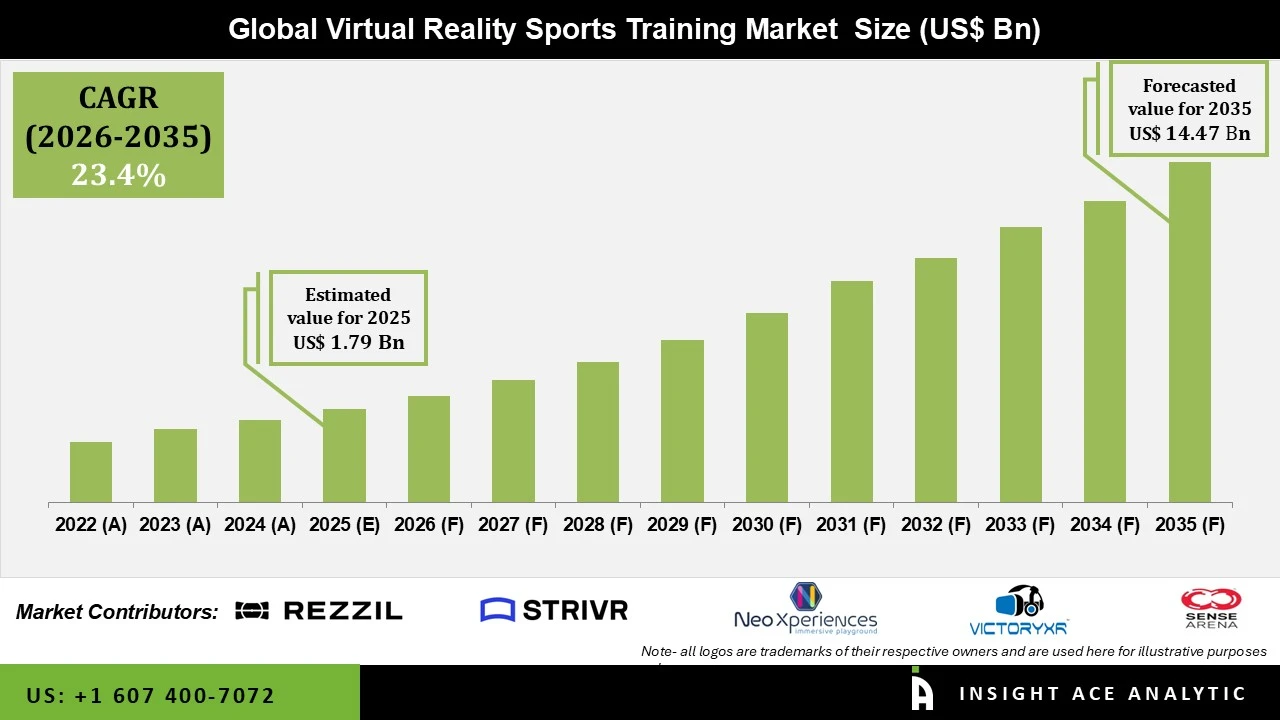
Virtual Reality Sports Training Market Size is valued at USD 1.79 Bn in 2025 and is predicted to reach USD 14.47 Bn by the year 2035 at a 23.4% CAGR during the forecast period for 2026 to 2035.
Virtual Reality Sports Training Market Size, Share & Trends Analysis By Component (Hardware, Software, and Services), Sport Type (Team Sports, Individual Sports, and Combat Sports), End User (Professional Sports Teams, Sports Academies & Training Institutes, Individual Athletes, and Fitness & Training Centers), Application (Skill Development & Training, Performance Analysis, and Injury Rehabilitation & Recovery), and Segment Forecasts, 2026 to 2035
Virtual reality sports training involves the use of an immersive digital environment through which the athlete's performance is improved through simulated game situations in a safe environment. Through virtual reality technology, athletics training can be carried out through the use of headsets, motion tracking system, artificial intelligence, and performance analytics. This enables the athletes to acquire skills, make better decisions, improve reaction time, and avoid injuries that may arise from physical training.
Factors such as the need for athlete performance analysis driven by data, the rise in sports technology investment, and increased usage of immersive training platforms have been noted as the major drivers for the virtual reality sports training market. These sports organizations are using virtual reality technology in order to develop the tactical understanding, cognitive skills, and rehab exercises while avoiding physical exhaustion.
Also, greater emphasis on esports, digital fitness platforms, and smart sports infrastructure will help boost market growth. Rising adoption of wearable sensors, cloud coaching applications, and personal training services is driving organizations to adopt VR in various forms of sports. In addition, ongoing technological developments in graphic processing, haptics, and XR technologies will open up growth avenues during the forecast period. Nonetheless, high implementation costs, hardware constraints, and the requirement of training infrastructure can hamper market growth.
Competitive Landscape
Which are the Leading Players in Virtual Reality Sports Training Market?
• STRIVR
• Rezzil
• Sense Arena
• Cognilize
• Beyond Sports
• HTC Corporation
• Meta Platforms Inc.
• EON Reality
• Unity Technologies
• Virtuix
• Axon Sports
• NeuroTrainer
• SyncThink
• Win Reality
• PlaySight Interactive
• VALD
• Sony Group Corporation
• Microsoft Corporation
• NVIDIA Corporation
• Pico Interactive
Market Dynamics
Driver
Growing Adoption of Immersive Training Technologies in Professional Sports
Use of virtual reality technologies by sports organizations is one of the key trends that contribute to the Virtual Reality Sports Training market. Organizations are increasingly using immersive simulations to enhance their performance, which involves reaction speed, decision-making skills, tactical maneuvers, and other elements of training. Unlike traditional methods, VR technology allows athletes to simulate any scenario and receive feedback on their performance without causing stress to their bodies. The use of artificial intelligence technologies and motion capture systems is another trend that makes athlete performance analysis even more precise, helping coaches to build personalized training programs and minimize the risk of injuries. Investments in the development of innovative products from sports organizations, technological companies, and fitness organizations are contributing to innovations in the market. The increasing popularity of cloud-coaching platforms, performance sensors, and analytics is allowing organizations to provide personalized training programs. In addition, the growing demand for rehabilitation tools and remote coaching platforms will help the market grow in the future.
Restrain/Challenge
High Initial Investment and Hardware Compatibility Challenges
The key barrier that restrains the expansion of the market for VR-based sports training is high costs of implementing advanced VR training solutions. Expensive professional headsets, motion sensors, haptic devices, and performance analytics applications can be costly. As a result, smaller sports clubs, educational institutions, and training academies lack the resources required to invest in such technology. Compatibility with sports training facilities and necessity of specialized personnel able to use the technology is another challenge faced by VR-based training platforms. Long-term usage of virtual reality devices can cause nausea, visual strain, and other health issues for certain athletes.
Professional Sports Teams Segment is Expected to Drive the Virtual Reality Sports Training Market
Virtual Reality Sports Training market's professional sports team segment held the largest market share in 2025. Virtual reality technology training platforms are used by professional sports teams for better tactical awareness, faster reaction times, decision-making skills, and improved performance of players. These technologies allow athletes to simulate game conditions without suffering physical exhaustion. Professional sports teams from different sports like football, baseball, basketball, soccer, cricket, golf, and motorsport segments are adopting immersive technologies to get a competitive edge. Coaches are using AI-driven performance analytics integrated with VR technology to analyze their players' performances. With continued investments made by sports organizations in digital performance technologies, this segment is expected to be the largest revenue generator during the forecast period.
Head-Mounted Displays Segment is Growing at the Highest Rate in the Virtual Reality Sports Training Market
The Head-Mounted Display (HMD) category is projected to grow at the highest rate in the forecast period. HMDs provide extremely immersive virtual reality that allows athletes to experience real-life game simulations along with the monitoring of their eye movements, head positioning, and reaction time. Advancements made in terms of increased display resolution, reduction in weight, increased field of view, and wireless capability have greatly improved the user experience. Next-generation virtual reality headsets have also been equipped with advanced features such as artificial intelligence, eye-tracking, and spatial computing, which help in providing more personalized training for athletes.
Why North America Led the Virtual Reality Sports Training Market?
North America led the Virtual Reality Sports Training market in 2025 owing to the presence of major sports technology firms, high investments made towards optimizing athletic performance and the use of immersive digital technologies. Various professional leagues, including NFL, NBA, MLB, NHL, and MLS, are making increasing use of virtual reality technology to train players, rehabilitate them, analyze their tactics and coach them. The area also has high technological infrastructure, makes investments in research and development and cooperates with sports professionals and technology providers in many ways. Educational institutions and sports academies make growing use of virtual reality technology in training athletes to enhance their performance and prevent injuries.
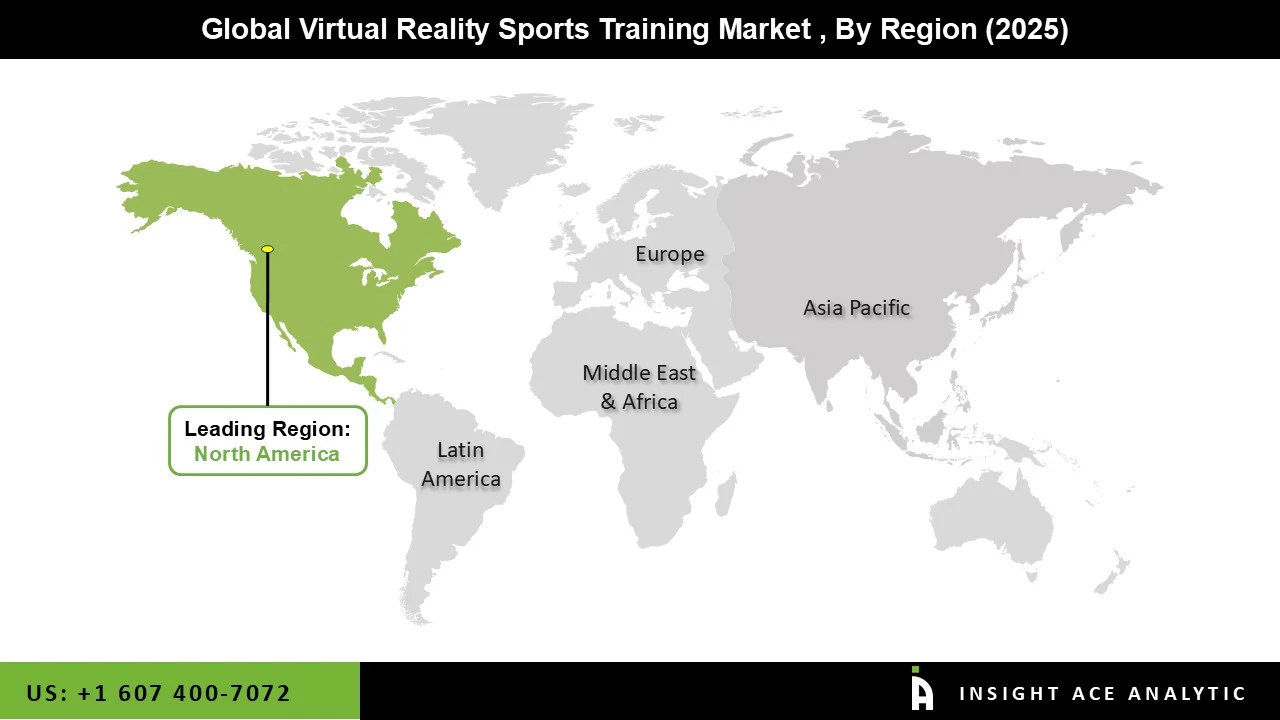
Asia Pacific is expected to demonstrate the highest CAGR during the forecast period. Increased investment in sports infrastructure, increased popularity of esports, the growing involvement of governments in developing athletes, digital transformation in various countries, including China, Japan, India, South Korea, and Australia, are the factors that increase market demand. Rapid adoption of VR technology in education, fitness, and professional sports is also expected to promote the growth of the market in the region.
Virtual Reality Sports Training Market Report Scope:
| Report Attribute | Specifications |
| Market size value in 2025 | USD 1.79 Bn |
| Revenue forecast in 2035 | USD 14.47 Bn |
| Growth Rate CAGR | CAGR of 23.4% from 2026 to 2035 |
| Quantitative Units | Representation of revenue in US$ Bn and CAGR from 2026 to 2035 |
| Historic Year | 2022 to 2025 |
| Forecast Year | 2026-2035 |
| Report Coverage | The forecast of revenue, the position of the company, the competitive market structure, growth prospects, and trends |
| Segments Covered | Component, Sport Type, End User, Application, and By Region |
| Regional Scope | North America; Europe; Asia Pacific; Latin America; Middle East & Africa |
| Country Scope | U.S.; Canada; U.K.; Germany; China; India; Japan; Brazil; Mexico; The UK; France; Italy; Spain; China; Japan; India; South Korea; Southeast Asia; South Korea; Southeast Asia |
| Competitive Landscape | STRIVR, Rezzil, Sense Arena, Cognilize, Beyond Sports, HTC Corporation, Meta Platforms Inc., EON Reality, Unity Technologies, Virtuix, Axon Sports, NeuroTrainer, SyncThink, Win Reality, PlaySight Interactive, VALD, Sony Group Corporation, Microsoft Corporation, NVIDIA Corporation, and Pico Interactive. |
| Customization Scope | Free customization report with the procurement of the report, Modifications to the regional and segment scope. Geographic competitive landscape. |
| Pricing and Available Payment Methods | Explore pricing alternatives that are customized to your particular study requirements. |
Market Segmentation:
Virtual Reality Sports Training Market by Component -
• Hardware
• Software
• Services
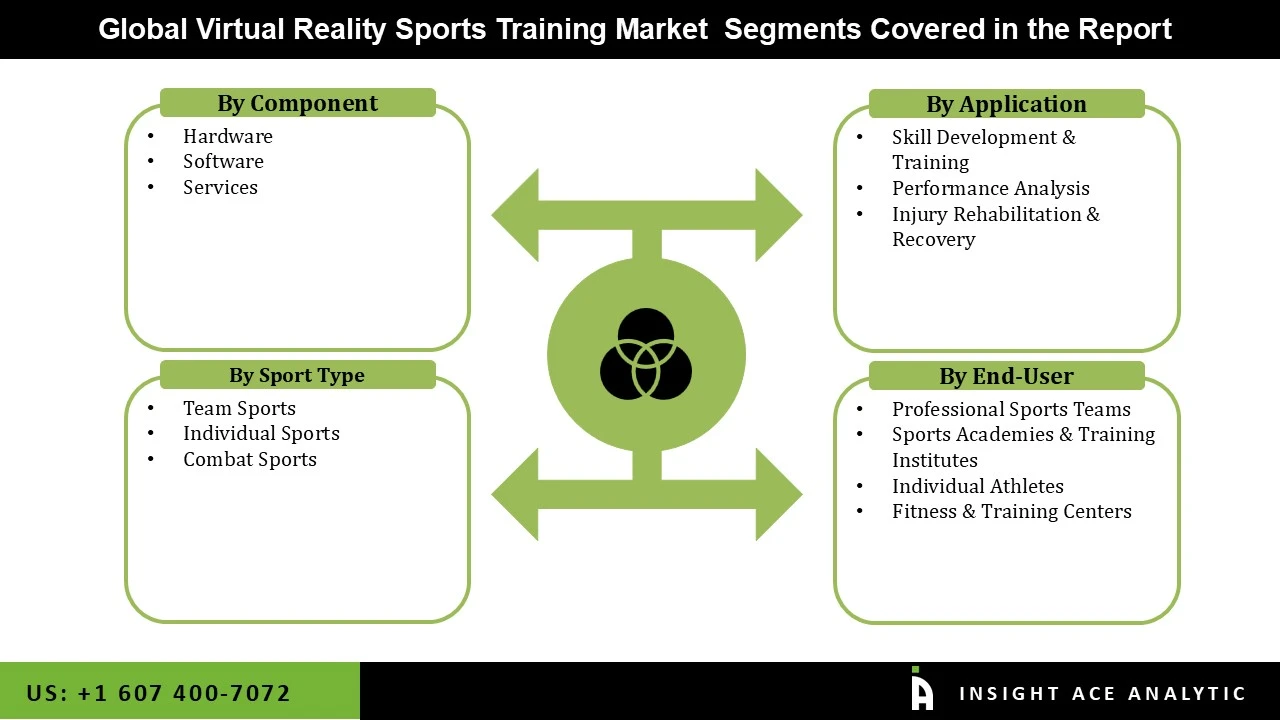
Virtual Reality Sports Training Market by Sport Type-
• Team Sports
• Individual Sports
• Combat Sports
Virtual Reality Sports Training Market by End-User -
• Professional Sports Teams
• Sports Academies & Training Institutes
• Individual Athletes
• Fitness & Training Centers
Virtual Reality Sports Training Market by Application -
• Skill Development & Training
• Performance Analysis
• Injury Rehabilitation & Recovery
Virtual Reality Sports Training Market By Region-
North America-
• The US
• Canada
Europe-
• Germany
• The UK
• France
• Italy
• Spain
• Rest of Europe
Asia-Pacific-
• China
• Japan
• India
• South Korea
• South East Asia
• Rest of Asia Pacific
Latin America-
• Brazil
• Argentina
• Mexico
• Rest of Latin America
Middle East & Africa-
• GCC Countries
• South Africa
• Rest of Middle East and Africa
Research Design and Approach
This study employed a multi-step, mixed-method research approach that integrates:
- Secondary research
- Primary research
- Data triangulation
- Hybrid top-down and bottom-up modelling
- Forecasting and scenario analysis
This approach ensures a balanced and validated understanding of both macro- and micro-level market factors influencing the market.
Secondary Research
Secondary research for this study involved the collection, review, and analysis of publicly available and paid data sources to build the initial fact base, understand historical market behaviour, identify data gaps, and refine the hypotheses for primary research.
Sources Consulted
Secondary data for the market study was gathered from multiple credible sources, including:
- Government databases, regulatory bodies, and public institutions
- International organizations (WHO, OECD, IMF, World Bank, etc.)
- Commercial and paid databases
- Industry associations, trade publications, and technical journals
- Company annual reports, investor presentations, press releases, and SEC filings
- Academic research papers, patents, and scientific literature
- Previous market research publications and syndicated reports
These sources were used to compile historical data, market volumes/prices, industry trends, technological developments, and competitive insights.

Primary Research
Primary research was conducted to validate secondary data, understand real-time market dynamics, capture price points and adoption trends, and verify the assumptions used in the market modelling.
Stakeholders Interviewed
Primary interviews for this study involved:
- Manufacturers and suppliers in the market value chain
- Distributors, channel partners, and integrators
- End-users / customers (e.g., hospitals, labs, enterprises, consumers, etc., depending on the market)
- Industry experts, technology specialists, consultants, and regulatory professionals
- Senior executives (CEOs, CTOs, VPs, Directors) and product managers
Interview Process
Interviews were conducted via:
- Structured and semi-structured questionnaires
- Telephonic and video interactions
- Email correspondences
- Expert consultation sessions
Primary insights were incorporated into demand modelling, pricing analysis, technology evaluation, and market share estimation.
Data Processing, Normalization, and Validation
All collected data were processed and normalized to ensure consistency and comparability across regions and time frames.
The data validation process included:
- Standardization of units (currency conversions, volume units, inflation adjustments)
- Cross-verification of data points across multiple secondary sources
- Normalization of inconsistent datasets
- Identification and resolution of data gaps
- Outlier detection and removal through algorithmic and manual checks
- Plausibility and coherence checks across segments and geographies
This ensured that the dataset used for modelling was clean, robust, and reliable.
Market Size Estimation and Data Triangulation
Bottom-Up Approach
The bottom-up approach involved aggregating segment-level data, such as:
- Company revenues
- Product-level sales
- Installed base/usage volumes
- Adoption and penetration rates
- Pricing analysis
This method was primarily used when detailed micro-level market data were available.

Top-Down Approach
The top-down approach used macro-level indicators:
- Parent market benchmarks
- Global/regional industry trends
- Economic indicators (GDP, demographics, spending patterns)
- Penetration and usage ratios
This approach was used for segments where granular data were limited or inconsistent.
Hybrid Triangulation Approach
To ensure accuracy, a triangulated hybrid model was used. This included:
- Reconciling top-down and bottom-up estimates
- Cross-checking revenues, volumes, and pricing assumptions
- Incorporating expert insights to validate segment splits and adoption rates
This multi-angle validation yielded the final market size.
Forecasting Framework and Scenario Modelling
Market forecasts were developed using a combination of time-series modelling, adoption curve analysis, and driver-based forecasting tools.
Forecasting Methods
- Time-series modelling
- S-curve and diffusion models (for emerging technologies)
- Driver-based forecasting (GDP, disposable income, adoption rates, regulatory changes)
- Price elasticity models
- Market maturity and lifecycle-based projections
Scenario Analysis
Given inherent uncertainties, three scenarios were constructed:
- Base-Case Scenario: Expected trajectory under current conditions
- Optimistic Scenario: High adoption, favourable regulation, strong economic tailwinds
- Conservative Scenario: Slow adoption, regulatory delays, economic constraints
Sensitivity testing was conducted on key variables, including pricing, demand elasticity, and regional adoption.
Request Customization
Add countries, segments, company profiles, or extend forecast — free 10% customization with purchase.
Customize This Report →Enquire Before Buying
Speak with our analyst team about scope, methodology, pricing, or deliverable formats.
Enquire Now →Frequently Asked Questions
Virtual Reality Sports Training Market Size is valued at USD 1.79 Bn in 2025 and is predicted to reach USD 14.47 Bn by the year 2035
Virtual Reality Sports Training Market is expected to grow at a 23.4% CAGR during the forecast period for 2026 to 2035.
STRIVR, Rezzil, Sense Arena, Cognilize, Beyond Sports, HTC Corporation, Meta Platforms Inc., EON Reality, Unity Technologies, Virtuix, Axon Sports, NeuroTrainer, SyncThink, Win Reality, PlaySight Interactive, VALD, Sony Group Corporation, Microsoft Corporation, NVIDIA Corporation, and Pico Interactive.
Virtual Reality Sports Training Market is segmented into Component, Sport Type, End User, Application, and By Region
North America region is leading the Virtual Reality Sports Training Market.