Sustainable Protein and Meat Packaging Market Size, Revenue, Forecast Report 2026 to 2035
What is Sustainable Protein and Meat Packaging Market Size?
Sustainable Protein and Meat Packaging Market Size is valued at USD 38.51 Bn in 2025 and is predicted to reach USD 74.87 Bn by the year 2035 at a 7.0% CAGR during the forecast period for 2026 to 2035.
Sustainable Protein and Meat Packaging Market Size, Share & Trends Analysis by Format (Fiber Trays, Vacuum Skin, Flexibles, and MAP), by Material (Recyclable Mono, and Fiber), by Protein (Meat, Poultry, Seafood, and Alt), and Region Forecasts, 2026 to 2035
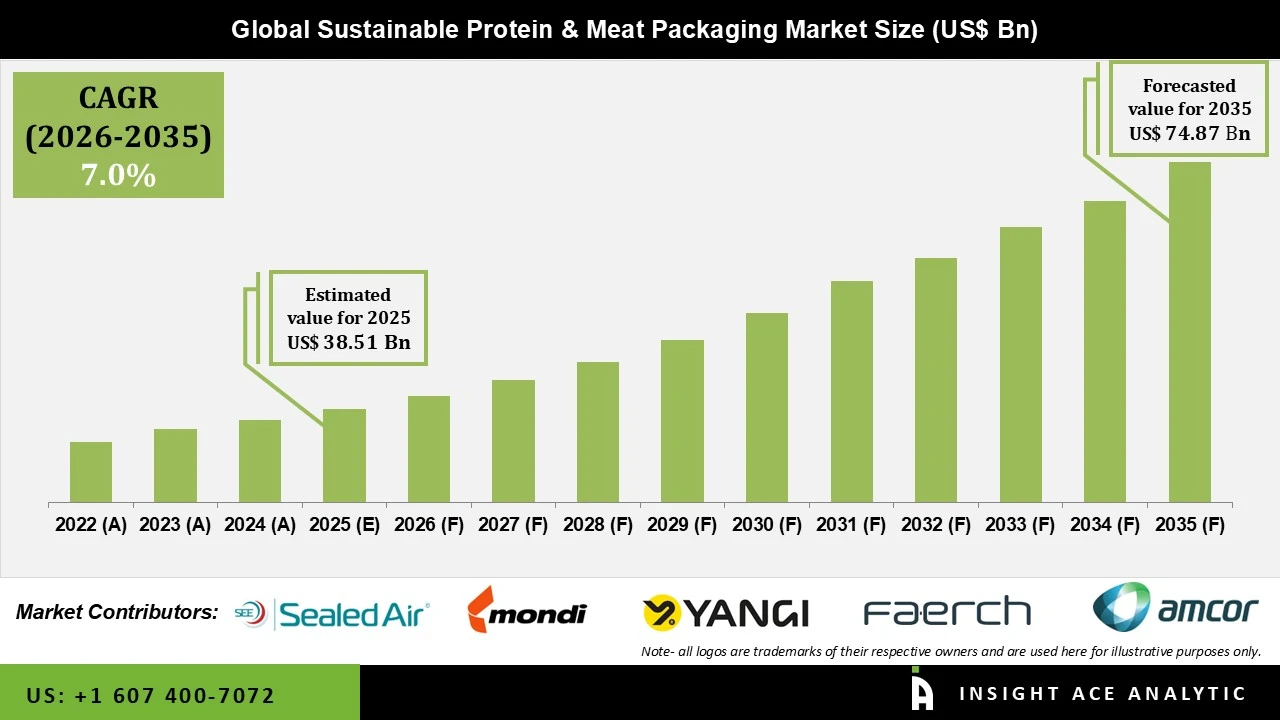
The term "sustainable protein/meat packaging" implies environmentally friendly packaging systems used for ensuring the safe packaging of fresh meat, poultry, fish and seafood products, as well as processed meats and plant-based proteins. Sustainable packaging uses recycled, compostable, biodegradable, or renewable raw materials and helps reduce plastic waste, cut carbon emissions, improve resource management through the entire lifecycle of the packaged product and contributes to food safety, prolonging its shelf-life, preserving food's freshness and minimizing food waste.
Environmental issues are growing and more and more stringent government legislation is being passed regulating the usage of single-use plastics. People themselves realize how harmful the conventional plastic packaging is for our environment and prefer products packed in sustainable recyclable or bio-based packaging material. This change in purchasing behavior motivates packaging providers to produce innovative sustainable packaging.
Growing demand for global food processing, increasing intake of packaged meat products, and fast-paced development in the plant-based protein substitutes segment is fueling the market growth. Packaging innovations such as modified atmosphere packaging (MAP), vacuum packing, recyclable barrier films, and fiber trays are increasing the protection levels along with decreasing the amount of new plastic usage. Also, innovations in the science of material production help producers manufacture lighter packages with better barriers and recyclability.
Moreover, sustainability objectives of retailers and food brands are leading to decrease in packaging waste and increase in recycled materials content. Leading companies in the packaging market keep investing in circular economy projects, closed-loop recycling programs, and renewable packaging materials as regulations evolve and become stricter. As a result, growing importance of sustainability criteria during purchasing among all customers will further foster the development of the market over the coming years.
Competitive Landscape
Which are the Leading Players in Sustainable Protein & Meat Packaging Market?
• Amcor plc
• Sealed Air Corporation
• Berry Global Inc.
• Sonoco Products Company
• Mondi plc
• Huhtamaki Oyj
• Smurfit Westrock
• Coveris
• Winpak Ltd.
• DS Smith plc
• Graphic Packaging International
• Tetra Pak
• ProAmpac
• Constantia Flexibles
• Faerch Group
• Klöckner Pentaplast
• SABERT Corporation
• ULMA Packaging
• UPM Specialty Papers
• Stora Enso
• PakSense
• Novolex
• Eco-Products
• Ranpak Holdings Corp.
• AptarGroup
Market Dynamics
Driver
Increasing Demand for Sustainable Food Packaging Solutions
Increasing awareness about environmental protection along with strict regulation of plastic waste is one of the major factors fuelling the sustainable protein & meat packaging market growth. Government regulations favoring use of recyclable, reusable and biodegradable packaging materials are being adopted in North America, Europe, and Asia-Pacific.
There is a growing trend among the food producers and grocery stores in replacing traditional plastic films with recyclable mono-material packaging, paper based material, compostable material and bio-polymer packaging materials.
Furthermore, there is an increasing demand for packaging of food items using environmentally sustainable packaging materials from consumers' side as well. Sustainable packaging efforts are being made by many retail chain organizations for enhancing brand image. Constant innovation in recyclable barrier film technology and light-weight packages technology will be instrumental in boosting growth of the market in the coming years.
Restrain/Challenge
High Production Costs and Performance Limitations of Sustainable Materials
One of the key issues hindering the Sustainable Protein & Meat Packaging market is the comparatively higher price tag on the materials used for sustainable packaging relative to plastics. The manufacture of materials like bio-based polymers, biodegradable films, and fiber packaging entails expensive manufacturing technologies, which make it costly for manufacturers.
Furthermore, the retention of barrier property, water vapor and oxygen resistance, and strength still pose problems for certain types of sustainable materials. There is a need for manufacturers of sustainable packaging to ensure that the packaging is just as safe and as effective as regular plastic packaging in preserving food safety and shelf life of products according to food safety guidelines.
Finally, there is lack of proper recycling infrastructure for certain bio-based materials alongside regional difference in waste management. Notwithstanding the limitations, investments in innovative materials and circular packaging continue to be made to improve sustainability product performance.
Fresh Meat Segment is Expected to Drive the Sustainable Protein & Meat Packaging Market
Fresh Meat was the dominant segment in terms of revenue in 2025 in the global market of sustainable protein & meat packaging and is anticipated to continue to be a leader during the forecast period. In general, fresh meat packaging requires materials that can ensure proper barriers from environmental factors like air, water vapor, and contaminants along with an extended shelf life and preservation of quality. Sustainable meat packing materials like trays, packages made out of fibers, and MAP films have started to replace plastic packaging.
Rising interest of consumers in fresh meat products with minimal processing and increased focus on sustainable packaging among meat processors and retailers are some of the drivers of the segment under consideration. Also, reduction of plastic packaging by retailers along with improved product presentation and decreased food wastage are other drivers of the segment's growth.
Modified Atmosphere Packaging (MAP) Segment is Growing at the Highest Rate in the Sustainable Protein & Meat Packaging Market
The Modified Atmosphere Packaging (MAP) segment is projected to register the highest growth during the forecast period. MAP technology extends the shelf life of fresh meat, poultry, seafood, and plant-based protein products by controlling the gas composition inside the package. This helps reduce microbial growth, maintain freshness, preserve color, and minimize food waste throughout transportation and storage.
Packaging manufacturers are increasingly developing recyclable and mono-material MAP solutions that combine sustainability with high-performance barrier properties. As retailers seek to reduce food waste while meeting sustainability targets, demand for eco-friendly MAP packaging solutions is expected to increase significantly over the coming years.
Why North America Led the Sustainable Protein & Meat Packaging Market?
The region of North America dominated the market of Sustainable Protein & Meat Packaging during 2025 as the region had greater awareness among consumers about sustainable packaging, well-developed food processing industry, and various regulatory steps being taken by governments in order to minimize plastic waste. Manufacturers and retailers in North American region are making their investment in sustainable packaging material including fiber trays and bio-plastics.
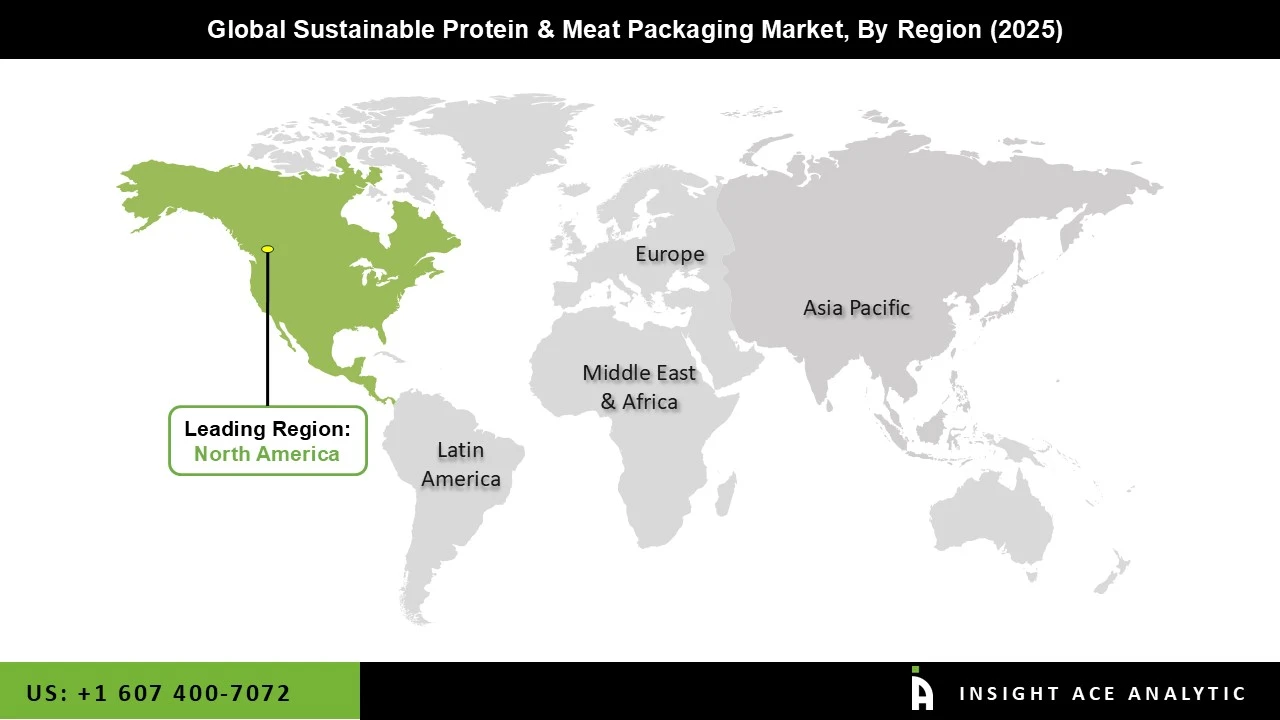
Presence of major packaging companies in this region, innovations in packaging technologies, and demand for meat and alternatives protein products in packaged form have contributed to market growth in this region. Moreover, retail chains in North America are also working together with packaging companies to manufacture recyclable and lighter packaging.
Further, investments in circular economy programs, food waste reduction programs and developments in recycling facilities contribute significantly towards growing market in North America.
Key Development:
May 2025: Amcor plc came out with recyclable high barrier flexible food packaging solutions meant for fresh meat and proteins, which enable food manufactures to use less virgin plastic while keeping their products fresh and preserving their shelf lives.
March 2025: Sealed Air Corporation added to its collection of sustainable packaging options by adding recyclable Cryovac® food packaging solutions to help improve meat preservation while meeting the requirements of circular packaging practices and minimizing food waste.
November 2024: Mondi plc worked together with food manufacturers to come up with paper-based and recyclable food packaging options for fresh protein products in support of low carbon footprints packages.
September 2024: Berry Global Inc. launched its lightweight food packaging made from higher recycled material content that would help meat processors have more sustainable packaging without compromising on safety.
June 2024: Smurfit Westrock came up with more fiber based sustainable food packaging options following the merger between Smurfit Kappa and WestRock.
Sustainable Protein & Meat Packaging Market Report Scope:
| Report Attribute | Specifications |
| Market size value in 2025 | USD 38.51 Bn |
| Revenue forecast in 2035 | USD 74.87 Bn |
| Growth Rate CAGR | CAGR of 7.0% from 2026 to 2035 |
| Quantitative Units | Representation of revenue in US$ Bn and CAGR from 2026 to 2035 |
| Historic Year | 2022 to 2025 |
| Forecast Year | 2026-2035 |
| Report Coverage | The forecast of revenue, the position of the company, the competitive market structure, growth prospects, and trends |
| Segments Covered | Format, Material, Protein, and By Region |
| Regional Scope | North America; Europe; Asia Pacific; Latin America; Middle East & Africa |
| Country Scope | U.S.; Canada; U.K.; Germany; China; India; Japan; Brazil; Mexico; The UK; France; Italy; Spain; China; Japan; India; South Korea; Southeast Asia; South Korea; Southeast Asia |
| Competitive Landscape | Amcor plc, Sealed Air Corporation, Berry Global Inc., Sonoco Products Company, Mondi plc, Huhtamaki Oyj, Smurfit Westrock, Coveris, Winpak Ltd., DS Smith plc, Graphic Packaging International, Tetra Pak, ProAmpac, Constantia Flexibles, Faerch Group, Klöckner Pentaplast, SABERT Corporation, ULMA Packaging, UPM Specialty Papers, Stora Enso, Novolex, Ranpak Holdings Corp., AptarGroup and others. |
| Customization Scope | Free customization report with the procurement of the report, Modifications to the regional and segment scope. Geographic competitive landscape. |
| Pricing and Available Payment Methods | Explore pricing alternatives that are customized to your particular study requirements. |
Sustainable Protein & Meat Packaging Market Segmentation:
Sustainable Protein & Meat Packaging Market by Format -
• Fiber Trays
• Vaccum Skin
• Flexibles
• MAP
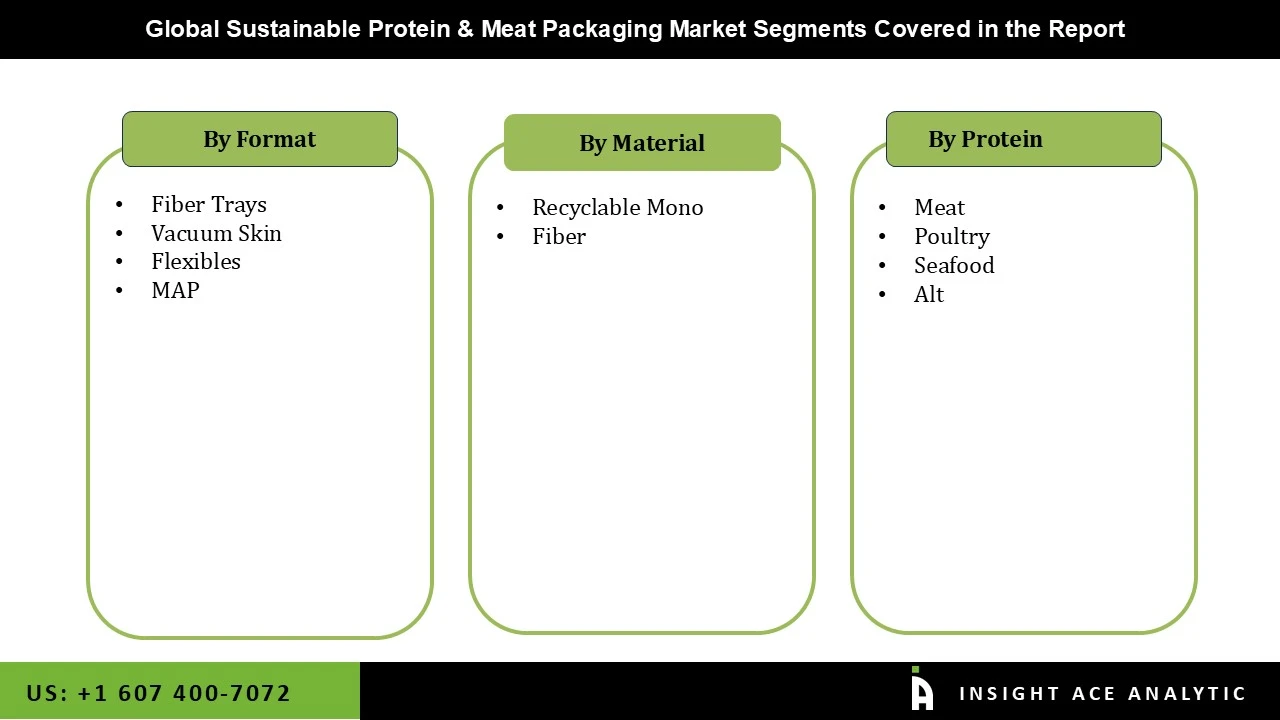
Sustainable Protein & Meat Packaging Market by Material -
• Recyclable Mono
• Fiber
Sustainable Protein & Meat Packaging Market by Protein -
• Meat
• Poultry
• Seafood
• Alt
Sustainable Protein & Meat Packaging Market- By Region-
North America-
• The US
• Canada
Europe-
• Germany
• The UK
• France
• Italy
• Spain
• Rest of Europe
Asia-Pacific-
• China
• Japan
• India
• South Korea
• South East Asia
• Rest of Asia Pacific
Latin America-
• Brazil
• Argentina
• Mexico
• Rest of Latin America
Middle East & Africa-
• GCC Countries
• South Africa
• Rest of Middle East and Africa
Research Design and Approach
This study employed a multi-step, mixed-method research approach that integrates:
- Secondary research
- Primary research
- Data triangulation
- Hybrid top-down and bottom-up modelling
- Forecasting and scenario analysis
This approach ensures a balanced and validated understanding of both macro- and micro-level market factors influencing the market.
Secondary Research
Secondary research for this study involved the collection, review, and analysis of publicly available and paid data sources to build the initial fact base, understand historical market behaviour, identify data gaps, and refine the hypotheses for primary research.
Sources Consulted
Secondary data for the market study was gathered from multiple credible sources, including:
- Government databases, regulatory bodies, and public institutions
- International organizations (WHO, OECD, IMF, World Bank, etc.)
- Commercial and paid databases
- Industry associations, trade publications, and technical journals
- Company annual reports, investor presentations, press releases, and SEC filings
- Academic research papers, patents, and scientific literature
- Previous market research publications and syndicated reports
These sources were used to compile historical data, market volumes/prices, industry trends, technological developments, and competitive insights.

Primary Research
Primary research was conducted to validate secondary data, understand real-time market dynamics, capture price points and adoption trends, and verify the assumptions used in the market modelling.
Stakeholders Interviewed
Primary interviews for this study involved:
- Manufacturers and suppliers in the market value chain
- Distributors, channel partners, and integrators
- End-users / customers (e.g., hospitals, labs, enterprises, consumers, etc., depending on the market)
- Industry experts, technology specialists, consultants, and regulatory professionals
- Senior executives (CEOs, CTOs, VPs, Directors) and product managers
Interview Process
Interviews were conducted via:
- Structured and semi-structured questionnaires
- Telephonic and video interactions
- Email correspondences
- Expert consultation sessions
Primary insights were incorporated into demand modelling, pricing analysis, technology evaluation, and market share estimation.
Data Processing, Normalization, and Validation
All collected data were processed and normalized to ensure consistency and comparability across regions and time frames.
The data validation process included:
- Standardization of units (currency conversions, volume units, inflation adjustments)
- Cross-verification of data points across multiple secondary sources
- Normalization of inconsistent datasets
- Identification and resolution of data gaps
- Outlier detection and removal through algorithmic and manual checks
- Plausibility and coherence checks across segments and geographies
This ensured that the dataset used for modelling was clean, robust, and reliable.
Market Size Estimation and Data Triangulation
Bottom-Up Approach
The bottom-up approach involved aggregating segment-level data, such as:
- Company revenues
- Product-level sales
- Installed base/usage volumes
- Adoption and penetration rates
- Pricing analysis
This method was primarily used when detailed micro-level market data were available.

Top-Down Approach
The top-down approach used macro-level indicators:
- Parent market benchmarks
- Global/regional industry trends
- Economic indicators (GDP, demographics, spending patterns)
- Penetration and usage ratios
This approach was used for segments where granular data were limited or inconsistent.
Hybrid Triangulation Approach
To ensure accuracy, a triangulated hybrid model was used. This included:
- Reconciling top-down and bottom-up estimates
- Cross-checking revenues, volumes, and pricing assumptions
- Incorporating expert insights to validate segment splits and adoption rates
This multi-angle validation yielded the final market size.
Forecasting Framework and Scenario Modelling
Market forecasts were developed using a combination of time-series modelling, adoption curve analysis, and driver-based forecasting tools.
Forecasting Methods
- Time-series modelling
- S-curve and diffusion models (for emerging technologies)
- Driver-based forecasting (GDP, disposable income, adoption rates, regulatory changes)
- Price elasticity models
- Market maturity and lifecycle-based projections
Scenario Analysis
Given inherent uncertainties, three scenarios were constructed:
- Base-Case Scenario: Expected trajectory under current conditions
- Optimistic Scenario: High adoption, favourable regulation, strong economic tailwinds
- Conservative Scenario: Slow adoption, regulatory delays, economic constraints
Sensitivity testing was conducted on key variables, including pricing, demand elasticity, and regional adoption.
Request Customization
Add countries, segments, company profiles, or extend forecast — free 10% customization with purchase.
Customize This Report →Enquire Before Buying
Speak with our analyst team about scope, methodology, pricing, or deliverable formats.
Enquire Now →Frequently Asked Questions
Sustainable Protein and Meat Packaging Market Size is valued at USD 38.51 Bn in 2025 and is predicted to reach USD 74.87 Bn by the year 2035
Sustainable Protein and Meat Packaging Market is expected to grow at a 7.0% CAGR during the forecast period for 2026 to 2035.
Amcor plc, Sealed Air Corporation, Berry Global Inc., Sonoco Products Company, Mondi plc, Huhtamaki Oyj, Smurfit Westrock, Coveris, Winpak Ltd., DS Smith plc, Graphic Packaging International, Tetra Pak, ProAmpac, Constantia Flexibles, Faerch Group, Klöckner Pentaplast, SABERT Corporation, ULMA Packaging, UPM Specialty Papers, Stora Enso, Novolex, Ranpak Holdings Corp., AptarGroup and others.
Sustainable Protein and Meat Packaging Market is segmented into Format, Material, Protein, and By Region.
North America region is leading the Sustainable Protein and Meat Packaging Market.