Hermetic Packaging Market Size, Share, Trend, Forecast Report 2026 to 2035
What is Hermetic Packaging Market Size?
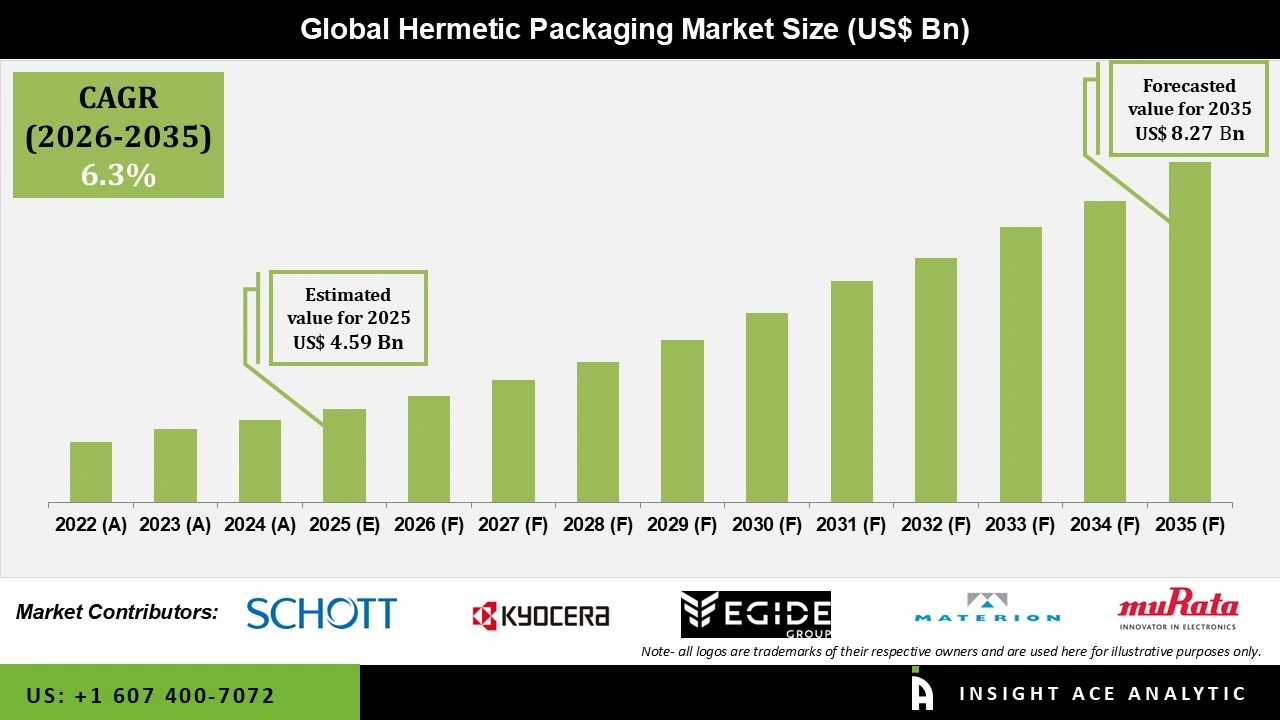
Global Hermetic Packaging Market Size is valued at USD 4.59 Bn in 2025 and is predicted to reach USD 8.27 Bn by the year 2035 at a 6.3% CAGR during the forecast period for 2026 to 2035.
Hermetic Packaging Market Size, Share & Trends Analysis Distribution by Type of Product (Ceramic-to-Metal Sealing (CERTM), Glass-to-Metal Sealing (GTMS), Passivation Glass, Reed Glass, Transponder Glass), by Configuration (Metal Can Packages, Multilayer Ceramic Packages (MLCP), Pressed Ceramic Packages), by Sealing Process (Brazing, Compression Sealing, Epoxy Sealing, Glass Frit Sealing, Laser Welding, Solder Sealing), by Application (Airbag Ignitors, Lasers, MEMS Switches, Oscillators, Photodiodes, Sensors, Transistors), by End User (Aerospace & Defense, Automotive, Consumer Electronics, Industrial, Medical Devices, Telecommunications) and Segment Forecasts, 2026 to 2035.
Hermetic packaging refers to advanced sealing technologies that create completely airtight enclosures to protect sensitive electronic, optical, and microelectronic components from external environmental conditions, including moisture, gases, dust, chemicals, pressure changes, and extreme temperatures. These packaging solutions are essential in applications where even minor contamination or environmental exposure can negatively impact device performance, reliability, or operational lifespan. Hermetic packaging is widely used in semiconductors, photonics, MEMS devices, aerospace electronics, medical implants, telecommunications systems, military equipment, and industrial sensors, where long-term stability and high reliability are critical. Technologies such as ceramic-to-metal sealing, glass-to-metal sealing, laser welding, brazing, and wafer-level encapsulation are commonly used to achieve high-performance sealing and protection across complex electronic architectures. As electronic systems continue to shrink, speed up, and become more powerful, hermetic packaging technologies are evolving beyond traditional protective enclosures toward highly engineered, precision-driven solutions capable of supporting next-generation devices and operating in harsh environments.
The increasing adoption of artificial intelligence infrastructure, cloud computing, silicon photonics, MEMS sensors, advanced medical implants, satellite systems, and electric vehicles is creating demand for compact, lightweight, and thermally stable hermetic packaging solutions. Advanced materials such as speciality ceramics, glass composites, high-performance alloys, and ultra-thin barrier coatings are being integrated into packaging architectures to improve durability, thermal management, miniaturisation, and long-term reliability. In addition, innovations in automated laser welding, atomic layer deposition (ALD), thin-film encapsulation, and photonic integrated circuit (PIC) packaging are helping manufacturers achieve higher precision, improved manufacturing efficiency, and enhanced device protection for increasingly sophisticated electronic systems.
The Hermetic Packaging Market is experiencing strong growth as industries increasingly rely on high-performance electronic systems that require long-term environmental protection and operational reliability. Rapid expansion in semiconductor manufacturing, AI-driven data centres, aerospace modernisation, defence electronics, telecommunications infrastructure, and medical electronics is significantly increasing the demand for advanced hermetic packaging solutions. Companies are investing heavily in precision sealing technologies, photonic packaging, wafer-level encapsulation, and automated manufacturing systems to meet growing demand for miniaturised, high-density electronic components. At the same time, the growing use of sensors, RF devices, optical communication systems, and implantable medical devices is creating new opportunities for highly specialised hermetic packaging technologies across multiple industries.
One of the major factors driving market growth is the increasing deployment of photonic integrated circuits (PICs), optical interconnects, and high-speed communication technologies used in AI infrastructure, cloud computing, and next-generation telecommunications networks. These applications require highly reliable hermetic sealing solutions that protect sensitive optical and semiconductor components from contamination and thermal stress. In addition, rising investments in aerospace, defence, and satellite communication systems are driving demand for hermetic packaging solutions that can withstand harsh environmental conditions, radiation exposure, vibration, and extreme temperatures. The medical sector is also contributing significantly to market expansion, with the growing adoption of implantable medical devices, biosensors, pacemakers, neurostimulators, and remote patient monitoring systems that require biocompatible, long-lasting, hermetic enclosures.
Another important trend shaping the market is the growing focus on automation, advanced manufacturing technologies, and material innovation.
Manufacturers are increasingly adopting automated laser welding systems, precision microjoining technologies, and wafer-level packaging platforms to improve scalability, production consistency, and cost efficiency. Emerging technologies such as atomic layer deposition (ALD), ultra-thin barrier coatings, and advanced glass sealing are helping companies develop next-generation hermetic packaging solutions with improved sealing performance and miniaturisation capabilities. Strategic collaborations between semiconductor companies, photonics manufacturers, materials suppliers, and defence contractors are further accelerating product innovation and commercialisation across high-growth application areas. Despite strong long-term growth opportunities, the market continues to face several challenges. Hermetic packaging technologies often involve complex manufacturing processes, strict quality requirements, and high production costs, particularly for aerospace, semiconductor, and medical applications. Achieving reliable sealing performance in increasingly compact, high-density electronic devices remains technically challenging and requires ongoing investment in research, advanced materials, and precision manufacturing capabilities. In addition, supply chain constraints, raw material price fluctuations, and evolving regulatory standards may impact production efficiency and product development timelines.
However, ongoing advancements in semiconductor technology, photonics, aerospace systems, medical electronics, and AI-driven infrastructure are expected to continue supporting market expansion in the coming years. As industries increasingly prioritise device reliability, miniaturisation, thermal performance, and long operational lifespans, hermetic packaging technologies will remain a critical enabling component for the next generation of advanced electronic and optical systems.
Competitive Landscape
Which are the Leading Players in the Hermetic Packaging Market?
- SCHOTT
- Kyocera Corporation
- Egide Group
- Materion Corporation
- Murata Manufacturing
- AMETEK Interconnects
- Hermetic Solutions Group
- Qnnect
- Kitea Health
- PHIX Photonics Assembly
- Forge Nano
- Silitronics
- SCHOTT Primoceler
- ficonTEC
- Quantifi Photonics
Market Dynamics
Driver
Rising Demand for High-Reliability Electronics in Harsh Environments
The main driver of the packaging market is the growing demand for reliable electronic and optical components. These parts must work well in environments. Many sectors need systems. These include aerospace, defense, medical devices, telecom, semiconductors and automotive electronics. They need protection from moisture, gases, dust, radiation, pressure changes and extreme temperatures. Hermetic packaging provides airtight protection. This keeps parts reliable and stable over time. The demand for packaging is increasing. This is due to growth in areas such as AI, cloud computing, MEMS sensors, silicon photonics, implantable medical devices, and satellite communications. These areas need durable hermetic packaging. As electronics get smaller, faster and more complex, they are more at risk. They can be damaged by contamination and heat. To solve this, manufacturers are using sealing methods. These include ceramic-to-metal and glass-to-metal sealing, laser welding and wafer-level encapsulation. These methods help make products last longer. The market is also growing due to upgrades in vehicles, telecom networks, and the aerospace industry. Improvements in precision manufacturing, automated sealing and advanced materials are helping. Companies can now produce smaller, more heat-resistant hermetic packaging. This packaging is for electronic applications.
Restrain/Challenge
High Manufacturing Complexity and Production Costs Limit Market Expansion
A major challenge for the hermetic packaging market is the high complexity and cost of making advanced hermetic seals. It is really hard and expensive to make hermetic seals. These seals need materials and very careful engineering. They also need complicated steps to make sure they are airtight. This is important for protecting electronics and optics. Some methods, like laser welding and brazing, are used to make these seals. There is also wafer-level encapsulation, ceramic-to-metal and glass-to-metal sealing. These methods need factories with very good quality control and skilled workers. This makes them very expensive compared to packaging. As devices get smaller, it is harder to keep the seals working in tight spaces. This is a problem for parts in semiconductors, photonics, MEMS, aerospace and medical implants. They need to be made precisely to avoid leaks, contamination or heat damage. Even small problems with the seals can affect how well they work and how long they last. This is especially important for users. There are also challenges like changes in the price of raw materials, problems with the supply chain and new regulations. Special materials, like ceramics, high-performance alloys and ultra-thin coatings, are very expensive to buy and use. Companies have to spend money on research, automation and making their processes better to be more efficient while keeping the packaging market reliable. The hermetic packaging market needs to find ways to make these advanced hermetic seals better and cheaper.
Glass-to-Metal Sealing (GTMS) Segment is Expected to Drive the Hermetic Packaging Market
The Glass-to-Metal Sealing (GTMS) segment is expected to play a significant role in driving the Hermetic Packaging Market due to its strong sealing performance, high durability, and ability to provide reliable protection for sensitive electronic components. GTMS technology is widely used in applications that require airtight sealing and long-term stability, particularly in aerospace, automotive electronics, telecommunications, and medical devices. Glass-to-metal seals help prevent moisture, gas, and contaminants from entering electronic systems, ensuring consistent performance even in harsh operating conditions. These seals are highly valued for their thermal resistance, electrical insulation properties, and mechanical strength, making them suitable for high-reliability applications such as sensors, transistors, photodiodes, and oscillators. The growing demand for compact, high-performance electronic devices is further driving the adoption of GTMS solutions. In addition, advancements in semiconductor technologies and the increasing use of electronic components in safety-critical systems are supporting segment growth. As industries continue to focus on reliability, miniaturisation, and long operational life, the GTMS segment is expected to remain a key contributor to the Hermetic Packaging Market.
The Laser Welding Segment is Expected to Drive the Hermetic Packaging Market
The laser welding segment is emerging as a major growth driver in the Hermetic Packaging Market due to its precision, efficiency, and ability to create strong hermetic seals with minimal thermal damage. Laser welding is widely preferred in industries where high sealing accuracy and component reliability are essential, including aerospace, medical devices, telecommunications, and advanced electronics manufacturing. This sealing process offers several advantages, such as high-speed production, clean weld quality, reduced material distortion, and compatibility with miniaturised electronic components. As electronic devices become increasingly compact and complex, manufacturers are adopting laser welding technologies to achieve precise sealing while maintaining product integrity. Laser welding is particularly important for applications involving sensors, MEMS switches, lasers, and photodiodes, where even minor contamination can impact device performance. The increasing adoption of automation in electronics manufacturing and the rising demand for high-reliability packaging solutions are further supporting the segment’s expansion. With continuous advancements in laser processing technologies, the laser welding segment is expected to grow strongly in the coming years.
Why North America Led the Hermetic Packaging Market?
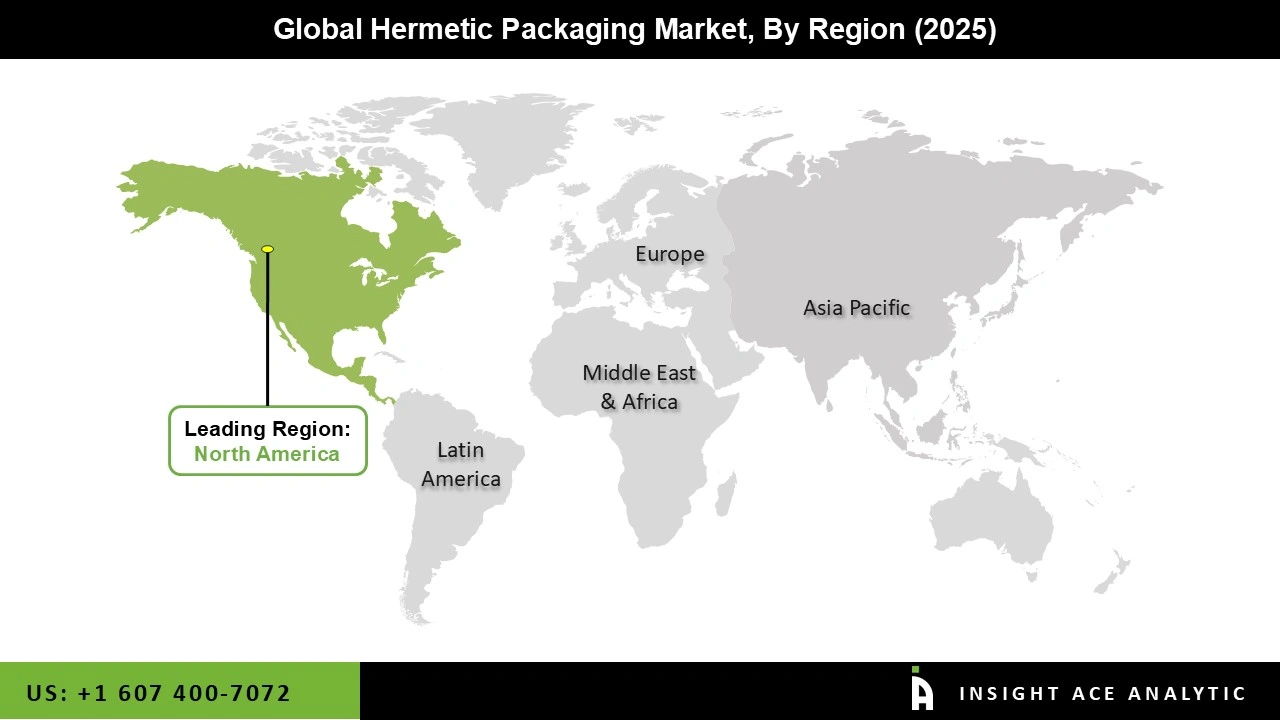
North America is leading the hermetic packaging market because it has strong aerospace, defence, semiconductor, and medical device industries. This region has manufacturing, uses many new electronic technologies, and invests heavily in research and development. The United States is particularly important because it has semiconductor manufacturers, defence contractors, and medical technology companies that need packaging that works well. The government is also supporting the demand by investing in defence upgrades, space exploration and advanced healthcare. The presence of players in the market and the ongoing innovation in packaging technologies make North America even stronger.
People in this region care a lot about reliability, safety and how well things work in the long term, which helps the use of hermetic packaging spread. In short, North America is in the lead because it has technology, strong industries, and a growing need for high-performance electronics. The Hermetic Packaging Market is doing well in North America, and the laser welding segment is part of it.
Key Developments:
• In March 2026, SCHOTT launched ultra-large hermetic optical MEMS lids for next-generation optical circuit switching and AI-driven cloud data-centre architectures, strengthening advanced photonic hermetic packaging capabilities.
• In March 2026, Kyocera Corporation accelerated development of liquid-hydrogen-compatible ceramic hermetic seal connectors and current feedthrough terminals in collaboration with JAXA, targeting aerospace, hydrogen infrastructure, and clean-energy applications.
Hermetic Packaging Market Report Scope :
| Report Attribute | Specifications |
| Market size value in 2025 | USD 4.59 Bn |
| Revenue forecast in 2035 | USD 8.27 Bn |
| Growth Rate CAGR | CAGR of 6.3% from 2026 to 2035 |
| Quantitative Units | Representation of revenue in US$ Bn and CAGR from 2026 to 2035 |
| Historic Year | 2022 to 2025 |
| Forecast Year | 2026-2035 |
| Report Coverage | The forecast of revenue, the position of the company, the competitive market structure, growth prospects, and trends |
| Segments Covered | Product Type, Configuration, Sealing Process, Application, End Use Industry and By Region |
| Regional Scope | North America; Europe; Asia Pacific; Latin America; Middle East & Africa |
| Country Scope | U.S.; Canada; U.K.; Germany; China; India; Japan; Brazil; Mexico; The UK; France; Italy; Spain; China; Japan; India; South Korea; Southeast Asia; South Korea; Southeast Asia |
| Competitive Landscape | SCHOTT, Kyocera Corporation, Egide Group, Materion Corporation, Murata Manufacturing, AMETEK Interconnects, Hermetic Solutions Group, Qnnect, Kitea Health, PHIX Photonics Assembly, Forge Nano, Silitronics, SCHOTT Primoceler, ficonTEC, Quantifi Photonics |
| Customization Scope | Free customisation report with the procurement of the report, Modifications to the regional and segment scope. Geographic competitive landscape. |
| Pricing and Available Payment Methods | Explore pricing alternatives that are customised to your particular study requirements. |
Segmentations of Market :
Hermetic Packaging Market by Type of Product -
- Ceramic-to-Metal Sealing (CERTM)
- Glass-to-Metal Sealing (GTMS)
- Passivation Glass
- Reed Glass
- Transponder Glass
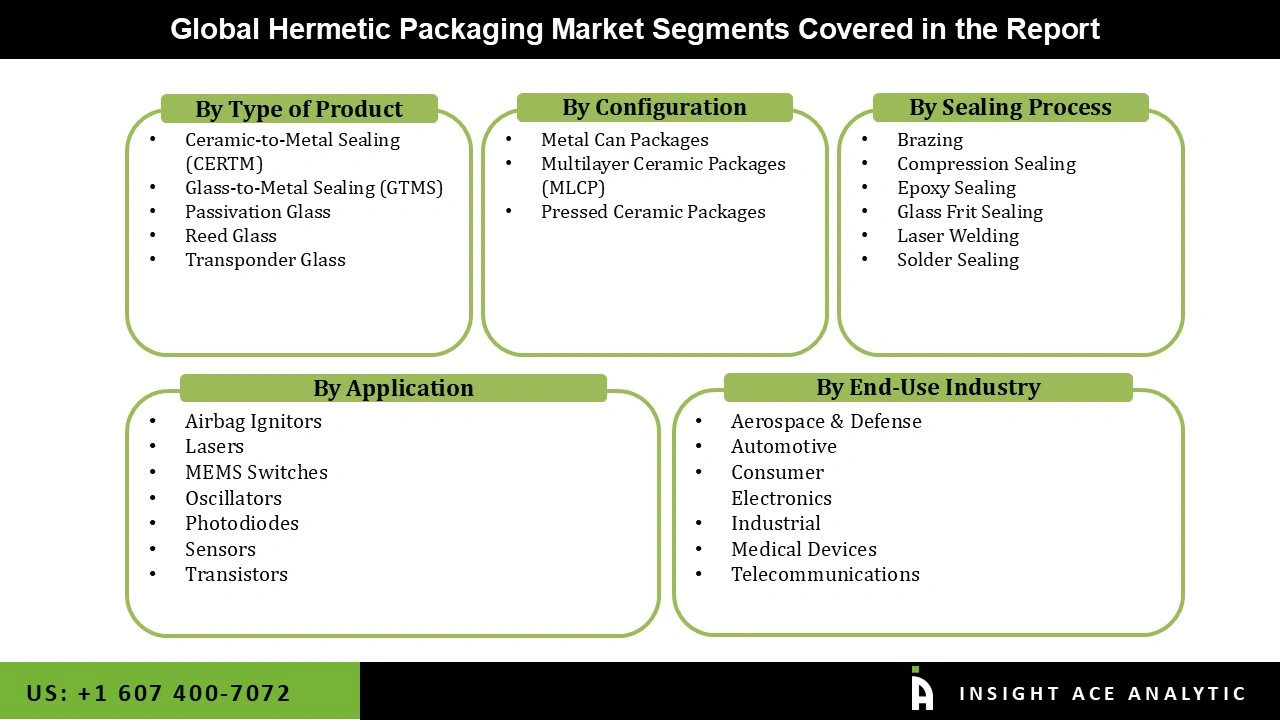
Hermetic Packaging Market by Configuration -
- Metal Can Packages
- Multilayer Ceramic Packages (MLCP)
- Pressed Ceramic Packages
Hermetic Packaging Market by Sealing Process -
- Brazing
- Compression Sealing
- Epoxy Sealing
- Glass Frit Sealing
- Laser Welding
- Solder Sealing
Hermetic Packaging Market by Application -
- Airbag Ignitors
- Lasers
- MEMS Switches
- Oscillators
- Photodiodes
- Sensors
- Transistors
Hermetic Packaging Market by End User –
- Aerospace & Defense
- Automotive
- Consumer Electronics
- Industrial
- Medical Devices
- Telecommunications
Hermetic Packaging Market by Region-
- North America-
- The US
- Canada
- Europe-
- Germany
- The UK
- France
- Italy
- Spain
- Rest of Europe
- Asia-Pacific-
- China
- Japan
- India
- South Korea
- South East Asia
- Rest of Asia Pacific
- Latin America-
- Brazil
- Argentina
- Mexico
- Rest of Latin America
- Middle East and Africa-
- GCC Countries
- South Africa
- Rest of Middle East and Africa
Research Design and Approach
This study employed a multi-step, mixed-method research approach that integrates:
- Secondary research
- Primary research
- Data triangulation
- Hybrid top-down and bottom-up modelling
- Forecasting and scenario analysis
This approach ensures a balanced and validated understanding of both macro- and micro-level market factors influencing the market.
Secondary Research
Secondary research for this study involved the collection, review, and analysis of publicly available and paid data sources to build the initial fact base, understand historical market behaviour, identify data gaps, and refine the hypotheses for primary research.
Sources Consulted
Secondary data for the market study was gathered from multiple credible sources, including:
- Government databases, regulatory bodies, and public institutions
- International organizations (WHO, OECD, IMF, World Bank, etc.)
- Commercial and paid databases
- Industry associations, trade publications, and technical journals
- Company annual reports, investor presentations, press releases, and SEC filings
- Academic research papers, patents, and scientific literature
- Previous market research publications and syndicated reports
These sources were used to compile historical data, market volumes/prices, industry trends, technological developments, and competitive insights.
Primary Research
Primary research was conducted to validate secondary data, understand real-time market dynamics, capture price points and adoption trends, and verify the assumptions used in the market modelling.
Stakeholders Interviewed
Primary interviews for this study involved:
- Manufacturers and suppliers in the market value chain
- Distributors, channel partners, and integrators
- End-users / customers (e.g., hospitals, labs, enterprises, consumers, etc., depending on the market)
- Industry experts, technology specialists, consultants, and regulatory professionals
- Senior executives (CEOs, CTOs, VPs, Directors) and product managers
Interview Process
Interviews were conducted via:
- Structured and semi-structured questionnaires
- Telephonic and video interactions
- Email correspondences
- Expert consultation sessions
Primary insights were incorporated into demand modelling, pricing analysis, technology evaluation, and market share estimation.
Data Processing, Normalization, and Validation
All collected data were processed and normalized to ensure consistency and comparability across regions and time frames.
The data validation process included:
- Standardization of units (currency conversions, volume units, inflation adjustments)
- Cross-verification of data points across multiple secondary sources
- Normalization of inconsistent datasets
- Identification and resolution of data gaps
- Outlier detection and removal through algorithmic and manual checks
- Plausibility and coherence checks across segments and geographies
This ensured that the dataset used for modelling was clean, robust, and reliable.
Market Size Estimation and Data Triangulation
Bottom-Up Approach
The bottom-up approach involved aggregating segment-level data, such as:
- Company revenues
- Product-level sales
- Installed base/usage volumes
- Adoption and penetration rates
- Pricing analysis
This method was primarily used when detailed micro-level market data were available.
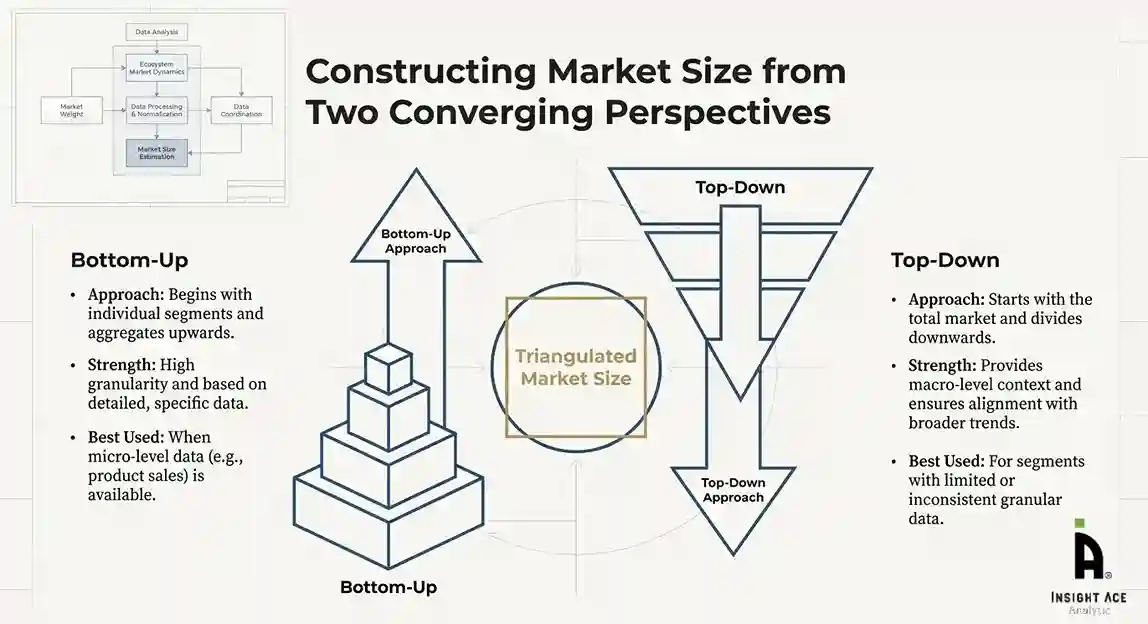
Top-Down Approach
The top-down approach used macro-level indicators:
- Parent market benchmarks
- Global/regional industry trends
- Economic indicators (GDP, demographics, spending patterns)
- Penetration and usage ratios
This approach was used for segments where granular data were limited or inconsistent.
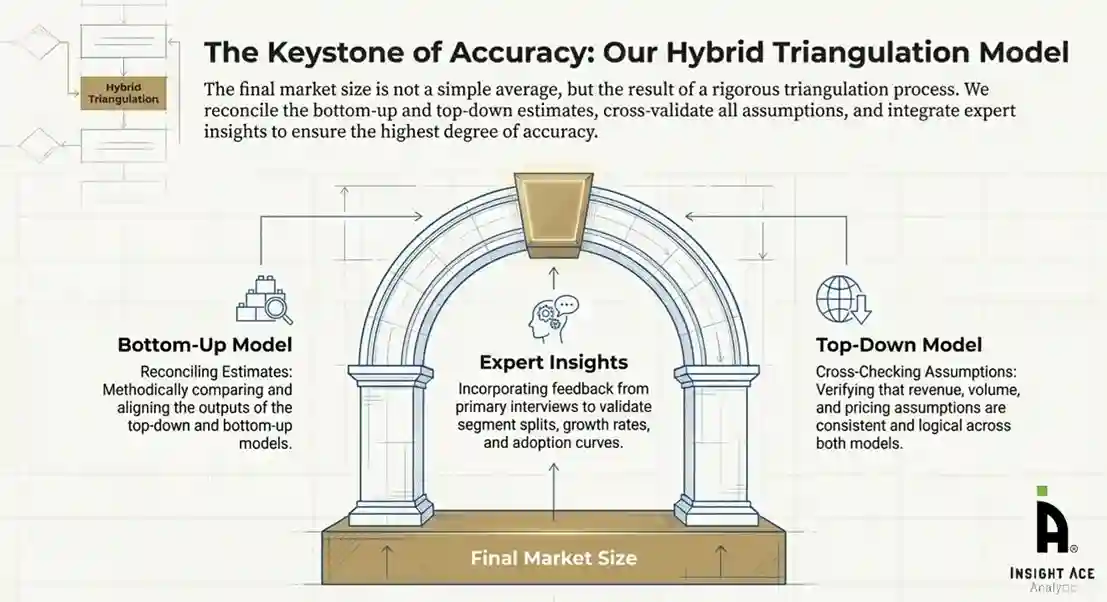
Hybrid Triangulation Approach
To ensure accuracy, a triangulated hybrid model was used. This included:
- Reconciling top-down and bottom-up estimates
- Cross-checking revenues, volumes, and pricing assumptions
- Incorporating expert insights to validate segment splits and adoption rates
This multi-angle validation yielded the final market size.
Forecasting Framework and Scenario Modelling
Market forecasts were developed using a combination of time-series modelling, adoption curve analysis, and driver-based forecasting tools.
Forecasting Methods
- Time-series modelling
- S-curve and diffusion models (for emerging technologies)
- Driver-based forecasting (GDP, disposable income, adoption rates, regulatory changes)
- Price elasticity models
- Market maturity and lifecycle-based projections
Scenario Analysis
Given inherent uncertainties, three scenarios were constructed:
- Base-Case Scenario: Expected trajectory under current conditions
- Optimistic Scenario: High adoption, favourable regulation, strong economic tailwinds
- Conservative Scenario: Slow adoption, regulatory delays, economic constraints
Sensitivity testing was conducted on key variables, including pricing, demand elasticity, and regional adoption.
Request Customization
Add countries, segments, company profiles, or extend forecast — free 10% customization with purchase.
Customize This Report →Enquire Before Buying
Speak with our analyst team about scope, methodology, pricing, or deliverable formats.
Enquire Now →Frequently Asked Questions
Hermetic Packaging Market Size is valued at USD 4.59 Bn in 2025 and is predicted to reach USD 8.27 Bn by the year 2035
The Hermetic Packaging Market is expected to grow at a 6.3% CAGR during the forecast period for 2026 to 2035
SCHOTT, Kyocera Corporation, Egide Group, Materion Corporation, Murata Manufacturing, AMETEK Interconnects, Hermetic Solutions Group, Qnnect, Kitea Health, PHIX Photonics Assembly, Forge Nano, Silitronics, SCHOTT Primoceler, ficonTEC, Quantifi Photonics and Others.
Hermetic Packaging Market is segmeneted into Product Type, Configuration, Sealing Process, Application, End Use Industry and Other.
North America region is leading the Hermetic Packaging Market.