Tarsometatarsal Arthrodesis Treatment Market Size, Share and Trends Analysis 2026 to 2035
Tarsometatarsal Arthrodesis Treatment Market Size is valued at USD 1.07 Bn in 2025 and is predicted to reach USD 2.05 Bn by the year 2035 at a 6.8% CAGR during the forecast period for 2026 to 2035.
Tarsometatarsal Arthrodesis Treatment Market Size, Share & Trends Analysis Distribution by Type (Plating Systems, K-wires, and Crossing Screws), Material (Stainless Steel and Titanium), End-user (Hospitals, Orthopedic Outpatient Clinics, and Ambulatory Surgical Centers), and Segment Forecasts, 2026 to 2035
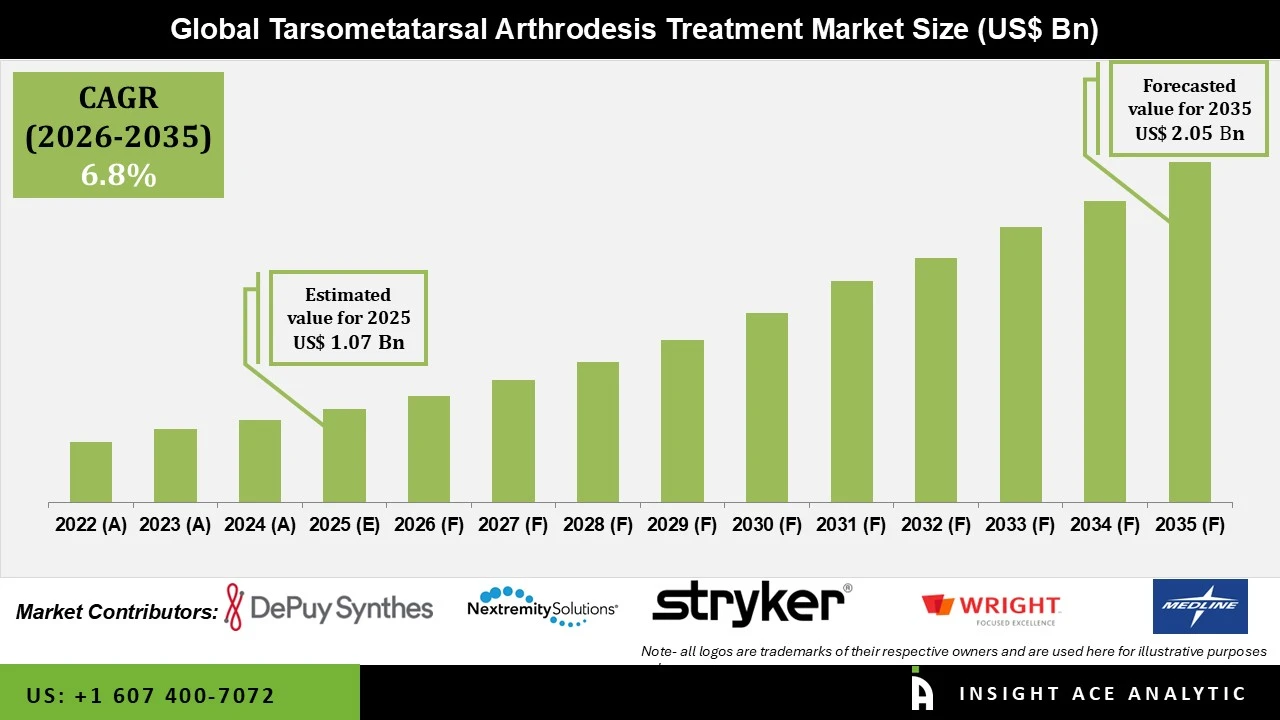
In recent decades, the shift toward precision and minimally invasive techniques has quietly become one of the most important advances in modern foot and ankle surgery. Tarsometatarsal arthrodesis (TMT fusion) exemplifies this evolution: by permanently stabilizing the midfoot joints between the tarsal and metatarsal bones, the procedure eliminates painful motion while restoring alignment and load-bearing capacity. It is now a standard intervention for severe midfoot arthritis, post-traumatic instability, progressive deformities, and chronic joint pain refractory to non-operative care. Surgeons remove damaged cartilage, realign the bony surfaces, and achieve rigid fixation with screws, plates, or staples, typically resulting in reliable pain relief and improved function at the cost of some midfoot flexibility. The procedure’s growing role reflects an aging population with more degenerative joint disease, increasing sports-related midfoot trauma, and greater recognition of the TMT complex as a frequent source of disabling foot pain.
One of the main drivers of the tarsometatarsal arthrodesis treatment market's expansion is the rising need for minimally invasive procedures. This can be attributed to the less invasive nature of tarsometatarsal arthrodesis treatment. Additionally, the industry is also experiencing significant expansion due to the increased knowledge of the advantages of tarsometatarsal arthrodesis treatment. This is because the treatment of foot and ankle injuries with Tarsometatarsal Arthrodesis is quite successful. The demand for efficient treatments is anticipated to grow as the population ages and lifestyle-related illnesses become more common, resulting in a healthy business climate. Moreover, there are opportunities for expansion due to continuous research and development initiatives targeted at improving surgical methods and post-operative care.
Moreover, better fusion rates and fewer problems are anticipated as a result of this individualized method becoming commonplace. A significant trend that aims to reduce patient morbidity and do away with the requirement for hardware removal surgery is the development of bioabsorbable fixation devices. Furthermore, the advanced surgical techniques are also becoming more accessible due to significant investments made by both public and private organizations in enhancing healthcare infrastructure and accessibility. Thus, this is anticipated to boost the tarsometatarsal arthrodesis treatment market growth over the forecast period.
Competitive Landscape
Which are the Leading Players in Tarsometatarsal Arthrodesis Treatment Market?
• DePuySynthes
• Medline Industries Inc.
• Acumed LLC
• Stryker GmbH
• Biomet Trauma
• Nextremity Solutions Inc.
• Wright Medical Technology Inc.
• Integra Lifesciences Corporation
• Novastep Inc.
• Paragon 28 Inc.
• Orthofix Medical Inc.
• Others
Market Dynamics
Driver
Growing Prevalence of Traumatic Injuries
The growing prevalence of traumatic injuries and midfoot disorders, especially Lisfranc injury and degenerative osteoarthritis, is one of the main factors propelling the tarsometatarsal arthrodesis treatment market. The number of patients needing surgery for persistent midfoot pain and instability has increased due in large part to age-related joint degradation, increased involvement in sports, and traffic accidents. Furthermore, the demand for corrective and pain-relieving surgical operations has been further spurred by the global increase in the senior population, who are more susceptible to structural foot abnormalities and arthritis. Improved surgical methods, better fixation devices, and better postoperative results have also boosted patient acceptability and physician confidence, which has supported the tarsometatarsal arthrodesis treatment market growth.
Restrain/Challenge
High Procedure Cost and Related Postoperative Recovery
The high procedure cost and related postoperative recovery burden are a significant barrier to the tarsometatarsal arthrodesis treatment market. The procedure calls for specialist implants like plates and screws, sophisticated imaging guidance, and knowledgeable orthopedic surgeons, all of which raise the total cost of care. Limited reimbursement coverage and high out-of-pocket expenses limit patient access to the surgery in many developing and cost-sensitive nations. Additionally, when conservative treatment alternatives are still available, the risk of complications such as infection, nonunion, hardware irritation, and protracted immobilization can deter patients and healthcare professionals from choosing surgical fusion.
Plating Systems Segment is Expected to Drive the Tarsometatarsal Arthrodesis Treatment Market
The plating systems category held the largest share in the tarsometatarsal arthrodesis treatment market in 2025 as a result of surgeons' growing predilection for strict internal fixation techniques that offer better stability and fusion results. Plate systems provide more biomechanical support than individual screws, especially in cases of revision surgery, multi-joint fusions, and complex midfoot abnormalities. Orthopedic surgeons have turned to them because of their ability to preserve exact anatomical alignment while lowering the possibility of hardware failure or nonunion. Additional technological developments that have increased procedural success rates and decreased postoperative problems include locking plate designs, low-profile anatomical plates, and better biocompatible materials.
Hospitals Segment is Growing at the Highest Rate in the Tarsometatarsal Arthrodesis Treatment Market
In 2025, the hospitals category dominated the tarsometatarsal arthrodesis treatment market as a result of the growing demand for sophisticated surgical environments with specialist orthopedic infrastructure. Hospitals are usually the main locations for complicated foot and ankle surgeries because they provide access to skilled orthopedic surgeons, cutting-edge imaging equipment, and extensive postoperative care settings. In addition to improving surgical results and patient safety, the availability of multidisciplinary teams that include anesthesiologists and rehabilitation specialists encourages more patients to seek treatment in hospitals. Furthermore, the increasing incidence of hospitalizations for age-related degenerative diseases, sports-related midfoot fractures, and traumatic injuries supports procedural volumes.
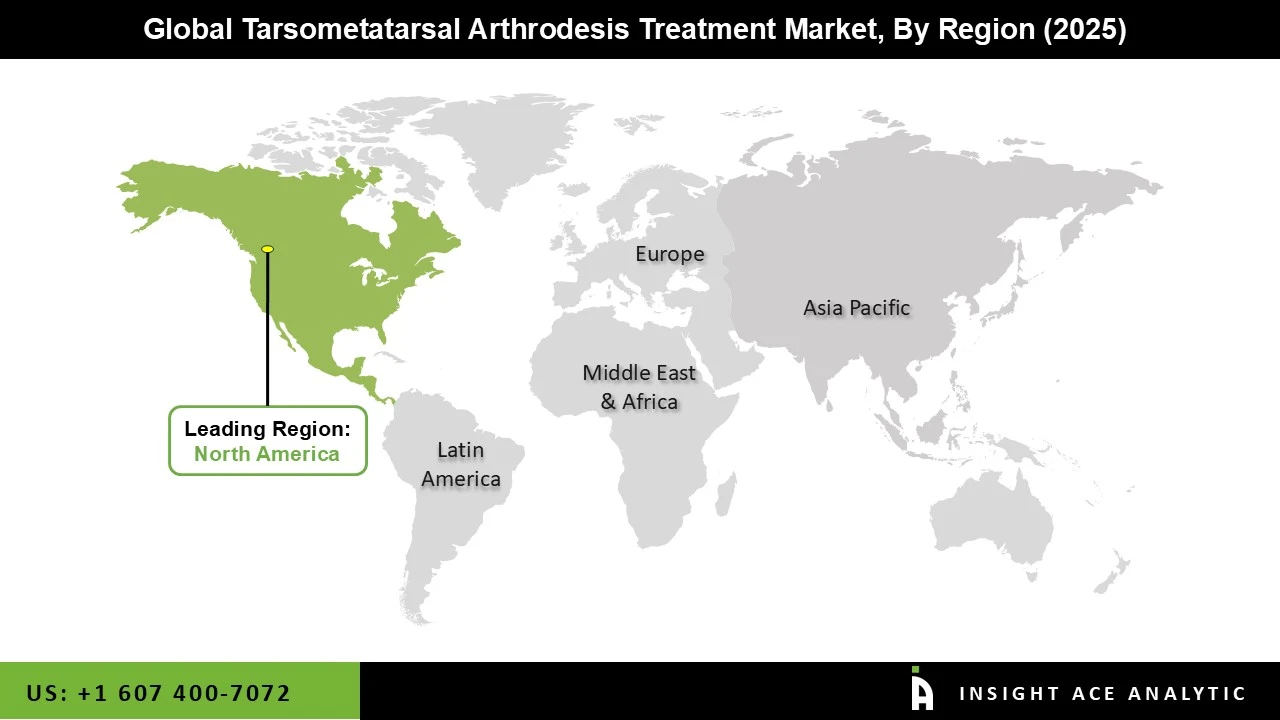
Why North America Led the Tarsometatarsal Arthrodesis Treatment Market?
The tarsometatarsal arthrodesis treatment market was dominated by North America region in 2025 driven by a high rate of foot abnormalities, arthritis, and sophisticated medical facilities. Due to their well-established orthopedic care systems, extensive network of specialist surgical centers, and robust reimbursement structures that promote the use of arthrodesis treatments, the United States and Canada lead the world in procedure volumes. The advanced fixation systems are becoming more and more popular among clinicians due to technological advancements such as bioabsorbable materials, optimized implant designs, and minimally invasive surgical methods that improve patient outcomes. Furthermore, the need for corrective arthrodesis surgery is growing as individuals and medical professionals become more aware of foot and ankle conditions. North America's supremacy is further cemented by high healthcare costs and continuous R&D investments by significant medical device makers.
Tarsometatarsal Arthrodesis Treatment Market Report Scope:
| Report Attribute | Specifications |
| Market size value in 2025 | USD 1.07 Bn |
| Revenue forecast in 2035 | USD 2.05 Bn |
| Growth Rate CAGR | CAGR of 6.8% from 2026 to 2035 |
| Quantitative Units | Representation of revenue in US$ Bn and CAGR from 2026 to 2035 |
| Historic Year | 2022 to 2025 |
| Forecast Year | 2026-2035 |
| Report Coverage | The forecast of revenue, the position of the company, the competitive market structure, growth prospects, and trends |
| Segments Covered | Type, Material, Treatment Duration, End-user, Distribution Channel, and By Region |
| Regional Scope | North America; Europe; Asia Pacific; Latin America; Middle East & Africa |
| Country Scope | U.S.; Canada; U.K.; Germany; China; India; Japan; Brazil; Mexico; France; Italy; Spain; South Korea; Southeast Asia |
| Competitive Landscape | DePuySynthes, Medline Industries Inc., Acumed LLC, Stryker GmbH, Biomet Trauma, Nextremity Solutions Inc., Wright Medical Technology Inc., Integra Lifesciences Corporation, Novastep Inc., Paragon 28 Inc., Orthofix Medical Inc., and Others |
| Customization Scope | Free customization report with the procurement of the report, Modifications to the regional and segment scope. Geographic competitive landscape. |
| Pricing and Available Payment Methods | Explore pricing alternatives that are customized to your particular study requirements. |
Market Segmentation:
Tarsometatarsal Arthrodesis Treatment Market by Type-
• Plating Systems
• K-wires
• Crossing Screws
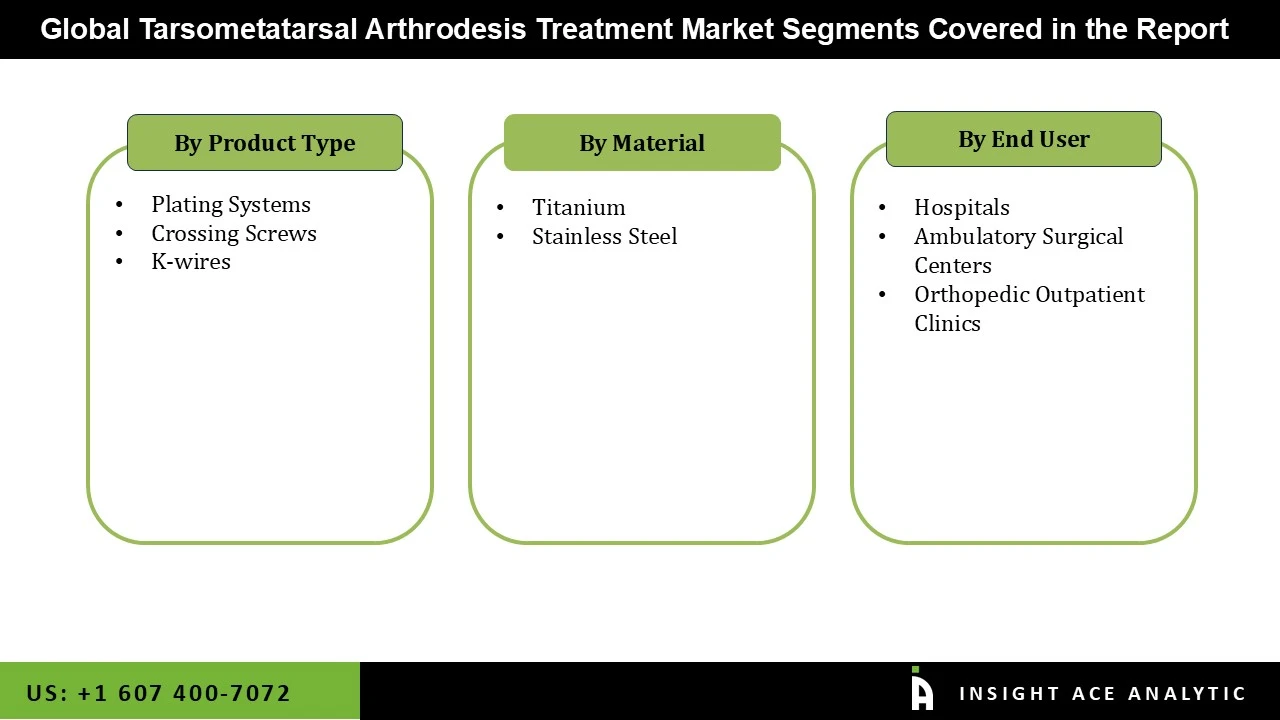
Tarsometatarsal Arthrodesis Treatment Market by Material-
• Stainless Steel
• Titanium
Tarsometatarsal Arthrodesis Treatment Market by End-user-
• Hospitals
• Orthopedic Outpatient Clinics
• Ambulatory Surgical Centers
Tarsometatarsal Arthrodesis Treatment Market By Region-
North America-
• The US
• Canada
Europe-
• Germany
• The UK
• France
• Italy
• Spain
• Rest of Europe
Asia-Pacific-
• China
• Japan
• India
• South Korea
• South East Asia
• Rest of Asia Pacific
Latin America-
• Brazil
• Argentina
• Mexico
• Rest of Latin America
Middle East & Africa-
• GCC Countries
• South Africa
• Rest of Middle East and Africa
Research Design and Approach
This study employed a multi-step, mixed-method research approach that integrates:
- Secondary research
- Primary research
- Data triangulation
- Hybrid top-down and bottom-up modelling
- Forecasting and scenario analysis
This approach ensures a balanced and validated understanding of both macro- and micro-level market factors influencing the market.
Secondary Research
Secondary research for this study involved the collection, review, and analysis of publicly available and paid data sources to build the initial fact base, understand historical market behaviour, identify data gaps, and refine the hypotheses for primary research.
Sources Consulted
Secondary data for the market study was gathered from multiple credible sources, including:
- Government databases, regulatory bodies, and public institutions
- International organizations (WHO, OECD, IMF, World Bank, etc.)
- Commercial and paid databases
- Industry associations, trade publications, and technical journals
- Company annual reports, investor presentations, press releases, and SEC filings
- Academic research papers, patents, and scientific literature
- Previous market research publications and syndicated reports
These sources were used to compile historical data, market volumes/prices, industry trends, technological developments, and competitive insights.

Primary Research
Primary research was conducted to validate secondary data, understand real-time market dynamics, capture price points and adoption trends, and verify the assumptions used in the market modelling.
Stakeholders Interviewed
Primary interviews for this study involved:
- Manufacturers and suppliers in the market value chain
- Distributors, channel partners, and integrators
- End-users / customers (e.g., hospitals, labs, enterprises, consumers, etc., depending on the market)
- Industry experts, technology specialists, consultants, and regulatory professionals
- Senior executives (CEOs, CTOs, VPs, Directors) and product managers
Interview Process
Interviews were conducted via:
- Structured and semi-structured questionnaires
- Telephonic and video interactions
- Email correspondences
- Expert consultation sessions
Primary insights were incorporated into demand modelling, pricing analysis, technology evaluation, and market share estimation.
Data Processing, Normalization, and Validation
All collected data were processed and normalized to ensure consistency and comparability across regions and time frames.
The data validation process included:
- Standardization of units (currency conversions, volume units, inflation adjustments)
- Cross-verification of data points across multiple secondary sources
- Normalization of inconsistent datasets
- Identification and resolution of data gaps
- Outlier detection and removal through algorithmic and manual checks
- Plausibility and coherence checks across segments and geographies
This ensured that the dataset used for modelling was clean, robust, and reliable.
Market Size Estimation and Data Triangulation
Bottom-Up Approach
The bottom-up approach involved aggregating segment-level data, such as:
- Company revenues
- Product-level sales
- Installed base/usage volumes
- Adoption and penetration rates
- Pricing analysis
This method was primarily used when detailed micro-level market data were available.

Top-Down Approach
The top-down approach used macro-level indicators:
- Parent market benchmarks
- Global/regional industry trends
- Economic indicators (GDP, demographics, spending patterns)
- Penetration and usage ratios
This approach was used for segments where granular data were limited or inconsistent.
Hybrid Triangulation Approach
To ensure accuracy, a triangulated hybrid model was used. This included:
- Reconciling top-down and bottom-up estimates
- Cross-checking revenues, volumes, and pricing assumptions
- Incorporating expert insights to validate segment splits and adoption rates
This multi-angle validation yielded the final market size.
Forecasting Framework and Scenario Modelling
Market forecasts were developed using a combination of time-series modelling, adoption curve analysis, and driver-based forecasting tools.
Forecasting Methods
- Time-series modelling
- S-curve and diffusion models (for emerging technologies)
- Driver-based forecasting (GDP, disposable income, adoption rates, regulatory changes)
- Price elasticity models
- Market maturity and lifecycle-based projections
Scenario Analysis
Given inherent uncertainties, three scenarios were constructed:
- Base-Case Scenario: Expected trajectory under current conditions
- Optimistic Scenario: High adoption, favourable regulation, strong economic tailwinds
- Conservative Scenario: Slow adoption, regulatory delays, economic constraints
Sensitivity testing was conducted on key variables, including pricing, demand elasticity, and regional adoption.
Request Customization
Add countries, segments, company profiles, or extend forecast — free 10% customization with purchase.
Customize This Report →Enquire Before Buying
Speak with our analyst team about scope, methodology, pricing, or deliverable formats.
Enquire Now →Frequently Asked Questions
Tarsometatarsal Arthrodesis Treatment Market Size is valued at USD 1.07 Bn in 2025 and is predicted to reach USD 2.05 Bn by the year 2035
Tarsometatarsal Arthrodesis Treatment Market is expected to grow at a 6.8% CAGR during the forecast period for 2026 to 2035.
DePuySynthes, Medline Industries Inc., Acumed LLC, Stryker GmbH, Biomet Trauma, Nextremity Solutions Inc., Wright Medical Technology Inc., Integra Lifesciences Corporation, Novastep Inc., Paragon 28 Inc., Orthofix Medical Inc., and Others
Tarsometatarsal Arthrodesis Treatment Market is segmented in Type, Material, Treatment Duration, End-user, Distribution Channel, and By Region.
North America region is leading the Tarsometatarsal Arthrodesis Treatment Market.