Nicorandil Marke Size, Share and Trends Report 2025 to 2034
Global Nicorandil Market is estimated to grow with a CAGR of 8.5% during the forecast period of 2025 to 2034.
Nicorandil Market Size, Share & Trends Analysis Distribution by Dosage Form (Oral Solutions, Tablets, Injectables, and Extended-Release Formulations), Therapeutic Application (Hypertension, Ischemic Heart Disease, Heart Failure, and Chronic Stable Angina), Patient Demographics, End User, Distribution Channel and Segment Forecasts, 2025 to 2034
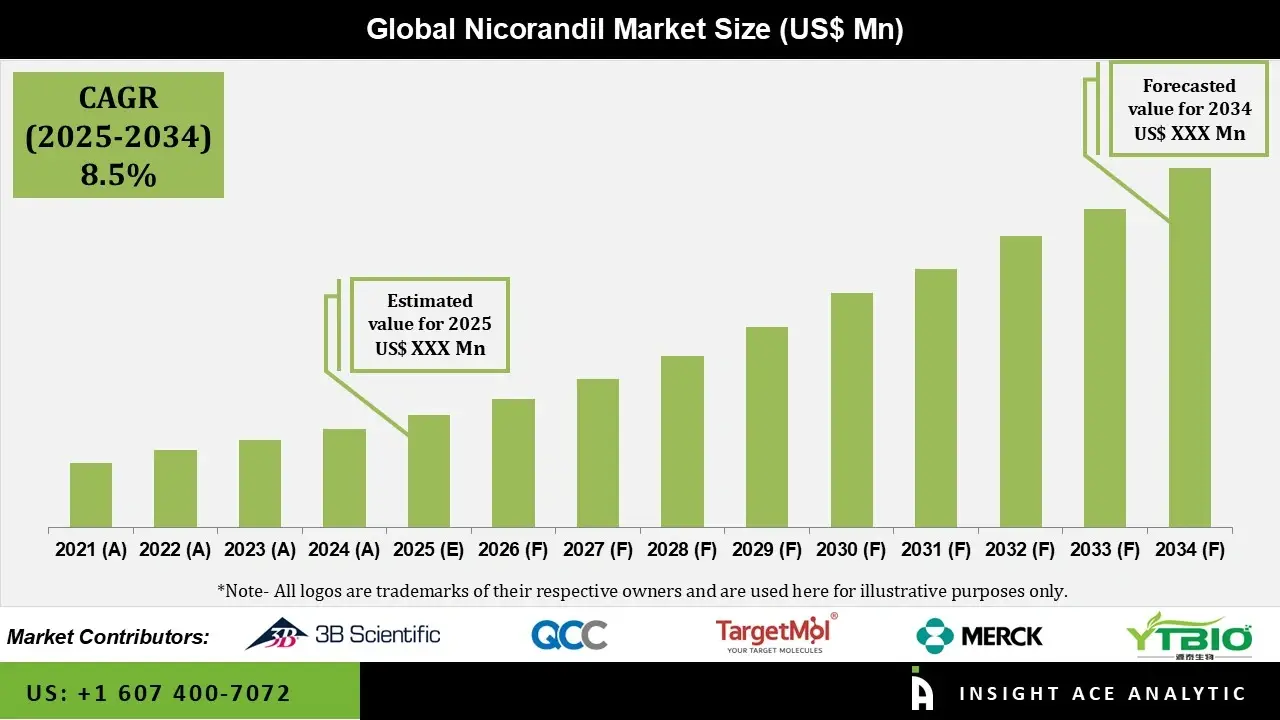
Nicorandil is a dual-action vasodilator and the only clinically approved potassium-channel activator with nitrate-like properties. It treats chronic stable angina pectoris by opening ATP-sensitive potassium channels in vascular smooth muscle and donating nitric oxide, resulting in both arterial and venous dilation.
This mechanism rapidly increases coronary blood flow, boosts oxygen delivery to the heart, and reduces cardiac preload and afterload, effectively relieving and preventing angina symptoms. Administered orally (typically 10–20 mg twice daily), it is indicated when beta-blockers or calcium-channel blockers are contraindicated or insufficient, and remains a standard therapy in Europe, Japan, and many Asia-Pacific and Middle East markets.
The Nicorandil market is growing steadily due to the rising number of people with heart disease worldwide. Aging populations, more sedentary lifestyles, and increasing rates of diabetes, high blood pressure, and Obesity are driving up angina cases. The growing elderly population – who are most at risk – is a major factor boosting demand. Better healthcare systems in developing countries, higher patient awareness, and increased spending on cardiovascular medicines also support market growth.
Side effects such as headaches, dizziness, and rare but serious mouth or gut ulcers can limit patient acceptance. Newer angina treatments and generic competition are additional challenges. However, ongoing research into improved formulations (e.g., sustained-release versions) and expanding use in emerging markets offer strong growth potential. As heart disease remains a majorcause of death globally, Nicorandil continues to play an important role in affordable, effective angina management.
Competitive Landscape
Some of the Key Players in Nicorandil Market:
• Nanjing Luomeimei Biotechnology Co. LTD
• Merck
• Shanghai Myrell Chemical Technology Co. LTD
• Shanghai Yuanye Bio-Technology Co. Ltd
• J&K Scientific
• Shenzhen Feisi Biological Technology Co. LTD
• Yunnan Xili Biotechnology Co. LTD
• Shanghai Aladdin Biochemical Technology Co. LTD
• Nanjing Shenglide Biotechnology Co. LTD
• Biorbyt
• Biosynth Carbosynth
• ApexBio Technology
• Santa Cruz BiotechnologyInc.
• Combi-Blocks Inc
• AdooQ BioScience
• Wuhan Belka Biomedicine
• Alfa Chemistry
• Toronto Research Chemicals Inc
• Apollo Scientific Ltd
• 3B Scientific
• Carbone Scientific
• Cayman Chemical
• TCI
• Targetmol
• QCC
• A&A Life Science Inc
Market Segmentation:
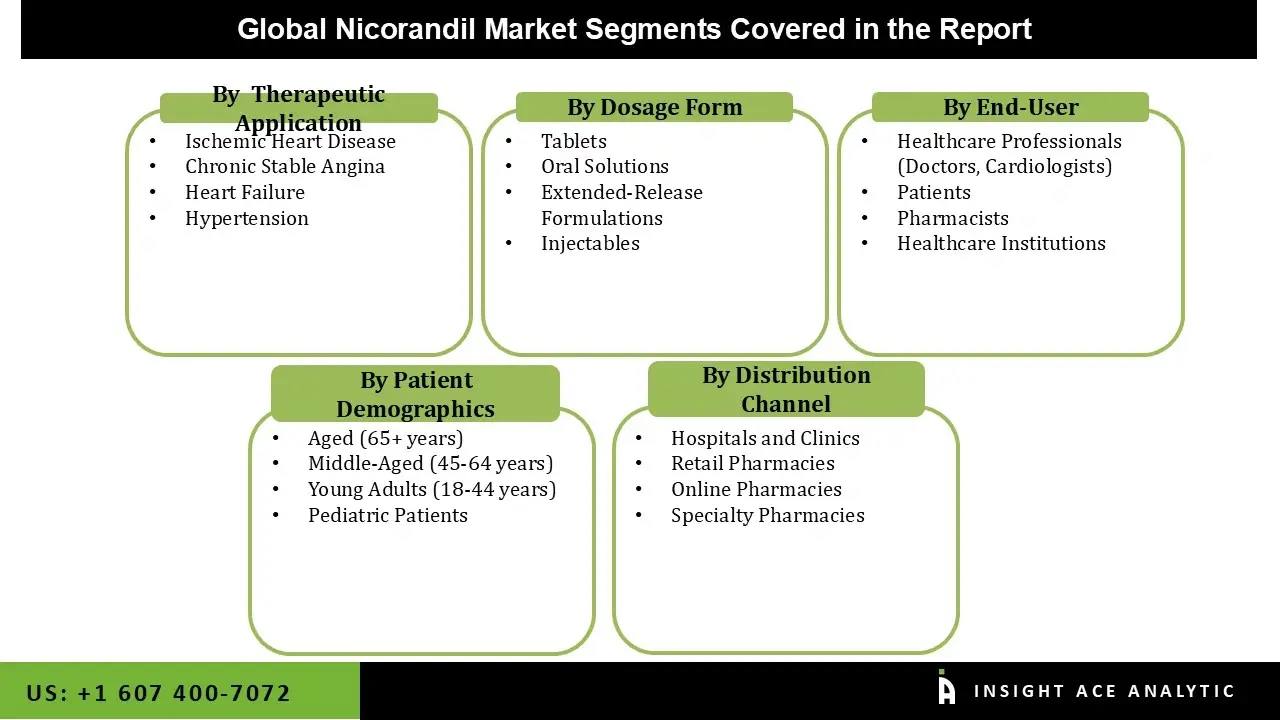
The nicorandil market is segmented by dosage form, therapeutic application, patient demographics, end user, and distribution channel. By dosage form, the market is segmented into oral solutions, tablets, injectables, and extended-release formulations. As per the therapeutic application, the market is segmented into hypertension, ischemic heart disease, heart failure, and chronic stable angina.
By patient demographics, the market is segmented into pediatric patients, young adults (18-44 years), middle-aged (45-64 years), and aged (65+ years). By end user, the market is segmented into healthcare professionals (doctors, cardiologists), pharmacists, patients, and healthcare institutions. The distribution channel segment comprises into hospitals and clinics, retail pharmacies, specialty pharmacies, and online pharmacies.
By Dosage Form, the Oral Solutions Segment is Expected to Drive the Nicorandil Market
The oral solutions category held the largest share in the Nicorandil market in 2024. Oral dose forms are the most widely recognized and usually recommended manner of delivering Nicorandil, with tablets being the prevalent type. This simplicity and patient compliance elevate the oral route's attractiveness, allowing for stable therapeutic levels without the requirement for expert administration, making it ideal for long-term maintenance. In order to improve absorption and maintain therapeutic benefits over time, oral versions are frequently made using a controlled-release mechanism.
Ischemic Heart Disease Segment by Therapeutic Application is Growing at the Highest Rate in the Nicorandil Market
In 2024, the Ischemic Heart Disease category dominated the Nicorandil market. Ischemic heart disease, which includes a variety of disorders marked by decreased blood flow to the heart muscle, makes up the greatest portion of the therapeutic application category. Due to the increased occurence of ischemic heart diseases worldwide, which are caused by risk factors such as diabetes, hypertension, and lifestyle decisions, this category is leading.
According to the World Health Organization, ischemic heart disease accounts for 16% of all fatalities globally, making it the leading cause of mortality. The need for Nicorandil as a treatment option is anticipated to increase as medical professionals become more aware of the significance of efficient management techniques for ischemic heart disease.
Regionally, North America is leading the Nicorandil Market
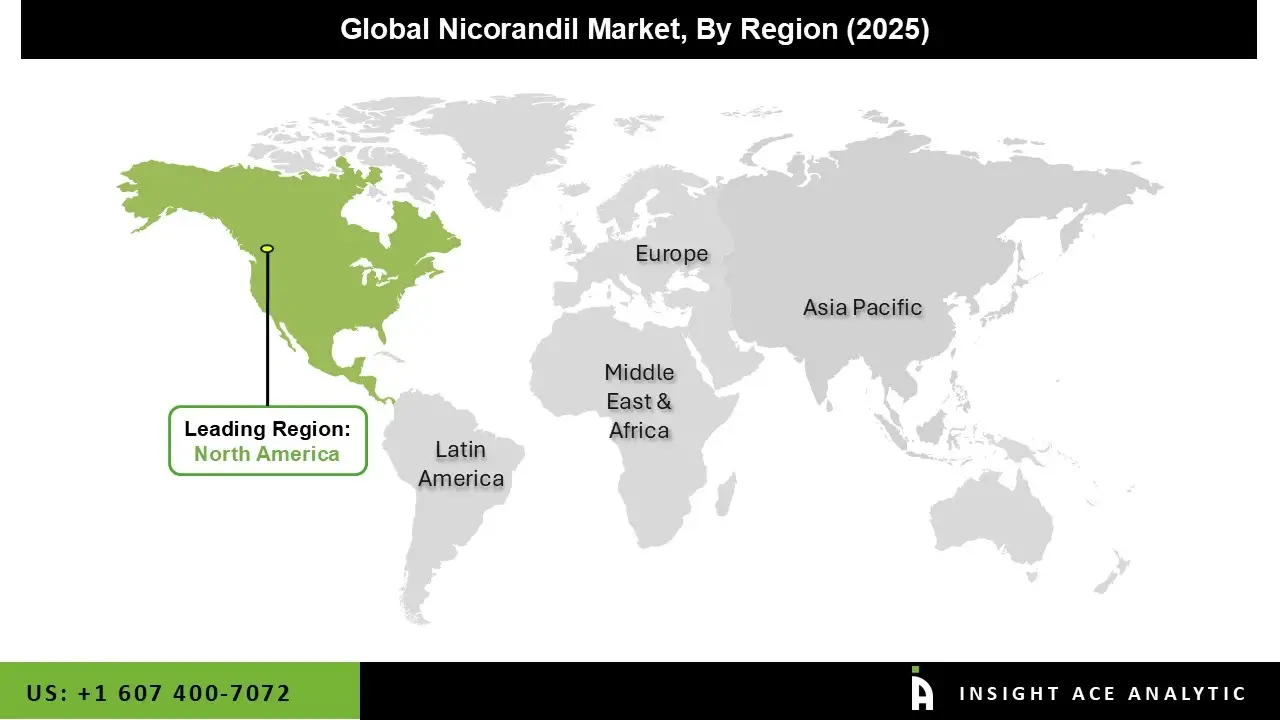
North America commands the leading market share in the global nicorandil landscape, characterized by its sophisticated and high-capacity healthcare ecosystem. The region’s dominance is underpinned by a significant patient population diagnosed with chronic stable angina and other ischemic heart conditions, supported by widespread diagnostic capabilities and a treatment culture that integrates both established and newer therapeutic options.
A mature pharmaceutical supply chain, combined with favorable reimbursement structures for cardiovascular medications, ensures consistent product availability and patient access. This established commercial footprint is reinforced by ongoing Cardiology research and clinical education that maintains physician awareness of nicorandil’s role in specific treatment algorithms, particularly for patients with refractory symptoms.
The Asia Pacific region is positioned for the most rapid expansion within the nicorandil market, representing the highest projected growth rate. This acceleration is driven by powerful demographic and systemic trends, including a sharply rising prevalence of hypertension, diabetes, and coronary artery disease across its vast and aging populations. Growth is further catalyzed by substantial governmental and private investment in healthcare infrastructure, which is improving diagnosis and treatment rates in both urban and emerging rural markets.
The region also benefits from the drug's established history and deep clinical familiarity in key markets like Japan and South Korea, while growth engines such as China and India contribute through scaling domestic pharmaceutical production, increasing physician adoption, and expanding insurance coverage for chronic disease management.
Nicorandil Market Report Scope:
| Report Attribute | Specifications |
| Growth Rate CAGR | CAGR of 8.5% from 2025 to 2034 |
| Quantitative Units | Representation of revenue in US$ Bn and CAGR from 2025 to 2034 |
| Historic Year | 2021 to 2024 |
| Forecast Year | 2025-2034 |
| Report Coverage | The forecast of revenue, the position of the company, the competitive market structure, growth prospects, and trends |
| Segments Covered | By Dosage Form, By Therapeutic Application, By Patient Demographics, By End User, By Distribution Channel, and By Region |
| Regional Scope | North America; Europe; Asia Pacific; Latin America; Middle East & Africa |
| Country Scope | U.S.; Canada; Germany; The UK; France; Italy; Spain; Rest of Europe; China; Japan; India; South Korea; Southeast Asia; Rest of Asia Pacific; Brazil; Argentina; Mexico; Rest of Latin America; GCC Countries; South Africa; Rest of the Middle East and Africa |
| Competitive Landscape | Nanjing Luomeimei Biotechnology Co. LTD, Merck, Shanghai Myrell Chemical Technology Co. LTD, Shanghai Yuanye Bio-Technology Co. Ltd, J&K Scientific, Shenzhen Feisi Biological Technology Co. LTD, Yunnan Xili Biotechnology Co. LTD, Shanghai Aladdin Biochemical Technology Co. LTD, Nanjing Shenglide Biotechnology Co. LTD, Biorbyt, Biosynth Carbosynth, ApexBio Technology, Santa Cruz BiotechnologyInc., Combi-Blocks Inc, AdooQ BioScience, Wuhan Belka Biomedicine, Alfa Chemistry, Toronto Research Chemicals Inc, Apollo Scientific Ltd, 3B Scientific, Carbone Scientific, Cayman Chemical, TCI, Targetmol, QCC, and A&A Life Science Inc |
| Customization Scope | Free customization report with the procurement of the report, Modifications to the regional and segment scope. Geographic competitive landscape. |
| Pricing and Available Payment Methods | Explore pricing alternatives that are customized to your particular study requirements. |
Segmentation of Nicorandil Market -
Nicorandil Market by Dosage Form-
• Oral Solutions
• Tablets
• Injectables
• Extended-Release Formulations
Nicorandil Market by Therapeutic Application -
• Hypertension
• Ischemic Heart Disease
• Heart Failure
• Chronic Stable Angina
Nicorandil Market by Patient Demographics-
• Pediatric Patients
• Young Adults (18-44 Years)
• Middle-Aged (45-64 Years)
• Aged (65+ Years)
Nicorandil Market by End User-
• Healthcare Professionals
o Doctors
o Cardiologists
• Pharmacists
• Patients
• Healthcare Institutions
Nicorandil Market by Distribution Channel-
• Hospitals and Clinics
• Retail Pharmacies
• Specialty Pharmacies
• Online Pharmacies
Nicorandil Market by Region-
North America-
• The US
• Canada
Europe-
• Germany
• The UK
• France
• Italy
• Spain
• Rest of Europe
Asia-Pacific-
• China
• Japan
• India
• South Korea
• Southeast Asia
• Rest of Asia Pacific
Latin America-
• Brazil
• Argentina
• Mexico
• Rest of Latin America
Middle East & Africa-
• GCC Countries
• South Africa
• Rest of the Middle East and Africa
Research Design and Approach
This study employed a multi-step, mixed-method research approach that integrates:
- Secondary research
- Primary research
- Data triangulation
- Hybrid top-down and bottom-up modelling
- Forecasting and scenario analysis
This approach ensures a balanced and validated understanding of both macro- and micro-level market factors influencing the market.
Secondary Research
Secondary research for this study involved the collection, review, and analysis of publicly available and paid data sources to build the initial fact base, understand historical market behaviour, identify data gaps, and refine the hypotheses for primary research.
Sources Consulted
Secondary data for the market study was gathered from multiple credible sources, including:
- Government databases, regulatory bodies, and public institutions
- International organizations (WHO, OECD, IMF, World Bank, etc.)
- Commercial and paid databases
- Industry associations, trade publications, and technical journals
- Company annual reports, investor presentations, press releases, and SEC filings
- Academic research papers, patents, and scientific literature
- Previous market research publications and syndicated reports
These sources were used to compile historical data, market volumes/prices, industry trends, technological developments, and competitive insights.

Primary Research
Primary research was conducted to validate secondary data, understand real-time market dynamics, capture price points and adoption trends, and verify the assumptions used in the market modelling.
Stakeholders Interviewed
Primary interviews for this study involved:
- Manufacturers and suppliers in the market value chain
- Distributors, channel partners, and integrators
- End-users / customers (e.g., hospitals, labs, enterprises, consumers, etc., depending on the market)
- Industry experts, technology specialists, consultants, and regulatory professionals
- Senior executives (CEOs, CTOs, VPs, Directors) and product managers
Interview Process
Interviews were conducted via:
- Structured and semi-structured questionnaires
- Telephonic and video interactions
- Email correspondences
- Expert consultation sessions
Primary insights were incorporated into demand modelling, pricing analysis, technology evaluation, and market share estimation.
Data Processing, Normalization, and Validation
All collected data were processed and normalized to ensure consistency and comparability across regions and time frames.
The data validation process included:
- Standardization of units (currency conversions, volume units, inflation adjustments)
- Cross-verification of data points across multiple secondary sources
- Normalization of inconsistent datasets
- Identification and resolution of data gaps
- Outlier detection and removal through algorithmic and manual checks
- Plausibility and coherence checks across segments and geographies
This ensured that the dataset used for modelling was clean, robust, and reliable.
Market Size Estimation and Data Triangulation
Bottom-Up Approach
The bottom-up approach involved aggregating segment-level data, such as:
- Company revenues
- Product-level sales
- Installed base/usage volumes
- Adoption and penetration rates
- Pricing analysis
This method was primarily used when detailed micro-level market data were available.

Top-Down Approach
The top-down approach used macro-level indicators:
- Parent market benchmarks
- Global/regional industry trends
- Economic indicators (GDP, demographics, spending patterns)
- Penetration and usage ratios
This approach was used for segments where granular data were limited or inconsistent.
Hybrid Triangulation Approach
To ensure accuracy, a triangulated hybrid model was used. This included:
- Reconciling top-down and bottom-up estimates
- Cross-checking revenues, volumes, and pricing assumptions
- Incorporating expert insights to validate segment splits and adoption rates
This multi-angle validation yielded the final market size.
Forecasting Framework and Scenario Modelling
Market forecasts were developed using a combination of time-series modelling, adoption curve analysis, and driver-based forecasting tools.
Forecasting Methods
- Time-series modelling
- S-curve and diffusion models (for emerging technologies)
- Driver-based forecasting (GDP, disposable income, adoption rates, regulatory changes)
- Price elasticity models
- Market maturity and lifecycle-based projections
Scenario Analysis
Given inherent uncertainties, three scenarios were constructed:
- Base-Case Scenario: Expected trajectory under current conditions
- Optimistic Scenario: High adoption, favourable regulation, strong economic tailwinds
- Conservative Scenario: Slow adoption, regulatory delays, economic constraints
Sensitivity testing was conducted on key variables, including pricing, demand elasticity, and regional adoption.
Request Customization
Add countries, segments, company profiles, or extend forecast — free 10% customization with purchase.
Customize This Report →Enquire Before Buying
Speak with our analyst team about scope, methodology, pricing, or deliverable formats.
Enquire Now →Frequently Asked Questions
Nicorandil Market Size is predicted to grow at an 8.5% CAGR over the forecast period.
The major players in the Nicorandil market are Nanjing Luomeimei Biotechnology Co. LTD, Merck, Shanghai Myrell Chemical Technology Co. LTD, Shanghai Yuanye Bio-Technology Co. Ltd, J&K Scientific, Shenzhen Feisi Biological Technology Co. LTD, Yunnan Xili Biotechnology Co. LTD, Shanghai Aladdin Biochemical Technology Co. LTD, Nanjing Shenglide Biotechnology Co. LTD, Biorbyt, Biosynth Carbosynth, ApexBio Technology, Santa Cruz BiotechnologyInc., Combi-Blocks Inc, AdooQ BioScience, Wuhan Belka Biomedicine, Alfa Chemistry, Toronto Research Chemicals Inc, Apollo Scientific Ltd, 3B Scientific, Carbone Scientific, Cayman Chemical, TCI, Targetmol, QCC, and A&A Life Science Inc.
The primary Nicorandil market segments are Dosage Form, Therapeutic Application, Patient Demographics, End User, and Distribution Channel.
North America leads the market for Nicorandil driven by the frequency of cardiovascular diseases, the development of cutting-edge cardiac drugs, and sophisticated healthcare infrastructure.