Nematicide Market Size, Share, Scope Report 2026 to 2035
What is Nematicide Market Size?
Global Nematicide Market Size is valued at USD 2.63 Bn in 2025 and is predicted to reach USD 8.16 Bn by the year 2035 at a 12.2% CAGR during the forecast period for 2026 to 2035.
Nematicide Market Size, Share & Trends Analysis Distribution by Type (Chemical, Biological), by Nematode Type (Root-knot Nematode, Cyst Nematode, Lesion Nematode), by Mode of Application (Drenching, Soil Dressing, Seed Treatment, Fumigation), by Formulation (Granular, Liquid), by Crop Type (Fruits & Vegetables, Cereals & Grains, Oilseeds & Pulses, Others) and Segment Forecasts, 2026 to 2035.
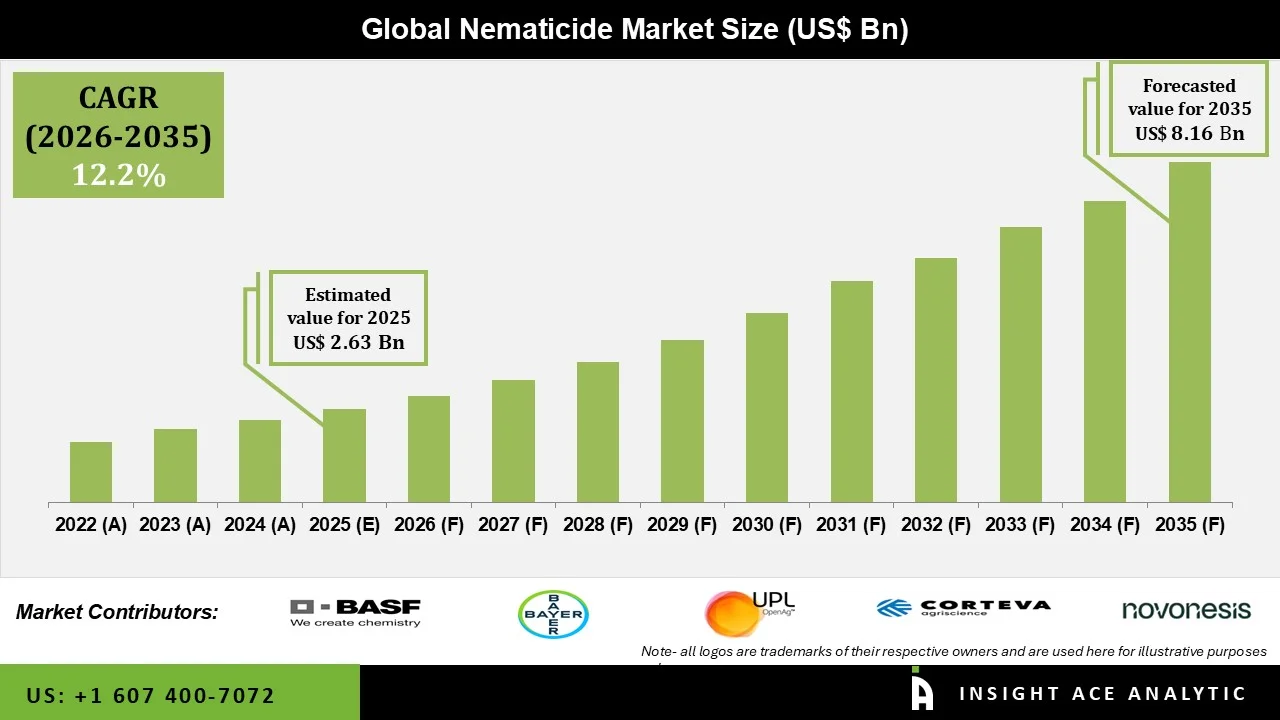
Nematicides play an important role in modern crop protection by helping farmers manage plant-parasitic nematodes that can damage crops and reduce agricultural productivity. Farmers use these products to control nematodes in the soil and around plant roots, helping protect crops from root damage, nutrient loss, stunted growth, and reduced yields. Nematicides are applied across a wide range of crops, including fruits and vegetables, cereals and grains, oilseeds and pulses, and other crops. As farmers face increasing pressure to improve crop productivity and protect yields, demand for effective nematode management solutions is supporting the growth of the nematicides market.
The growing prevalence of root-knot, cyst, and lesion nematodes is a key driver of market demand. These pests can remain in agricultural soils and affect crop development over multiple growing seasons, making effective control an important part of crop protection programs. Increasing global food demand, limited arable land, and the need to increase productivity from existing farmland are encouraging farmers to adopt solutions that reduce crop losses from soil-borne pests. Nematicides come in different formulations and can be applied through methods such as drenching, soil dressing, seed treatment, and fumigation, allowing growers to choose solutions based on crop type, soil conditions, and farming practices.
One important trend in the market is the growing interest in biological nematicides. Chemical nematicides are still common because they work well and are familiar to farmers, but more people are looking at biological options as sustainability and environmental concerns become more important. Biological nematicides use helpful microorganisms, microbial byproducts, or other natural methods to control nematodes. New research in this area is helping companies create more targeted and eco-friendly products. This change is opening up new opportunities for manufacturers to offer a wider range of nematode control solutions. Another trend is the creation of easier and more precise ways to apply nematicides. Seed treatment is becoming popular because it protects crops from nematodes early on, while soil treatments like drenching and soil dressing are still important for dealing with existing pests. New granular and liquid forms are being made to make handling and applying nematicides easier and to work better with modern equipment. Advances in precision agriculture and better soil monitoring are also helping farmers spot pest problems and use crop protection products more effectively.
Despite these opportunities, the nematicides market faces several challenges. Regulatory restrictions on certain chemical active ingredients, concerns about soil health and environmental impact, and rising demand for safer crop protection products can influence nematicide development and use. Chemical products must also meet increasingly stringent safety and environmental requirements, which can raise development costs and affect availability in certain markets. In addition, farmers in developing regions may face affordability and accessibility challenges, limiting the adoption of advanced nematicide products. Biological nematicides also face challenges related to field performance, product stability, storage conditions, and consistent effectiveness under different environmental conditions.
Competitive Landscape
Which are the Leading Players in Nematicide Market?
- BASF SE
- Bayer AG
- UPL
- Corteva
- Novonesis Group
- FMC Corporation
- Nufarm
- Syngenta
- American Vanguard Corporation
- Sumitomo Chemicals
Driver
Growing Demand for Crop Protection and Rising Nematode Infestation
The need to protect crops from nematode infestations is a key factor driving the nematicide market. Plant-parasitic nematodes damage roots, limit nutrient and water uptake, and hurt crop growth and yields. Root-knot, cyst, and lesion nematodes are some of the main types affecting crops around the world. As farmers look to reduce losses and boost yields, more are using nematicides in major farming regions. The growing global population and rising demand for food are encouraging farmers to improve agricultural productivity and protect crop output. Fruits and vegetables, cereals and grains, oilseeds, and pulses are particularly vulnerable to nematode-related damage, creating demand for effective nematode management solutions. Nematicides help control nematode populations in the soil and protect crops during critical growth stages. More farmers are using intensive farming, protected cultivation, and growing high-value crops, which is helping the market grow. They are also more aware of how soil pests affect crop quality and yields. As a result, many are turning to integrated pest management, combining chemical and biological nematicides with crop rotation, resistant varieties, and other farming methods. New developments in biological nematicides are opening up more market opportunities. Microbial and plant-based options are getting more attention as both farmers and regulators focus on sustainable farming and lowering the environmental impact of chemical pesticides. Higher food demand, more crop losses from nematodes, and the use of modern crop protection methods are expected to keep demand for nematicides strong.
Restraint/Challenge
Regulatory Restrictions and Environmental Concerns May Limit Market Expansion
Strict regulations governing agricultural pesticide use can be a major challenge for the nematicide market. Chemical nematicides are subject to regulatory requirements related to environmental safety, residue levels, worker exposure, soil health, and effects on non-target organisms. In some countries, restrictions or phase-outs of certain active ingredients can reduce the availability of conventional nematicide products and increase compliance costs for manufacturers. Developing and getting approval for new nematicides requires significant investment in research, field tests, safety studies, environmental assessments, and regulatory compliance. These steps can lengthen development and increase costs, especially for companies developing new ingredients or biological products. Farmers also face challenges with nematicide costs and use. Prices, application methods, equipment needs, and the need for repeat treatments all affect buying decisions, especially for small and medium farms. If farmers do not use nematicides correctly, they may not work well and could harm soil or the environment.
Fruits & Vegetables Segment is Expected to Lead the Nematicide Market
The fruits and vegetables segment is expected to account for a significant share of the nematicide market because many fruit and vegetable crops are highly susceptible to plant-parasitic nematodes. Crops such as tomatoes, potatoes, carrots, cucumbers, bananas, and other horticultural products can experience significant root damage from nematode infestations, resulting in reduced plant growth, lower yields, and poor crop quality. The increasing cultivation of high-value fruits and vegetables is encouraging farmers to invest in crop protection products that can help maintain productivity and quality. Root-knot nematodes are particularly important in vegetable production, while several nematode species can affect fruit crops and other horticultural plants.
Chemical Nematicides Segment is Expected to Lead the Nematicide Market
The chemical segment is expected to maintain a significant position in the nematicide market due to the established use and relatively rapid effectiveness of chemical products in controlling nematode populations. Chemical nematicides are widely used in commercial agriculture, where farmers need effective protection against nematodes and want to minimise crop losses. These products are available in different formulations and can be applied through methods such as soil treatment, fumigation, drenching, and seed treatment. Their established application practices and availability across major agricultural markets continue to support their adoption.
However, growing environmental concerns and tighter pesticide regulations are pushing manufacturers to develop safer, more targeted chemical solutions. At the same time, biological nematicides are gaining attention as complementary or alternative solutions, particularly in sustainable and organic-oriented agricultural systems. While chemical nematicides are expected to remain important, future growth will increasingly depend on product safety, regulatory compliance, application efficiency, and manufacturers' ability to develop solutions with lower environmental impact.
Why Europe Led the Nematicide Market?
Europe is expected to lead the nematicides market, driven by strong demand for crop protection solutions, advanced agricultural practices, and a growing emphasis on sustainable farming. Countries such as Germany, France, Italy, Spain, and the U.K. have well-developed agricultural sectors and significant production of fruits and vegetables, cereals and grains, oilseeds, and other crops. The region’s focus on reducing crop losses and improving agricultural productivity is supporting the adoption of effective nematode management solutions. Growing awareness of integrated pest management and sustainable crop protection is also encouraging farmers to consider both chemical and biological nematicides.
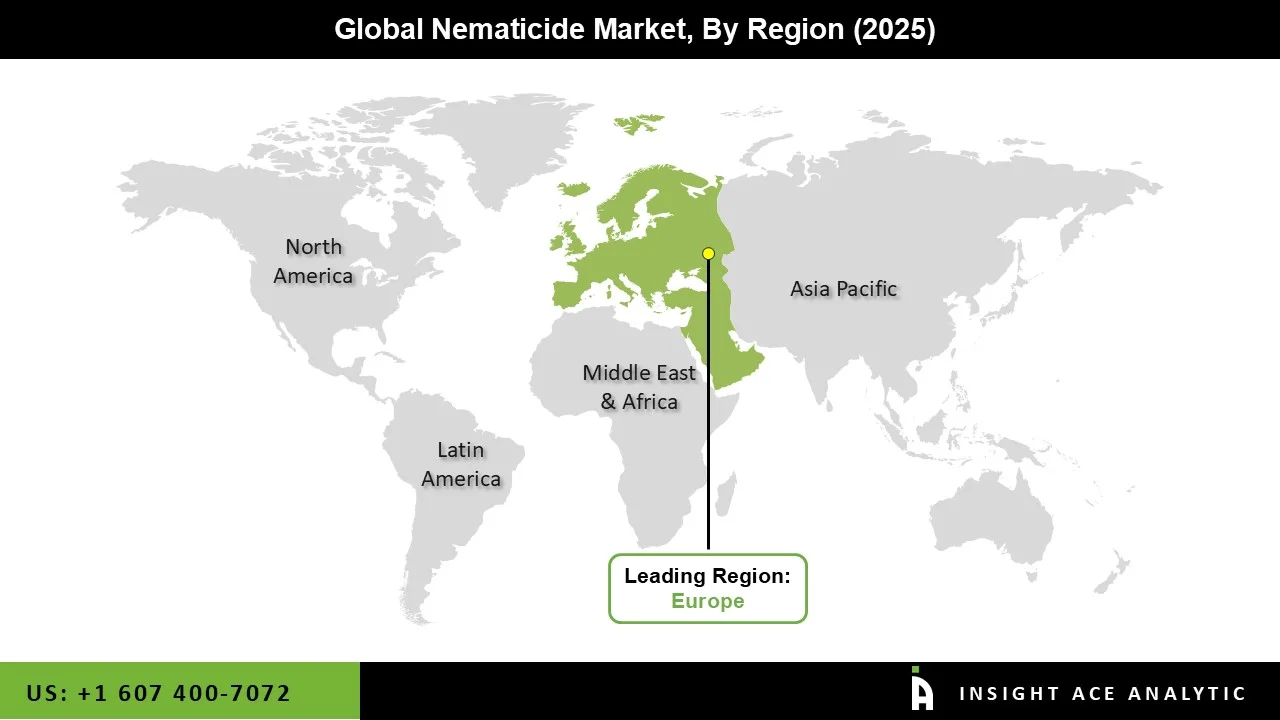
Europe’s stringent environmental and food-safety regulations are further driving innovation toward safer active ingredients, biological nematicides, improved formulations, and targeted application technologies. As growers increasingly focus on soil health, sustainable production, and efficient crop protection, demand for advanced nematode management solutions is expected to remain strong across the region. Established agricultural input manufacturers, advanced farming technologies, and well-developed distribution networks further support market growth. With continued investment in sustainable agriculture and increasing adoption of integrated pest management practices, Europe is expected to maintain its leading position in the Nematicides Market.
Key Developments:
• In January 2024, BASF SE continued strengthening its crop protection portfolio with nematode management solutions, including chemical and biological approaches designed to improve crop protection and support sustainable agricultural productivity.
Nematicide Market Report Scope :
| Report Attribute | Specifications |
| Market size value in 2025 | USD 2.63 Bn |
| Revenue forecast in 2035 | USD 8.16 Bn |
| Growth Rate CAGR | CAGR of 12.2% from 2026 to 2035 |
| Quantitative Units | Representation of revenue in US$ Bn and CAGR from 2026 to 2035 |
| Historic Year | 2021 to 2025 |
| Forecast Year | 2026-2035 |
| Report Coverage | The forecast of revenue, the position of the company, the competitive market structure, growth prospects, and trends |
| Segments Covered | Nematode Type, Mode of Application, Formulation, Crop Type and By Region |
| Regional Scope | North America; Europe; Asia Pacific; Latin America; Middle East & Africa |
| Country Scope | U.S.; Canada; U.K.; Germany; China; India; Japan; Brazil; Mexico; France; Italy; Spain; South Korea; Southeast Asia |
| Competitive Landscape | BASF SE, Bayer AG, UPL, Corteva, Novonesis Group, FMC Corporation, Nufarm, Syngenta, American Vanguard Corporation, Sumitomo Chemicals |
| Customization Scope | Free customisation report with the procurement of the report, Modifications to the regional and segment scope. Geographic competitive landscape. |
| Pricing and Available Payment Methods | Explore pricing alternatives that are customised to your particular study requirements. |
Segmentation Nematicide Market :
Nematicide Market by Type -
- Chemical
- Fumigants
- Methyl bromide
- Metam sodium
- 1-3-dichloropropene
- Other fumigants
- Non-fumigants
- Carbamates
- Organophosphates
- Abamectin (next-gen)
- Sdhi (next-gen)
- Fluopyram
- Cyclobutrifluram
- Other chemicals
- Fluoroalkenyl compounds
- Tioxazafen
- Fluazaindolizine
- Fumigants
- Biological
- Microbials
- Biochemicals
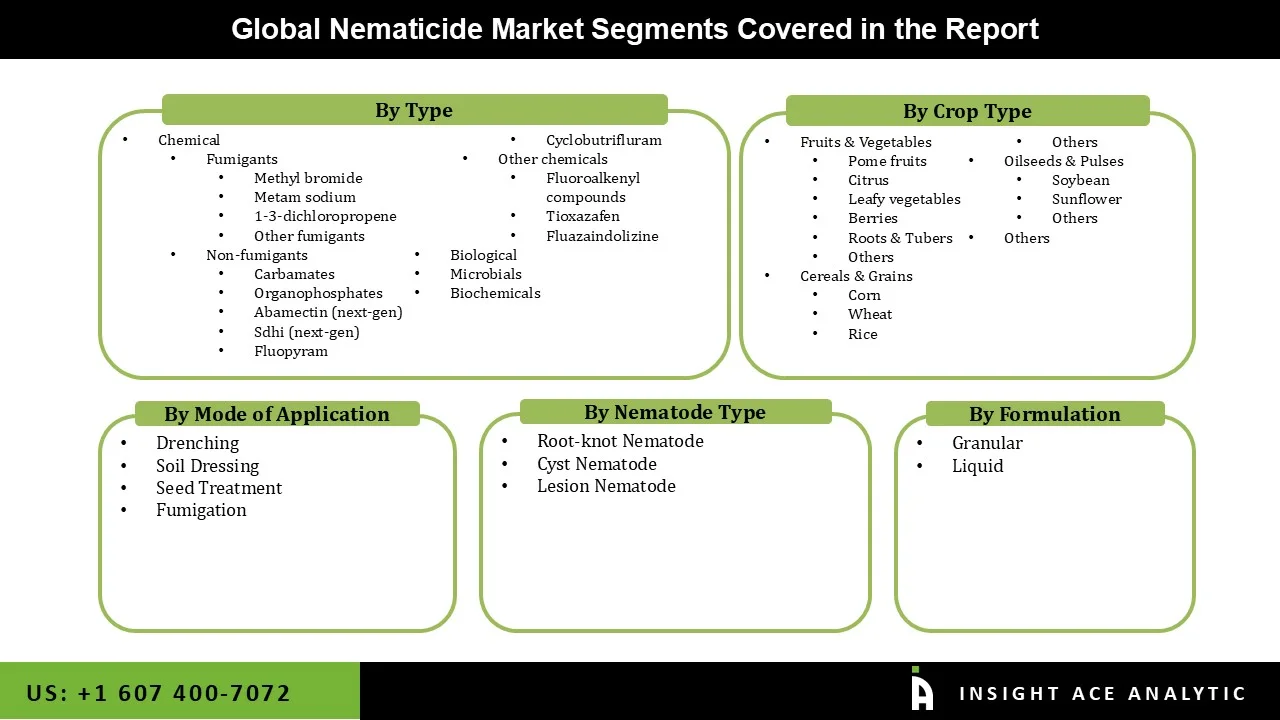
Nematicide Market by Nematode Type -
- Root-knot Nematode
- Cyst Nematode
- Lesion Nematode
Nematicide Market by Mode of Application -
- Drenching
- Soil Dressing
- Seed Treatment
- Fumigation
Nematicide Market by Formulation -
- Granular
- Liquid
Nematicide Market by Crop Type-
- Fruits & Vegetables
- Pome fruits
- Citrus
- Leafy vegetables
- Berries
- Roots & Tubers
- Others
- Cereals & Grains
- Corn
- Wheat
- Rice
- Others
- Oilseeds & Pulses
- Soybean
- Sunflower
- Others
- Others
Nematicide Market by Region-
- North America-
- The US
- Canada
- Europe-
- Germany
- The UK
- France
- Italy
- Spain
- Rest of Europe
- Asia-Pacific-
- China
- Japan
- India
- South Korea
- South East Asia
- Rest of Asia Pacific
- Latin America-
- Brazil
- Argentina
- Mexico
- Rest of Latin America
- Middle East and Africa-
- GCC Countries
- South Africa
- Rest of Middle East and Africa
Research Design and Approach
This study employed a multi-step, mixed-method research approach that integrates:
- Secondary research
- Primary research
- Data triangulation
- Hybrid top-down and bottom-up modelling
- Forecasting and scenario analysis
This approach ensures a balanced and validated understanding of both macro- and micro-level market factors influencing the market.
Secondary Research
Secondary research for this study involved the collection, review, and analysis of publicly available and paid data sources to build the initial fact base, understand historical market behaviour, identify data gaps, and refine the hypotheses for primary research.
Sources Consulted
Secondary data for the market study was gathered from multiple credible sources, including:
- Government databases, regulatory bodies, and public institutions
- International organizations (WHO, OECD, IMF, World Bank, etc.)
- Commercial and paid databases
- Industry associations, trade publications, and technical journals
- Company annual reports, investor presentations, press releases, and SEC filings
- Academic research papers, patents, and scientific literature
- Previous market research publications and syndicated reports
These sources were used to compile historical data, market volumes/prices, industry trends, technological developments, and competitive insights.

Primary Research
Primary research was conducted to validate secondary data, understand real-time market dynamics, capture price points and adoption trends, and verify the assumptions used in the market modelling.
Stakeholders Interviewed
Primary interviews for this study involved:
- Manufacturers and suppliers in the market value chain
- Distributors, channel partners, and integrators
- End-users / customers (e.g., hospitals, labs, enterprises, consumers, etc., depending on the market)
- Industry experts, technology specialists, consultants, and regulatory professionals
- Senior executives (CEOs, CTOs, VPs, Directors) and product managers
Interview Process
Interviews were conducted via:
- Structured and semi-structured questionnaires
- Telephonic and video interactions
- Email correspondences
- Expert consultation sessions
Primary insights were incorporated into demand modelling, pricing analysis, technology evaluation, and market share estimation.
Data Processing, Normalization, and Validation
All collected data were processed and normalized to ensure consistency and comparability across regions and time frames.
The data validation process included:
- Standardization of units (currency conversions, volume units, inflation adjustments)
- Cross-verification of data points across multiple secondary sources
- Normalization of inconsistent datasets
- Identification and resolution of data gaps
- Outlier detection and removal through algorithmic and manual checks
- Plausibility and coherence checks across segments and geographies
This ensured that the dataset used for modelling was clean, robust, and reliable.
Market Size Estimation and Data Triangulation
Bottom-Up Approach
The bottom-up approach involved aggregating segment-level data, such as:
- Company revenues
- Product-level sales
- Installed base/usage volumes
- Adoption and penetration rates
- Pricing analysis
This method was primarily used when detailed micro-level market data were available.

Top-Down Approach
The top-down approach used macro-level indicators:
- Parent market benchmarks
- Global/regional industry trends
- Economic indicators (GDP, demographics, spending patterns)
- Penetration and usage ratios
This approach was used for segments where granular data were limited or inconsistent.
Hybrid Triangulation Approach
To ensure accuracy, a triangulated hybrid model was used. This included:
- Reconciling top-down and bottom-up estimates
- Cross-checking revenues, volumes, and pricing assumptions
- Incorporating expert insights to validate segment splits and adoption rates
This multi-angle validation yielded the final market size.
Forecasting Framework and Scenario Modelling
Market forecasts were developed using a combination of time-series modelling, adoption curve analysis, and driver-based forecasting tools.
Forecasting Methods
- Time-series modelling
- S-curve and diffusion models (for emerging technologies)
- Driver-based forecasting (GDP, disposable income, adoption rates, regulatory changes)
- Price elasticity models
- Market maturity and lifecycle-based projections
Scenario Analysis
Given inherent uncertainties, three scenarios were constructed:
- Base-Case Scenario: Expected trajectory under current conditions
- Optimistic Scenario: High adoption, favourable regulation, strong economic tailwinds
- Conservative Scenario: Slow adoption, regulatory delays, economic constraints
Sensitivity testing was conducted on key variables, including pricing, demand elasticity, and regional adoption.
Request Customization
Add countries, segments, company profiles, or extend forecast — free 10% customization with purchase.
Customize This Report →Enquire Before Buying
Speak with our analyst team about scope, methodology, pricing, or deliverable formats.
Enquire Now →Frequently Asked Questions
Nematicide Market Size is valued at USD 2.63 Bn in 2025 and is predicted to reach USD 8.16 Bn by the year 2035
The Nematicide Market is expected to grow at a 12.2% CAGR during the forecast period for 2026 to 2035
BASF SE, Bayer AG, UPL, Corteva, Novonesis Group, FMC Corporation, Nufarm, Syngenta, American Vanguard Corporation, Sumitomo Chemicals
Nematicide Market is segmented into Nematode Type, Mode of Application, Formulation, Crop Type and Other.
Europe region is leading the Nematicide Market.