MEMS Packaging Substrates Market Size, Trend, Forecast Report 2026 to 2035
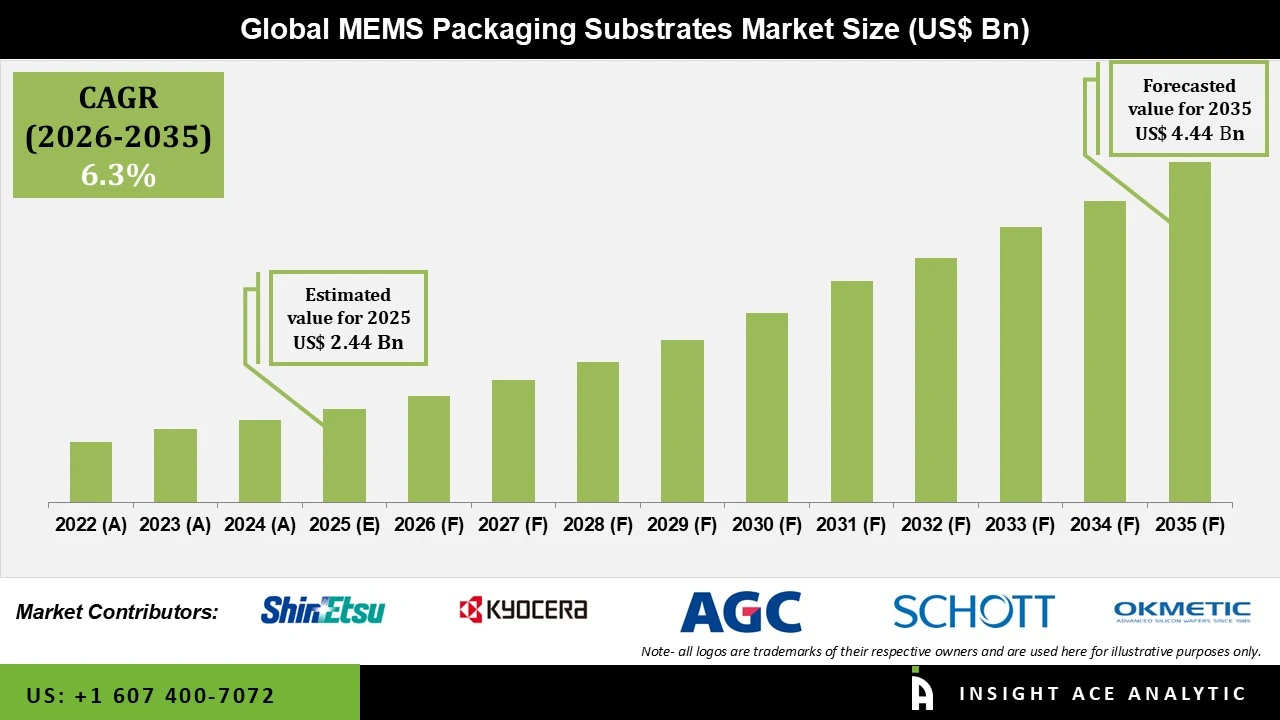
MEMS Packaging Substrates Market Size is valued at USD 2.44 Bn in 2025 and is predicted to reach USD 4.44 Bn by the year 2035 at a 6.3% CAGR during the forecast period for 2026 to 2035.
MEMS Packaging Substrates Market Size, Share & Trends Analysis Distribution By Substrate Type (Glass, Silicon, Organic, and Ceramic), By Application (Actuator (Microfluidic, Optical, Microspeaker, Inkjet Head, Radio Frequency) and Sensor (Optical Sensors, Inertial Sensors, Pressure Sensors, Environmental Sensors, Microphones, Others)), By End-user (Automotive, Consumer Electronics, Defense, Aerospace, Industrial, Healthcare, IT and Telecommunication, Others), and Segment Forecasts, 2026 to 2035
Micro-Electro-Mechanical Systems (MEMS) devices are supported, shielded, and electrically connected during packing using MEMS packaging substrates, which are specialized base materials. MEMS devices, including sensors, accelerometers, gyroscopes, and pressure sensors, include small mechanical and electronic parts that need to be properly placed and sealed in order for them to operate consistently.
The conductive traces, solder bumps, or wire bonds are used to connect the MEMS chip to external circuits. Because of their mechanical stability, thermal conductivity, and suitability for MEMS fabrication procedures, these substrates are usually composed of materials like silicon, ceramic, glass, or organic laminates. The MEMS packaging substrates market is expanding significantly as a result of the growing usage of IoT devices, improvements in automotive technology, and the growing desire for smaller consumer electronics.
The MEMS packaging substrates market is being driven by the increasing demand for MEMS sensors in a variety of industries. These substrates offer crucial support for safeguarding sensitive microelectromechanical components while guaranteeing dependable electrical connectivity and thermal control. To provide features such as motion detection, speech recognition, and environmental monitoring, MEMS devices like accelerometers, gyroscopes, pressure sensors, and microphones are frequently utilized in consumer electronics, including wearables, smartphones, and smart home appliances.
Furthermore, the need for small and effective MEMS packaging solutions is growing due to the quick development of the Internet of Things (IoT), automotive electronics, and medical devices. As manufacturers concentrate on device shrinking, enhanced performance, and energy efficiency, the trend is anticipated to continue.
In addition, the MEMS packaging substrates market is anticipated to be further shaped in the upcoming years by ongoing developments in semiconductor packaging technologies and rising R&D expenditures. However, the MEMS packaging substrates market is confronted with obstacles like complicated production procedures and high initial costs. Significant limitations also come from environmental considerations and regulatory requirements about the materials used in packaging.
Despite these obstacles, the MEMS packaging substrates market has significant growth potential because of continuing technological developments and the growing integration of MEMS in a variety of applications, such as industrial automation and healthcare. It is anticipated that the adoption of cutting-edge materials and the creation of environmentally friendly packaging solutions will open up new business prospects.
Competitive Landscape
Which are the Leading Players in MEMS Packaging Substrates Market?
• Shin-Etsu Chemical Co., Ltd.
• Kyocera Corporation
• AGC INC.
• Sumco Corporation
• Globalwafers
• Coorstek Inc.
• Ceramtec Gmbh
• Planoptik AG
• Waferpro
• Schott
• Okmetic
• Hongruixing (HUBEI) Electronics Co., Ltd.
• Nikko Company
• Koa Corporation
• Shinko Electric Industries Co., Ltd.
• NT Ceramic Co., LTD.
• Soitec
• Icemos Technology LTD.
• Tecnisco, LTD.
• Nippon Carbide Industries Co., Inc.
• Rena Technologies Gmbh
• Silicon Valley Microelectronics, Inc.
• Valley Design Corp.
• Heraeus Electronics
• Ohara Inc.
• Rogers Corporation
Market Dynamics
Driver
Growing Consumer Electronics Demand for MEMS Sensors
The rapidly growing need for MEMS sensors in consumer electronics is one of the main factors propelling the MEMS packaging substrates market. MEMS-based components, such as accelerometers, gyroscopes, pressure sensors, and microphones, are crucial to modern products, including smartphones, tablets, smartwatches, wireless earbuds, and game consoles. The advanced functions, such as voice control, gesture recognition, motion detection, and environmental monitoring, are made possible by these sensors. Furthermore, the demand for small and dependable packaging substrates has increased dramatically as manufacturers continue to concentrate on device downsizing and improved functionality.
MEMS packaging substrates ensure that delicate microelectromechanical components operate at their best by offering mechanical protection, electrical connectivity, and effective heat dissipation. Additionally, the demand for sophisticated MEMS packaging substrate solutions is being driven globally by the ongoing expansion of wearable technology and smart home goods, which is further increasing the deployment of MEMS sensors.
Restrain/Challenge
Complexity and High Expense of Advanced MEMS Packaging
The high cost and complexity of sophisticated MEMS packaging technology are major barriers to the MEMS packaging substrates market. MEMS devices need extremely specific packaging options that preserve electrical performance and dependability while safeguarding fragile mechanical structures. The complexity of manufacturing processes is increased when several functions, including sealing, connectivity, and thermal management, are integrated into a small package. Furthermore, complex materials, precise manufacturing, and strict quality control procedures are frequently used in modern packaging processes, which greatly increase production costs. The widespread use of MEMS packaging substrates in cost-sensitive applications may be constrained by these high costs, which might be difficult for small and medium-sized businesses. Additionally, sustaining performance and dependability during mass production presents new technical difficulties that could impede the MEMS packaging substrates market expansion in some industries.
Glass Segment is Expected to Drive the MEMS Packaging Substrates Market
The glass segment held the largest share in the MEMS packaging substrates market in 2025. They are ideal for next-generation MEMS devices because of their unique set of characteristics, which include exceptional electrical insulation, optical clarity, chemical resistance, and thermal stability. Glass substrates are becoming more popular for applications requiring optical signal transmission, hermetic sealing, and biocompatibility as optical, environmental, and biological sensor integration advances. They enable through-glass vias (TGVs), which are essential for small, high-performance MEMS used in IoT, automotive, and medical systems. TGVs allow for high-density interconnections, enhanced signal integrity, and less parasitic effects. Additionally, improvements in anodic bonding and laser drilling are lowering manufacturing costs and increasing scalability in glass processing methods.
Consumer Electronics Segment is Growing at the Highest Rate in the MEMS Packaging Substrates Market
In 2025, the consumer electronics segment dominated the MEMS packaging substrates market as a result of the growing incorporation of MEMS sensors and actuators in gadgets, including wearables, tablets, smartphones, and smart home goods. MEMS components, such as accelerometers, gyroscopes, pressure sensors, and MEMS microphones, are crucial to modern consumer electronics for tasks including motion detection, orientation sensing, audio recording, and environmental monitoring. Additionally, the advanced packaging substrates that can enable compact and high-performance MEMS devices are becoming more and more in demand as device manufacturers continue to place a high priority on downsizing, multifunctionality, and low power consumption. These substrates offer vital functions such as electrical connectivity, temperature control, and mechanical stability, allowing dependable operation in ever-tinier electronic devices.
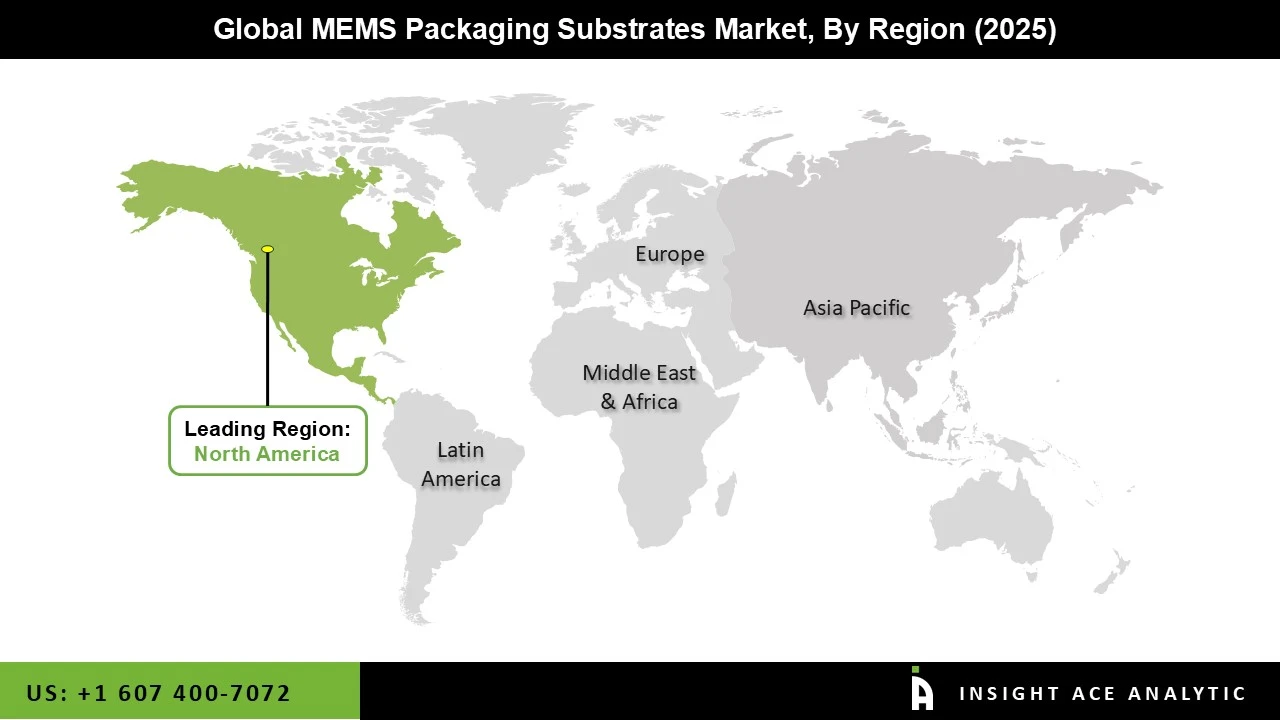
Why North America Led the MEMS Packaging Substrates Market?
The MEMS packaging substrates market was dominated by North America region in 2025 fueled by the existence of significant MEMS device makers, technical developments, and the robust demand for MEMS devices in industries including consumer electronics and healthcare. Due to its sophisticated R&D capabilities, well-established semiconductor companies, and significant penetration of linked devices, the United States leads the region. The need for high-reliability MEMS packaging substrate solutions is further supported by automobile electrification and regulatory requirements. Furthermore, the sensor integration is enhanced by the expansion of IoT ecosystems in the consumer and industrial sectors, which is aided by extensive 5G deployments and smart city initiatives. Moreover, the adoption of innovative packaging in medical equipment is driven by North America's increased emphasis on sustainability and healthcare innovation. Strong industrial automation is another factor in the MEMS packaging substrates market's consistent expansion throughout this region.
MEMS Packaging Substrates Market Report Scope:
| Report Attribute | Specifications |
| Market size value in 2025 | USD 2.44 Bn |
| Revenue forecast in 2035 | USD 4.44 Bn |
| Growth Rate CAGR | CAGR of 6.3% from 2026 to 2035 |
| Quantitative Units | Representation of revenue in US$ Bn and CAGR from 2026 to 2035 |
| Historic Year | 2022 to 2025 |
| Forecast Year | 2026-2035 |
| Report Coverage | The forecast of revenue, the position of the company, the competitive market structure, growth prospects, and trends |
| Segments Covered | Substrate Type, Application, End-user, and By Region |
| Regional Scope | North America; Europe; Asia Pacific; Latin America; Middle East & Africa |
| Country Scope | U.S.; Canada; U.K.; Germany; China; India; Japan; Brazil; Mexico; The UK; France; Italy; Spain; China; Japan; India; South Korea; Southeast Asia; South Korea; Southeast Asia |
| Competitive Landscape | Shin-Etsu Chemical Co., Ltd., Kyocera Corporation, AGC INC., Sumco Corporation, Globalwafers, Coorstek Inc., Ceramtec Gmbh, Planoptik AG, Waferpro, Schott, Okmetic, Hongruixing (HUBEI) Electronics Co., Ltd., Nikko Company, Koa Corporation, Shinko Electric Industries Co., Ltd., NT Ceramic Co., LTD., Soitec, Icemos Technology LTD., Tecnisco, LTD., Nippon Carbide Industries Co., Inc., Rena Technologies Gmbh, Silicon Valley Microelectronics, Inc., Valley Design Corp., Heraeus Electronics, Ohara Inc., and Rogers Corporation |
| Customization Scope | Free customization report with the procurement of the report, Modifications to the regional and segment scope. Geographic competitive landscape. |
| Pricing and Available Payment Methods | Explore pricing alternatives that are customized to your particular study requirements. |
MEMS Packaging Substrates Market Segmentation:
MEMS Packaging Substrates Market by Substrate Type-
• Glass
• Silicon
• Organic
• Ceramic
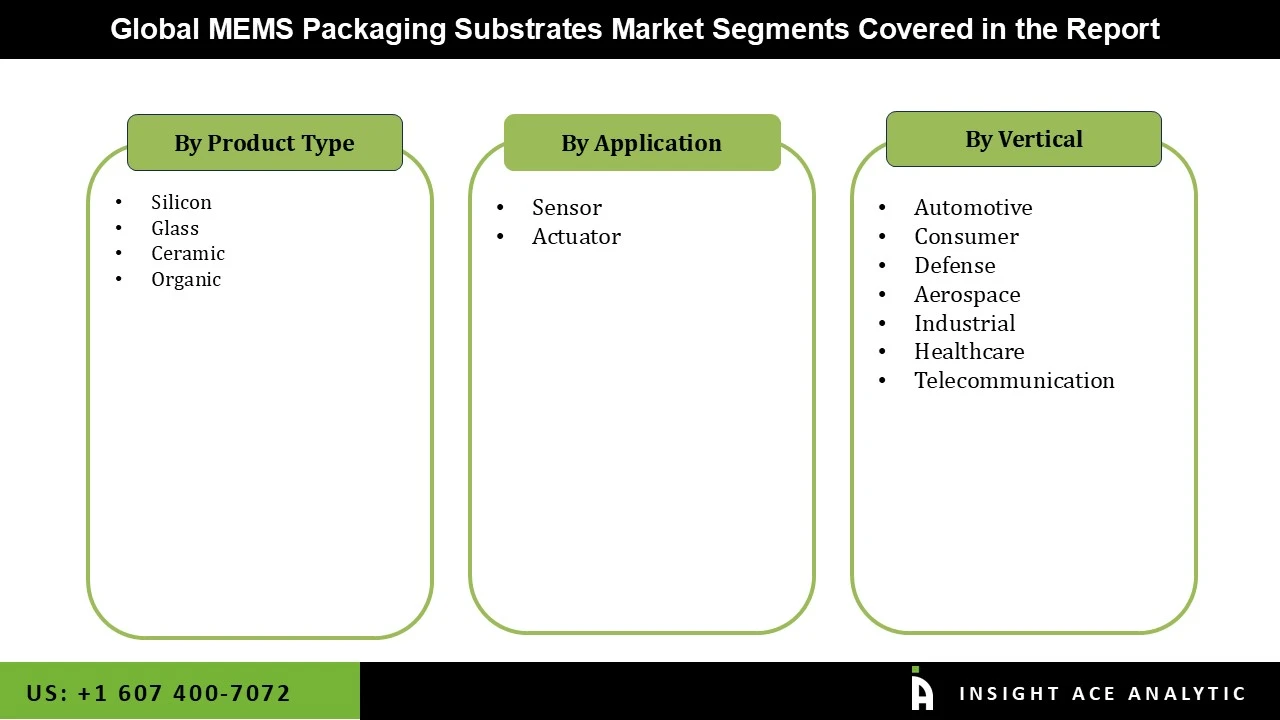
MEMS Packaging Substrates Market by Application-
• Actuator
o Microfluidic
o Optical
o Microspeaker
o Inkjet Head
o Radio Frequency
• Sensor
o Optical Sensors
o Inertial Sensors
o Pressure Sensors
o Environmental Sensors
o Microphones
o Others
MEMS Packaging Substrates Market by End-user-
• Automotive
• Consumer Electronics
• Defense
• Aerospace
• Industrial
• Healthcare
• IT and Telecommunication
• Others
MEMS Packaging Substrates Market- By Region
North America-
• The US
• Canada
Europe-
• Germany
• The UK
• France
• Italy
• Spain
• Rest of Europe
Asia-Pacific-
• China
• Japan
• India
• South Korea
• South East Asia
• Rest of Asia Pacific
Latin America-
• Brazil
• Argentina
• Mexico
• Rest of Latin America
Middle East & Africa-
• GCC Countries
• South Africa
• Rest of Middle East and Africa
Research Design and Approach
This study employed a multi-step, mixed-method research approach that integrates:
- Secondary research
- Primary research
- Data triangulation
- Hybrid top-down and bottom-up modelling
- Forecasting and scenario analysis
This approach ensures a balanced and validated understanding of both macro- and micro-level market factors influencing the market.
Secondary Research
Secondary research for this study involved the collection, review, and analysis of publicly available and paid data sources to build the initial fact base, understand historical market behaviour, identify data gaps, and refine the hypotheses for primary research.
Sources Consulted
Secondary data for the market study was gathered from multiple credible sources, including:
- Government databases, regulatory bodies, and public institutions
- International organizations (WHO, OECD, IMF, World Bank, etc.)
- Commercial and paid databases
- Industry associations, trade publications, and technical journals
- Company annual reports, investor presentations, press releases, and SEC filings
- Academic research papers, patents, and scientific literature
- Previous market research publications and syndicated reports
These sources were used to compile historical data, market volumes/prices, industry trends, technological developments, and competitive insights.

Primary Research
Primary research was conducted to validate secondary data, understand real-time market dynamics, capture price points and adoption trends, and verify the assumptions used in the market modelling.
Stakeholders Interviewed
Primary interviews for this study involved:
- Manufacturers and suppliers in the market value chain
- Distributors, channel partners, and integrators
- End-users / customers (e.g., hospitals, labs, enterprises, consumers, etc., depending on the market)
- Industry experts, technology specialists, consultants, and regulatory professionals
- Senior executives (CEOs, CTOs, VPs, Directors) and product managers
Interview Process
Interviews were conducted via:
- Structured and semi-structured questionnaires
- Telephonic and video interactions
- Email correspondences
- Expert consultation sessions
Primary insights were incorporated into demand modelling, pricing analysis, technology evaluation, and market share estimation.
Data Processing, Normalization, and Validation
All collected data were processed and normalized to ensure consistency and comparability across regions and time frames.
The data validation process included:
- Standardization of units (currency conversions, volume units, inflation adjustments)
- Cross-verification of data points across multiple secondary sources
- Normalization of inconsistent datasets
- Identification and resolution of data gaps
- Outlier detection and removal through algorithmic and manual checks
- Plausibility and coherence checks across segments and geographies
This ensured that the dataset used for modelling was clean, robust, and reliable.
Market Size Estimation and Data Triangulation
Bottom-Up Approach
The bottom-up approach involved aggregating segment-level data, such as:
- Company revenues
- Product-level sales
- Installed base/usage volumes
- Adoption and penetration rates
- Pricing analysis
This method was primarily used when detailed micro-level market data were available.

Top-Down Approach
The top-down approach used macro-level indicators:
- Parent market benchmarks
- Global/regional industry trends
- Economic indicators (GDP, demographics, spending patterns)
- Penetration and usage ratios
This approach was used for segments where granular data were limited or inconsistent.
Hybrid Triangulation Approach
To ensure accuracy, a triangulated hybrid model was used. This included:
- Reconciling top-down and bottom-up estimates
- Cross-checking revenues, volumes, and pricing assumptions
- Incorporating expert insights to validate segment splits and adoption rates
This multi-angle validation yielded the final market size.
Forecasting Framework and Scenario Modelling
Market forecasts were developed using a combination of time-series modelling, adoption curve analysis, and driver-based forecasting tools.
Forecasting Methods
- Time-series modelling
- S-curve and diffusion models (for emerging technologies)
- Driver-based forecasting (GDP, disposable income, adoption rates, regulatory changes)
- Price elasticity models
- Market maturity and lifecycle-based projections
Scenario Analysis
Given inherent uncertainties, three scenarios were constructed:
- Base-Case Scenario: Expected trajectory under current conditions
- Optimistic Scenario: High adoption, favourable regulation, strong economic tailwinds
- Conservative Scenario: Slow adoption, regulatory delays, economic constraints
Sensitivity testing was conducted on key variables, including pricing, demand elasticity, and regional adoption.
Request Customization
Add countries, segments, company profiles, or extend forecast — free 10% customization with purchase.
Customize This Report →Enquire Before Buying
Speak with our analyst team about scope, methodology, pricing, or deliverable formats.
Enquire Now →Frequently Asked Questions
MEMS Packaging Substrates Market Size is valued at USD 2.44 Bn in 2025 and is predicted to reach USD 4.44 Bn by the year 2035
MEMS Packaging Substrates Market is expected to grow at a 6.3% CAGR during the forecast period for 2026 to 2035.
Shin-Etsu Chemical Co., Ltd., Kyocera Corporation, AGC INC., Sumco Corporation, Globalwafers, Coorstek Inc., Ceramtec Gmbh, Planoptik AG, Waferpro, Schott, Okmetic, Hongruixing (HUBEI) Electronics Co., Ltd., Nikko Company, Koa Corporation, Shinko Electric Industries Co., Ltd., NT Ceramic Co., LTD., Soitec, Icemos Technology LTD., Tecnisco, LTD., Nippon Carbide Industries Co., Inc., Rena Technologies Gmbh, Silicon Valley Microelectronics, Inc., Valley Design Corp., Heraeus Electronics, Ohara Inc., and Rogers Corporation
MEMS Packaging Substrates Market is segmented into Substrate Type, Application, End-user, and By Region
North America region is leading the MEMS Packaging Substrates Market.