Lower Limb Prosthetic Market Size, Share, Forecast Report 2026 to 2035
What is Lower Limb Prosthetic Market Size?
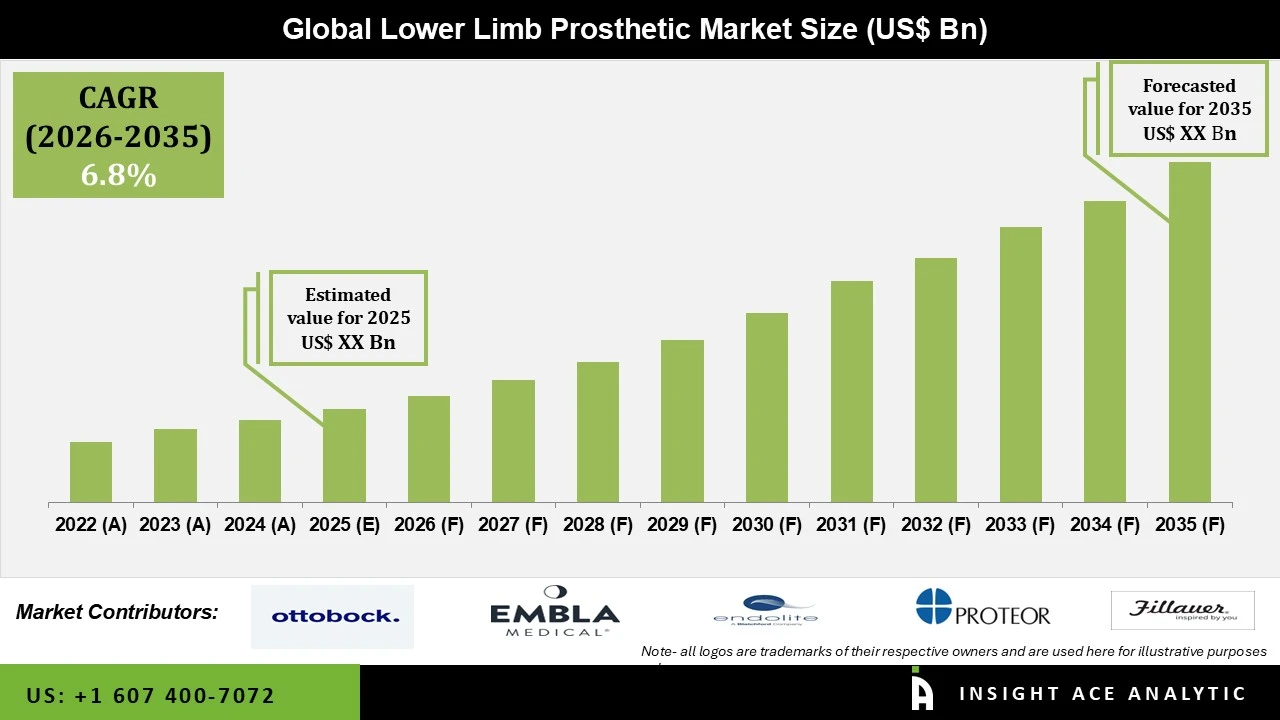
Lower Limb Prosthetic Market is estimated to grow with a 6.8% CAGR during the forecast period for 2026 to 2035.
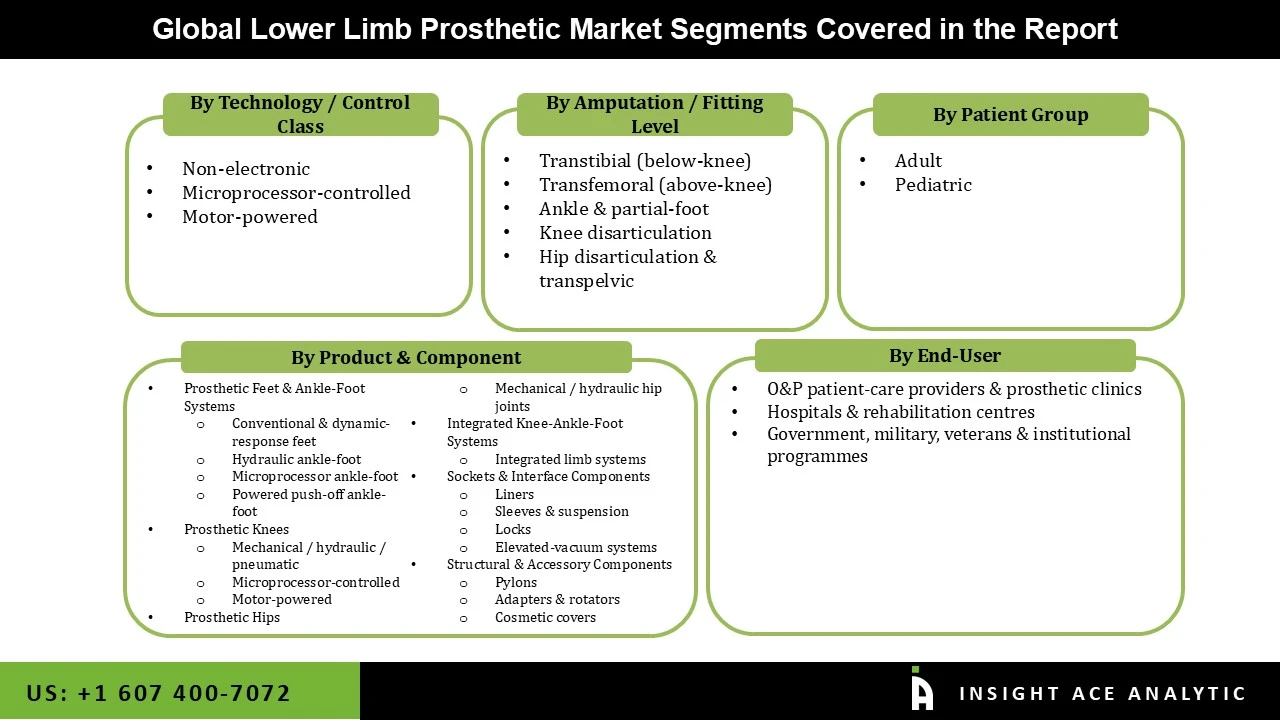
Lower Limb Prosthetic Market Size, Share & Trends Analysis Distribution by Product & Component (Prosthetic Feet & Ankle-Foot Systems, Conventional & Dynamic-Response Feet, Hydraulic Ankle-Foot, Microprocessor Ankle-Foot, Powered Push-Off Ankle-Foot, Prosthetic Knees, Mechanical / Hydraulic / Pneumatic, Microprocessor-Controlled, Motor-Powered, Prosthetic Hips, Mechanical / Hydraulic Hip Joints, Integrated Knee-Ankle-Foot Systems, Integrated Limb Systems, Sockets & Interface Components, Liners, Sleeves & Suspension, Locks, Elevated-Vacuum Systems, Structural & Accessory Components, Pylons, Adapters & Rotators, Cosmetic Covers), by Technology / Control Class, by Patient Group, by End User and Segment Forecasts, 2026 to 2035
Lower-limb prosthetics encompass artificial limbs, prosthetic components, and associated technologies designed to replace lost lower-extremity function and support mobility following limb loss or amputation. These solutions are designed to restore or improve stability, balance, gait, and functional movement while supporting users in performing everyday activities with greater independence. Lower-limb prosthetic systems range from conventional mechanical devices to advanced technology-enabled solutions incorporating microprocessors, hydraulic mechanisms, powered actuation, electronic sensors, and adaptive control systems.
The Lower-Limb Prosthetics Market includes a broad range of prosthetic devices and components, including prosthetic feet, ankle-foot systems, prosthetic knees, hip systems, and complete lower-limb prostheses. Advanced systems may incorporate microprocessor-controlled knees and feet, powered or motorized components, hydraulic and pneumatic mechanisms, sensor-based control, and other technologies designed to adapt prosthetic performance to different walking conditions and user requirements. The market also includes essential components and interface products such as prosthetic sockets, liners, suspension systems, pylons, adapters, connectors, and interface materials, which contribute to fit, comfort, alignment, durability, and overall device performance.
Lower-limb prosthetic solutions are designed to accommodate different levels and types of amputation, including transtibial, transfemoral, knee disarticulation, hip disarticulation, and partial-foot amputations. Device selection and configuration depend on factors such as the individual's residual limb characteristics, functional capability, activity level, mobility requirements, clinical condition, and rehabilitation objectives.
Increasingly, prosthetic fitting incorporates digital assessment, computer-aided design and manufacturing, 3D scanning, additive manufacturing, and personalized socket fabrication to improve fit and functional outcomes.
The market extends beyond the manufacture and sale of prosthetic devices to include clinical assessment, prosthetic prescription, customization, fitting and alignment, rehabilitation support, maintenance, repair, and replacement services. Its ecosystem comprises prosthetic manufacturers, component suppliers, material and technology developers, prosthetic and orthotic clinics, rehabilitation centres, hospitals, and specialized healthcare providers serving prosthetists and individual users. Both conventional mechanical systems and advanced electronically controlled and sensor-enabled technologies are utilized according to patient needs and the intended level of mobility.
Advancements in lightweight materials, biomechanics, sensor technology, microprocessor control, powered actuation, digital fabrication, and personalized prosthetic design are contributing to the evolution of lower-limb prosthetic systems. These developments are enabling greater adaptability, improved user control, enhanced comfort, and more natural movement while expanding the range of functional capabilities available to individuals with lower-limb loss.
Competitive Landscape
Which are the Leading Players in the Lower Limb Prosthetic Market ?
• Ottobock SE & Co. KGaA
• Embla Medical hf. (Össur, College Park, Streifeneder)
• Blatchford Group (Endolite)
• PROTEOR
• Fillauer LLC (Hanger, Inc.)
• WillowWood Global LLC
• Nabtesco Corporation
• Reboocon Bionics
• Trulife
• Uniprox (Bauerfeind Group)
• Ortho Europe (AM Healthcare Group)
• Teh Lin Prosthetic & Orthopaedic Inc.
• BionicM Inc.
• Levitate
• Roadrunnerfoot Engineering
• Imasen Engineering Corporation
• Kawamura Gishi Co., Ltd.
• Xiborg Inc.
• ST&G (USA) Corporation
• Coyote
• ALPS South LLC
• Silipos Holding LLC
• Mecuris
• Radii Devices
• Regal Prosthesis Ltd.
• ALIMCO
• Jaipur Foot (BMVSS)
• Integrum AB
• Hanger Clinic
• ForMotion
• Ottobock Care
• Blatchford Clinical Services
• SPS – Southern Prosthetic Supply
• Steeper Group
Market Dynamics
Driver
Rising Prevalence of Diabetes, Peripheral Artery Disease, and Limb Loss
More people are developing diabetes, peripheral artery disease, severe injuries, and other conditions that can lead to lower-limb amputations, which is increasing the demand for prosthetic solutions. As more people need limb replacements and mobility support, the need for reliable, comfortable prosthetic devices is growing. At the same time, new technologies like microprocessor-controlled knees, dynamic-response feet, and powered ankle-foot systems are making it easier for users to move and feel stable. These improvements are leading more hospitals, rehabilitation centres, and prosthetic clinics to adopt advanced lower-limb prosthetics.
Restrain/Challenge
High Cost of Advanced Prosthetic Devices and Limited Accessibility
The high cost of advanced lower-limb prosthetic devices is a major challenge, especially for patients in developing countries and those sensitive to price. Devices like microprocessor-controlled knees and powered prosthetic systems need advanced sensors, electronics, special materials, and custom fitting, which all add to the cost. Patients also need regular adjustments, maintenance, replacement parts, and rehabilitation, which increases long-term expenses. Limited insurance, poor reimbursement policies, and not enough trained prosthetists make it even harder for people in low- and middle-income countries to access advanced prosthetic solutions.
Prosthetic Feet & Ankle-Foot Systems Segment is Expected to Drive the Lower Limb Prosthetic Market
Prosthetic feet and ankle-foot systems are expected to account for a significant share of the lower limb prosthetic market because they help with balance, stability, weight distribution, and natural walking. These parts are used for many types of amputations, especially for transtibial and transfemoral amputees. Conventional and dynamic-response feet remain important for patients who want practical, affordable mobility, while hydraulic, microprocessor-controlled, and powered push-off systems are becoming more popular for improving walking and adapting to different surfaces. Ongoing improvements in lightweight materials, energy-return features, and ankle movement are also helping develop and spread advanced prosthetic foot systems.
Microprocessor-Controlled Segment is Growing at the Highest Rate in the Lower Limb Prosthetic Market
The microprocessor-controlled segment is expected to grow at the highest rate, supported by increasing demand for prosthetic solutions that provide improved stability, adaptability, and more natural movement. These systems use sensors and built-in processors to track movement, walking speed, terrain, and user activity, so the prosthetic can adjust as needed. Microprocessor-controlled knees and ankle-foot systems help users walk more efficiently, lower their risk of falling, and handle different surfaces and daily tasks. Continued technological advances, greater user awareness, and better access to advanced rehabilitation services are also helping more people choose these systems.
Why North America Led the Lower Limb Prosthetic Market?
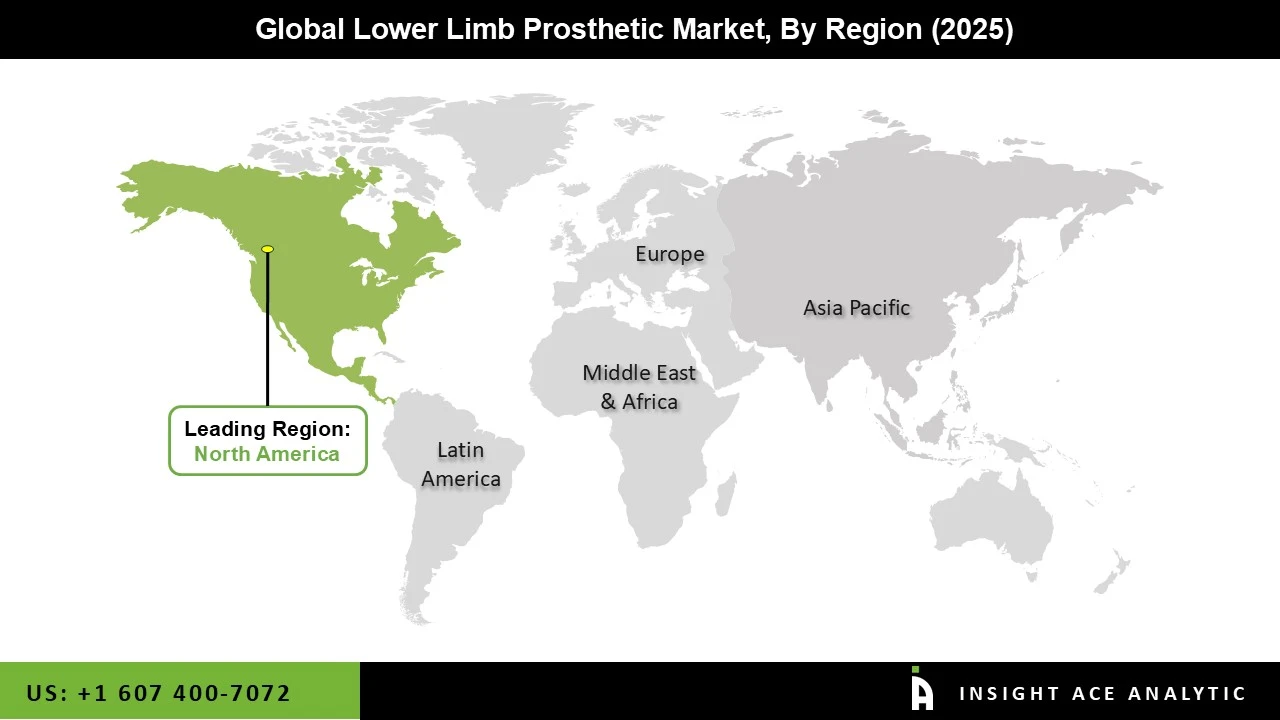
North America is expected to lead the lower limb prosthetic market because it has a strong prosthetics and orthotics industry, advanced healthcare, and high use of new mobility technologies. The region is home to major companies like Ottobock, Hanger Clinic, Fillauer, WillowWood, and Blatchford, which help with product innovation, distribution, fitting, and patient care. Access to prosthetic solutions is also supported by specialized clinics, rehabilitation centers, trained prosthetists, and established insurance and reimbursement systems. More people are seeking advanced microprocessor-controlled and powered prosthetics to improve mobility and independence, which is further strengthening the regional market.
Key Development
• In May 2026, Ottobock SE & Co. KGaA introduced several prosthetic and orthotic innovations at OTWorld 2026, including the Genium X4 microprocessor-controlled prosthetic knee, designed to improve walking performance, stability, and movement adaptability. The company also presented new digital fitting solutions and advancements in customized prosthetic care, strengthening its focus on technology-driven mobility solutions.
• In May 2026, Embla Medical hf. (Össur, College Park, Streifeneder) introduced new products across its prosthetics portfolio, including updated Iceross Dermo Cushion and Iceross Synergy Cushion liners from Össur, alongside the Kinegen. flow hydraulic prosthetic knee from Streifeneder. These developments focus on improving comfort, stability, durability, and the overall fitting experience for prosthetic users.
Lower Limb Prosthetic Market Report Scope:
| Report Attribute | Specifications |
| Growth Rate CAGR | CAGR of 6.8% from 2026 to 2035 |
| Quantitative Units | Representation of revenue in US$ Bn and CAGR from 2026 to 2035 |
| Historic Year | 2022 to 2025 |
| Forecast Year | 2026-2035 |
| Report Coverage | The forecast of revenue, the position of the company, the competitive market structure, growth prospects, and trends |
| Segments Covered | Product & Component, Technology / Control Class, Amputation / Fitting Level, Patient Group, End User and By Region |
| Regional Scope | North America; Europe; Asia Pacific; Latin America; Middle East & Africa |
| Country Scope | U.S.; Canada; U.K.; Germany; China; India; Japan; Brazil; Mexico; France; Italy; Spain; South Korea; Southeast Asia |
| Competitive Landscape | Ottobock SE & Co. KGaA, Embla Medical hf. (Össur, College Park, Streifeneder), Blatchford Group (Endolite), PROTEOR, Fillauer LLC (Hanger, Inc.), WillowWood Global LLC, Nabtesco Corporation, Reboocon Bionics, Trulife, Uniprox (Bauerfeind Group), Ortho Europe (AM Healthcare Group), Teh Lin Prosthetic & Orthopaedic Inc., BionicM Inc., Levitate, Roadrunnerfoot Engineering, Imasen Engineering Corporation, Kawamura Gishi Co., Ltd., Xiborg Inc., ST&G (USA) Corporation, Coyote, ALPS South LLC, Silipos Holding LLC, Mecuris, Radii Devices, Regal Prosthesis Ltd., ALIMCO, Jaipur Foot (BMVSS), Integrum AB, Hanger Clinic, ForMotion, Ottobock Care, Blatchford Clinical Services, SPS – Southern Prosthetic Supply, Steeper Group. |
| Customization Scope | Free customization report with the procurement of the report, Modifications to the regional and segment scope. Geographic competitive landscape. |
| Pricing and Available Payment Methods | Explore pricing alternatives that are customized to your particular study requirements. |
Market Segmentation:
Lower Limb Prosthetic Market by Product & Component -
• Prosthetic Feet & Ankle-Foot Systems
o Conventional & Dynamic-Response Feet
o Hydraulic Ankle-Foot
o Microprocessor Ankle-Foot
o Powered Push-Off Ankle-Foot
• Prosthetic Knees
o Mechanical / Hydraulic / Pneumatic
o Microprocessor-Controlled
o Motor-Powered
• Prosthetic Hips
o Mechanical / Hydraulic Hip Joints
• Integrated Knee-Ankle-Foot Systems
o Integrated Limb Systems
• Sockets & Interface Components
o Liners
o Sleeves & Suspension
o Locks
o Elevated-Vacuum Systems
• Structural & Accessory Components
o Pylons
o Adapters & Rotators
o Cosmetic Covers
Lower Limb Prosthetic Market by Technology / Control Class -
• Non-Electronic
• Microprocessor-Controlled
• Motor-Powered
Lower Limb Prosthetic Market by Amputation / Fitting Level -
• Transtibial
• Transfemoral
• Ankle & Partial-Foot
• Knee Disarticulation
• Hip Disarticulation & Transpelvic
Lower Limb Prosthetic Market by Patient Group-
• Adult
• Pediatric
Lower Limb Prosthetic Market by End User -
• O&P Patient-Care Providers & Prosthetic Clinics
• Hospitals & Rehabilitation Centres
• Government, Military, Veterans & Institutional Programmes
Lower Limb Prosthetic Market by Region-
North America-
• The US
• Canada
• Mexico
Europe-
• Germany
• The UK
• France
• Italy
• Spain
• Rest of Europe
Asia-Pacific-
• China
• Japan
• India
• South Korea
• South East Asia
• Rest of Asia Pacific
Latin America-
• Brazil
• Argentina
• Rest of Latin America
Middle East & Africa-
• GCC Countries
• South Africa
• Rest of Middle East and Africa
Research Design and Approach
This study employed a multi-step, mixed-method research approach that integrates:
- Secondary research
- Primary research
- Data triangulation
- Hybrid top-down and bottom-up modelling
- Forecasting and scenario analysis
This approach ensures a balanced and validated understanding of both macro- and micro-level market factors influencing the market.
Secondary Research
Secondary research for this study involved the collection, review, and analysis of publicly available and paid data sources to build the initial fact base, understand historical market behaviour, identify data gaps, and refine the hypotheses for primary research.
Sources Consulted
Secondary data for the market study was gathered from multiple credible sources, including:
- Government databases, regulatory bodies, and public institutions
- International organizations (WHO, OECD, IMF, World Bank, etc.)
- Commercial and paid databases
- Industry associations, trade publications, and technical journals
- Company annual reports, investor presentations, press releases, and SEC filings
- Academic research papers, patents, and scientific literature
- Previous market research publications and syndicated reports
These sources were used to compile historical data, market volumes/prices, industry trends, technological developments, and competitive insights.

Primary Research
Primary research was conducted to validate secondary data, understand real-time market dynamics, capture price points and adoption trends, and verify the assumptions used in the market modelling.
Stakeholders Interviewed
Primary interviews for this study involved:
- Manufacturers and suppliers in the market value chain
- Distributors, channel partners, and integrators
- End-users / customers (e.g., hospitals, labs, enterprises, consumers, etc., depending on the market)
- Industry experts, technology specialists, consultants, and regulatory professionals
- Senior executives (CEOs, CTOs, VPs, Directors) and product managers
Interview Process
Interviews were conducted via:
- Structured and semi-structured questionnaires
- Telephonic and video interactions
- Email correspondences
- Expert consultation sessions
Primary insights were incorporated into demand modelling, pricing analysis, technology evaluation, and market share estimation.
Data Processing, Normalization, and Validation
All collected data were processed and normalized to ensure consistency and comparability across regions and time frames.
The data validation process included:
- Standardization of units (currency conversions, volume units, inflation adjustments)
- Cross-verification of data points across multiple secondary sources
- Normalization of inconsistent datasets
- Identification and resolution of data gaps
- Outlier detection and removal through algorithmic and manual checks
- Plausibility and coherence checks across segments and geographies
This ensured that the dataset used for modelling was clean, robust, and reliable.
Market Size Estimation and Data Triangulation
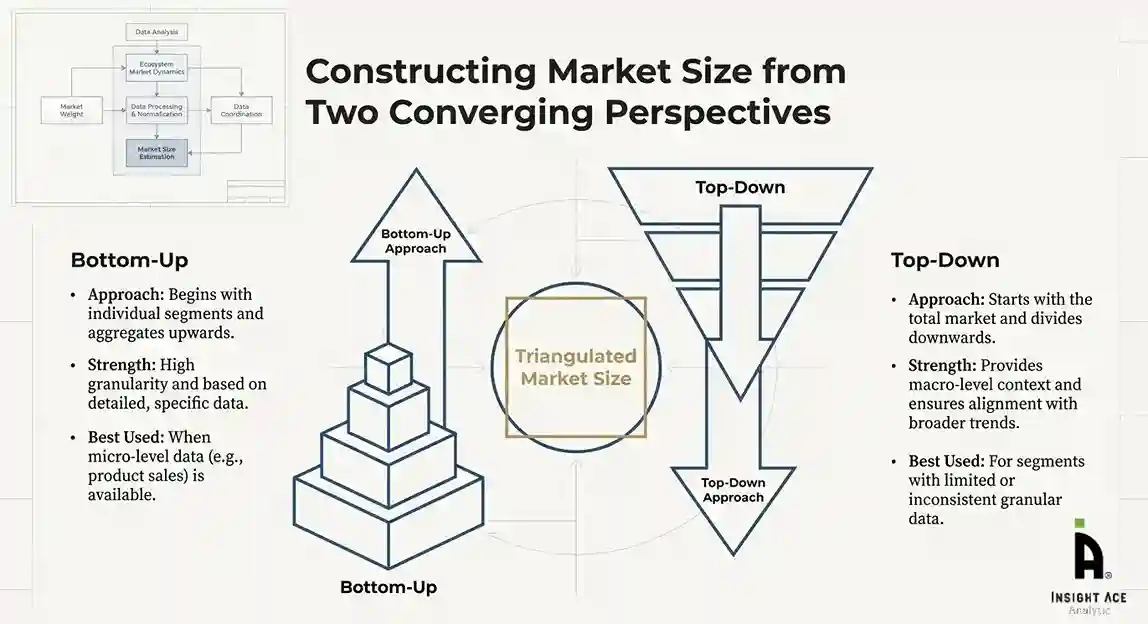
Bottom-Up Approach
The bottom-up approach involved aggregating segment-level data, such as:
- Company revenues
- Product-level sales
- Installed base/usage volumes
- Adoption and penetration rates
- Pricing analysis
This method was primarily used when detailed micro-level market data were available.
Top-Down Approach
The top-down approach used macro-level indicators:
- Parent market benchmarks
- Global/regional industry trends
- Economic indicators (GDP, demographics, spending patterns)
- Penetration and usage ratios
This approach was used for segments where granular data were limited or inconsistent.
Hybrid Triangulation Approach
To ensure accuracy, a triangulated hybrid model was used. This included:
- Reconciling top-down and bottom-up estimates
- Cross-checking revenues, volumes, and pricing assumptions
- Incorporating expert insights to validate segment splits and adoption rates
This multi-angle validation yielded the final market size.
Forecasting Framework and Scenario Modelling
Market forecasts were developed using a combination of time-series modelling, adoption curve analysis, and driver-based forecasting tools.
Forecasting Methods
- Time-series modelling
- S-curve and diffusion models (for emerging technologies)
- Driver-based forecasting (GDP, disposable income, adoption rates, regulatory changes)
- Price elasticity models
- Market maturity and lifecycle-based projections
Scenario Analysis
Given inherent uncertainties, three scenarios were constructed:
- Base-Case Scenario: Expected trajectory under current conditions
- Optimistic Scenario: High adoption, favourable regulation, strong economic tailwinds
- Conservative Scenario: Slow adoption, regulatory delays, economic constraints
Sensitivity testing was conducted on key variables, including pricing, demand elasticity, and regional adoption.
Request Customization
Add countries, segments, company profiles, or extend forecast — free 10% customization with purchase.
Customize This Report →Enquire Before Buying
Speak with our analyst team about scope, methodology, pricing, or deliverable formats.
Enquire Now →Frequently Asked Questions
Lower Limb Prosthetic Market is estimated to grow with a 6.8% CAGR during the forecast period for 2026 to 2035.
Ottobock SE & Co. KGaA, Embla Medical hf. (Össur, College Park, Streifeneder), Blatchford Group (Endolite), PROTEOR, Fillauer LLC (Hanger, Inc.), WillowWood Global LLC, Nabtesco Corporation, Reboocon Bionics, Trulife, Uniprox (Bauerfeind Group), Ortho Europe (AM Healthcare Group), Teh Lin Prosthetic & Orthopaedic Inc., BionicM Inc., Levitate, Roadrunnerfoot Engineering, Imasen Engineering Corporation, Kawamura Gishi Co., Ltd., Xiborg Inc., ST&G (USA) Corporation, Coyote, ALPS South LLC, Silipos Holding LLC, Mecuris, Radii Devices, Regal Prosthesis Ltd., ALIMCO, Jaipur Foot (BMVSS), Integrum AB, Hanger Clinic, ForMotion, Ottobock Care, Blatchford Clinical Services, SPS – Southern Prosthetic Supply, Steeper Group.
Lower Limb Prosthetic Market is segmented into Product & Component, Technology / Control Class, Amputation / Fitting Level, Patient Group, End User and By Region
North America region is leading the Lower Limb Prosthetic Market.