Microbial Fermentation Contract Manufacturing Market Size, Share, Revenue Report 2026 to 2035
What is Microbial Fermentation Contract Manufacturing Market Size?
Microbial Fermentation Contract Manufacturing Market is estimated to grow at a 8.8% CAGR during the forecast period for 2026 to 2035.
Microbial Fermentation Contract Manufacturing Market Size, Share & Trends Analysis Distribution by Service Type / Offering (Development Services, Drug-Substance Manufacturing, Integrated Drug-Product / Fill-Finish), by Host Organism / Expression System (Bacterial, Yeast, Filamentous Fungi, Actinomycetes, Other / Anaerobic & Specialty Microbial Hosts), by Development Phase (Preclinical & Process Development, Clinical-Scale GMP Manufacturing, Commercial-Scale GMP Manufacturing), by End User (Large Pharmaceutical Companies, Biotechnology Companies, Emerging / Virtual Biopharma, Academic & Government / Non-Profit Research Institutes) and Segment Forecasts, 2026 to 2035
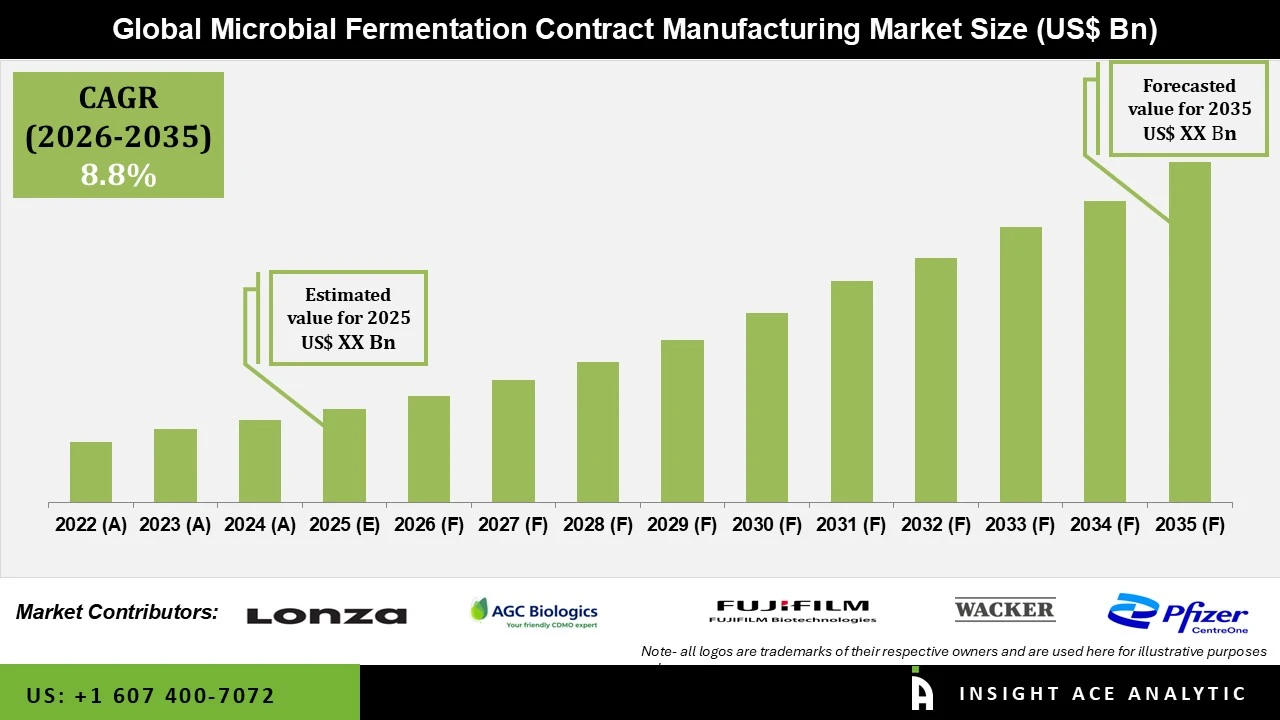
Microbial fermentation is a bioprocessing technology that uses microorganisms, including bacteria, yeast, filamentous fungi, and other specialized microbial hosts, to produce pharmaceutical ingredients, therapeutic proteins, enzymes, vaccine components, and other biologically derived products. Microbial expression systems are particularly valuable for manufacturing molecules that can be efficiently produced through microbial hosts, offering advantages in terms of rapid growth, scalable cultivation, established genetic engineering techniques, and adaptable fermentation processes. Common production hosts include Escherichia coli, yeast species such as Saccharomyces cerevisiae and Pichia pastoris, filamentous fungi, and other engineered microbial strains.
The microbial fermentation contract manufacturing market encompasses outsourced development and manufacturing services for pharmaceutical and biotechnology products produced through microbial fermentation. These services span the major stages of microbial bioprocessing, including strain development and engineering, strain optimization, cell banking, fermentation process development, upstream processing, fermentation scale-up, downstream recovery and purification, analytical testing, formulation, and GMP-compliant manufacturing. Service capabilities can extend from laboratory and preclinical development through clinical-stage production and commercial-scale manufacturing.
Microbial fermentation CDMOs provide pharmaceutical and biotechnology companies with access to specialized fermentation infrastructure, process-development expertise, microbial expression platforms, and regulatory-compliant manufacturing capabilities. Manufacturing systems can range from small-scale development reactors to large-scale stainless-steel or single-use fermentation platforms, depending on the product, host organism, process requirements, and production stage. Downstream processing may incorporate technologies such as filtration, centrifugation, chromatography, concentration, and other purification approaches to achieve the required product quality and specifications.
The market supports the production of recombinant proteins, therapeutic proteins, enzymes, vaccine antigens and other vaccine-related components, microbial-derived active pharmaceutical ingredients (APIs), and other specialty biologically produced compounds. Its customer base includes large pharmaceutical companies, biotechnology companies, emerging and virtual biopharma firms, and academic or research institutions seeking external development and manufacturing capabilities. The market covers preclinical process development, clinical-scale GMP manufacturing, and commercial-scale production, with service providers offering flexible fermentation capacity and specialized microbial platforms to accommodate different organisms, product types, batch requirements, and manufacturing scales.
Increasing complexity in microbial bioprocess development, the need for specialized fermentation infrastructure, and demand for scalable and GMP-compliant manufacturing capabilities are strengthening the role of contract manufacturers across the biopharmaceutical value chain. Advances in strain engineering, fermentation control, process analytical technologies, automation, and downstream purification are further expanding the capabilities of microbial fermentation platforms and supporting their application across a broader range of pharmaceutical and biotechnology products.
Competitive Landscape
Which are the Leading Players in the Microbial Fermentation Contract Manufacturing Market?
• Lonza Group AG
• AGC Biologics
• FUJIFILM Biotechnologies
• Wacker Biotech GmbH (WACKER BIOSOLUTIONS)
• Pfizer CentreOne
• KBI Biopharma, Inc.
• Agilent Technologies, Inc. (BIOVECTRA)
• EUROAPI S.A.
• Olon S.p.A. (Olon Biotech)
• Richter Biologics GmbH & Co. KG
• Northway Biotech
• 3PBIOVIAN
• Laurus Bio Private Limited
• Biose Industrie
• CKD Bio Corporation
• Centrient Pharmaceuticals
• Xellia Pharmaceuticals
• Sanzyme Biomolecules Private Limited
• BiBo Biopharma Engineering
• Etinpro (Beijing)
• List Labs (List Biological Laboratories, Inc.)
Market Dynamics
Driver
Growing Demand for Biologics and Microbial-Derived Pharmaceutical Products
As demand grows for biologics, recombinant proteins, enzymes, vaccines, and microbial-derived APIs, more companies are turning to specialised microbial fermentation contract manufacturing services. Pharmaceutical and biotech firms now rely on microbial expression systems to develop and produce these products efficiently and at scale. CDMOs offer the necessary fermentation infrastructure, technical know-how, and GMP-compliant manufacturing, which helps companies avoid large investments in their own facilities and speed up product development. The expanding biologics pipeline and the need for dependable outsourced manufacturing are also driving the growth of microbial fermentation CDMO services.
Restrain/Challenge
Complexity of Fermentation Process Optimisation and Scale-Up
One of the main challenges in microbial fermentation contract manufacturing is keeping process consistency and product quality when moving from lab or development scale to commercial production. Differences in microbial strains, fermentation conditions, nutrients, oxygen transfer, and other process factors can impact yield, purity, and efficiency. Each microbial host may need its own process development and purification methods, which adds technical complexity and raises costs. Manufacturers also face difficulties in making sure each batch is consistent and meets strict GMP and regulatory standards, especially when working with complex products and scaling up for commercial use.
Development Services Segment is Expected to Hold a Significant Share of the Microbial Fermentation Contract Manufacturing Market
The development services segment is expected to account for a significant share of the market, supported by the increasing need for specialised skills in microbial strain development, process optimisation, analytical methods, and fermentation process characterisation. More pharmaceutical and biotech companies are outsourcing early-stage development to CDMOs to establish scalable, commercially viable manufacturing before moving to clinical or commercial production. These services boost microbial productivity, improve fermentation conditions, and help create efficient purification methods. The growing number of early-stage biotech programs and biologics candidates is also driving demand for outsourced process development.
Commercial-Scale GMP Manufacturing Segment is Expected to Witness Strong Growth in the Microbial Fermentation Contract Manufacturing Market
The commercial-scale GMP manufacturing segment is set to grow as more pharmaceutical and biotech companies need reliable, large-scale production for approved products and biologics moving toward commercialisation. Microbial fermentation allows for high-volume, cost-effective production of recombinant proteins, enzymes, therapeutic ingredients, and microbial-derived APIs. Building commercial manufacturing facilities takes a lot of capital, specialised infrastructure, and regulatory know-how, so many companies choose to work with experienced CDMOs. The need for more manufacturing capacity, steady product quality, and dependable supply is also driving the use of outsourced GMP manufacturing services.
Why North America Led the Microbial Fermentation Contract Manufacturing Market?
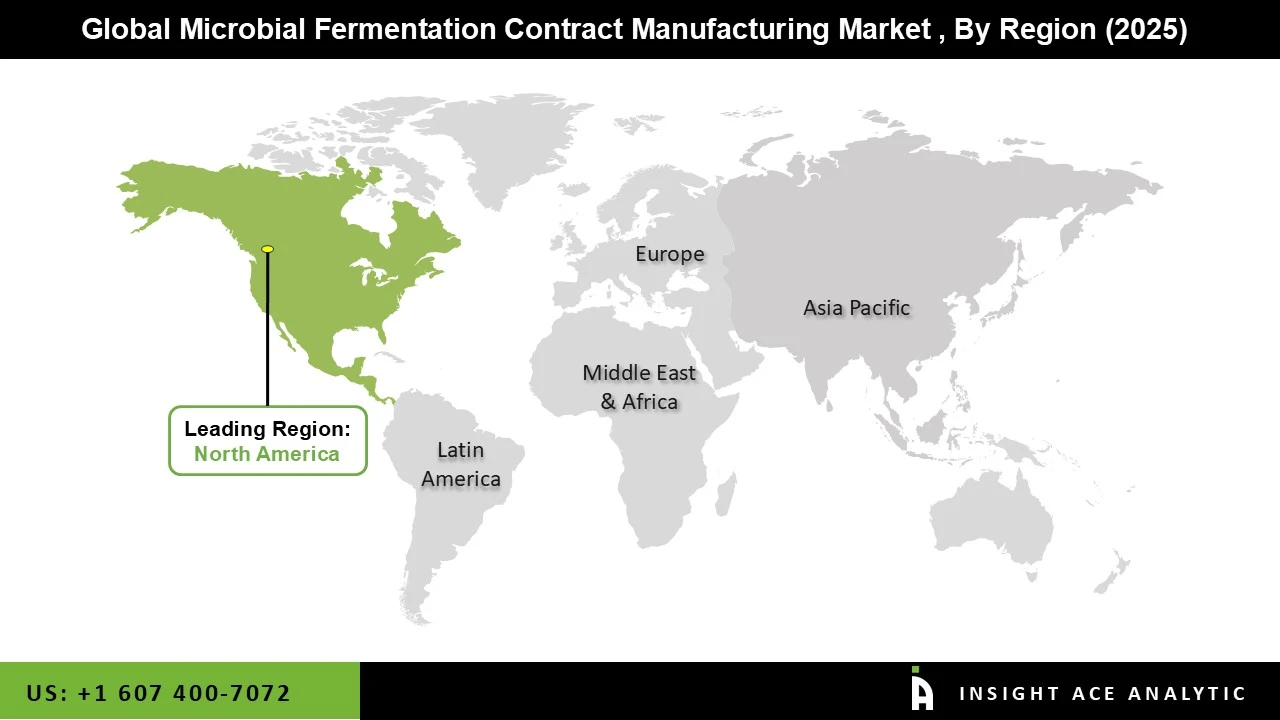
North America is expected to lead the microbial fermentation contract manufacturing market. This is due to its strong pharmaceutical and biotech industries, a robust biopharmaceutical research environment, and access to specialised CDMOs with advanced fermentation skills. The region also benefits from large investments in biotech research, a growing biologics pipeline, and high demand for outsourced process development and GMP manufacturing. Established pharma companies, new biotech firms, and research institutions all contribute to a strong customer base. Advanced manufacturing, technical expertise, and solid regulatory systems further boost North America's position in the market.
Key Development
• In September 2026, AGC Biologics was selected by Flen Health to manufacture recombinant enzymes for its next-generation wound treatment. The collaboration highlights AGC Biologics' microbial manufacturing capabilities and expertise in supporting the development and production of recombinant biologics.
• In March 2026, OLON S.p.A. partnered with myBIOS to advance methanol-free recombinant protein manufacturing using the myPichia platform based on Pichia pastoris. The collaboration combines myBIOS' fermentation technology with OLON's industrial-scale fermentation and downstream processing expertise to support more sustainable and scalable production of recombinant proteins, enzymes, and bioactive peptides.
Microbial Fermentation Contract Manufacturing Market Report Scope:
| Report Attribute | Specifications |
| Growth Rate CAGR | CAGR of 8.8% from 2026 to 2035 |
| Quantitative Units | Representation of revenue in US$ Bn and CAGR from 2026 to 2035 |
| Historic Year | 2022 to 2025 |
| Forecast Year | 2026-2035 |
| Report Coverage | The forecast of revenue, the position of the company, the competitive market structure, growth prospects, and trends |
| Segments Covered | Service Type / Offering, Host Organism / Expression System, Development Phase, End User and By Region |
| Regional Scope | North America; Europe; Asia Pacific; Latin America; Middle East & Africa |
| Country Scope | U.S.; Canada; U.K.; Germany; China; India; Japan; Brazil; Mexico; France; Italy; Spain; South Korea; Southeast Asia |
| Competitive Landscape | Lonza Group AG, AGC Biologics, FUJIFILM Biotechnologies, Wacker Biotech GmbH (WACKER BIOSOLUTIONS), Pfizer CentreOne, KBI Biopharma, Inc., Agilent Technologies, Inc. (BIOVECTRA), EUROAPI S.A., Olon S.p.A. (Olon Biotech), Richter Biologics GmbH & Co. KG, Northway Biotech, 3PBIOVIAN, Laurus Bio Private Limited, Biose Industrie, CKD Bio Corporation, Centrient Pharmaceuticals, Xellia Pharmaceuticals, Sanzyme Biomolecules Private Limited, BiBo Biopharma Engineering, Etinpro (Beijing), List Labs (List Biological Laboratories, Inc.) |
| Customization Scope | Free customization report with the procurement of the report, Modifications to the regional and segment scope. Geographic competitive landscape. |
| Pricing and Available Payment Methods | Explore pricing alternatives that are customized to your particular study requirements. |
Market Segmentation:
Microbial Fermentation Contract Manufacturing Market by Servie Type/Offering Type -
• Development Services
• Drug-Substance Manufacturing
• Integrated Drug-Product / Fill-Finish
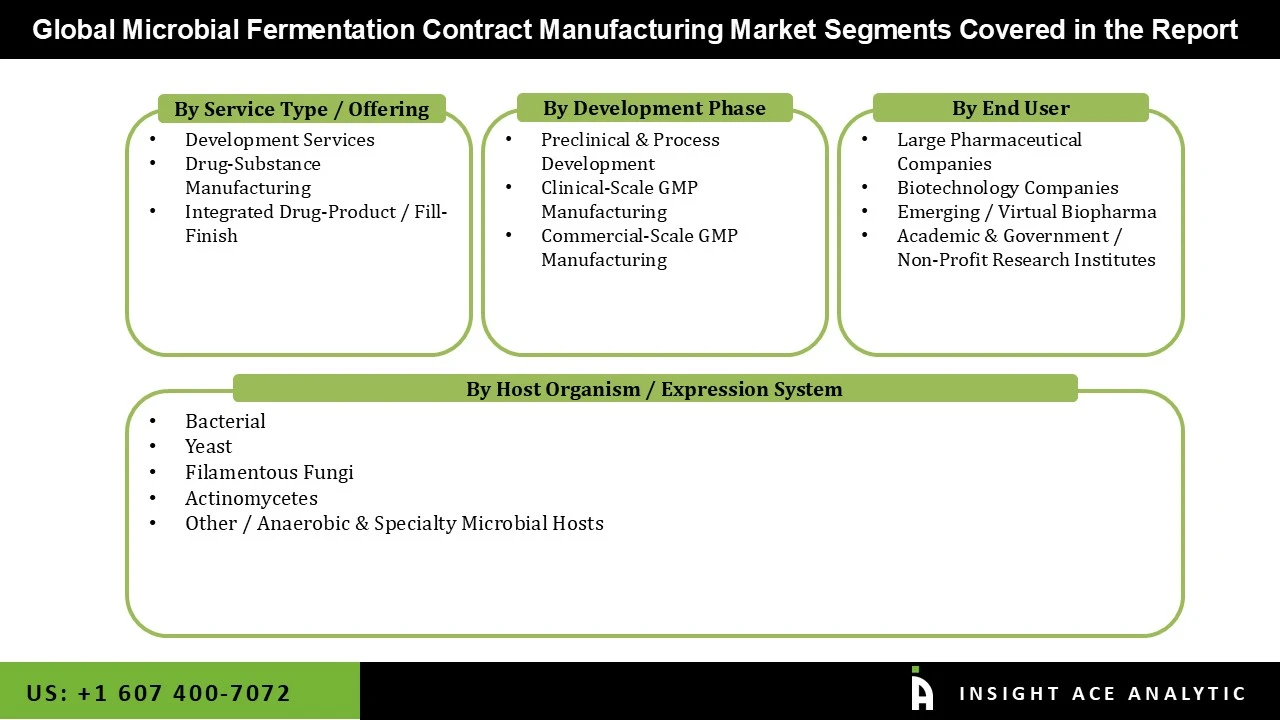
Microbial Fermentation Contract Manufacturing Market by Host Organism / Expression System-
• Bacterial
• Yeast
• Filamentous Fungi
• Actinomycetes
• Other / Anaerobic & Specialty Microbial Hosts
Microbial Fermentation Contract Manufacturing Market by Development Phase -
• Preclinical & Process Development
• Clinical-Scale GMP Manufacturing
• Commercial-Scale GMP Manufacturing
Microbial Fermentation Contract Manufacturing Market by End User -
• Large Pharmaceutical Companies
• Biotechnology Companies
• Emerging / Virtual Biopharma
• Academic & Government / Non-Profit Research Institutes
Microbial Fermentation Contract Manufacturing Market by Region-
North America-
• The US
• Canada
• Mexico
Europe-
• Germany
• The UK
• France
• Italy
• Spain
• Rest of Europe
Asia-Pacific-
• China
• Japan
• India
• South Korea
• South East Asia
• Rest of Asia Pacific
Latin America-
• Brazil
• Argentina
• Rest of Latin America
Middle East & Africa-
• GCC Countries
• South Africa
• Rest of Middle East and Africa
Research Design and Approach
This study employed a multi-step, mixed-method research approach that integrates:
- Secondary research
- Primary research
- Data triangulation
- Hybrid top-down and bottom-up modelling
- Forecasting and scenario analysis
This approach ensures a balanced and validated understanding of both macro- and micro-level market factors influencing the market.
Secondary Research
Secondary research for this study involved the collection, review, and analysis of publicly available and paid data sources to build the initial fact base, understand historical market behaviour, identify data gaps, and refine the hypotheses for primary research.
Sources Consulted
Secondary data for the market study was gathered from multiple credible sources, including:
- Government databases, regulatory bodies, and public institutions
- International organizations (WHO, OECD, IMF, World Bank, etc.)
- Commercial and paid databases
- Industry associations, trade publications, and technical journals
- Company annual reports, investor presentations, press releases, and SEC filings
- Academic research papers, patents, and scientific literature
- Previous market research publications and syndicated reports
These sources were used to compile historical data, market volumes/prices, industry trends, technological developments, and competitive insights.
Primary Research
Primary research was conducted to validate secondary data, understand real-time market dynamics, capture price points and adoption trends, and verify the assumptions used in the market modelling.
Stakeholders Interviewed
Primary interviews for this study involved:
- Manufacturers and suppliers in the market value chain
- Distributors, channel partners, and integrators
- End-users / customers (e.g., hospitals, labs, enterprises, consumers, etc., depending on the market)
- Industry experts, technology specialists, consultants, and regulatory professionals
- Senior executives (CEOs, CTOs, VPs, Directors) and product managers
Interview Process
Interviews were conducted via:
- Structured and semi-structured questionnaires
- Telephonic and video interactions
- Email correspondences
- Expert consultation sessions
Primary insights were incorporated into demand modelling, pricing analysis, technology evaluation, and market share estimation.
Data Processing, Normalization, and Validation
All collected data were processed and normalized to ensure consistency and comparability across regions and time frames.
The data validation process included:
- Standardization of units (currency conversions, volume units, inflation adjustments)
- Cross-verification of data points across multiple secondary sources
- Normalization of inconsistent datasets
- Identification and resolution of data gaps
- Outlier detection and removal through algorithmic and manual checks
- Plausibility and coherence checks across segments and geographies
This ensured that the dataset used for modelling was clean, robust, and reliable.
Market Size Estimation and Data Triangulation
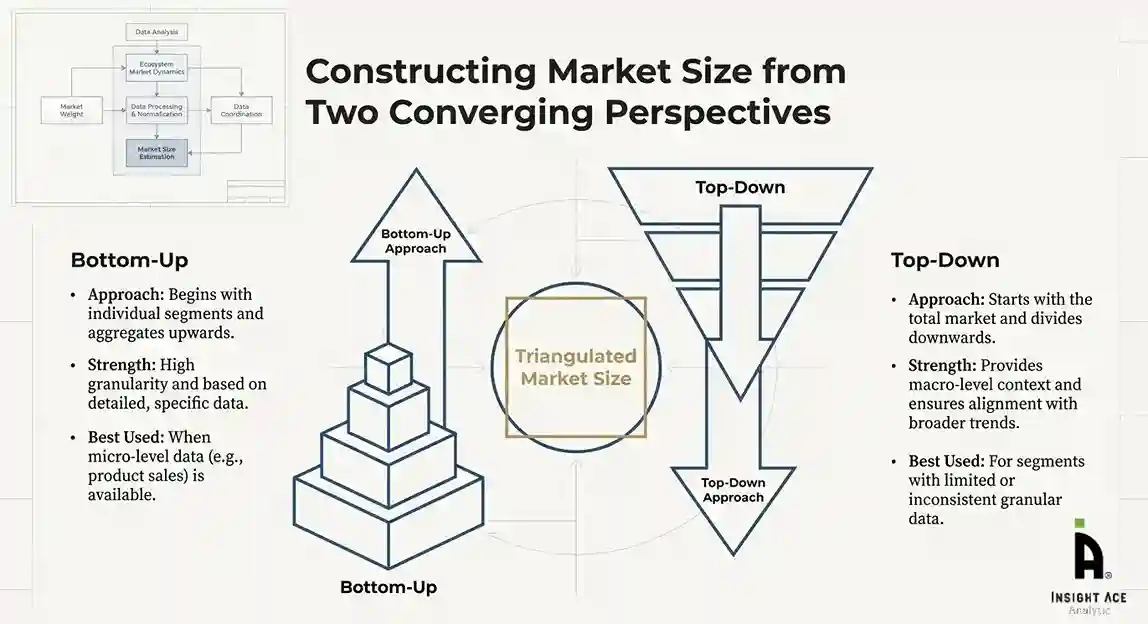
Bottom-Up Approach
The bottom-up approach involved aggregating segment-level data, such as:
- Company revenues
- Product-level sales
- Installed base/usage volumes
- Adoption and penetration rates
- Pricing analysis
This method was primarily used when detailed micro-level market data were available.
Top-Down Approach
The top-down approach used macro-level indicators:
- Parent market benchmarks
- Global/regional industry trends
- Economic indicators (GDP, demographics, spending patterns)
- Penetration and usage ratios
This approach was used for segments where granular data were limited or inconsistent.
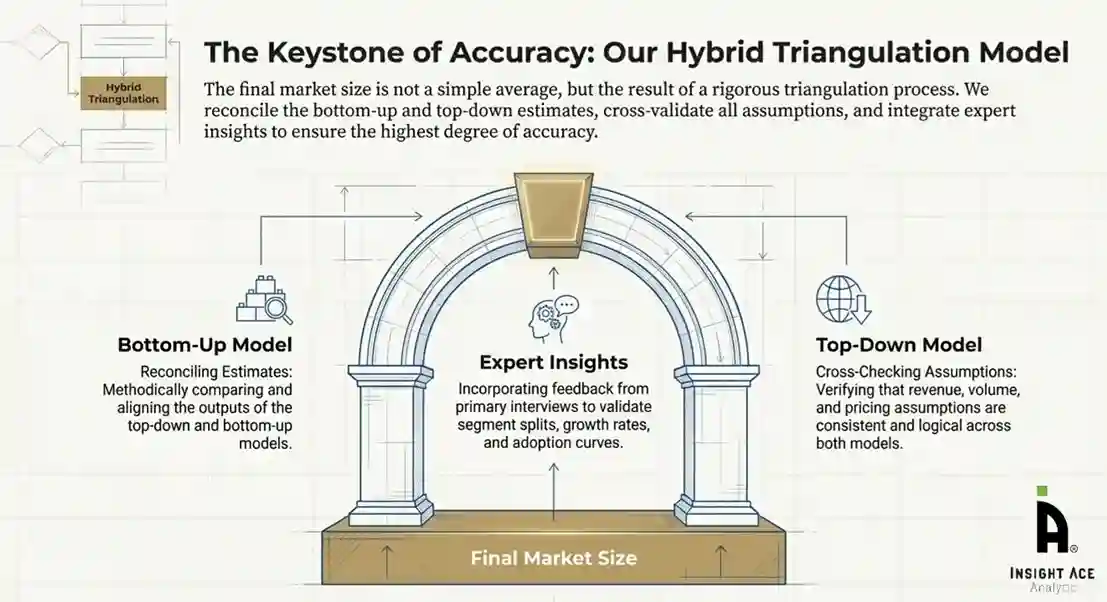
Hybrid Triangulation Approach
To ensure accuracy, a triangulated hybrid model was used. This included:
- Reconciling top-down and bottom-up estimates
- Cross-checking revenues, volumes, and pricing assumptions
- Incorporating expert insights to validate segment splits and adoption rates
This multi-angle validation yielded the final market size.
Forecasting Framework and Scenario Modelling
Market forecasts were developed using a combination of time-series modelling, adoption curve analysis, and driver-based forecasting tools.
Forecasting Methods
- Time-series modelling
- S-curve and diffusion models (for emerging technologies)
- Driver-based forecasting (GDP, disposable income, adoption rates, regulatory changes)
- Price elasticity models
- Market maturity and lifecycle-based projections
Scenario Analysis
Given inherent uncertainties, three scenarios were constructed:
- Base-Case Scenario: Expected trajectory under current conditions
- Optimistic Scenario: High adoption, favourable regulation, strong economic tailwinds
- Conservative Scenario: Slow adoption, regulatory delays, economic constraints
Sensitivity testing was conducted on key variables, including pricing, demand elasticity, and regional adoption.
Request Customization
Add countries, segments, company profiles, or extend forecast — free 10% customization with purchase.
Customize This Report →Enquire Before Buying
Speak with our analyst team about scope, methodology, pricing, or deliverable formats.
Enquire Now →Frequently Asked Questions
Microbial Fermentation Contract Manufacturing Market is estimated to grow at a 8.8% CAGR during the forecast period for 2026 to 2035.
Lonza Group AG, AGC Biologics, FUJIFILM Biotechnologies, Wacker Biotech GmbH (WACKER BIOSOLUTIONS), Pfizer CentreOne, KBI Biopharma, Inc., Agilent Technologies, Inc. (BIOVECTRA), EUROAPI S.A., Olon S.p.A. (Olon Biotech), Richter Biologics GmbH & Co. KG, Northway Biotech, 3PBIOVIAN, Laurus Bio Private Limited, Biose Industrie, CKD Bio Corporation, Centrient Pharmaceuticals, Xellia Pharmaceuticals, Sanzyme Biomolecules Private Limited, BiBo Biopharma Engineering, Etinpro (Beijing), List Labs (List Biological Laboratories, Inc.)
Microbial Fermentation Contract Manufacturing Market is segmented into Service Type / Offering, Host Organism / Expression System, Development Phase, End User and By Region
North America region is leading the Microbial Fermentation Contract Manufacturing Market.