Asia Pacific AI ECG Analysis & Screening Software Market Size, Share, Trend, Revenue Report 2026 to 2035
What is Asia Pacific AI ECG Analysis & Screening Software Market Size?
Asia Pacific AI ECG Analysis & Screening Software Market is estimated to grow at a 22.0% CAGR during the forecast period for 2026 to 2035.
Asia Pacific AI ECG Analysis & Screening Software Market Size, Share & Trends Analysis Distribution by Clinical Function (AI-ECG Diagnostic Interpretation Software, AI-ECG Screening & Risk Prediction Software, AI-ECG Real-Time Alerting & Monitoring Triage Software), By ECG Data Source (Resting 12-Lead ECG (including 15/18-Lead), Handheld & Reduced-Lead Point-of-Care ECG (1- to 6-Lead), Consumer Wearable ECG (Smartwatch, Ring, Chest Strap), Ambulatory Long-Term ECG (Holter, Patch, Event Recorder, MCT), In-Hospital Continuous Telemetry & Bedside Monitor ECG), By Offering & Revenue Model (Perpetual / Term Software Licence, SaaS Subscription, Pay-per-Analysis / Per-Study Fee, AI-Enabled ECG Reading Service (AI-Attributable Share), OEM / Embedded Algorithm Licensing), By Deployment Model (Cloud-Based (SaaS / Vendor-Hosted), On-Premise / Hospital-Hosted (including Hospital Private Cloud), Device-Embedded / Edge), By End User (Hospitals & Health Systems, Diagnostic Centres, Cardiology Clinics & Physician Offices, Primary Care, Health-Check & Population Screening Programmes, Telecardiology & Remote Monitoring Service Providers) and Segment Forecasts, 2026 to 2035
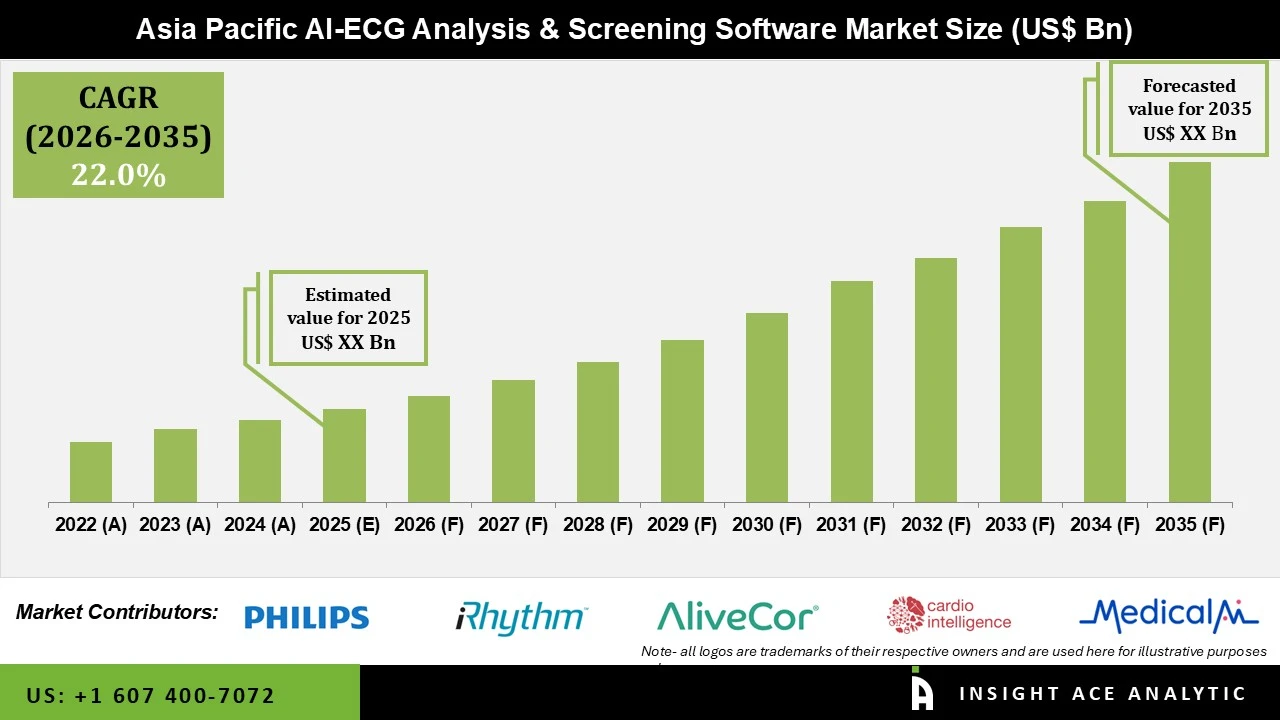
AI-ECG analysis and screening software refers to artificial intelligence-powered software solutions that process and interpret electrocardiogram (ECG) signals to identify cardiac abnormalities, detect potential cardiovascular conditions, and support clinical decision-making. These systems employ machine learning, deep learning, and advanced signal-processing algorithms to evaluate electrical activity of the heart and identify patterns associated with arrhythmias, myocardial infarction, ventricular dysfunction, atrial fibrillation, and other cardiovascular conditions. Advanced AI-ECG platforms can also identify subtle or clinically relevant ECG patterns that may be difficult to recognize through conventional interpretation, generate automated diagnostic reports, and provide real-time alerts for potentially abnormal cardiac events.
AI-ECG software can analyse data obtained from a broad range of ECG sources, including resting 12-lead ECG systems, handheld and reduced-lead devices, wearable ECG monitors, Holter monitors, ambulatory monitoring systems, and continuous cardiac telemetry platforms. This enables applications across hospital-based diagnosis, preventive cardiovascular screening, emergency and acute-care assessment, remote cardiac monitoring, and population-level health screening. Integration with electronic health records, hospital information systems, cloud-based diagnostic platforms, and telecardiology infrastructure further enables ECG data to be incorporated into broader digital clinical workflows.
The Asia Pacific AI-ECG analysis and screening software market is developing alongside the increasing adoption of artificial intelligence, digital diagnostics, and connected healthcare technologies across the region. Healthcare systems in countries such as Japan, South Korea, Australia, Singapore, China, and India are increasingly incorporating digital tools into cardiovascular care, while emerging healthcare markets across Southeast Asia are expanding their digital health infrastructure. The growing need for efficient cardiovascular screening, earlier identification of cardiac abnormalities, and scalable diagnostic services is supporting the integration of AI-enabled ECG interpretation into hospitals, diagnostic centres, specialist cardiology practices, and remote-care environments.
The regional market encompasses AI-ECG solutions developed by medical technology companies, healthcare software providers, digital health companies, and diagnostic technology developers. Increasing integration of AI-ECG capabilities with wearable devices, remote monitoring platforms, cloud-based diagnostics, hospital information systems, and telecardiology networks is broadening the range of clinical applications. Consequently, AI-ECG technology is becoming an increasingly important component of digital cardiovascular care in Asia Pacific, supporting applications ranging from automated clinical interpretation and early disease detection to preventive screening and continuous cardiac monitoring.
Competitive Landscape
Which are the Leading Players in the Asia Pacific AI-ECG Analysis & Screening Software Market?
• Koninklijke Philips N.V.
• iRhythm Technologies, Inc.
• AliveCor, Inc.
• Cardio Intelligence Inc.
• Medical AI Co., Ltd.
• Tricog Health
• Lepu Medical Technology (Beijing) Co., Ltd.
• Sunfox Technologies Pvt. Ltd.
• Seers Technology Co., Ltd.
Market Dynamics
Driver
Rising Cardiovascular Disease Burden and Growing Demand for Early Cardiac Diagnosis
The rising incidence of cardiovascular diseases in the Asia Pacific area is leading to greater demand for sophisticated cardiac diagnostic tools that can help with the early detection of disease and allow for timely clinical intervention. In countries including China, India, Japan, and Indonesia there is a heavy burden of heart disorders, which in turn is increasing the number of ECGs carried out in hospitals, diagnostic centres and primary healthcare clinics. Since traditional ECG interpretation usually depends on experienced cardiologists, it becomes difficult to analyse large numbers of cases, especially in areas where there are few specialists available. AI-powered ECG analysis and screening software overcomes this problem by automatically interpreting ECG signals, identifying abnormal heart patterns, detecting possible arrhythmias and screening for conditions such as left ventricular dysfunction and myocardial infarction.
Restrain/Challenge
Fragmented Regulatory Frameworks and Clinical Validation Requirements
The AI-ECG software encounters different regulatory approval requirements in the various countries of the Asia Pacific region, such as China, Japan, South Korea, India, and Australia. Differences in the rules concerning medical devices, the standards for clinical validation, and the data requirements add to the complexity and cost of entering the market for software companies. Moreover, limited access to diverse regional ECG datasets can have an effect on the accuracy of the algorithm and on clinical acceptance, leading to difficulties in achieving widespread commercialization.
AI-ECG Diagnostic Interpretation Software Segment is Expected to Drive the Asia Pacific AI-ECG Analysis & Screening Software Market
The AI-ECG diagnostic interpretation software is expected to take over the Asia Pacific AI-ECG analysis & screening software market as a result of the increasing use of automated ECG interpretation solutions in hospitals, diagnostic centres, and cardiology clinics. These systems allow for the quick detection of arrhythmias, rhythm abnormalities, and acute cardiac conditions, thereby reducing the amount of manual work involved in ECG analysis and helping to make timely clinical decisions. The rising volume of ECG examinations, together with the incorporation of AI-driven interpretation tools into current healthcare diagnostic processes in China, Japan, India, and South Korea, is expected to contribute to growth in this segment.
Consumer Wearable ECG (Smartwatch, Ring, Chest Strap) Segment is Growing at the Highest Rate in the Asia Pacific AI-ECG Analysis & Screening Software Market
Consumer wearable ECG (Smartwatch, Ring, Chest Strap) is expected to be the fastest-growing segment in the Asia Pacific AI-ECG Analysis & Screening Software Market. Growth is supported by increasing adoption of wearable health-monitoring technologies, rising consumer interest in continuous heart-health tracking, and the integration of AI-powered ECG analysis into smartwatches and other connected devices. Expanding digital health ecosystems, growing awareness of early cardiac abnormality detection, and increasing connectivity between wearable devices and telecardiology platforms across China, Japan, South Korea, and India are expected to accelerate segment growth.
Key Development:
• July 2025: Koninklijke Philips N.V. launched its ECG AI Marketplace, enabling hospitals to integrate AI-powered cardiac diagnostic algorithms into existing ECG workflows. Anumana became the first provider on the platform with its FDA-cleared ECG-AI Low Ejection Fraction algorithm.
Asia Pacific AI-ECG Analysis & Screening Software Market Report Scope:
| Report Attribute | Specifications |
| Growth Rate CAGR | CAGR of 22.0% from 2026 to 2035 |
| Quantitative Units | Representation of revenue in US$ Bn and CAGR from 2026 to 2035 |
| Historic Year | 2022 to 2025 |
| Forecast Year | 2026-2035 |
| Report Coverage | The forecast of revenue, the position of the company, the competitive market structure, growth prospects, and trends |
| Segments Covered | Clinical Function, ECG Data Source, Offering & Revenue Model, Deployment Model, End User and By Region |
| Regional Scope | Asia Pacific |
| Country Scope | China, Japan, India, South Korea, Australia, New Zealand, Taiwan, Southeast Asia(Singapore, Thailand, Malaysia, Indonesia, Vietnam, Philippines, Rest of Southeast Asia), Rest of Asia Pacific |
| Competitive Landscape | Koninklijke Philips N.V., iRhythm Technologies, Inc., AliveCor, Inc., Cardio Intelligence Inc., Medical AI Co., Ltd., Tricog Health, Lepu Medical Technology (Beijing) Co., Ltd., Sunfox Technologies Pvt. Ltd., Seers Technology Co., Ltd. |
| Customization Scope | Free customization report with the procurement of the report, Modifications to the regional and segment scope. Geographic competitive landscape. |
| Pricing and Available Payment Methods | Explore pricing alternatives that are customized to your particular study requirements. |
Market Segmentation:
Asia Pacific AI-ECG Analysis & Screening Software Market by Clinical Function -
• AI-ECG Diagnostic Interpretation Software
o Arrhythmia Detection & Rhythm Classification
o Acute Coronary Syndrome / STEMI-OMI Detection
o Comprehensive Multi-Condition Interpretation & Automated Reporting
• AI-ECG Screening & Risk Prediction Software
o Left Ventricular Systolic / Diastolic Dysfunction Detection
o Cardiomyopathy & Infiltrative Disease Detection
o Atrial Fibrillation Risk Prediction from Sinus-Rhythm ECG
o Other Latent-Disease Screening
• AI-ECG Real-Time Alerting & Monitoring Triage Software
o In-Hospital Telemetry & Critical-Care ECG Alerting
o Remote & Ambulatory Real-Time Event Alerting
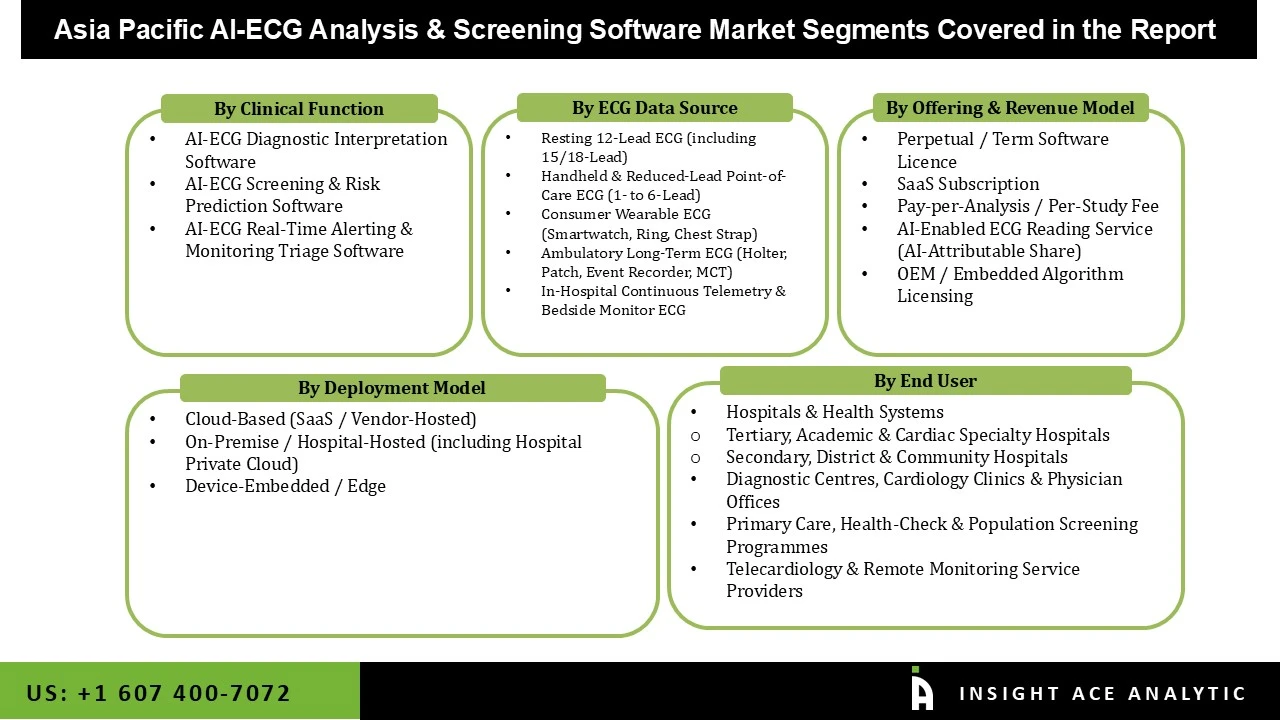
Asia Pacific AI-ECG Analysis & Screening Software Market by ECG Data Source -
• Resting 12-Lead ECG (including 15/18-Lead)
• Handheld & Reduced-Lead Point-of-Care ECG (1- to 6-Lead)
• Consumer Wearable ECG (Smartwatch, Ring, Chest Strap)
• Ambulatory Long-Term ECG (Holter, Patch, Event Recorder, MCT)
• In-Hospital Continuous Telemetry & Bedside Monitor ECG
Asia Pacific AI-ECG Analysis & Screening Software Market by Offering & Revenue Model -
• Perpetual / Term Software Licence
• SaaS Subscription
• Pay-per-Analysis / Per-Study Fee
• AI-Enabled ECG Reading Service (AI-Attributable Share)
• OEM / Embedded Algorithm Licensing
Asia Pacific AI-ECG Analysis & Screening Software Market by Deployment Model -
• Cloud-Based (SaaS / Vendor-Hosted)
• On-Premise / Hospital-Hosted (including Hospital Private Cloud)
• Device-Embedded / Edge
Asia Pacific AI-ECG Analysis & Screening Software Market by End-User -
• Hospitals & Health Systems
o Tertiary, Academic & Cardiac Specialty Hospitals
o Secondary, District & Community Hospitals
• Diagnostic Centres, Cardiology Clinics & Physician Offices
• Primary Care, Health-Check & Population Screening Programmes
• Telecardiology & Remote Monitoring Service Providers
Asia Pacific AI-ECG Analysis & Screening Software Market by Country -
• China
• Japan
• India
• South Korea
• Australia
• New Zealand
• Taiwan
• Southeast Asia
o Singapore
o Thailand
o Malaysia
o Indonesia
o Vietnam
o Philippines
o Rest of Southeast Asia
• Rest of Asia Pacific
Research Design and Approach
This study employed a multi-step, mixed-method research approach that integrates:
- Secondary research
- Primary research
- Data triangulation
- Hybrid top-down and bottom-up modelling
- Forecasting and scenario analysis
This approach ensures a balanced and validated understanding of both macro- and micro-level market factors influencing the market.
Secondary Research
Secondary research for this study involved the collection, review, and analysis of publicly available and paid data sources to build the initial fact base, understand historical market behaviour, identify data gaps, and refine the hypotheses for primary research.
Sources Consulted
Secondary data for the market study was gathered from multiple credible sources, including:
- Government databases, regulatory bodies, and public institutions
- International organizations (WHO, OECD, IMF, World Bank, etc.)
- Commercial and paid databases
- Industry associations, trade publications, and technical journals
- Company annual reports, investor presentations, press releases, and SEC filings
- Academic research papers, patents, and scientific literature
- Previous market research publications and syndicated reports
These sources were used to compile historical data, market volumes/prices, industry trends, technological developments, and competitive insights.
Primary Research
Primary research was conducted to validate secondary data, understand real-time market dynamics, capture price points and adoption trends, and verify the assumptions used in the market modelling.
Stakeholders Interviewed
Primary interviews for this study involved:
- Manufacturers and suppliers in the market value chain
- Distributors, channel partners, and integrators
- End-users / customers (e.g., hospitals, labs, enterprises, consumers, etc., depending on the market)
- Industry experts, technology specialists, consultants, and regulatory professionals
- Senior executives (CEOs, CTOs, VPs, Directors) and product managers
Interview Process
Interviews were conducted via:
- Structured and semi-structured questionnaires
- Telephonic and video interactions
- Email correspondences
- Expert consultation sessions
Primary insights were incorporated into demand modelling, pricing analysis, technology evaluation, and market share estimation.
Data Processing, Normalization, and Validation
All collected data were processed and normalized to ensure consistency and comparability across regions and time frames.
The data validation process included:
- Standardization of units (currency conversions, volume units, inflation adjustments)
- Cross-verification of data points across multiple secondary sources
- Normalization of inconsistent datasets
- Identification and resolution of data gaps
- Outlier detection and removal through algorithmic and manual checks
- Plausibility and coherence checks across segments and geographies
This ensured that the dataset used for modelling was clean, robust, and reliable.
Market Size Estimation and Data Triangulation
Bottom-Up Approach
The bottom-up approach involved aggregating segment-level data, such as:
- Company revenues
- Product-level sales
- Installed base/usage volumes
- Adoption and penetration rates
- Pricing analysis
This method was primarily used when detailed micro-level market data were available.
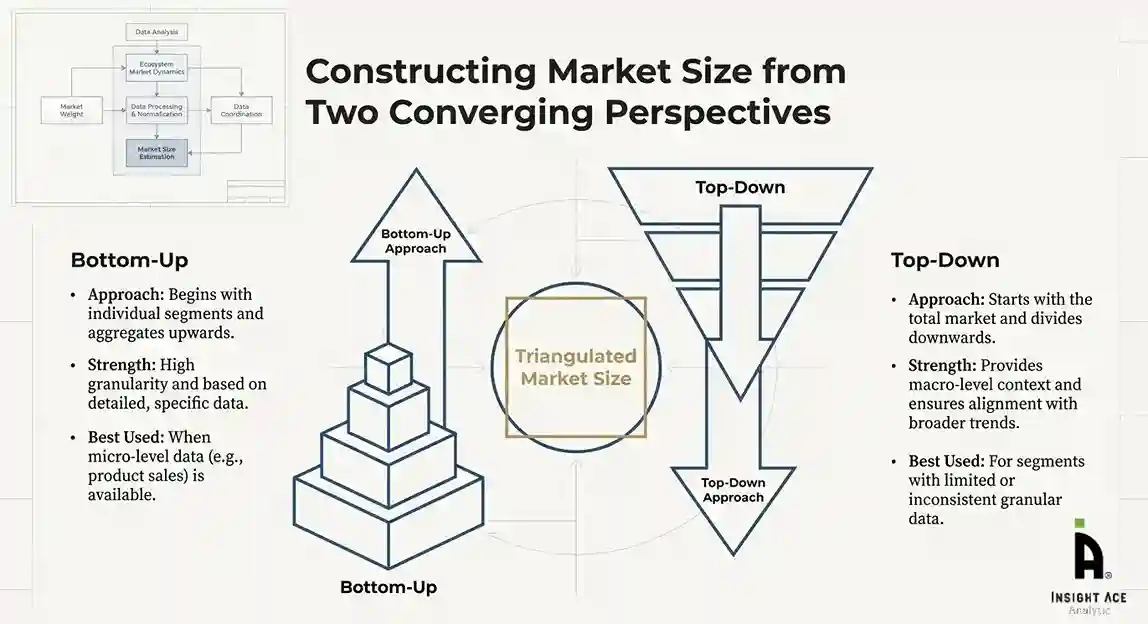
Top-Down Approach
The top-down approach used macro-level indicators:
- Parent market benchmarks
- Global/regional industry trends
- Economic indicators (GDP, demographics, spending patterns)
- Penetration and usage ratios
This approach was used for segments where granular data were limited or inconsistent.
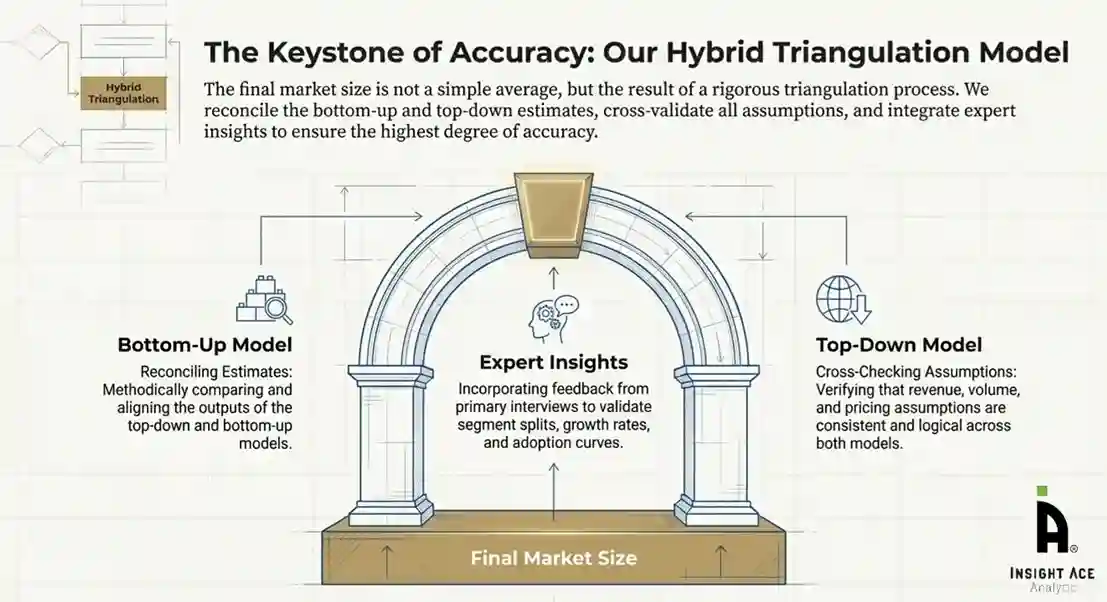
Hybrid Triangulation Approach
To ensure accuracy, a triangulated hybrid model was used. This included:
- Reconciling top-down and bottom-up estimates
- Cross-checking revenues, volumes, and pricing assumptions
- Incorporating expert insights to validate segment splits and adoption rates
This multi-angle validation yielded the final market size.
Forecasting Framework and Scenario Modelling
Market forecasts were developed using a combination of time-series modelling, adoption curve analysis, and driver-based forecasting tools.
Forecasting Methods
- Time-series modelling
- S-curve and diffusion models (for emerging technologies)
- Driver-based forecasting (GDP, disposable income, adoption rates, regulatory changes)
- Price elasticity models
- Market maturity and lifecycle-based projections
Scenario Analysis
Given inherent uncertainties, three scenarios were constructed:
- Base-Case Scenario: Expected trajectory under current conditions
- Optimistic Scenario: High adoption, favourable regulation, strong economic tailwinds
- Conservative Scenario: Slow adoption, regulatory delays, economic constraints
Sensitivity testing was conducted on key variables, including pricing, demand elasticity, and regional adoption.
Request Customization
Add countries, segments, company profiles, or extend forecast — free 10% customization with purchase.
Customize This Report →Enquire Before Buying
Speak with our analyst team about scope, methodology, pricing, or deliverable formats.
Enquire Now →Frequently Asked Questions
Asia Pacific AI ECG Analysis & Screening Software Market is estimated to grow at a 22.0% CAGR during the forecast period for 2026 to 2035.
China, Japan, India, South Korea, Australia, New Zealand, Taiwan, Southeast Asia(Singapore, Thailand, Malaysia, Indonesia, Vietnam, Philippines, Rest of Southeast Asia), Rest of Asia Pacific
Asia Pacific AI ECG Analysis & Screening Software Market is segmented into Clinical Function, ECG Data Source, Offering & Revenue Model, Deployment Model, End User and By Region
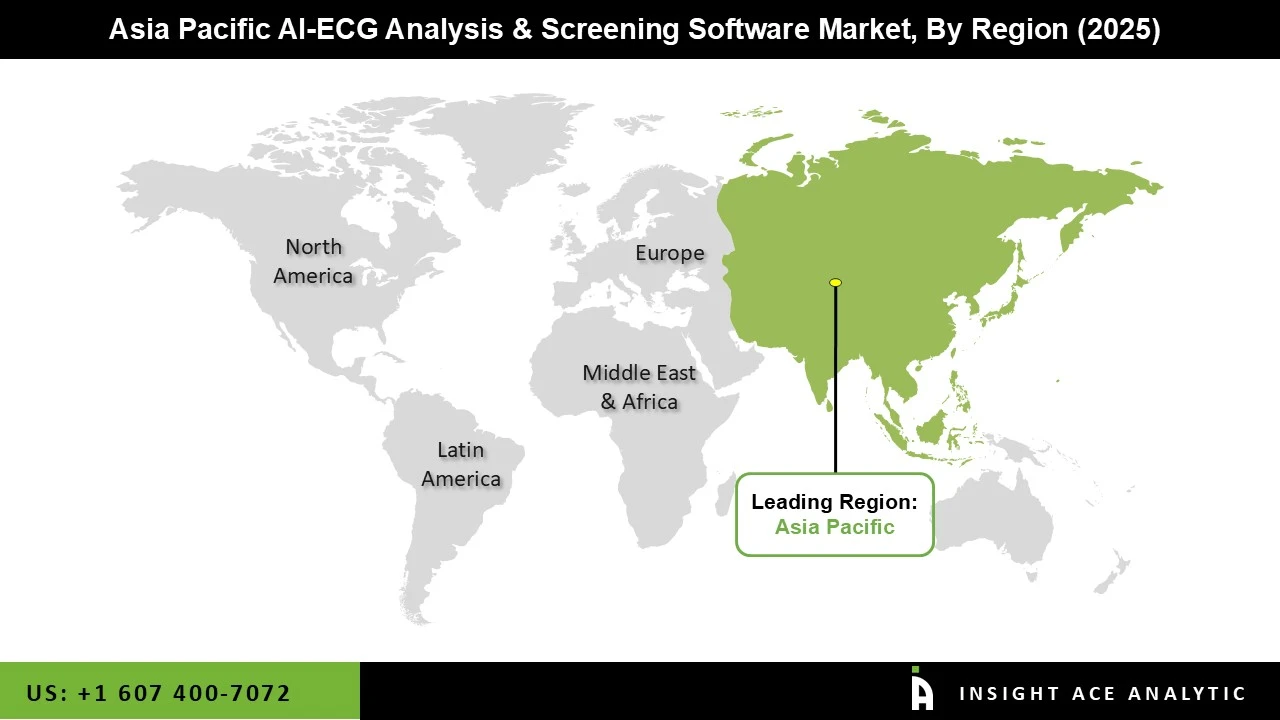
Asia Pacific region is leading the Asia Pacific AI ECG Analysis & Screening Software Market