AI-Based Microbiome Platforms Market Size, Revenue, Forecast Report 2026 to 2035
What is AI-Based Microbiome Platforms Market Size?
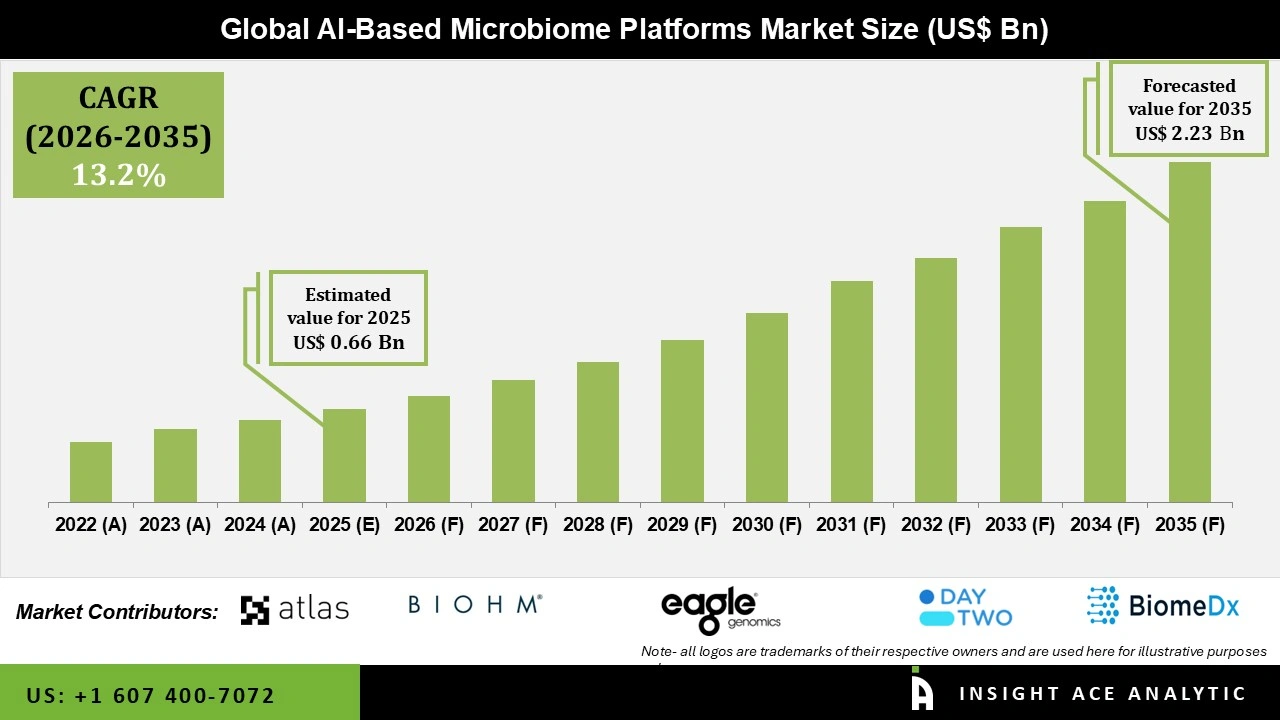
Global AI-Based Microbiome Platforms Market Size is valued at USD 0.66 Bn in 2025 and is predicted to reach USD 2.23 Bn by the year 2035 at a 13.2% CAGR during the forecast period for 2026 to 2035.
AI-Based Microbiome Platforms Market Size, Share & Trends Analysis by Microbiome Type (Gut Microbiome, skin Microbiome, Oral Microbiome, and Environmental Microbiome), Deployment Mode (Cloud-based, On-Premises, and Hybrid Models), Application (Drug Discovery & Development, Precision Medicine & Personalized Nutrition, Clinical Diagnostics, Consumer Microbiome & Wellness Platform, and Others), End-user (Pharmaceutical & Biotechnology Companies, Clinical & Diagnostic Laboratories, Research & Academic Institutes, Food & Nutrition Companies, and Others), and Segment Forecasts, 2026 to 2035.
The microbiome platforms that use intelligence are really smart tools that combine computer techniques with microbiome studies to understand complex microbial data and get useful biological information from it. These platforms use intelligence, machine learning and bioinformatics to find patterns in microbes figure out how they are related to diseases discover new targets for drugs and help with personalized medicine. This means scientists can work with sets of data from the human gut, skin, mouth, respiratory tract and environment more easily than they could before.
The fact that people are getting more interested in studies in areas like healthcare, pharmaceuticals, food and farming is helping the market for artificial intelligence microbiome platforms grow. More money is being spent on sequencing technology, metagenomics and computer biology which is creating huge amounts of data from microbiomes that need to be analyzed using advanced artificial intelligence software. Many pharmaceutical companies are using these platforms to find biomarkers develop drugs based on microbiome research and make clinical trials more successful.
Artificial intelligence is getting better fast which is good for the market. Machine learning algorithms can find connections between microbes and diseases and predictive analytics can forecast how patients will respond to treatment. Cloud computing has also made it easier for researchers around the world to use microbiome platforms and do big studies. Artificial intelligence microbiome platforms are becoming important tools, for scientists who study microbiomes. Microbiome platforms that use intelligence are helping scientists understand the microbial ecosystem and how it affects human health.
Competitive Landscape
Which are the Leading Players in AI-Based Microbiome Platforms Market?
- Viome Life Sciences
- Eagle Genomics Ltd.
- Microba Life Sciences
- CosmosID
- Second Genome
- DayTwo Ltd.
- Phylagen Inc.
- Zymo Research Corporation
- BaseClear B.V.
- BiomeSense Inc.
- QIAGEN N.V.
- Illumina Inc.
- Thermo Fisher Scientific Inc.
- Oxford Nanopore Technologies plc
- BioGaia AB
- Charles River Laboratories
- Eurofins Scientific
- Novogene Co., Ltd.
- Ginkgo Bioworks
- Seed Health
- Biotia Inc.
- Resphera Biosciences
- DNAnexus
- NVIDIA Corporation
- Microsoft Corporation
- Google Cloud
Market Dynamics
Driver
Growing Integration of Artificial Intelligence in Precision Microbiome Research
AI-driven microbiome platform solutions are going to grow a lot because more people are using intelligence in microbiome research and precision medicine. The microbiome data generated from research labs and healthcare institutes has increased a lot with sequencing technologies. AI platforms help scientists quickly and effectively analyze data. They find biomarkers understand disease risk and create personalized medicines. There are cases of chronic conditions such as inflammatory bowel disease, obesity, diabetes, cancer and neurodegenerative diseases. So the demand for diagnostics and therapeutics has increased. Artificial intelligence-based microbiome platforms are used by firms in research and development. This helps them reduce research time select candidates and ensure successful trials. The market for AI-driven microbiome platform solutions is also growing because of cloud computing and bioinformatics software. The use of AI in research helps scientists understand the microbiome better. Microbiome platform solutions are becoming more important, for precision medicine. AI-driven microbiome platforms help in creating medicines. The market is expected to grow in the coming years.
Restrain/Challenge
Complex Data Interpretation and Limited Standardization
The AI-powered microbiome platforms market has a problem. This problem is that it is really hard to understand the data from microbiomes. People have microbiomes because of their genes what they eat how they live, where they live and where they are from. This makes it very hard to create AI models that give the results for everyone. The AI-powered microbiome platforms market also has another issue. This issue is that there is no way of collecting samples reading the data getting the data ready and explaining the microbiomes. Different labs do things differently. The data they get is not the same. This means the AI cannot work correctly. The AI-powered microbiome platforms market has problems. For example combining data from systems that read microbiomes requires a lot of special knowledge and strong computers. The AI-powered microbiome platforms market is also limited by concerns about keeping data private rules for using AI to diagnose diseases are not clear and there are not experts, in bioinformatics. All these things slow down the growth of the AI-powered microbiome platforms market.
Pharmaceutical & Biotechnology Companies Segment is Expected to Drive the AI-Based Microbiome Platforms Market
The pharmaceutical and biotech segment had the part of the market in 2025. Companies in this segment are using Artificial Intelligence microbiome platforms more and more. This is because these platforms help them find drugs faster find microbes that can make people sick make new treatments better and do clinical trials in a smarter way. Artificial Intelligence helps researchers look at a lot of information, about microbes quickly. People think that putting money into treatments that use microbes and medicines that are made just for one person will help the pharmaceutical and biotech segment do better in the future. The pharmaceutical and biotech segment will keep using Artificial Intelligence to make discoveries.
Machine Learning Segment is Growing at the Highest Rate in the AI-Based Microbiome Platforms Market
The machine learning part was really big in 2025. This is because machine learning can handle lots of microbiome data and find biological patterns in it. We use machine learning for things like figuring out what disease someone has finding biomarkers seeing how microorganisms interact with each other and predicting how treatments will work on patients. As computers get powerful and artificial intelligence technology gets better machine learning will probably become even more popular. Machine learning will keep being important because it helps us understand microbiomes and make decisions, about patient care using machine learning.
Why North America Led the AI-Based Microbiome Platforms Market?
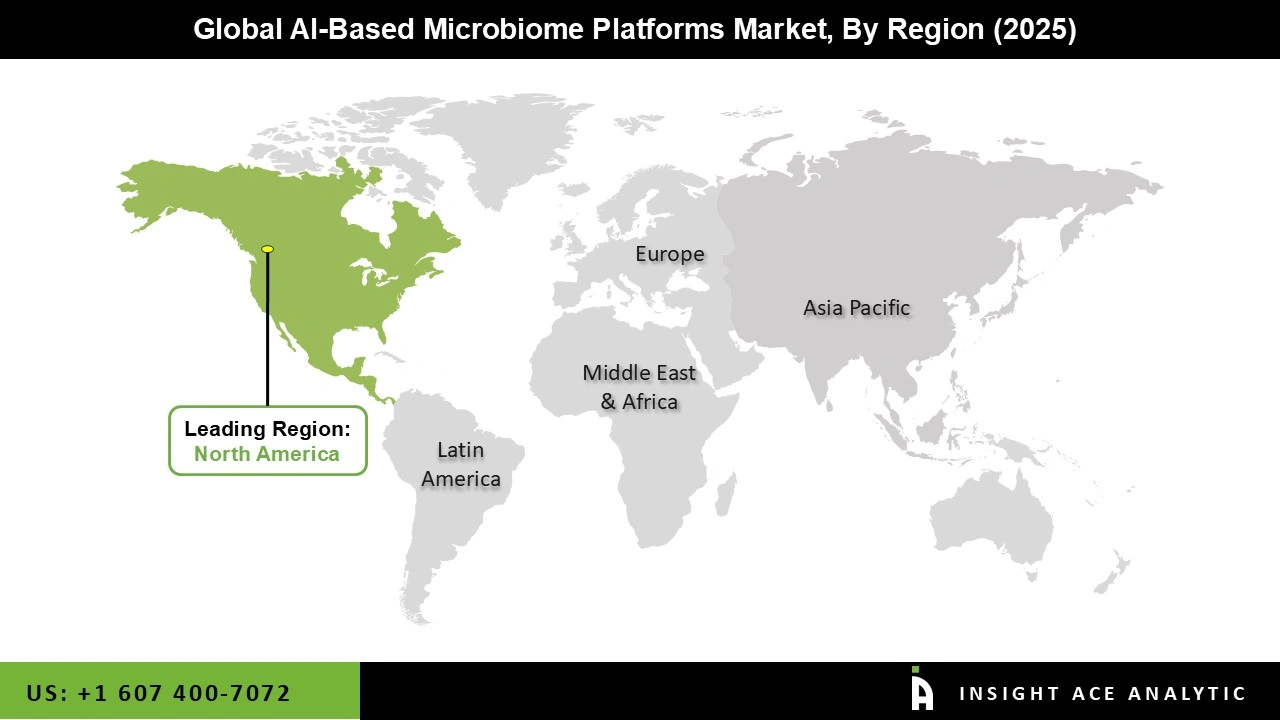
The main area for AI-based microbiome platforms in 2025 was North America. This is because North America has good biotechnology infrastructure, big AI technology companies and many microbiome research programs. The United States has been putting a lot of money into precision medicine, genomics, AI and computational biology. They are doing this by working with pharmaceutical companies, research institutes and healthcare organizations.
Other things that are helping include the use of cloud computing a lot of venture capital investments and having companies for sequencing technologies. The government is also giving a lot of money for research and this is helping to make AI-based healthcare technologies more popular.
Asia Pacific is expected to grow at the highest rate during the forecast period. Growth in the region is supported by expanding biotechnology activity, increasing genomics investment, rising healthcare digitalization, and growing AI research in countries such as China, Japan, South Korea, India, Singapore, and Australia.
Key Development:
• In July 2025, Viome Life Sciences collaborated with Microsoft to scale its RNA-based molecular health platform using AI and cloud computing, supporting personalized health insights based on microbiome and molecular data.
AI-Based Microbiome Platforms Market Report Scope:
| Report Attribute | Specifications |
| Market size value in 2025 | USD 0.66 Bn |
| Revenue forecast in 2035 | USD 2.23 Bn |
| Growth Rate CAGR | CAGR of 13.2% from 2026 to 2035 |
| Quantitative Units | Representation of revenue in USD Bn and CAGR from 2026 to 2035 |
| Historic Year | 2022 to 2025 |
| Forecast Year | 2026-2035 |
| Report Coverage | The forecast of revenue, the position of the company, the competitive market structure, growth prospects, and trends |
| Segments Covered | Microbiome Type, Deployment Mode, Application, End-user, and By Region |
| Regional Scope | North America; Europe; Asia Pacific; Latin America; Middle East & Africa |
| Country Scope | U.S.; Canada; U.K.; Germany; China; India; Japan; Brazil; Mexico; The UK; France; Italy; Spain; China; Japan; India; South Korea; Southeast Asia; South Korea; Southeast Asia |
| Competitive Landscape | Viome Life Sciences, Eagle Genomics Ltd., Microba Life Sciences, CosmosID, Second Genome, DayTwo Ltd., Phylagen Inc., Zymo Research Corporation, BaseClear B.V., BiomeSense Inc., QIAGEN N.V., Illumina Inc., Thermo Fisher Scientific Inc., Oxford Nanopore Technologies plc, BioGaia AB, Charles River Laboratories, Eurofins Scientific, Novogene Co., Ltd., Ginkgo Bioworks, Seed Health, Biotia Inc., Resphera Biosciences, DNAnexus, NVIDIA Corporation, Microsoft Corporation, and Google Cloud. |
| Customization Scope | Free customization report with the procurement of the report, Modifications to the regional and segment scope. Geographic competitive landscape. |
| Pricing and Available Payment Methods | Explore pricing alternatives that are customized to your particular study requirements. |
Segmentations of AI-Based Microbiome Platforms Market :
AI-Based Microbiome Platforms Market by Microbiome Type-
- Gut Microbiome
- Skin Microbiome
- Oral Microbiome
- Environment Microbiome
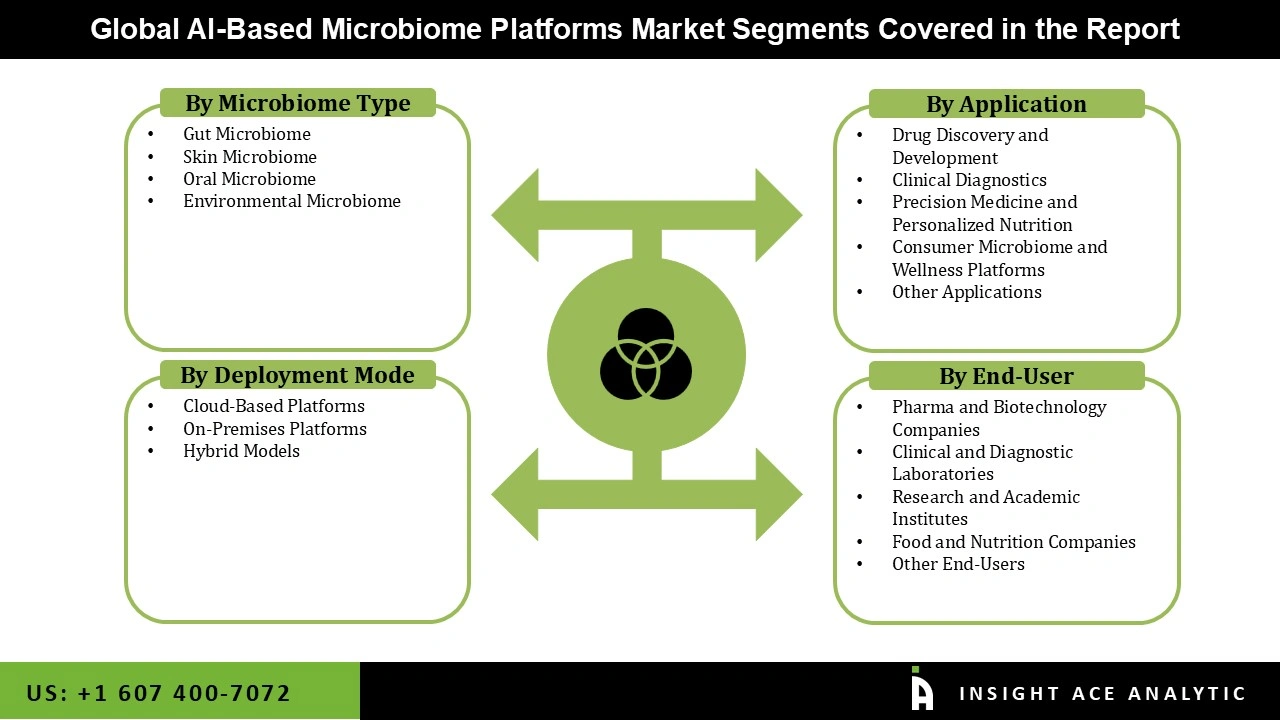
AI-Based Microbiome Platforms Market by Deployment Mode-
- Cloud
- On-premises
- Hybrid Models
AI-Based Microbiome Platforms Market by Application-
- Drug Discovery & Development
- Clinical Diagnostics
- Precision Medicine & Personalized Nutrition
- Consumer Microbiome & Wellness Platform
- Others
AI-Based Microbiome Platforms Market by End-user-
- Pharma & Biotechnology Companies
- Clinical & Diagnostic Laboratories
- Resraech & Academic Institutes
- Food & Nutrition Companies
- Others
AI-Based Microbiome Platforms Market By Region-
- North America-
- The US
- Canada
- Europe-
- Germany
- The UK
- France
- Italy
- Spain
- Rest of Europe
- Asia-Pacific-
- China
- Japan
- India
- South Korea
- South East Asia
- Rest of Asia Pacific
- Latin America-
- Brazil
- Argentina
- Mexico
- Rest of Latin America
- Middle East and Africa-
- GCC Countries
- South Africa
- Rest of Middle East and Africa
Research Design and Approach
This study employed a multi-step, mixed-method research approach that integrates:
- Secondary research
- Primary research
- Data triangulation
- Hybrid top-down and bottom-up modelling
- Forecasting and scenario analysis
This approach ensures a balanced and validated understanding of both macro- and micro-level market factors influencing the market.
Secondary Research
Secondary research for this study involved the collection, review, and analysis of publicly available and paid data sources to build the initial fact base, understand historical market behaviour, identify data gaps, and refine the hypotheses for primary research.
Sources Consulted
Secondary data for the market study was gathered from multiple credible sources, including:
- Government databases, regulatory bodies, and public institutions
- International organizations (WHO, OECD, IMF, World Bank, etc.)
- Commercial and paid databases
- Industry associations, trade publications, and technical journals
- Company annual reports, investor presentations, press releases, and SEC filings
- Academic research papers, patents, and scientific literature
- Previous market research publications and syndicated reports
These sources were used to compile historical data, market volumes/prices, industry trends, technological developments, and competitive insights.

Primary Research
Primary research was conducted to validate secondary data, understand real-time market dynamics, capture price points and adoption trends, and verify the assumptions used in the market modelling.
Stakeholders Interviewed
Primary interviews for this study involved:
- Manufacturers and suppliers in the market value chain
- Distributors, channel partners, and integrators
- End-users / customers (e.g., hospitals, labs, enterprises, consumers, etc., depending on the market)
- Industry experts, technology specialists, consultants, and regulatory professionals
- Senior executives (CEOs, CTOs, VPs, Directors) and product managers
Interview Process
Interviews were conducted via:
- Structured and semi-structured questionnaires
- Telephonic and video interactions
- Email correspondences
- Expert consultation sessions
Primary insights were incorporated into demand modelling, pricing analysis, technology evaluation, and market share estimation.
Data Processing, Normalization, and Validation
All collected data were processed and normalized to ensure consistency and comparability across regions and time frames.
The data validation process included:
- Standardization of units (currency conversions, volume units, inflation adjustments)
- Cross-verification of data points across multiple secondary sources
- Normalization of inconsistent datasets
- Identification and resolution of data gaps
- Outlier detection and removal through algorithmic and manual checks
- Plausibility and coherence checks across segments and geographies
This ensured that the dataset used for modelling was clean, robust, and reliable.
Market Size Estimation and Data Triangulation
Bottom-Up Approach
The bottom-up approach involved aggregating segment-level data, such as:
- Company revenues
- Product-level sales
- Installed base/usage volumes
- Adoption and penetration rates
- Pricing analysis
This method was primarily used when detailed micro-level market data were available.

Top-Down Approach
The top-down approach used macro-level indicators:
- Parent market benchmarks
- Global/regional industry trends
- Economic indicators (GDP, demographics, spending patterns)
- Penetration and usage ratios
This approach was used for segments where granular data were limited or inconsistent.
Hybrid Triangulation Approach
To ensure accuracy, a triangulated hybrid model was used. This included:
- Reconciling top-down and bottom-up estimates
- Cross-checking revenues, volumes, and pricing assumptions
- Incorporating expert insights to validate segment splits and adoption rates
This multi-angle validation yielded the final market size.
Forecasting Framework and Scenario Modelling
Market forecasts were developed using a combination of time-series modelling, adoption curve analysis, and driver-based forecasting tools.
Forecasting Methods
- Time-series modelling
- S-curve and diffusion models (for emerging technologies)
- Driver-based forecasting (GDP, disposable income, adoption rates, regulatory changes)
- Price elasticity models
- Market maturity and lifecycle-based projections
Scenario Analysis
Given inherent uncertainties, three scenarios were constructed:
- Base-Case Scenario: Expected trajectory under current conditions
- Optimistic Scenario: High adoption, favourable regulation, strong economic tailwinds
- Conservative Scenario: Slow adoption, regulatory delays, economic constraints
Sensitivity testing was conducted on key variables, including pricing, demand elasticity, and regional adoption.
Request Customization
Add countries, segments, company profiles, or extend forecast — free 10% customization with purchase.
Customize This Report →Enquire Before Buying
Speak with our analyst team about scope, methodology, pricing, or deliverable formats.
Enquire Now →Frequently Asked Questions
AI-Based Microbiome Platforms Market Size is valued at USD 0.66 Bn in 2025 and is predicted to reach USD 2.23 Bn by the year 2035
The AI-Based Microbiome Platforms Market is expected to grow at a 13.2% CAGR during the forecast period for 2026 to 2035
Viome Life Sciences, Eagle Genomics Ltd., Microba Life Sciences, CosmosID, Second Genome, DayTwo Ltd., Phylagen Inc., Zymo Research Corporation, BaseClear B.V., BiomeSense Inc., QIAGEN N.V., Illumina Inc., Thermo Fisher Scientific Inc., Oxford Nanopore Technologies plc, BioGaia AB, Charles River Laboratories, Eurofins Scientific, Novogene Co., Ltd., Ginkgo Bioworks, Seed Health, Biotia Inc., Resphera Biosciences, DNAnexus, NVIDIA Corporation, Microsoft Corporation, and Google Cloud and Others.
AI-Based Microbiome Platforms Market is segmented into Microbiome Type, Deployment Mode, Application, End-user, and Other.
North America region is leading the AI-Based Microbiome Platforms Market.