Pediatric Non Invasive Wearables Market Size, Trend, Revenue Report 2026 to 2035
What is Pediatric Non Invasive Wearables Market Size?
Pediatric Non Invasive Wearables Market Size is valued at USD 3.05 Bn in 2025 and is predicted to reach USD 11.31 Bn by the year 2035 at a 14.2% CAGR during the forecast period for 2026 to 2035.
Pediatric Non Invasive Wearables Market Size, Share & Trends Analysis By Product Type (Smartwatches, Fitness Bands, Patches), By Application (Health Monitoring, Fitness Tracking, Remote Patient Monitoring), By End-user (Hospitals, Homecare Settings, Specialty Clinics), and Segment Forecasts, 2026 to 2035
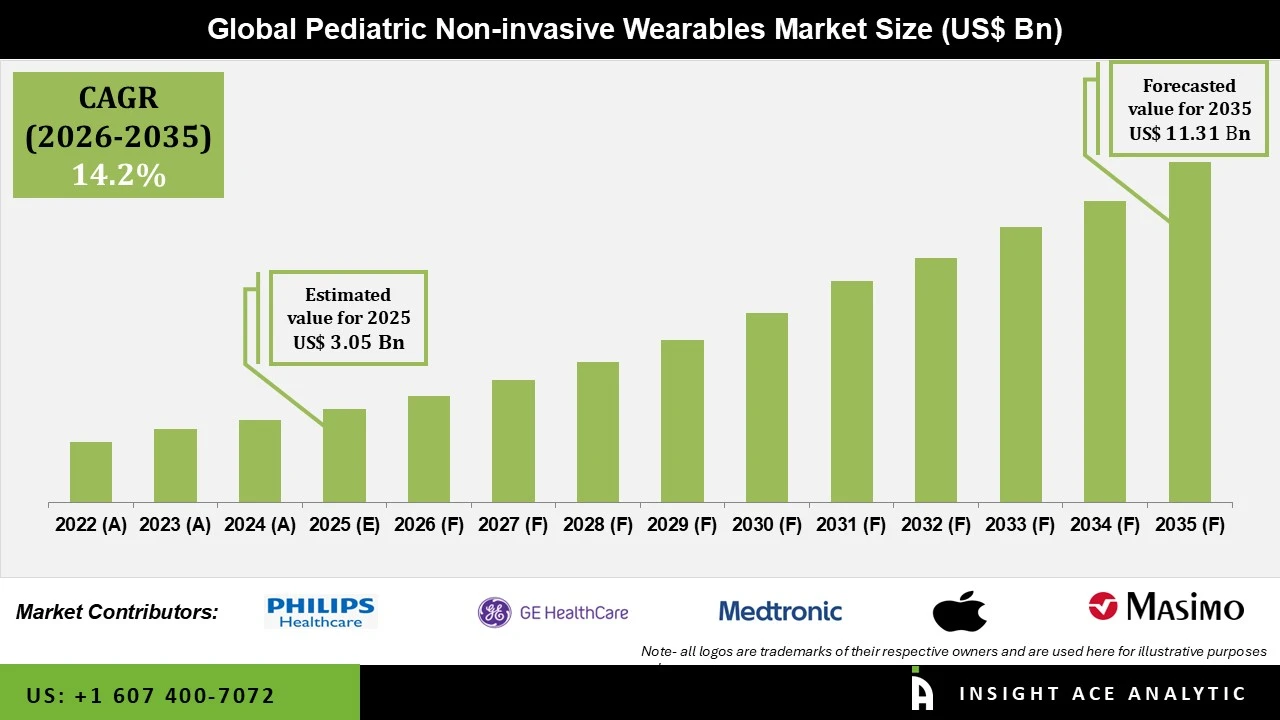
The pediatric non-invasive wearables consist of wearable health devices that are used to monitor and evaluate physiological functions and general well-being of the children without invasive actions and methods. Pediatric non-invasive wearables may include sensors and applications that continuously measure such indicators as heart rate, body temperature, oxygen saturation level, respiratory process, as well as physiological activities such as sleep and physical activity. Depending on a product, results are available to parents and caregivers through dedicated smartphone applications and connected healthcare portals. Growing demand for comfort and constant monitoring drives innovations within wearable technology market for children.
Increased adoption of remote patient monitoring, healthcare digitalization, and medical device connections drive growth of the pediatric non-invasive wearables market, since patients, caregivers, and healthcare professionals want to get necessary health data outside the clinical environment. Wearables help in conducting post-discharge monitoring of patients, chronic disease management, preventative healthcare, and providing the services at home without repeated visits to the hospital.
Moreover, continuous technological improvement is facilitating the development and introduction of wearable devices. Continuous development in sensors and wireless connectivity helps to make devices smaller and more comfortable to use. Connecting wearables to the smartphone allows users to collect and analyze physiological information during long periods and provides possibilities for more personalized care for children.
Furthermore, increasing awareness about preventive healthcare and detection of possible health problems stimulates caregivers to use wearable monitoring devices. Hospitals and specialty clinics begin using such devices for monitoring purposes, and homecare application field also expands along with popularizing connected healthcare. However, some challenges still remain as obstacles for the market including costs, regulation, data privacy issues, and accurate measurements.
Competitive Landscape
Which are the Leading Players in Pediatric Non-invasive Wearables Market?
• Philips
• Masimo
• GE HealthCare
• Medtronic
• Apple
• Samsung
• Garmin
• Fitbit (Google)
• Owlet
• Withings
• Xiaomi
• iRhythm
• Abbott
• Dexcom
• Empatica
• VitalConnect
• BioIntelliSense
• Preventice Solutions
• TempTraq
• Sibel Health
Market Dynamics
Driver
Growing Demand for Continuous Pediatric Health Monitoring
Continuous and painless tracking of children’s health is one of the main trends behind the development of the pediatric non-invasive wearable market. Monitoring in the traditional way usually involves the need to connect to the clinical equipment or visit healthcare facility periodically. In contrast, wearables allow you to track certain physiological functions during usual activity of a child.
Vitals and Temperature Monitoring Wearables can be recognized as important products because it allows you to monitor changes in the condition of a child without causing additional discomfort. It will help in home observation and post-hospital monitoring, as well as timely detection of changes in health. Market analysis shows that vitals and temperature wearables are leaders in this sphere.
Another trend that helps to push demand is the development of remote patient monitoring. Now there is a great need in maintaining the visibility about the status of the children even after hospitalization, especially when monitoring continues to be necessary.
Restrain/Challenge
High Device Costs, Clinical Validation, and Data Privacy Concerns
Some of the hurdles associated with pediatric non-invasive wearables include cost considerations, issues of accuracy, regulatory constraints, and data privacy. Pediatric devices should be designed and built in such a way that they are easy on the child, and are precise, comfortable and applicable at different age brackets.
Accuracy is very critical when it comes to wearing a device since the data gathered can be used to make critical healthcare decisions and can have varying effects on a person depending on their age and physiological makeup. Validation of wearable devices is thus imperative before they can be adopted in healthcare settings.
Privacy of data gathered by the wearable devices is yet another challenge because they contain confidential patient data. Data protection and proper data management strategies should be put in place. Additionally, integration into hospitals and electronic health systems may present further challenges to adoption of pediatric wearables.
Vitals & Temperature Wearables Segment is Expected to Drive the Pediatric Non-invasive Wearables Market
This is estimated to form the dominant share of the pediatric non-invasive wearables market. The wearable devices meet the primary monitoring needs and have capabilities like continuous monitoring of vitals and body temperature. They are easy to use at home or other healthcare settings as a result of their simple monitoring capabilities.
The increasing need to detect fever, changes in the patient's vitals, and to monitor patients after treatment has led to the increased need for this device. The fact that they are non-invasive means that they will be useful in infants and other young children who require many conventional monitoring tests. Market analysis studies have revealed that vitals and temperature wearables dominate the monitoring categories in the market today.
Health Monitoring Segment is Expected to Drive the Pediatric Non-invasive Wearables Market
It appears that health monitoring would still dominate applications of pediatric non-invasive wearables due to their continuous collection of parameters that could assist both parents and healthcare practitioners in recognizing any changes in them.
This particular application proves quite relevant in case a child requires constant monitoring, which could make such wearable monitoring more effective and help avoid the reliance on the sporadic collection of data from time to time.
Additionally, increasing attention towards preventive medicine and early diagnosis contributes to the expansion of wearable monitoring use. Since healthcare organizations are adopting the connected and home care approach, applications for health monitoring would continue dominating the industry.
Why North America Led the Pediatric Non-invasive Wearables Market?
North America will remain a dominant player in the pediatric non-invasive wearables market on account of its superior healthcare delivery system, high penetration of technology in healthcare, and availability of medical technology giants and wearable giants in the region.
The United States is highly developed when it comes to technologies that relate to remote patient monitoring, connected medical devices, and technologies for healthcare. Healthcare facilities are increasingly integrating digital monitoring solutions in their pediatric care while parents are growing accustomed to using wearables to track children’s health parameters.
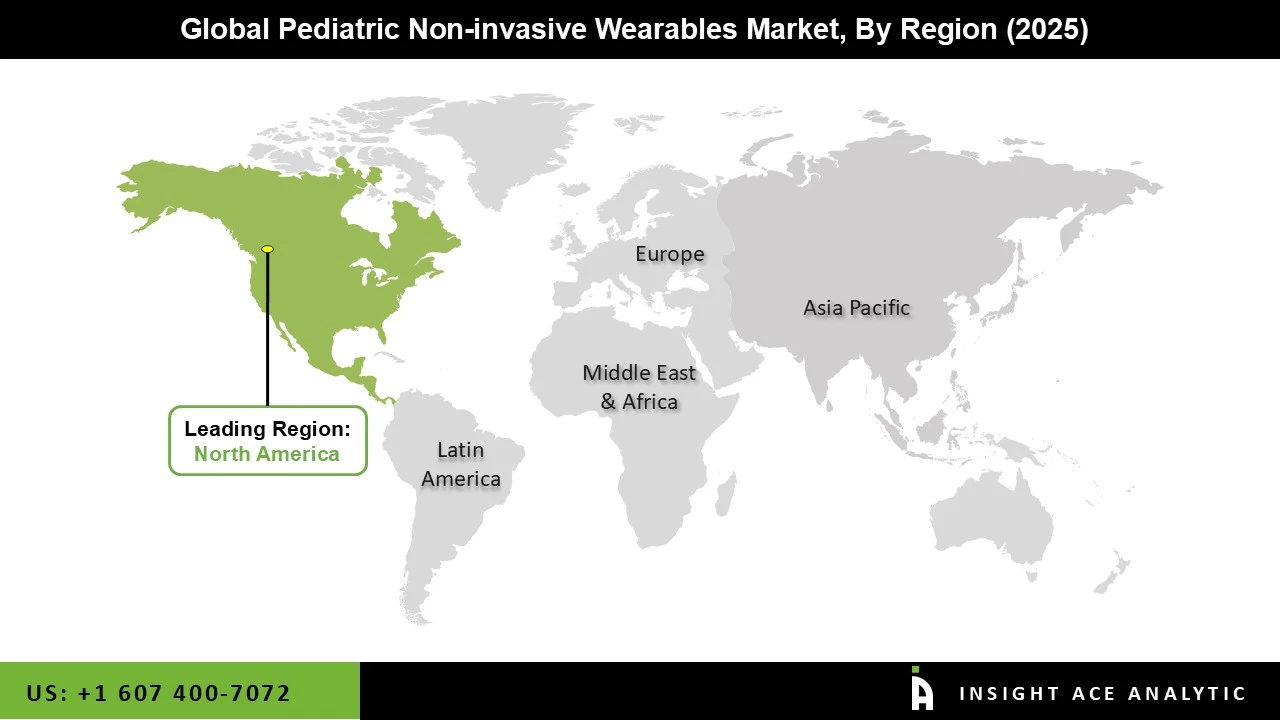
Research and development investments and presence of healthcare technology vendors drive innovation while regulatory experiences with connected medical devices and growth of home healthcare add value to regional market development. Estimates published by market analysts name North America the leading regional market.
Pediatric Non Invasive Wearables Market Report Scope:
| Report Attribute | Specifications |
| Market size value in 2025 | USD 3.05 Bn |
| Revenue forecast in 2035 | USD 11.31 Bn |
| Growth Rate CAGR | CAGR of 14.2% from 2026 to 2035 |
| Quantitative Units | Representation of revenue in US$ Bn and CAGR from 2026 to 2035 |
| Historic Year | 2022 to 2025 |
| Forecast Year | 2026-2035 |
| Report Coverage | The forecast of revenue, the position of the company, the competitive market structure, growth prospects, and trends |
| Segments Covered | Product Type, Application, End-user, and By Region |
| Regional Scope | North America; Europe; Asia Pacific; Latin America; Middle East & Africa |
| Country Scope | U.S.; Canada; U.K.; Germany; China; India; Japan; Brazil; Mexico; France; Italy; Spain; South Korea; Southeast Asia |
| Competitive Landscape | Philips, Masimo, GE HealthCare, Medtronic, Apple, Samsung, Garmin, Fitbit (Google), Owlet, Withings, Xiaomi, iRhythm, Abbott, Dexcom, Empatica, VitalConnect, BioIntelliSense, Preventice Solutions, TempTraq, and Sibel Health. |
| Customization Scope | Free customization report with the procurement of the report, Modifications to the regional and segment scope. Geographic competitive landscape. |
| Pricing and Available Payment Methods | Explore pricing alternatives that are customized to your particular study requirements. |
Market Segmentation:
Pediatric Non-invasive Wearables Market by Product Type -
• Smartwatches
• Fitness Bands
• Patches
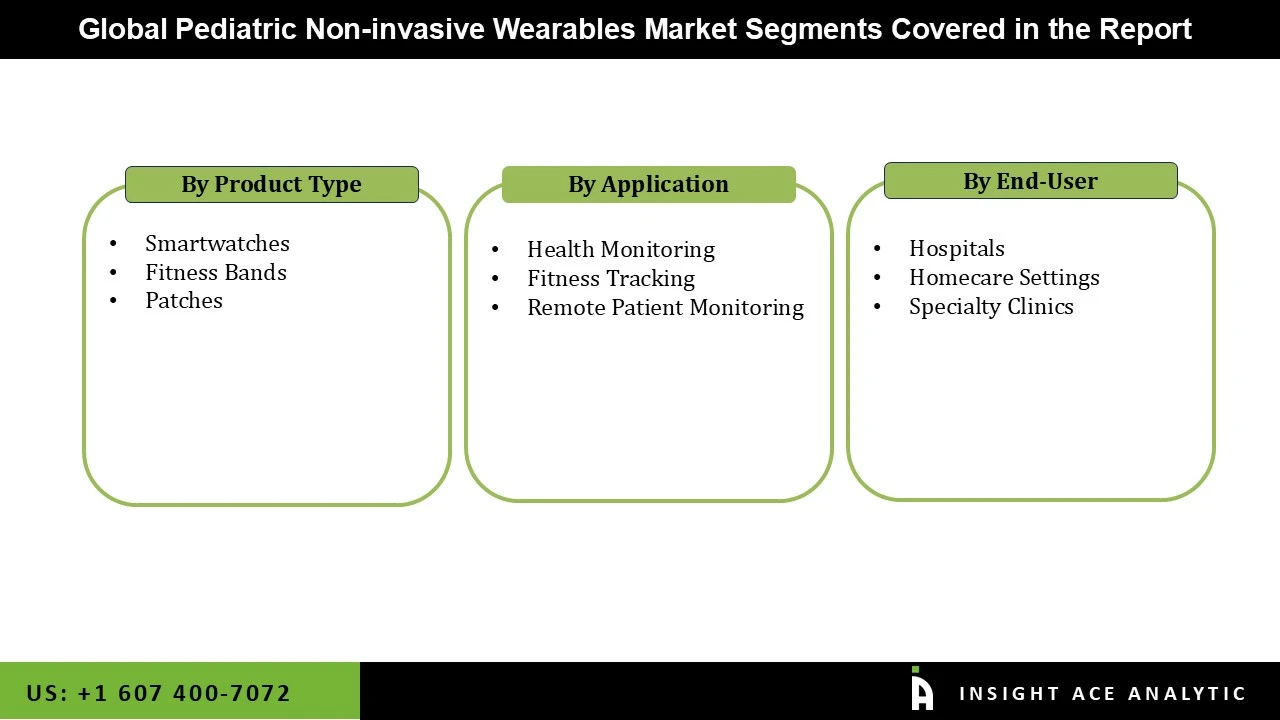
Pediatric Non-invasive Wearables Market by Application-
• Health Monitoring
• Fitness Tracking
• Remote Patient Monitoring
Pediatric Non-invasive Wearables Market by End-user-
• Hospitals
• Homecare Settings
• Specialty Clinics
Research Design and Approach
This study employed a multi-step, mixed-method research approach that integrates:
- Secondary research
- Primary research
- Data triangulation
- Hybrid top-down and bottom-up modelling
- Forecasting and scenario analysis
This approach ensures a balanced and validated understanding of both macro- and micro-level market factors influencing the market.
Secondary Research
Secondary research for this study involved the collection, review, and analysis of publicly available and paid data sources to build the initial fact base, understand historical market behaviour, identify data gaps, and refine the hypotheses for primary research.
Sources Consulted
Secondary data for the market study was gathered from multiple credible sources, including:
- Government databases, regulatory bodies, and public institutions
- International organizations (WHO, OECD, IMF, World Bank, etc.)
- Commercial and paid databases
- Industry associations, trade publications, and technical journals
- Company annual reports, investor presentations, press releases, and SEC filings
- Academic research papers, patents, and scientific literature
- Previous market research publications and syndicated reports
These sources were used to compile historical data, market volumes/prices, industry trends, technological developments, and competitive insights.

Primary Research
Primary research was conducted to validate secondary data, understand real-time market dynamics, capture price points and adoption trends, and verify the assumptions used in the market modelling.
Stakeholders Interviewed
Primary interviews for this study involved:
- Manufacturers and suppliers in the market value chain
- Distributors, channel partners, and integrators
- End-users / customers (e.g., hospitals, labs, enterprises, consumers, etc., depending on the market)
- Industry experts, technology specialists, consultants, and regulatory professionals
- Senior executives (CEOs, CTOs, VPs, Directors) and product managers
Interview Process
Interviews were conducted via:
- Structured and semi-structured questionnaires
- Telephonic and video interactions
- Email correspondences
- Expert consultation sessions
Primary insights were incorporated into demand modelling, pricing analysis, technology evaluation, and market share estimation.
Data Processing, Normalization, and Validation
All collected data were processed and normalized to ensure consistency and comparability across regions and time frames.
The data validation process included:
- Standardization of units (currency conversions, volume units, inflation adjustments)
- Cross-verification of data points across multiple secondary sources
- Normalization of inconsistent datasets
- Identification and resolution of data gaps
- Outlier detection and removal through algorithmic and manual checks
- Plausibility and coherence checks across segments and geographies
This ensured that the dataset used for modelling was clean, robust, and reliable.
Market Size Estimation and Data Triangulation
Bottom-Up Approach
The bottom-up approach involved aggregating segment-level data, such as:
- Company revenues
- Product-level sales
- Installed base/usage volumes
- Adoption and penetration rates
- Pricing analysis
This method was primarily used when detailed micro-level market data were available.

Top-Down Approach
The top-down approach used macro-level indicators:
- Parent market benchmarks
- Global/regional industry trends
- Economic indicators (GDP, demographics, spending patterns)
- Penetration and usage ratios
This approach was used for segments where granular data were limited or inconsistent.
Hybrid Triangulation Approach
To ensure accuracy, a triangulated hybrid model was used. This included:
- Reconciling top-down and bottom-up estimates
- Cross-checking revenues, volumes, and pricing assumptions
- Incorporating expert insights to validate segment splits and adoption rates
This multi-angle validation yielded the final market size.
Forecasting Framework and Scenario Modelling
Market forecasts were developed using a combination of time-series modelling, adoption curve analysis, and driver-based forecasting tools.
Forecasting Methods
- Time-series modelling
- S-curve and diffusion models (for emerging technologies)
- Driver-based forecasting (GDP, disposable income, adoption rates, regulatory changes)
- Price elasticity models
- Market maturity and lifecycle-based projections
Scenario Analysis
Given inherent uncertainties, three scenarios were constructed:
- Base-Case Scenario: Expected trajectory under current conditions
- Optimistic Scenario: High adoption, favourable regulation, strong economic tailwinds
- Conservative Scenario: Slow adoption, regulatory delays, economic constraints
Sensitivity testing was conducted on key variables, including pricing, demand elasticity, and regional adoption.
Request Customization
Add countries, segments, company profiles, or extend forecast — free 10% customization with purchase.
Customize This Report →Enquire Before Buying
Speak with our analyst team about scope, methodology, pricing, or deliverable formats.
Enquire Now →Frequently Asked Questions
Pediatric Non Invasive Wearables Market Size is valued at USD 3.05 Bn in 2025 and is predicted to reach USD 11.31 Bn by the year 2035
Pediatric Non Invasive Wearables Market is expected to grow at a 14.2% CAGR during the forecast period for 2026 to 2035.
Philips, Masimo, GE HealthCare, Medtronic, Apple, Samsung, Garmin, Fitbit (Google), Owlet, Withings, Xiaomi, iRhythm, Abbott, Dexcom, Empatica, VitalConnect, BioIntelliSense, Preventice Solutions, TempTraq, and Sibel Health.
Pediatric Non Invasive Wearables Market is segmented into Product Type, Application, End-user, and By Region
North America region is leading the Pediatric Non Invasive Wearables Market.