AI in Rare Disease Diagnostics Market Size, Share and Trends Analysis 2026 to 2035
Global AI in Rare Disease Diagnostics Market Size is valued at USD 1.7 Bn in 2025 and is predicted to reach USD 19.4 Bn by the year 2035 at a 28.7% CAGR during the forecast period for 2026 to 2035.
AI in Rare Disease Diagnostics Market Size, Share & Trends Analysis Distribution By Component (Hardware, Software, and Services), By Deployment Mode (Cloud-based and On-premise), By Technology (Computer Vision, Machine Learning, Natural Language Processing, Deep Learning, and Others), By Application (Metabolic Disorders, Genetic Disorders, Oncology Disorders, Neurological Disorders, and Others), By End-user (Hospitals, Research Institutes, Diagnostic Centers, and Others), and Segment Forecasts, 2026 to 2035
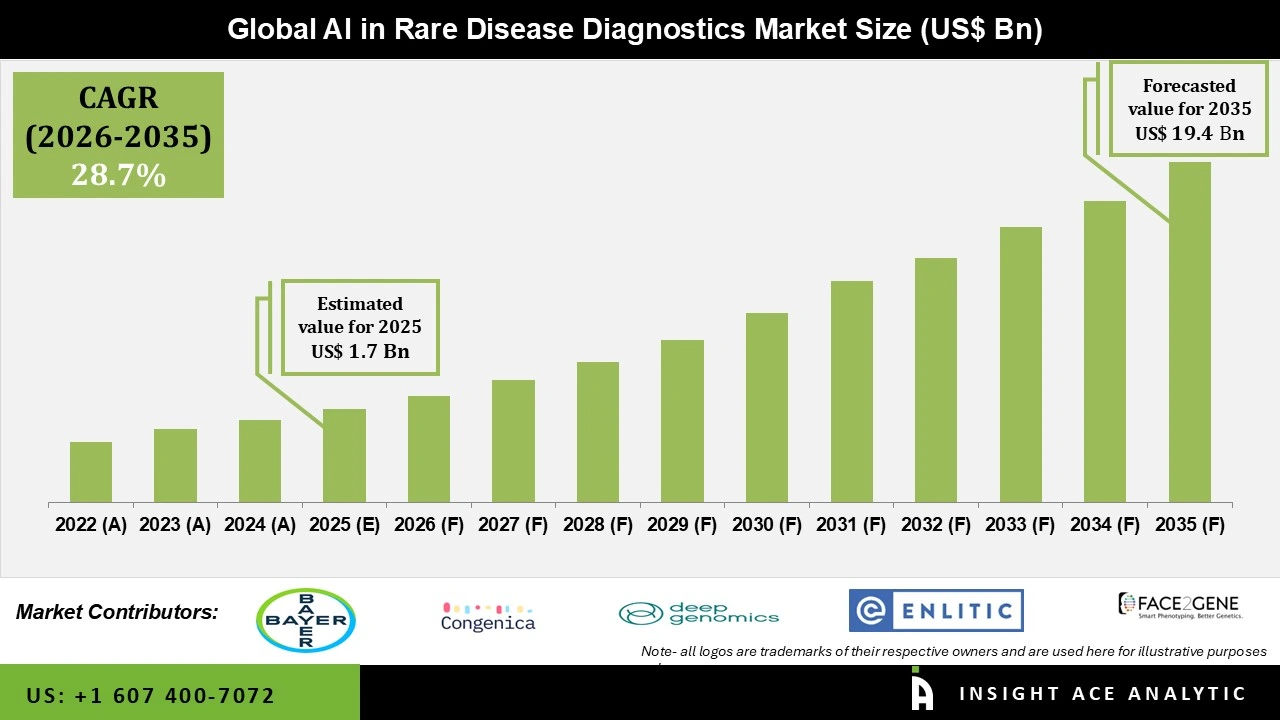
The use of sophisticated computational methods like machine learning, deep learning, and natural language processing to recognize, evaluate, and interpret complicated medical data for the early and precise identification of rare diseases is known as artificial intelligence (AI) in rare disease diagnostics. Large volumes of data, such as genetic sequencing data, medical images, electronic health records, and clinical notes, can be processed by AI systems to identify subtle patterns and correlations that are frequently challenging for clinicians to identify because rare disorders are uncommon and present in a variety of ways. The rising incidence of chronic illnesses, the growing need for precision diagnostics, and notable developments in machine learning algorithms that improve diagnostic precision and shorten clinical decision-making times are driving the AI in rare disease diagnostics market's expansion.
The AI in rare disease diagnostics market is anticipated to grow substantially due to the expansion of newborn screening programs worldwide, an increased emphasis on precision medicine and individualized treatment, the incorporation of artificial intelligence and machine learning in diagnostics, and improved healthcare systems in emerging markets. Moreover, leveraging AI for customized medicine, fostering partnerships between AI startups and healthcare providers, developing genomic diagnostics, and taking advantage of growing awareness of early detection are some of the major business prospects in the AI-powered rare illness diagnosis sector. Furthermore, the incorporation of AI-driven technologies in the diagnosis of rare diseases is further supported by the growing funding of rare illness research projects by governments and non-profits. Thus, this is anticipated to boost the AI in rare disease diagnostics market expansion over the forecast period.
In addition, the AI in rare disease diagnostics market is being driven by the increasing cooperation between research groups, tech firms, and healthcare institutions, which is encouraging innovation and knowledge exchange. The spread of biobanks, next-generation sequencing technologies, and electronic health records (EHRs) has produced a wealth of data that AI systems may use to learn. These partnerships are helping to create standardized procedures and legal frameworks in addition to improving the training and validation of AI models. Furthermore, an aging population, the expansion of healthcare infrastructure in emerging nations, and the rising incidence of rare illnesses worldwide are all contributing to the AI in rare disease diagnostics market's growth. However, there are significant barriers to the AI in rare disease diagnostics market, especially in the areas of data security, privacy, and regulatory compliance. The adoption of AI is hampered by the sensitive nature of patient data and the difficulty of exchanging data across borders, particularly in areas with strict data security regulations.
Competitive Landscape
Which are the Leading Players in AI in Rare Disease Diagnostics Market?
- Deep Genomics
- Bayer
- Congenica
- Enlitic
- Face2Gene
- BioMind
- Fabric Genomics
- FDNA
- IBM Watson Health
- Invitae
- Freenome
- GeneDx
- Mendel.ai
- Nostos Genomics
- PathAI
- SOPHiA GENETICS
- Tempus Labs
- PhenoTips
- Raremark
Market Dynamics
Driver
Growing Need for Early and Accurate Diagnosis of Rare Diseases
The AI in rare disease diagnostics market is primarily driven by the urgent need for early and accurate diagnosis of rare diseases, which frequently have complicated and confusing symptoms. It can take years for traditional diagnostic techniques to produce definitive results, which causes major treatment delays and higher patient morbidity. By quickly evaluating enormous and varied datasets, including genomic, phenotypic, and clinical data, AI-powered systems that make use of cutting-edge machine learning and deep learning techniques are transforming this field. This greatly reduces diagnostic odysseys and improves patient outcomes by allowing clinicians to find illness patterns and correlations that would otherwise go undiscovered. Additionally, the ongoing development of AI algorithms guarantees that diagnostic precision increases with time, solidifying AI's role in identifying uncommon diseases.
Restrain/Challenge
Lack of Representative, High-Quality Data Needed to Develop and Assess Reliable Models
The scarcity of high-quality, representative data required to train and evaluate trustworthy models is a major barrier to the AI in rare disease diagnostics market. Due to the limited patient populations associated with rare diseases, datasets are frequently dispersed between hospitals, nations, and registries, with different formats, missing clinical information, and inconsistent imaging or genomic standards. Additionally, many areas still lack interoperable health records, and stringent privacy regulations and consent requirements can make cross-institution data sharing costly and time-consuming. Due to the "data sparsity" and bias that result from this combination, physicians and regulators are hesitant since AI systems may perform well in one center but fail to generalize to new populations, age ranges, or ethnicities.
Software Segment is Expected to Drive the AI in Rare Disease Diagnostics Market
The software segment held the largest share in the AI in rare disease diagnostics market in 2024. The foundation of AI-powered systems is software, which includes specialized diagnostic algorithms, data analytics tools, and machine learning platforms. Clinicians may make well-informed judgments more quickly and accurately thanks to these software tools, which handle data intake, processing, pattern identification, and result interpretation. Furthermore, the widespread acceptance of AI solutions is being fueled by the ongoing improvement of software architectures and the incorporation of user-friendly interfaces, which are making AI solutions more accessible to healthcare professionals.
Genetic Disorders Segment is Growing at the Highest Rate in the AI in Rare Disease Diagnostics Market
In 2024, the genetic disorders segment dominated the AI in rare disease diagnostics market because genetics plays a crucial role in diagnosis, and because inherited uncommon diseases are becoming more common. AI-powered systems are excellent at finding harmful mutations, processing complex genomic data, and linking genotypic data to clinical symptoms. Early diagnosis and treatment of diseases such as muscular dystrophies, uncommon congenital syndromes, and cystic fibrosis are greatly improved by this skill. Additionally, the use of AI in conjunction with next-generation sequencing and genomic data processing has made it possible to identify novel genetic mutations and variants that cause disease with previously unheard-of speed and precision.
Why North America Led the AI in Rare Disease Diagnostics Market?
The AI in rare disease diagnostics market was dominated by North America region in 2024 attributed to the existence of top AI technology firms, significant expenditures in healthcare IT, sophisticated legal frameworks that encourage AI innovation, and the extensive use of electronic health record systems that enable AI integration. Strong cooperation between IT firms and healthcare providers benefits the area by fostering an environment that is favorable to the development and implementation of AI diagnostic solutions.
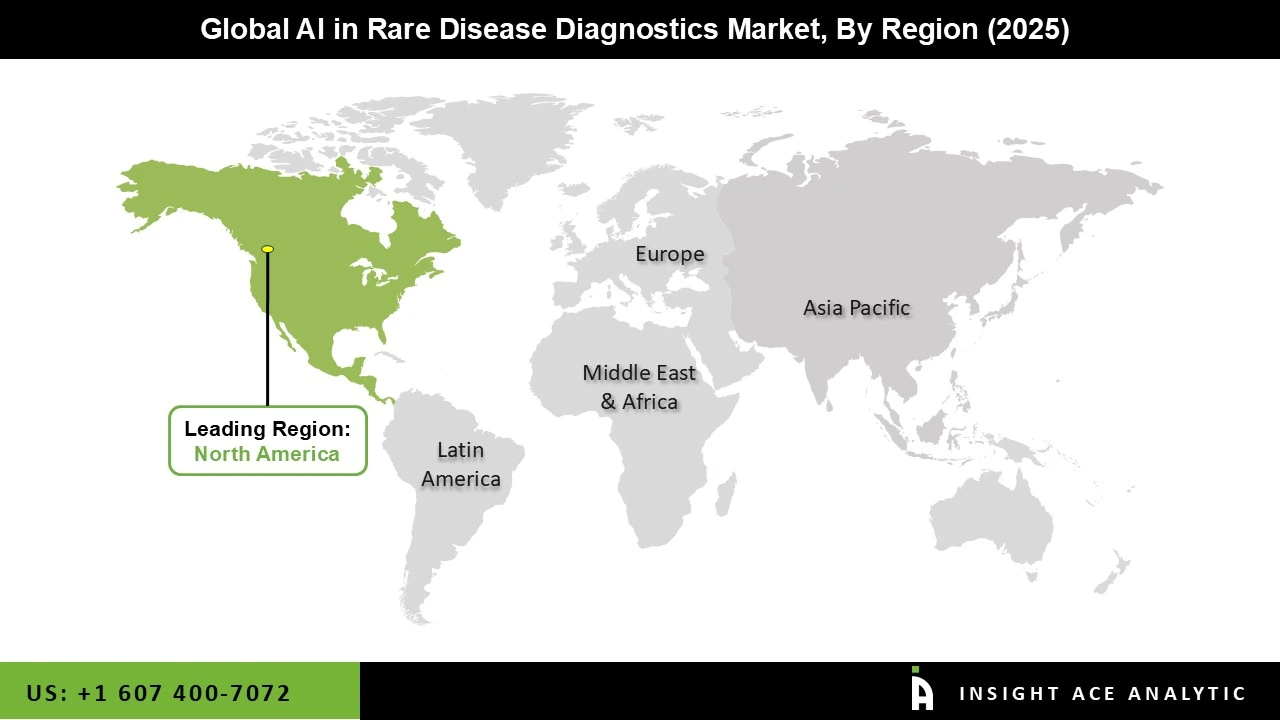
Additionally, the adoption of AI diagnostic tools is also made possible by the region's strong healthcare infrastructure, high healthcare spending, and significant emphasis on technology innovation. North America is leading the world in the application of AI medical diagnostics due to the implementation of comprehensive AI strategies by major U.S. healthcare systems that include clinical decision support, predictive analytics, and diagnostic imaging.
Key Development
- May 2025: Promoter AI, a sophisticated AI program developed by Illumina (US), aids in the interpretation of pathogenic regulatory genetic variations found in noncoding areas of the human genome. This technique is a revolutionary advancement in the detection of rare diseases since it provides a deeper understanding of these conditions.
- February 2025: Utilizing cutting-edge machine learning techniques, IT Medical LLC developed the Artificial Intelligence Diagnostics Assistant to improve diagnostic precision and shorten clinical decision-making times for medical professionals in a variety of disciplines.
March 2024: In order to accelerate innovation in healthcare AI applications and improve medical image-based diagnostic technology capabilities, Microsoft Corporation and NVIDIA Corporation announced their partnership to combine Microsoft Azure with NVIDIA DGX Cloud and Clara computing platforms. - October 2023: A unified whole-genome sequencing solution was introduced by Oxford Nanopore Technologies, a UK-based biotechnology company, and Fabric Genomics, an AI-driven US company. By combining speedy sequencing with AI-based variant interpretation, our partnership makes it possible to diagnose uncommon diseases more quickly and accurately. In order to swiftly identify uncommon genetic variants, the technology combines real-time nanopore sequencing with AI-powered genomic analysis. This provides doctors with practical insights that improve diagnostic speed and accuracy, particularly in pediatric treatment.
AI in Rare Disease Diagnostics Market Report Scope :
| Report Attribute | Specifications |
| Market size value in 2025 | USD 1.7 Bn |
| Revenue forecast in 2035 | USD 19.4 Bn |
| Growth Rate CAGR | CAGR of 28.7% from 2026 to 2035 |
| Quantitative Units | Representation of revenue in US$ Bn and CAGR from 2024 to 2034 |
| Historic Year | 2022 to 2025 |
| Forecast Year | 2026-2035 |
| Report Coverage | The forecast of revenue, the position of the company, the competitive market structure, growth prospects, and trends |
| Segments Covered | By Component, By Deployment Mode, By Technology, By Application, By End-user, and By Region |
| Regional Scope | North America; Europe; Asia Pacific; Latin America; Middle East & Africa |
| Country Scope | U.S.; Canada; U.K.; Germany; China; India; Japan; Brazil; Mexico; The UK; France; Italy; Spain; China; Japan; India; South Korea; Southeast Asia; South Korea; Southeast Asia |
| Competitive Landscape | Deep Genomics, Bayer, Congenica, Enlitic, Face2Gene, BioMind, Fabric Genomics, FDNA, IBM Watson Health, Invitae, Freenome, GeneDx, Mendel.ai, Nostos Genomics, PathAI, SOPHiA GENETICS, Tempus Labs, PhenoTips, and Raremark |
| Customization Scope | Free customization report with the procurement of the report, Modifications to the regional and segment scope. Geographic competitive landscape. |
| Pricing and Available Payment Methods | Explore pricing alternatives that are customized to your particular study requirements. |
Segmentation of AI in Rare Disease Diagnostics Market :
AI in Rare Disease Diagnostics Market by Component
- Hardware
- Software
- Services
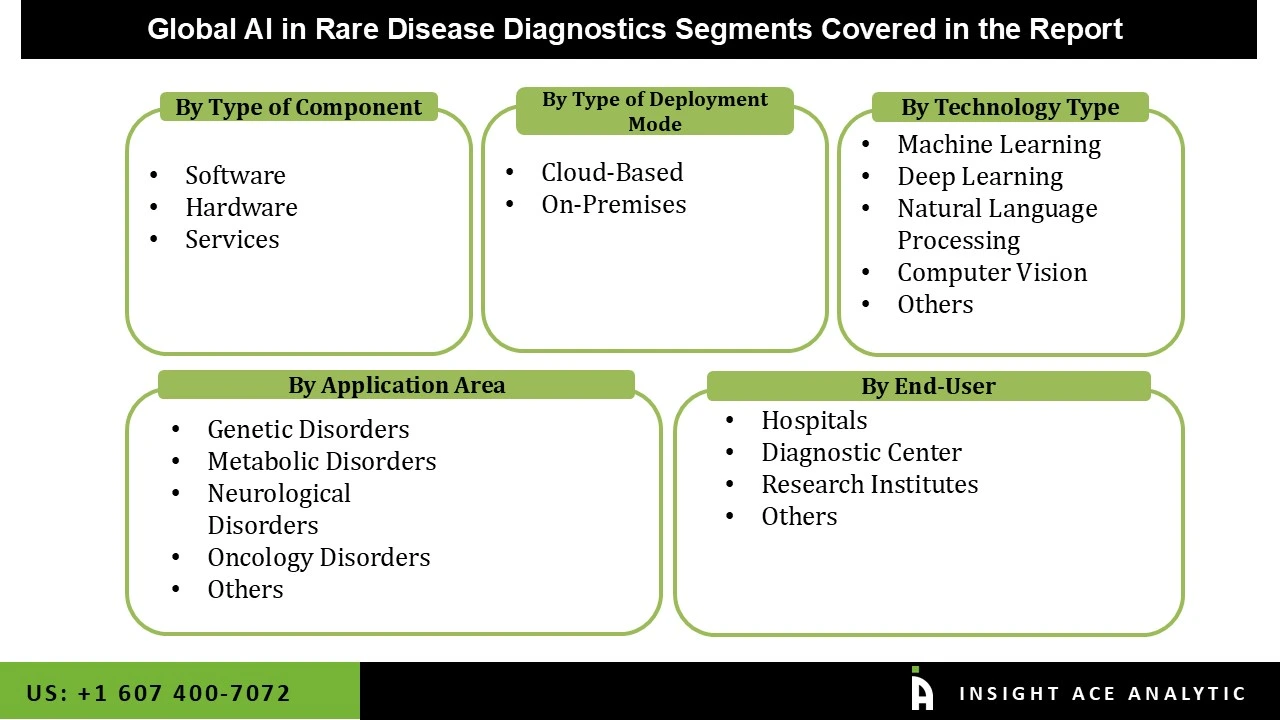
AI in Rare Disease Diagnostics Market by Deployment Mode
- Cloud-based
- On-premise
AI in Rare Disease Diagnostics Market by Technology
- Computer Vision
- Machine Learning
- Natural Language Processing
- Deep Learning
- Others
AI in Rare Disease Diagnostics Market by Application
- Metabolic Disorders
- Genetic Disorders
- Oncology Disorders
- Neurological Disorders
- Others
AI in Rare Disease Diagnostics Market by End-user
- Hospitals
- Research Institutes
- Diagnostic Centers
- Others
AI in Rare Disease Diagnostics Market-By Region
- North America-
- The US
- Canada
- Europe-
- Germany
- The UK
- France
- Italy
- Spain
- Rest of Europe
- Asia-Pacific-
- China
- Japan
- India
- South Korea
- South East Asia
- Rest of Asia Pacific
- Latin America-
- Brazil
- Argentina
- Mexico
- Rest of Latin America
- Middle East & Africa-
- GCC Countries
- South Africa
- Rest of Middle East and Africa
Research Design and Approach
This study employed a multi-step, mixed-method research approach that integrates:
- Secondary research
- Primary research
- Data triangulation
- Hybrid top-down and bottom-up modelling
- Forecasting and scenario analysis
This approach ensures a balanced and validated understanding of both macro- and micro-level market factors influencing the market.
Secondary Research
Secondary research for this study involved the collection, review, and analysis of publicly available and paid data sources to build the initial fact base, understand historical market behaviour, identify data gaps, and refine the hypotheses for primary research.
Sources Consulted
Secondary data for the market study was gathered from multiple credible sources, including:
- Government databases, regulatory bodies, and public institutions
- International organizations (WHO, OECD, IMF, World Bank, etc.)
- Commercial and paid databases
- Industry associations, trade publications, and technical journals
- Company annual reports, investor presentations, press releases, and SEC filings
- Academic research papers, patents, and scientific literature
- Previous market research publications and syndicated reports
These sources were used to compile historical data, market volumes/prices, industry trends, technological developments, and competitive insights.
Primary Research
Primary research was conducted to validate secondary data, understand real-time market dynamics, capture price points and adoption trends, and verify the assumptions used in the market modelling.
Stakeholders Interviewed
Primary interviews for this study involved:
- Manufacturers and suppliers in the market value chain
- Distributors, channel partners, and integrators
- End-users / customers (e.g., hospitals, labs, enterprises, consumers, etc., depending on the market)
- Industry experts, technology specialists, consultants, and regulatory professionals
- Senior executives (CEOs, CTOs, VPs, Directors) and product managers
Interview Process
Interviews were conducted via:
- Structured and semi-structured questionnaires
- Telephonic and video interactions
- Email correspondences
- Expert consultation sessions
Primary insights were incorporated into demand modelling, pricing analysis, technology evaluation, and market share estimation.
Data Processing, Normalization, and Validation
All collected data were processed and normalized to ensure consistency and comparability across regions and time frames.
The data validation process included:
- Standardization of units (currency conversions, volume units, inflation adjustments)
- Cross-verification of data points across multiple secondary sources
- Normalization of inconsistent datasets
- Identification and resolution of data gaps
- Outlier detection and removal through algorithmic and manual checks
- Plausibility and coherence checks across segments and geographies
This ensured that the dataset used for modelling was clean, robust, and reliable.
Market Size Estimation and Data Triangulation
Bottom-Up Approach
The bottom-up approach involved aggregating segment-level data, such as:
- Company revenues
- Product-level sales
- Installed base/usage volumes
- Adoption and penetration rates
- Pricing analysis
This method was primarily used when detailed micro-level market data were available.
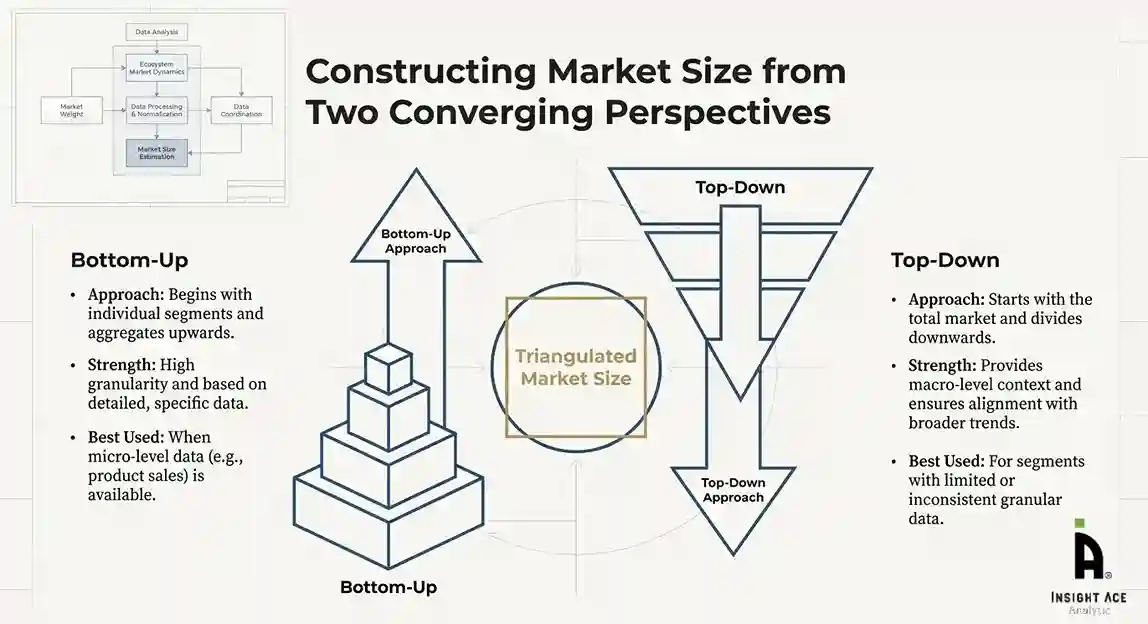
Top-Down Approach
The top-down approach used macro-level indicators:
- Parent market benchmarks
- Global/regional industry trends
- Economic indicators (GDP, demographics, spending patterns)
- Penetration and usage ratios
This approach was used for segments where granular data were limited or inconsistent.
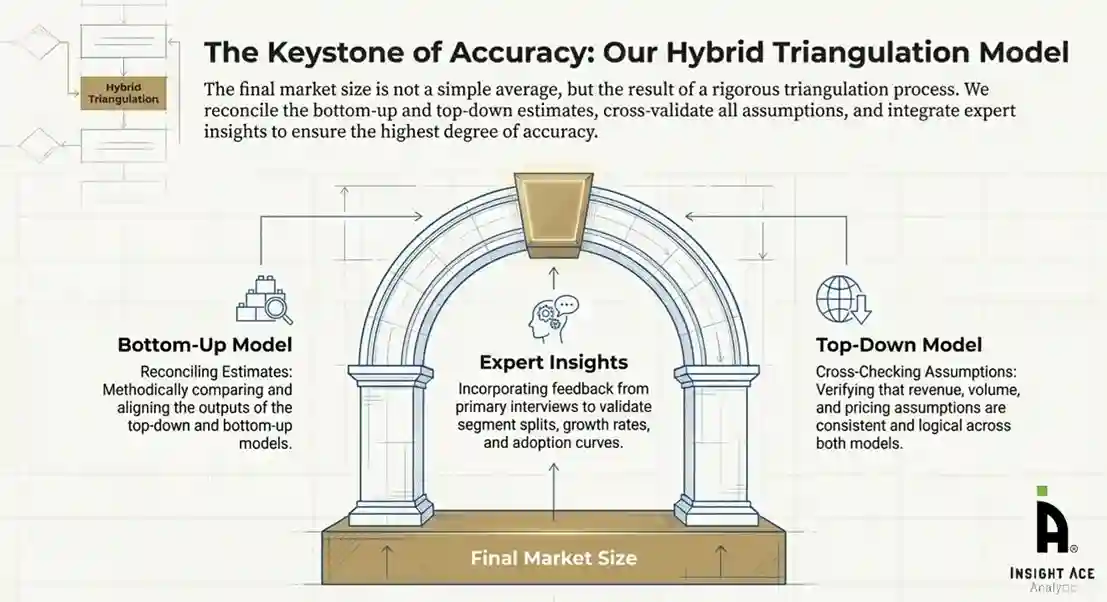
Hybrid Triangulation Approach
To ensure accuracy, a triangulated hybrid model was used. This included:
- Reconciling top-down and bottom-up estimates
- Cross-checking revenues, volumes, and pricing assumptions
- Incorporating expert insights to validate segment splits and adoption rates
This multi-angle validation yielded the final market size.
Forecasting Framework and Scenario Modelling
Market forecasts were developed using a combination of time-series modelling, adoption curve analysis, and driver-based forecasting tools.
Forecasting Methods
- Time-series modelling
- S-curve and diffusion models (for emerging technologies)
- Driver-based forecasting (GDP, disposable income, adoption rates, regulatory changes)
- Price elasticity models
- Market maturity and lifecycle-based projections
Scenario Analysis
Given inherent uncertainties, three scenarios were constructed:
- Base-Case Scenario: Expected trajectory under current conditions
- Optimistic Scenario: High adoption, favourable regulation, strong economic tailwinds
- Conservative Scenario: Slow adoption, regulatory delays, economic constraints
Sensitivity testing was conducted on key variables, including pricing, demand elasticity, and regional adoption.
Request Customization
Add countries, segments, company profiles, or extend forecast — free 10% customization with purchase.
Customize This Report →Enquire Before Buying
Speak with our analyst team about scope, methodology, pricing, or deliverable formats.
Enquire Now →Frequently Asked Questions
AI in Rare Disease Diagnostics Market Size is valued at USD 1.7 Bn in 2025 and is predicted to reach USD 19.4 Bn by the year 2035
AI in Rare Disease Diagnostics Market is expected to grow at a 28.7% CAGR during the forecast period for 2025 to 2034.
Deep Genomics, Bayer, Congenica, Enlitic, Face2Gene, BioMind, Fabric Genomics, FDNA, IBM Watson Health, Invitae, Freenome, GeneDx, Mendel.ai, Nostos Genomics, PathAI, SOPHiA GENETICS, Tempus Labs, PhenoTips, and Raremark
Component, Deployment Mode, Technology, Application and End-user are the key segments of the AI in Rare Disease Diagnostics Market.
North America region is leading the AI in Rare Disease Diagnostics Market.