Advanced Wound Care OTC Market Size, Share, Forecast Report 2026 to 2035
What is Advanced Wound Care OTC Market Size?
Global Advanced Wound Care OTC Market Size is valued at USD 7.53 Bn in 2025 and is predicted to reach USD 19.43 Bn by the year 2035 at a 10.2% CAGR during the forecast period for 2026 to 2035.
Advanced Wound Care OTC Market Size, Share & Trends Analysis Distribution by Product Type (Foam Dressings (Adhesive, Non-Adhesive Foam Dressings), Film Dressings, Non-Woven Post Operative Dressings, Greasy Gauzes, Hydrocolloids, Honey Dressings, Hydrogel Dressings, and Others), Application (Acute Wounds (Burns (only 1st degree burns), Surgical (post-surgical wounds) & Traumatic Wounds (lacerations, abrasions, and cuts)) and Chronic Wounds (Pressure Ulcers, Diabetic Foot Ulcers, Venous Leg Ulcers, Others)), Distribution Channel (Retail Pharmacies / Drugstores, E-commerce/Online Pharmacies / Health E-tailers, and Others), and Segment Forecasts, 2026 to 2035
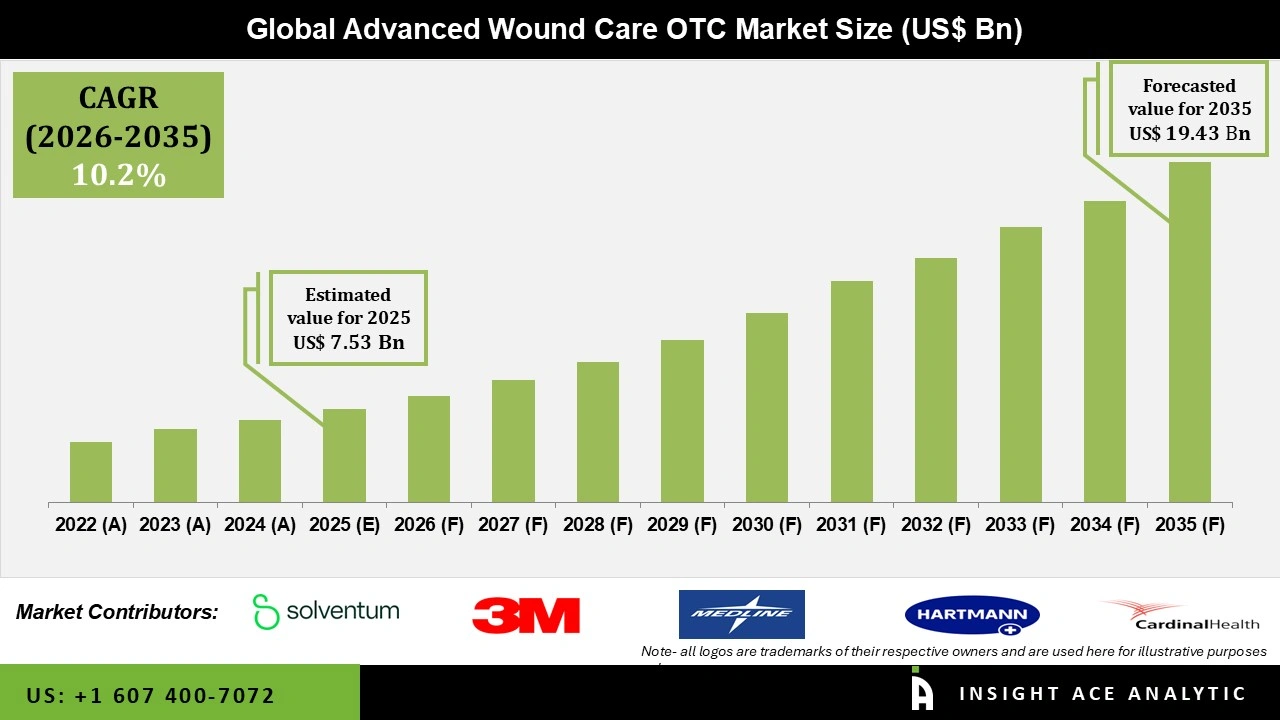
Advanced Wound Care OTC Market Key Takeaways:
|
The advanced wound care OTC (over-the-counter) refers to a group of wound care products that are accessible without a prescription and are intended to accelerate healing, protect the wound, and lower the risk of infection. These products maintain a moist healing environment, which is believed to speed up tissue repair and reduce scarring, using contemporary materials and technologies such as hydrocolloid, hydrogel, foam, alginate dressings, antimicrobial ointments, and silicone-based bandages. For minor cuts, burns, abrasions, blisters, and small surgical wounds, advanced over-the-counter wound care solutions are frequently utilized. The rising frequency of acute wounds, such as burns, traumatic injuries, and surgical wounds, which call for quick and efficient wound care, is the main factor for the advanced wound care OTC market's expansion.
The need for cutting-edge over-the-counter (OTC) wound care solutions that accelerate healing and lower the risk of infection has increased due to rising numbers of traffic accidents, sports injuries, and surgical procedures worldwide. The Total Family Care Center reported in April 2025 that about 11 million Americans suffer from acute wounds each year, with about 300,000 of those instances needing hospital treatment. This is anticipated to boost the advanced wound care OTC market expansion over the forecast period. Additionally, the increasing number of regulatory approvals for over-the-counter advanced wound care treatments is expected to fuel substantial market expansion in the years to come. With these approvals, consumers now have more access to cutting-edge wound care procedures outside of conventional medical settings. Furthermore, there is a noticeable increase in burn incidence, which will support the advanced wound care OTC market expansion.
In addition, the advanced wound care OTC market is anticipated to increase substantially due to the increasing prevalence of various wound types, such as small cuts, lacerations, abrasions, blisters, pressure ulcers, diabetic foot ulcers, and burns. Such injuries affect a significant portion of the population in many nations, which increases the need for easily accessible and efficient at-home treatment options. For instance, according to data published in April 2025 by the Total Family Care Center, an estimated 11 million Americans suffer from acute wounds annually, of which only around 300,000 need hospitalization. This shows that the majority of these cases are treated at home with over-the-counter products, highlighting the significant market potential for cutting-edge wound care products designed for self-care and at-home use. Moreover, the advanced wound care OTC market is growing because of the quick development of digital distribution channels such as online pharmacies, manufacturer websites, and e-commerce marketplaces.
Competitive Landscape
Which are the Leading Players in Advanced Wound Care OTC Market?
- Solventum
- Convatec Group PLC
- Smith+Nephew
- 3M
- Coloplast Group
- Mölnlycke AB
- Sonoma Pharmaceuticals, Inc.
- B. Braun SE
- Beiersdorf
- Medline Industries, LP.
- PAUL HARTMANN AG
- Cardinal Health
- Dimora Medical
- Remedium Healthcare Products
- DeRoyal Industries, Inc.
- Vomaris Innovations, Inc.
- Lavior
Market Dynamics
Driver
Growing Rates of Chronic Wounds and Minor Injuries
The rising prevalence of minor injuries, burns, cuts, and chronic wounds in the world's population is one of the main factors propelling the advanced wound care OTC market. The need for prompt and efficient wound care solutions has grown dramatically due to the rise in sports, outdoor activities, and occupational injuries. Additionally, people are adopting improved wound care solutions for early treatment and avoidance of complications due to the increased risk of wounds like diabetic foot ulcers brought on by the rising prevalence of chronic illnesses such as diabetes. Since OTC advanced dressings such as hydrocolloid and antimicrobial bandages promote quicker healing, lower the risk of infection, and require fewer dressing changes than conventional gauze products, consumers are increasingly choosing them. Furthermore, the advanced wound care OTC market is expanding due to the ease of readily available over-the-counter (OTC) treatments in pharmacies and online, as well as the growing awareness of contemporary wound management procedures.
Restrain/Challenge
Expensive in Comparison to Conventional Wound Care Products
The comparatively greater price of these items in comparison to traditional wound care solutions, such as cotton gauze, adhesive bandages, and antiseptic lotions, is a significant barrier to the advanced wound care OTC market. In order to maintain ideal moisture levels, enhance healing, and lower the risk of infection, advanced wound dressings require specific materials and technologies, which raises the cost of production. Because of this, these goods are frequently more expensive, making them less accessible to customers in price-sensitive markets, especially in developing nations. Despite the therapeutic benefits of improved over-the-counter (OTC) wound care therapies, many people still favor traditional wound care products because of their affordability and accessibility. This expense barrier may hinder the advanced wound care OTC market penetration, particularly for those with lower incomes.
Hydrocolloids Segment is Expected to Drive the Advanced Wound Care OTC Market
The hydrocolloids category held the largest share in the Advanced Wound Care OTC market in 2025 because of their special capacity to provide a moist wound healing environment that speeds up tissue regeneration and lessens discomfort. These dressings are very successful for a variety of wound types because they are made of gel-forming chemicals that absorb exudates while preserving a barrier against external pollutants. Patient compliance and convenience in over-the-counter settings are improved by their flexibility and ease of use, which allow patients to self-manage wounds without frequent dressing changes. Furthermore, by offering occlusive protection—which is essential for wound healing outside of clinical settings—hydrocolloid dressings reduce the incidence of secondary infections. The usage of hydrocolloid dressings is also being accelerated by the growing consumer preference for at-home wound care options.
Chronic Wounds Segment is Growing at the Highest Rate in the Advanced Wound Care OTC Market
In 2025, the chronic wounds category dominated the Advanced Wound Care OTC market, primarily driven by the rising prevalence of pressure ulcers, venous insufficiency, and diabetes globally. The need for readily available and trustworthy over-the-counter wound care treatments is increased by the length of time these wounds need to be managed, which frequently goes beyond clinical settings into long-term home care. Additionally, patients with chronic wounds benefit greatly from sophisticated dressings that prevent microbial infections and maintain a moist environment, which shortens healing durations and lowers readmission rates to hospitals. The intricacy of chronic wounds demands treatments that actively promote tissue regeneration and exudate control in addition to providing coverage and protection—qualities that sophisticated over-the-counter wound care products adequately handle.
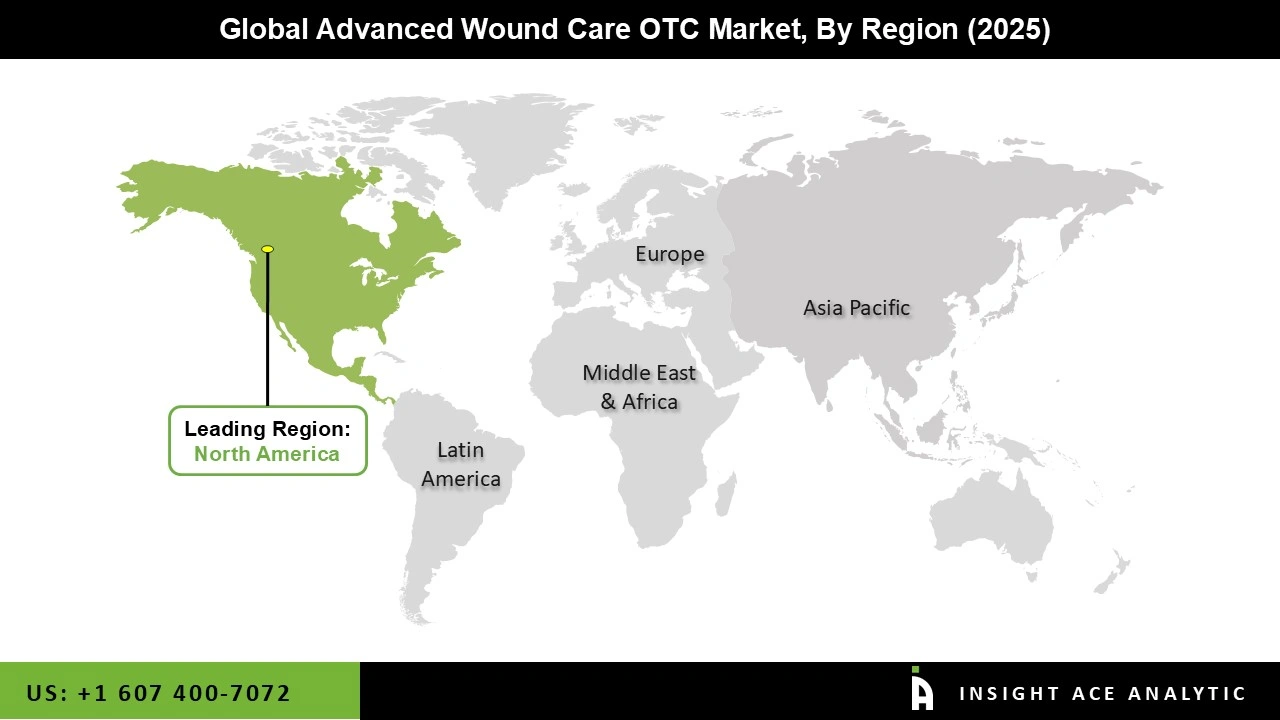
Why North America Led the Advanced Wound Care OTC Market?
The Advanced Wound Care OTC market was dominated by North America region in 2025 because the region has a strong, well-established healthcare infrastructure and a high level of awareness of contemporary wound care products. Since they encourage quicker healing and lower the risk of infection, consumers in the US and Canada are increasingly choosing cutting-edge over-the-counter wound care treatments such as hydrocolloid bandages, antimicrobial dressings, and hydrogel products.
The need for efficient wound care solutions is also being fueled by the growing frequency of chronic illnesses like diabetes, which frequently result in sores such as diabetic foot ulcers. Further promoting market expansion are the aging population, rising sports and outdoor activity involvement, and the robust availability of cutting-edge wound care products through pharmacies, retail establishments, and e-commerce platforms.
Key Development
In April 2024, The FDA approved Vomaris Inc.'s PowerHeal bioelectric bandage for over-the-counter use. The bandage, which has microcell batteries comprised of elemental silver and zinc, is intended to treat superficial wounds such as small cuts, abrasions, and blisters. The microcells generate therapeutic microcurrents that accelerate healing and aid in infection prevention when stimulated by a conductive liquid such as saline, hydrogel, or wound exudate.
Advanced Wound Care OTC Market Report Scope :
| Report Attribute | Specifications |
| Market size value in 2025 | USD 7.53 Bn |
| Revenue forecast in 2035 | USD 19.43 Bn |
| Growth Rate CAGR | CAGR of 10.2% from 2026 to 2035 |
| Quantitative Units | Representation of revenue in US$ Bn and CAGR from 2026 to 2035 |
| Historic Year | 2022 to 2025 |
| Forecast Year | 2026 to 2035 |
| Report Coverage | The forecast of revenue, the position of the company, the competitive market structure, growth prospects, and trends |
| Segments Covered | Product Type, Application, Distribution Channel, and By Region |
| Regional Scope | North America; Europe; Asia Pacific; Latin America; Middle East & Africa |
| Country Scope | U.S.; Canada; U.K.; Germany; China; India; Japan; Brazil; Mexico; The UK; France; Italy; Spain; China; Japan; India; South Korea; Southeast Asia; South Korea; Southeast Asia |
| Competitive Landscape | Solventum, Convatec Group PLC, Smith+Nephew, 3M, Coloplast Group, Mölnlycke AB, Sonoma Pharmaceuticals, Inc., B. Braun SE, Beiersdorf, Medline Industries, LP., PAUL HARTMANN AG, Cardinal Health, Dimora Medical, Remedium Healthcare Products, DeRoyal Industries, Inc., Vomaris Innovations, Inc., and Lavior |
| Customization Scope | Free customization report with the procurement of the report, Modifications to the regional and segment scope. Geographic competitive landscape. |
| Pricing and Available Payment Methods | Explore pricing alternatives that are customized to your particular study requirements. |
Segmentations of Advanced Wound Care OTC Market :
Advanced Wound Care OTC Market, by Product Type-
- Foam Dressings
- Adhesive
- Non-Adhesive Foam Dressings
- Film Dressings
- Non-Woven Post Operative Dressings
- Greasy Gauzes
- Hydrocolloids
- Honey Dressings
- Hydrogel Dressings
- Others
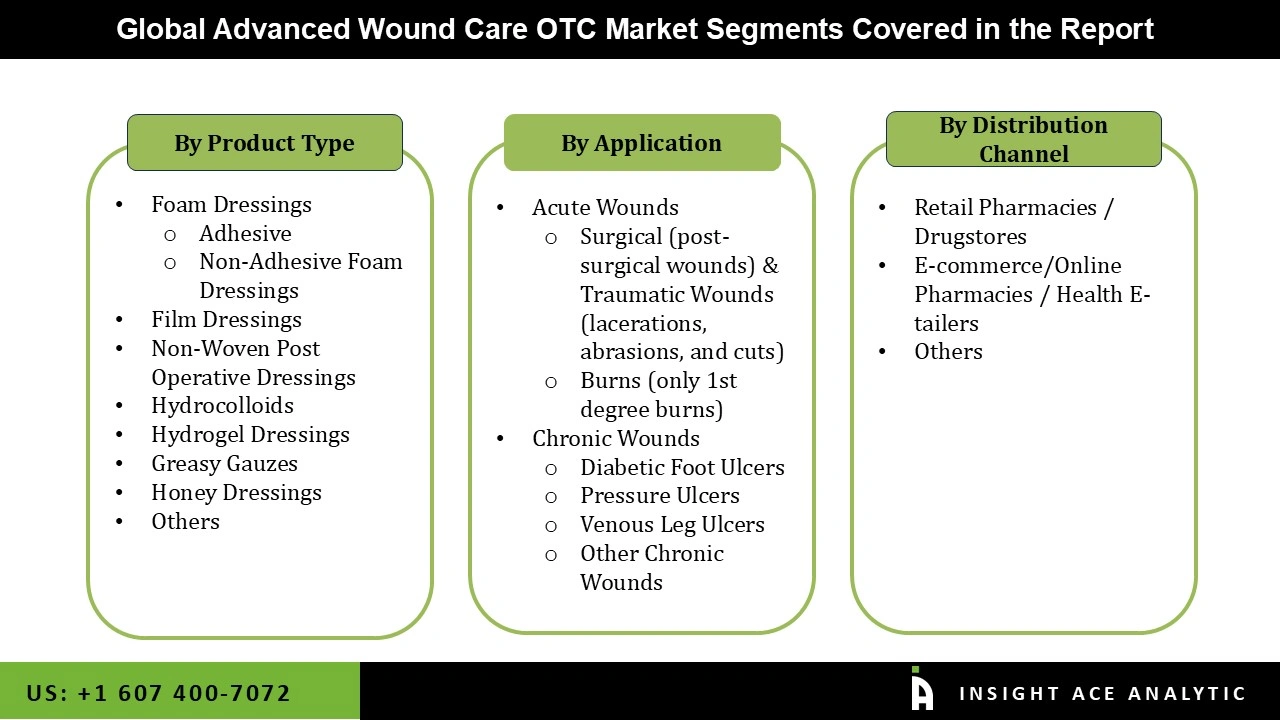
Advanced Wound Care OTC Market, by Application-
- Acute Wounds
- Burns (only 1st degree burns)
- Surgical (post-surgical wounds) & Traumatic Wounds (lacerations, abrasions, and cuts)
- Chronic Wounds
- Pressure Ulcers
- Diabetic Foot Ulcers
- Venous Leg Ulcers
- Others
Advanced Wound Care OTC Market, by Distribution Channel-
- Retail Pharmacies / Drugstores
- E-commerce/Online Pharmacies / Health E-tailers
- Others
Advanced Wound Care OTC Market, by Region-
- North America-
- The US
- Canada
- Europe-
- Germany
- The UK
- France
- Italy
- Spain
- Rest of Europe
- Asia-Pacific-
- China
- Japan
- India
- South Korea
- South East Asia
- Rest of Asia Pacific
- Latin America-
- Brazil
- Argentina
- Mexico
- Rest of Latin America
- Middle East & Africa-
- GCC Countries
- South Africa
- Rest of Middle East and Africa
Research Design and Approach
This study employed a multi-step, mixed-method research approach that integrates:
- Secondary research
- Primary research
- Data triangulation
- Hybrid top-down and bottom-up modelling
- Forecasting and scenario analysis
This approach ensures a balanced and validated understanding of both macro- and micro-level market factors influencing the market.
Secondary Research
Secondary research for this study involved the collection, review, and analysis of publicly available and paid data sources to build the initial fact base, understand historical market behaviour, identify data gaps, and refine the hypotheses for primary research.
Sources Consulted
Secondary data for the market study was gathered from multiple credible sources, including:
- Government databases, regulatory bodies, and public institutions
- International organizations (WHO, OECD, IMF, World Bank, etc.)
- Commercial and paid databases
- Industry associations, trade publications, and technical journals
- Company annual reports, investor presentations, press releases, and SEC filings
- Academic research papers, patents, and scientific literature
- Previous market research publications and syndicated reports
These sources were used to compile historical data, market volumes/prices, industry trends, technological developments, and competitive insights.

Primary Research
Primary research was conducted to validate secondary data, understand real-time market dynamics, capture price points and adoption trends, and verify the assumptions used in the market modelling.
Stakeholders Interviewed
Primary interviews for this study involved:
- Manufacturers and suppliers in the market value chain
- Distributors, channel partners, and integrators
- End-users / customers (e.g., hospitals, labs, enterprises, consumers, etc., depending on the market)
- Industry experts, technology specialists, consultants, and regulatory professionals
- Senior executives (CEOs, CTOs, VPs, Directors) and product managers
Interview Process
Interviews were conducted via:
- Structured and semi-structured questionnaires
- Telephonic and video interactions
- Email correspondences
- Expert consultation sessions
Primary insights were incorporated into demand modelling, pricing analysis, technology evaluation, and market share estimation.
Data Processing, Normalization, and Validation
All collected data were processed and normalized to ensure consistency and comparability across regions and time frames.
The data validation process included:
- Standardization of units (currency conversions, volume units, inflation adjustments)
- Cross-verification of data points across multiple secondary sources
- Normalization of inconsistent datasets
- Identification and resolution of data gaps
- Outlier detection and removal through algorithmic and manual checks
- Plausibility and coherence checks across segments and geographies
This ensured that the dataset used for modelling was clean, robust, and reliable.
Market Size Estimation and Data Triangulation
Bottom-Up Approach
The bottom-up approach involved aggregating segment-level data, such as:
- Company revenues
- Product-level sales
- Installed base/usage volumes
- Adoption and penetration rates
- Pricing analysis
This method was primarily used when detailed micro-level market data were available.

Top-Down Approach
The top-down approach used macro-level indicators:
- Parent market benchmarks
- Global/regional industry trends
- Economic indicators (GDP, demographics, spending patterns)
- Penetration and usage ratios
This approach was used for segments where granular data were limited or inconsistent.
Hybrid Triangulation Approach
To ensure accuracy, a triangulated hybrid model was used. This included:
- Reconciling top-down and bottom-up estimates
- Cross-checking revenues, volumes, and pricing assumptions
- Incorporating expert insights to validate segment splits and adoption rates
This multi-angle validation yielded the final market size.
Forecasting Framework and Scenario Modelling
Market forecasts were developed using a combination of time-series modelling, adoption curve analysis, and driver-based forecasting tools.
Forecasting Methods
- Time-series modelling
- S-curve and diffusion models (for emerging technologies)
- Driver-based forecasting (GDP, disposable income, adoption rates, regulatory changes)
- Price elasticity models
- Market maturity and lifecycle-based projections
Scenario Analysis
Given inherent uncertainties, three scenarios were constructed:
- Base-Case Scenario: Expected trajectory under current conditions
- Optimistic Scenario: High adoption, favourable regulation, strong economic tailwinds
- Conservative Scenario: Slow adoption, regulatory delays, economic constraints
Sensitivity testing was conducted on key variables, including pricing, demand elasticity, and regional adoption.
Request Customization
Add countries, segments, company profiles, or extend forecast — free 10% customization with purchase.
Customize This Report →Enquire Before Buying
Speak with our analyst team about scope, methodology, pricing, or deliverable formats.
Enquire Now →Frequently Asked Questions
Advanced Wound Care OTC Market Size is valued at USD 7.53 Bn in 2025 and is predicted to reach USD 19.53 Bn by the year 2035
Advanced Wound Care OTC Market is expected to grow at an 10.2% CAGR during the forecast period for 2026 to 2035.
Solventum, Convatec Group PLC, Smith+Nephew, 3M, Coloplast Group, Mölnlycke AB, Sonoma Pharmaceuticals, Inc., B. Braun SE, Beiersdorf, Medline Industries, LP., PAUL HARTMANN AG, Cardinal Health, Dimora Medical, Remedium Healthcare Products, DeRoyal Industries, Inc., Vomaris Innovations, Inc., Lavior and others
Advanced Wound Care OTC Market is segmented into Product Type, Application, Distribution Channel, and other.
North America region is leading the Advanced Wound Care OTC Market.