Fighting Cancer from Home: A New Era in Oncology Drug Administration
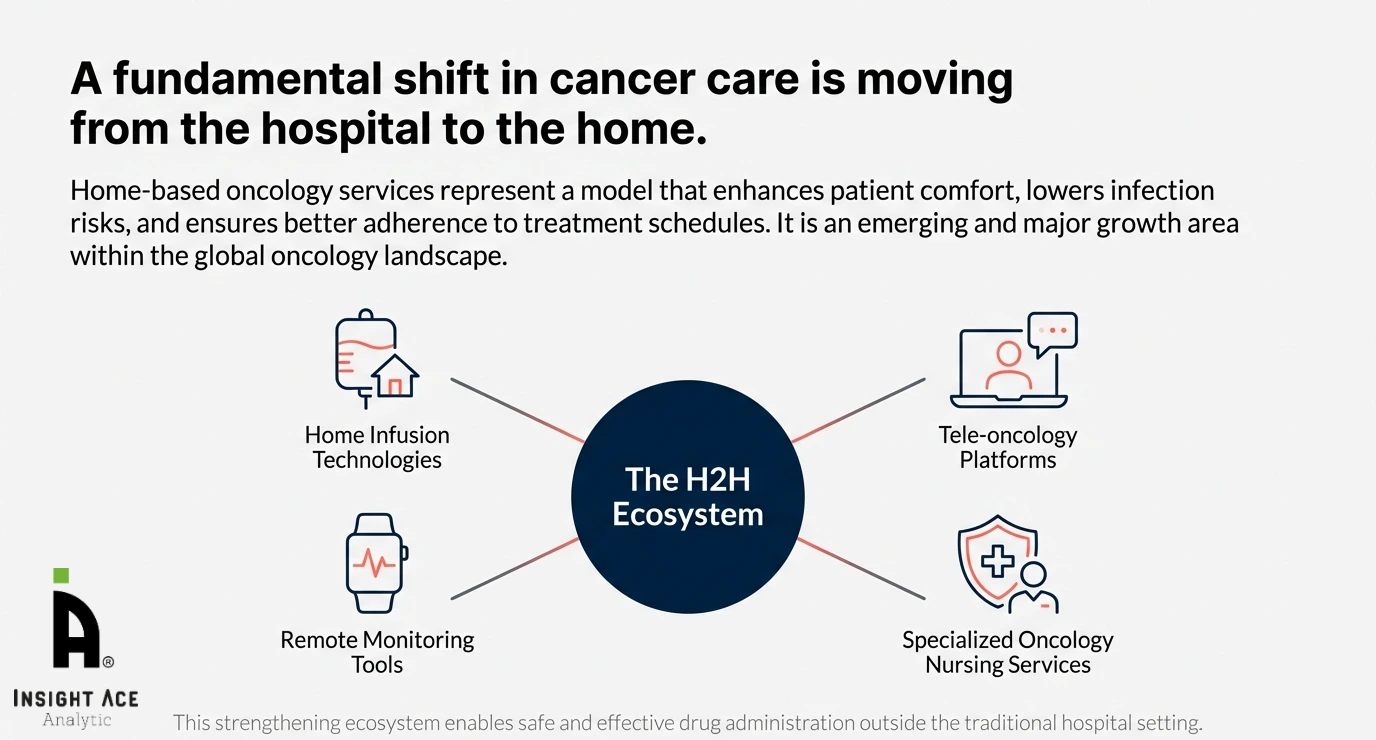
Cancer care is no longer confined to hospitals. With the growth of oncology hospital-to-home (H2H) drug administration market, patients can now receive vital cancer treatments safely at home, reducing travel, stress, and frequent clinic visits. This approach creates a more comfortable and supportive healing experience for patients and their families. Delivered by trained healthcare professionals, H2H oncology care follows strict safety standards and personalized treatment plans. It not only enhances patient comfort and peace of mind but also helps healthcare providers improve efficiency and optimize resources. As healthcare moves toward more patient-centric models, home-based oncology drug administration represents a compassionate and progressive step bringing advanced cancer care closer to home.
In this blog, we analyse the oncology hospital-to-home (H2H) drug administration market, examining key growth drivers, emerging care delivery models, and technological advancements supporting safe at-home treatments. We also assess market opportunities, challenges, and the long-term outlook shaping the future of decentralized oncology care.
Introduction to Hospital-to-Home (H2H) oncology drug administration:
Cancer care is evolving beyond traditional hospital settings to meet the growing demand for more flexible and patient-centric treatment options. Oncology hospital-to-home (H2H) drug administration market enables eligible patients to receive prescribed cancer therapies safely at home, reducing frequent hospital visits and easing physical, emotional, and logistical burdens for patients and their families. Delivered by trained healthcare professionals following strict clinical protocols, this model ensures safe administration, continuous monitoring, and personalized care while maintaining hospital-level quality standards.
From a healthcare system perspective, H2H oncology care improves resource utilization, supports efficient workflows, and aligns with value-based care goals. For patients, it offers greater comfort, dignity, and reassurance making oncology hospital-to-home (H2H) drug administration a meaningful and sustainable advancement in modern cancer care.
Hospital-to-Home Oncology: Therapies Redefining Cancer Treatment
1. Immunotherapy: Immunotherapy helps the immune system identify and attack cancer cells and can be safely administered at home under professional supervision, reducing the need for frequent hospital visits.
2. Targeted Therapies: Targeted therapies act on specific cancer pathways, offering effective treatment with fewer side effects and making them suitable for controlled home-based administration.
- ADC Supportive Regimens: These regimens support patients receiving antibody-drug conjugates by managing side effects and improving treatment tolerance at home.
- Subcutaneous (SC) Biologics: SC biologics are easy to administer under the skin and are increasingly used in home settings due to their convenience and safety.
3. Maintenance Chemotherapy: Maintenance chemotherapy helps control disease progression after initial treatment and can be delivered at home to ensure continuity and patient comfort.
4. Hormonal Therapy: Hormonal therapy is used for hormone-sensitive cancers and can be conveniently managed at home with routine monitoring over long treatment periods.
5. Supportive Oncology Care: Supportive care focuses on symptom management and side-effect relief, helping patients maintain comfort and quality of life during treatment.
- G-CSF (e.g., Neulasta Onpro): G-CSF therapies boost white blood cell counts and reduce infection risk, with devices enabling safe home administration.
- Anti-Nausea Infusion Therapy: These infusions control treatment-related nausea and vomiting, providing timely relief in a home setting.
- IV Hydration & Pain Management: IV hydration and pain management therapies help address dehydration and discomfort, improving overall patient well-being at home.
6. Palliative Oncology Infusions: Palliative infusions focus on comfort and symptom relief, allowing patients to receive compassionate care in a familiar and supportive home environment.
Why Hospital-to-Home Oncology Is Gaining Momentum
- Rising Cancer Burden: Increasing global cancer incidence is driving demand for scalable care models beyond hospital capacity.
- Patient Preference for Home Care: Patients increasingly favor receiving treatment in familiar, less stressful home environments.
- Cost Containment Pressures: Home-based oncology reduces inpatient costs, readmissions, and emergency visits.
- Advances in Digital Health: Remote monitoring, teleoncology, and connected devices enable safe home-based treatment.
- Value-Based Care Models: Payers and providers are shifting toward outcome-driven, cost-efficient care delivery.
Obstacles in Implementing Home-Based Oncology Care
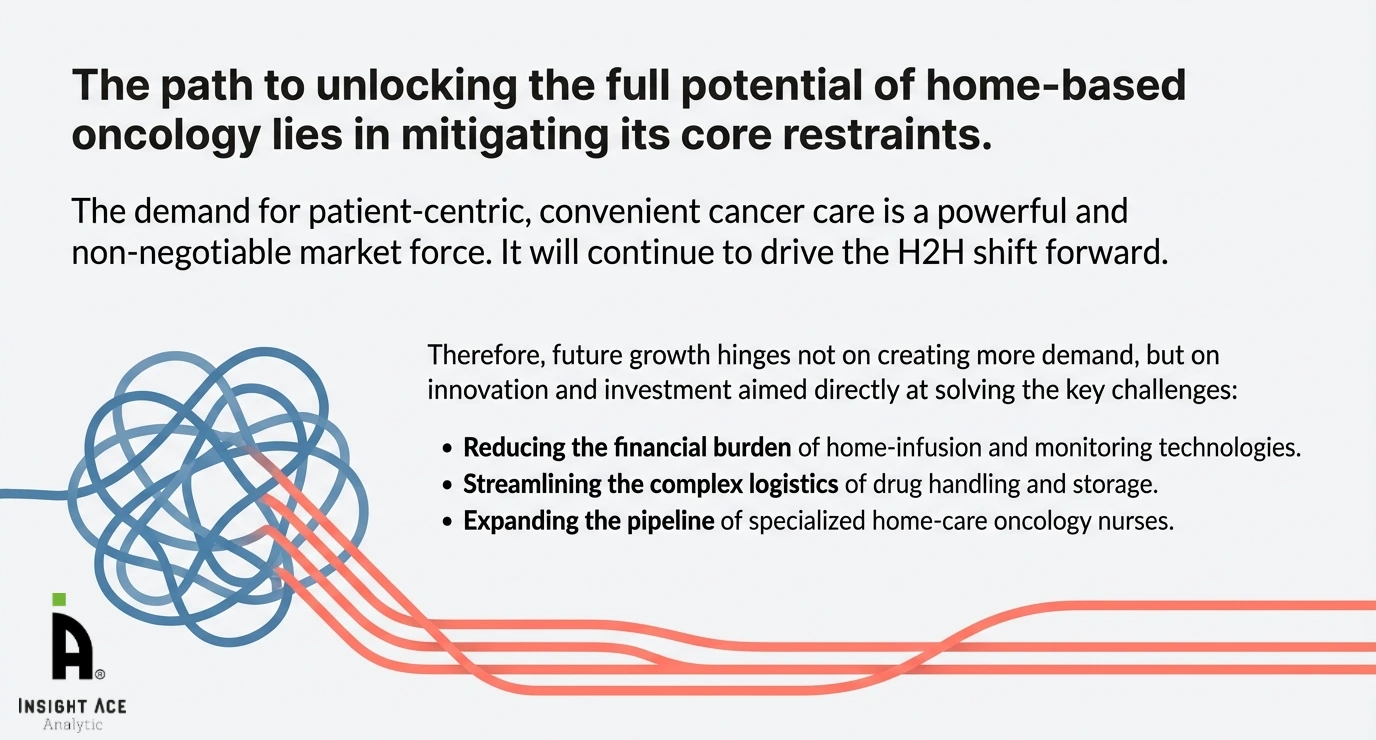
- Safety and Clinical Risks: Managing side effects and emergencies at home can be challenging.
- Regulatory and Compliance Issues: Ensuring adherence to drug handling, licensing, and healthcare regulations is complex.
- Logistical Challenges: Timely drug delivery, proper storage, and trained staff availability can be difficult.
- High Operational Costs: Home-based care requires investment in staff training, equipment, and safety protocols.
- Limited Awareness and Acceptance: Patients and providers may hesitate due to concerns about safety or unfamiliarity with the H2H model.
Leading companies:
- McKesson – Home oncology services and specialty drug distribution
- Optum (UnitedHealth Group) – Integrated home-based oncology and virtual care models
- CVS Health / Coram – Home infusion and oncology support services
- B. Braun – Home infusion technologies and oncology devices
- CareCentrix – Home care coordination for oncology patients
- Philips Healthcare – Remote patient monitoring and digital health platforms
- Medically Home – Hospital-at-home infrastructure including oncology care
Future Outlook:
- The COVID-19 pandemic highlighted the risks of frequent hospital visits for immunocompromised cancer patients, accelerating the adoption of oncology hospital-to-home (H2H) drug administration as a safer, contact-minimized care model.
- North America region has rapidly expanded home-based oncology services due to strong healthcare infrastructure, telehealth adoption, and emergency policy support aimed at reducing hospital overcrowding.
Conclusion:
Oncology hospital-to-home (H2H) drug administration is reshaping cancer care by bringing safe, clinically supervised treatments into patients’ homes. This approach reduces frequent hospital visits, improves comfort and continuity of care, and enhances quality of life benefits that became especially evident during the COVID-19 pandemic as healthcare systems sought to minimize infection risks and hospital strain. With ongoing advances in clinical protocols, digital monitoring, and home infusion technologies, H2H oncology care is emerging as a reliable and scalable alternative to hospital-based treatment, supported by growing patient acceptance and strong investments from leading healthcare providers.