Synthetic Biology Market Size, Share, Trend, Scope Report 2026 to 2035
What is Synthetic Biology Market Size?
Global Synthetic Biology Market Size is valued at USD 19.49 Bn in 2025 and is predicted to reach USD 115.53 Bn by the year 2035 at an 20.30% CAGR during the forecast period for 2026 to 2035.
Synthetic Biology Market Share & Trends Analysis Report, By Product (Oligonucleotide/Oligo Pools and Synthetic DNA, Enzymes, Cloning Technologies Kits, Xeno-Nucleic Acids, Chassis Organism), By Technology (NGS Technology, PCR Technology, Genome Editing Technology, Bioprocessing Technology, Other Technologies), By Application, By End Use, By Region, and Segment Forecasts, 2026 to 2035. 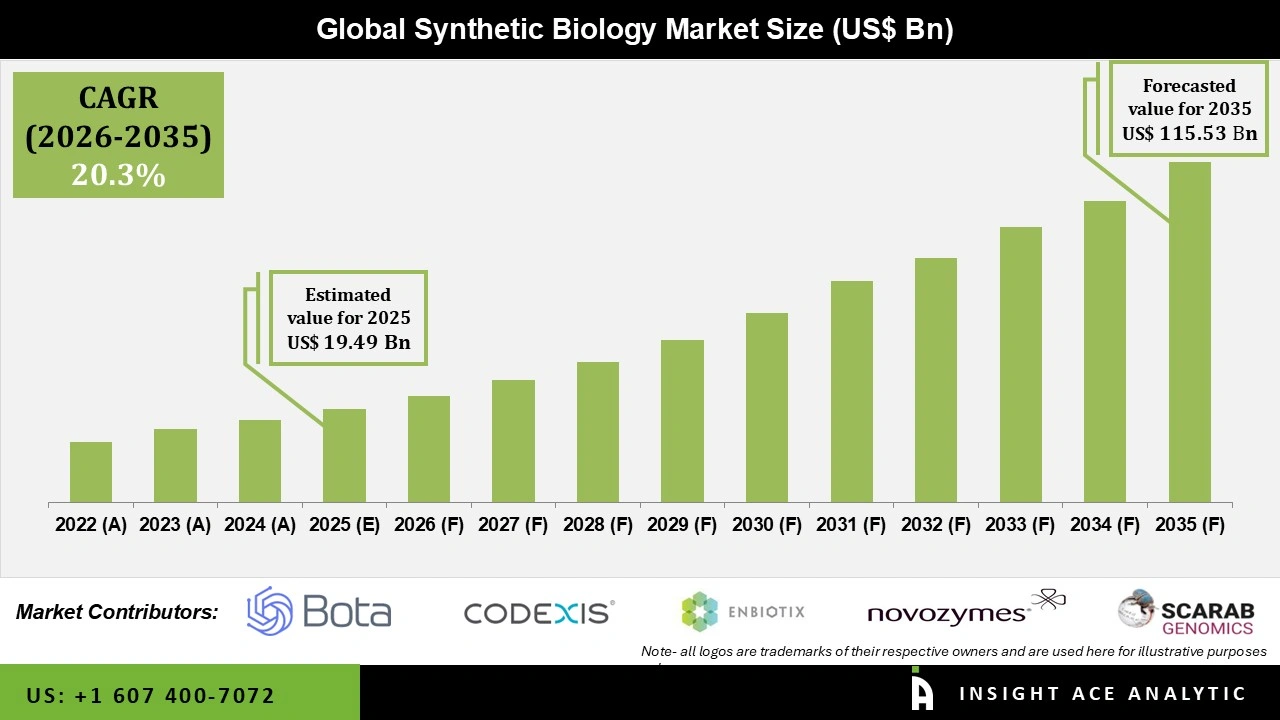
Synthetic Biology Market Key Takeaways:
|
Synthetic biology is a rapidly advancing scientific discipline focused on repurposing organisms to give them new capabilities. It allows researchers and businesses worldwide to tackle critical issues in manufacturing, agriculture, and medicine by harnessing nature’s power. Although synthetic biology is relatively new, its progress has been greatly accelerated by technological DNA sequencing and synthesis breakthroughs. This field enables the development of gene-edited crops with improved drought resistance, nutrient utilization, pest resistance, and enhanced nutritional value, offering new potential in agricultural resilience and food security. Additionally, synthetic biology is instrumental in the production of renewable biofuels, as engineered microorganisms can convert biomass into fuels like ethanol, butanol, and biodiesel, thereby providing sustainable alternatives to fossil fuels and reducing the carbon footprint of energy production.
Synthetic biology is driving the sustainable production of valuable chemicals, materials, and pharmaceuticals by enabling engineered microorganisms to produce biofuels, such as ethanol and biodiesel, from renewable resources. This advancement aligns with the growing demand for alternative energy sources, driven by climate change concerns and the depletion of traditional resources, positioning biofuels as a key area in the synthetic biology market. Increased funding and research are expected as synthetic biology provides effective ways to engineer microbes for more efficient biofuel production. Additionally, gene editing technologies like CRISPR/Cas9 are transforming the field, allowing precise DNA modifications that enable new treatments for genetic diseases, enhanced crop yields, and engineered organisms with novel characteristics. This revolution in gene editing is garnering significant attention in gene therapy and genetic engineering, paving the way for synthetic biology to reshape biotechnology and medicine fundamentally.
Competitive Landscape
Some of the Major Key Players in the Synthetic Biology Market are
- Bota Biosciences Inc.
- Codexis, Inc.
- Creative Biogene.
- Creative Enzymes.
- Enbiotix, Inc.
- Illumina, Inc.
- Merck Kgaa
- New England Biolabs
- Eurofins Scientific
- Novozymes
- Pareto Bio, Inc.
- Scarab Genomics, Llc
- Synthego
- Synthetic Genomics Inc.
- Thermo Fisher Scientific, Inc.
- Agilent Technologies, Inc.
- Twist Bioscience
- BioBricks Foundation
- DIYbio
- Amyris
- Cyrus Biotechnology
- TeselaGen
Market Segmentation
The Synthetic Biology Market is segmented based on product, technology, application, and end user. Based on the product, the market is divided into oligonucleotide/oligo pools and synthetic DNA, enzymes, cloning technologies kits, Xeno-nucleic acids, and chassis organisms. Based on the technology, the market is divided into NGS technology, PCR technology, genome editing technology, bioprocessing technology, and other technologies. Based on the application, the market is divided into healthcare, clinical, bio/pharmaceuticals, diagnostics, non-clinical, non-healthcare, biotech crops, specialty chemicals, biofuels, and others. Based on the end-user, the market is divided into biotechnology and pharmaceutical companies, academic and research institutes, and others.
The Oligonucleotide/Oligo Pools and Synthetic DNA Segment is Expected to Have the Highest Growth Rate During the Forecast Period.
Based on the product, the market is divided into oligonucleotide/oligo pools and synthetic DNA, enzymes, cloning technologies kits, Xeno-nucleic acids, and chassis organisms. Among these, the oligonucleotide/oligo pools and synthetic DNA segment are expected to have the highest growth rate during the forecast period. Oligonucleotide pools and synthetic DNA are essential for gene editing tools like CRISPR, which require precise DNA sequences for applications in gene therapy, disease modeling, and agricultural advancements. As gene editing technology continues to grow, so does the demand for high-quality synthetic DNA. With advancements in personalized medicine and the development of gene therapies, there is a greater need for custom DNA sequences. Synthetic DNA enables tailored therapeutic solutions that can be designed to match an individual’s genetic profile, supporting a surge in synthetic biology applications in healthcare. Rising investments and strategic partnerships in synthetic biology, supported by both private and governmental organizations, are fueling research and development in synthetic DNA. These investments support the scaling of synthetic DNA production, expanding its applications and accelerating its growth.
The Genome Editing Technology Segment dominates the Market
Based on the technology, the market is divided into NGS technology, PCR technology, genome editing technology, bioprocessing technology, and other technologies. Among these, the genome editing technology segment dominates the market. Genome editing facilitates the creation of microorganisms or plants that can produce valuable chemicals, biofuels, and pharmaceuticals more efficiently and sustainably. Genome editing is enabling faster product development, from genetically modified organisms (GMOs) to synthetic therapeutics. This acceleration in product commercialization leads to faster return on investment for companies, which further propels the growth of the genome editing market. As genome editing technology matures, regulatory frameworks and ethical guidelines are evolving to support its use in human therapies, agricultural innovations, and environmental applications. This provides an environment conducive to continued growth in the market.
North America Has the Largest Market Share During the Forecast Period.
North America, particularly the United States, has a robust biotechnology ecosystem with significant investments in research and development (R&D). This includes funding from both the public and private sectors, driving advancements in synthetic biology. The U.S. is home to leading biotech companies and universities that push the boundaries of synthetic biology applications in medicine, agriculture, and industry.
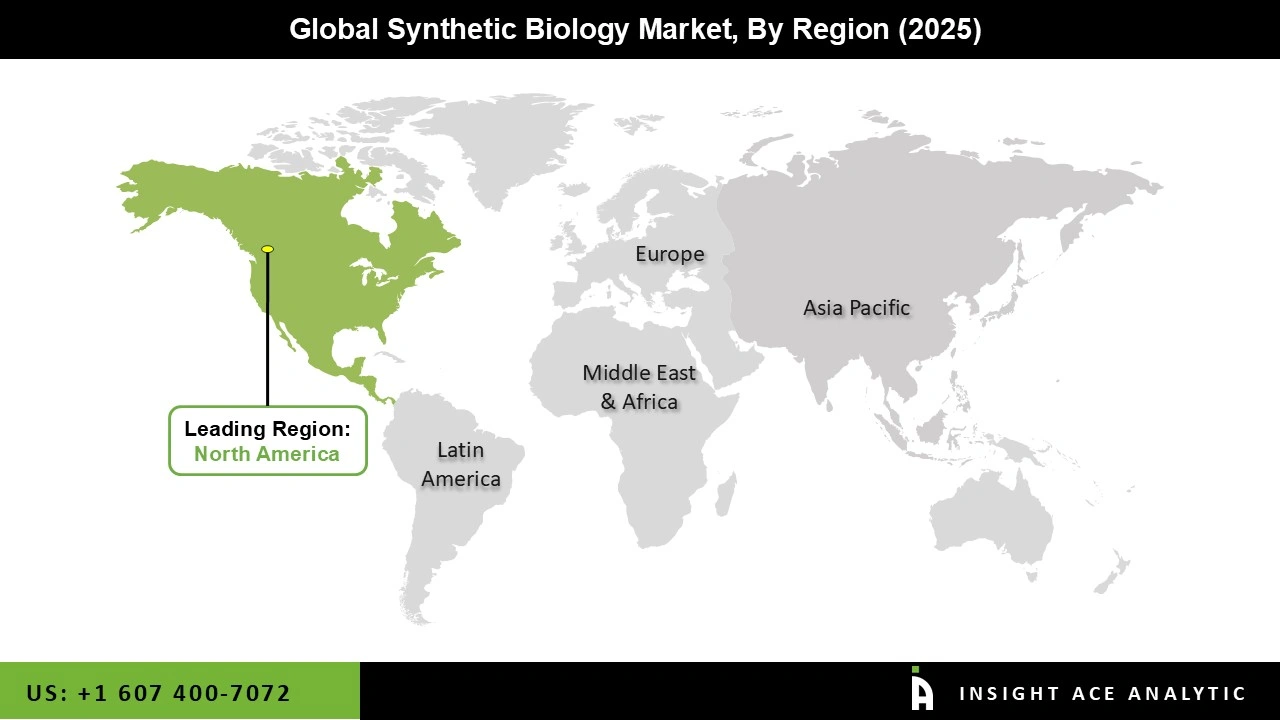
The U.S. has a dominant biotechnology and pharmaceutical industry, which heavily utilizes synthetic biology technologies. Applications such as gene editing, gene therapy, and drug discovery are expanding rapidly, supported by favorable regulations and high demand for innovative treatments. Companies in North America are also leading in synthetic biology-based product development, including genetically engineered organisms and bio-manufactured chemicals.
Recent Developments:
- In June 2024, Cyrus Biotechnology, Inc., a Seattle-based software-enabled biotechnology firm, expanded the Cyrus platform to the broader biopharma sector by spinning out Levitate Bio, a software and services firm. ACE2v2 ("ACE2v2"), an extended-half-life COVID prophylactic/therapeutic IND-stage candidate, and additional autoimmune and oncology initiatives in the discovery stage are in line with Cyrus' development of its IdeS IgG degrading enzyme for many IgG-mediated autoimmune diseases. As Levitate expands its biopharma business, Cyrus will continue to gain from the platform. These cutting-edge instruments can be extremely useful for research, manufacturing, synthetic biology, and agriculture in addition to drug development.
- In August 2023, Synthego, announced a strategic partnership to build a platform centered on the implementation of synthetic circuitry in cells for therapeutic application.bit.bio is building a pipeline of cell therapies focused on areas of unmet clinical need. The partnership will apply Synthego’s expertise in gene editing to bit.bio’s opti-oxTM precision cell programming technology, to discover and develop advanced genetic engineering solutions for cell therapies.
Synthetic Biology Market Report Scope :
| Report Attribute | Specifications |
| Market Size Value In 2025 | USD 19.49 Bn |
| Revenue Forecast In 2035 | USD 115.53 Bn |
| Growth Rate CAGR | CAGR of 20.30% from 2026 to 2035 |
| Quantitative Units | Representation of revenue in US$ Bn and CAGR from 2026 to 2035 |
| Historic Year | 2022 to 2025 |
| Forecast Year | 2026 to 2035 |
| Report Coverage | The forecast of revenue, the position of the company, the competitive Market structure, growth prospects, and trends |
| Segments Covered | Product, Technology, Application and End User. |
| Regional Scope | North America; Europe; Asia Pacific; Latin America; Middle East & Africa |
| Country Scope | U.S.; Canada; U.K.; Germany; China; India; Japan; Brazil; Mexico; France; Italy; Spain; South Korea; South East Asia |
| Competitive Landscape | Bota Biosciences Inc., Codexis, Inc., Creative Biogene., Creative Enzymes., Enbiotix, Inc., Illumina, Inc., Merck Kgaa, New England Biolabs Eurofins Scientific, Novozymes, Pareto Bio, Inc., Scarab Genomics, Llc, Synthego, Synthetic Genomics Inc., Thermo Fisher Scientific, Inc., Agilent Technologies, Inc., Twist Bioscience, BioBricks Foundation, DIYbio, Amyris, Cyrus Biotechnology, TeselaGen |
| Customization Scope | Free customization report with the procurement of the report and modifications to the regional and segment scope. Particular Geographic competitive landscape. |
| Pricing and Available Payment Methods | Explore pricing alternatives that are customized to your particular study requirements. |
Segmentation of the Synthetic Biology Market :
Synthetic Biology Market- By Product
- Oligonucleotide/Oligo Pools and Synthetic DNA
- Enzymes
- Cloning Technologies Kits
- Xeno-Nucleic Acids
- Chassis Organism
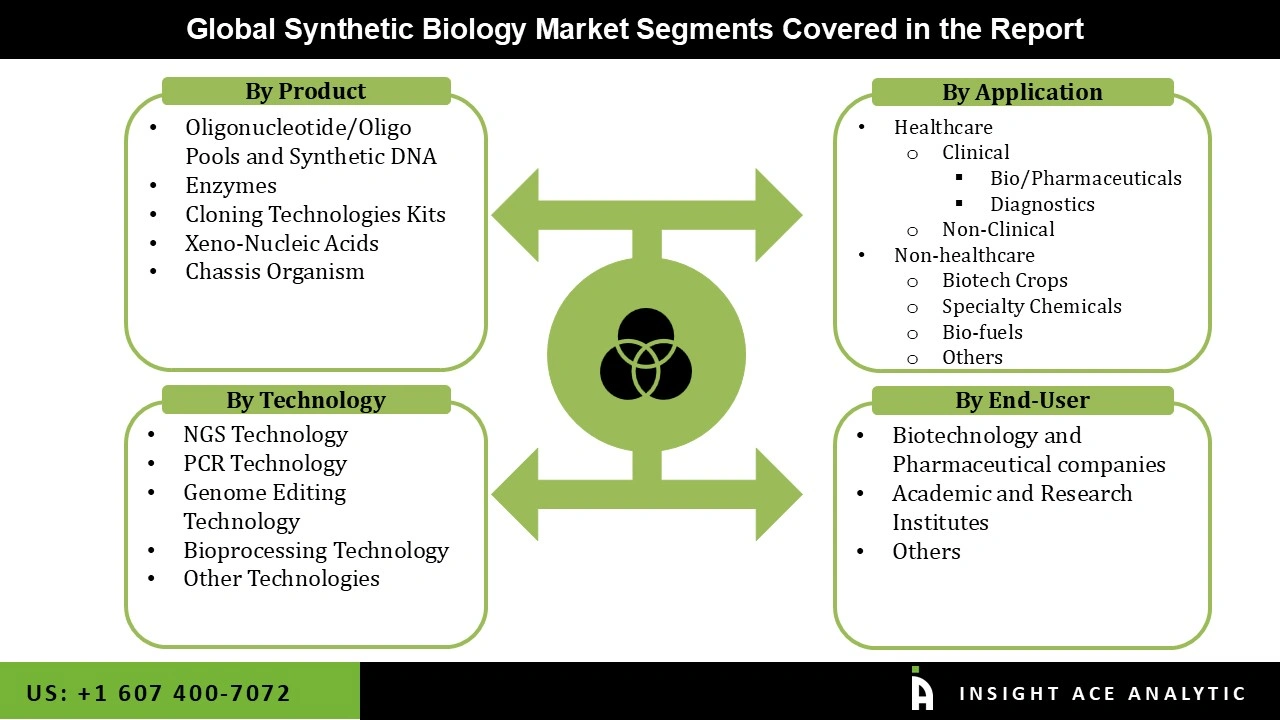
Synthetic Biology Market- By Technology
- NGS Technology
- PCR Technology
- Genome Editing Technology
- Bioprocessing Technology
- Other Technologies
Synthetic Biology Market – By Application
- Healthcare
- Clinical
- Bio/Pharmaceuticals
- Diagnostics
- Non-Clinical
- Clinical
- Non-healthcare
- Biotech Crops
- Specialty Chemicals
- Bio-fuels
- Others
Synthetic Biology Market – By End Use
- Biotechnology and Pharmaceutical companies
- Academic and Research Institutes
- Others
Synthetic Biology Market – By Region
- North America-
- US
- Canada
- Europe-
- Germany
- The UK
- France
- Italy
- Spain
- Rest of Europe
- Asia-Pacific-
- China
- Japan
- India
- South Korea
- Southeast Asia
- Rest of Asia Pacific
- Latin America-
- Mexico
- Brazil
- Argentina
- Rest of Latin America
- Middle East & Africa-
- GCC Countries
- South Africa
- Rest of the Middle East and Africa
Research Design and Approach
This study employed a multi-step, mixed-method research approach that integrates:
- Secondary research
- Primary research
- Data triangulation
- Hybrid top-down and bottom-up modelling
- Forecasting and scenario analysis
This approach ensures a balanced and validated understanding of both macro- and micro-level market factors influencing the market.
Secondary Research
Secondary research for this study involved the collection, review, and analysis of publicly available and paid data sources to build the initial fact base, understand historical market behaviour, identify data gaps, and refine the hypotheses for primary research.
Sources Consulted
Secondary data for the market study was gathered from multiple credible sources, including:
- Government databases, regulatory bodies, and public institutions
- International organizations (WHO, OECD, IMF, World Bank, etc.)
- Commercial and paid databases
- Industry associations, trade publications, and technical journals
- Company annual reports, investor presentations, press releases, and SEC filings
- Academic research papers, patents, and scientific literature
- Previous market research publications and syndicated reports
These sources were used to compile historical data, market volumes/prices, industry trends, technological developments, and competitive insights.

Primary Research
Primary research was conducted to validate secondary data, understand real-time market dynamics, capture price points and adoption trends, and verify the assumptions used in the market modelling.
Stakeholders Interviewed
Primary interviews for this study involved:
- Manufacturers and suppliers in the market value chain
- Distributors, channel partners, and integrators
- End-users / customers (e.g., hospitals, labs, enterprises, consumers, etc., depending on the market)
- Industry experts, technology specialists, consultants, and regulatory professionals
- Senior executives (CEOs, CTOs, VPs, Directors) and product managers
Interview Process
Interviews were conducted via:
- Structured and semi-structured questionnaires
- Telephonic and video interactions
- Email correspondences
- Expert consultation sessions
Primary insights were incorporated into demand modelling, pricing analysis, technology evaluation, and market share estimation.
Data Processing, Normalization, and Validation
All collected data were processed and normalized to ensure consistency and comparability across regions and time frames.
The data validation process included:
- Standardization of units (currency conversions, volume units, inflation adjustments)
- Cross-verification of data points across multiple secondary sources
- Normalization of inconsistent datasets
- Identification and resolution of data gaps
- Outlier detection and removal through algorithmic and manual checks
- Plausibility and coherence checks across segments and geographies
This ensured that the dataset used for modelling was clean, robust, and reliable.
Market Size Estimation and Data Triangulation
Bottom-Up Approach
The bottom-up approach involved aggregating segment-level data, such as:
- Company revenues
- Product-level sales
- Installed base/usage volumes
- Adoption and penetration rates
- Pricing analysis
This method was primarily used when detailed micro-level market data were available.

Top-Down Approach
The top-down approach used macro-level indicators:
- Parent market benchmarks
- Global/regional industry trends
- Economic indicators (GDP, demographics, spending patterns)
- Penetration and usage ratios
This approach was used for segments where granular data were limited or inconsistent.
Hybrid Triangulation Approach
To ensure accuracy, a triangulated hybrid model was used. This included:
- Reconciling top-down and bottom-up estimates
- Cross-checking revenues, volumes, and pricing assumptions
- Incorporating expert insights to validate segment splits and adoption rates
This multi-angle validation yielded the final market size.
Forecasting Framework and Scenario Modelling
Market forecasts were developed using a combination of time-series modelling, adoption curve analysis, and driver-based forecasting tools.
Forecasting Methods
- Time-series modelling
- S-curve and diffusion models (for emerging technologies)
- Driver-based forecasting (GDP, disposable income, adoption rates, regulatory changes)
- Price elasticity models
- Market maturity and lifecycle-based projections
Scenario Analysis
Given inherent uncertainties, three scenarios were constructed:
- Base-Case Scenario: Expected trajectory under current conditions
- Optimistic Scenario: High adoption, favourable regulation, strong economic tailwinds
- Conservative Scenario: Slow adoption, regulatory delays, economic constraints
Sensitivity testing was conducted on key variables, including pricing, demand elasticity, and regional adoption.
Request Customization
Add countries, segments, company profiles, or extend forecast — free 10% customization with purchase.
Customize This Report →Enquire Before Buying
Speak with our analyst team about scope, methodology, pricing, or deliverable formats.
Enquire Now →Frequently Asked Questions
Synthetic Biology Market Size is valued at USD 19.49 Bn in 2025 and is predicted to reach USD 115.53 Bn by the year 2035
Synthetic Biology Market is expected to grow at an 20.30% CAGR during the forecast period for 2026 to 2035.
Bota Biosciences Inc., Codexis, Inc., Creative Biogene., Creative Enzymes., Enbiotix, Inc., Illumina, Inc., Merck Kgaa, New England Biolabs Eurofins
Synthetic Biology Market is Segmented in Product (Oligonucleotide/Oligo Pools and Synthetic DNA, Enzymes, Cloning Technologies Kits, Xeno-Nucleic Acids, Chassis Organism), Technology (NGS Technology, PCR Technology, Genome Editing Technology, Bioprocessing Technology, Other Technologies), By Application, By End Use and other.
North American region is the leading region of the market.