Suppository Packaging Market Size, Share and Trends Analysis 2026 to 2035
What is Suppository Packaging Market Size?
Suppository Packaging Market Size is valued at USD 371.39 million in 2025 and is predicted to reach USD 820.91 million by the year 2035 at a 8.3% CAGR during the forecast period for 2026 to 2035.
Suppository Packaging Market Size, Share & Trends Analysis Report By Material (Alu/PE, PVC/PE, Others), By Application (Nasal, Ear, Rectal, Urethral, Vaginal, Others), By Region, And By Segment Forecasts, 2026 to 2035.
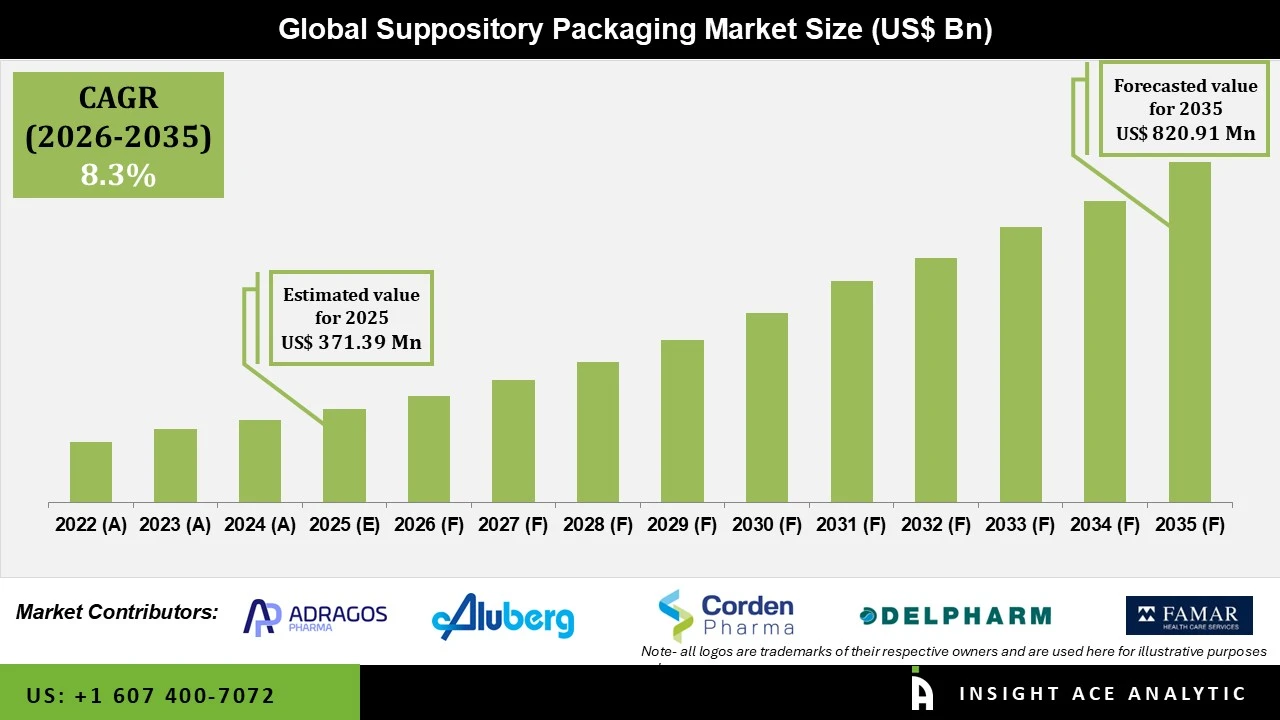
Suppository Packaging Market Key Takeaways:
|
Suppository packaging is a beneficial container made to hold powder quantity forms called suppositories, which are administered through bodily apertures such as the urethral, genital, or colon. Because regulations have evolved and people are becoming more concerned about security, there is a rising market for packaging products. For medications, including suppositories, regulatory authorities mandate these safety precautions in order to reduce unintentional illnesses. It is also recognized by the company that using child-resistant packaging shows customers that they are extra dependable and enhances the public perception of their products, making them more appealing to customers who are concerned about security. In considering this, the need for improved safety goes beyond just satisfying regulatory criteria; it also serves to differentiate products in the sector, which fuels the growth of the suppository packaging industry.
However, the industry is severely hindered by the absence of regulations for handling and storing. Because it is generally required that suppositories remain at an appropriate level to assist them in keeping their form and function, since they must be refrigerated to prevent evaporating, it might be difficult to store as well as move them. The requirement for a freezer or regulated temperature raises the item's cost and limits the number of available outlets. Suppositories are extremely sensitive and can deteriorate if not managed properly. It needs to provide defence against incidents of injury while being handled and transported. A well-managed and supervised distribution system primarily ensures suppository cleanliness. Infection, expenses, and distribution network interruption can arise from even minor breaches in the freezer system or product transport.
Competitive Landscape
Some Major Key Players In The Suppository Packaging Market:
- Adragos Pharma
- Aluberg s.p.a.
- CordenPharma
- Delpharm
- FAMAR Health Care Services
- Hudi Pharma HQ
- HySum Europe GmbH
- Key International
- LGM Pharma
- NextPharma Technologies
- Recipharm AB
- Sarong S.p.A.
- Trefoil Packaging Pvt Ltd
- Unither
- Valmatic S.R.L.
- Other Players
Market Segmentation:
The suppository packaging market is segmented based on material and application. Based on material, the market is segmented into Alu/PE, PVC/PE, and others. By application, the market is segmented into nasal, ear, rectal, urethral, vaginal, and others.
Based On The Application, The Urethral Suppository Packaging Market Segment Is Accounted As A Major Contributor To The Suppository Packaging Market
The urethral suppository packaging market will hold a major global market share because there is growing recognition of the advantages of urethral drug administration for conditions like erection problems and UTIs, where personalized care can quickly provide comfort and enhance patient success. As medical professionals look for more efficient ways to manage individuals who might have trouble taking pills orally, fluid capsules are becoming increasingly common as viable alternatives.
Alu/PE Segment To Witness Growth At A Rapid Rate
The Alu/PE industry uses suppository packaging because of its special blend of qualities and wide range of uses. In order to protect the solidity and durability of the suppository material, the aluminium component provides an excellent barrier against moisture, illumination, and pollution. Combining polyolefin and customized aluminium sheets results in a packaging product that is pleasingly adaptable and long-lasting. Enabling users to rip off the wrapper without harming the suppository themselves guarantees that the item stays intact and can be utilized as specified
In The Region, The Asia Pacific Suppository Packaging Market Holds A Significant Revenue Share.
The Asia Pacific suppository packaging market is expected to note the highest market share in revenue in the near future. This can be attributed to a number of important considerations. Suppositories and other specialized medication delivery techniques are becoming more and more necessary as this industry's medical facilities, clinics, and medications develop. In addition, Europe is likely to grow rapidly in the global suppository packaging industry due to rising awareness of health issues and surgical devices that recognize the effectiveness of medication. The developed pharma industry in this area, combined with higher R&D expenditures, encourages creativity in packaging techniques, which in turn accelerates the expansion of the sector.
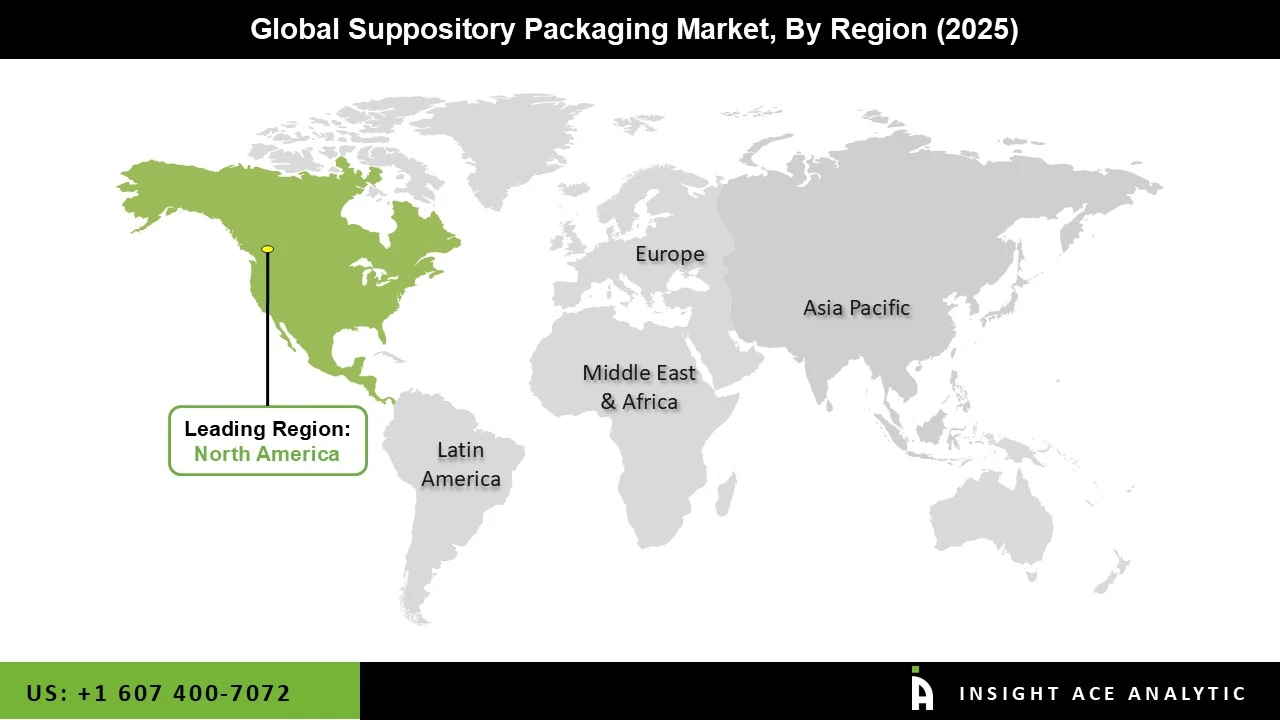
Suppository Packaging Market Report Scope
| Report Attribute | Specifications |
| Market Size Value In 2025 | USD 371.39 Mn |
| Revenue Forecast In 2035 | USD 820.91 Mn |
| Growth Rate CAGR | CAGR of 8.3% from 2026 to 2035 |
| Quantitative Units | Representation of revenue in US$ Mn, Volume (Kilotons) and CAGR from 2026 to 2035 |
| Historic Year | 2022 to 2025 |
| Forecast Year | 2026-2035 |
| Report Coverage | The forecast of revenue, the position of the company, the competitive market structure, growth prospects, and trends |
| Segments Covered | By Material, By Application, |
| Regional Scope | North America; Europe; Asia Pacific; Latin America; Middle East & Africa |
| Country Scope | U.S.; Canada; U.K.; Germany; China; India; Japan; Brazil; Mexico; France; Italy; Spain; South East Asia; South Korea |
| Competitive Landscape | NextPharma Technologies, CordenPharma, Recipharm AB, Valmatic S.R.L., Sarong S.p.A., HySum Europe GmbH, FAMAR Health Care Services, Hudi Pharma HQ, Adragos Pharma, LGM Pharma, Aluberg s.p.a., Delpharm, Unither, and Trefoil Packaging Pvt Ltd. |
| Customization Scope | Free customization report with the procurement of the report and modifications to the regional and segment scope. Particular Geographic competitive landscape. |
| Pricing And Available Payment Methods | Explore pricing alternatives that are customized to your particular study requirements. |
Segmentation Of Suppository Packaging Market-
Suppository Packaging Market By Material
- Alu/PE
- PVC/PE
- Others
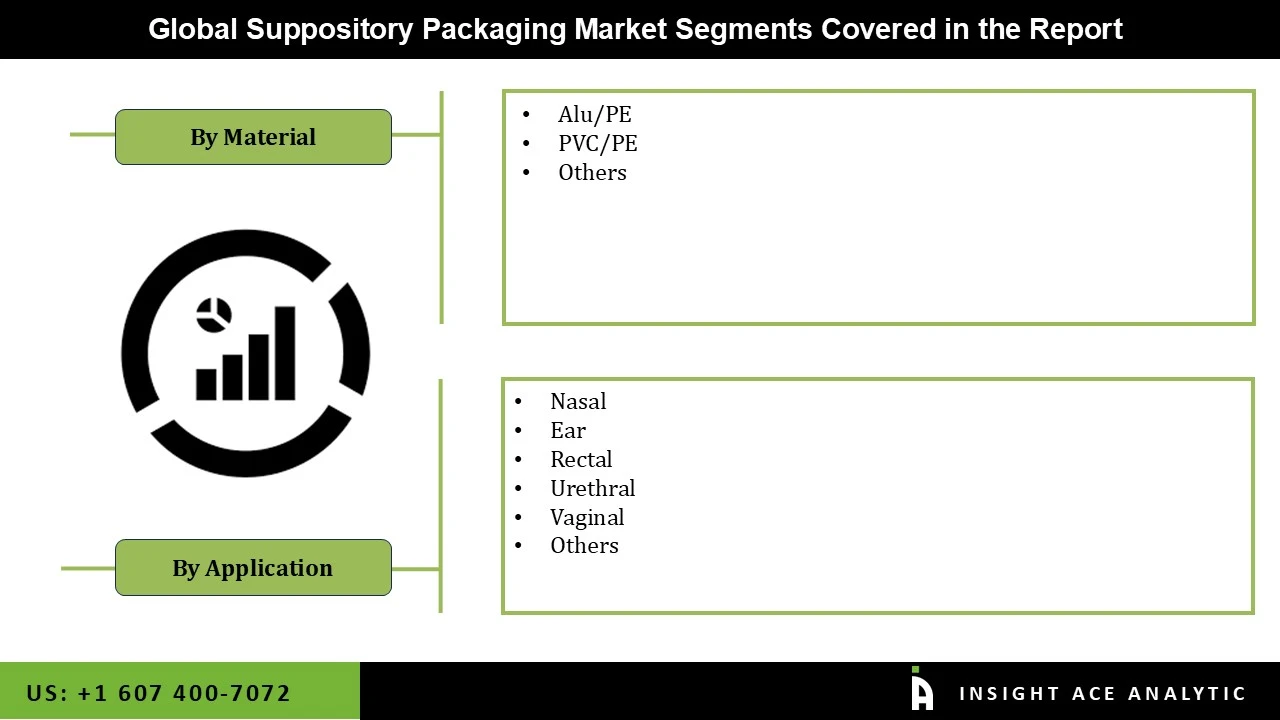
Suppository Packaging Market By Application
- Nasal
- Ear
- Rectal
- Urethral
- Vaginal
- Others
Suppository Packaging Market By Region-
North America-
- The US
- Canada
- Mexico
Europe-
- Germany
- The UK
- France
- Italy
- Spain
- Rest of Europe
Asia-Pacific-
- China
- Japan
- India
- South Korea
- South East Asia
- Rest of Asia Pacific
Latin America-
- Brazil
- Argentina
- Rest of Latin America
Middle East & Africa-
- GCC Countries
- South Africa
- Rest of the Middle East and Africa
Research Design and Approach
This study employed a multi-step, mixed-method research approach that integrates:
- Secondary research
- Primary research
- Data triangulation
- Hybrid top-down and bottom-up modelling
- Forecasting and scenario analysis
This approach ensures a balanced and validated understanding of both macro- and micro-level market factors influencing the market.
Secondary Research
Secondary research for this study involved the collection, review, and analysis of publicly available and paid data sources to build the initial fact base, understand historical market behaviour, identify data gaps, and refine the hypotheses for primary research.
Sources Consulted
Secondary data for the market study was gathered from multiple credible sources, including:
- Government databases, regulatory bodies, and public institutions
- International organizations (WHO, OECD, IMF, World Bank, etc.)
- Commercial and paid databases
- Industry associations, trade publications, and technical journals
- Company annual reports, investor presentations, press releases, and SEC filings
- Academic research papers, patents, and scientific literature
- Previous market research publications and syndicated reports
These sources were used to compile historical data, market volumes/prices, industry trends, technological developments, and competitive insights.

Primary Research
Primary research was conducted to validate secondary data, understand real-time market dynamics, capture price points and adoption trends, and verify the assumptions used in the market modelling.
Stakeholders Interviewed
Primary interviews for this study involved:
- Manufacturers and suppliers in the market value chain
- Distributors, channel partners, and integrators
- End-users / customers (e.g., hospitals, labs, enterprises, consumers, etc., depending on the market)
- Industry experts, technology specialists, consultants, and regulatory professionals
- Senior executives (CEOs, CTOs, VPs, Directors) and product managers
Interview Process
Interviews were conducted via:
- Structured and semi-structured questionnaires
- Telephonic and video interactions
- Email correspondences
- Expert consultation sessions
Primary insights were incorporated into demand modelling, pricing analysis, technology evaluation, and market share estimation.
Data Processing, Normalization, and Validation
All collected data were processed and normalized to ensure consistency and comparability across regions and time frames.
The data validation process included:
- Standardization of units (currency conversions, volume units, inflation adjustments)
- Cross-verification of data points across multiple secondary sources
- Normalization of inconsistent datasets
- Identification and resolution of data gaps
- Outlier detection and removal through algorithmic and manual checks
- Plausibility and coherence checks across segments and geographies
This ensured that the dataset used for modelling was clean, robust, and reliable.
Market Size Estimation and Data Triangulation
Bottom-Up Approach
The bottom-up approach involved aggregating segment-level data, such as:
- Company revenues
- Product-level sales
- Installed base/usage volumes
- Adoption and penetration rates
- Pricing analysis
This method was primarily used when detailed micro-level market data were available.

Top-Down Approach
The top-down approach used macro-level indicators:
- Parent market benchmarks
- Global/regional industry trends
- Economic indicators (GDP, demographics, spending patterns)
- Penetration and usage ratios
This approach was used for segments where granular data were limited or inconsistent.
Hybrid Triangulation Approach
To ensure accuracy, a triangulated hybrid model was used. This included:
- Reconciling top-down and bottom-up estimates
- Cross-checking revenues, volumes, and pricing assumptions
- Incorporating expert insights to validate segment splits and adoption rates
This multi-angle validation yielded the final market size.
Forecasting Framework and Scenario Modelling
Market forecasts were developed using a combination of time-series modelling, adoption curve analysis, and driver-based forecasting tools.
Forecasting Methods
- Time-series modelling
- S-curve and diffusion models (for emerging technologies)
- Driver-based forecasting (GDP, disposable income, adoption rates, regulatory changes)
- Price elasticity models
- Market maturity and lifecycle-based projections
Scenario Analysis
Given inherent uncertainties, three scenarios were constructed:
- Base-Case Scenario: Expected trajectory under current conditions
- Optimistic Scenario: High adoption, favourable regulation, strong economic tailwinds
- Conservative Scenario: Slow adoption, regulatory delays, economic constraints
Sensitivity testing was conducted on key variables, including pricing, demand elasticity, and regional adoption.
Request Customization
Add countries, segments, company profiles, or extend forecast — free 10% customization with purchase.
Customize This Report →Enquire Before Buying
Speak with our analyst team about scope, methodology, pricing, or deliverable formats.
Enquire Now →Frequently Asked Questions
Suppository Packaging Market Size is valued at USD 371.39 million in 2025 and is predicted to reach USD 820.91 million by the year 2035.
Suppository Packaging Market is expected to grow at a 8.3% CAGR during the forecast period for 2026 to 2035.
NextPharma Technologies, CordenPharma, Recipharm AB, Valmatic S.R.L., Sarong S.p.A., HySum Europe GmbH, FAMAR Health Care Services, Hudi Pharma HQ, Ad
Material and Application are the key segments of the Suppository Packaging Market.
North American region is leading the Suppository Packaging Market.