Severe Asthma Therapeutics Products Market Current Trends Analysis 2026 to 2035
Severe Asthma Therapeutics Products Market Size is predicted to grow at a 6.9% CAGR during the forecast period for 2026 to 2035.
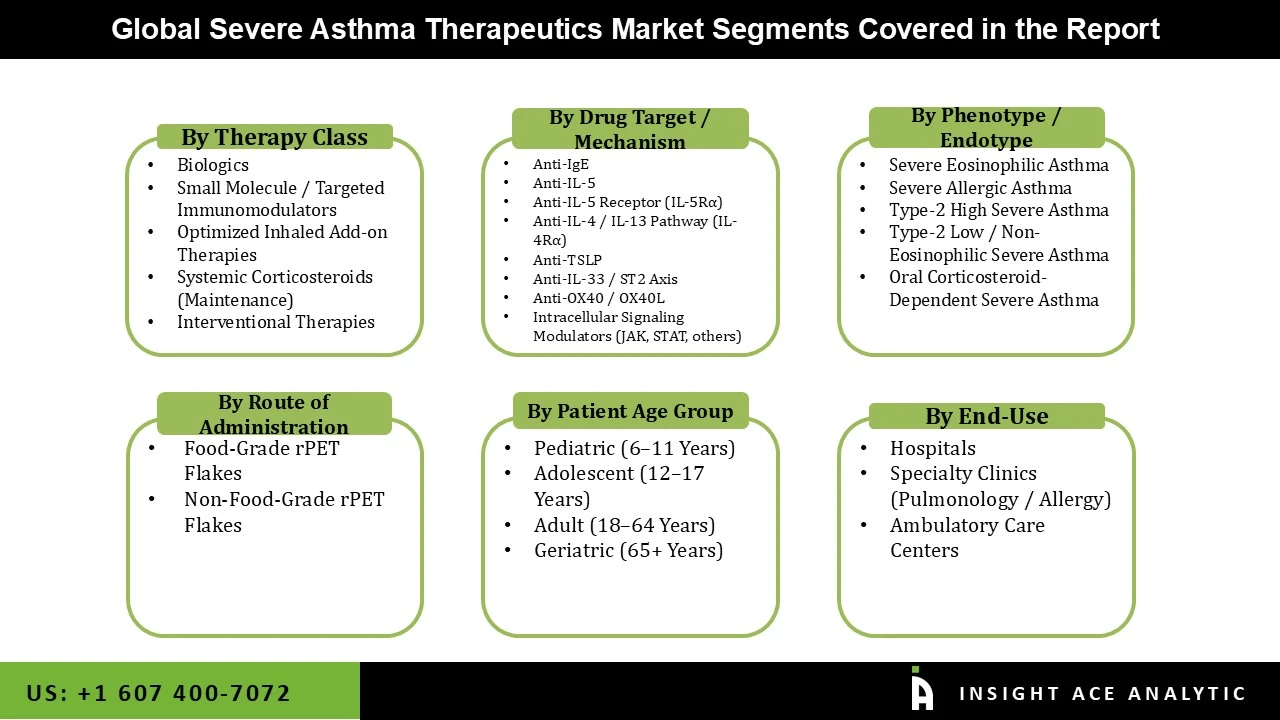
Severe Asthma Therapeutics Products Market Size, Share & Trends Analysis Distribution by Therapy Class (Biologics, Small Molecule / Targeted Immunomodulators, Optimized Inhaled Add-on Therapies, Systemic Corticosteroids (Maintenance), Interventional Therapies), By Drug Target / Mechanism (Anti-IgE, Anti-IL-5, Anti-IL-5 Receptor (IL-5Rα), Anti-IL-4 / IL-13 Pathway (IL-4Rα), Anti-TSLP, Anti-IL-33 / ST2 Axis, Anti-OX40 / OX40L, Intracellular Signaling Modulators (JAK, STAT, others)), By Phenotype / Endotype (Severe Eosinophilic Asthma, Severe Allergic Asthma, Type-2 High Severe Asthma, Type-2 Low / Non-Eosinophilic Severe Asthma, Oral Corticosteroid-Dependent Severe Asthma), By Route of Administration (Subcutaneous, Intravenous, Inhaled, Oral), By Patient Age Group (Pediatric (6–11 Years), Adolescent (12–17 Years), Adult (18–64 Years), Geriatric (65+ Years)), By End User (Hospitals, Specialty Clinics (Pulmonology / Allergy), Ambulatory Care Centers) and Segment Forecasts, 2026 to 2035
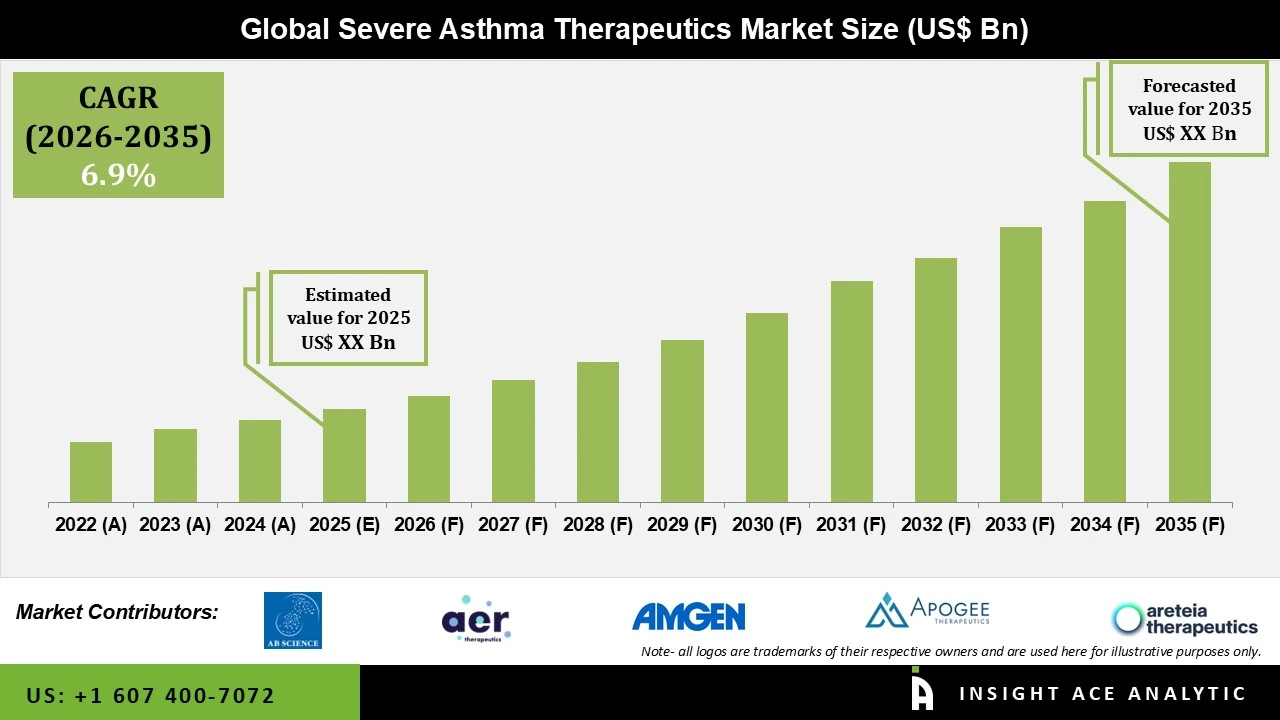
The severe asthma therapeutics market comprises pharmaceuticals and biologics developed for the treatment of severe asthma, a chronic inflammatory respiratory disease characterized by persistent symptoms, frequent exacerbations, and a poor response to conventional inhaled corticosteroids and bronchodilators. Although severe asthma is a relatively small patient population, it is a major contributor to healthcare expenditure, hospitalization, and disease-related morbidity because of its complex immune pathophysiology. Severe asthma therapeutics are mainly biologics, monoclonal antibodies, and targeted small molecules that target the major inflammatory pathways of IgE, IL-5, and IL-4/IL-13, with the goal of decreasing exacerbations, improving lung function, improving symptoms, and allowing corticosteroid sparing. These are increasingly used in hospital outpatient clinics and speciality pulmonology and allergy practices, often employing biomarker-driven patient stratification and precision medicine strategies.
Severe asthma therapeutics market growth is fueled by the increasing incidence of severe and uncontrolled asthma, exposure to environmental and lifestyle-related risk factors, and the growing use of targeted biologic therapies with enhanced efficacy and safety profiles. Breakthroughs in immunology and precision diagnostics have also facilitated personalized treatment approaches, propelling adoption among eligible patients. Nevertheless, market growth is constrained by the high prices of biologic therapies, hindering accessibility in cost-sensitive and emerging markets, as well as by difficulties in precise diagnosis and phenotyping of severe asthma patients, which impede the initiation of targeted therapy.
Competitive Landscape
Which are the Leading Players in the Severe Asthma Therapeutics Products Market?
• AB Science
• AER Therapeutics
• Amgen
• Apogee Therapeutics
• Areteia Therapeutics
• AstraZeneca
• Bio-Thera Solutions
• Biosion
• CSPC ZhongQi Pharmaceutical Technology
• Generate:Biomedicines
• GlaxoSmithKline (GSK)
• Incyte
• Insmed
• Kinaset Therapeutics
• Kymera Therapeutics
• Lanier Biotherapeutics
• Novartis
• Oneness Biotech
• Regeneron Pharmaceuticals
• Roche
• Sanofi
• Suzhou Connect Biopharmaceuticals
• Teva Pharmaceutical Industries
• Upstream Bio
Market Dynamics
Driver
Growing Adoption of Targeted Biologic Therapies as the Primary Market Driver
The key driving factor for the severe asthma therapeutics market is the rising use of targeted biologic therapies in severe and uncontrolled asthma. Biologics targeting major inflammatory pathways such as IgE, IL-5, and IL-4/IL-13 have shown improved clinical efficacy in lowering exacerbation events, improving lung function, and improving quality of life in patients who remain poorly responsive to conventional inhaled therapies. The rising acceptance among clinicians, expanding therapeutic use, and relevance to the concept of precision medicine have made biologics the key driving factor for the market.
Restrain/Challenge
High Cost of Biologic Therapies Limiting Market Accessibility and Adoption
The most significant challenge in the severe asthma therapeutics market is the high price of biologic therapies. The advanced biologics and targeted therapies are quite costly, and hence, there are reimbursement issues, and the adoption is limited, especially in the price-sensitive markets. Moreover, the requirement of long-term therapy, administration by specialists, and monitoring adds to the cost, thus restricting the market penetration.
Biologics Segment is Expected to Drive the Severe Asthma Therapeutics Products Market
Biologics lead the growth in the market due to their targeted approach to the major inflammatory pathways (IgE, IL-5, IL-4/IL-13), their superiority in efficacy in reducing exacerbations, and their use in the management of patients with severe, uncontrolled asthma who remain refractory to conventional therapies. The growing pipeline of biologics, the rising number of approvals, and the rising trend of phenotype-based and precision medicine strategies further make this segment the major growth driver in the market, outperforming small molecules, optimized inhaled add-on therapies, maintenance systemic corticosteroids, and interventional therapies.
Anti-IL-5 and Anti-IL-5 Receptor (IL-5Rα) Segment is Growing at the Highest Rate in the Severe Asthma Therapeutics Products Market
The Anti-IL-5 and Anti-IL-5 Receptor (IL-5Rα) segment holds the fastest-growing area within the severe asthma therapeutics market. This segment growth is principally driven by strong demand from patients with severe eosinophilic asthma and consistently positive treatment outcomes. These therapies have gained widespread adoption due to demonstrated clinical effectiveness, high levels of physician confidence, and increasing real-world utilisation across eligible patient populations. Expanded reimbursement access and the introduction of clearer treatment guidelines have further supported overall market growth. Consequently, IL-5–targeted therapies are expected to grow significantly compared to newer biologic classes such as Anti-TSLP and Anti-IL-33, supported by earlier market entry, stronger physician familiarity, broader patient eligibility, and more established reimbursement coverage.
Why North America Led the Severe Asthma Therapeutics Products Market?
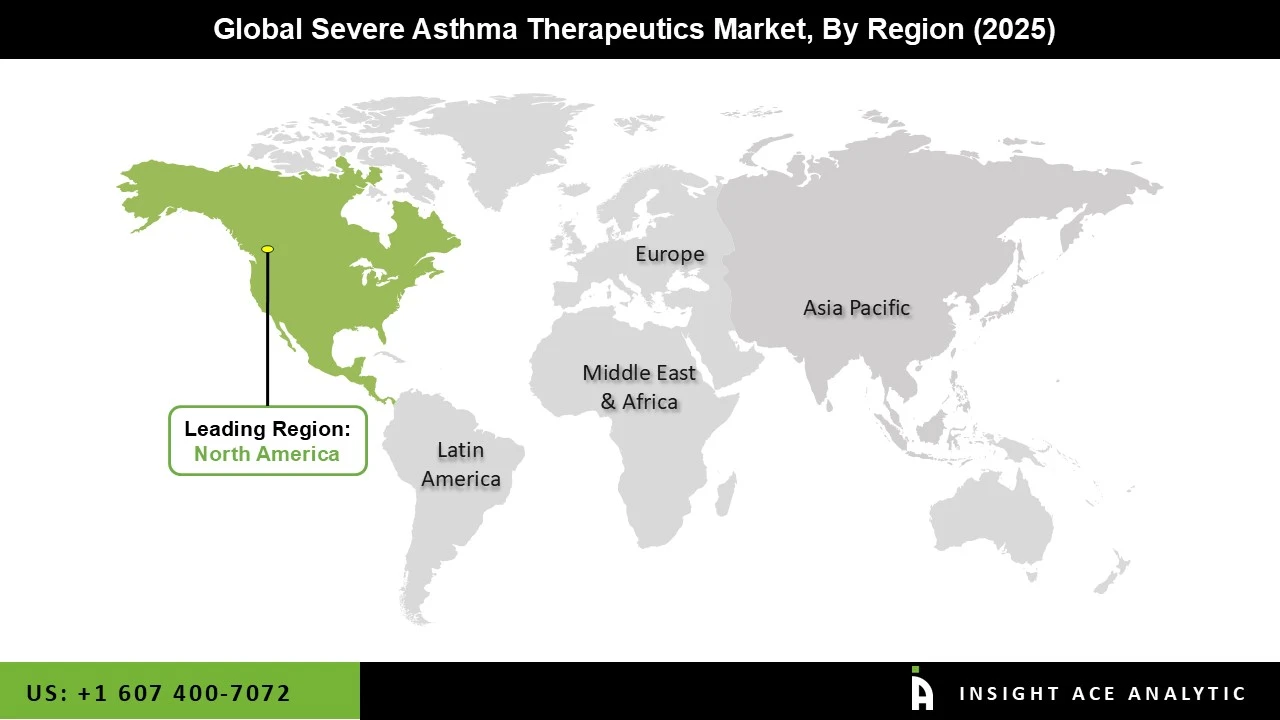
The severe asthma therapeutics market is led by North America due to the large number of patients suffering from severe and uncontrolled asthma, early adoption of innovative biologic therapies, and an established healthcare infrastructure. The region has favorable reimbursement systems in place, easy access to specialty care, and quick approvals for new biologic therapies targeting major inflammatory pathways. Furthermore, increased awareness of the disease, active clinical research, and the presence of key pharmaceutical companies have spurred the adoption of precision medicine therapies, making North America the leading market.
Key Development
• January 2024: GSK acquired Aiolos Bio for $1.4 billion to strengthen its respiratory pipeline, including $1 billion upfront and up to $400 million in milestone payments. The acquisition added AIO-001, a long-acting anti-TSLP monoclonal antibody for severe asthma, positioned in the same therapeutic class as AstraZeneca’s Tezspire.
Severe Asthma Therapeutics Products Market Report Scope:
| Report Attribute | Specifications |
| Growth Rate CAGR | CAGR of 6.9% from 2026 to 2035 |
| Quantitative Units | Representation of revenue in US$ Bn and CAGR from 2026 to 2035 |
| Historic Year | 2022 to 2025 |
| Forecast Year | 2026-2035 |
| Report Coverage | The forecast of revenue, the position of the company, the competitive market structure, growth prospects, and trends |
| Segments Covered | By Therapy Class, By Drug Target / Mechanism, Phenotype / Endotype, Route of Administration, Patient Age Group, End User and By Region |
| Regional Scope | North America; Europe; Asia Pacific; Latin America; Middle East & Africa |
| Country Scope | U.S.; Canada; U.K.; Germany; China; India; Japan; Brazil; Mexico; The UK; France; Italy; Spain; China; Japan; India; South Korea; Southeast Asia; South Korea; Southeast Asia |
| Competitive Landscape | AB Science, AER Therapeutics, Amgen, Apogee Therapeutics, Areteia Therapeutics, AstraZeneca, Bio-Thera Solutions, Biosion, CSPC ZhongQi Pharmaceutical Technology, Generate:Biomedicines, GlaxoSmithKline (GSK), Incyte, Insmed, Kinaset Therapeutics, Kymera Therapeutics, Lanier Biotherapeutics, Novartis, Oneness Biotech, Regeneron Pharmaceuticals, Roche, Sanofi, Suzhou Connect Biopharmaceuticals, Teva Pharmaceutical Industries, Upstream Bio |
| Customization Scope | Free customization report with the procurement of the report, Modifications to the regional and segment scope. Geographic competitive landscape. |
| Pricing and Available Payment Methods | Explore pricing alternatives that are customized to your particular study requirements. |
Severe Asthma Therapeutics Products Market Segmentation:
Severe Asthma Therapeutics Products Market by Therapy Class -
• Biologics
• Small Molecule / Targeted Immunomodulators
• Optimized Inhaled Add-on Therapies
• Systemic Corticosteroids (Maintenance)
• Interventional Therapies
Severe Asthma Therapeutics Products Market by Drug Target / Mechanism -
• Anti-IgE
• Anti-IL-5
• Anti-IL-5 Receptor (IL-5Rα)
• Anti-IL-4 / IL-13 Pathway (IL-4Rα)
• Anti-TSLP
• Anti-IL-33 / ST2 Axis
• Anti-OX40 / OX40L
• Intracellular Signaling Modulators (JAK, STAT, others)
Severe Asthma Therapeutics Products Market by Phenotype / Endotype-
• Severe Eosinophilic Asthma
• Severe Allergic Asthma
• Type-2 High Severe Asthma
• Type-2 Low / Non-Eosinophilic Severe Asthma
• Oral Corticosteroid-Dependent Severe Asthma
Severe Asthma Therapeutics Products Market by Route of Administration -
• Subcutaneous
• Intravenous
• Inhaled
• Oral
Severe Asthma Therapeutics Products Market by Patient Age Group -
• Pediatric (6–11 Years)
• Adolescent (12–17 Years)
• Adult (18–64 Years)
• Geriatric (65+ Years)
Severe Asthma Therapeutics Products Market by End User -
• Hospitals
• Specialty Clinics (Pulmonology / Allergy)
• Ambulatory Care Centers
Severe Asthma Therapeutics Products Market by Region-
North America-
- The US
- Canada
Europe-
- Germany
- The UK
- France
- Italy
- Spain
- Rest of Europe
Asia-Pacific-
- China
- Japan
- India
- South Korea
- South East Asia
- Rest of Asia Pacific
Latin America-
- Brazil
- Argentina
- Mexico
- Rest of Latin America
Middle East & Africa-
- GCC Countries
- South Africa
- Rest of Middle East and Africa
Research Design and Approach
This study employed a multi-step, mixed-method research approach that integrates:
- Secondary research
- Primary research
- Data triangulation
- Hybrid top-down and bottom-up modelling
- Forecasting and scenario analysis
This approach ensures a balanced and validated understanding of both macro- and micro-level market factors influencing the market.
Secondary Research
Secondary research for this study involved the collection, review, and analysis of publicly available and paid data sources to build the initial fact base, understand historical market behaviour, identify data gaps, and refine the hypotheses for primary research.
Sources Consulted
Secondary data for the market study was gathered from multiple credible sources, including:
- Government databases, regulatory bodies, and public institutions
- International organizations (WHO, OECD, IMF, World Bank, etc.)
- Commercial and paid databases
- Industry associations, trade publications, and technical journals
- Company annual reports, investor presentations, press releases, and SEC filings
- Academic research papers, patents, and scientific literature
- Previous market research publications and syndicated reports
These sources were used to compile historical data, market volumes/prices, industry trends, technological developments, and competitive insights.

Primary Research
Primary research was conducted to validate secondary data, understand real-time market dynamics, capture price points and adoption trends, and verify the assumptions used in the market modelling.
Stakeholders Interviewed
Primary interviews for this study involved:
- Manufacturers and suppliers in the market value chain
- Distributors, channel partners, and integrators
- End-users / customers (e.g., hospitals, labs, enterprises, consumers, etc., depending on the market)
- Industry experts, technology specialists, consultants, and regulatory professionals
- Senior executives (CEOs, CTOs, VPs, Directors) and product managers
Interview Process
Interviews were conducted via:
- Structured and semi-structured questionnaires
- Telephonic and video interactions
- Email correspondences
- Expert consultation sessions
Primary insights were incorporated into demand modelling, pricing analysis, technology evaluation, and market share estimation.
Data Processing, Normalization, and Validation
All collected data were processed and normalized to ensure consistency and comparability across regions and time frames.
The data validation process included:
- Standardization of units (currency conversions, volume units, inflation adjustments)
- Cross-verification of data points across multiple secondary sources
- Normalization of inconsistent datasets
- Identification and resolution of data gaps
- Outlier detection and removal through algorithmic and manual checks
- Plausibility and coherence checks across segments and geographies
This ensured that the dataset used for modelling was clean, robust, and reliable.
Market Size Estimation and Data Triangulation
Bottom-Up Approach
The bottom-up approach involved aggregating segment-level data, such as:
- Company revenues
- Product-level sales
- Installed base/usage volumes
- Adoption and penetration rates
- Pricing analysis
This method was primarily used when detailed micro-level market data were available.

Top-Down Approach
The top-down approach used macro-level indicators:
- Parent market benchmarks
- Global/regional industry trends
- Economic indicators (GDP, demographics, spending patterns)
- Penetration and usage ratios
This approach was used for segments where granular data were limited or inconsistent.
Hybrid Triangulation Approach
To ensure accuracy, a triangulated hybrid model was used. This included:
- Reconciling top-down and bottom-up estimates
- Cross-checking revenues, volumes, and pricing assumptions
- Incorporating expert insights to validate segment splits and adoption rates
This multi-angle validation yielded the final market size.
Forecasting Framework and Scenario Modelling
Market forecasts were developed using a combination of time-series modelling, adoption curve analysis, and driver-based forecasting tools.
Forecasting Methods
- Time-series modelling
- S-curve and diffusion models (for emerging technologies)
- Driver-based forecasting (GDP, disposable income, adoption rates, regulatory changes)
- Price elasticity models
- Market maturity and lifecycle-based projections
Scenario Analysis
Given inherent uncertainties, three scenarios were constructed:
- Base-Case Scenario: Expected trajectory under current conditions
- Optimistic Scenario: High adoption, favourable regulation, strong economic tailwinds
- Conservative Scenario: Slow adoption, regulatory delays, economic constraints
Sensitivity testing was conducted on key variables, including pricing, demand elasticity, and regional adoption.
Request Customization
Add countries, segments, company profiles, or extend forecast — free 10% customization with purchase.
Customize This Report →Enquire Before Buying
Speak with our analyst team about scope, methodology, pricing, or deliverable formats.
Enquire Now →Frequently Asked Questions
Severe Asthma Therapeutics Products Market Size is predicted to grow at a 6.9% CAGR during the forecast period for 2026 to 2035.
AB Science, AER Therapeutics, Amgen, Apogee Therapeutics, Areteia Therapeutics, AstraZeneca, Bio-Thera Solutions, Biosion, CSPC ZhongQi Pharmaceutical Technology, Generate:Biomedicines, GlaxoSmithKline (GSK), Incyte, Insmed, Kinaset Therapeutics, Kymera Therapeutics, Lanier Biotherapeutics, Novartis, Oneness Biotech, Regeneron Pharmaceuticals, Roche, Sanofi, Suzhou Connect Biopharmaceuticals, Teva Pharmaceutical Industries, Upstream Bio
Severe Asthma Therapeutics Products Market is segmented in By Therapy Class, By Drug Target / Mechanism, Phenotype / Endotype, Route of Administration, Patient Age Group, End User and By Region
North America region is leading the Severe Asthma Therapeutics Products Market.