Sequential Compression Systems Market Size, Share, Trend, Scope Report 2026 to 2035
What is Sequential Compression Systems Market Size?
Sequential Compression Systems Market Size is valued at USD 1.37 Bn in 2025 and is predicted to reach USD 3.08 Bn by the year 2035 at a 8.4% CAGR during the forecast period for 2026 to 2035.
Sequential Compression Systems Market Size, Share & Trends Analysis Distribution by Product Type (Consumables & Accessories (Garments, Compression Sleeves, Replacement Tubing & Connectors) and Compression Systems (Portable & Wearable Units, Stationary/Tabletop Units), Application (Lymphedema Management, Sports Recovery & Performance, Deep Vein Thrombosis (DVT) Prevention, Chronic Venous Insufficiency (CVI) & Ulcer Management, and Others), Technology (Simultaneous Sequential Compression (SSC) and Alternate Sequential Compression (ASC)), End-user (Institutional Settings (Hospitals, Rehabilitation & Skilled Nursing Facilities, Specialty Clinics) and Home & Retail, Direct-to-Consumer (DTC) Sports/Fitness Centers, Home Healthcare)), and Segment Forecasts, 2026 to 2035
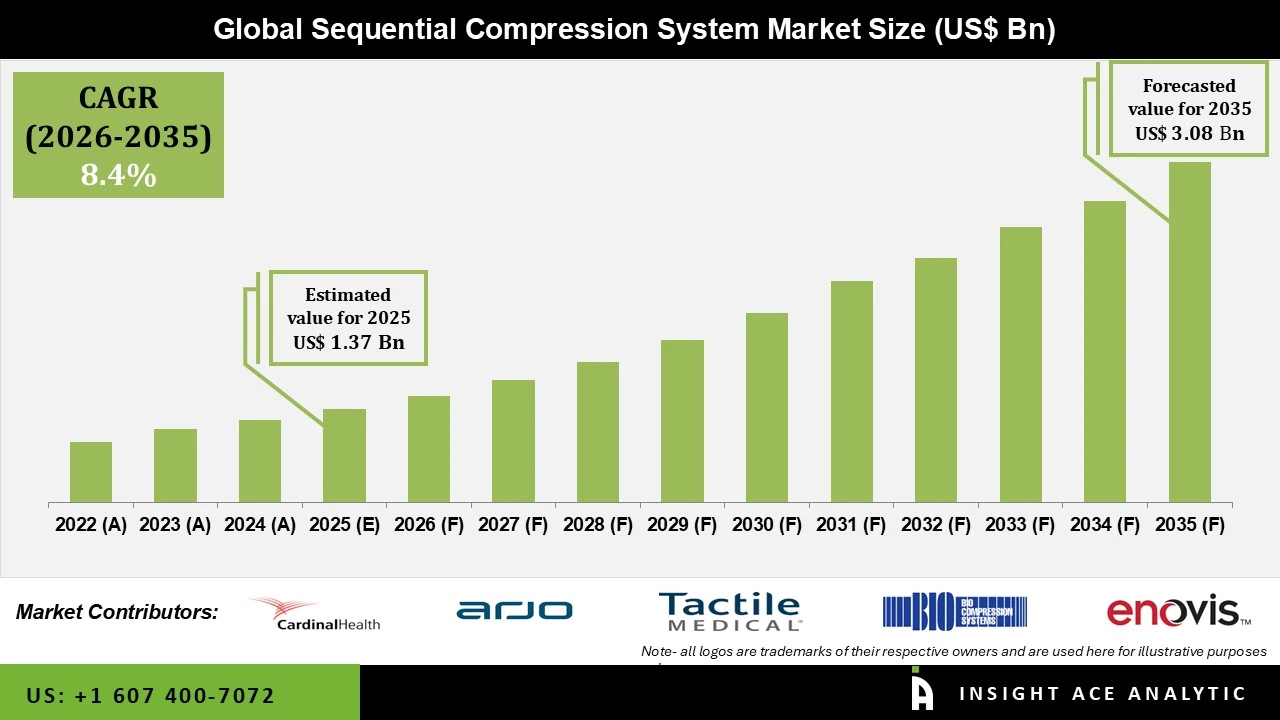
Sequential Compression Systems Market Key Takeaways:
|
A sequential compression system is a mechanical or therapeutic device that uses inflatable cuffs or chambers to apply controlled pressure in a pattern or sequence along a limb or body part. These systems function by sequentially inflating and deflating air chambers, beginning with the distal part (like the hand or foot) and working their way toward the proximal part (like the upper arm or thigh). This sequential action prevents fluid buildup in tissues, improves lymphatic drainage, and increases blood circulation. The rising incidence of chronic venous conditions such as deep vein thrombosis (DVT) and lymphedema, particularly in the elderly population, is the main driver of the sequential compression systems market's global expansion.
Deep vein thrombosis (DVT), chronic venous illnesses, and cardiovascular ailments are becoming more common, which is pushing the demand for sequential compression systems. These devices are frequently used in hospitals and surgical facilities to enhance blood flow and avoid clot formation, especially in patients having general, cardiology, and orthopedic procedures. Furthermore, the sequential compression systems are in greater demand in both hospital and home care settings due to the rising incidence of venous diseases brought on by aging populations and sedentary lifestyles. Additionally, increasing awareness of postoperative problems, including venous thromboembolism, and the amount of surgical procedures performed globally are driving the sequential compression systems market.
In addition, the use of sequential compression systems as a non-invasive and successful treatment for edema, lymphedema, and circulation-related disorders is being encouraged by the healthcare industry's growing emphasis on early intervention and preventative care. The product uptake is also being boosted by technological developments, including smart monitoring features, portable compression devices, and enhanced patient comfort. Additionally, supporting clinical guidelines that advocate mechanical prophylaxis for DVT prevention and the development of healthcare infrastructure, especially in emerging nations, are anticipated to bolster the sequential compression systems market growth. However, some of the main issues impeding the sequential compression systems market expansion are the adoption of alternative technologies and an insufficient reimbursement system for these devices.
Competitive Landscape
Which are the Leading Players in Sequential Compression Systems Market?
• Cardinal Health
• Hyperice
• Bio Compression Systems
• Enovis
• AIROS Medical
• Therabody
• Mego Afek
• Zimmer Biomet
• Tactile Medical
• BREG, Inc.
• Arjo
Market Dynamics
Driver
Rising Incidence of Venous Thromboembolism (VTE)
The rising incidence of venous thromboembolism (VTE), which includes deep vein thrombosis (DVT) and pulmonary embolism, especially among hospitalized and postoperative patients, is one of the main factors propelling the sequential compression systems market. The danger of blood clot development is greatly increased by factors such as the increasing frequency of orthopedic, cardiovascular, and general surgeries, longer hospital stays, and restricted patient mobility. As a non-invasive mechanical prophylactic technique, sequential compression systems are frequently advised to enhance venous blood flow and lessen the risk of clot formation in the lower extremities. Furthermore, these devices are in greater demand in hospitals, ambulatory surgical centers, and home care settings due to the growing global aging population and the rising prevalence of lifestyle-related conditions such as obesity, diabetes, and cardiovascular diseases.
Restrain/Challenge
High Cost of Sophisticated Compression Equipment and Associated Accessories
The sequential compression systems market is challenged by the high cost of sophisticated compression equipment and associated accessories, which may prevent adoption in smaller hospitals and healthcare facilities with tighter budgets. In developing nations, where knowledge of mechanical prophylaxis is still low, many healthcare facilities may give priority to basic medical equipment over specialized devices for thrombosis prevention. Moreover, the operational expenses may also rise due to the requirement for routine maintenance, disposable sleeves, and qualified medical personnel to operate and keep an eye on the devices. These operational and budgetary obstacles may hinder the broad adoption of sequential compression systems, particularly in low- and middle-income nations, hence limiting the expansion of the sequential compression systems market.
Compression Systems Segment is Expected to Drive the Sequential Compression Systems Market
The compression systems category held the largest share in the Sequential Compression Systems market in 2025 because it is widely used in hospitals, surgical facilities, and post-acute care settings to prevent venous thromboembolism (VTE). These devices are essential to standardized DVT prophylaxis programs because they provide controlled, intermittent pneumatic compression with consistent pressure precision, making them preferred over accessories and clothing alone. Furthermore, the ongoing technological developments, such as portable, tubeless, and smart compression devices, growing use in home-based care, and an increase in surgery volumes worldwide, all contribute to the segment's expansion of the installed base of compression systems.
Deep Vein Thrombosis (DVT) Prevention Segment is Growing at the Highest Rate in the Sequential Compression Systems Market
In 2025, the deep vein thrombosis (DVT) prevention category dominated the Sequential Compression Systems market because extended immobility and surgical treatments are linked to thromboembolic consequences that are becoming more widely recognized. In hospitals and surgical facilities, sequential compression devices are frequently utilized as a mechanical prophylactic technique to lower the risk of blood clot development in deep veins, especially in patients having abdominal, cardiovascular, and orthopedic procedures.
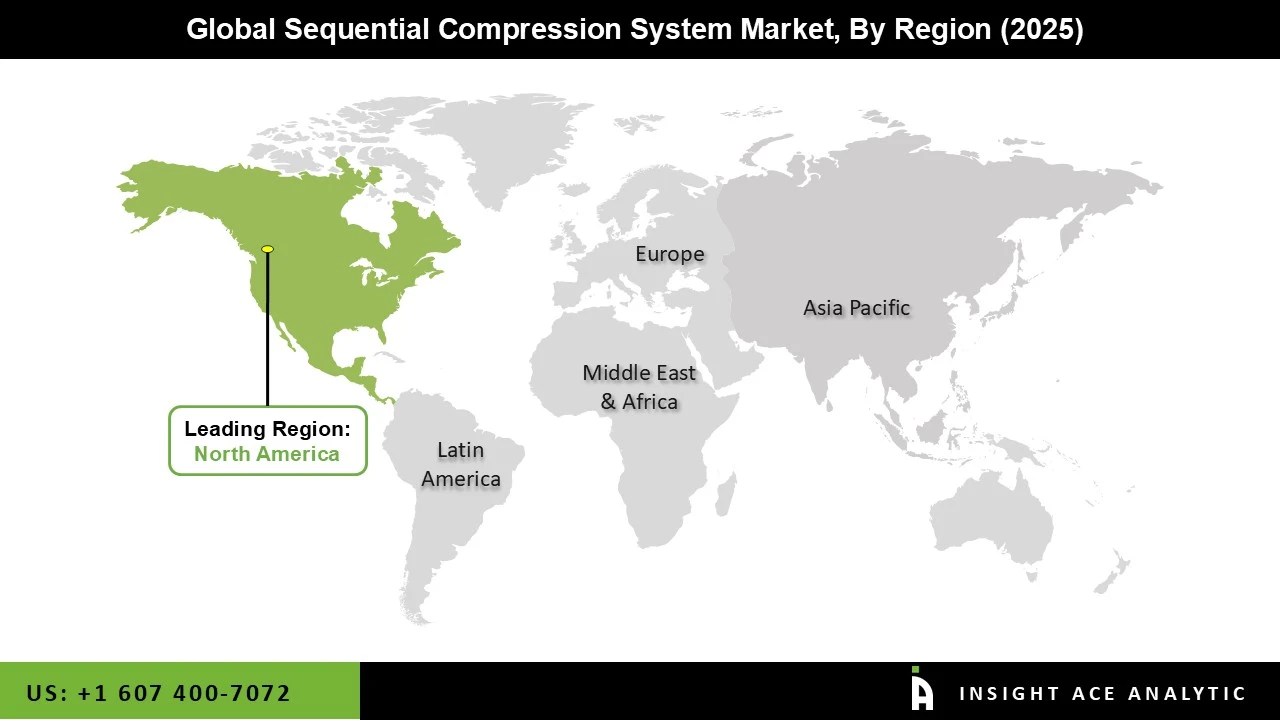
Why North America Led the Sequential Compression Systems Market?
The Sequential Compression Systems market was dominated by North America region in 2025 due to the advantageous reimbursement policies, strong healthcare infrastructure, and high frequency of vascular illnesses linked to lifestyle. A mature and competitive environment has been created by the existence of significant sequential compression systems market competitors, ongoing technological advancement, and robust clinical research efforts. Additionally, the region's leadership position is further reinforced by its proactive approach to DVT prevention in immobile and post-surgical patients, as well as by strict regulatory standards guaranteeing device efficacy and safety. Moreover, the ongoing need for sequential compression systems in North America is partly influenced by the aging population and increased patient and healthcare provider knowledge of the dangers of venous thromboembolism.
Key Development
• November 2024: The next-generation Kendall SCD SmartFlow Compression System, which is intended to enhance patient comfort and clinician workflow, was introduced in the United States by Cardinal Health. In addition to improving circulation and lowering pain and swelling related to venous stasis, the system uses clinically proven technology that provides tailored intermittent pneumatic compression (IPC) to improve blood flow in at-risk patients, supporting the prevention of venous thromboembolism (VTE).
Sequential Compression Systems Market Report Scope:
| Report Attribute | Specifications |
| Market size value in 2025 | USD 1.37 Bn |
| Revenue forecast in 2035 | USD 3.08 Bn |
| Growth Rate CAGR | CAGR of 8.4% from 2026 to 2035 |
| Quantitative Units | Representation of revenue in US$ Bn and CAGR from 2026 to 2035 |
| Historic Year | 2022 to 2025 |
| Forecast Year | 2026-2035 |
| Report Coverage | The forecast of revenue, the position of the company, the competitive market structure, growth prospects, and trends |
| Segments Covered | Product Type, Application, Technology, End-user, and By Region |
| Regional Scope | North America; Europe; Asia Pacific; Latin America; Middle East & Africa |
| Country Scope | U.S.; Canada; U.K.; Germany; China; India; Japan; Brazil; Mexico; The UK; France; Italy; Spain; China; Japan; India; South Korea; Southeast Asia; South Korea; Southeast Asia |
| Competitive Landscape | Cardinal Health, Hyperice, Bio Compression Systems, Enovis, AIROS Medical, Therabody, Mego Afek, Zimmer Biomet, Tactile Medical, BREG, Inc., and Arjo |
| Customization Scope | Free customization report with the procurement of the report, Modifications to the regional and segment scope. Geographic competitive landscape. |
| Pricing and Available Payment Methods | Explore pricing alternatives that are customized to your particular study requirements. |
Market Segmentation:
Sequential Compression Systems Market by Product Type-
- Consumables & Accessories
-
- Garments
- Compression Sleeves
- Replacement Tubing & Connectors
- Compression Systems
-
- Portable & Wearable Units
- Stationary/Tabletop Units
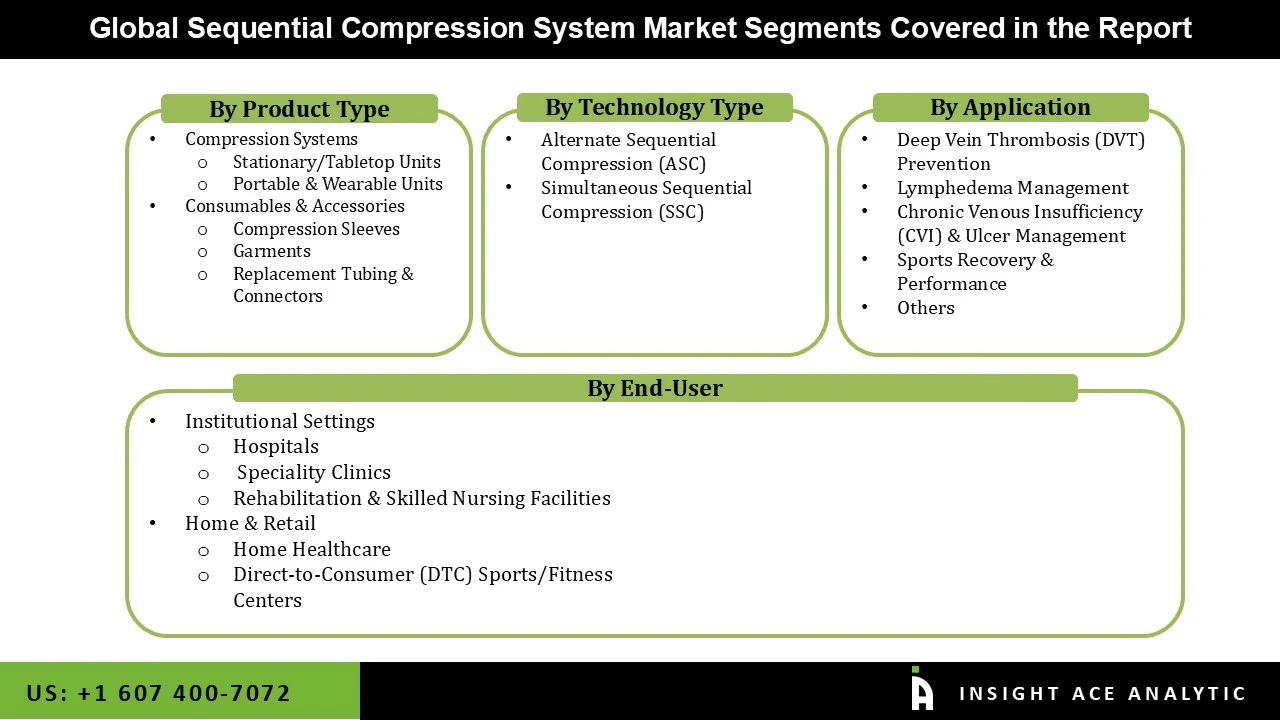
Sequential Compression Systems Market by Application-
• Lymphedema Management
• Sports Recovery & Performance
• Deep Vein Thrombosis (DVT) Prevention
• Chronic Venous Insufficiency (CVI) & Ulcer Management
• Others
Sequential Compression Systems Market by Technology-
• Simultaneous Sequential Compression (SSC)
• Alternate Sequential Compression (ASC)
Sequential Compression Systems Market by End-user-
• Institutional Settings
o Hospitals
o Rehabilitation & Skilled Nursing Facilities
• Specialty Clinics
o Home & Retail
o Direct-to-Consumer (DTC) Sports/Fitness Centers
o Home Healthcare
Sequential Compression Systems Market by By Region-
North America-
• The US
• Canada
Europe-
• Germany
• The UK
• France
• Italy
• Spain
• Rest of Europe
Asia-Pacific-
• China
• Japan
• India
• South Korea
• South East Asia
• Rest of Asia Pacific
Latin America-
• Brazil
• Argentina
• Mexico
• Rest of Latin America
Middle East & Africa-
• GCC Countries
• South Africa
• Rest of Middle East and Africa
Research Design and Approach
This study employed a multi-step, mixed-method research approach that integrates:
- Secondary research
- Primary research
- Data triangulation
- Hybrid top-down and bottom-up modelling
- Forecasting and scenario analysis
This approach ensures a balanced and validated understanding of both macro- and micro-level market factors influencing the market.
Secondary Research
Secondary research for this study involved the collection, review, and analysis of publicly available and paid data sources to build the initial fact base, understand historical market behaviour, identify data gaps, and refine the hypotheses for primary research.
Sources Consulted
Secondary data for the market study was gathered from multiple credible sources, including:
- Government databases, regulatory bodies, and public institutions
- International organizations (WHO, OECD, IMF, World Bank, etc.)
- Commercial and paid databases
- Industry associations, trade publications, and technical journals
- Company annual reports, investor presentations, press releases, and SEC filings
- Academic research papers, patents, and scientific literature
- Previous market research publications and syndicated reports
These sources were used to compile historical data, market volumes/prices, industry trends, technological developments, and competitive insights.

Primary Research
Primary research was conducted to validate secondary data, understand real-time market dynamics, capture price points and adoption trends, and verify the assumptions used in the market modelling.
Stakeholders Interviewed
Primary interviews for this study involved:
- Manufacturers and suppliers in the market value chain
- Distributors, channel partners, and integrators
- End-users / customers (e.g., hospitals, labs, enterprises, consumers, etc., depending on the market)
- Industry experts, technology specialists, consultants, and regulatory professionals
- Senior executives (CEOs, CTOs, VPs, Directors) and product managers
Interview Process
Interviews were conducted via:
- Structured and semi-structured questionnaires
- Telephonic and video interactions
- Email correspondences
- Expert consultation sessions
Primary insights were incorporated into demand modelling, pricing analysis, technology evaluation, and market share estimation.
Data Processing, Normalization, and Validation
All collected data were processed and normalized to ensure consistency and comparability across regions and time frames.
The data validation process included:
- Standardization of units (currency conversions, volume units, inflation adjustments)
- Cross-verification of data points across multiple secondary sources
- Normalization of inconsistent datasets
- Identification and resolution of data gaps
- Outlier detection and removal through algorithmic and manual checks
- Plausibility and coherence checks across segments and geographies
This ensured that the dataset used for modelling was clean, robust, and reliable.
Market Size Estimation and Data Triangulation
Bottom-Up Approach
The bottom-up approach involved aggregating segment-level data, such as:
- Company revenues
- Product-level sales
- Installed base/usage volumes
- Adoption and penetration rates
- Pricing analysis
This method was primarily used when detailed micro-level market data were available.

Top-Down Approach
The top-down approach used macro-level indicators:
- Parent market benchmarks
- Global/regional industry trends
- Economic indicators (GDP, demographics, spending patterns)
- Penetration and usage ratios
This approach was used for segments where granular data were limited or inconsistent.
Hybrid Triangulation Approach
To ensure accuracy, a triangulated hybrid model was used. This included:
- Reconciling top-down and bottom-up estimates
- Cross-checking revenues, volumes, and pricing assumptions
- Incorporating expert insights to validate segment splits and adoption rates
This multi-angle validation yielded the final market size.
Forecasting Framework and Scenario Modelling
Market forecasts were developed using a combination of time-series modelling, adoption curve analysis, and driver-based forecasting tools.
Forecasting Methods
- Time-series modelling
- S-curve and diffusion models (for emerging technologies)
- Driver-based forecasting (GDP, disposable income, adoption rates, regulatory changes)
- Price elasticity models
- Market maturity and lifecycle-based projections
Scenario Analysis
Given inherent uncertainties, three scenarios were constructed:
- Base-Case Scenario: Expected trajectory under current conditions
- Optimistic Scenario: High adoption, favourable regulation, strong economic tailwinds
- Conservative Scenario: Slow adoption, regulatory delays, economic constraints
Sensitivity testing was conducted on key variables, including pricing, demand elasticity, and regional adoption.
Request Customization
Add countries, segments, company profiles, or extend forecast — free 10% customization with purchase.
Customize This Report →Enquire Before Buying
Speak with our analyst team about scope, methodology, pricing, or deliverable formats.
Enquire Now →Frequently Asked Questions
Sequential Compression Systems Market Size is valued at USD 1.37 Bn in 2025 and is predicted to reach USD 3.08 Bn by the year 2035
Sequential Compression Systems Market is expected to grow at a 8.4% CAGR during the forecast period for 2026 to 2035.
Cardinal Health, Hyperice, Bio Compression Systems, Enovis, AIROS Medical, Therabody, Mego Afek, Zimmer Biomet, Tactile Medical, BREG, Inc., and Arjo
Sequential Compression Systems Market is segmented into Product Type, Application, Technology, End-user, and By Region
North America region is leading the Sequential Compression Systems Market