Roadways Intelligent Transportation System Market Size, Share and Growth Analysis 2026 to 2035
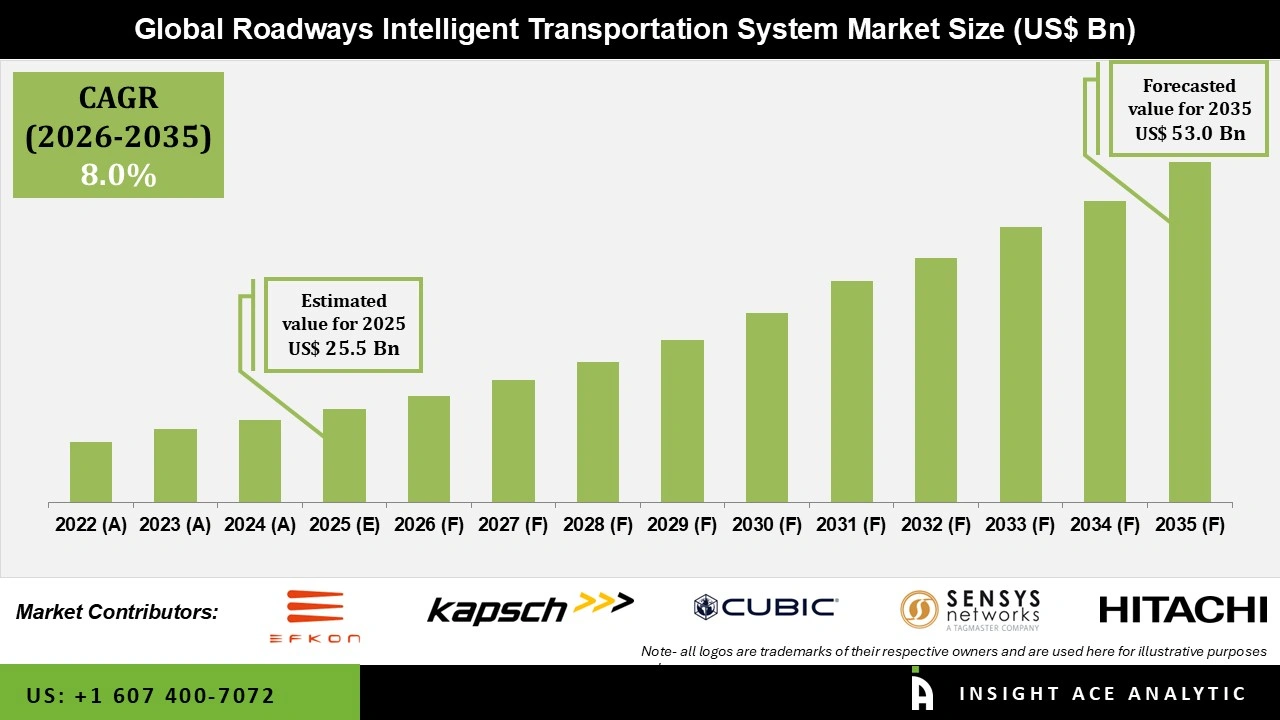
Global Roadways Intelligent Transportation System Market Size is valued at USD 25.5 Bn in 2025 and is predicted to reach USD 53.0 Bn by the year 2035 at a 8.0% CAGR during the forecast period for 2026 to 2035.
Roadways Intelligent Transportation System Market Size, Share & Trends Analysis Distribution by System Type (Services (Cloud Services, Professional Services, Business Services), Hardware (Surveillance Cameras, Sensors, Interface Boards, Telecommunication Networks, Monitoring and Detection Systems, Others), and Software (Visualization Software, Transit Management GPS Software, Video Detection Management Software, Others)), By Offering (Emergency Medical System (EMS), Advanced Traffic Management System (ATMS), Advanced Traveler Information System (ATIS), Advanced Public Transportation System (APTS), and Advanced Transportation Pricing System (ATPS)), By Application (Public Transport, Traffic Management, Freight Management, Road Safety and Security, Environment Protection, Road Tolling Systems, Automotive Telematics, Parking Management, and Others), and Segment Forecasts, 2026 to 2035
A roadway's Intelligent Transportation System (ITS) is a cutting-edge framework that enhances road transportation's sustainability, efficiency, and safety by utilising information and communication technology. It combines elements including sensors, cameras, GPS, traffic signals, and data analytics platforms to track, manage, and regulate traffic in real time. Traveller information services, electronic toll collection, adaptive signal control, incident detection, route guidance, and traffic congestion management are all made possible by ITS.
By enabling connected and autonomous vehicles, enhancing public transportation operations, and building a more dependable and user-friendly road transportation network, it also plays a crucial role in enabling smart cities. The roadways intelligent transportation system market is anticipated to increase quickly due to factors such as increasing urbanization, traffic congestion, government policies and programs, and the growth of public transit networks.
The roadways intelligent transportation system market is expanding rapidly due to the development of smart technology, increased urbanization, and the rising demand for environmentally friendly mobility options. These technologies use big data, IoT, and AI to increase safety, ease traffic, and improve transportation efficiency. Furthermore, the increase in traffic and traffic fatalities is another aspect propelling the roadways intelligent transportation system market. For instance, the number of traftransportation fic deaths in the United States rose by 7% in the first quarter of 2022 over the same period last year. To overcome these obstacles, sophisticated solutions like intelligent traffic management and collision avoidance technologies are essential. Moreover, to improve traffic and lower pollution, governments all around the world make significant investments in these systems.
The demand for ITS in traffic and mobility management is being driven by the global focus on smart city initiatives, which presents considerable prospects for the roadways intelligent transportation system market expansion. Additionally, there is a surge in investments in smart mobility technologies. To improve user comfort and maximize network efficiency, businesses are creating cutting-edge solutions like automated toll collection, real-time traffic monitoring, and integrated ticketing systems.
Despite the expansion, the global roadways intelligent transportation system market is limited by constraints such as costly initial expenditures and interoperability and integration challenges. ITS necessitates large financial investments in software integration, communication networks, and infrastructure. The budget constraints impede the implementation of roadways intelligent transportation system in developing countries.
Competitive Landscape
Which are the Leading Players in Roadways Intelligent Transportation System Market?
• Siemens AG
• Garmin Ltd.
• EFKON GmbH
• Kapsch TrafficCom
• TomTom International BV
• Sensys Networks, Inc.
• Teledyne FLIR LLC (Teledyne Technologies Incorporated)
• Hitachi, Ltd.
• Iteris, Inc.
• Cubic Corporation
Market Dynamics
Driver
Increasing Number of Cars on the Road
The roadways intelligent transportation system market is anticipated to expand in the future due to the increasing number of vehicles on the road. The number of vehicles on the road is rising as a result of population growth, urbanization, economic development, and more access to personal transportation. This could lead to traffic issues. By lowering traffic congestion, the use of intelligent transportation systems will contribute to improving traffic efficiency and lowering traffic problems.
For instance, in January 2022, there were 20.7 million registered motor vehicles, a 2% increase from January 2021, according to the Department of Infrastructure, Transport, Regional Development, Communications, and the Arts, an Australian government department responsible for implementing Australian government policy and programs, in February 2024. Therefore, the roadways intelligent transportation system market is expanding due to the increasing number of cars on the road.
Restrain/Challenge
Interoperability Issues and High Initial Implementation Costs
Installing infrastructure, sensors, and communication technology is one of the major upfront expenses associated with implementing roadways intelligent transportation systems. The adoption may be hampered by these high upfront costs, especially for smaller towns or regions with tighter budgets. Smooth integration may be hampered by the lack of compatibility and established protocols. The efficacy of a comprehensive transportation network may be limited by incompatibility problems that occur while trying to connect disparate systems. These characteristics are therefore anticipated to limit the roadways intelligent transportation system market growth significantly during the projection period.
The Hardware Segment is Expected to Drive the Roadways Intelligent Transportation System Market
The hardware category held the largest share in the Roadways Intelligent Transportation System market in 2024. The requirement for precise data gathering, real-time monitoring, and dependable connectivity across transportation networks is driving demand for sophisticated hardware solutions. Modern hardware is anticipated to continue to be widely adopted as cities make investments in modernizing their transportation infrastructure, especially in areas where smart city projects are still in progress. The market for roadways intelligent transportation systems has also grown as a result of technological developments in telecommunications systems and the growing use of sophisticated sensors in the railroad industry to improve safety.
The Traffic Management Segment is Growing at the Highest Rate in the Roadways Intelligent Transportation System Market
In 2024, the Traffic Management category dominated the Roadways Intelligent Transportation System market. The foundation of roadways intelligent transportation system is traffic management software, which makes it easier to monitor and regulate traffic flow. These systems optimize signal timings, control traffic, and boost overall traffic efficiency by utilizing real-time data, sensors, and algorithms. In order to improve safety, efficiency, and sustainability, the market for roadways intelligent transportation system is essential to modernizing and optimizing transportation networks. It incorporates cutting-edge technology to gather, process, and distribute data in order to enhance the efficiency of transportation networks. It includes solutions for both hardware and software.
Why North America Led the Roadways Intelligent Transportation System Market?
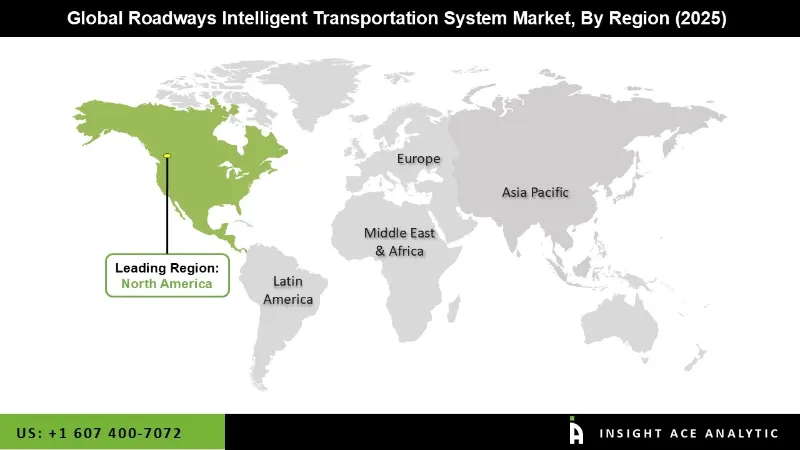
The Roadways Intelligent Transportation System market was dominated by the North America region in 2024. The desire to alleviate traffic congestion, increase road safety, and improve transportation efficiency has prompted the United States and Canada to be early adopters of roadways intelligent transportation systems.
Strong governmental backing, a well-established transportation network, and continuous R&D expenditures all assist the adoption of the intelligent transportation system in this region. Additionally, the construction of 5G networks and the use of connected and autonomous cars are driving the expansion of the roadways intelligent transportation system market in North America. It is anticipated that there would be a strong demand for sophisticated ITS solutions as states and cities continue to modernize their transportation networks.
Key Developments:
• In January 2024: Garmin announced new industry-first features for its Automotive OEM Unified Cabin solutions at CES 2024, including personalized HMI theming, Cluster Theatre Mode for entertainment, and expanded use of cabin monitoring for driver distraction mitigation.
Roadways Intelligent Transportation System Market Report Scope:
| Report Attribute | Specifications |
| Market size value in 2025 | USD 25.5 Bn |
| Revenue forecast in 2035 | USD 53.0 Bn |
| Growth Rate CAGR | CAGR of 8.0% from 2026 to 2035 |
| Quantitative Units | Representation of revenue in US$ Bn and CAGR from 2025 to 2035 |
| Historic Year | 2022 to 2025 |
| Forecast Year | 2026-2035 |
| Report Coverage | The forecast of revenue, the position of the company, the competitive market structure, growth prospects, and trends |
| Segments Covered | System Type, Offering, Application, and By Region |
| Regional Scope | North America; Europe; Asia Pacific; Latin America; Middle East & Africa |
| Country Scope | U.S.; Canada; U.K.; Germany; China; India; Japan; Brazil; Mexico; The UK; France; Italy; Spain; China; Japan; India; South Korea; Southeast Asia; South Korea; Southeast Asia |
| Competitive Landscape | Siemens AG, Garmin Ltd., EFKON GmbH, Kapsch TrafficCom, TomTom International BV, Sensys Networks, Inc., Teledyne FLIR LLC (Teledyne Technologies Incorporated), Hitachi, Ltd., Iteris, Inc., and Cubic Corporation. |
| Customization Scope | Free customization report with the procurement of the report, Modifications to the regional and segment scope. Geographic competitive landscape. |
| Pricing and Available Payment Methods | Explore pricing alternatives that are customized to your particular study requirements. |
Market Segmentation:
Roadways Intelligent Transportation System Market by System Type-
- Services
-
- Cloud Services
- Professional Services
- Business Services
- Hardware
-
- Surveillance Cameras
- Sensors
- Interface Boards
- Telecommunication Networks
- Monitoring and Detection Systems
- Others
- Software
-
- Visualization Software
- Transit Management Software
- Video Detection Management Software
- Others
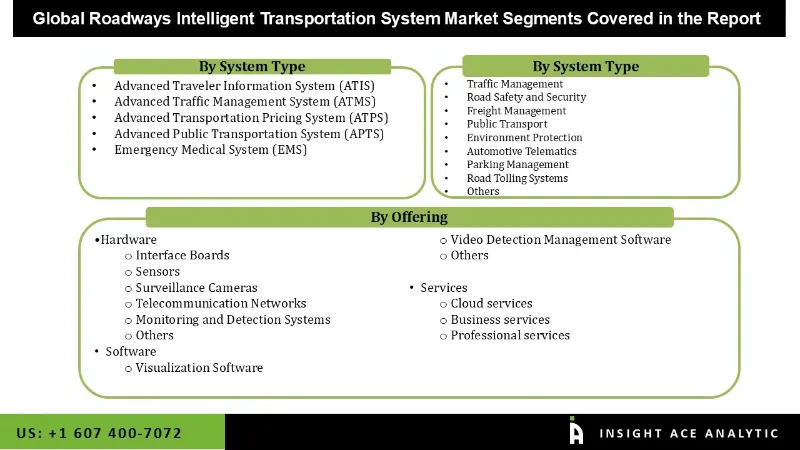
Roadways Intelligent Transportation System Market by Offering-
- Emergency Medical System (EMS)
- Advanced Traffic Management System (ATMS)
- Advanced Traveler Information System (ATIS)
- Advanced Public Transportation System (APTS)
- Advanced Transportation Pricing System (ATPS)
Roadways Intelligent Transportation System Market by Application-
- Public Transport
- Traffic Management
- Freight Management
- Road Safety and Security
- Environment Protection
- Road Tolling Systems
- Automotive Telematics
- Parking Management
- Others
By Region-
North America-
- The US
- Canada
Europe-
- Germany
- The UK
- France
- Italy
- Spain
- Rest of Europe
Asia-Pacific-
- China
- Japan
- India
- South Korea
- South East Asia
- Rest of Asia Pacific
Latin America-
- Brazil
- Argentina
- Mexico
- Rest of Latin America
Middle East & Africa-
- GCC Countries
- South Africa
- Rest of Middle East and Africa
Research Design and Approach
This study employed a multi-step, mixed-method research approach that integrates:
- Secondary research
- Primary research
- Data triangulation
- Hybrid top-down and bottom-up modelling
- Forecasting and scenario analysis
This approach ensures a balanced and validated understanding of both macro- and micro-level market factors influencing the market.
Secondary Research
Secondary research for this study involved the collection, review, and analysis of publicly available and paid data sources to build the initial fact base, understand historical market behaviour, identify data gaps, and refine the hypotheses for primary research.
Sources Consulted
Secondary data for the market study was gathered from multiple credible sources, including:
- Government databases, regulatory bodies, and public institutions
- International organizations (WHO, OECD, IMF, World Bank, etc.)
- Commercial and paid databases
- Industry associations, trade publications, and technical journals
- Company annual reports, investor presentations, press releases, and SEC filings
- Academic research papers, patents, and scientific literature
- Previous market research publications and syndicated reports
These sources were used to compile historical data, market volumes/prices, industry trends, technological developments, and competitive insights.

Primary Research
Primary research was conducted to validate secondary data, understand real-time market dynamics, capture price points and adoption trends, and verify the assumptions used in the market modelling.
Stakeholders Interviewed
Primary interviews for this study involved:
- Manufacturers and suppliers in the market value chain
- Distributors, channel partners, and integrators
- End-users / customers (e.g., hospitals, labs, enterprises, consumers, etc., depending on the market)
- Industry experts, technology specialists, consultants, and regulatory professionals
- Senior executives (CEOs, CTOs, VPs, Directors) and product managers
Interview Process
Interviews were conducted via:
- Structured and semi-structured questionnaires
- Telephonic and video interactions
- Email correspondences
- Expert consultation sessions
Primary insights were incorporated into demand modelling, pricing analysis, technology evaluation, and market share estimation.
Data Processing, Normalization, and Validation
All collected data were processed and normalized to ensure consistency and comparability across regions and time frames.
The data validation process included:
- Standardization of units (currency conversions, volume units, inflation adjustments)
- Cross-verification of data points across multiple secondary sources
- Normalization of inconsistent datasets
- Identification and resolution of data gaps
- Outlier detection and removal through algorithmic and manual checks
- Plausibility and coherence checks across segments and geographies
This ensured that the dataset used for modelling was clean, robust, and reliable.
Market Size Estimation and Data Triangulation
Bottom-Up Approach
The bottom-up approach involved aggregating segment-level data, such as:
- Company revenues
- Product-level sales
- Installed base/usage volumes
- Adoption and penetration rates
- Pricing analysis
This method was primarily used when detailed micro-level market data were available.

Top-Down Approach
The top-down approach used macro-level indicators:
- Parent market benchmarks
- Global/regional industry trends
- Economic indicators (GDP, demographics, spending patterns)
- Penetration and usage ratios
This approach was used for segments where granular data were limited or inconsistent.
Hybrid Triangulation Approach
To ensure accuracy, a triangulated hybrid model was used. This included:
- Reconciling top-down and bottom-up estimates
- Cross-checking revenues, volumes, and pricing assumptions
- Incorporating expert insights to validate segment splits and adoption rates
This multi-angle validation yielded the final market size.
Forecasting Framework and Scenario Modelling
Market forecasts were developed using a combination of time-series modelling, adoption curve analysis, and driver-based forecasting tools.
Forecasting Methods
- Time-series modelling
- S-curve and diffusion models (for emerging technologies)
- Driver-based forecasting (GDP, disposable income, adoption rates, regulatory changes)
- Price elasticity models
- Market maturity and lifecycle-based projections
Scenario Analysis
Given inherent uncertainties, three scenarios were constructed:
- Base-Case Scenario: Expected trajectory under current conditions
- Optimistic Scenario: High adoption, favourable regulation, strong economic tailwinds
- Conservative Scenario: Slow adoption, regulatory delays, economic constraints
Sensitivity testing was conducted on key variables, including pricing, demand elasticity, and regional adoption.
Request Customization
Add countries, segments, company profiles, or extend forecast — free 10% customization with purchase.
Customize This Report →Enquire Before Buying
Speak with our analyst team about scope, methodology, pricing, or deliverable formats.
Enquire Now →Frequently Asked Questions
Roadways Intelligent Transportation System Market Size is valued at USD 25.5 Bn in 2025 and is predicted to reach USD 53.0 Bn by the year 2035
Roadways Intelligent Transportation System Market is likely to grow at a 8.0% CAGR during the forecast period for 2026 to 2035.
Siemens AG, Garmin Ltd., EFKON GmbH, Kapsch TrafficCom, TomTom International BV, Sensys Networks, Inc., Teledyne FLIR LLC (Teledyne Technologies Incorporated), Hitachi, Ltd., Iteris, Inc., and Cubic Corporation.
System Type, Offering, Application, and By Region are the key segments of the Roadways Intelligent Transportation System Market.
North America region is leading the Roadways Intelligent Transportation System Market.