Forecourts Market Size, Share & Trends Analysis Distribution By Revenue Model (Revenue From Charging Point, Value-Added Service, and Energy Storage) and Segment Forecasts, 2025-2034
Forecourts Market Size is valued at US$ 9.3 Bn in 2025 and is predicted to reach US$ 125.3 Bn by the year 2034 at an 33.4% CAGR during the forecast period for 2025-2034.
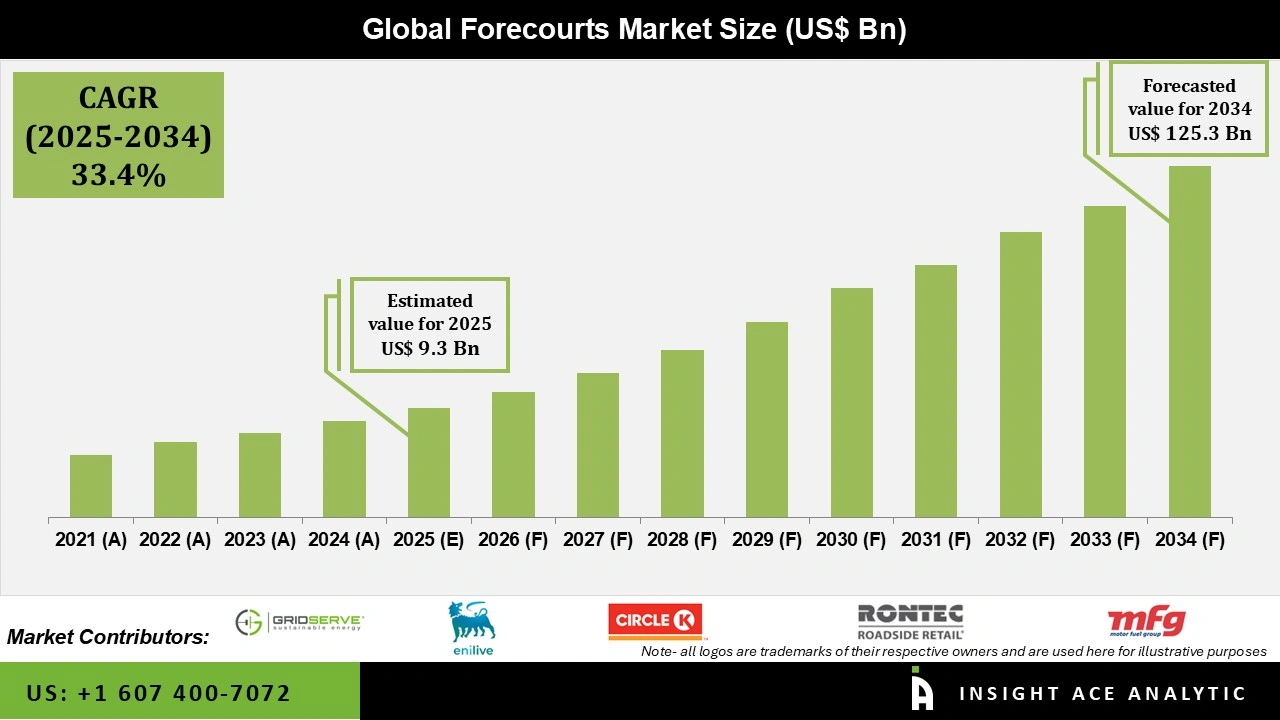
Forecourts are modern fuel stations combining fuel pumps, convenience stores, food services, car washes, and EV charging. They serve busy motorists with quick access to fuel and everyday needs in one stop. As lifestyles evolve, forecourts have become multi-service hubs generating 50-70% of revenue from non-fuel sales. The global market is growing through digital payments, better food offerings and EV infrastructure.
Digital payment systems are driving rapid forecourt market expansion. Consumers want faster, safer transactions, so forecourts are adopting contactless cards, mobile wallets, and app-based payments. These solutions cut wait times, improve customer experience, and reduce cash handling costs. Digital payments also enable loyalty programs, personalized discounts, and seamless transactions across services (fuel, food, and car wash). For operators, they boost efficiency, lower costs, and provide valuable customer data for targeted marketing, accelerating modernization worldwide.
Forecourts are evolving beyond fuel stations into lifestyle hubs. Loyalty programs, promotions, and extended hours keep customers coming back. Many locations now feature premium coffee, fresh food, and quick-service restaurants. EV charging infrastructure attracts electric vehicle owners, while car wash services add revenue streams. Enhanced store layouts and digital signage improve the shopping experience. As fuel demand shifts, forecourts adapt by diversifying services to remain essential community destinations.
Competitive Landscape
Some of the Key Players in the Forecourts Market:
- GRIDSERVE
- Motor Fuel Group (MFG)
- Rontec
- ENILIVE
- Circle K
- SHELL RECHARGE
- ELECTRIFY AMERICA
- Audi A.G.
- BP p.l.c
Market Segmentation:
The Forecourts market is segmented by revenue model and By Region. The revenue model segment comprises revenue from charging points, value-added services, and energy storage.
By Revenue Model, the Revenue from the Charging Point Segment is Expected to Drive the Forecourts Market
In 2024, the revenue from charging points held the major market share due to the integration of electric vehicle (EV) charging infrastructure, as rising EV adoption shifts consumer demand away from traditional fuels. Operators are investing in fast-charging points to capture new revenue streams, enhance customer loyalty, and future-proof their business models. Charging points generate revenue not only through direct charging fees but also by attracting customers who spend on retail, food, and ancillary services during charging, thereby diversifying and strengthening overall forecourt profitability.
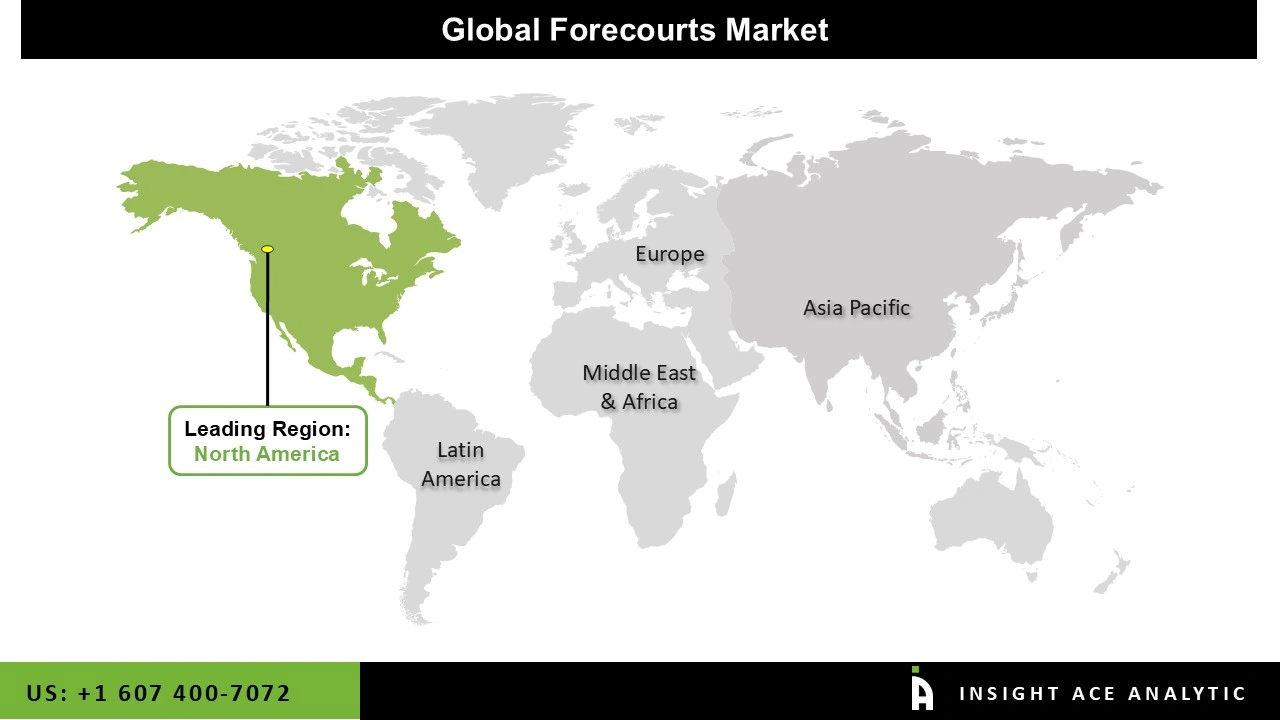
Regionally, North America Led the Forecourts Market
North America dominates the market for forecourts due to the region’s increasing demand for convenience and integrated retail-fuel services. Rising vehicle ownership and long-distance travel have boosted fuel station usage, while customers' preference for one-stop solutions supports growth in forecourt convenience stores. Digital payment solutions, loyalty programs, and automated fueling technologies enhance customer experience, attracting repeat users. Additionally, the expansion of electric vehicle (EV) charging infrastructure within forecourts reflects rising sustainability trends, pushing operators to diversify deliveries and remain competitive in a rapidly evolving market.
Moreover, Europe's forecourt market is also fueled by the integration of cutting-edge convenience retail, sustainable fuel options, and digital transformation. Rising customer preference for one-stop locations combining fueling, food, and retail services is boosting investments in modernised forecourts. The shift toward electric vehicle (EV) adoption also drives the installation of EV charging stations at forecourts, aligning with EU climate goals. Additionally, contactless payments, loyalty programs, and smart data-driven retail strategies expand consumer experience, fostering expansion and competitiveness across the European market.
Forecourts Market Report Scope
| Report Attribute | Specifications |
| Market Size Value In 2025 | USD 9.3 Bn |
| Revenue Forecast In 2034 | USD 125.3 Bn |
| Growth Rate CAGR | CAGR of 33.4% from 2025 to 2034 |
| Quantitative Units | Representation of revenue in US$ Bn and CAGR from 2025 to 2034 |
| Historic Year | 2021 to 2024 |
| Forecast Year | 2025-2034 |
| Report Coverage | The forecast of revenue, the position of the company, the competitive market structure, growth prospects, and trends |
| Segments Covered | By Revenue Model, and By Region |
| Regional Scope | North America; Europe; Asia Pacific; Latin America; Middle East & Africa |
| Country Scope | U.S.; Canada; Germany; The UK; France; Italy; Spain; Rest of Europe; China; Japan; India; South Korea; Southeast Asia; Rest of Asia Pacific; Brazil; Argentina; Mexico; Rest of Latin America; GCC Countries; South Africa; Rest of the Middle East and Africa |
| Competitive Landscape | GRIDSERVE, Motor Fuel Group (MFG), Rontec, ENILIVE, Circle K, SHELL RECHARGE, ELECTRIFY AMERICA, Audi A.G., BP p.l.c, and 7-Eleven Inc. |
| Customization Scope | Free customization report with the procurement of the report, Modifications to the regional and segment scope. Geographic competitive landscape. |
| Pricing and Available Payment Methods | Explore pricing alternatives that are customized to your particular study requirements. |
Segmentation of Forecourts Market -
Forecourts Market by Type-
· Revenue From Charging Point
· Value-Added Service
· Energy Storage
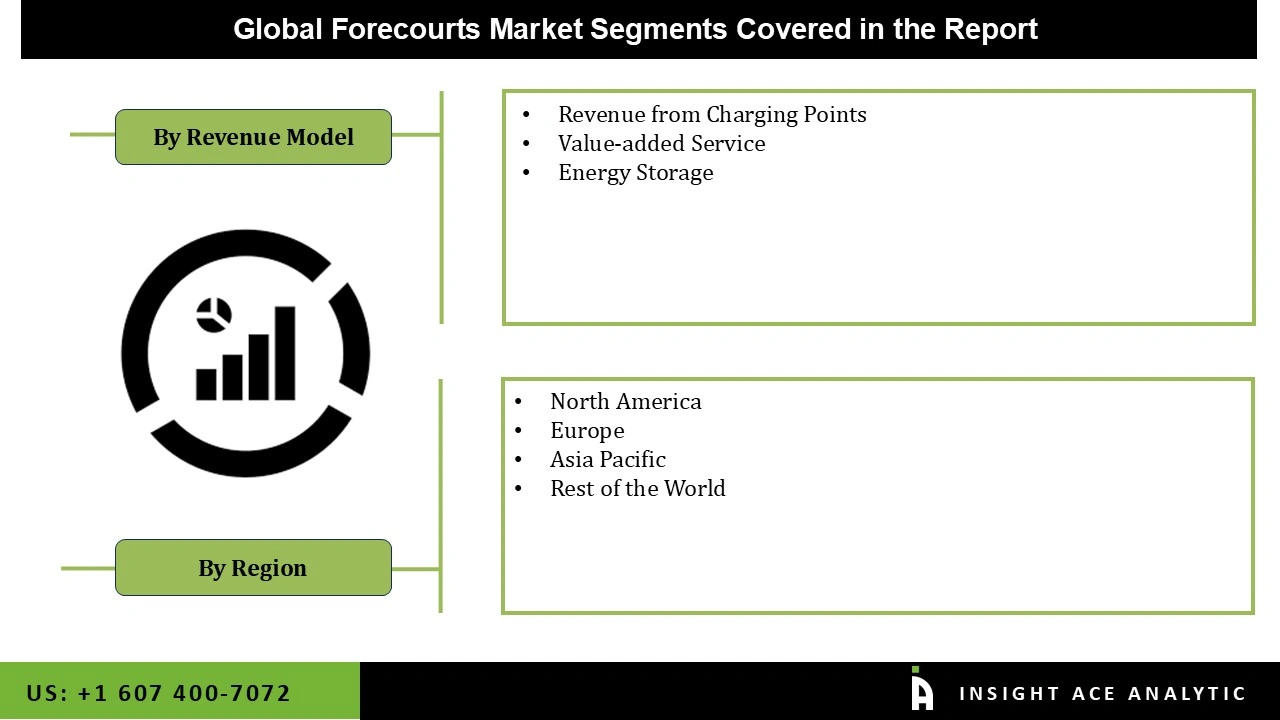
Forecourts Market by Region-
North America-
· The US
· Canada
Europe-
· Germany
· The UK
· France
· Italy
· Spain
· Rest of Europe
Asia-Pacific-
· China
· Japan
· India
· South Korea
· Southeast Asia
· Rest of Asia Pacific
Latin America-
· Brazil
· Argentina
· Mexico
· Rest of Latin America
Middle East & Africa-
· GCC Countries
· South Africa
· Rest of the Middle East and Africa
Research Design and Approach
This study employed a multi-step, mixed-method research approach that integrates:
- Secondary research
- Primary research
- Data triangulation
- Hybrid top-down and bottom-up modelling
- Forecasting and scenario analysis
This approach ensures a balanced and validated understanding of both macro- and micro-level market factors influencing the market.
Secondary Research
Secondary research for this study involved the collection, review, and analysis of publicly available and paid data sources to build the initial fact base, understand historical market behaviour, identify data gaps, and refine the hypotheses for primary research.
Sources Consulted
Secondary data for the market study was gathered from multiple credible sources, including:
- Government databases, regulatory bodies, and public institutions
- International organizations (WHO, OECD, IMF, World Bank, etc.)
- Commercial and paid databases
- Industry associations, trade publications, and technical journals
- Company annual reports, investor presentations, press releases, and SEC filings
- Academic research papers, patents, and scientific literature
- Previous market research publications and syndicated reports
These sources were used to compile historical data, market volumes/prices, industry trends, technological developments, and competitive insights.

Primary Research
Primary research was conducted to validate secondary data, understand real-time market dynamics, capture price points and adoption trends, and verify the assumptions used in the market modelling.
Stakeholders Interviewed
Primary interviews for this study involved:
- Manufacturers and suppliers in the market value chain
- Distributors, channel partners, and integrators
- End-users / customers (e.g., hospitals, labs, enterprises, consumers, etc., depending on the market)
- Industry experts, technology specialists, consultants, and regulatory professionals
- Senior executives (CEOs, CTOs, VPs, Directors) and product managers
Interview Process
Interviews were conducted via:
- Structured and semi-structured questionnaires
- Telephonic and video interactions
- Email correspondences
- Expert consultation sessions
Primary insights were incorporated into demand modelling, pricing analysis, technology evaluation, and market share estimation.
Data Processing, Normalization, and Validation
All collected data were processed and normalized to ensure consistency and comparability across regions and time frames.
The data validation process included:
- Standardization of units (currency conversions, volume units, inflation adjustments)
- Cross-verification of data points across multiple secondary sources
- Normalization of inconsistent datasets
- Identification and resolution of data gaps
- Outlier detection and removal through algorithmic and manual checks
- Plausibility and coherence checks across segments and geographies
This ensured that the dataset used for modelling was clean, robust, and reliable.
Market Size Estimation and Data Triangulation
Bottom-Up Approach
The bottom-up approach involved aggregating segment-level data, such as:
- Company revenues
- Product-level sales
- Installed base/usage volumes
- Adoption and penetration rates
- Pricing analysis
This method was primarily used when detailed micro-level market data were available.

Top-Down Approach
The top-down approach used macro-level indicators:
- Parent market benchmarks
- Global/regional industry trends
- Economic indicators (GDP, demographics, spending patterns)
- Penetration and usage ratios
This approach was used for segments where granular data were limited or inconsistent.
Hybrid Triangulation Approach
To ensure accuracy, a triangulated hybrid model was used. This included:
- Reconciling top-down and bottom-up estimates
- Cross-checking revenues, volumes, and pricing assumptions
- Incorporating expert insights to validate segment splits and adoption rates
This multi-angle validation yielded the final market size.
Forecasting Framework and Scenario Modelling
Market forecasts were developed using a combination of time-series modelling, adoption curve analysis, and driver-based forecasting tools.
Forecasting Methods
- Time-series modelling
- S-curve and diffusion models (for emerging technologies)
- Driver-based forecasting (GDP, disposable income, adoption rates, regulatory changes)
- Price elasticity models
- Market maturity and lifecycle-based projections
Scenario Analysis
Given inherent uncertainties, three scenarios were constructed:
- Base-Case Scenario: Expected trajectory under current conditions
- Optimistic Scenario: High adoption, favourable regulation, strong economic tailwinds
- Conservative Scenario: Slow adoption, regulatory delays, economic constraints
Sensitivity testing was conducted on key variables, including pricing, demand elasticity, and regional adoption.
Request Customization
Add countries, segments, company profiles, or extend forecast — free 10% customization with purchase.
Customize This Report →Enquire Before Buying
Speak with our analyst team about scope, methodology, pricing, or deliverable formats.
Enquire Now →Frequently Asked Questions
Forecourts Market Size is valued at US$ 9.3 Bn in 2025 and is predicted to reach US$ 125.3 Bn by the year 2034 at an 33.4% CAGR during the forecast period for 2025-2034.
The major players in the Forecourts market are GRIDSERVE, Motor Fuel Group (MFG), Rontec, ENILIVE, Circle K, SHELL RECHARGE, ELECTRIFY AMERICA, Audi A.G., BP p.l.c, and 7-Eleven Inc
The primary Forecourts market segments are by revenue model, and by region.
North America leads the market for Forecourts due to the integration of advanced convenience retail, sustainable fuel options, and digital transformation.