Autoimmune CAR-T Cell Therapy Market Size, Trend, Revenue Report 2026 to 2035
What is Autoimmune Car-T Cell Therapy Market Size?
Autoimmune Car-T Cell Therapy Market is estimated to grow at a 66.1% CAGR during the forecast period for 2026 to 2035.
Autoimmune Car-T Cell Therapy Market Size, Share & Trends Analysis Distribution by Therapy Platform (Autologous CAR-T, Allogeneic (Off-the-Shelf) CAR-T, In-Vivo CAR-T), By Target Antigen (CD19-Directed CAR-T, BCMA-Directed CAR-T, Dual / Multi-Target CAR-T, Other Targets), By Indication (Neurological Autoimmune Diseases, Rheumatic & Systemic Autoimmune Diseases, Other Immune-Mediated Diseases) and Segment Forecasts, 2026 to 2035
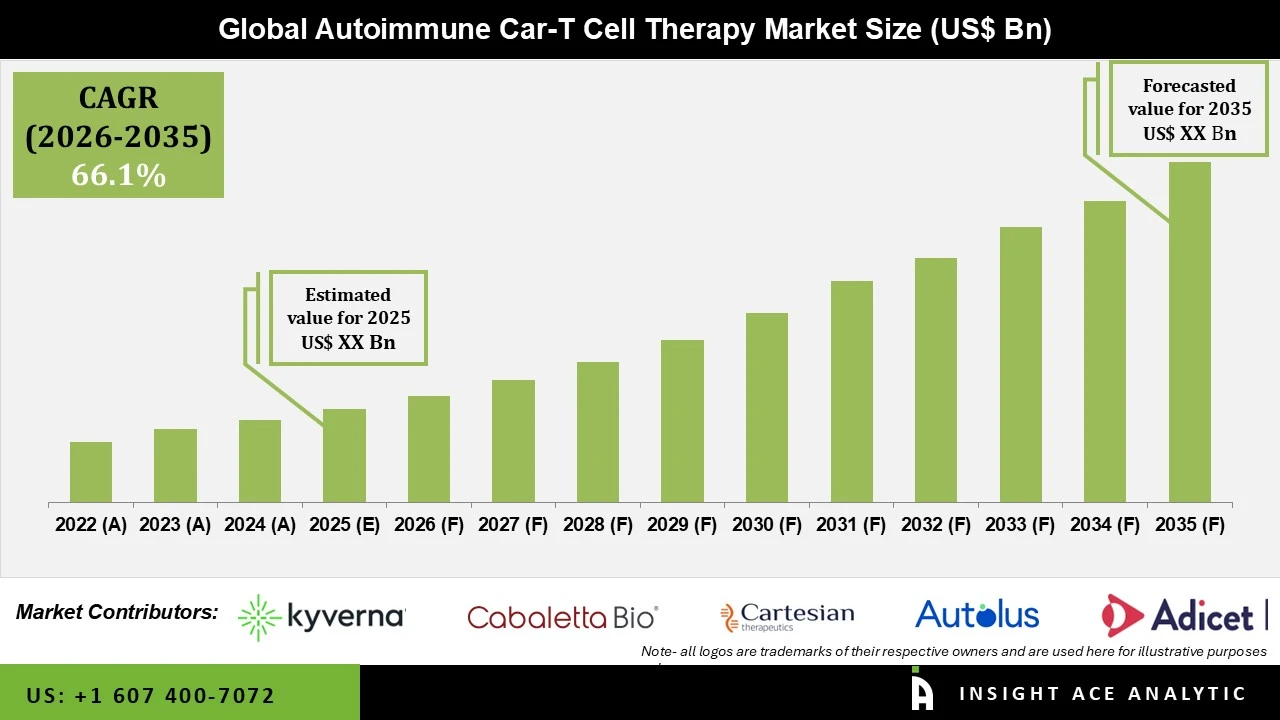
Autoimmune CAR-T cell therapy is an emerging form of cellular immunotherapy that uses genetically modified T cells to treat autoimmune diseases. Unlike conventional CAR-T approaches developed primarily for oncology, these therapies are designed to identify and eliminate disease-driving immune cells, particularly autoreactive B cells that produce pathogenic autoantibodies.
The therapies direct engineered T cells against specific surface antigens, such as CD19 and BCMA, with the goal of interrupting abnormal immune activity and helping to restore immune balance. Development pathways include autologous approaches that use a patient’s own modified T cells, allogeneic (donor-derived) products, and in-vivo methods that reprogramme T cells directly within the body. Clinical investigation is underway across a range of conditions, including systemic lupus erythematosus, systemic sclerosis, idiopathic inflammatory myopathies, multiple sclerosis and other neurological autoimmune disorders.
The global autoimmune CAR-T cell therapy market encompasses therapeutic development, clinical evaluation, manufacturing and the potential commercialisation of these advanced cellular treatments. Current activity is characterised by a growing pipeline of antigen-specific programmes, with CD19-directed therapies representing a major focus alongside emerging BCMA-targeted and multi-target strategies. Research spans multiple engineering platforms, including viral-vector autologous CAR-T, transient mRNA-based approaches, off-the-shelf allogeneic products and in-vivo CAR-T technologies. As clinical trials expand across rheumatic, neurological and systemic autoimmune indications, the field is progressing from early-stage research toward a broader therapeutic category with potential application across diverse patient populations.
Competitive Landscape
Which are the Leading Players in the Autoimmune Car-T Cell Therapy Market?
• Kyverna Therapeutics, Inc.
• Cabaletta Bio, Inc.
• Cartesian Therapeutics, Inc.
• Autolus Therapeutics plc
• Adicet Bio, Inc.
• Fate Therapeutics, Inc.
• Bioray Laboratories, Inc. (BRL Medicine)
• Bristol Myers Squibb Company
• Novartis AG
• Miltenyi Biomedicine GmbH
• Sana Biotechnology, Inc.
• CRISPR Therapeutics AG
• EdiGene, Inc.
Market Dynamics
Driver
Increasing demand for effective treatments for refractory autoimmune diseases
A substantial number of patients with autoimmune disorders continue to experience persistent disease activity, relapses, or inadequate responses despite existing immunosuppressive drugs and biologic therapies. There is therefore a need for more advanced treatment methods which can aim at the immune cells responsible for causing autoimmune reactions. CAR-T cell therapy holds the promise of selectively removing the B cells associated with the disease, especially by means of CD19-directed therapies, and may thus be able to restore the immune system and secure more profound and longer-lasting remissions. Initial clinical results in patients with systemic lupus erythematosus, systemic sclerosis, and inflammatory myopathies have increased interest in this technique, prompting pharmaceutical and biotechnology companies to broaden the clinical development of this approach to other autoimmune conditions.
Restrain/Challenge
High treatment costs and complex CAR-T cell manufacturing
The development of autoimmune CAR-T cell therapy is hindered by the high cost and complexity involved in manufacturing personalized cell treatments. Producing autologous CAR-T cells involves a number of specialized procedures, such as collecting the T cells, genetically modifying them, expanding the cells, carrying out quality testing, and then reinfusing them, a process that is both time-consuming and demanding in terms of resources. The need for specialized manufacturing facilities, trained staff, and strict quality-control measures also adds to the cost of treatment and reduces access to it. This is especially important in the case of autoimmune diseases, since the group of possible patients in this context is much larger than the small number of patients who at present receive CAR-T therapy for cancer. Even though allogeneic and in-vivo CAR-T technologies are being developed in order to make manufacturing easier and to improve scalability, these methods still encounter technical and clinical difficulties concerning immune rejection, cell persistence, and safety.
Autologous CAR-T Segment is Expected to Drive the Autoimmune Car-T Cell Therapy Market
Autologous CAR-T is expected to dominate the autoimmune CAR-T cell therapy market, driven by its comparatively advanced clinical development, established therapeutic approach, and expanding clinical evidence across autoimmune disorders. This technique involves taking the patient's own T cells, modifying them genetically so that they can identify the immune cells associated with the disease, expanding them, and then returning them to the patient. Research into CD19-targeted autologous CAR-T therapies is becoming more common in the case of systemic lupus erythematosus, systemic sclerosis, inflammatory myopathies, and neurological autoimmune diseases. Moreover, progress in transient mRNA-engineered autologous CAR-T methods is broadening the range of treatments available by allowing for temporary CAR expression, which in turn provides better control over the activity of the engineered T cells and may lead to an improved safety profile for these therapies.
Dual / Multi-Target CAR-T Segment is Growing at the Highest Rate in the Autoimmune Car-T Cell Therapy Market
The dual / multi-target CAR-T is forecast to show maximum growth in the autoimmune CAR-T cell therapy market due to the growing number of studies focusing on treatments which target several immune-cell populations at once. As opposed to single-target therapies, dual/multi-target CAR-T treatment will target not only one antigen but several antigens that are present in various stages of B cell development, such as CD19 and BCMA, allowing for more effective depletion of autoreactive B cells and plasma cells producing antibodies. Such treatments are becoming more common in the case of autoimmune conditions like systemic lupus erythematosus, systemic sclerosis, and neurological autoimmune diseases when the cells producing antibodies may be a source of pathogenesis.
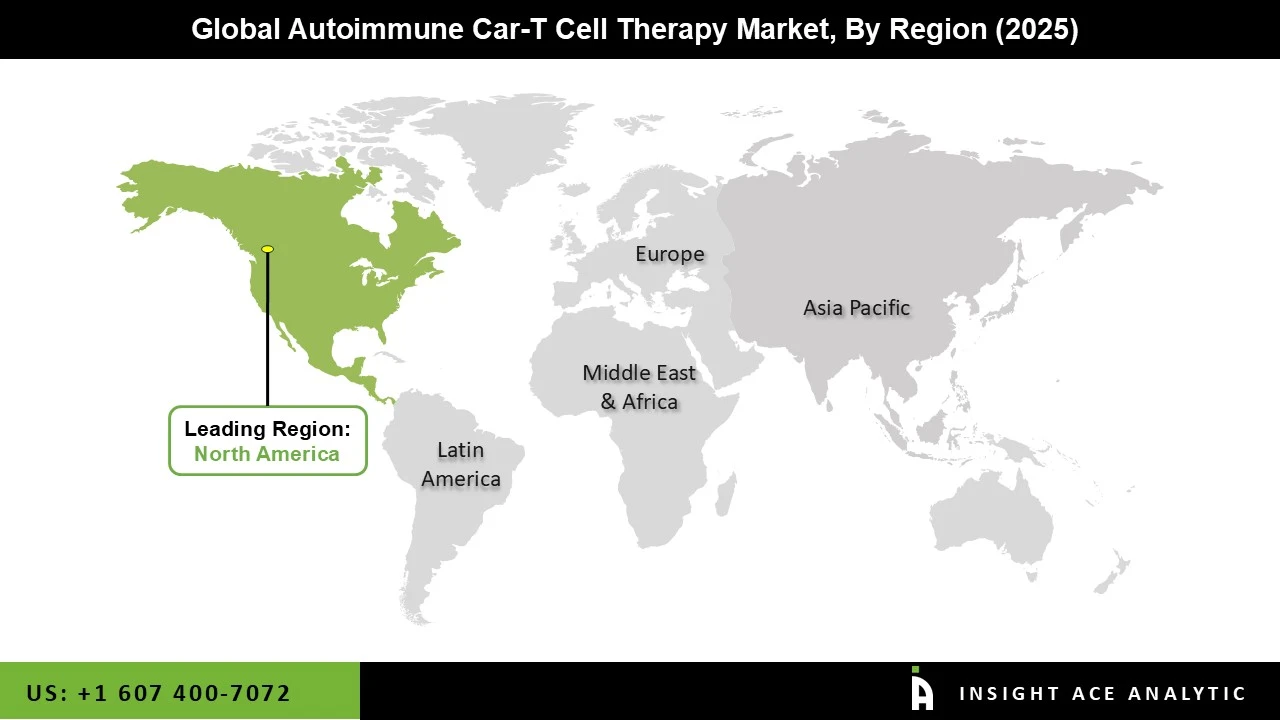
Why North America Led the Autoimmune Car-T Cell Therapy Market?
The autoimmune CAR-T cell therapy market has been dominated by North America owing to the superior research facilities, developed biotechnology network and clinical development of autoimmune CAR-T therapies in the region. North America enjoys the advantage of having advanced centers of clinical research, advanced manufacturing capacities for CAR-T cells, competent regulatory authorities and investment in cellular immunotherapies. The U.S., which occupies a prominent portion of the overall development activities in the region, has seen many clinical trials of CD19-targeting CAR-T cell therapies being conducted for systemic lupus erythematosus, systemic sclerosis, inflammatory myopathies, and neurological autoimmune diseases. Additionally, good collaboration between biotech firms and hospitals has enabled the transition of experimental CAR-T cell therapy approaches into clinical applications.
Key Development
• May 2026: Kyverna Therapeutics received FDA alignment on the rolling BLA submission pathway for miv-cel (KYV-101), its investigational CD19-directed CAR-T therapy for stiff person syndrome (SPS), and outlined plans for a potential 2027 launch.
Autoimmune Car-T Cell Therapy Market Report Scope:
| Report Attribute | Specifications |
| Growth Rate CAGR | CAGR of 66.1% from 2028 to 2035 |
| Quantitative Units | Representation of revenue in US$ Bn and CAGR from 2026 to 2035 |
| Historic Year | 2022 to 2025 |
| Forecast Year | 2026-2035 |
| Report Coverage | The forecast of revenue, the position of the company, the competitive market structure, growth prospects, and trends |
| Segments Covered | Therapy Platform, Target Antigen, Indication (Therapeutic Area), End-User Industry and By Region |
| Regional Scope | North America; Europe; Asia Pacific; Latin America; Middle East & Africa |
| Country Scope | U.S.; Canada; U.K.; Germany; China; India; Japan; Brazil; Mexico; France; Italy; Spain; South Korea; Southeast Asia |
| Competitive Landscape | Kyverna Therapeutics, Inc., Cabaletta Bio, Inc., Cartesian Therapeutics, Inc., Autolus Therapeutics plc, Adicet Bio, Inc., Fate Therapeutics, Inc., Bioray Laboratories, Inc. (BRL Medicine), Bristol Myers Squibb Company, Novartis AG, Miltenyi Biomedicine GmbH, Sana Biotechnology, Inc., CRISPR Therapeutics AG, EdiGene, Inc. |
| Customization Scope | Free customization report with the procurement of the report, Modifications to the regional and segment scope. Geographic competitive landscape. |
| Pricing and Available Payment Methods | Explore pricing alternatives that are customized to your particular study requirements. |
Market Segmentation:
Autoimmune Car-T Cell Therapy Market by Therapy Platform -
• Autologous CAR-T
o Integrating (Viral-Vector) Autologous CAR-T
o Transient (mRNA-Engineered) Autologous CAR-T
• Allogeneic (Off-the-Shelf) CAR-T
• In-Vivo CAR-T
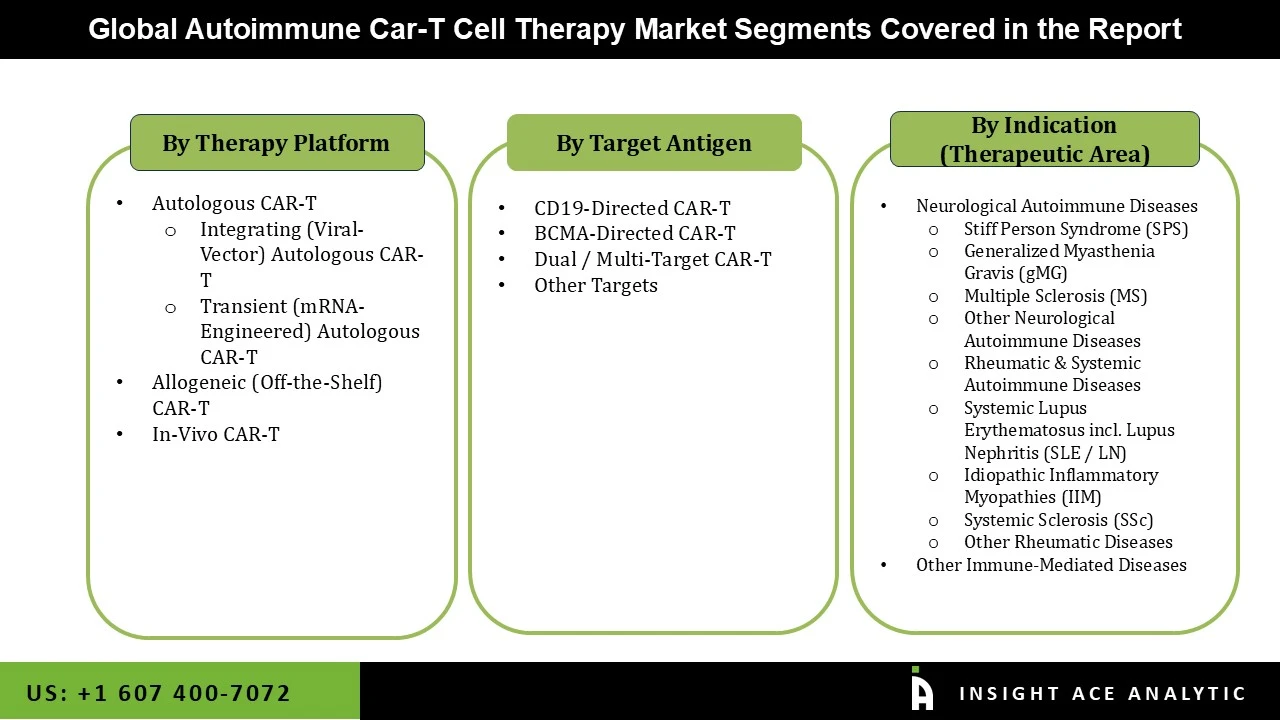
Autoimmune Car-T Cell Therapy Market by Target Antigen -
• CD19-Directed CAR-T
• BCMA-Directed CAR-T
• Dual / Multi-Target CAR-T
• Other Targets
Autoimmune Car-T Cell Therapy Market by Indication (Therapeutic Area)-
• Neurological Autoimmune Diseases
o Stiff Person Syndrome (SPS)
o Generalized Myasthenia Gravis (gMG)
o Multiple Sclerosis (MS)
o Other Neurological Autoimmune Diseases
• Rheumatic & Systemic Autoimmune Diseases
o Systemic Lupus Erythematosus incl. Lupus Nephritis (SLE / LN)
o Idiopathic Inflammatory Myopathies (IIM)
o Systemic Sclerosis (SSc)
o Other Rheumatic Diseases
• Other Immune-Mediated Diseases
Autoimmune Car-T Cell Therapy Market by Region-
North America-
• The US
• Canada
• Mexico
Europe-
• Germany
• The UK
• France
• Italy
• Spain
• Rest of Europe
Asia-Pacific-
• China
• Japan
• India
• South Korea
• South East Asia
• Rest of Asia Pacific
Latin America-
• Brazil
• Argentina
• Rest of Latin America
Middle East & Africa-
• GCC Countries
• South Africa
• Rest of Middle East and Africa
Research Design and Approach
This study employed a multi-step, mixed-method research approach that integrates:
- Secondary research
- Primary research
- Data triangulation
- Hybrid top-down and bottom-up modelling
- Forecasting and scenario analysis
This approach ensures a balanced and validated understanding of both macro- and micro-level market factors influencing the market.
Secondary Research
Secondary research for this study involved the collection, review, and analysis of publicly available and paid data sources to build the initial fact base, understand historical market behaviour, identify data gaps, and refine the hypotheses for primary research.
Sources Consulted
Secondary data for the market study was gathered from multiple credible sources, including:
- Government databases, regulatory bodies, and public institutions
- International organizations (WHO, OECD, IMF, World Bank, etc.)
- Commercial and paid databases
- Industry associations, trade publications, and technical journals
- Company annual reports, investor presentations, press releases, and SEC filings
- Academic research papers, patents, and scientific literature
- Previous market research publications and syndicated reports
These sources were used to compile historical data, market volumes/prices, industry trends, technological developments, and competitive insights.
Primary Research
Primary research was conducted to validate secondary data, understand real-time market dynamics, capture price points and adoption trends, and verify the assumptions used in the market modelling.
Stakeholders Interviewed
Primary interviews for this study involved:
- Manufacturers and suppliers in the market value chain
- Distributors, channel partners, and integrators
- End-users / customers (e.g., hospitals, labs, enterprises, consumers, etc., depending on the market)
- Industry experts, technology specialists, consultants, and regulatory professionals
- Senior executives (CEOs, CTOs, VPs, Directors) and product managers
Interview Process
Interviews were conducted via:
- Structured and semi-structured questionnaires
- Telephonic and video interactions
- Email correspondences
- Expert consultation sessions
Primary insights were incorporated into demand modelling, pricing analysis, technology evaluation, and market share estimation.
Data Processing, Normalization, and Validation
All collected data were processed and normalized to ensure consistency and comparability across regions and time frames.
The data validation process included:
- Standardization of units (currency conversions, volume units, inflation adjustments)
- Cross-verification of data points across multiple secondary sources
- Normalization of inconsistent datasets
- Identification and resolution of data gaps
- Outlier detection and removal through algorithmic and manual checks
- Plausibility and coherence checks across segments and geographies
This ensured that the dataset used for modelling was clean, robust, and reliable.
Market Size Estimation and Data Triangulation
Bottom-Up Approach
The bottom-up approach involved aggregating segment-level data, such as:
- Company revenues
- Product-level sales
- Installed base/usage volumes
- Adoption and penetration rates
- Pricing analysis
This method was primarily used when detailed micro-level market data were available.
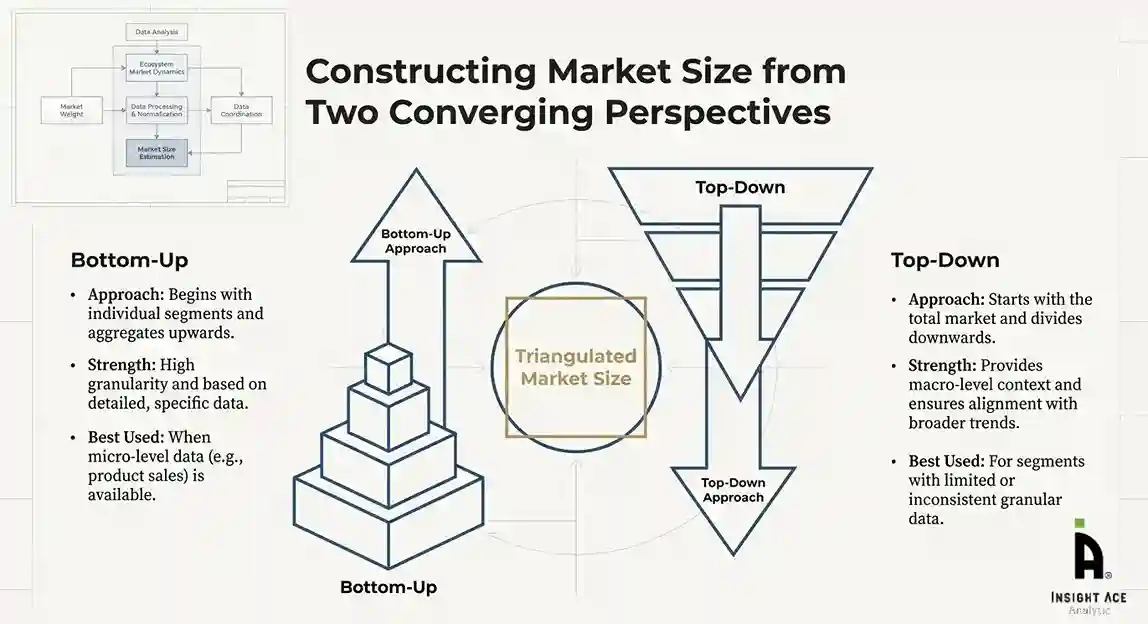
Top-Down Approach
The top-down approach used macro-level indicators:
- Parent market benchmarks
- Global/regional industry trends
- Economic indicators (GDP, demographics, spending patterns)
- Penetration and usage ratios
This approach was used for segments where granular data were limited or inconsistent.
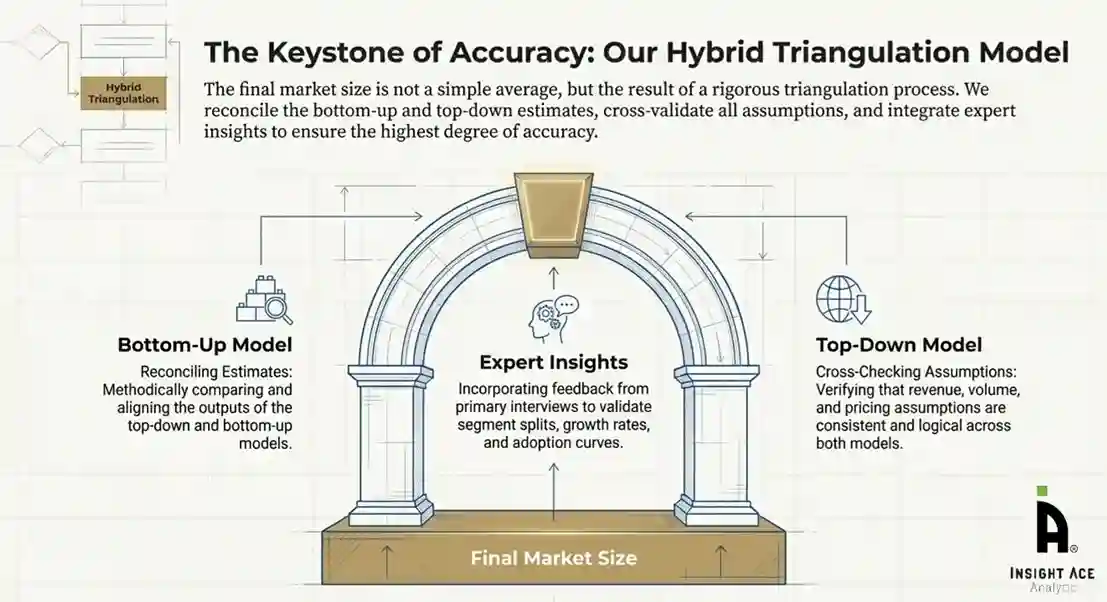
Hybrid Triangulation Approach
To ensure accuracy, a triangulated hybrid model was used. This included:
- Reconciling top-down and bottom-up estimates
- Cross-checking revenues, volumes, and pricing assumptions
- Incorporating expert insights to validate segment splits and adoption rates
This multi-angle validation yielded the final market size.
Forecasting Framework and Scenario Modelling
Market forecasts were developed using a combination of time-series modelling, adoption curve analysis, and driver-based forecasting tools.
Forecasting Methods
- Time-series modelling
- S-curve and diffusion models (for emerging technologies)
- Driver-based forecasting (GDP, disposable income, adoption rates, regulatory changes)
- Price elasticity models
- Market maturity and lifecycle-based projections
Scenario Analysis
Given inherent uncertainties, three scenarios were constructed:
- Base-Case Scenario: Expected trajectory under current conditions
- Optimistic Scenario: High adoption, favourable regulation, strong economic tailwinds
- Conservative Scenario: Slow adoption, regulatory delays, economic constraints
Sensitivity testing was conducted on key variables, including pricing, demand elasticity, and regional adoption.
Request Customization
Add countries, segments, company profiles, or extend forecast — free 10% customization with purchase.
Customize This Report →Enquire Before Buying
Speak with our analyst team about scope, methodology, pricing, or deliverable formats.
Enquire Now →Frequently Asked Questions
Autoimmune Car-T Cell Therapy Market is estimated to grow at a 66.1% CAGR during the forecast period for 2026 to 2035.
Kyverna Therapeutics, Inc., Cabaletta Bio, Inc., Cartesian Therapeutics, Inc., Autolus Therapeutics plc, Adicet Bio, Inc., Fate Therapeutics, Inc., Bioray Laboratories, Inc. (BRL Medicine), Bristol Myers Squibb Company, Novartis AG, Miltenyi Biomedicine GmbH, Sana Biotechnology, Inc., CRISPR Therapeutics AG, EdiGene, Inc.
Autoimmune Car-T Cell Therapy Market is segmented into Therapy Platform, Target Antigen, Indication (Therapeutic Area), End-User Industry and By Region
North America region is leading the Autoimmune Car-T Cell Therapy Market.