Lignans Market Size, Share, Trend, Revenue Report 2026 to 2035
What is Lignans Market Size?
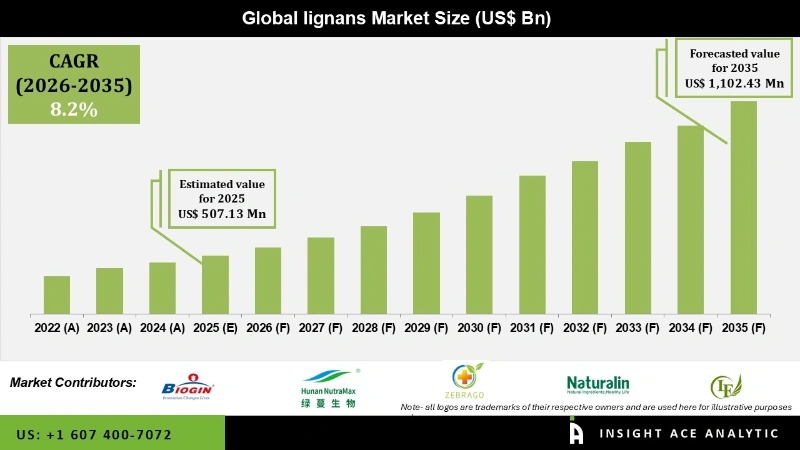
The Global Lignans Market Size is valued at USD 507.13 Million in 2025 and is predicted to reach USD 1,102.43 Million by the year 2035 at an 8.2% CAGR during the forecast period for 2026 to 2035.
Lignans Market Size, Share & Trends Analysis Report By Source (Oilseeds, Cereals, Plant Resins, Fruits And Others), Application (Food, Cosmetic, Pharmaceutical, Animal Feed And Others) And Distribution Channel (Offline And Online), By Region, And Segment Forecasts, 2026 to 2035.
Lignans Market Key Takeaways:
|
Key Industry Insights & Findings from the Report:
- The cosmetic and personal care industry's interest in natural and functional ingredients, given their antioxidant properties, provides an avenue for incorporating lignans into skincare and beauty products.
- The increasing popularity of functional foods and nutraceuticals has driven the incorporation of lignans into products like flaxseed supplements, contributing to the growth of the lignans market.
- North America dominated the market and accounted for a revenue share of global revenue in 2023.
- Despite the increasing awareness of health benefits, the general population may still need more knowledge about lignans and their specific advantages. This lack of awareness could restrain market growth.
Phenylpropanoid dimers called lignans are made up of two phenyl propane units joined by their C8 central carbons. These compounds are widely distributed throughout plants and are typically found in the stem, bark, root, fruits, and seed sections. Sesame, flax, pumpkin, sunflower, wheat, corn, broccoli, strawberries, and peas are the main sources of lignans.
The increased use of cereal-based goods including muesli, oatmeal, raisin bran, and compressed puffed rice is the main reason driving the growth of the lignans industry. The growing use of lignans to add antioxidant and oestrogen properties to foods like energy bars, cereals, whole-grain bread, crackers, semolina pasta, vegetarian dinners, and other snack foods is the main reason fueling demand for lignans. In addition, the market for lignans is expected to have increased demand due to rising health concerns, a growing animal feed business, and a robust pharmaceutical sector.
The market for lignans is also expanding as a result of factors such as increased disposable income, technological advancements, shifting demographics and lifestyles, and several encouraging research findings. A potential obstacle to the growth of the lignans market is the lack of consumer product awareness. On the other hand, the regulations and taxes on lignan production imposed by various governments in various regions are expected to act as a restraint.
Competitive Landscape:
Some major key players in the lignans market are:
- BioGin Biochemicals Co. Ltd.
- Hunan Nutramax Inc.
- Naturalin Bio-Resources Co. Ltd
- Shaanxi Zebrago Industrial Co. Limited
- Xian Lyphar Biotech Co. Ltd.
- Kingherbs Hanzhong Penghong Tianyi Biotech Co. Ltd.
- Hebei Xinqidian Biotechnology Co. Ltd
- Skuny Bioscience Co. Ltd.
- TSKG Products LLC
- Ipsen
- Meiherb Biotech Co. Ltd.
- Ningbo United Plant Technology Co. Ltd.
- Zebrago Herb
- Caldic Canada Inc.
- Archer Daniels Midland Company
- Kingherbs Limited
Market Segmentation:
The lignans market is segmented on the source, application and distribution channel. Based on source, the market is segmented into oilseeds, cereals, plant resins, fruits and others. Based on application, lignans market is segmented into food, cosmetic, pharmaceutical, animal feed and others. Based on distibution channel, lignans market is segmented into offline and online.
Based On Source, The Cereals Segment Is Accounted As A Major Contributor To The Lignans Market
The cereals category grabbed the highest revenue share, and it is anticipated that they will continue to hold that position during the anticipated time. Lignans obtained from cereals and whole grains, such as rye, barley, wheat, corn, and oats, exhibit anti-inflammatory, antioxidant, and hormone-mimicking properties in people following fermentative conversion, as well as after as a native compound in the colon. The expansion of the cereals- and grains-based lignans is projected to be aided by the rising usage of natural components in cosmetics and toiletry products.
The Food Segment Witnessed Growth At A Rapid Rate
The food category is anticipated to grow at a significant rate over the forecast period ascribed to the expanding fashion industry globally. Functional foods have a significant role in preventive healthcare by lowering the risk of diseases by boosting the immune system. The market is projected to be driven by consumers' shifting preferences for preventative healthcare as a result of increased disposable income levels.
The Asia Pacific Lignans Market Hold A Significant Revenue Share In The Region
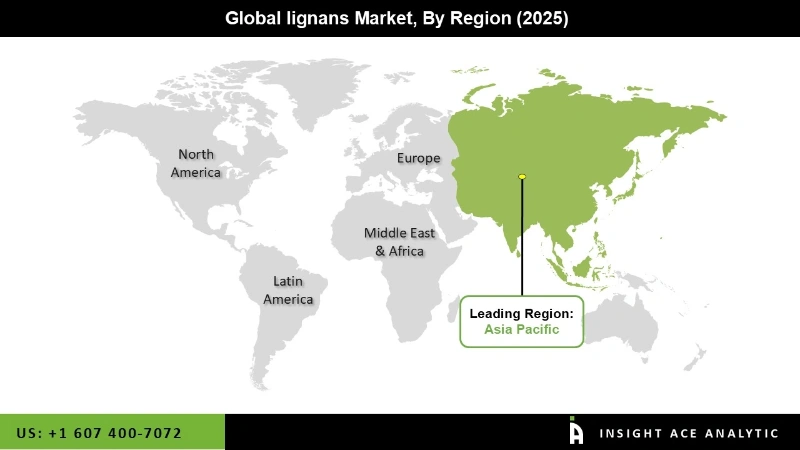
The Asia Pacific lignans market is expected to register the highest market share in revenue in the near future. The two main elements promoting industry growth in the area are new product developments and fortification requirements from the government. Consumption of functional food items has increased as a result of a growing preference for foods that are not only nutrient-dense but also have the potential to enhance general health and wellbeing. In addition, the North America is projected to grow at a rapid rate in the global lignans market. The region's functional food industry has expanded quickly as a result of the rising working-class population in North America. People in the area mainly eat functional meals to manage their weight. Market expansion has been aided by increased investments from major multinational corporations in North America and the launch of new products to satisfy escalating demand.
Lignans Market Report Scope:
| Report Attribute | Specifications |
| Market size value in 2025 | USD 507.13 Mn |
| Revenue forecast in 2035 | USD 1,102.43 Mn |
| Growth rate CAGR | CAGR of 8.2% from 2026 to 2035 |
| Quantitative units | Representation of revenue in US$ Million, and CAGR from 2026 to 2035 |
| Historic Year | 2022 to 2024 |
| Forecast Year | 2026-2035 |
| Report coverage | The forecast of revenue, the position of the company, the competitive market structure, growth prospects, and trends |
| Segments covered | Source, Application And Distribution Channel |
| Regional scope | North America; Europe; Asia Pacific; Latin America; Middle East & Africa |
| Country scope | U.S.; Canada; U.K.; Germany; China; India; Japan; Brazil; Mexico; The UK; France; Italy; Spain; China; Japan; India; South Korea; Southeast Asia; South Korea; Southeast Asia |
| Competitive Landscape | BioGin Biochemicals Co. Ltd., Hunan Nutramax Inc., Naturalin Bio-Resources Co. Ltd, Shaanxi Zebrago Industrial Co. Limited, Xian Lyphar Biotech Co. Ltd., Kingherbs Hanzhong Penghong Tianyi Biotech Co. Ltd., Hebei Xinqidian Biotechnology Co. Ltd, Skuny Bioscience Co. Ltd., TSKG Products LLC, Ipsen, Meiherb Biotech Co. Ltd., Ningbo United Plant Technology Co. Ltd., Zebrago Herb, Caldic Canada Inc., Archer Daniels Midland Company, and Kingherbs Limited. |
| Customization scope | Free customization report with the procurement of the report, Modifications to the regional and segment scope. Particular Geographic competitive landscape. |
| Pricing and available payment methods | Explore pricing alternatives that are customized to your particular study requirements. |
Segmentation of Lignans Market-
Lignans Market By Source
- Oilseeds
- Cereals
- Plant resins
- Fruits
- Others
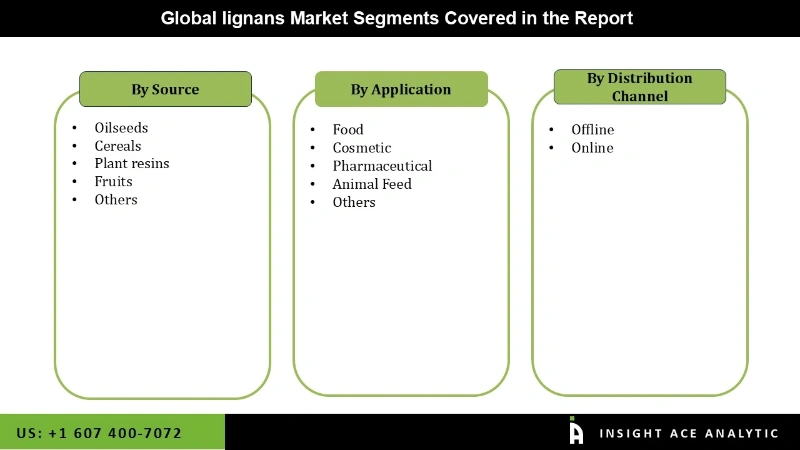
Lignans Market By Application
- Food
- Cosmetic
- Pharmaceutical
- Animal Feed
- Others
Lignans Market By Distribution Channel
- Offline
- Online
By Region-
North America-
- The US
- Canada
- Mexico
Europe-
- Germany
- The UK
- France
- Italy
- Spain
- Rest of Europe
Asia-Pacific-
- China
- Japan
- India
- South Korea
- South East Asia
- Rest of Asia Pacific
Latin America-
- Brazil
- Argentina
- Rest of Latin America
Middle East & Africa-
- GCC Countries
- South Africa
- Rest of Middle East and Africa
Research Design and Approach
This study employed a multi-step, mixed-method research approach that integrates:
- Secondary research
- Primary research
- Data triangulation
- Hybrid top-down and bottom-up modelling
- Forecasting and scenario analysis
This approach ensures a balanced and validated understanding of both macro- and micro-level market factors influencing the market.
Secondary Research
Secondary research for this study involved the collection, review, and analysis of publicly available and paid data sources to build the initial fact base, understand historical market behaviour, identify data gaps, and refine the hypotheses for primary research.
Sources Consulted
Secondary data for the market study was gathered from multiple credible sources, including:
- Government databases, regulatory bodies, and public institutions
- International organizations (WHO, OECD, IMF, World Bank, etc.)
- Commercial and paid databases
- Industry associations, trade publications, and technical journals
- Company annual reports, investor presentations, press releases, and SEC filings
- Academic research papers, patents, and scientific literature
- Previous market research publications and syndicated reports
These sources were used to compile historical data, market volumes/prices, industry trends, technological developments, and competitive insights.

Primary Research
Primary research was conducted to validate secondary data, understand real-time market dynamics, capture price points and adoption trends, and verify the assumptions used in the market modelling.
Stakeholders Interviewed
Primary interviews for this study involved:
- Manufacturers and suppliers in the market value chain
- Distributors, channel partners, and integrators
- End-users / customers (e.g., hospitals, labs, enterprises, consumers, etc., depending on the market)
- Industry experts, technology specialists, consultants, and regulatory professionals
- Senior executives (CEOs, CTOs, VPs, Directors) and product managers
Interview Process
Interviews were conducted via:
- Structured and semi-structured questionnaires
- Telephonic and video interactions
- Email correspondences
- Expert consultation sessions
Primary insights were incorporated into demand modelling, pricing analysis, technology evaluation, and market share estimation.
Data Processing, Normalization, and Validation
All collected data were processed and normalized to ensure consistency and comparability across regions and time frames.
The data validation process included:
- Standardization of units (currency conversions, volume units, inflation adjustments)
- Cross-verification of data points across multiple secondary sources
- Normalization of inconsistent datasets
- Identification and resolution of data gaps
- Outlier detection and removal through algorithmic and manual checks
- Plausibility and coherence checks across segments and geographies
This ensured that the dataset used for modelling was clean, robust, and reliable.
Market Size Estimation and Data Triangulation
Bottom-Up Approach
The bottom-up approach involved aggregating segment-level data, such as:
- Company revenues
- Product-level sales
- Installed base/usage volumes
- Adoption and penetration rates
- Pricing analysis
This method was primarily used when detailed micro-level market data were available.

Top-Down Approach
The top-down approach used macro-level indicators:
- Parent market benchmarks
- Global/regional industry trends
- Economic indicators (GDP, demographics, spending patterns)
- Penetration and usage ratios
This approach was used for segments where granular data were limited or inconsistent.
Hybrid Triangulation Approach
To ensure accuracy, a triangulated hybrid model was used. This included:
- Reconciling top-down and bottom-up estimates
- Cross-checking revenues, volumes, and pricing assumptions
- Incorporating expert insights to validate segment splits and adoption rates
This multi-angle validation yielded the final market size.
Forecasting Framework and Scenario Modelling
Market forecasts were developed using a combination of time-series modelling, adoption curve analysis, and driver-based forecasting tools.
Forecasting Methods
- Time-series modelling
- S-curve and diffusion models (for emerging technologies)
- Driver-based forecasting (GDP, disposable income, adoption rates, regulatory changes)
- Price elasticity models
- Market maturity and lifecycle-based projections
Scenario Analysis
Given inherent uncertainties, three scenarios were constructed:
- Base-Case Scenario: Expected trajectory under current conditions
- Optimistic Scenario: High adoption, favourable regulation, strong economic tailwinds
- Conservative Scenario: Slow adoption, regulatory delays, economic constraints
Sensitivity testing was conducted on key variables, including pricing, demand elasticity, and regional adoption.
Request Customization
Add countries, segments, company profiles, or extend forecast — free 10% customization with purchase.
Customize This Report →Enquire Before Buying
Speak with our analyst team about scope, methodology, pricing, or deliverable formats.
Enquire Now →Frequently Asked Questions
Lignans Market Size is valued at USD 507.13 Million in 2025 and is predicted to reach USD 1,102.43 Million by the year 2035.
Lignans Market expected to grow 8.2% CAGR during the forecast period for 2026-2035
BioGin Biochemicals Co. Ltd., Hunan Nutramax Inc., Naturalin Bio-Resources Co. Ltd, Shaanxi Zebrago Industrial Co. Limited, Xian Lyphar Biotech Co. L
lignans market is segmented on the source, application and distribution channel.
Asia Pacific region is leading the lignans market.