Green Bond Market Size, Share, Trend, Revenue Report 2026 to 2035
What is Green Bond Market Size?
Global Green Bond Market Size is valued at USD 546.13 Bn in 2025 and is predicted to reach USD 1,383.47 Bn by the year 2035 at a 10.0 CAGR during the forecast period for 2026 to 2035.
Green Bond Market Size, Share & Trends Analysis Distribution by Bond Type (Asset-Backed Security (ABS), Corporate Bond, Financial Sector Bond, Municipal Bond, Project Bond, Supranational, Sub-Sovereign & Agency Bond), by Issuers Type (Public Sector Issuers, Private Sector Issuers), by End User (ABS, Development Banks, Financial Corporates, Government Backed Entities, Loan, Local Government, Non-Financial Corporates, Sovereign), by Enterprise Type (Large Enterprises, Small and Medium Enterprises) and Segment Forecasts, 2026 to 2035.
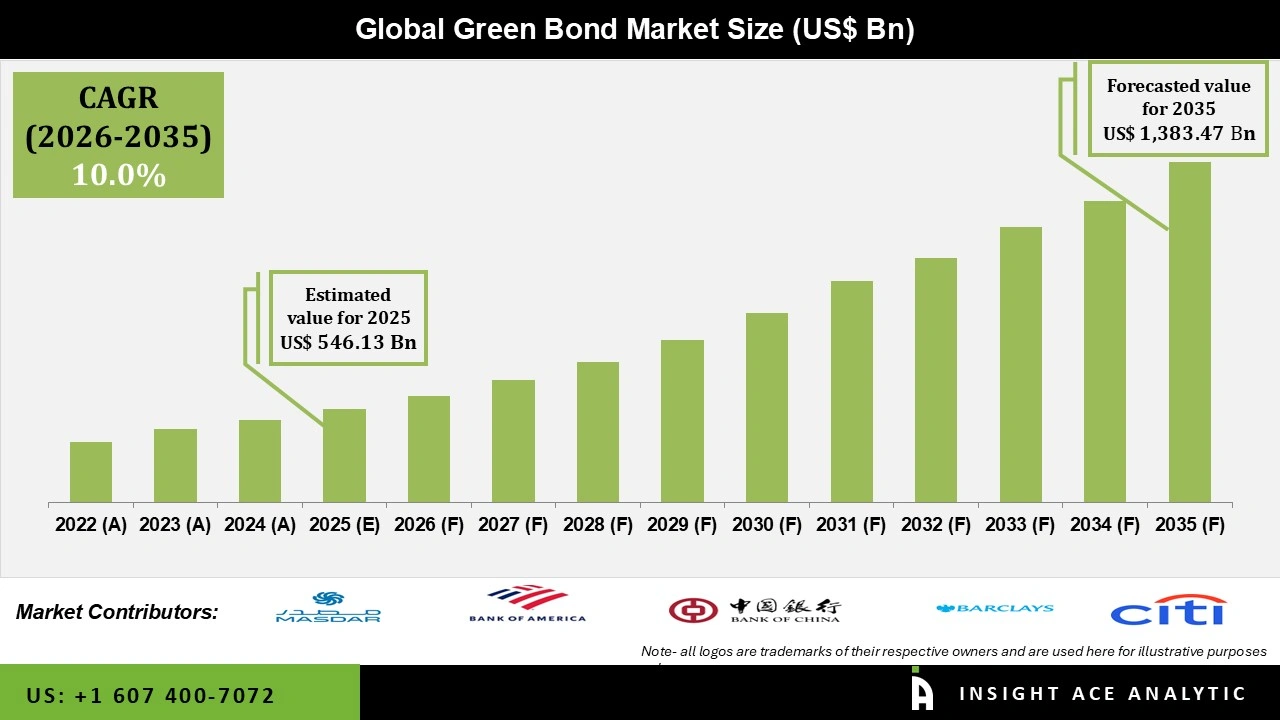
Green bonds have been instrumental in the evolution of the sustainable finance framework at the global level as they allow various governments, financial institutions, businesses, and development organizations to mobilize money for eco-friendly projects. Green bonds are special debt securities that are issued exclusively for financing projects that include investments in renewable energy, energy efficiency measures, clean transportation systems, sustainable infrastructure, water-related projects, and mitigation efforts to combat climate change. With rising worries regarding climate change, environmental sustainability, and lowering carbon emissions, the use of green bonds as a sustainable financial tool has become more popular than ever before. The increasing emphasis on ESG investments worldwide has been one of the main drivers of the growth of the market. The institutional investors and the asset management companies are increasingly relying on sustainable investment standards, which have increased the demand for green financial products. In addition, governments and regulatory agencies are implementing green financing-friendly initiatives such as favourable tax policies and sustainability frameworks. With efforts from countries to attain net-zero emission targets globally, there has been an increase in the issuance of green bonds in developed and developing countries.
The development of technology and improvement in the sustainable finance architecture are playing an instrumental role in facilitating market development. Use of digital platforms, better reporting mechanisms, ESG analytical tools, and monitoring mechanisms is enabling issuers to be more transparent about the positive environmental effects of their projects. Standardisation of green bond frameworks and certifications is also playing an important role in instilling confidence among investors due to improved transparency in terms of how proceeds from such bonds will be used.
A further important trend driving the market is the increased involvement of varied issuers. Although government agencies and development banks were early adopters of green bonds, the involvement of corporations, financial institutions, municipal governments, and even individuals has increased significantly in the market. Some organizations have been issuing green bonds to support projects such as renewable energy development, sustainable construction projects, electric vehicles' charging stations, and resilience projects aimed at mitigating climate change. Additionally, strategic partnerships between various market players such as governments, financial institutions, investors, and organizations working on sustainability issues are promoting green bond market access and innovations in green financing. However, despite having enormous growth potential, the green bond market is faced by some challenges that could slow down the growth process. First, there are challenges of inconsistencies due to the absence of globally accepted standards and reporting requirements for classifying and assessing green projects. The issue of greenwashing, which involves marketing some projects as green yet they do not add value to the environment, is a matter that attracts much regulatory concern. Another challenge that could affect some issuers' ability to participate in the green bond market is higher compliance costs for meeting certification requirements.
Nevertheless, Increased financial requirements for climate action, growing use of ESG investing approaches, more supportive government policies for sustainable development, and high demand for environmentally sustainable investments are likely to ensure future growth in the market. As businesses across the world continue to work towards becoming low-carbon and sustainable enterprises, it is believed that green bonds will remain at the forefront of financing environmental initiatives.
Competitive Landscape
Which are the Leading Players in the Green Bond Market?
- Abu Dhabi Future Energy Company
- Apple
- Bank of America
- Bank of China
- Barclays
- Citigroup
- Deutsche Bank
- European Investment Bank
- HSBC
- Morgan Stanley
Market Dynamics
Driver
Rising Demand for Sustainable and ESG-Focused Investments
One of the primary drivers of the green bond market is the growing demand for sustainable and ESG-focused investments. Investors across the globe are increasingly seeking financial products that not only generate returns but also contribute to positive environmental outcomes. Green bonds provide a dedicated funding mechanism for projects related to renewable energy, clean transportation, energy-efficient buildings, and climate change mitigation. Governments, corporations, and financial institutions are actively issuing green bonds to support sustainability goals and meet growing investor demand. As global commitments toward carbon neutrality and environmental protection continue to strengthen, the adoption of green bonds is expected to increase significantly, supporting long-term market growth.
Restrain/Challenge
Lack of Standardized Green Bond Frameworks and Greenwashing Concerns
The major challenges facing the green bond market is the lack of universally accepted standards for defining and evaluating green projects. Different regions and issuers may follow varying frameworks and reporting requirements, creating inconsistencies in the market. This has raised concerns about "greenwashing," where funds raised through green bonds may not fully support genuine environmental objectives. Investors often require greater transparency and verification regarding how bond proceeds are utilized and what environmental impact is achieved. Addressing these concerns requires stronger reporting standards, independent verification processes, and greater regulatory alignment to maintain investor confidence and support sustainable market growth.
Corporate Bond Segment is Expected to Drive the Green Bond Market
The corporate bond segment is expected to drive growth in the green bond market as there are increasing numbers of companies in different sectors seeking sustainable finance options to meet their environmental and climate change-related goals. Green bonds are being issued by corporations to finance projects ranging from renewable energy infrastructure to energy-efficient buildings, green transport systems, waste reduction projects, and carbon reduction projects. The growing pressures on firms to improve ESG performance have been motivating corporations to adopt sustainable finance within their strategy plans. With increasing numbers of corporations aiming to achieve net zero emissions, green bond issuance will continue to be a significant source of growth.
Public Sector Issuers Segment is Expected to Drive the Green Bond Market
The public sector issuers segment is expected to be a major growth driver in the green bond market due to increasing government investments in sustainable infrastructure and climate action initiatives. National governments, municipalities, and public agencies are actively issuing green bonds to finance projects related to renewable energy, clean water systems, public transportation, climate resilience, and environmental conservation. Growing policy support, international climate commitments, and government-led sustainability programs are creating strong demand for green financing instruments. As countries continue to prioritize environmental development and carbon reduction goals, public sector issuers are expected to play a critical role in expanding the green bond market.
Why Europe Leads the Green Bond Market?
Europe is the leading region in terms of issuance of green bonds because of its sustainability orientation, strong regulatory system, and widespread adoption of sustainable finance practices. The region has taken the initiative of encouraging green investments in which governments, businesses, banks, and supranational organizations have issued green bonds that help invest in environmentally sustainable projects. The growing number of investors interested in ESG investment has also encouraged the issuance of green bonds in Europe. Europe enjoys the advantage of a favorable environment with regards to its green bonds issuance including the European Green Deal, sustainable finance regulation, and climate action policy that ensures carbon neutrality.
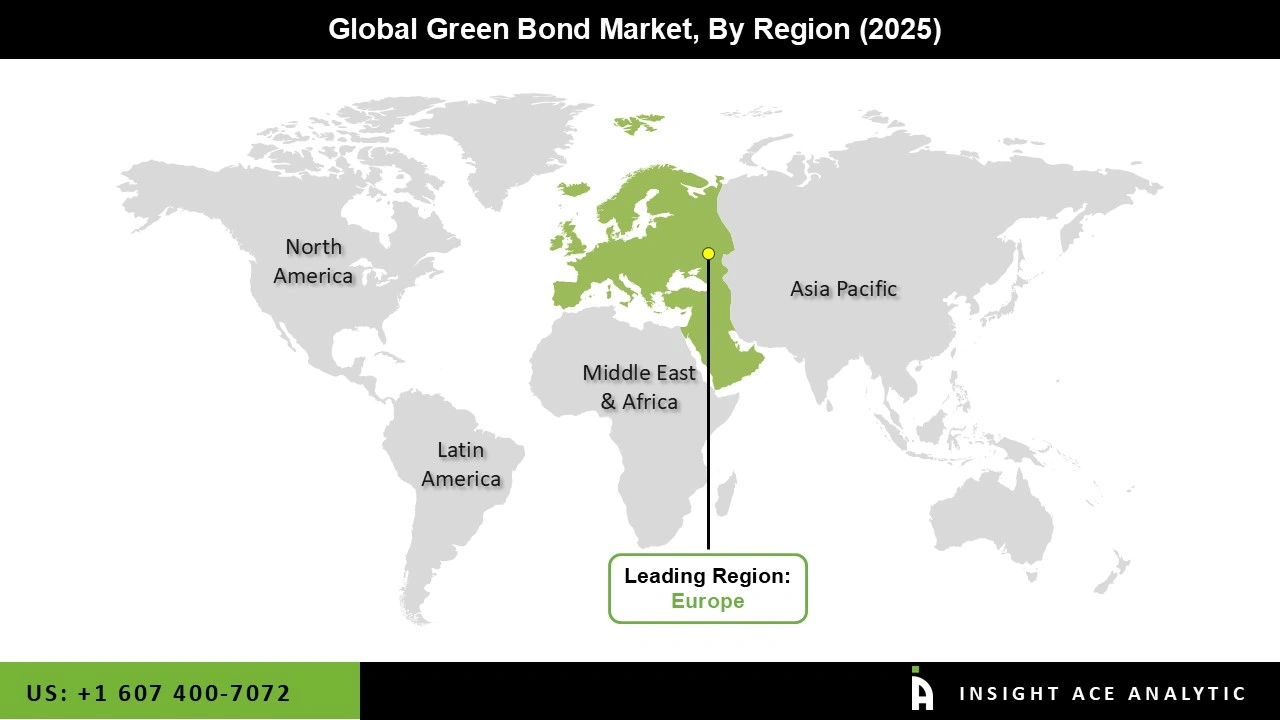
Moreover, there is evidence of European green bonds standards and reporting systems which improve transparency levels and build the trust of investors. The participation of the public sector organizations, development banks, municipal governments, and private companies plays a vital role in Europe maintaining its dominant role in the issuance of such securities. The existence of a sophisticated financial environment, climate-oriented investments, and environmentally oriented objectives have encouraged the issuance of green bonds in Europe. Efforts to develop green economics will help Europe maintain its dominant position in the global green bonds market.
Key Developments-
• In March 2025, the European Investment Bank (EIB) expanded its climate financing initiatives through additional green bond issuances to support renewable energy, clean transportation, and sustainable infrastructure projects across Europe, reinforcing its position as one of the world's leading green bond issuers.
• In February 2025, Bank of America strengthened its sustainable finance strategy by supporting green bond issuances and ESG-linked financing projects aimed at accelerating investments in clean energy, energy efficiency, and climate transition initiatives.
Green Bond Market Report Scope:
| Report Attribute | Specifications |
| Market size value in 2025 | USD 546.13 Bn |
| Revenue forecast in 2035 | USD 1,383.47 Bn |
| Growth Rate CAGR | CAGR of 10.0% from 2026 to 2035 |
| Quantitative Units | Representation of revenue in US$ Bn and CAGR from 2026 to 2035 |
| Historic Year | 2021 to 2025 |
| Forecast Year | 2026-2035 |
| Report Coverage | The forecast of revenue, the position of the company, the competitive market structure, growth prospects, and trends |
| Segments Covered | Bond Type, Issuer Type, Enterprise Type, End User and By Region |
| Regional Scope | North America; Europe; Asia Pacific; Latin America; Middle East & Africa |
| Country Scope | U.S.; Canada; U.K.; Germany; China; India; Japan; Brazil; Mexico; The UK; France; Italy; Spain; China; Japan; India; South Korea; Southeast Asia; South Korea; Southeast Asia |
| Competitive Landscape | Abu Dhabi Future Energy Company, Apple, Bank of America, Bank of China, Barclays, Citigroup, Deutsche Bank, European Investment Bank, HSBC, Morgan Stanley. |
| Customization Scope | Free customization report with the procurement of the report, Modifications to the regional and segment scope. Geographic competitive landscape. |
| Pricing and Available Payment Methods | Explore pricing alternatives that are customized to your particular study requirements. |
Segmentations of Green Bond Market :
Green Bond Market by Bond Type -
- Asset-Backed Security (ABS)
- Corporate Bond
- Financial Sector Bond
- Municipal Bond
- Project Bond
- Supranational, Sub-Sovereign & Agency Bond
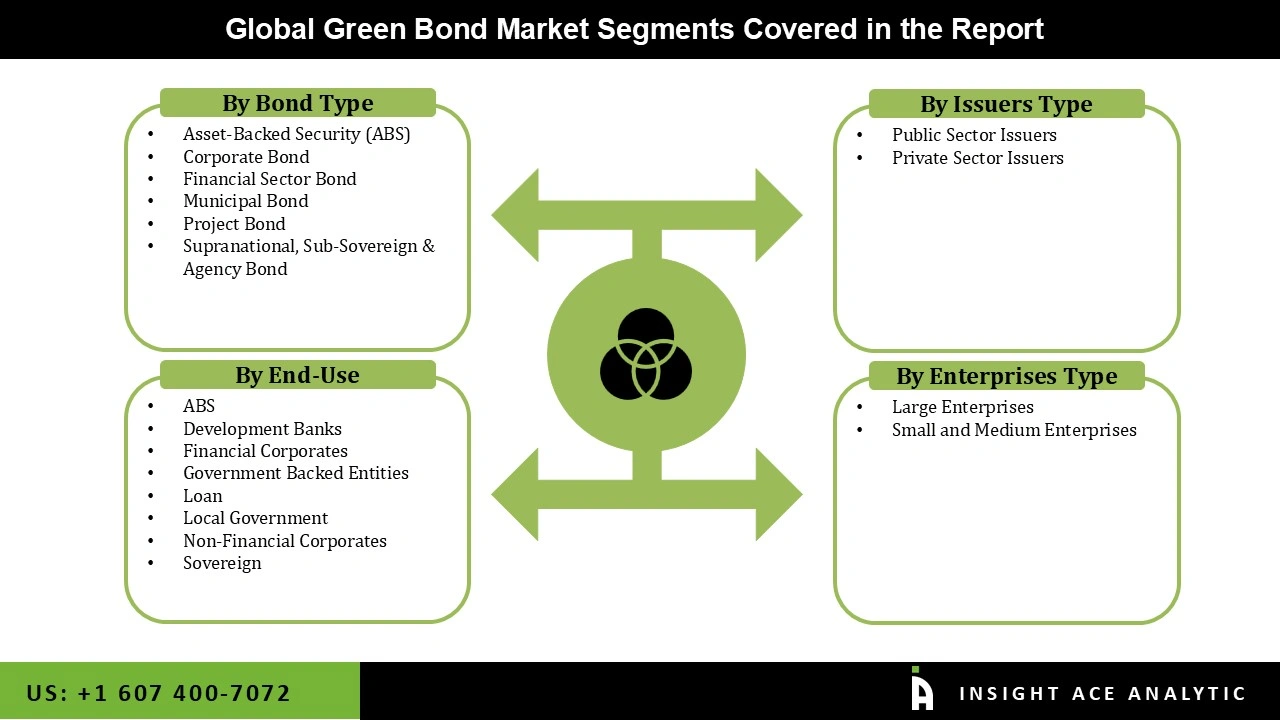
Green Bond Market by Issuers Type-
- Public Sector Issuers
- Private Sector Issuers
Green Bond Market by End User -
- ABS
- Development Banks
- Financial Corporates
- Government-Backed Entities
- Loan
- Local Government
- Non-Financial Corporates
- Sovereign
Green Bond Market by Enterprise Type -
- Large Enterprises
- Small and Medium Enterprises
Green Bond Market by Region-
- North America-
- The US
- Canada
- Europe-
- Germany
- The UK
- France
- Italy
- Spain
- Rest of Europe
- Asia-Pacific-
- China
- Japan
- India
- South Korea
- South East Asia
- Rest of Asia Pacific
- Latin America-
- Brazil
- Argentina
- Mexico
- Rest of Latin America
- Middle East and Africa-
- GCC Countries
- South Africa
- Rest of Middle East and Africa
Research Design and Approach
This study employed a multi-step, mixed-method research approach that integrates:
- Secondary research
- Primary research
- Data triangulation
- Hybrid top-down and bottom-up modelling
- Forecasting and scenario analysis
This approach ensures a balanced and validated understanding of both macro- and micro-level market factors influencing the market.
Secondary Research
Secondary research for this study involved the collection, review, and analysis of publicly available and paid data sources to build the initial fact base, understand historical market behaviour, identify data gaps, and refine the hypotheses for primary research.
Sources Consulted
Secondary data for the market study was gathered from multiple credible sources, including:
- Government databases, regulatory bodies, and public institutions
- International organizations (WHO, OECD, IMF, World Bank, etc.)
- Commercial and paid databases
- Industry associations, trade publications, and technical journals
- Company annual reports, investor presentations, press releases, and SEC filings
- Academic research papers, patents, and scientific literature
- Previous market research publications and syndicated reports
These sources were used to compile historical data, market volumes/prices, industry trends, technological developments, and competitive insights.
Primary Research
Primary research was conducted to validate secondary data, understand real-time market dynamics, capture price points and adoption trends, and verify the assumptions used in the market modelling.
Stakeholders Interviewed
Primary interviews for this study involved:
- Manufacturers and suppliers in the market value chain
- Distributors, channel partners, and integrators
- End-users / customers (e.g., hospitals, labs, enterprises, consumers, etc., depending on the market)
- Industry experts, technology specialists, consultants, and regulatory professionals
- Senior executives (CEOs, CTOs, VPs, Directors) and product managers
Interview Process
Interviews were conducted via:
- Structured and semi-structured questionnaires
- Telephonic and video interactions
- Email correspondences
- Expert consultation sessions
Primary insights were incorporated into demand modelling, pricing analysis, technology evaluation, and market share estimation.
Data Processing, Normalization, and Validation
All collected data were processed and normalized to ensure consistency and comparability across regions and time frames.
The data validation process included:
- Standardization of units (currency conversions, volume units, inflation adjustments)
- Cross-verification of data points across multiple secondary sources
- Normalization of inconsistent datasets
- Identification and resolution of data gaps
- Outlier detection and removal through algorithmic and manual checks
- Plausibility and coherence checks across segments and geographies
This ensured that the dataset used for modelling was clean, robust, and reliable.
Market Size Estimation and Data Triangulation
Bottom-Up Approach
The bottom-up approach involved aggregating segment-level data, such as:
- Company revenues
- Product-level sales
- Installed base/usage volumes
- Adoption and penetration rates
- Pricing analysis
This method was primarily used when detailed micro-level market data were available.
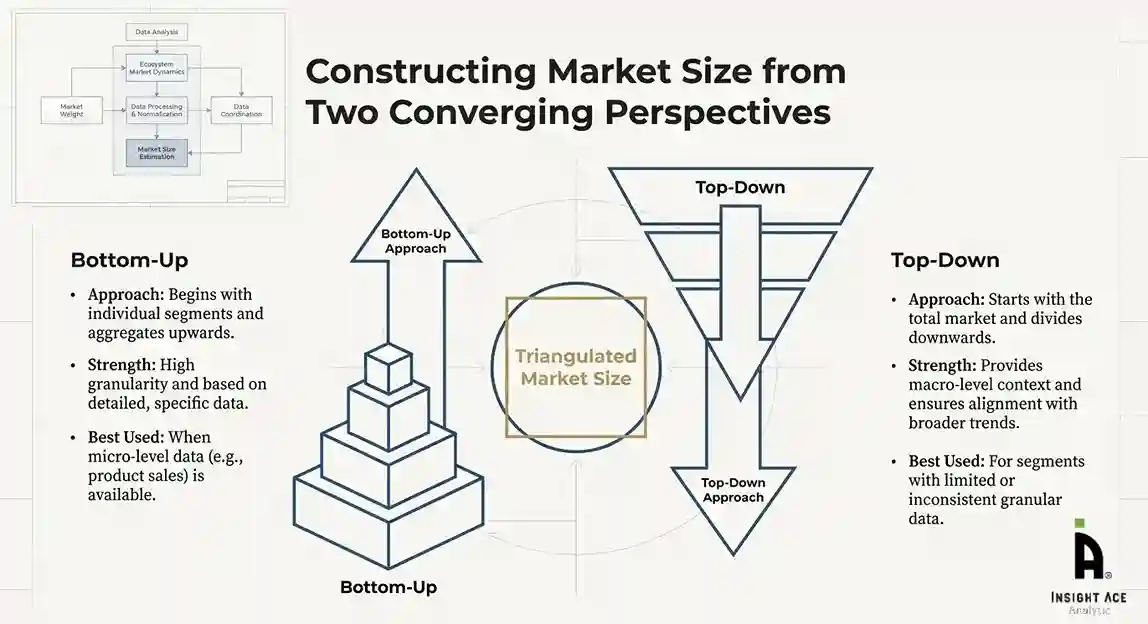
Top-Down Approach
The top-down approach used macro-level indicators:
- Parent market benchmarks
- Global/regional industry trends
- Economic indicators (GDP, demographics, spending patterns)
- Penetration and usage ratios
This approach was used for segments where granular data were limited or inconsistent.
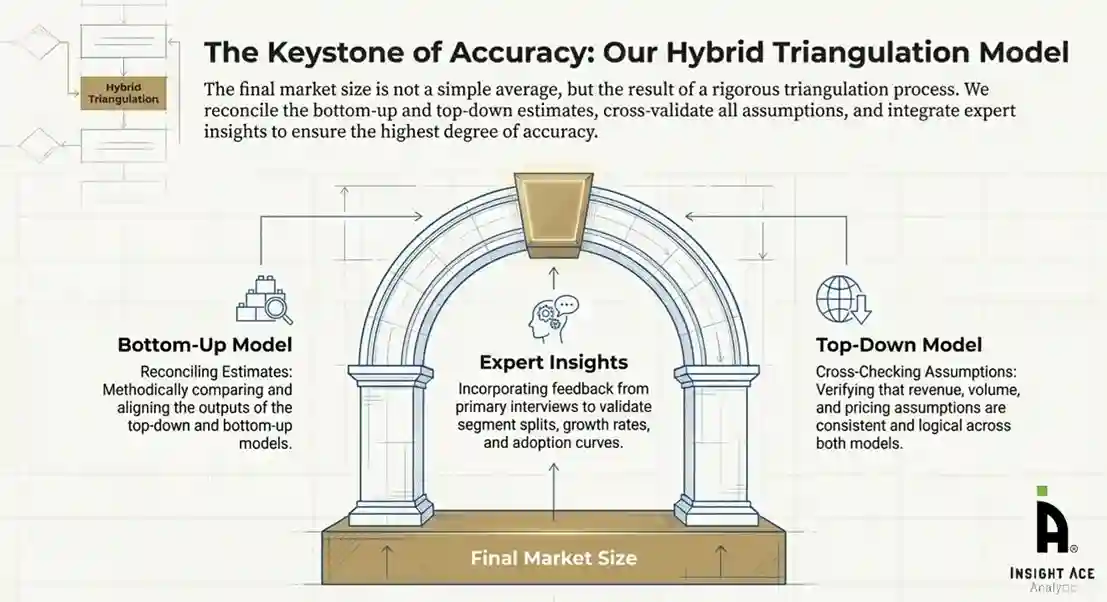
Hybrid Triangulation Approach
To ensure accuracy, a triangulated hybrid model was used. This included:
- Reconciling top-down and bottom-up estimates
- Cross-checking revenues, volumes, and pricing assumptions
- Incorporating expert insights to validate segment splits and adoption rates
This multi-angle validation yielded the final market size.
Forecasting Framework and Scenario Modelling
Market forecasts were developed using a combination of time-series modelling, adoption curve analysis, and driver-based forecasting tools.
Forecasting Methods
- Time-series modelling
- S-curve and diffusion models (for emerging technologies)
- Driver-based forecasting (GDP, disposable income, adoption rates, regulatory changes)
- Price elasticity models
- Market maturity and lifecycle-based projections
Scenario Analysis
Given inherent uncertainties, three scenarios were constructed:
- Base-Case Scenario: Expected trajectory under current conditions
- Optimistic Scenario: High adoption, favourable regulation, strong economic tailwinds
- Conservative Scenario: Slow adoption, regulatory delays, economic constraints
Sensitivity testing was conducted on key variables, including pricing, demand elasticity, and regional adoption.
Request Customization
Add countries, segments, company profiles, or extend forecast — free 10% customization with purchase.
Customize This Report →Enquire Before Buying
Speak with our analyst team about scope, methodology, pricing, or deliverable formats.
Enquire Now →Frequently Asked Questions
Green Bond Market Size is valued at USD 546.13 Bn in 2025 and is predicted to reach USD 1,383.47 Bn by the year 2035
The Green Bond Market is expected to grow at a 10.0% CAGR during the forecast period for 2026 to 2035
Abu Dhabi Future Energy Company, Apple, Bank of America, Bank of China, Barclays, Citigroup, Deutsche Bank, European Investment Bank, HSBC, Morgan Stanley. and Others.
Green Bond Market is segmented into Bond Type, Issuer Type, Enterprise Type, End User and Other.
Europe region is leading the Green Bond Market.