Digital Detox Apps Market Size, Share, Revenue Report 2026 to 2035
What is Digital Detox Apps Market Size ?
Digital Detox Apps Market Size is valued at USD 0.98 Bn in 2025 and is predicted to reach USD 7.81 Bn by the year 2035 at a 23.4% CAGR during the forecast period for 2026 to 2035.
Digital Detox Apps Market Size, Share & Trends Analysis Distribution by Type of Platform (Desktop-Based, Mobile-Based), By End-Users (Business Users, Personal Users) By Type of Enterprise (Large Enterprises, Small and Medium-sized Enterprises) and Segment Forecasts, 2026 to 2035
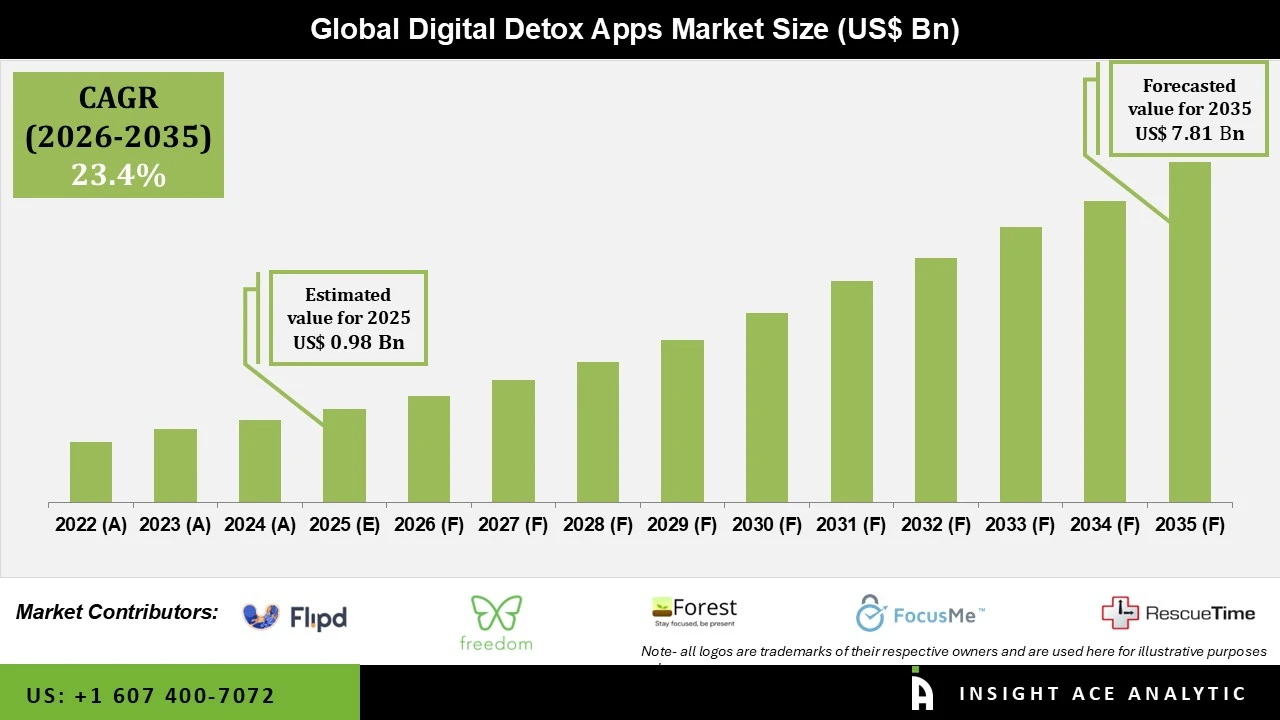
Digital detox apps are invented to help people reduce excessive screen time, cut down on digital distractions, and build healthier relationships with technology. These apps offer features like screen-time monitoring, blocking apps and websites, focus modes, usage stats, managing notifications, scheduling device breaks, and setting personal digital wellness goals. Many also include mindfulness exercises, meditation sessions, sleep tracking, and tools for building good habits. This promotes mental well-being, improves concentration, and encourages balanced technology use. Digital detox apps work with smartphones, tablets, desktops, and wearable devices. They serve a wide range of users, including students, professionals, families, and businesses.
Digital detox has become a key part of modern digital well-being. As smartphones, social media, streaming services, online gaming, and remote work have become more common, people are expending more time on connected devices. As a result, digital wellness apps have developed from simple screen-time trackers into comprehensive platforms for managing behavior, using artificial intelligence, machine learning, and data analytics. New features like personalized usage recommendations, gamification, syncing across devices, productivity insights, and wearable device integration help users better understand and control their digital habits. This supports healthier and more mindful technology use.
The digital detox apps market includes companies that develop software solutions focused on managing screen time, reducing distractions, improving digital wellness, and boosting productivity. This market consists of standalone digital detox apps, productivity and focus tools, parental control solutions with screen-time management, enterprise digital wellness platforms, and subscription-based digital wellness services. Ongoing innovation in AI-driven personalization, behavioral analytics, cloud-based syncing, and integration with health and wellness networks is expanding these solutions. This growth positions digital detox applications as an increasingly important part of preventive digital health, workplace wellness, and personal productivity.
Competitive Landscape
Which are the Leading Players in the Digital Detox Apps Market?
• AppDetox
• Cleverest
• Digital Wellbeing
• Flipd
• FocusMe
• Forest
• Freedom
• OffScreen
• OFFTIME
• RescueTime
• Siempo
• Space
• StayFree
• YourHour
• ZenScreen
• Other Prominent Players
Market Dynamics
Driver
Rising Screen Time and Growing Awareness of Digital Well-being
The rapid rise in smartphone use, social media activity, online gaming, streaming services, and remote work has significantly boosted the amount of time people spend on digital devices. Too much screen time has been linked to problems like digital fatigue, lower productivity, sleep issues, eye strain, and trouble focusing. As more people become aware of the importance of digital well-being, schools, employers, and healthcare providers are noticing this shift. More individuals are now using digital detox apps to track screen time, cut down on distractions, and build healthier habits with technology. This growing focus on finding balance between digital use and mental health continues to increase the demand for digital detox solutions.
Restrain/Challenge
Low User Retention and Sustaining Long-Term Behavioral Change
Although many users download digital detox apps with the intention of reducing screen time and improving productivity, maintaining long-term engagement remains a significant challenge. Users often discontinue using these applications after the initial motivation declines or disable app restrictions to regain unrestricted access to digital content. Since digital detox requires consistent behavioral change rather than a one-time intervention, many apps experience high uninstall rates and declining active user engagement over time. This limits subscription renewals, customer lifetime value, and overall market growth.
Mobile-Based Segment is Expected to Drive the Digital Detox Apps Market
The Mobile-Based segment is expected to lead the Digital Detox Apps Market. This growth is driven by the rise in smartphone usage and the increasing time users spend on mobile apps for communication, social media, entertainment, gaming, and work. Mobile-based digital detox apps help users track their screen time, block distracting apps, manage notifications, activate focus modes, and get real-time personalized usage insights. These features make them more convenient and accessible than desktop solutions. Moreover, the increasing number of smartphone users, better mobile internet access, easy availability in app stores, and ongoing improvements in AI-driven personalization and digital wellness features are further boosting the importance of the mobile-based segment throughout the forecast period.
Personal Users Segment is Growing at the Highest Rate in the Digital Detox Apps Market
The personal users segment is expected to see the highest growth during the forecast period. This rise is due to the increasing awareness of digital well-being, more dependence on smartphones, and growing worries about el,xcessive screen time, social media addiction, digital fatigue, and mental health. People are increasingly using digital detox apps to monitor their screen time, improve productivity, focus better, manage stress, and build healthier digital habits. The availability of affordable subscription plans, personalized recommendations powered by AI, gamification features, and smooth integration with smartphones and wearable device is also boosting adoption among consumers. Furthermore, the rising popularity of self-care, mindfulness, and preventive wellness practices is likely to speed up the growth of the personal users segment throughout the forecast period.
Why North America Led the Digital Detox Apps Market?
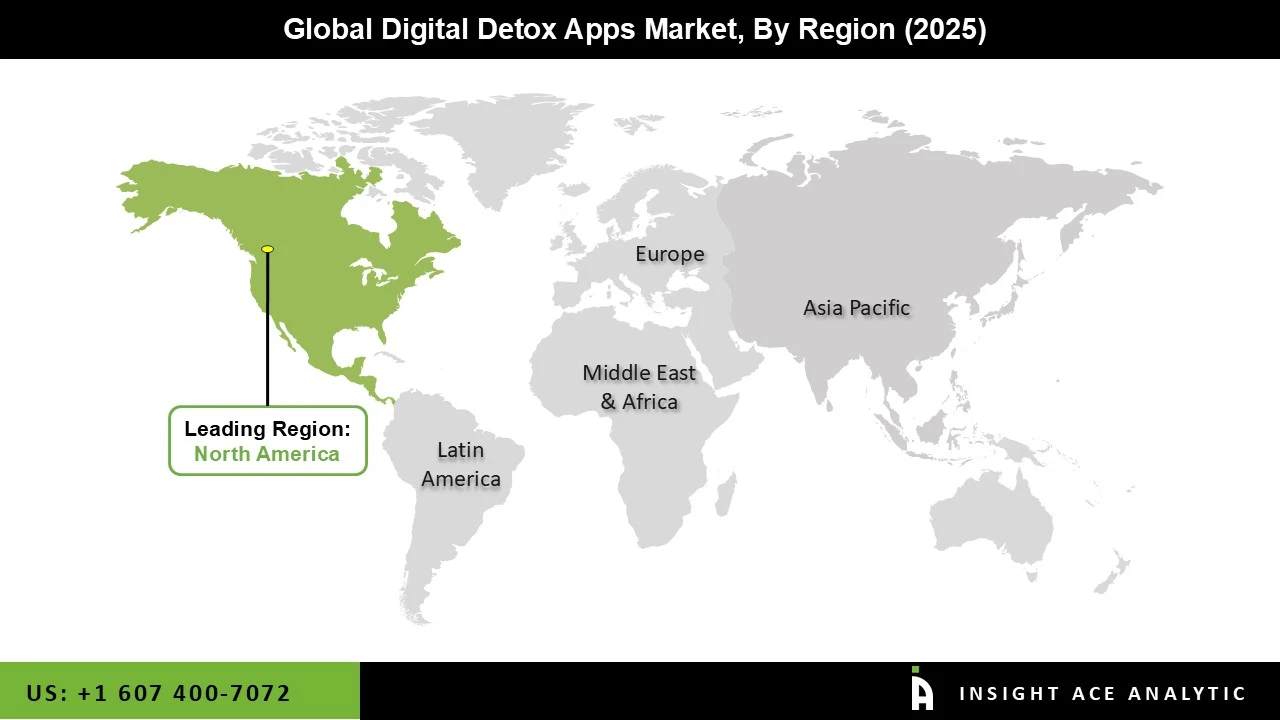
North America is expected to have the largest share of the digital detox apps market during the forecast period. This growth is driven by high smartphone and internet use, the widespread adoption of digital health and wellness apps, and strong consumer awareness of mental well-being and healthy technology use. The region has many remote and hybrid workers, students, and digitally connected consumers who increasingly use digital detox apps to manage screen time, boost productivity, and lessen digital distractions. Furthermore, the presence of leading technology companies, established app developers, robust digital infrastructure, high disposable incomes, and rising investments in AI-driven digital wellness solutions support market growth. The increasing integration of digital well-being initiatives in workplaces, schools, and healthcare systems also enhances North America's position in the global Digital Detox Apps Market.
Key Development
• February 2026: Freedom introduced a redesigned application experience featuring enhanced cross-device synchronization and performance improvements. The update aimed to deliver a more seamless distraction-blocking experience across multiple devices, strengthening the company's digital wellness platform.
Digital Detox Apps Market Report Scope:
Digital Detox Apps Market Segmentation:
Digital Detox Apps Market by Type of Platform -
• Desktop-Based
• Mobile-Based
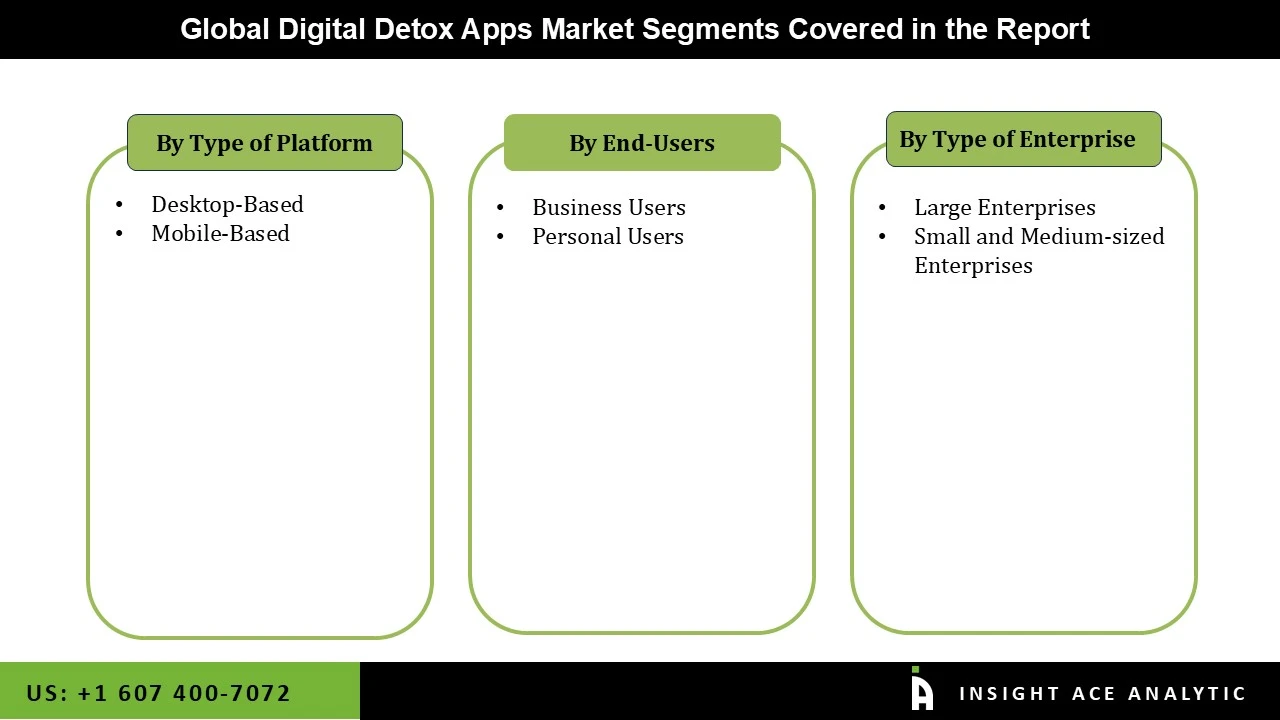
Digital Detox Apps Market by End-Users -
• Business Users
• Personal Users
Digital Detox Apps Market by Type of Enterprise -
• Large Enterprises
• Small and Medium-sized Enterprises
Digital Detox Apps Market by Region-
North America-
• The US
• Canada
• Mexico
Europe-
• Germany
• The UK
• France
• Italy
• Spain
• Rest of Europe
Asia-Pacific-
• China
• Japan
• India
• South Korea
• South East Asia
• Rest of Asia Pacific
Latin America-
• Brazil
• Argentina
• Rest of Latin America
Middle East & Africa-
• GCC Countries
• South Africa
• Rest of Middle East and Africa
Research Design and Approach
This study employed a multi-step, mixed-method research approach that integrates:
- Secondary research
- Primary research
- Data triangulation
- Hybrid top-down and bottom-up modelling
- Forecasting and scenario analysis
This approach ensures a balanced and validated understanding of both macro- and micro-level market factors influencing the market.
Secondary Research
Secondary research for this study involved the collection, review, and analysis of publicly available and paid data sources to build the initial fact base, understand historical market behaviour, identify data gaps, and refine the hypotheses for primary research.
Sources Consulted
Secondary data for the market study was gathered from multiple credible sources, including:
- Government databases, regulatory bodies, and public institutions
- International organizations (WHO, OECD, IMF, World Bank, etc.)
- Commercial and paid databases
- Industry associations, trade publications, and technical journals
- Company annual reports, investor presentations, press releases, and SEC filings
- Academic research papers, patents, and scientific literature
- Previous market research publications and syndicated reports
These sources were used to compile historical data, market volumes/prices, industry trends, technological developments, and competitive insights.

Primary Research
Primary research was conducted to validate secondary data, understand real-time market dynamics, capture price points and adoption trends, and verify the assumptions used in the market modelling.
Stakeholders Interviewed
Primary interviews for this study involved:
- Manufacturers and suppliers in the market value chain
- Distributors, channel partners, and integrators
- End-users / customers (e.g., hospitals, labs, enterprises, consumers, etc., depending on the market)
- Industry experts, technology specialists, consultants, and regulatory professionals
- Senior executives (CEOs, CTOs, VPs, Directors) and product managers
Interview Process
Interviews were conducted via:
- Structured and semi-structured questionnaires
- Telephonic and video interactions
- Email correspondences
- Expert consultation sessions
Primary insights were incorporated into demand modelling, pricing analysis, technology evaluation, and market share estimation.
Data Processing, Normalization, and Validation
All collected data were processed and normalized to ensure consistency and comparability across regions and time frames.
The data validation process included:
- Standardization of units (currency conversions, volume units, inflation adjustments)
- Cross-verification of data points across multiple secondary sources
- Normalization of inconsistent datasets
- Identification and resolution of data gaps
- Outlier detection and removal through algorithmic and manual checks
- Plausibility and coherence checks across segments and geographies
This ensured that the dataset used for modelling was clean, robust, and reliable.
Market Size Estimation and Data Triangulation
Bottom-Up Approach
The bottom-up approach involved aggregating segment-level data, such as:
- Company revenues
- Product-level sales
- Installed base/usage volumes
- Adoption and penetration rates
- Pricing analysis
This method was primarily used when detailed micro-level market data were available.

Top-Down Approach
The top-down approach used macro-level indicators:
- Parent market benchmarks
- Global/regional industry trends
- Economic indicators (GDP, demographics, spending patterns)
- Penetration and usage ratios
This approach was used for segments where granular data were limited or inconsistent.
Hybrid Triangulation Approach
To ensure accuracy, a triangulated hybrid model was used. This included:
- Reconciling top-down and bottom-up estimates
- Cross-checking revenues, volumes, and pricing assumptions
- Incorporating expert insights to validate segment splits and adoption rates
This multi-angle validation yielded the final market size.
Forecasting Framework and Scenario Modelling
Market forecasts were developed using a combination of time-series modelling, adoption curve analysis, and driver-based forecasting tools.
Forecasting Methods
- Time-series modelling
- S-curve and diffusion models (for emerging technologies)
- Driver-based forecasting (GDP, disposable income, adoption rates, regulatory changes)
- Price elasticity models
- Market maturity and lifecycle-based projections
Scenario Analysis
Given inherent uncertainties, three scenarios were constructed:
- Base-Case Scenario: Expected trajectory under current conditions
- Optimistic Scenario: High adoption, favourable regulation, strong economic tailwinds
- Conservative Scenario: Slow adoption, regulatory delays, economic constraints
Sensitivity testing was conducted on key variables, including pricing, demand elasticity, and regional adoption.
Request Customization
Add countries, segments, company profiles, or extend forecast — free 10% customization with purchase.
Customize This Report →Enquire Before Buying
Speak with our analyst team about scope, methodology, pricing, or deliverable formats.
Enquire Now →Frequently Asked Questions
Digital Detox Apps Market Size is valued at USD 0.98 Bn in 2025 and is predicted to reach USD 7.81 Bn by the year 2035
Digital Detox Apps Market is likely to grow with at a 23.4% CAGR during the forecast period for 2026 to 2035.
AppDetox, Cleverest, Digital Wellbeing, Flipd, FocusMe, Forest, Freedom, OffScreen, OFFTIME, RescueTime, Siempo, Space, StayFree, YourHour, ZenScreen
Digital Detox Apps Market is segmented into Type of Platform, End-Users, Type of Enterprise and By Region
North America region is leading the Digital Detox Apps Market.