Environmental Compliance Software Market Size, Share, Forecast Report 2026 to 2035
What is Environmental Compliance Software Market Size?
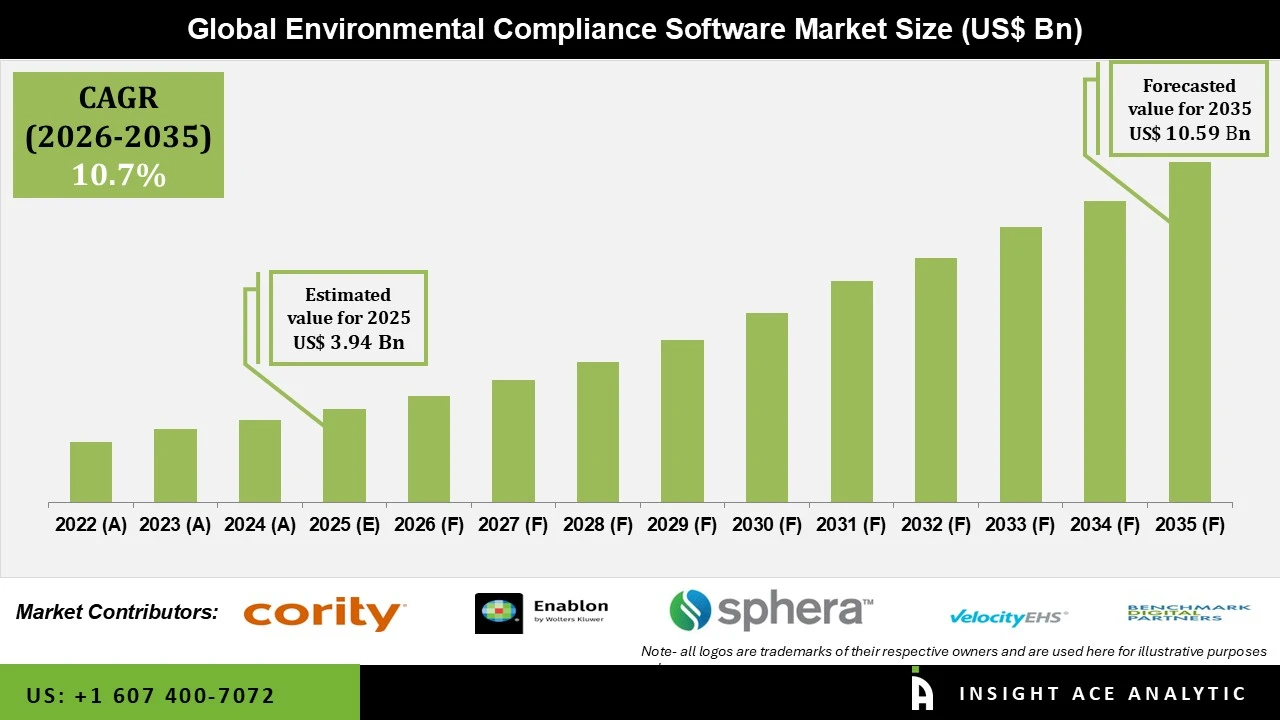
Environmental Compliance Software Market Size is valued at USD 3.94 Bn in 2025 and is predicted to reach USD 10.59 Bn by the year 2035 at a 10.7% CAGR during the forecast period for 2026 to 2035.
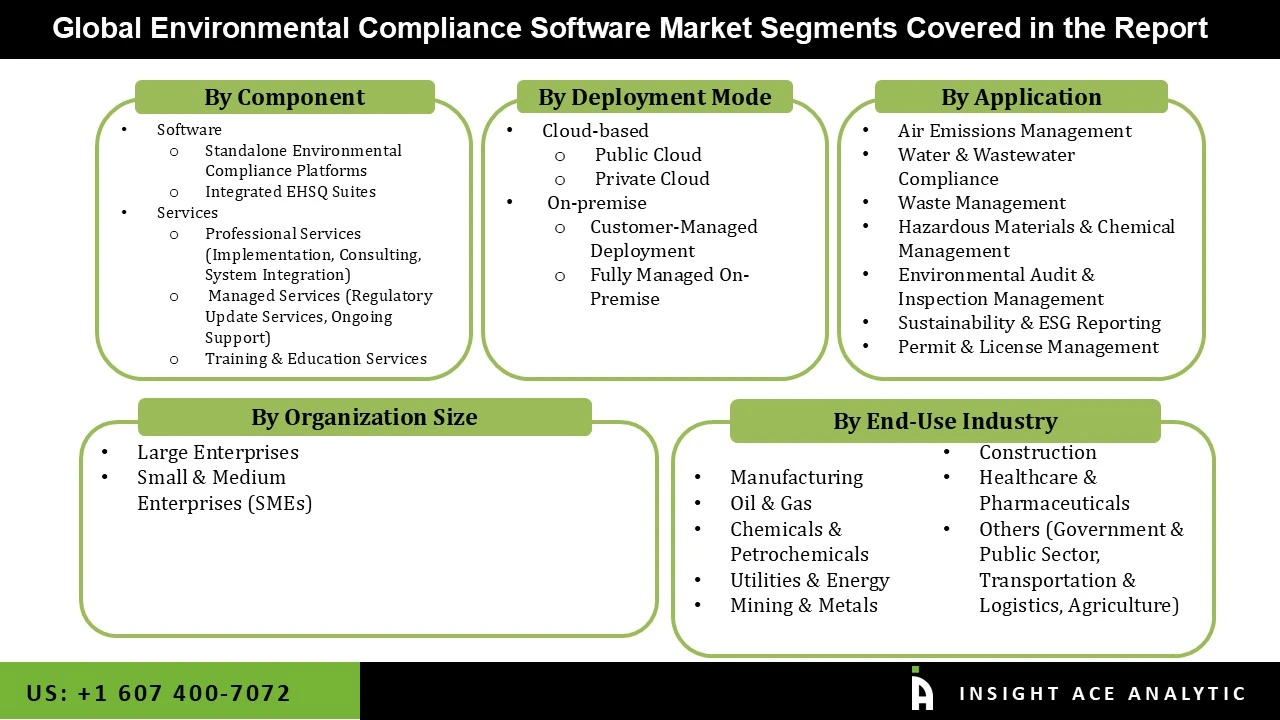
Environmental Compliance Software Market Size, Share & Trends Analysis Distribution by Component (Software (Standalone Environmental Compliance Platforms, Integrated EHSQ Suites) and Services (Professional Services [Implementation, Consulting, System Integration], Managed Services [Regulatory Update Services, Ongoing Support], Training & Education Services)), Organization Size (Large Enterprises and Small & Medium Enterprises (SMEs)), Deployment Mode (Cloud-based (Public Cloud, Private Cloud) and On-premise (Customer-Managed Deployment, Fully Managed On-Premise)), by Application, by End-user and Segment Forecasts, 2026 to 2035
Environmental Compliance Software Market Key Takeaways:
|
Environmental compliance software is a digital tool created to assist businesses in keeping an eye on, managing, and adhering to environmental laws, rules, and industry standards concerning waste management, water use, air emissions, and overall environmental effect. Companies can use it to manage permits, track environmental data, create regulatory reports, and make sure local, national, and international environmental standards are followed. By guaranteeing timely reporting and precise record-keeping, the software usually automates compliance procedures, minimizes human paperwork, and assists firms in avoiding fines. To improve operational efficiency and transparency in environmental management, several contemporary solutions incorporate capabilities like data analytics, real-time monitoring, and cloud-based reporting. The environmental compliance software market is expanding rapidly due to stricter environmental protection regulations, growing regulatory pressure, and the growing demand for effective waste management in a variety of industries.
The growing global regulatory demands have a major impact on the expansion of the environmental compliance software market. To reduce the negative environmental effects of industrial activity, governments and regulatory agencies are enforcing strict environmental restrictions. The need for compliance software that enables businesses to efficiently track, manage, and report their environmental impact has increased as a result. Additionally, the environmental compliance software market growth is being driven by organizations' increasing understanding of the significance of environmental stewardship and sustainability. The key companies are realizing more and more that in order to improve their brand image and satisfy stakeholder expectations, they must align their operations with environmental norms. Furthermore, the market is also being driven by the growing emphasis on corporate social responsibility (CSR), as stakeholders demand transparency in environmental reporting and procedures.
The environmental compliance software market is expanding due in large part to technological developments. The way compliance software functions is being completely transformed by the incorporation of cutting-edge technologies such as machine learning (ML), artificial intelligence (AI), and the Internet of Things (IoT). By enabling automated reporting, real-time monitoring, and predictive analytics, these technologies improve the effectiveness and precision of compliance management. Additionally, the environmental compliance software market's expansion is aided by the increased focus and awareness of corporate social responsibility (CSR). Companies are realizing the value of sustainability as a competitive advantage as well as a requirement for compliance. However, the intricacy and diversity of environmental laws in various industries and geographical areas pose a significant obstacle to the growth of environmental compliance software market expansion.
Competitive Landscape
Which are the Leading Players in Environmental Compliance Software Market?
• VelocityEHS Holdings Inc.
• Cority Software Inc.
• Intelex Technologies ULC
• Benchmark Digital Partners LLC
• Quentic GmbH
• IsoMetrix
• ETQ LLC (Hexagon AB)
• Dakota Software Corporation
• Enablon (Wolters Kluwer N.V.)
• Sphera Solutions, Inc.
• ERA Environmental Management Solutions
• Ideagen PLC
Market Dynamics
Driver
Increasing Global Regulatory and Political Pressure
Growing global regulatory and political pressure is the main factor driving the environmental compliance software market. The Environmental Protection Agency (EPA) claims that environmental laws in the United States alone have tightened, especially in areas such as waste disposal, water quality standards, and emissions reduction. The organizations are being forced by these restrictions to put in place efficient compliance systems that enable them to keep an eye on their environmental impact and make sure they adhere to the rules. For instance, the United States' Clean Water State Revolving Fund (CWSRF) has funded the construction of water infrastructure projects in order to comply with new, strict wastewater and water quality regulations. Similarly, businesses in Europe are required by the EU Emissions Trading System (ETS) to track and report their greenhouse gas emissions; this requires sophisticated software to guarantee compliance.
Restrain/Challenge
High Initial Cost of Implementing Environmental Compliance Software
The high initial cost of implementing environmental compliance software solutions is one of the main barriers to market growth. Businesses frequently have to make large financial commitments for physical infrastructure, software licenses, and other customizations. The costs of software adoption, including infrastructure, training, and continuing maintenance, can be unaffordable, particularly for small and medium-sized businesses (SMBs). The Small Business Administration (SBA) estimates that budgetary limitations prevent around 70% of SMBs in the United States from implementing new technology. The environmental compliance software adoption may be delayed if the initial cost is not justified by the perceived return on investment. Additionally, continuing maintenance and subscription payments can put additional strain on financial resources, which is why many firms delay implementing these solutions.
Cloud-based Segment is Expected to Drive the Environmental Compliance Software Market
The cloud-based category held the largest share in the Environmental Compliance Software market in 2025 because of its accessibility, affordability, and scalability. Without having to make a substantial capital investment in on-premise hardware, these platforms enable companies to safely store vast volumes of environmental data and handle compliance needs. Additionally, cloud-based solutions provide the advantage of remote accessibility and real-time updates, which makes it simpler for businesses to stay current with changing environmental standards.
For instance, AWS environmental compliance solutions provide cloud infrastructure designed for environmental data management, making it easier for businesses to comply with regulations. For small firms that do not have the funds to invest in conventional on-premise software, cloud solutions' cheap upfront costs are another important benefit.
Air Emissions Management Segment is Growing at the Highest Rate in the Environmental Compliance Software Market
In 2025, the air emissions management category dominated the Environmental Compliance Software market because there are more rules in place to limit greenhouse gas emissions and industrial air pollution.
Stricter emission regulations are being enforced by governments and regulatory agencies, which has led to the adoption of software solutions that assist in precisely monitoring, tracking, and reporting air pollutants in sectors including manufacturing, oil and gas, power generation, and chemicals. These solutions allow enterprises to provide automated reports for authorities, manage emissions data, and guarantee regulatory compliance. Additionally, the adoption of air pollution management software is also being accelerated by the increased emphasis on corporate sustainability efforts, carbon reduction targets, and climate change mitigation.
Why North America Led the Environmental Compliance Software Market?
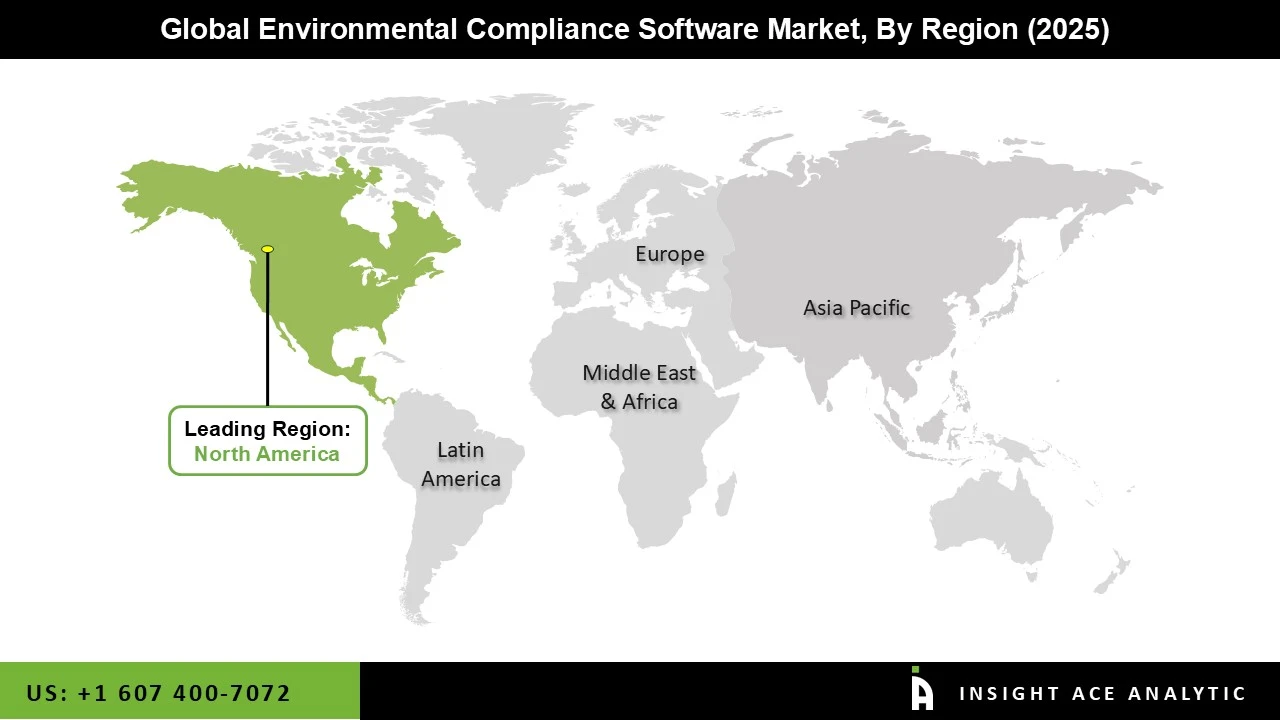
The Environmental Compliance Software market was dominated by the North America region in 2025 because of its established regulatory structure and significant industry understanding of environmental issues. The environmental compliance software market in the area is also fueled by continuous investments in sustainability and compliance programs in a number of industries. Due to the strong demand for compliance services created by federal and state rules, the United States, in particular, is a major contributor to the industry. The adoption of cutting-edge compliance solutions is further supported by the region's emphasis on technical innovation, which accelerates the environmental compliance software market expansion.
Environmental Compliance Software Market Report Scope:
| Report Attribute | Specifications |
| Market size value in 2025 | USD 3.94 Bn |
| Revenue forecast in 2035 | USD 10.59 Bn |
| Growth Rate CAGR | CAGR of 10.7% from 2026 to 2035 |
| Quantitative Units | Representation of revenue in US$ Bn and CAGR from 2026 to 2035 |
| Historic Year | 2022 to 2025 |
| Forecast Year | 2026-2035 |
| Report Coverage | The forecast of revenue, the position of the company, the competitive market structure, growth prospects, and trends |
| Segments Covered | Component, Organization Size, Deployment Mode, Application, End-user, and By Region |
| Regional Scope | North America; Europe; Asia Pacific; Latin America; Middle East & Africa |
| Country Scope | U.S.; Canada; U.K.; Germany; China; India; Japan; Brazil; Mexico; The UK; France; Italy; Spain; China; Japan; India; South Korea; Southeast Asia; South Korea; Southeast Asia |
| Competitive Landscape | VelocityEHS Holdings Inc., Cority Software Inc., Intelex Technologies ULC, Benchmark Digital Partners LLC, Quentic GmbH, IsoMetrix, ETQ LLC (Hexagon AB), Dakota Software Corporation, Enablon (Wolters Kluwer N.V.), Sphera Solutions, Inc., ERA Environmental Management Solutions, and Ideagen PLC |
| Customization Scope | Free customization report with the procurement of the report, Modifications to the regional and segment scope. Geographic competitive landscape. |
| Pricing and Available Payment Methods | Explore pricing alternatives that are customized to your particular study requirements. |
Market Segmentation:
Environmental Compliance Software Market by Component-
• Software
o Standalone Environmental Compliance Platforms
o Integrated EHSQ Suites
• Services
o Professional Services
Implementation
Consulting
System Integration
o Managed Services
Regulatory Update Services
Ongoing Support
o Training & Education Services
Environmental Compliance Software Market by Organization Size-
- Large Enterprises
- Small & Medium Enterprises (SMEs)
Environmental Compliance Software Market by Deployment Mode-
- Cloud-based
-
- Public Cloud
- Private Cloud
- On-premise
-
- Customer-Managed Deployment
- Fully Managed On-Premise
Environmental Compliance Software Market by Application-
- Water & Wastewater Compliance
-
- Stormwater Management
- Effluent Discharge Monitoring
- Air Emissions Management
-
- Air Quality Monitoring & Permit Compliance
- Greenhouse Gas (GHG) Emissions Tracking & Reporting
- Waste Management
-
- Hazardous Waste Compliance
- Solid & Non-Hazardous Waste Tracking
- Permit & License Management
-
- Environmental Permit Tracking
- Regulatory Deadline & Obligation Management
- Environmental Audit & Inspection Management
-
- Internal Environmental Audits
- Regulatory Inspection Management
- Hazardous Materials & Chemical Management
-
- Material Safety Data & Hazard Communication
- Chemical Inventory & REACH/ROHS Compliance
- Sustainability & ESG Reporting
-
- Scope 1,2, and 3 Emissions Reporting
- ESG Disclosure Framework Alignment (CSRD, TCFD, GRI)
Environmental Compliance Software Market by End-user-
- Manufacturing
-
- Process Manufacturing (Food & Beverage, Textiles, Plastics)
- Discrete Manufacturing (Automotive, Electronics, Machinery)
- Mining & Metals
-
- Surface Mining
- Underground Mining & Smelting
- Chemicals & Petrochemicals
-
- Basic Chemicals
- Specialty Chemicals
- Utilities & Energy
-
- Water & Wastewater Utilities
- Power Generation
- Oil & Gas
-
- Downstream (Refining & Distribution)
- Upstream (Exploration & Production)
- Healthcare & Pharmaceuticals
- Construction
- Others (Government & Public Sector, Agriculture, Transportation & Logistics)
Research Design and Approach
This study employed a multi-step, mixed-method research approach that integrates:
- Secondary research
- Primary research
- Data triangulation
- Hybrid top-down and bottom-up modelling
- Forecasting and scenario analysis
This approach ensures a balanced and validated understanding of both macro- and micro-level market factors influencing the market.
Secondary Research
Secondary research for this study involved the collection, review, and analysis of publicly available and paid data sources to build the initial fact base, understand historical market behaviour, identify data gaps, and refine the hypotheses for primary research.
Sources Consulted
Secondary data for the market study was gathered from multiple credible sources, including:
- Government databases, regulatory bodies, and public institutions
- International organizations (WHO, OECD, IMF, World Bank, etc.)
- Commercial and paid databases
- Industry associations, trade publications, and technical journals
- Company annual reports, investor presentations, press releases, and SEC filings
- Academic research papers, patents, and scientific literature
- Previous market research publications and syndicated reports
These sources were used to compile historical data, market volumes/prices, industry trends, technological developments, and competitive insights.

Primary Research
Primary research was conducted to validate secondary data, understand real-time market dynamics, capture price points and adoption trends, and verify the assumptions used in the market modelling.
Stakeholders Interviewed
Primary interviews for this study involved:
- Manufacturers and suppliers in the market value chain
- Distributors, channel partners, and integrators
- End-users / customers (e.g., hospitals, labs, enterprises, consumers, etc., depending on the market)
- Industry experts, technology specialists, consultants, and regulatory professionals
- Senior executives (CEOs, CTOs, VPs, Directors) and product managers
Interview Process
Interviews were conducted via:
- Structured and semi-structured questionnaires
- Telephonic and video interactions
- Email correspondences
- Expert consultation sessions
Primary insights were incorporated into demand modelling, pricing analysis, technology evaluation, and market share estimation.
Data Processing, Normalization, and Validation
All collected data were processed and normalized to ensure consistency and comparability across regions and time frames.
The data validation process included:
- Standardization of units (currency conversions, volume units, inflation adjustments)
- Cross-verification of data points across multiple secondary sources
- Normalization of inconsistent datasets
- Identification and resolution of data gaps
- Outlier detection and removal through algorithmic and manual checks
- Plausibility and coherence checks across segments and geographies
This ensured that the dataset used for modelling was clean, robust, and reliable.
Market Size Estimation and Data Triangulation
Bottom-Up Approach
The bottom-up approach involved aggregating segment-level data, such as:
- Company revenues
- Product-level sales
- Installed base/usage volumes
- Adoption and penetration rates
- Pricing analysis
This method was primarily used when detailed micro-level market data were available.

Top-Down Approach
The top-down approach used macro-level indicators:
- Parent market benchmarks
- Global/regional industry trends
- Economic indicators (GDP, demographics, spending patterns)
- Penetration and usage ratios
This approach was used for segments where granular data were limited or inconsistent.
Hybrid Triangulation Approach
To ensure accuracy, a triangulated hybrid model was used. This included:
- Reconciling top-down and bottom-up estimates
- Cross-checking revenues, volumes, and pricing assumptions
- Incorporating expert insights to validate segment splits and adoption rates
This multi-angle validation yielded the final market size.
Forecasting Framework and Scenario Modelling
Market forecasts were developed using a combination of time-series modelling, adoption curve analysis, and driver-based forecasting tools.
Forecasting Methods
- Time-series modelling
- S-curve and diffusion models (for emerging technologies)
- Driver-based forecasting (GDP, disposable income, adoption rates, regulatory changes)
- Price elasticity models
- Market maturity and lifecycle-based projections
Scenario Analysis
Given inherent uncertainties, three scenarios were constructed:
- Base-Case Scenario: Expected trajectory under current conditions
- Optimistic Scenario: High adoption, favourable regulation, strong economic tailwinds
- Conservative Scenario: Slow adoption, regulatory delays, economic constraints
Sensitivity testing was conducted on key variables, including pricing, demand elasticity, and regional adoption.
Request Customization
Add countries, segments, company profiles, or extend forecast — free 10% customization with purchase.
Customize This Report →Enquire Before Buying
Speak with our analyst team about scope, methodology, pricing, or deliverable formats.
Enquire Now →Frequently Asked Questions
Environmental Compliance Software Market Size is valued at USD 3.94 Bn in 2025 and is predicted to reach USD 10.59 Bn by the year 2035
Environmental Compliance Software Market is expected to grow at a 10.7% CAGR during the forecast period for 2026 to 2035.
VelocityEHS Holdings Inc., Cority Software Inc., Intelex Technologies ULC, Benchmark Digital Partners LLC, Quentic GmbH, IsoMetrix, ETQ LLC (Hexagon AB), Dakota Software Corporation, Enablon (Wolters Kluwer N.V.), Sphera Solutions, Inc., ERA Environmental Management Solutions, and Ideagen PLC
Environmental Compliance Software Market is segmented into Component, Organization Size, Deployment Mode, Application, End-user, and By Region
North America region is leading the Environmental Compliance Software Market