Direct-to-Consumer Laboratory Testing Market Size, Share, Revenue Report 2026 to 2035
What is Direct-to-Consumer Laboratory Testing Market?
Global Direct-to-Consumer Laboratory Testing Market Size is valued at USD 3.64 Bn in 2025 and is predicted to reach USD 8.28 Bn by the year 2035 at a 8.7% CAGR during the forecast period for 2026 to 2035.
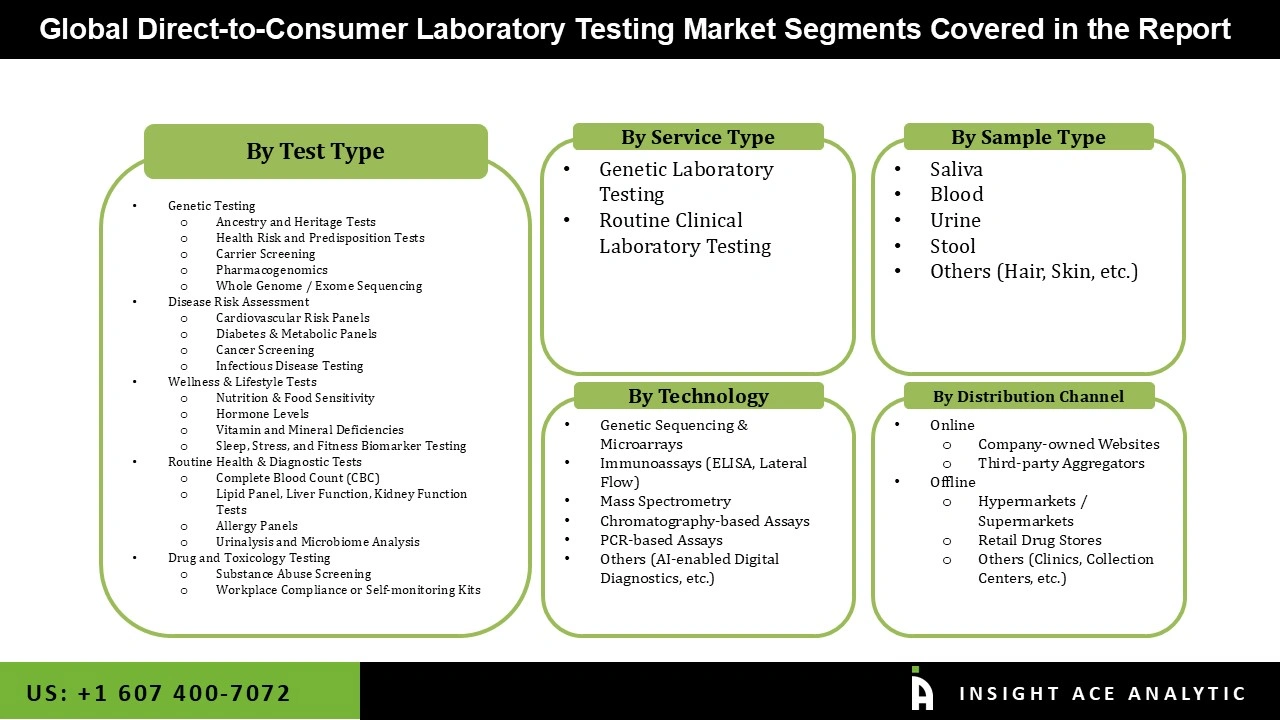
Direct-to-Consumer Laboratory Testing Market Size, Share & Trends Analysis Distribution by Test Type (Routine Health & Diagnostic Tests (Complete Blood Count (CBC), Allergy Panels, Lipid Panel, Liver Function, Kidney Function Tests, Urinalysis and Microbiome Analysis), Disease Risk Assessment (Diabetes & Metabolic Panels, Cardiovascular Risk Panels, Infectious Disease Testing, Cancer Screening), Genetic Testing (Ancestry and Heritage Tests, Carrier Screening, Pharmacogenomics, Health Risk and Predisposition Tests, Whole Genome / Exome Sequencing), Wellness & Lifestyle Tests (Nutrition & Food Sensitivity, Vitamin and Mineral Deficiencies, Hormone Levels, Sleep, Stress, and Fitness Biomarker Testing), and Drug and Toxicology Testing (Substance Abuse Screening, Workplace Compliance or Self-monitoring Kits)), Sample Type (Urine, Saliva, Stool, Blood, and Others (Hair, Skin, etc.)), Technology (Chromatography-based Assays, Genetic Sequencing & Microarrays, PCR-based Assays, Immunoassays (ELISA, Lateral Flow), Mass Spectrometry, and Others (Al-enabled Digital Diagnostics, etc.)), Service (Genetic Laboratory Testing and Routine Clinical Laboratory Testing), Distribution Channel (Offline (Retail Drug Stores, Hypermarkets / Supermarkets, Others (Clinics, Collection Centers, etc.)) and Online (Company-owned Websites, Third-party Aggregators)), and Segment Forecasts, 2026 to 2035
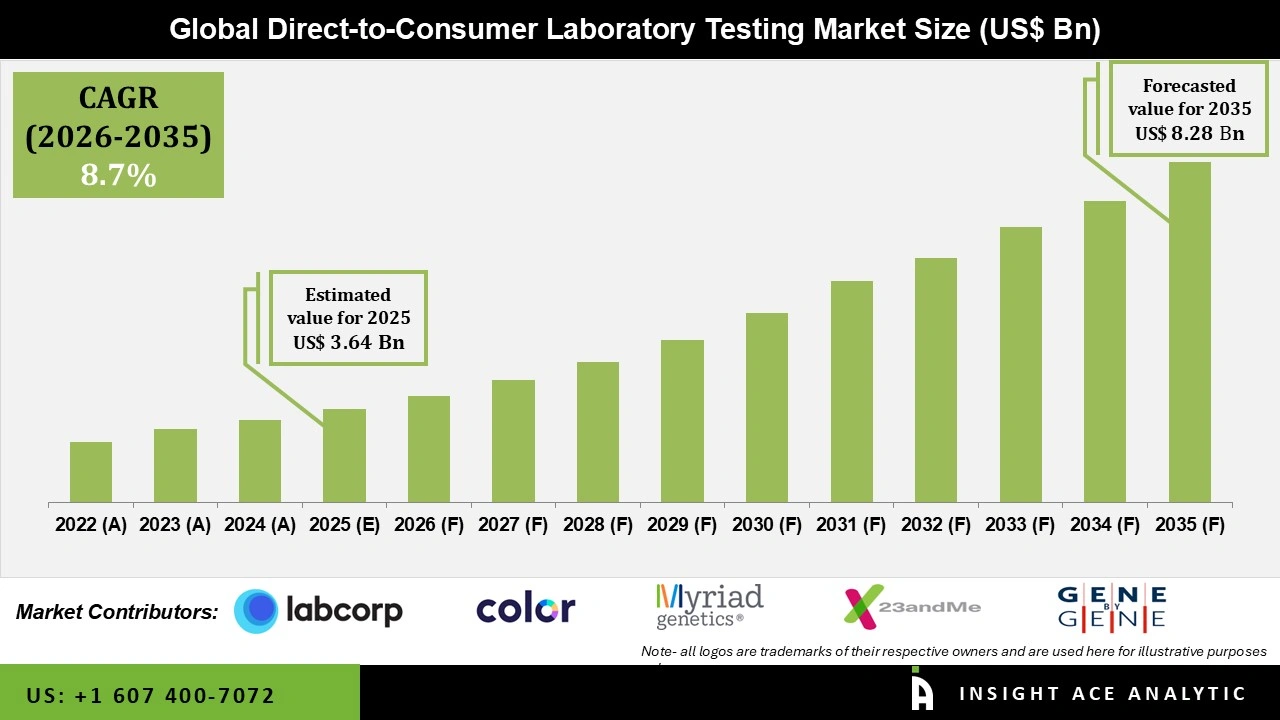
A healthcare model known as "direct-to-consumer" (DTC) laboratory testing allows people to order medical or wellness-related diagnostic tests directly—without necessarily needing a doctor's prescription—and obtain their results on their own, frequently via online platforms or at-home sample collection kits. Genetic screening, blood biomarker analysis, hormone level evaluations, allergy testing, and infectious illness screening are a few examples of these examinations. DTC laboratory testing provides ease, privacy, and quicker access to insights, enabling customers to take an active role in managing their health. The key factors driving the global direct-to-consumer laboratory testing market include a growth in the number of elderly people, a rise in the incidence of various infectious and lifestyle-related disorders, and a surge in demand for early disease detection and diagnosis combined with tailored medications.
The direct-to-consumer laboratory testing market is expanding due to consumers' growing inclination to monitor their health without the requirement for conventional clinician visits. The market is expanding due to increased awareness of wellness tracking, early disease identification, and preventive healthcare. Additionally, the quick development of e-commerce and digital health platforms has made at-home testing kits easily accessible, enabling people to purchase tests, gather samples, and easily obtain results. As customers look for privacy, affordability, and quicker turnaround times, the trend is anticipated to boost the direct-to-consumer laboratory testing market growth. Furthermore, the precision and reach of DTC testing services are being improved by developments in diagnostic technologies, such as genetic testing and biomarker analysis.
In addition, people are adopting routine self-testing due to the increasing prevalence of chronic diseases and lifestyle-related ailments, which is driving the direct-to-consumer laboratory testing market demand, especially in urban and tech-savvy populations. The ongoing advancements in testing techniques and growing integration with digital health ecosystems are expected to change the direct-to-consumer laboratory testing market landscape. Moreover, it is anticipated that market dynamics will be impacted by regulatory advancements aimed at guaranteeing test accuracy, consumer safety, and data protection, thereby increasing user trust. The direct-to-consumer laboratory testing market is also seeing a shift toward comprehensive and personalized test panels that are suited to particular health requirements, like disease risk profiling, fitness, and nutrition.
Competitive Landscape
Which are the Leading Players in Direct-to-Consumer Laboratory Testing Market?
- Labcorp
- 23andMe, Inc.
- Metropolis Healthcare
- Helix, Inc.
- Gene by Gene, Ltd.
- Veritas Intercontinental
- Myriad Genetics, Inc.
- Color Health, Inc.
- GenePlanet
- Mapmygenome
- EasyDNA
- Ancestry
- MyHeritage Ltd.
- Quest Diagnostics Incorporated
- Genesis Healthcare Co. (A.D.A.M. Innovations Co.)
- Targeted Genomics LLC
Market Dynamics
Driver
Increasing Incidence of Infectious Diseases
The direct-to-consumer laboratory testing market is anticipated to develop in the future due to the increasing incidence of infectious diseases. A complex combination of biological, environmental, social, and economic factors affects the occurrence of infectious diseases. By expanding access to testing, encouraging early intervention, and assisting public health initiatives through data collection and education, DTC laboratory testing helps prevent, identify, and manage infectious diseases. For instance, the World Health Organization, an international public health organization with headquarters in Switzerland, reported in October 2024 that the number of newly diagnosed cases of tuberculosis increased from approximately 7.5 million in 2022 to approximately 8.2 million in 2023, making tuberculosis the leading infectious disease killer. Therefore, the direct-to-consumer laboratory testing market is being driven by the increasing incidence of infectious diseases.
Restrain/Challenge
Growing Need for Greater Consistency and Regulation
The direct-to-consumer laboratory testing market is severely constrained by the requirement for greater consistency and regulation. The accuracy, validity, and reliability of test findings may be compromised by direct-to-consumer (DTC) laboratory testing, which requires the same degree of regulatory oversight and quality control as traditional laboratory testing. Additionally, ethical, legal, and social issues may arise from DTC laboratory testing. These include the potential for misuse or misinterpretation of the test results, the lack of counseling and informed consent, the risk of discrimination or privacy violations, and the potential effect on the doctor-patient relationship. Less than half of the 21 U.S. companies providing direct-to-consumer (DTC) lab tests claimed to be following HIPAA regulations, and less than a quarter offered specific guidelines for the preservation of biological samples, according to research conducted by the Baylor College of Medicine Center for Medical Ethics and Health Policy in Houston.
Blood Segment is Expected to Drive the Direct-to-Consumer Laboratory Testing Market
The blood category held the largest share in the Direct-to-Consumer Laboratory Testing market in 2025. Since blood can offer valuable information about an organism's overall health and physiological processes, it is commonly used as a sample for testing in labs. Blood is an important source of information for medical diagnostics since it serves as a channel for the movement of nutrients, oxygen, hormones, and waste products throughout the body. Venipuncture, which entails drawing blood from a vein, is a simple and comparatively non-invasive method of obtaining blood. Because of this feature, it is a convenient sample for routine testing. Additionally, the body's blood flow is consistent. As a result, changes in its composition provide important insights into a variety of systemic ailments, including hormonal imbalances, metabolic problems, and infections.
Routine Clinical Laboratory Testing Segment is Growing at the Highest Rate in the Direct-to-Consumer Laboratory Testing Market
In 2025, the Routine Clinical Laboratory Testing category dominated the Direct-to-Consumer Laboratory Testing market mainly due to the growing need for preventive treatment and routine health monitoring. In order to monitor their general health status without frequent hospital visits, consumers are increasingly choosing regular testing such as complete blood counts (CBC), lipid profiles, blood glucose tests, and liver and kidney function tests. Since early detection and ongoing monitoring are crucial for successful therapy, the increasing frequency of chronic ailments like diabetes, cardiovascular diseases, and thyroid problems has further pushed the acceptance of routine testing. Additionally, a wider range of customers are adopting these services due to the ease of at-home sample collection and simple online access to test results.
Why North America Led the Direct-to-Consumer Laboratory Testing Market?
The Direct-to-Consumer Laboratory Testing market was dominated by North America region in 2025 attributed to several factors, such as the high prevalence of chronic and infectious diseases, the favorable reimbursement policies and regulatory environment, the large number of direct-to-consumer laboratory testing providers and laboratories, and the widespread consumer awareness and demand for personalized healthcare.
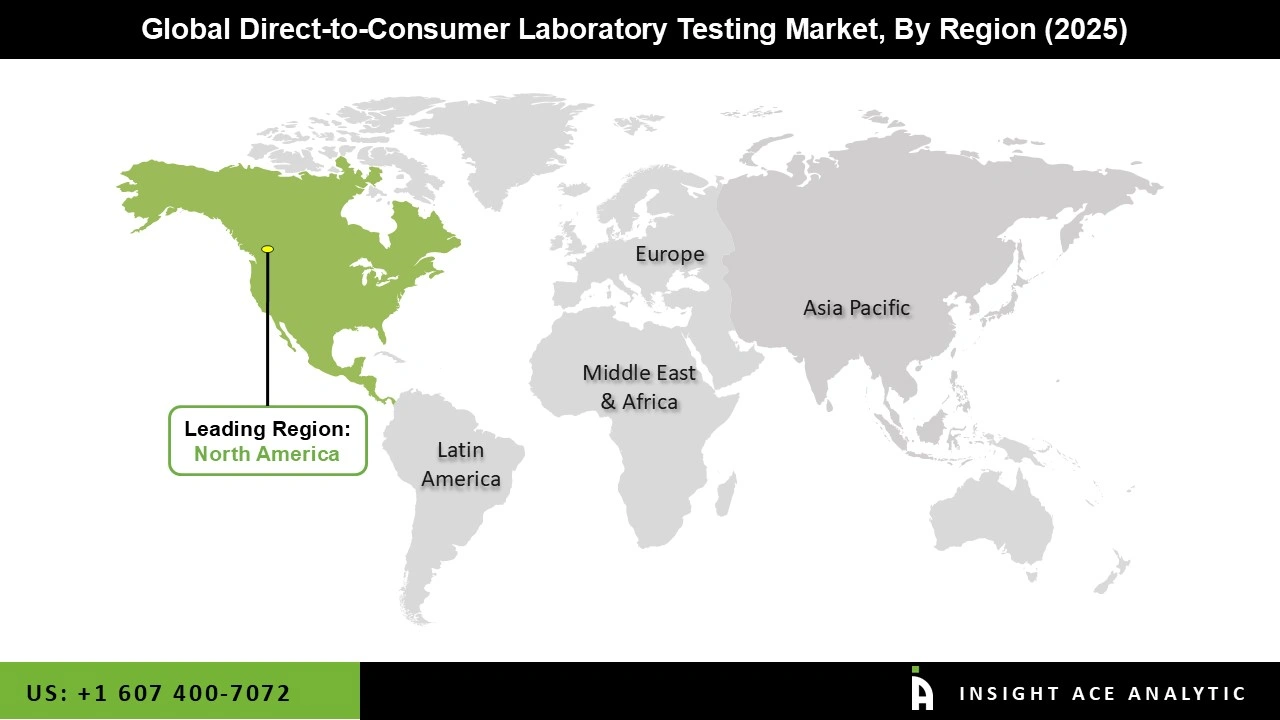
Additionally, there is an increasing need for diagnostic testing due to the rise in chronic illnesses and the susceptible elderly population. As a result, direct-to-consumer laboratory testing has become necessary in North America because these tests are more easily available and handy for customers. Furthermore, the North American population demonstrates a high degree of technology acumen and competency, which leads to an increase in the region's use of telehealth services.
Direct-to-Consumer Laboratory Testing Market Report Scope:
| Report Attribute | Specifications |
| Market size value in 2025 | USD 3.64 Bn |
| Revenue forecast in 2035 | USD 8.28 Bn |
| Growth Rate CAGR | CAGR of 8.7% from 2026 to 2035 |
| Quantitative Units | Representation of revenue in US$ Bn and CAGR from 2026 to 2035 |
| Historic Year | 2022 to 2025 |
| Forecast Year | 2026-2035 |
| Report Coverage | The forecast of revenue, the position of the company, the competitive market structure, growth prospects, and trends |
| Segments Covered | Test Type, Sample Type, Technology, Service, Distribution Channel, and By Region |
| Regional Scope | North America; Europe; Asia Pacific; Latin America; Middle East & Africa |
| Country Scope | U.S.; Canada; U.K.; Germany; China; India; Japan; Brazil; Mexico; The UK; France; Italy; Spain; China; Japan; India; South Korea; Southeast Asia; South Korea; Southeast Asia |
| Competitive Landscape | Labcorp, 23andMe, Inc., Metropolis Healthcare, Helix, Inc., Gene by Gene, Ltd., Veritas Intercontinental, Myriad Genetics, Inc., Color Health, Inc., GenePlanet, Mapmygenome, EasyDNA, Ancestry, MyHeritage Ltd., Quest Diagnostics Incorporated, Genesis Healthcare Co. (A.D.A.M. Innovations Co.), and Targeted Genomics LLC. |
| Customization Scope | Free customization report with the procurement of the report, Modifications to the regional and segment scope. Geographic competitive landscape. |
| Pricing and Available Payment Methods | Explore pricing alternatives that are customized to your particular study requirements. |
Segmentations of Direct-to-Consumer Laboratory Testing Market:
Direct-to-Consumer Laboratory Testing Market, by Test Type-
- Routine Health & Diagnostic Tests
- Complete Blood Count (CBC)
- Allergy Panels
- Lipid Panel, Liver Function, Kidney Function Tests
- Urinalysis and Microbiome Analysis
- Disease Risk Assessment
- Diabetes & Metabolic Panels
- Cardiovascular Risk Panels
- Infectious Disease Testing
- Cancer Screening
- Genetic Testing
- Ancestry and Heritage Tests
- Carrier Screening
- Pharmacogenomics
- Health Risk and Predisposition Tests
- Whole Genome / Exome Sequencing
- Wellness & Lifestyle Tests
- Nutrition & Food Sensitivity
- Vitamin and Mineral Deficiencies
- Hormone Levels
- Sleep, Stress, and Fitness Biomarker Testing
- Drug and Toxicology Testing
- Substance Abuse Screening
- Workplace Compliance or Self-monitoring Kits
Direct-to-Consumer Laboratory Testing Market, by Sample Type-
- Urine
- Saliva
- Stool
- Blood
- Others (Hair, Skin, etc.)
Direct-to-Consumer Laboratory Testing Market, by Technology-
- Chromatography-based Assays
- Genetic Sequencing & Microarrays
- PCR-based Assays
- Immunoassays (ELISA, Lateral Flow)
- Mass Spectrometry
- Others (Al-enabled Digital Diagnostics, etc.)
Direct-to-Consumer Laboratory Testing Market, by Service-
- Genetic Laboratory Testing
- Routine Clinical Laboratory Testing
Direct-to-Consumer Laboratory Testing Market, by Distribution Channel-
- Offline
- Retail Drug Stores
- Hypermarkets / Supermarkets
- Others (Clinics, Collection Centers, etc.)
- Online
- Company-owned Websites
- Third-party Aggregators
Direct-to-Consumer Laboratory Testing Market, by Region-
- North America-
- The US
- Canada
- Europe-
- Germany
- The UK
- France
- Italy
- Spain
- Rest of Europe
- Asia-Pacific-
- China
- Japan
- India
- South Korea
- South East Asia
- Rest of Asia Pacific
- Latin America-
- Brazil
- Argentina
- Mexico
- Rest of Latin America
- Middle East and Africa-
- GCC Countries
- South Africa
- Rest of Middle East and Africa
Research Design and Approach
This study employed a multi-step, mixed-method research approach that integrates:
- Secondary research
- Primary research
- Data triangulation
- Hybrid top-down and bottom-up modelling
- Forecasting and scenario analysis
This approach ensures a balanced and validated understanding of both macro- and micro-level market factors influencing the market.
Secondary Research
Secondary research for this study involved the collection, review, and analysis of publicly available and paid data sources to build the initial fact base, understand historical market behaviour, identify data gaps, and refine the hypotheses for primary research.
Sources Consulted
Secondary data for the market study was gathered from multiple credible sources, including:
- Government databases, regulatory bodies, and public institutions
- International organizations (WHO, OECD, IMF, World Bank, etc.)
- Commercial and paid databases
- Industry associations, trade publications, and technical journals
- Company annual reports, investor presentations, press releases, and SEC filings
- Academic research papers, patents, and scientific literature
- Previous market research publications and syndicated reports
These sources were used to compile historical data, market volumes/prices, industry trends, technological developments, and competitive insights.

Primary Research
Primary research was conducted to validate secondary data, understand real-time market dynamics, capture price points and adoption trends, and verify the assumptions used in the market modelling.
Stakeholders Interviewed
Primary interviews for this study involved:
- Manufacturers and suppliers in the market value chain
- Distributors, channel partners, and integrators
- End-users / customers (e.g., hospitals, labs, enterprises, consumers, etc., depending on the market)
- Industry experts, technology specialists, consultants, and regulatory professionals
- Senior executives (CEOs, CTOs, VPs, Directors) and product managers
Interview Process
Interviews were conducted via:
- Structured and semi-structured questionnaires
- Telephonic and video interactions
- Email correspondences
- Expert consultation sessions
Primary insights were incorporated into demand modelling, pricing analysis, technology evaluation, and market share estimation.
Data Processing, Normalization, and Validation
All collected data were processed and normalized to ensure consistency and comparability across regions and time frames.
The data validation process included:
- Standardization of units (currency conversions, volume units, inflation adjustments)
- Cross-verification of data points across multiple secondary sources
- Normalization of inconsistent datasets
- Identification and resolution of data gaps
- Outlier detection and removal through algorithmic and manual checks
- Plausibility and coherence checks across segments and geographies
This ensured that the dataset used for modelling was clean, robust, and reliable.
Market Size Estimation and Data Triangulation
Bottom-Up Approach
The bottom-up approach involved aggregating segment-level data, such as:
- Company revenues
- Product-level sales
- Installed base/usage volumes
- Adoption and penetration rates
- Pricing analysis
This method was primarily used when detailed micro-level market data were available.

Top-Down Approach
The top-down approach used macro-level indicators:
- Parent market benchmarks
- Global/regional industry trends
- Economic indicators (GDP, demographics, spending patterns)
- Penetration and usage ratios
This approach was used for segments where granular data were limited or inconsistent.
Hybrid Triangulation Approach
To ensure accuracy, a triangulated hybrid model was used. This included:
- Reconciling top-down and bottom-up estimates
- Cross-checking revenues, volumes, and pricing assumptions
- Incorporating expert insights to validate segment splits and adoption rates
This multi-angle validation yielded the final market size.
Forecasting Framework and Scenario Modelling
Market forecasts were developed using a combination of time-series modelling, adoption curve analysis, and driver-based forecasting tools.
Forecasting Methods
- Time-series modelling
- S-curve and diffusion models (for emerging technologies)
- Driver-based forecasting (GDP, disposable income, adoption rates, regulatory changes)
- Price elasticity models
- Market maturity and lifecycle-based projections
Scenario Analysis
Given inherent uncertainties, three scenarios were constructed:
- Base-Case Scenario: Expected trajectory under current conditions
- Optimistic Scenario: High adoption, favourable regulation, strong economic tailwinds
- Conservative Scenario: Slow adoption, regulatory delays, economic constraints
Sensitivity testing was conducted on key variables, including pricing, demand elasticity, and regional adoption.
Request Customization
Add countries, segments, company profiles, or extend forecast — free 10% customization with purchase.
Customize This Report →Enquire Before Buying
Speak with our analyst team about scope, methodology, pricing, or deliverable formats.
Enquire Now →Frequently Asked Questions
Direct-to-Consumer Laboratory Testing Market Size is valued at USD 3.64 Bn in 2025 and is predicted to reach USD 8.28 Bn by the year 2035
The Direct-to-Consumer Laboratory Testing Market is expected to grow at a 8.7% CAGR during the forecast period for 2026 to 2035
Labcorp, 23andMe, Inc., Metropolis Healthcare, Helix, Inc., Gene by Gene, Ltd., Veritas Intercontinental, Myriad Genetics, Inc., Color Health, Inc., GenePlanet, Mapmygenome, EasyDNA, Ancestry, MyHeritage Ltd., Quest Diagnostics Incorporated, Genesis Healthcare Co. (A.D.A.M. Innovations Co.), Targeted Genomics LLC. and Others.
Direct-to-Consumer Laboratory Testing Market is segmented into Test Type, Sample Type, Technology, Service, Distribution Channel, and Other.
North America region is leading the Direct-to-Consumer Laboratory Testing Market.