Digital Art Market Size, Revenue, Forecast Report 2026 to 2035
What is Digital Art Market Size?
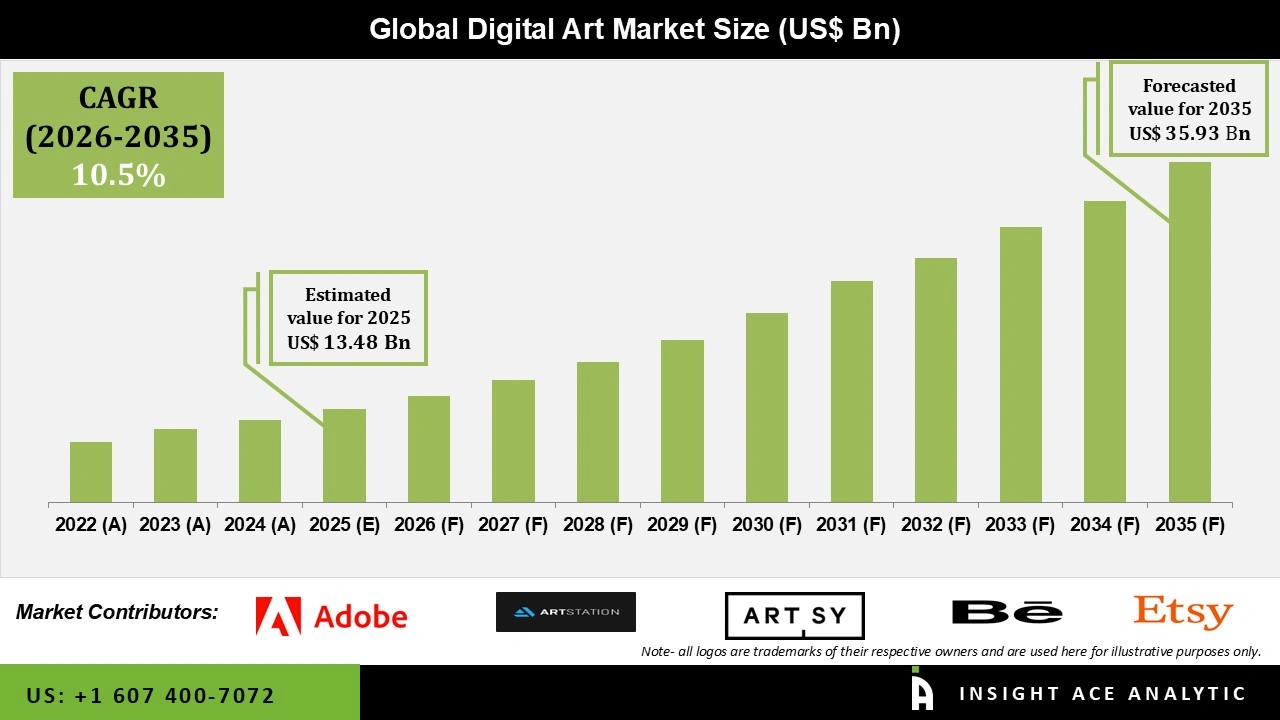
Global Digital Art Market Size is valued at USD 13.48 Bn in 2025 and is predicted to reach USD 35.93 Bn by the year 2035 at a 10.5% CAGR during the forecast period for 2026 to 2035.
Digital Art Market Size, Share & Trends Analysis Distribution By Type of Digital Art (Digital Collage, Digital Painting, Digital Photographs, Digital Sculptures, Generative Art, GIF Art, Others), by Type of Medium (2D, 3D, AR, Interactive, Video, VR, Others), by Type of Art Style (Abstract, Contemporary, Landscape, Modern, Pop Art, Street Art), by Type of Distribution Channel (E-Commerce, Exhibitions, Galleries, Marketplaces, Personal Websites, Social Media, Others), by End-User (Commercial, Investments, Personal, Others) and Segment Forecasts, 2026 to 2035.
Digital art is quickly becoming one of the most exciting ways to convey creativity in today’s entertainment and media world. By combining artistic ideas with digital technology, artists, designers, and brands can create eye-catching content in many forms, such as digital paintings, illustrations, animations, NFTs, generative art, virtual reality, and interactive media. In comparison to traditional art, digital art gives creators more flexibility, easier access, and new ways to experiment with styles and tools. It also lets artists share their work instantly with people around the world using online platforms. As technology becomes a bigger part of art and entertainment, it is changing how art is made, experienced, bought, and shared among industries like gaming, advertising, film, fashion, social media, and e-commerce. The digital art market is growing fast, thanks to better internet access, the impact of social media, and new digital creation tools. Artists are using advanced software, tablets, AI-powered design tools, augmented reality, and blockchain platforms to make new kinds of digital art and earn money more easily. At the same time, more people want digital content that is immersive, personal, and easy to share, especially younger audiences who join online creative communities and virtual experiences. The rise of NFTs and blockchain-based ownership has also boosted interest in digital art by helping artists prove, trade, and sell their work in new ways.
One key reason the digital art market is growing is that more businesses are using digital art in different areas. Companies use digital artwork for branding, advertising, gaming, product packaging, website design, entertainment, and social media marketing. The gaming and media industries especially need 2D and 3D digital artists, animation designers, and creators of immersive visuals. Online art marketplaces, digital galleries, and platforms focused on creators make it easier for independent artists to show and sell their work without needing traditional galleries or auction houses. Also, affordable digital drawing tools and creative software are helping more people get involved in making digital content. Ongoing advances in technology and growing interest in immersive interactions including augmented reality, virtual reality, and interactive digital exhibits are helping the market grow even more. Artists are trying out AI-generated art, metaverse exhibitions, and virtual galleries to create new and engaging experiences. Social media, livestreaming, and creator communities are important for promoting digital artists and spreading trends worldwide. When digital artists work with fashion brands, gaming companies, entertainment studios, and influencers, they open up new business opportunities and help digital art reach a wider audience.
A new trend in the digital art market is the growing demand for personalised and community-oriented digital experiences. People want unique artworks, custom digital collectibles, and interactive content that show their personal identity and online culture. This is pushing artists and platforms to offer niche art styles, limited-edition collections, and new ways to interact with audiences. Still, the market confronts big challenges. Ongoing problems include copyright protection, digital piracy, unpredictable NFT prices, and worries about whether content is authentic. The creative industry is very competitive, and fast-changing trends and social media algorithms make it hard for creators to keep their audiences interested. Unclear rules about blockchain-based art sales and making money from digital art could also affect the market’s future in some areas.
Competitive Landscape
Which are the Leading Players in the Digital Art Market?
- Adobe
- ArtStation
- Artsy
- Behance
- DeviantArt
- Etsy
- Fine Art America
- Heritage Auctions
- OpenSea
- Procreate
- Rarible
- Saatchi Art
- SuperRare
- UGallery
- Zora
- Others
Market Dynamics
Driver
Rising Demand for Personalised and Skincare-Focused Beauty Products
The digital art market is growing because more industries like gaming, entertainment, advertising, social media, and e-commerce want digital content. Companies use digital artwork, animations, 3D visuals, and interactive content to connect with customers and build their brands in a dense online space. Online creator platforms, NFTs, and digital marketplaces help artists reach worldwide audiences and earn money in new ways. Better creative software, AI-powered design tools, and immersive technologies including augmented and virtual reality are making it easier and more valuable for both independent creators and big companies to make digital art.
Restrain/Challenge
Copyright Protection and Market Authenticity Concerns
The digital art market encounters major challenges, especially around copyright protection, digital piracy, and guaranteeing content is authentic. It is easy for digital art to be copied, altered, or shared online without permission, making it hard for artists to protect their rights and retain ownership of their work. The rapid growth of AI-generated content and NFT-based art has additionally raised concerns about originality, unpredictable prices, and transparency. On top of that, the digital content industry is very competitive, and fast-changing trends and social digital algorithms make it tough for artists to stay visible and keep their audiences.
Digital Painting Segment is Expected to Drive the Digital Art Market
Digital painting is expected to become a major part of the digital art market as an increasing number of people seek eye-catching creative content for gaming, advertising, entertainment, publishing, and social media. More digital artists are using advanced drawing software, graphic tablets, and AI tools to make high-quality art more easily than with classic methods. This area is becoming increasingly popular among independent artists, designers, and content creators because it is accessible, affordable, and adaptable to many art styles and uses. Character illustrations, concept art, fantasy art, portraits, and social media visuals are especially popular as brands and consumers look for more personalised and engaging digital experiences. Online art communities, creator platforms, and livestreaming services make it easier for digital painters to show and sell their work. Growing interest in NFTs, digital collectibles, and online commissions is also giving artists new ways to earn money. As digital design software, interactive visual technologies, and cloud-based creative platforms keep improving, digital painting is likely to become even more important in the market.
3D Medium Segment is Expected to Drive the Digital Art Market
The 3D segment of the digital art market is expected to grow rapidly as an increasing number of people seek immersive graphic content across gaming, animation, film, virtual reality, advertising, and product design. Businesses and creators use 3D art to make realistic environments, animated characters, digital simulations, and interactive experiences which keep audiences interested. The growth of metaverse platforms, AR/VR apps, and online events is also increasing demand for high-quality 3D content. Artists and studios are using advanced 3D modelling, rendering, and animation software to create detailed, attractive digital assets. 3D art is also being used more in e-commerce, architecture, fashion, and social media marketing, underscoring its growing importance. User-friendly design tools, AI-powered rendering, and web-based collaboration platforms are helping more independent artists and small studios join in. As brands continue to invest in immersive storytelling as well as digital engagement, the 3D segment is likely to remain a major driver of growth in the digital art market.
Why North America Led the Digital Art Market?
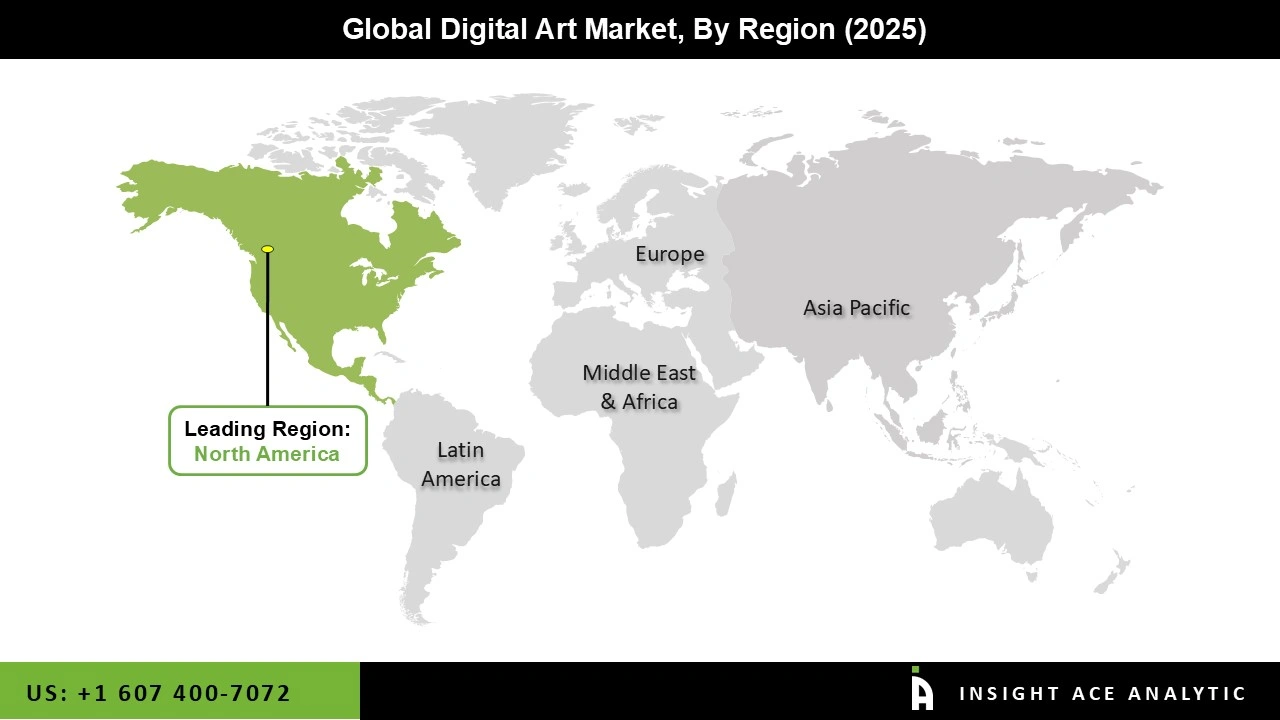
North America leads the digital art market because it has strong digital infrastructure, advanced creative technology, and high levels of digital entertainment and online media use. The region is a major centre for digital content creation, home to many top gaming companies, entertainment studios, tech firms, and online creator platforms. People in North America are very active with digital media, streaming, online gaming, NFTs, and virtual experiences, which keeps demand high for new digital art and immersive visuals. Social media, creator communities, and online art marketplaces help artists get noticed and interact with audiences. Independent artists and creative professionals use internet platforms to showcase, sell, and earn income from their digital art through subscriptions, commissions, NFTs, and virtual exhibitions.
Leading software providers, AI design tools, and AR/VR companies in the region also support ongoing innovation. As digital art becomes more common in advertising, gaming, film, fashion, and e-commerce, brands are investing more in interactive, custom digital content to engage customers and build their online presence. The region also benefits from strong consumer spending on digital entertainment, creative tools, and virtual experiences. Ongoing interest in AI-generated art, metaverse spaces, and immersive narratives is expected to keep boosting growth in North America’s digital art market.
Key Developments:
• In April 2025, Adobe expanded its AI-powered Firefly platform with new image, video, audio, and vector generation capabilities, while also introducing collaborative AI-first moodboarding tools to strengthen digital content creation workflows.
• In May 2025, Behance expanded creator visibility tools and AI-assisted creative workflows, helping digital artists and designers improve portfolio presentation and audience engagement.
Digital Art Market Report Scope :
| Report Attribute | Specifications |
| Market size value in 2025 | USD 13.48 Bn |
| Revenue forecast in 2035 | USD 35.93 Bn |
| Growth Rate CAGR | CAGR of 10.5% from 2026 to 2035 |
| Quantitative Units | Representation of revenue in US$ Bn and CAGR from 2026 to 2035 |
| Historic Year | 2022 to 2025 |
| Forecast Year | 2026-2035 |
| Report Coverage | The forecast of revenue, the position of the company, the competitive market structure, growth prospects, and trends |
| Segments Covered | Digital Art Type, Medium Type, Art Style, Distribution Channel, End User and By Region |
| Regional Scope | North America; Europe; Asia Pacific; Latin America; Middle East & Africa |
| Country Scope | US, Canada, UK, Germany, France, Italy, Spain, Rest of Europe, China, Japan, South Korea, India, Australia, Rest of Asia-Pacific, Brazil, Mexico, Argentina, Saudi Arabia, UAE, Egypt |
| Competitive Landscape | Adobe, ArtStation, Artsy, Behance, DeviantArt, Etsy, Fine Art America, Heritage Auctions, OpenSea, Procreate, Rarible, Saatchi Art, SuperRare, UGallery, Zora |
| Customization Scope | Free customization report with the procurement of the report, Modifications to the regional and segment scope. Geographic competitive landscape. |
| Pricing and Available Payment Methods | Explore pricing alternatives that are customized to your particular study requirements. |
Segmentations of Digital Art Market :
Digital Art Market by Type of Digital Art-
- Digital Collage
- Digital Painting
- Digital Photographs
- Digital Sculptures
- Generative Art
- GIF Art
- Others
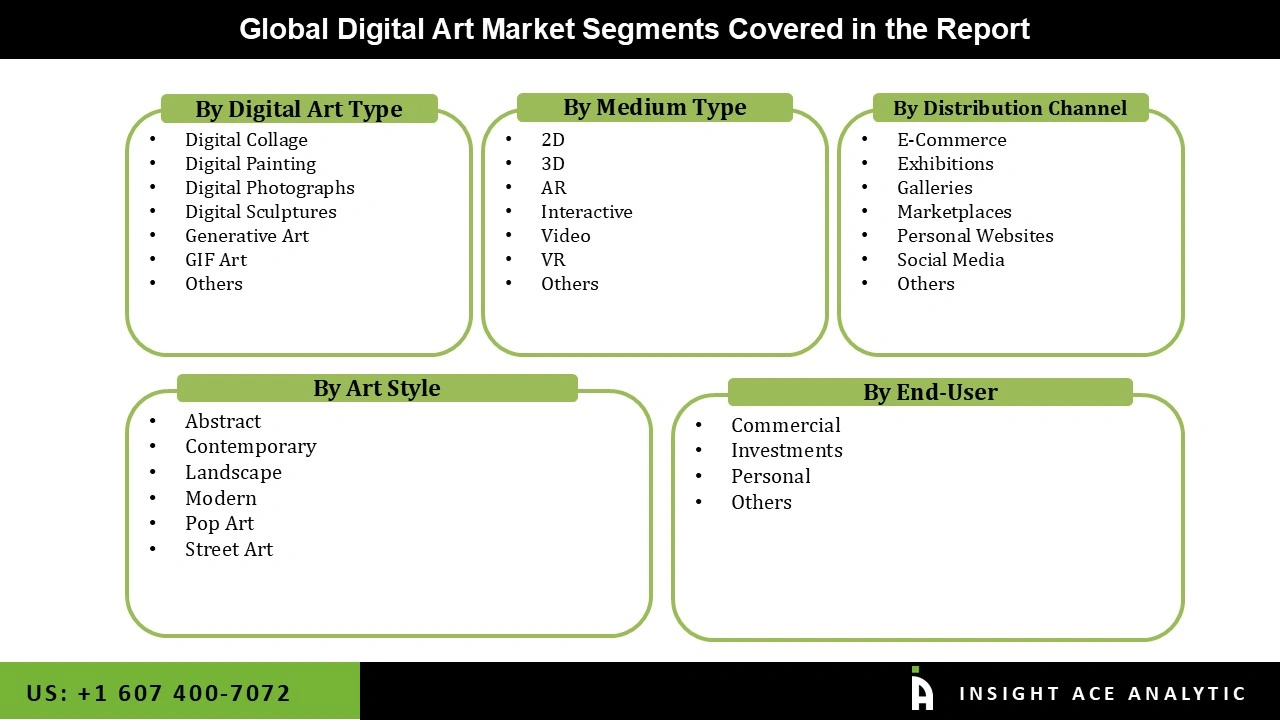
Digital Art Market by Type of Medium-
- 2D
- 3D
- AR
- Interactive
- Video
- VR
- Others
Digital Art Market by Type of Art Style-
- Abstract
- Contemporary
- Landscape
- Modern
- Pop Art
- Street Art
Digital Art Market by Type of Distribution Channel-
- E-Commerce
- Exhibitions
- Galleries
- Marketplaces
- Personal Websites
- Social Media
- Others
Digital Art Market by End-User-
- Commercial
- Investments
- Personal
- Others
- Geographical Regions
- North America-
- The US
- Canada
- Europe-
- Germany
- The UK
- France
- Italy
- Spain
- Rest of Europe
- Asia-Pacific-
- China
- Japan
- India
- South Korea
- South East Asia
- Rest of Asia Pacific
- Latin America-
- Brazil
- Argentina
- Mexico
- Rest of Latin America
- Middle East and Africa-
- GCC Countries
- South Africa
- Rest of Middle East and Africa
Research Design and Approach
This study employed a multi-step, mixed-method research approach that integrates:
- Secondary research
- Primary research
- Data triangulation
- Hybrid top-down and bottom-up modelling
- Forecasting and scenario analysis
This approach ensures a balanced and validated understanding of both macro- and micro-level market factors influencing the market.
Secondary Research
Secondary research for this study involved the collection, review, and analysis of publicly available and paid data sources to build the initial fact base, understand historical market behaviour, identify data gaps, and refine the hypotheses for primary research.
Sources Consulted
Secondary data for the market study was gathered from multiple credible sources, including:
- Government databases, regulatory bodies, and public institutions
- International organizations (WHO, OECD, IMF, World Bank, etc.)
- Commercial and paid databases
- Industry associations, trade publications, and technical journals
- Company annual reports, investor presentations, press releases, and SEC filings
- Academic research papers, patents, and scientific literature
- Previous market research publications and syndicated reports
These sources were used to compile historical data, market volumes/prices, industry trends, technological developments, and competitive insights.

Primary Research
Primary research was conducted to validate secondary data, understand real-time market dynamics, capture price points and adoption trends, and verify the assumptions used in the market modelling.
Stakeholders Interviewed
Primary interviews for this study involved:
- Manufacturers and suppliers in the market value chain
- Distributors, channel partners, and integrators
- End-users / customers (e.g., hospitals, labs, enterprises, consumers, etc., depending on the market)
- Industry experts, technology specialists, consultants, and regulatory professionals
- Senior executives (CEOs, CTOs, VPs, Directors) and product managers
Interview Process
Interviews were conducted via:
- Structured and semi-structured questionnaires
- Telephonic and video interactions
- Email correspondences
- Expert consultation sessions
Primary insights were incorporated into demand modelling, pricing analysis, technology evaluation, and market share estimation.
Data Processing, Normalization, and Validation
All collected data were processed and normalized to ensure consistency and comparability across regions and time frames.
The data validation process included:
- Standardization of units (currency conversions, volume units, inflation adjustments)
- Cross-verification of data points across multiple secondary sources
- Normalization of inconsistent datasets
- Identification and resolution of data gaps
- Outlier detection and removal through algorithmic and manual checks
- Plausibility and coherence checks across segments and geographies
This ensured that the dataset used for modelling was clean, robust, and reliable.
Market Size Estimation and Data Triangulation
Bottom-Up Approach
The bottom-up approach involved aggregating segment-level data, such as:
- Company revenues
- Product-level sales
- Installed base/usage volumes
- Adoption and penetration rates
- Pricing analysis
This method was primarily used when detailed micro-level market data were available.

Top-Down Approach
The top-down approach used macro-level indicators:
- Parent market benchmarks
- Global/regional industry trends
- Economic indicators (GDP, demographics, spending patterns)
- Penetration and usage ratios
This approach was used for segments where granular data were limited or inconsistent.
Hybrid Triangulation Approach
To ensure accuracy, a triangulated hybrid model was used. This included:
- Reconciling top-down and bottom-up estimates
- Cross-checking revenues, volumes, and pricing assumptions
- Incorporating expert insights to validate segment splits and adoption rates
This multi-angle validation yielded the final market size.
Forecasting Framework and Scenario Modelling
Market forecasts were developed using a combination of time-series modelling, adoption curve analysis, and driver-based forecasting tools.
Forecasting Methods
- Time-series modelling
- S-curve and diffusion models (for emerging technologies)
- Driver-based forecasting (GDP, disposable income, adoption rates, regulatory changes)
- Price elasticity models
- Market maturity and lifecycle-based projections
Scenario Analysis
Given inherent uncertainties, three scenarios were constructed:
- Base-Case Scenario: Expected trajectory under current conditions
- Optimistic Scenario: High adoption, favourable regulation, strong economic tailwinds
- Conservative Scenario: Slow adoption, regulatory delays, economic constraints
Sensitivity testing was conducted on key variables, including pricing, demand elasticity, and regional adoption.
Request Customization
Add countries, segments, company profiles, or extend forecast — free 10% customization with purchase.
Customize This Report →Enquire Before Buying
Speak with our analyst team about scope, methodology, pricing, or deliverable formats.
Enquire Now →Frequently Asked Questions
Digital Art Market Size is valued at USD 13.48 Bn in 2025 and is predicted to reach USD 35.93 Bn by the year 2035
The Digital Art Market is expected to grow at a 10.5% CAGR during the forecast period for 2026 to 2035
Adobe, ArtStation, Artsy, Behance, DeviantArt, Etsy, Fine Art America, Heritage Auctions, OpenSea, Procreate, Rarible, Saatchi Art, SuperRare, UGallery, Zora and Others.
Digital Art Market is segmented into Digital Art Type, Medium Type, Art Style, Distribution Channel, End User and Other.
North America region is leading the Digital Art Market.